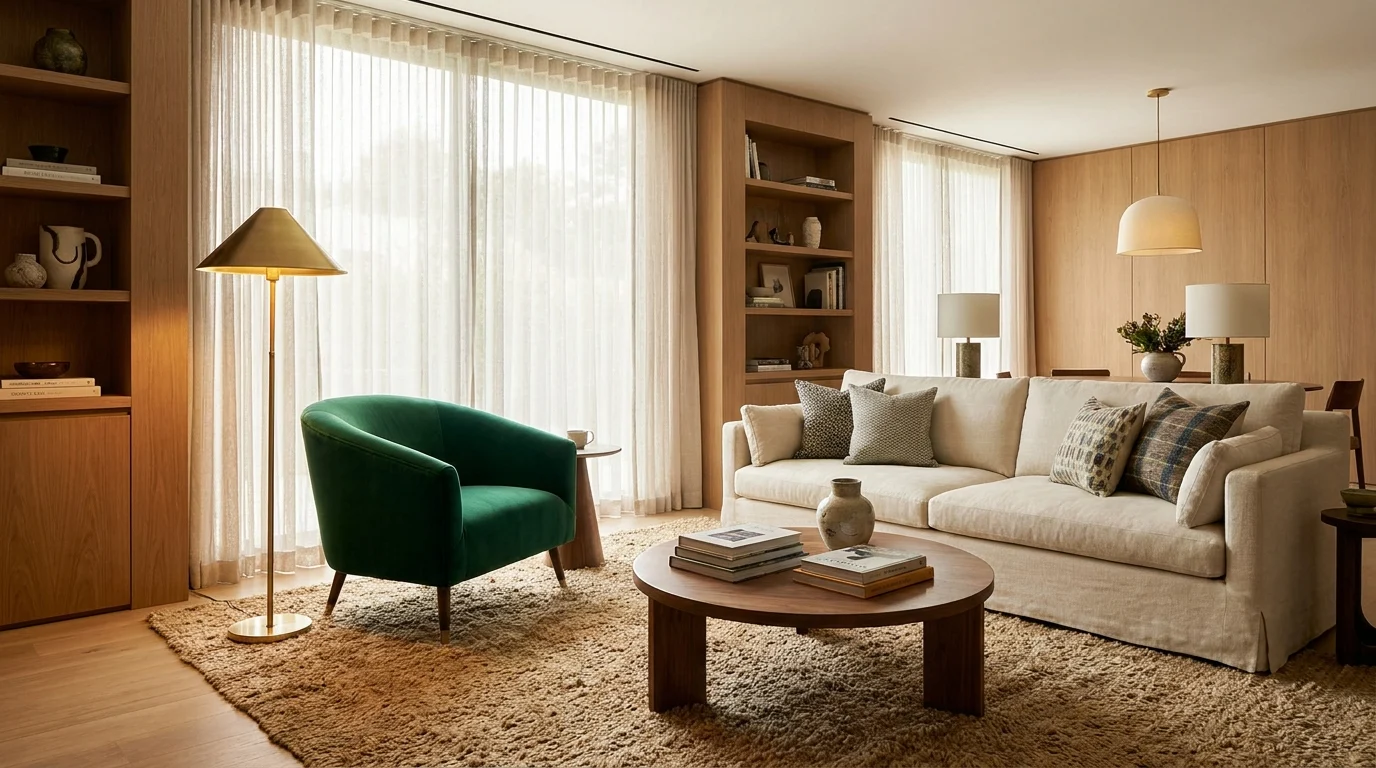
I didn’t understand the whole “accent chair” obsession for years, honestly. My living room had a sofa, a coffee table, and a TV, and that felt like plenty of furniture until a friend pointed out that my room had zero focal point beyond the television itself. Adding my first accent chair — a secondhand velvet piece I almost passed on at a thrift store — completely changed how the whole room felt and functioned. Since then I’ve helped a handful of friends pick chairs for their own spaces, made a few purchasing mistakes of my own along the way, and landed on 24 ideas that genuinely transform a living room rather than just filling an empty corner.
1. Bold Color Statement Chair
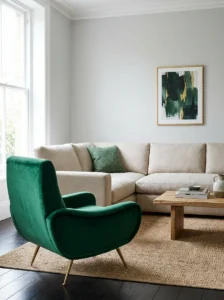
A single chair in a bold, unexpected color does more to energize a living room than almost any other single furniture purchase, and it’s exactly what convinced me accent chairs were worth the investment in the first place. My emerald green velvet chair sits against an otherwise neutral room, and it’s the first thing every guest comments on.
The trick to making a bold color feel intentional rather than random is picking a shade that echoes something small already present elsewhere in the room — a throw pillow, a piece of art, even a single flower in a vase — so the eye reads it as connected rather than jarringly out of place against everything else.
I’d encourage going bolder than initially feels comfortable here, since a single chair is a relatively low-risk place to experiment with color. Unlike a sofa or a wall color, one chair is easy to reupholster or replace entirely if you eventually tire of the shade, which removed a lot of my own hesitation going in.
Deep jewel tones — emerald, sapphire, garnet — tend to photograph beautifully and age better than trendier bright colors, staying relevant in a room’s overall design for years rather than feeling dated within a single season or two of shifting color trends.
2. Velvet Upholstery
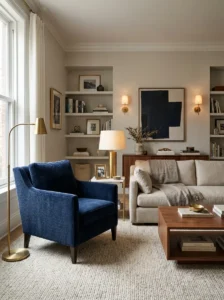
Velvet has become my personal favorite upholstery material for accent chairs specifically, mostly because the texture alone adds so much richness and depth to a room, even before you factor in color or shape. My own velvet chair catches light differently depending on the angle you’re viewing it from, which gives it a subtle visual movement flat fabrics just don’t have.
I’d caution that not all velvets are created equal in terms of durability. I learned this after my first velvet chair purchase pilled and flattened within a year, and switching to a performance velvet specifically designed for heavier daily use has held up considerably better through years of actual living room activity.
This material works particularly well in darker, richer colors — navy, emerald, burgundy — where the texture of the velvet adds dimension that a flat, matte fabric in the same color simply wouldn’t achieve on its own, making the color feel considerably more luxurious and intentional.
If you’ve got pets, I’d test a fabric swatch against actual claws or teeth before committing to a full chair, since some looser weave velvets snag and pull more easily than others. A tighter, denser velvet weave has held up remarkably well against my own cat’s occasional curious scratching.
3. Curved/Barrel Chair
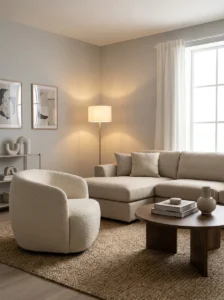
Curved, barrel-back chairs have become one of the more popular accent chair silhouettes in recent years, and after living with one in my own living room, I understand exactly why. The rounded shape softens a room full of straight lines — sofa edges, coffee tables, bookshelves — in a way that feels noticeably more inviting.
I positioned mine at a slight angle facing my sofa rather than straight on, which encourages a more natural, conversational layout than a perfectly symmetrical, formal arrangement would, and it makes the whole seating area feel more like an actual gathering spot rather than a showroom display.
This shape tends to work particularly well in smaller rooms specifically, since the rounded edges don’t create the same sharp, space-eating corners that a traditional boxy armchair would, making it easier to navigate around in a tighter living room layout without bumping into hard angles constantly.
I’d recommend this silhouette in a bold color or pattern specifically, since the curved shape already reads as a bit more modern and sculptural, and pairing that with an interesting fabric choice makes it function almost like a piece of functional art rather than purely functional seating.
4. Wingback Chair
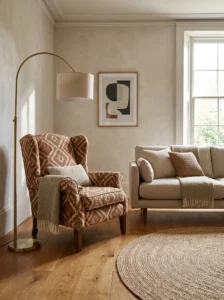
A wingback chair brings a genuinely classic, slightly formal quality into a living room, and I inherited mine from my grandmother’s house, keeping the original frame but reupholstering it in a fresh, more modern fabric to update the look while preserving the sentimental piece of furniture itself.
The tall, winged sides of this style were originally designed to block drafts near a fireplace, which is a detail I love knowing even though my own living room has no fireplace at all. That history gives the shape a real sense of purpose and heritage beyond just being decorative seating.
I’d recommend this silhouette specifically for anyone wanting to introduce a bit of traditional character into an otherwise more contemporary room, since the contrast between a classic wingback shape and modern surrounding furniture tends to read as curated and collected rather than mismatched or confused.
Reupholstering an inherited or secondhand wingback chair is often considerably cheaper than buying a brand-new one in a comparable fabric quality, and it gives you complete control over the exact color and pattern, which is exactly the route I’d recommend if you’re working with any kind of budget constraint.
5. Patterned Fabric
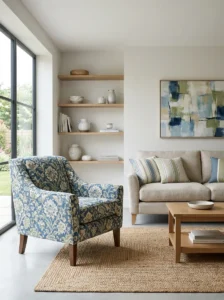
A boldly patterned accent chair does an enormous amount of visual work in an otherwise neutral room, and it’s a trick I picked up from a friend who does interior styling professionally. My own floral-patterned chair sits in a room of mostly solid, neutral furniture, and it consistently becomes the focal point the moment you walk in.
The key to making a bold pattern feel intentional rather than chaotic is keeping everything else in the room relatively restrained. I’d avoid pairing a heavily patterned chair with an equally busy rug or patterned curtains, since too many competing patterns in one space starts to feel visually overwhelming rather than curated.
I’d recommend choosing a pattern that includes at least one color already present elsewhere in your room, whether that’s a wall color, existing artwork, or another furniture piece, so the chair feels connected to its surroundings rather than randomly plopped in from a completely different color story.
This is another lower-risk place to experiment boldly, similar to color choices discussed elsewhere, since reupholstering or swapping out a single chair is a far smaller commitment than a patterned sofa or wallpaper would be if you eventually decide the specific pattern isn’t quite right for your evolving taste.
6. Leather Accent Chair
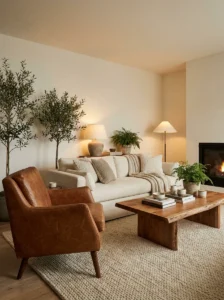
A leather accent chair brings a genuinely different texture and feel into a room compared to the fabric options discussed elsewhere on this list, and mine has become the chair my husband claims as his own reading spot, largely because leather develops such a comfortable, broken-in quality with regular use over time.
I chose a cognac-colored leather specifically because it pairs beautifully with both warm and cool color palettes, giving it genuine flexibility if I ever redecorate the rest of the room around it, unlike a more committed fabric color that might clash with a future design direction I haven’t settled on yet.
Genuine leather is a real investment upfront, but it ages beautifully over years of use, developing a natural patina that actually improves its look rather than deteriorating the way some fabrics do with heavy wear, which has made the higher initial cost feel worth it in our specific case.
For a lower-cost alternative, quality faux leather has improved enormously in recent years, and I’d recommend it for households with young kids or pets specifically, since it’s generally easier to wipe clean and more forgiving of the occasional accident than genuine leather tends to be over time.
7. Rattan/Wicker Chair
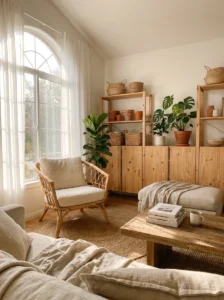
A rattan or wicker accent chair brings genuine natural texture into a living room, and I added a woven rattan peacock-style chair to my own sunroom corner specifically because the open, airy structure lets light filter through in a way that a solid upholstered chair never could in that particular spot.
This style pairs beautifully with the natural material palette discussed elsewhere on this blog — jute rugs, wood furniture, woven baskets — making it an easy addition if your home already leans toward that organic, textured aesthetic rather than something sleek, modern, and heavily upholstered throughout.
I’d recommend adding a cushion in a soft, complementary fabric if you plan to actually sit in the chair regularly, since raw rattan or wicker alone can feel a bit stiff and unforgiving for extended lounging, whereas a simple seat cushion makes it considerably more comfortable for daily, practical use.
This material works particularly well in sunrooms, reading nooks, or any space with a slightly more relaxed, bohemian feel, though I’ve also seen it used beautifully as an unexpected textural contrast in an otherwise more formal, traditionally furnished living room space for anyone wanting a bit of that same contrast effect.
8. Slipper Chair
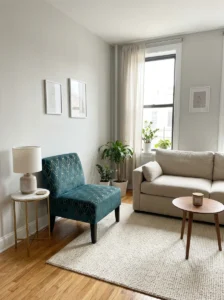
A slipper chair, characterized by its low profile and lack of arms, has become my go-to recommendation for smaller living rooms specifically, since the compact scale takes up noticeably less visual and physical space than a traditional armchair while still providing genuine, comfortable extra seating.
I added one to a corner of my own smaller apartment living room years ago, and it fit into a spot where a bulkier armchair simply wouldn’t have worked, giving me the extra seating I needed for guests without making the whole room feel cramped or overcrowded with furniture.
This style works particularly well in a bold pattern or color, similar to points made elsewhere on this list, since the simple, streamlined shape doesn’t compete with a busier fabric choice the way a more architecturally detailed chair with arms and elaborate trim might in the same space.
I’d recommend pairing a slipper chair with a small side table specifically, since the lack of arms means there’s nowhere obvious to set down a drink or a book while seated, which is a practical consideration worth thinking through before committing to this particular silhouette for your own living room.
9. Swivel Chair
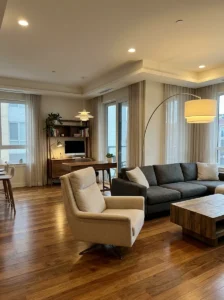
A swivel accent chair adds genuine functional flexibility to a living room that a stationary chair simply can’t match, and I added one specifically to a spot in my own room that sits between my main seating area and a small home office nook, letting me rotate between the two setups throughout the day.
This style works particularly well for open-concept spaces or rooms that need to serve double duty, since the ability to physically turn the chair toward a different focal point — a TV, a conversation area, a desk — gives the single piece of furniture considerably more versatility than a fixed-position chair would offer.
I’d recommend testing the swivel mechanism in person before purchasing if possible, since quality varies enormously between brands, and a smooth, quiet swivel base makes an enormous difference in daily comfort compared to a stiff, squeaky mechanism that becomes genuinely annoying with regular use over time.
Pairing a swivel chair with a low-profile design, rather than anything overly tall or bulky, tends to look more intentional and streamlined once it’s actually rotated to different positions throughout the day, rather than looking like an oddly placed piece of furniture no matter which direction it happens to be facing.
10. Mid-Century Modern Chair
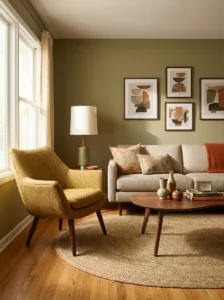
A mid-century modern accent chair brings clean lines and a genuinely timeless quality into a living room, and my own tapered-leg wood-and-fabric chair has remained one of my favorite pieces across two different apartments and one full home renovation, proving its versatility across genuinely different design contexts.
I’d describe this style as one of the safer long-term investments on this entire list, since mid-century design has maintained genuine popularity for decades now rather than cycling in and out of trend the way some other styles have, making it a reasonable choice if you’re hoping to keep a piece for many years.
The tapered wooden legs characteristic of this style pair beautifully with both warm wood tones and painted furniture elsewhere in a room, giving it genuine flexibility to work within multiple different overall color schemes and design directions as your own taste and home evolve over time.
I’d recommend seeking out genuine vintage pieces from this era specifically if your budget allows, since the quality of original construction often surpasses modern reproductions, and a well-maintained vintage find carries genuine history and character that a brand-new piece simply can’t replicate in quite the same way.
11. Oversized Cozy Chair
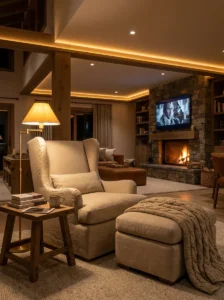
An oversized, deeply cushioned accent chair prioritizes genuine comfort over sleek visual lines, and mine has become the single most-used seat in my entire living room, the spot everyone gravitates toward first for movie nights or long afternoons of reading rather than the sofa itself.
I chose mine specifically with a deep seat and a high back, essentially designed for curling up rather than sitting formally upright, which makes it feel considerably more like a genuine retreat than a purely decorative accent piece existing mostly for visual purposes in the room.
This style works particularly well in rooms with enough square footage to accommodate its larger scale without feeling cramped, so I’d measure carefully before committing to this option in a genuinely small living room, where a more streamlined slipper or barrel chair might actually serve the space better.
Pairing an oversized chair with a matching ottoman creates an even more indulgent, lounge-like setup, essentially functioning as a genuine reading or relaxation station within the larger room, which is exactly the setup I eventually added to my own corner after living with just the chair alone for about a year.
12. Two Matching Chairs Symmetrical
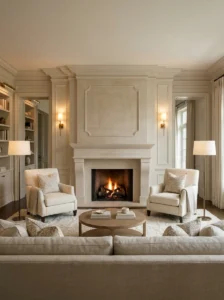
Using two identical accent chairs, positioned symmetrically on either side of a fireplace, window, or coffee table, creates a genuinely formal, balanced look that I’ve seen work beautifully in a friend’s more traditionally styled living room, flanking her fireplace with a pair of matching striped chairs.
This approach tends to read as more polished and considered than mismatched single chairs, since the symmetry itself does a lot of the visual work, creating an immediate sense of order and intentional design the moment you walk into the room, without needing to think through any additional styling.
I’d recommend this specifically for rooms with an existing architectural focal point worth framing, like a fireplace or a large window, since the symmetrical chairs naturally draw the eye toward whatever sits between them, essentially functioning as a frame for that central feature of the room.
This is a more significant investment than a single accent chair, obviously, since you’re purchasing two pieces rather than one, so I’d think carefully about whether your specific room and layout genuinely call for this level of formality before committing to the higher cost this approach requires.
13. Mismatched Pair#
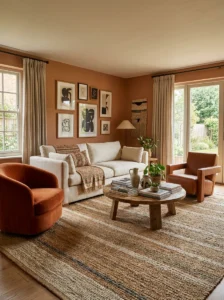
In contrast to the symmetrical approach above, pairing two intentionally different accent chairs creates a more collected, eclectic look that I personally find more visually interesting, and it’s the direction I ultimately chose for my own living room rather than a perfectly matched set.
The key to making mismatched chairs look intentional rather than accidental is finding some unifying thread between them, whether that’s a shared color family, a similar scale and proportion, or complementary materials, so the two pieces read as a considered choice rather than simply not matching at all.
I paired a curved velvet chair with a more angular leather one, unified by a similar warm tone across both pieces despite their very different shapes and materials, and the contrast between the two has become one of my favorite details in the whole room since making this particular choice.
This approach also solves a practical problem for anyone who already owns one accent chair and wants to add seating without necessarily matching their existing piece exactly, giving you far more flexibility to shop secondhand or mix pieces collected over time rather than needing to buy a matched set all at once.
14. Chair with Ottoman
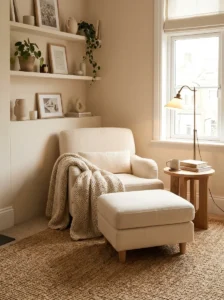
Pairing an accent chair with its own matching or complementary ottoman transforms a simple seat into a genuine lounging spot, and I added a small ottoman to my own reading chair specifically for this reason, elevating my feet and turning what was previously just a chair into a spot I actually want to spend hours in.
I’d recommend choosing an ottoman that can also function as extra seating or a footrest interchangeably, depending on the need at any given moment, since a slightly firmer, flatter-topped ottoman offers more versatility than one with a deeply cushioned, rounded top designed purely for feet.
This combination also gives you a practical surface for setting down a book, a laptop, or a drink when you’re not actually using it to elevate your feet, essentially functioning as an impromptu side table in a pinch, which has genuinely come in handy more times than I originally expected when purchasing it.
For smaller rooms where a full ottoman might feel like too much additional furniture, a small pouf or a narrow bench can achieve a similar function at a smaller physical footprint, which is the route I’d recommend for anyone tight on space but still wanting that same lounging capability nearby.
15. Boucle Textured Chair
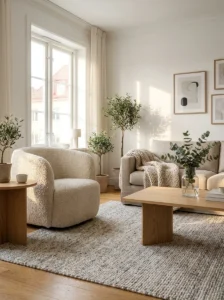
Boucle fabric, with its distinctive looped, nubby texture, has become an enormously popular accent chair material in recent years, and I added a cream-colored boucle chair to my own living room specifically for the tactile, almost sheepskin-like quality it brings that a smooth fabric simply doesn’t replicate.
The texture alone does a huge amount of visual and physical interest work in a neutral-colored room specifically, since a plain cream or white fabric can sometimes read as a bit flat or boring without additional textural variation, whereas boucle adds genuine dimension even in the most restrained, neutral color palette.
I’d recommend this fabric specifically for rooms already leaning toward a soft, cozy, Scandinavian-inspired aesthetic, since the texture pairs beautifully with light wood tones, sheepskin throws, and other similarly soft, tactile materials that tend to appear together in that particular overall design style.
Durability varies considerably between different boucle qualities, so I’d test a fabric sample against regular use before committing, particularly if you have pets whose claws might snag more easily in the looped texture compared to a tighter, flatter weave used in some of the other fabrics discussed on this list.
16. Vintage/Antique Find
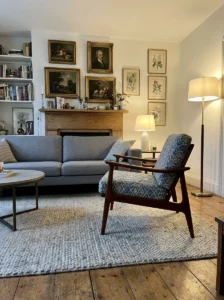
Sourcing an accent chair from a vintage shop, estate sale, or flea market almost guarantees a piece with genuine character that a brand-new purchase simply can’t replicate, and my own favorite chair in the house came from an estate sale, requiring only a fresh coat of fabric to bring it fully back to life.
I’d recommend inspecting the actual frame carefully before purchasing any vintage piece, checking for structural soundness and stability rather than focusing purely on the existing fabric, since reupholstering is a relatively straightforward and affordable fix, but a genuinely damaged or unstable frame is a much bigger, costlier problem.
Reupholstering a solid vintage frame in a completely fresh, modern fabric gives you the best of both worlds — genuine vintage construction quality that often surpasses what’s available at comparable price points today, combined with a contemporary look that fits seamlessly into your current design scheme.
I’d budget for professional reupholstering if you’re not comfortable doing it yourself, since the cost, while real, is often still considerably less than purchasing an equivalent quality brand-new chair, and you end up with a completely unique piece that nobody else will have in quite the same combination.
17. Chair in Reading Nook
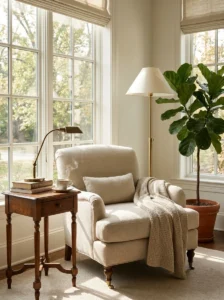
Dedicating a specific accent chair to a reading nook, rather than positioning it as part of your main seating arrangement, creates a genuinely separate little retreat within your living room, and I carved out exactly this kind of corner near a window in my own space specifically for this purpose.
I’d recommend positioning the chair near a natural light source specifically, since good reading light matters enormously for this particular use case, and a corner without adequate natural or supplemental lighting won’t function nearly as well for its intended purpose no matter how comfortable the chair itself might be.
Adding a small side table and a floor lamp specifically to this corner completes the reading nook setup, giving you somewhere to rest a book, a cup of tea, or your glasses, rather than needing to reach across the room or balance items awkwardly on the arm of the chair itself.
This approach works particularly well in a living room with an awkward, underused corner that doesn’t naturally fit into your main seating arrangement, essentially giving that otherwise wasted space genuine purpose and function rather than leaving it empty or cluttered with items that don’t have another home.
18. Chair by Window
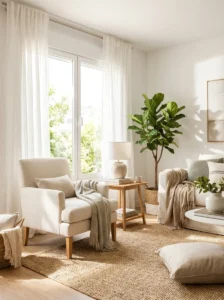
Positioning an accent chair directly by a window takes advantage of natural light and often a pleasant view, and I moved my own chair to exactly this spot after realizing how much time I was spending standing awkwardly near the window just to catch better light for reading during the day.
This placement works particularly well with a chair in a lighter fabric or a more open, airy silhouette, since heavier, darker pieces can sometimes feel visually at odds with the brightness and openness a window naturally brings into that specific corner of the room throughout the day.
I’d recommend checking the specific light exposure at different times of day before finalizing this placement, since direct afternoon sun can fade certain fabrics over time if the chair sits in the same spot for years, which is a detail I wish I’d considered before my own fabric started showing some subtle fading.
Adding a sheer curtain panel behind the chair softens harsh direct sunlight while still preserving the view and natural light benefit, which has been a small addition that’s made a genuine difference in both the comfort of sitting there and the longevity of the chair’s fabric over time.
19. Accent Chair with Metal Frame
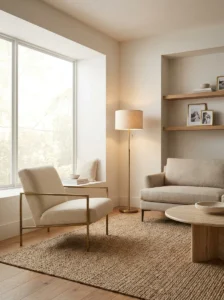
An accent chair with an exposed metal frame, whether brass, black iron, or chrome, brings a different structural quality into a room compared to the wood-framed options discussed elsewhere, and mine has become a favorite detail specifically because the slim metal legs make the whole piece feel lighter and less visually heavy.
I chose a brass-framed chair specifically to tie into other brass details already present throughout my living room — light fixtures, picture frames, a few decorative objects — creating a cohesive metallic thread running through the space without needing every single piece to match perfectly.
This style tends to read as more modern or industrial depending on the specific finish and the fabric paired with it, so I’d think through your room’s overall existing style before choosing a metal finish, since a chrome frame reads quite differently than an aged brass or matte black option would in the same space.
The slim profile typical of metal-framed chairs makes them a particularly good choice for smaller rooms, since the visual lightness of exposed metal legs (compared to a bulkier upholstered or wood base) helps the chair feel less imposing and takes up noticeably less visual weight in a tighter space.
20. Neutral Chair with Bold Throw Pillow
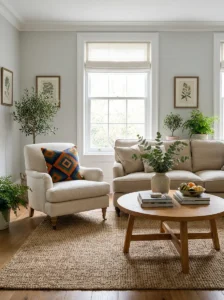
For anyone hesitant to commit to a fully bold or patterned chair, choosing a neutral base chair and adding a bold throw pillow offers a lower-commitment way to introduce color and personality, and it’s the approach I actually recommend most often to friends who are nervous about making a bigger commitment.
I keep a neutral linen chair in my own living room specifically so I can swap pillows seasonally or whenever I want a refresh, rotating between bold florals in spring, warm textures in fall, without ever needing to reupholster or replace the chair itself to keep the overall look feeling current.
This approach also extends the practical lifespan of the chair itself considerably, since a neutral base fabric is far more timeless and less likely to feel dated in a few years compared to a bold, trend-driven pattern that might not age as gracefully across changing seasons of personal taste.
I’d recommend choosing a pillow with a contrasting texture as well as color, not just a flat printed fabric, since the added dimension makes the accent feel more intentional and considered, rather than looking like a single flat splash of color randomly dropped onto an otherwise plain chair.
21. Chair as Extra Seating Corner
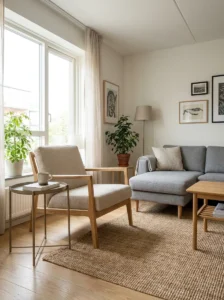
Adding a single accent chair specifically to provide extra seating for guests, positioned slightly apart from your main sofa arrangement, solves a genuinely common hosting problem, and it’s exactly the role my own accent chair plays whenever we have more than the usual two or three people over.
I’d recommend a chair that can be easily moved or repositioned for this specific purpose, rather than something oversized or heavy that’s difficult to relocate, since the whole point is flexibility — pulling it closer to the main conversation area when needed and returning it to its usual spot afterward.
This works particularly well in rooms where a full second sofa or loveseat simply isn’t practical given the available square footage, since a single chair provides genuine extra seating capacity without requiring nearly as much floor space as an additional larger piece of upholstered furniture would.
I’d choose a lighter-weight chair specifically for this purpose, whether that’s a slim metal frame or a simple wood construction, since you’ll likely be moving it around your room more frequently than a chair meant to stay permanently fixed in one single spot throughout the year.
22. High-Back Chair for Drama
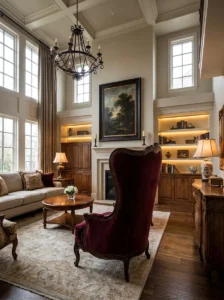
A tall, high-backed accent chair creates genuine visual drama and a sense of importance within a room, and I’ve seen this used beautifully in a friend’s more formal, traditionally styled living room, where her deep burgundy high-back chair anchors the entire space as an unmistakable focal point.
This silhouette works particularly well in rooms with higher ceilings specifically, since the taller chair proportion complements the vertical scale of the room rather than getting visually lost the way it might in a space with standard or lower ceiling heights where the proportions feel mismatched.
I’d recommend positioning a high-back chair somewhere it can genuinely be appreciated from multiple angles within the room, rather than tucking it into a corner where its dramatic height and presence gets cut off or obscured, since the whole appeal of this style depends on being able to see its full scale.
Pairing this style with a rich, saturated fabric color tends to amplify the drama even further, similar to points made about bold color choices elsewhere on this list, since the height combined with an intense color creates a genuinely commanding presence within the overall room.
23. Chair with Unique Silhouette (Egg Chair, etc.)
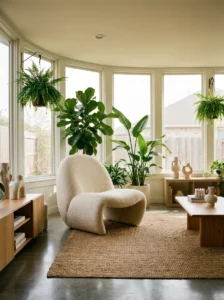
For anyone wanting a genuine conversation piece rather than a purely functional seat, a chair with a truly unique silhouette — an egg chair, a sculptural shape, an unusual asymmetrical form — makes a bold, memorable statement that a more traditional chair shape simply can’t achieve in quite the same way.
I added a hanging egg chair to my own sunroom, and it’s become the single most photographed spot in my entire house, genuinely functioning more as a piece of sculptural art that happens to also be comfortable seating than as purely practical furniture in the traditional sense.
I’d recommend this category specifically for a secondary or more casual space rather than your primary formal seating area, since an unusual silhouette can sometimes feel visually at odds with more traditional furniture pieces if placed directly alongside a conventional sofa and coffee table setup.
This is definitely a bolder, more personality-driven choice that won’t suit every home or every taste, so I’d think carefully about your own long-term attachment to a specific unusual shape before committing, since these pieces tend to be harder to casually swap out compared to more universally appealing, traditional silhouettes.
24. Chair Paired with Side Table & Lamp
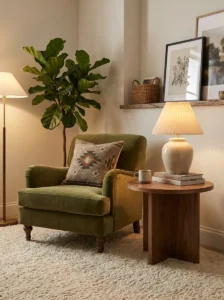
Beyond the chair itself, styling it properly with a coordinated side table and lamp completes the whole vignette, and this final styling step is genuinely what elevates an accent chair from a single piece of furniture into an actual designed moment within your living room.
I chose a small round side table in a material that echoes something else in my room — in my case, a wood tone that matches my coffee table — and topped it with a simple ceramic lamp, giving the whole corner genuine function for reading or setting down a drink rather than just visual appeal alone.
Scale matters considerably here. I’d recommend a side table that sits roughly at or slightly below the height of the chair’s arm, so reaching for a drink or a book feels natural rather than requiring an awkward reach up or down, which is a small ergonomic detail that makes a genuine daily difference.
This combination of chair, table, and lamp also gives you a complete, self-contained lighting option for a corner of the room that might not get adequate light from your main overhead or floor lamp fixtures, adding both function and a warm, layered glow to that specific area of your living room.
At the end of the day, the right accent chair does more than just fill an empty corner — it gives a room a focal point, a place to actually sit and linger, and often a little bit of personality that the rest of your furniture might not carry on its own. Start with whichever style genuinely speaks to you rather than chasing whatever’s currently trending, since the chairs I’ve loved longest in my own home have always been the ones I picked because I actually wanted to sit in them, not just look at them.