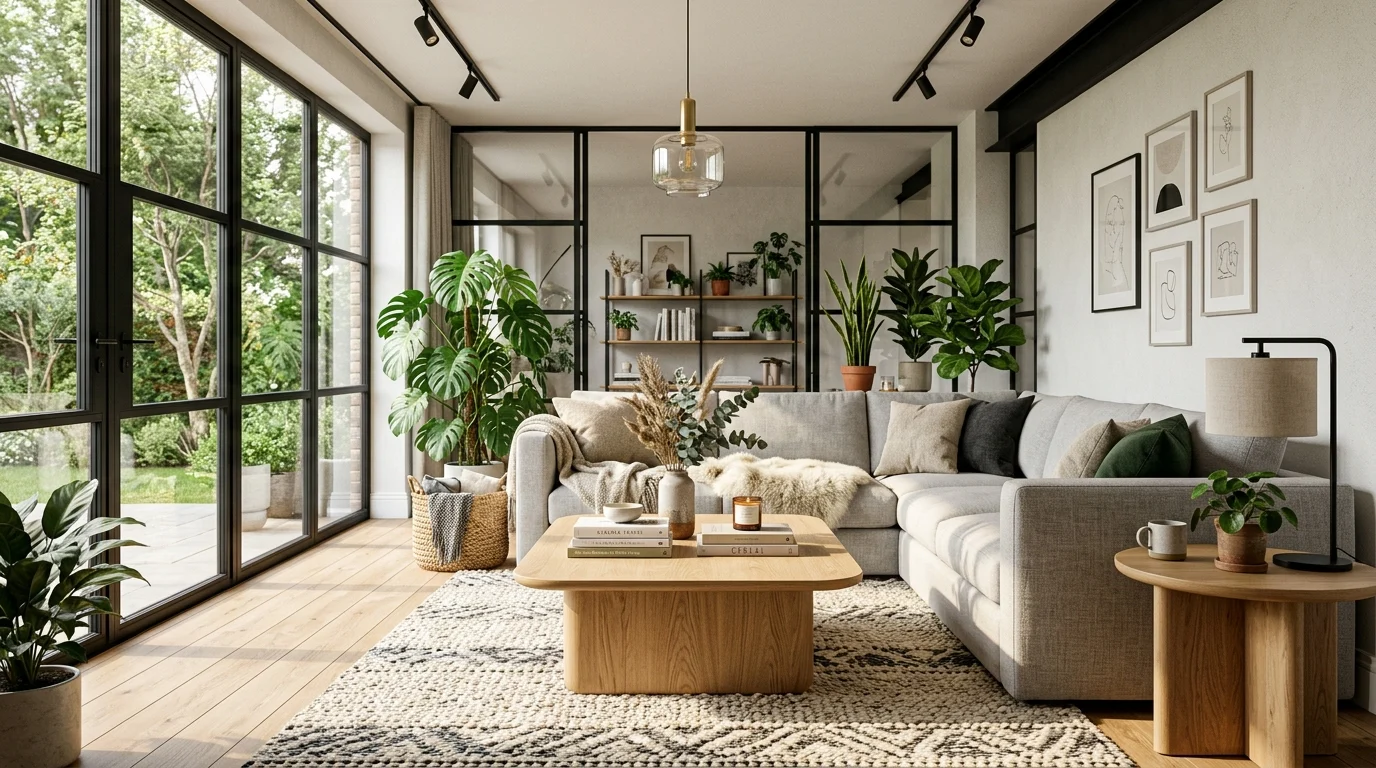
I didn’t fully appreciate how much a coffee table could affect an entire room’s overall cohesion until I made the mistake of choosing mine purely based on price during my first apartment furnishing process years ago. That table, a fine but entirely generic piece that didn’t relate to anything else in the room, sat there for nearly two years quietly undermining an otherwise reasonably well put-together living room, and I genuinely didn’t understand why the space still felt slightly disjointed until a friend pointed out that my coffee table looked like it had wandered in from an entirely different, unrelated room.
Replacing that table with something genuinely considered, chosen specifically to relate to my room’s other furniture and overall style, taught me just how much this single piece of furniture actually contributes to a living room’s overall sense of cohesion and intention. Since then, I’ve paid considerably more attention to table selection throughout every subsequent living room project I’ve worked on, both my own and for several friends, developing a much clearer sense of what actually makes this particular furniture category succeed at genuinely tying a room together rather than simply occupying central floor space.
Here are 21 living room table ideas, based on real projects and genuine trial and error rather than purely aspirational showroom photography, all aimed at helping you choose tables that actually pull your entire space together.
1. Choose a Coffee Table That Echoes Your Room’s Existing Wood Tones
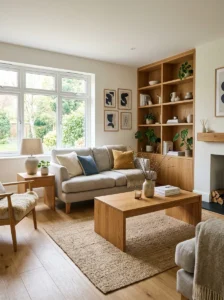
When I finally replaced my mismatched first coffee table, I specifically chose a piece in the same warm oak tone as my existing bookshelf and side tables, similar to material-coordination strategies I’ve applied throughout several other cohesive room design projects covered elsewhere throughout previous work, immediately resolving the disconnected feeling my previous, randomly chosen table had created throughout the space.
This kind of deliberate wood tone matching provides one of the most straightforward, reliable ways to ensure your coffee table genuinely belongs within your room’s broader furniture story, rather than existing as an isolated, disconnected element regardless of how attractive the piece might be considered entirely on its own, separate from its actual context within your specific room’s established furniture and material palette.
I’d recommend, before purchasing any coffee table, bringing a photo or sample of your room’s existing wood tones with you while shopping, similar to sample-comparison strategies I’ve applied throughout several other significant furniture and material decisions covered elsewhere throughout this broader body of previous work, ensuring your chosen table genuinely coordinates rather than merely coexists within your room’s established overall material palette and furniture story.
2. Add a Glass-Top Table for Visual Lightness in Smaller Rooms
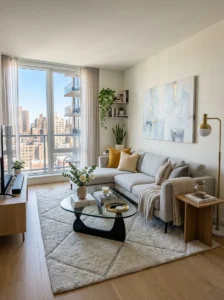
For a friend’s smaller living room, where a solid wood coffee table felt visually heavy relative to the room’s modest proportions, we chose a glass-top table instead, similar to visual-weight considerations I’ve applied throughout several other small-space furniture selection projects covered elsewhere throughout previous work, providing genuine function while maintaining a lighter, more open feeling throughout the compact space.
This kind of glass-top choice allows sightlines to continue through the table rather than stopping at a solid surface, similar to space-opening strategies I’ve applied throughout several other small-room design projects, genuinely helping a smaller living room feel less visually crowded than an equivalent solid-topped table would create within the same limited floor space and room proportions.
I’d recommend this glass-top approach specifically for smaller living rooms or rooms where visual openness matters more than the substantial furniture presence a solid table would provide, while acknowledging that glass surfaces require more frequent cleaning and maintenance than solid wood alternatives, a practical tradeoff worth weighing against the genuine visual space benefit this particular table style provides.
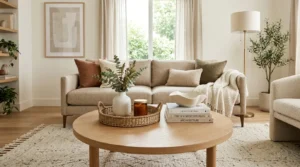
3. Use a Round Coffee Table to Soften Angular Furniture Arrangements
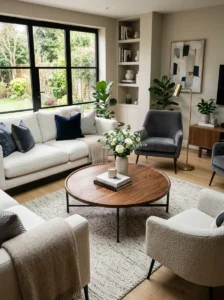
For my own living room, which includes several rectangular, angular furniture pieces, a sofa, a media console, I specifically chose a round coffee table, similar to shape-variation strategies I’ve applied throughout several other cohesive room design projects covered elsewhere throughout previous work, providing genuine visual softness that balanced out the room’s otherwise predominantly straight-lined furniture silhouettes.
This kind of intentional shape contrast, rather than matching every furniture piece’s angular lines throughout the room, provides genuine visual interest and balance, similar to shape-variety principles I’ve applied throughout several other furniture arrangement projects, preventing the room from feeling overly rigid or monotonous despite its otherwise generally clean-lined, contemporary furniture selection throughout the rest of the space.
I’d recommend considering this kind of round table option for any living room dominated by angular, rectangular furniture pieces, similar to shape-balancing considerations applied throughout several other room design projects covered throughout this broader body of previous work, providing this same kind of genuine visual softening and balance within your own room’s specific furniture arrangement and overall silhouette variety.
4. Choose Nesting Tables for Genuine Flexibility
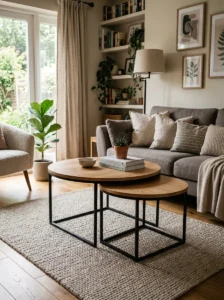
For a friend’s smaller apartment living room, we chose a set of nesting tables rather than a single, fixed coffee table, similar to flexible furniture strategies I’ve applied throughout several other space-constrained room projects covered elsewhere throughout previous work, providing genuine adaptability for different entertaining situations without requiring a larger, fixed table that might not suit every specific gathering or daily use scenario.
This kind of nesting table system allows the smaller tables to be pulled apart and distributed throughout the room when hosting guests, then consolidated back into their compact, nested configuration for everyday use, similar to expandable furniture concepts I’ve applied throughout several other flexible room design projects, providing this genuine functional flexibility without requiring separate storage for additional occasional tables.
I’d recommend this nesting table approach specifically for smaller living rooms or anyone who regularly hosts groups larger than their fixed furniture comfortably accommodates, similar to entertaining-focused furniture considerations relevant throughout several other living room projects, providing this genuine flexibility while maintaining a considerably smaller everyday footprint than a single larger table sized for occasional larger gatherings would require.
5. Add a Storage Ottoman as a Multi-Functional Table Alternative
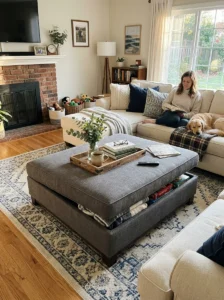
Rather than a traditional coffee table, a friend chose a large, upholstered storage ottoman for her living room’s central table position, similar to multi-functional furniture strategies I’ve applied throughout several other space-efficient room design projects covered elsewhere throughout previous work, providing both a soft, functional surface and genuine hidden storage capacity within the same footprint.
This kind of ottoman-as-table approach also provides additional seating flexibility when hosting guests, similar to flexible seating considerations I’ve applied throughout several other entertaining-focused living room projects, allowing the piece to function as extra seating when needed while still serving its primary role as a central table surface for drinks and other items during typical everyday use of the room.
I’d recommend this ottoman approach for anyone wanting genuine multi-functionality from their central table piece, choosing a durable, easy-clean fabric specifically given this piece’s likely combined function as both table surface and occasional seating, similar to durability considerations I’ve applied throughout several other heavily-used furniture selection projects covered throughout this broader body of previous work.
6. Choose Matching End Tables for Symmetrical Balance
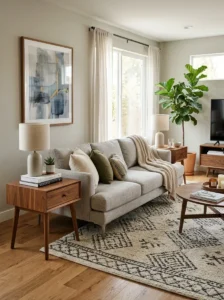
For my own living room, I chose a matching pair of end tables flanking my sofa, similar to symmetrical balance strategies I’ve applied throughout several other cohesive room design projects covered elsewhere throughout previous work, providing genuine visual order and intentionality that mismatched or asymmetrical end table choices wouldn’t have achieved to the same degree throughout the room’s overall furniture arrangement.
This kind of matching pair approach reads as considerably more polished and considered than mismatched end tables, similar to cohesion-prioritizing principles I’ve applied throughout several other furniture selection projects, providing genuine visual balance on either side of the sofa that helps anchor and organize the room’s overall seating arrangement and central furniture grouping throughout the space.
I’d recommend this matching end table approach for anyone seeking genuine visual order and symmetry within their living room’s central seating arrangement, similar to symmetry-based design principles applied throughout several other formal or semi-formal room design projects, while acknowledging that more eclectic, collected-over-time aesthetics might genuinely benefit from an intentionally mismatched approach instead, depending on your own room’s specific broader design direction and style.
7. Add a Console Table Behind the Sofa for Additional Function
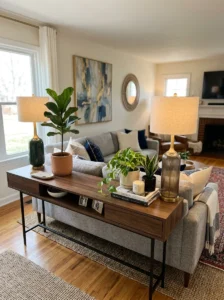
Beyond central and end tables, I added a console table positioned behind my sofa specifically, similar to functional-addition strategies I’ve applied throughout several other comprehensive living room furniture projects covered elsewhere throughout previous work, providing genuine additional surface space and a natural room-dividing element within my somewhat open floor plan.
This kind of console table addition works particularly well for sofas positioned away from a wall, similar to open-plan furniture strategies I’ve applied throughout several other connected living space projects, providing a natural backing element that helps define the seating area’s boundary while offering genuine additional function beyond what the coffee table and end tables alone would provide throughout the room’s overall furniture arrangement.
I’d recommend this console table addition for anyone with a sofa positioned away from a wall specifically, similar to positioning-based furniture considerations relevant throughout several other open floor plan living room projects, providing this genuine additional function and visual definition within your own room’s specific layout and furniture arrangement needs.
8. Choose a Table With Contrasting Metal Accents
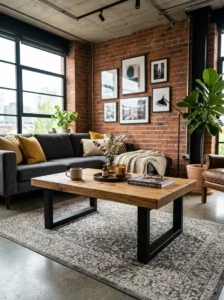
For a friend’s living room, we chose a coffee table combining a warm wood top with black metal legs, similar to material-contrast strategies I’ve applied throughout several other contemporary room design projects covered elsewhere throughout previous work, providing genuine visual interest through this material combination while still coordinating with her room’s broader established color and material palette.
This kind of contrasting material approach, rather than a table constructed entirely from a single material, provides additional visual interest and a more contemporary, considered feeling than a purely uniform material choice would achieve, similar to material-mixing principles I’ve applied throughout several other sophisticated room design projects, adding genuine textural and material variety within this single furniture piece specifically.
I’d recommend this kind of contrasting material table for anyone wanting additional visual interest within their central table piece specifically, ensuring the specific metal tone coordinates with your room’s other established metal finishes, similar to metal-coordination principles applied throughout several other cohesive room design projects covered throughout this broader body of previous work.
9. Add a Vintage or Antique Table for Character
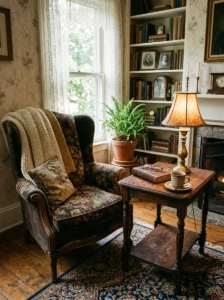
Rather than purely new furniture throughout, I incorporated a genuine antique side table, sourced from a local estate sale, into my living room’s furniture arrangement, similar to vintage-sourcing strategies I’ve applied throughout several other characterful room design projects covered elsewhere throughout previous work, providing genuine history and character that new furniture simply couldn’t replicate to the same authentic degree.
This kind of single vintage piece, mixed thoughtfully among otherwise more contemporary furniture, provides genuine visual interest and a sense of collected-over-time authenticity, similar to eclectic-mixing principles I’ve applied throughout several other characterful room design projects, avoiding the sometimes overly uniform, showroom-like feeling an entirely matched, all-new furniture set can sometimes create throughout a room’s overall furniture arrangement.
I’d recommend incorporating at least one genuine vintage or antique table piece into your own living room’s furniture arrangement if this kind of eclectic, collected character appeals to your particular aesthetic direction, similar to authenticity-prioritizing considerations relevant throughout several other characterful room design projects covered throughout this broader body of previous work.
10. Choose Tables Scaled Appropriately to Your Sofa
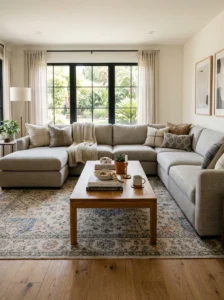
One of the more common mistakes I’ve noticed across several friends’ living rooms involves coffee tables scaled incorrectly relative to their sofa’s actual size and height, either too small and visually insignificant or too large and overwhelming, similar to furniture-scaling principles I’ve applied throughout several other proportion-focused room design projects covered elsewhere throughout previous work.
Getting this proportion right matters considerably for the room’s overall visual balance, and general guidelines suggest a coffee table’s height should sit roughly level with or slightly below your sofa’s seat cushion height, while its length should span approximately two-thirds of your sofa’s total length for genuinely balanced visual proportion throughout your specific seating and table arrangement.
I’d recommend, before purchasing any coffee table, measuring your existing sofa’s specific dimensions and calculating these proportional guidelines for your own particular space, similar to careful measurement practices applied throughout several other furniture-scaling projects covered throughout this broader body of previous work, ensuring your chosen table genuinely achieves this important proportional balance within your room’s specific furniture arrangement.
11. Add a Tray to Define and Organize Your Coffee Table Surface
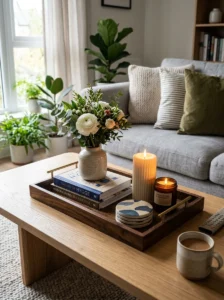
Beyond the table itself, I added a substantial tray to my coffee table’s surface specifically, similar to surface-organization strategies I’ve applied throughout several other styled table projects covered elsewhere throughout previous work, containing smaller items, remote controls, coasters, a small stack of books, within a single, visually organized boundary rather than scattered loosely across the table’s entire surface.
This kind of tray-based organization matters considerably for how polished and intentional a coffee table’s styling actually reads, similar to containment-based styling principles I’ve applied throughout several other surface-styling projects, providing genuine visual order that prevents the table from accumulating the kind of loose, scattered clutter that can undermine even a beautifully chosen table’s overall visual impact within the room.
I’d recommend this tray addition for nearly any coffee table styling approach, choosing a tray material and finish that coordinates with your table’s own material and your room’s broader established palette, similar to coordination principles applied throughout several other cohesive styling projects covered throughout this broader body of previous work.
12. Choose a Table With Genuine Storage for Remote Controls and Media
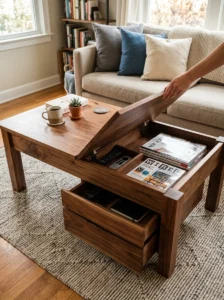
Beyond purely open surfaces, I chose a coffee table with a small, discreet drawer specifically for storing remote controls and other small media items, similar to concealed-storage strategies I’ve applied throughout several other functional furniture projects covered elsewhere throughout previous work, keeping these frequently used but visually cluttering items organized and out of sight when not actively in use.
This kind of practical storage integration addresses a genuine, common living room organizational challenge, similar to function-focused furniture selection I’ve applied throughout several other practical room design projects, ensuring your table provides real daily functional value beyond its purely visual and space-defining contribution to the room’s overall furniture arrangement and aesthetic.
I’d recommend considering this kind of integrated storage specifically if remote control and small media clutter represents a genuine, recurring frustration within your own living room, similar to needs-based furniture selection principles applied throughout several other practical furniture decisions covered throughout this broader body of previous work, addressing this common challenge through your table’s actual functional design rather than requiring a separate storage solution elsewhere in the room.
13. Add a Marble or Stone-Top Table for Elevated Sophistication
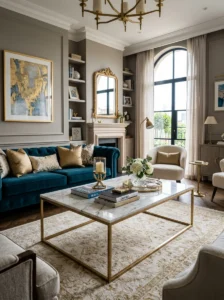
For a friend’s more formal living room, we chose a coffee table featuring a genuine marble top, similar to elevated material strategies I’ve applied throughout several other sophisticated room design projects covered elsewhere throughout previous work, providing genuine luxury and visual sophistication that complemented her room’s overall more elegant, formal design direction and established aesthetic.
This kind of stone material choice provides a distinctly different quality than wood or glass alternatives, similar to material-character considerations I’ve applied throughout several other significant furniture material decisions, offering genuine visual weight and luxurious texture that particularly suits more formal, elegant living room design directions rather than a more casual, relaxed aesthetic approach.
I’d recommend this marble or stone-top approach specifically for living rooms pursuing a more formal, elevated design direction, similar to style-appropriate material selection applied throughout several other cohesive room design projects covered throughout this broader body of previous work, while acknowledging that this material choice requires somewhat more careful maintenance regarding staining and etching compared to more forgiving alternatives like wood or tempered glass.
14. Choose a Table That Complements Your Rug’s Pattern
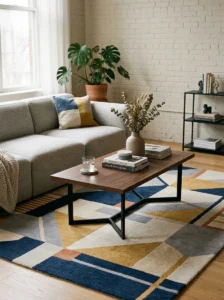
When selecting my own living room’s coffee table, I specifically considered how the table’s material and color would interact with my existing patterned area rug, similar to comprehensive coordination strategies I’ve applied throughout several other cohesive room design projects covered elsewhere throughout previous work, ensuring these two significant, floor-level elements genuinely worked together rather than competing for visual attention.
This kind of rug-and-table coordination matters considerably since these two elements typically occupy the same general visual zone within a living room, similar to zone-based coordination principles I’ve applied throughout several other room design projects, making their relationship particularly important for the room’s overall sense of cohesion compared to elements positioned in less visually connected areas throughout the space.
I’d recommend, before finalizing either your rug or coffee table selection, considering these two pieces together rather than in complete isolation, similar to holistic selection approaches applied throughout several other coordinated room design projects covered throughout this broader body of previous work, ensuring these visually connected elements genuinely support rather than compete against each other within your room’s overall floor-level design.
15. Add a Bar Cart as a Functional, Movable Table Alternative
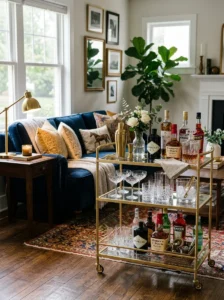
Rather than a fixed side table in one corner of her living room, a friend chose a mobile bar cart specifically, similar to flexible furniture strategies I’ve applied throughout several other adaptable room design projects covered elsewhere throughout previous work, providing genuine function for entertaining while offering the flexibility to be repositioned wherever specifically needed throughout different gatherings and daily uses of the room.
This kind of mobile table alternative provides genuine functional flexibility beyond what a fixed table position would offer, similar to mobility-based furniture considerations I’ve applied throughout several other entertaining-focused room design projects, allowing this piece to serve different specific functions and positions depending on the particular occasion or daily need throughout regular use of the living room.
I’d recommend this bar cart approach for anyone wanting genuine functional flexibility from a side table position specifically, similar to flexible furniture principles applied throughout several other adaptable room design projects covered throughout this broader body of previous work, particularly for those who regularly entertain and would benefit from this kind of repositionable, multi-purpose furniture piece.
16. Choose Tables With Rounded Edges for Households With Children
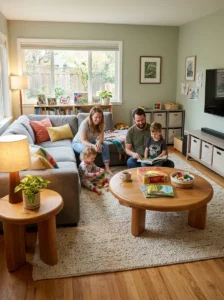
For a friend with young children, we specifically chose coffee and side tables with genuinely rounded edges throughout, similar to safety-conscious furniture selection I’ve applied throughout several other family-focused room design projects covered elsewhere throughout previous work, reducing injury risk from the sharp corners more angular table designs would otherwise present within an actively used family living space.
This kind of safety-conscious table selection matters considerably for households with young, physically active children specifically, similar to child-safety considerations relevant throughout several other family living room projects, providing genuine peace of mind alongside the table’s other functional and aesthetic contributions to the room’s overall furniture arrangement and daily family use.
I’d recommend this rounded-edge approach for any household with young children specifically, similar to family-appropriate furniture selection principles applied throughout several other child-safe room design projects covered throughout this broader body of previous work, prioritizing this practical safety consideration alongside your other aesthetic and functional table selection criteria throughout your own family living room’s furniture planning.
17. Add a Table With Genuine Height Variation for Visual Interest
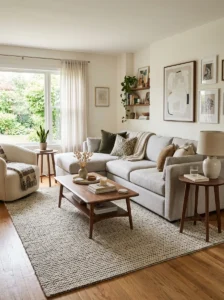
Beyond matching heights throughout, I incorporated some deliberate height variation among my living room’s various tables, a lower coffee table paired with slightly taller end tables, similar to height-variation strategies I’ve applied throughout several other dynamic room design projects covered elsewhere throughout previous work, creating visual rhythm rather than a flat, uniform table height throughout the entire room.
This kind of deliberate height variation, similar to shelf-styling height principles I’ve applied throughout several other room design projects, prevents the room’s table arrangement from feeling monotonous or overly uniform, providing genuine visual interest and a more dynamic, considered furniture arrangement throughout the living room’s overall central seating and table grouping.
I’d recommend considering this kind of intentional height variation among your own living room’s various tables, similar to visual-rhythm principles applied throughout several other dynamic furniture arrangement projects covered throughout this broader body of previous work, while ensuring your coffee table specifically maintains appropriate proportional relationship to your sofa’s height as discussed earlier throughout this list.
18. Choose a Table That Reflects Your Room’s Overall Style Direction
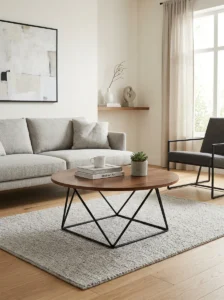
Beyond material and color coordination specifically, I made sure my coffee table’s overall design language, its leg style, its general silhouette, genuinely matched my room’s broader style direction, contemporary rather than traditional, similar to style-coherence principles I’ve applied throughout several other cohesive room design projects covered elsewhere throughout previous work.
This kind of stylistic coherence matters beyond purely material and color matching, since a table constructed from coordinating materials but featuring an entirely different design language, ornate traditional detailing within an otherwise contemporary room, for example, can still feel disconnected despite technically coordinating colors and materials throughout the rest of the space.
I’d recommend, when selecting your own living room tables, considering this broader stylistic coherence alongside more specific material and color coordination, similar to comprehensive style-matching principles applied throughout several other cohesive room design projects covered throughout this broader body of previous work, ensuring your chosen tables genuinely belong within your room’s overall established design language and aesthetic direction.
19. Add a Table Lamp That Ties Into Your Table’s Material Palette
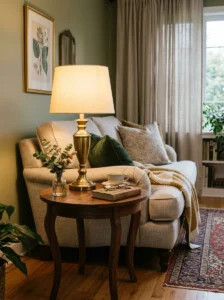
Beyond the tables themselves, I chose table lamps for my end tables specifically featuring bases in coordinating materials, brass accents matching my other room hardware, similar to comprehensive material coordination I’ve applied throughout several other cohesive room design projects covered elsewhere throughout previous work, ensuring these frequently paired elements genuinely worked together rather than existing as separately selected, potentially clashing pieces.
This kind of table-and-lamp coordination matters considerably since these two elements typically sit directly together throughout regular daily use, similar to paired-element coordination principles I’ve applied throughout several other functional room design decisions, making their combined visual relationship particularly important for how polished and intentional this specific area of the room ultimately reads.
I’d recommend considering your table and lamp selections together rather than in complete isolation, similar to holistic furniture-pairing approaches applied throughout several other coordinated room design projects covered throughout this broader body of previous work, ensuring these frequently paired elements genuinely support and complement each other within your room’s overall cohesive design.
20. Choose a Coffee Table Book Display That Reflects Personal Taste
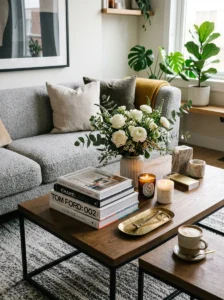
Beyond the table itself, I curated a small, thoughtful stack of coffee table books specifically chosen to reflect my own genuine interests and taste, similar to personal-curation principles I’ve applied throughout several other room personalization projects covered elsewhere throughout previous work, providing genuine personality and conversation-starting potential beyond what purely purchased decorative objects alone would offer.
This kind of curated book display, similar to personal touch principles I’ve applied throughout several other room styling projects, adds genuine authenticity and personal character to what could otherwise remain a purely furniture-focused, somewhat impersonal central table arrangement, connecting the practical furniture piece to your own genuine interests and personality throughout the room’s overall styled presentation.
I’d recommend this kind of thoughtful book curation for any coffee table styling approach, choosing titles that genuinely reflect your actual interests rather than books selected purely for their spine color or visual appeal, similar to authentic personalization principles applied throughout several other room styling projects covered throughout this broader body of previous work.
21. Regularly Reassess Whether Your Tables Still Serve the Room
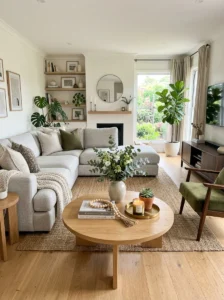
The final and perhaps most important lesson from my own coffee table journey, starting with that mismatched first purchase years ago, is that genuinely successful table selection benefits from ongoing reassessment rather than a single, permanent decision made once and never reconsidered, similar to ongoing reassessment principles I’ve applied throughout several other evolving room design projects covered elsewhere throughout previous work.
As my own living room’s broader style and other furniture pieces have evolved over subsequent years, I’ve periodically reconsidered whether my existing tables still genuinely coordinate with and serve the room’s current overall direction, making adjustments when this relationship has shifted meaningfully, rather than assuming my original table selection would remain perfectly suited indefinitely regardless of how the rest of the room continued naturally evolving over time.
I’d recommend this same periodic reassessment for your own living room’s tables, similar to ongoing evaluation principles applied throughout several other evolving room design projects covered throughout this broader body of previous work, ensuring these significant, central furniture pieces continue genuinely tying your space together as your room’s broader style and other elements naturally continue evolving throughout the years following their initial selection and placement.
Frequently Asked Questions
What size coffee table should I choose relative to my sofa? General guidelines suggest a length spanning about two-thirds of your sofa’s total length, with a height roughly level with or slightly below your sofa’s seat cushion, providing balanced proportion and comfortable functional use.
Do all my living room tables need to match exactly? Not necessarily, though coordinating material, color, or general style direction helps maintain cohesion even among tables that aren’t identical, allowing for some intentional variety while still achieving an overall unified, considered look.
Is glass or wood better for a coffee table? It depends on your room’s specific needs, glass provides visual lightness particularly valuable in smaller spaces, while wood offers more substantial visual weight and warmth, generally suiting larger rooms or more traditional design directions better.
How do I choose a coffee table for a household with young children? Prioritize rounded edges and durable, easy-clean materials specifically, considering an ottoman-style alternative if you want additional softness and safety beyond what even a rounded hard-surface table would provide.
Final Thoughts
That mismatched first coffee table, chosen purely on price without any real consideration for how it related to the rest of my room, taught me a lesson about furniture coordination that’s shaped every subsequent room project I’ve worked on since. The core lesson across all 21 of these ideas is that your living room’s tables, however seemingly secondary to larger pieces like your sofa, genuinely deserve the same thoughtful coordination and consideration, material, color, scale, style, that you’d apply to any other significant furniture decision throughout your space. Choose your tables with this same level of genuine, considered attention, and you’ll likely find, as I did, that they become the quiet, unifying thread tying your entire living room together.