A friend of mine remarried a couple of years ago, suddenly going from a household of three to a genuinely full house with five kids between them, hers, his, and the logistics of actually fitting everyone around one table for dinner each night became a real, practical problem rather than just a nice idea. Their existing kitchen table and four mismatched chairs simply couldn’t stretch to accommodate a blended family of seven, and buying an enormous new dining set felt both expensive and like it would overwhelm their fairly modest kitchen’s actual floor space. A banquette, built-in bench seating tucked into a corner, ended up being the answer, and watching that project come together taught me a lot about how much more seating capacity and genuine coziness this kind of built-in solution can squeeze out of a kitchen compared to standard freestanding furniture.
What started as a purely practical fix for fitting everyone around the table became something genuinely meaningful too, that built-in corner became the actual physical spot where this new, blended family started feeling like one unit rather than two families awkwardly sharing a house. Here are 17 kitchen banquette ideas, pulled from that real project and a couple of others since, all built around genuine, cozy, practical seating.
1. Choose an L-Shaped Bench for Maximum Seating
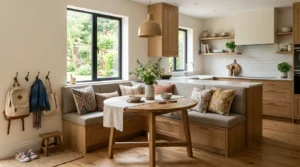
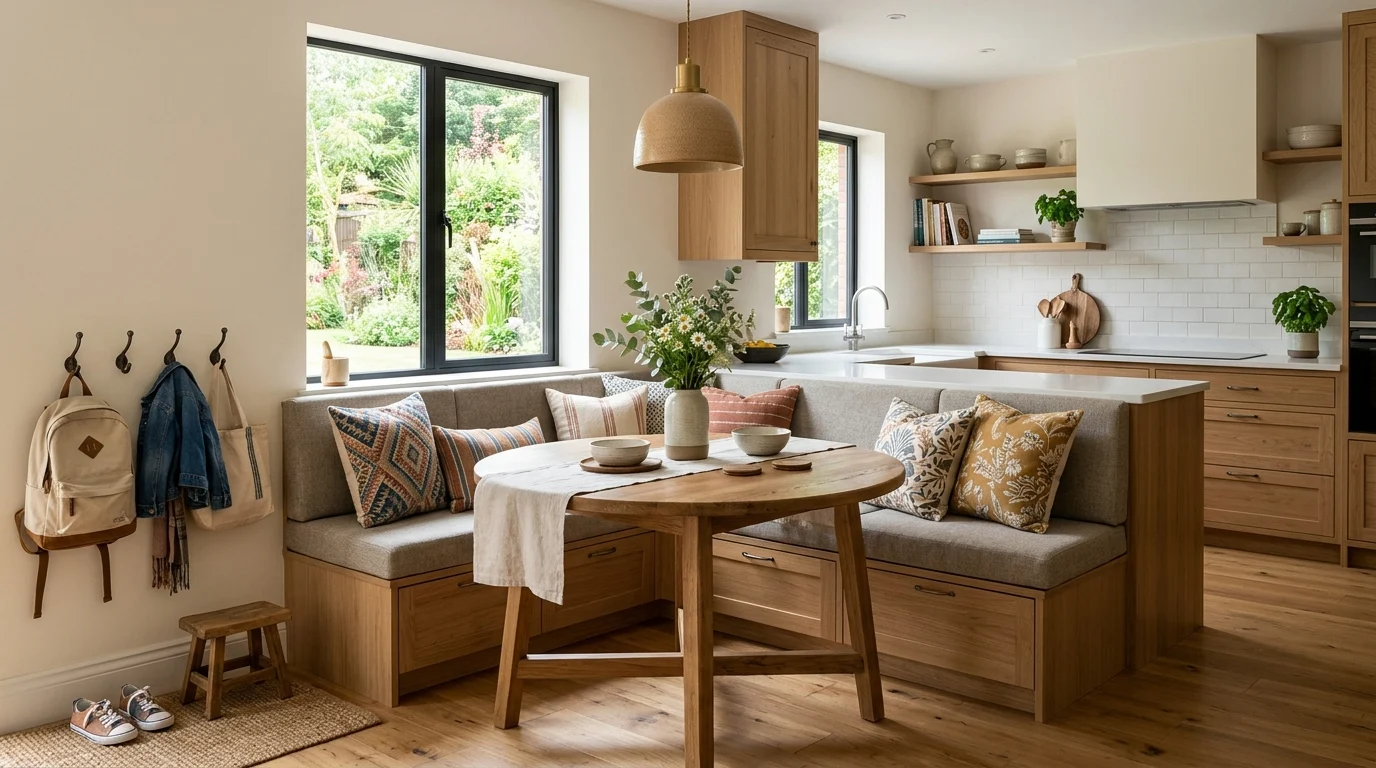
For my friend’s corner specifically, we built an L-shaped bench wrapping around two walls, genuinely maximizing how many people could sit comfortably within a relatively modest footprint, considerably more than a standard bench against just one wall would accommodate.
This L-shape configuration works beautifully for larger families specifically, and I’d recommend this approach for anyone needing to seat more people than a straight bench alone could comfortably fit within their available corner space.
2. Add Built-In Storage Beneath the Seating
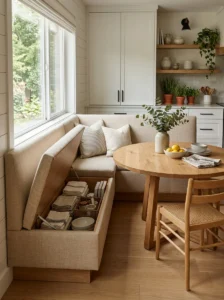
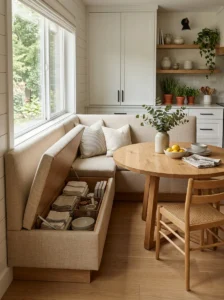
Beneath the bench, we incorporated lift-up storage compartments, genuinely reclaiming space that would have otherwise gone unused, now holding extra linens and seasonal kitchen items that previously cluttered other cabinets throughout the house.
This kind of hidden storage adds real practical value beyond just seating, and I’d recommend this addition for any banquette project, since this reclaimed under-bench space genuinely matters in a busy family kitchen specifically.
3. Choose Durable, Washable Upholstery
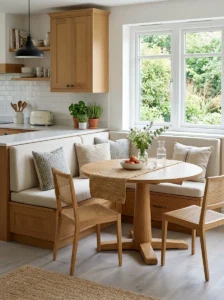
Given how many kids would regularly be sitting, spilling, and generally living on this bench daily, we specifically chose a durable, easily wipeable performance fabric rather than anything delicate that would show stains or wear too quickly.
This kind of practical material choice matters enormously for family-focused banquette seating specifically, and I’d recommend prioritizing genuine cleanability over purely aesthetic fabric choices for any household with young or messy eaters.
4. Add a Round Table for Easier Conversation
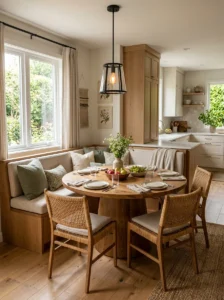
Rather than a standard rectangular table, my friend chose a round table to pair with her new banquette, genuinely improving how easily all seven family members could see and talk to each other during meals compared to a longer, more linear table shape.
This kind of round table pairing works particularly well with banquette seating specifically, and I’d recommend this shape for any family wanting to prioritize genuine conversation and connection during shared meals.
5. Incorporate Patterned Cushions for Personality
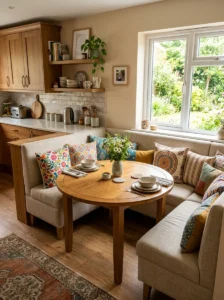
On top of the bench’s main upholstery, my friend added a few patterned throw cushions, mixing in some of each family member’s favorite colors, a small but genuinely meaningful way to make the new shared space feel like it belonged to everyone equally.
This kind of inclusive, personalized cushion choice adds real emotional warmth beyond pure function, and I’d recommend this approach for any family building a shared space meant to feel genuinely collective rather than favoring just one person’s taste.
6. Add a Window Behind the Banquette for Natural Light
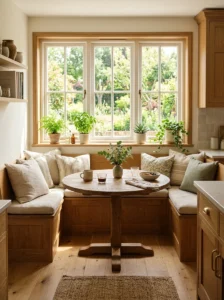
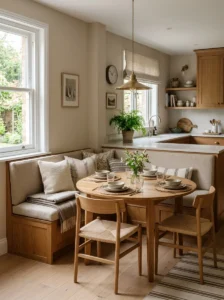
We positioned my friend’s new banquette directly beneath her kitchen’s existing window, ensuring the whole family’s new favorite spot got genuine natural light throughout the day rather than sitting in a darker, less inviting corner.
This kind of thoughtful positioning matters enormously for how much the space actually gets used daily, and I’d recommend prioritizing natural light access when planning your own banquette’s specific placement within your kitchen.
7. Choose a Table Height That Suits Growing Kids
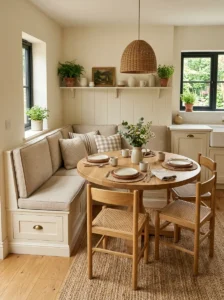
Given her blended family includes kids of quite different ages, we made sure the table height genuinely worked for everyone, not too tall for her younger children, not uncomfortably low for the teenagers, striking a workable middle ground for daily family use.
This kind of age-inclusive planning matters for genuine, practical daily function, and I’d recommend testing your own table and bench height combination carefully if your household similarly spans a wide age range.
8. Add a Removable Table Leaf for Flexible Seating
For occasions when extended family joins them, my friend’s table includes a removable leaf, genuinely expanding capacity beyond the regular seven without requiring a permanently oversized table taking up daily space.
This kind of flexible expansion matters for households whose gathering size genuinely varies, and I’d recommend this feature for any family wanting their banquette setup to comfortably handle both everyday meals and larger occasional gatherings.
9. Incorporate a Chalkboard Wall Near the Banquette
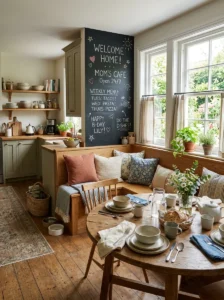
Behind the bench, my friend added a small chalkboard section, becoming a genuine family message board, chore reminders, encouraging notes between the kids, that’s turned this new corner into something considerably more interactive than just a place to eat.
This kind of functional, interactive addition adds genuine daily value beyond pure seating, and I’d recommend this detail for any family wanting their banquette area to serve as a genuine communication hub, not just a dining spot.
10. Choose Coordinating but Not Matching Pillow Patterns
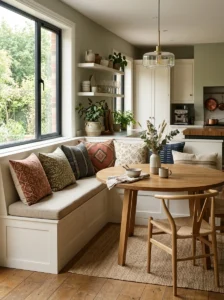
Rather than a single uniform pillow pattern throughout, my friend mixed several coordinating but distinctly different patterns, deliberately echoing how her newly blended family itself works, different individuals brought together into one genuinely cohesive whole.
This kind of intentional pattern variety adds real visual interest and symbolic meaning, and I’d recommend this approach for any family wanting their shared space to reflect everyone’s individuality within a unified, cohesive design.
11. Add Hooks Nearby for Backpacks and Jackets
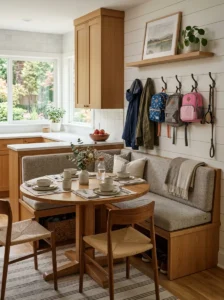
Beside the banquette, we installed a simple row of hooks at varying heights, letting each of the five kids have their own designated spot for backpacks and coats right near where they’d be sitting down to do homework or eat each day.
This kind of practical, nearby storage reduces genuine daily friction, and I’d recommend this addition for any family banquette area doing double duty as a homework or gathering spot beyond just mealtimes.
12. Choose a Banquette Depth That Allows Genuine Comfort
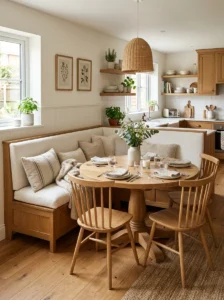
We specifically measured and built the bench seat with adequate depth, ensuring even the family’s teenagers could sit back comfortably rather than perching awkwardly on the edge the way an undersized bench often forces people to do.
This kind of proper sizing matters enormously for whether a banquette actually gets used happily or becomes something people avoid, and I’d recommend prioritizing genuine seat depth over purely visual proportions when planning your own build.
13. Add a Pendant Light Specifically Over the Table
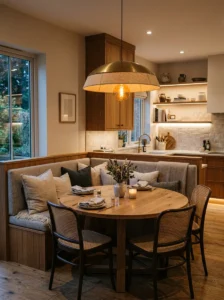
Above the new table, we hung a simple, warm pendant light, giving this family’s new favorite gathering spot its own clear visual identity and focal point distinct from the rest of the kitchen’s general lighting.
This kind of dedicated lighting reinforces the banquette area as a genuine destination within the kitchen, and I’d recommend this addition for any built-in seating area wanting that same sense of intentional, considered presence.
14. Incorporate a Mix of Family Photos Nearby
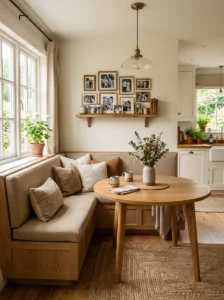
On a small shelf near the banquette, my friend arranged photos representing both sides of her now-blended family, a visual reminder every single day that this shared table genuinely belongs to everyone equally.
This kind of inclusive, visible display adds real emotional meaning to a practical piece of furniture, and I’d recommend this consideration for any family navigating a similar blending process, letting the space visibly honor everyone’s full story.
15. Choose a Bench Back Height That Supports Genuine Comfort
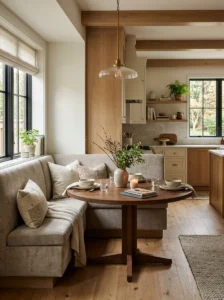
We built the banquette’s back at a height that genuinely supports the mid-back rather than stopping too low, ensuring comfortable sitting through longer family dinners and homework sessions rather than people needing to lean forward uncomfortably.
This kind of ergonomic consideration matters for how much the space actually gets used for extended periods, and I’d recommend testing your own banquette’s back height specifically before finalizing a build, since this detail affects genuine daily comfort considerably.
16. Add a Storage Bin Specifically for Kids’ Activities
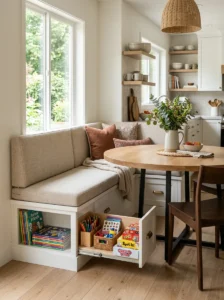
Within the bench’s built-in storage, my friend dedicated one specific compartment to coloring books and small activities, keeping the younger kids genuinely entertained during longer family conversations or while older siblings finish homework at the same table.
This kind of age-specific, practical storage addition matters for genuine daily family function, and I’d recommend this consideration for any family with a range of ages needing to share the same gathering space comfortably.
17. Let the Space Become Where Your Family Actually Comes Together
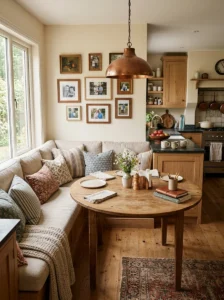
The final and most meaningful lesson from this whole project is that the banquette’s real success had very little to do with its specific design details and everything to do with how genuinely it brought my friend’s newly blended family together around one table, every single night, during a period when they were all still learning to become one family.
Watching five kids who’d started as near-strangers slowly become genuinely comfortable sharing that one bench, talking over each other, squabbling over the good cushion, taught me that sometimes a piece of furniture really can become the physical anchor for something much bigger happening in a family’s life.
My honest advice, whatever’s bringing you to need more seating, blending families, growing kids, simply wanting more togetherness, build the space with genuine warmth and inclusivity in mind, and trust that the togetherness will follow.
Frequently Asked Questions
How much seating can a kitchen banquette typically add compared to standard chairs? An L-shaped banquette can often seat two to three more people within the same footprint a few standalone chairs would require, making it genuinely efficient for larger or growing families.
Is built-in storage beneath a banquette worth the extra cost? Generally yes, this reclaimed space provides genuine practical value in most kitchens, especially for families needing extra storage for linens, seasonal items, or kids’ activities.
What’s the best table shape to pair with banquette seating? Round or oval tables tend to work particularly well, improving sightlines and conversation flow for everyone seated around the bench compared to a longer, more rectangular shape.
How do I make a banquette comfortable for both kids and adults? Prioritize genuine seat depth and an appropriately supportive back height, testing the proportions carefully if your household spans a wide range of ages and sizes.
Final Thoughts
Watching my friend’s newly blended family slowly settle into their built-in banquette, learning to actually become one family around that single, shared bench, taught me that a well-designed piece of furniture can genuinely hold space for something much bigger than just seating. Whatever’s bringing you to consider a kitchen banquette of your own, growing family, limited space, or simply wanting more genuine togetherness at mealtimes, my honest advice is to build it with real warmth and inclusivity at the center, and let your own family’s story fill in the rest.