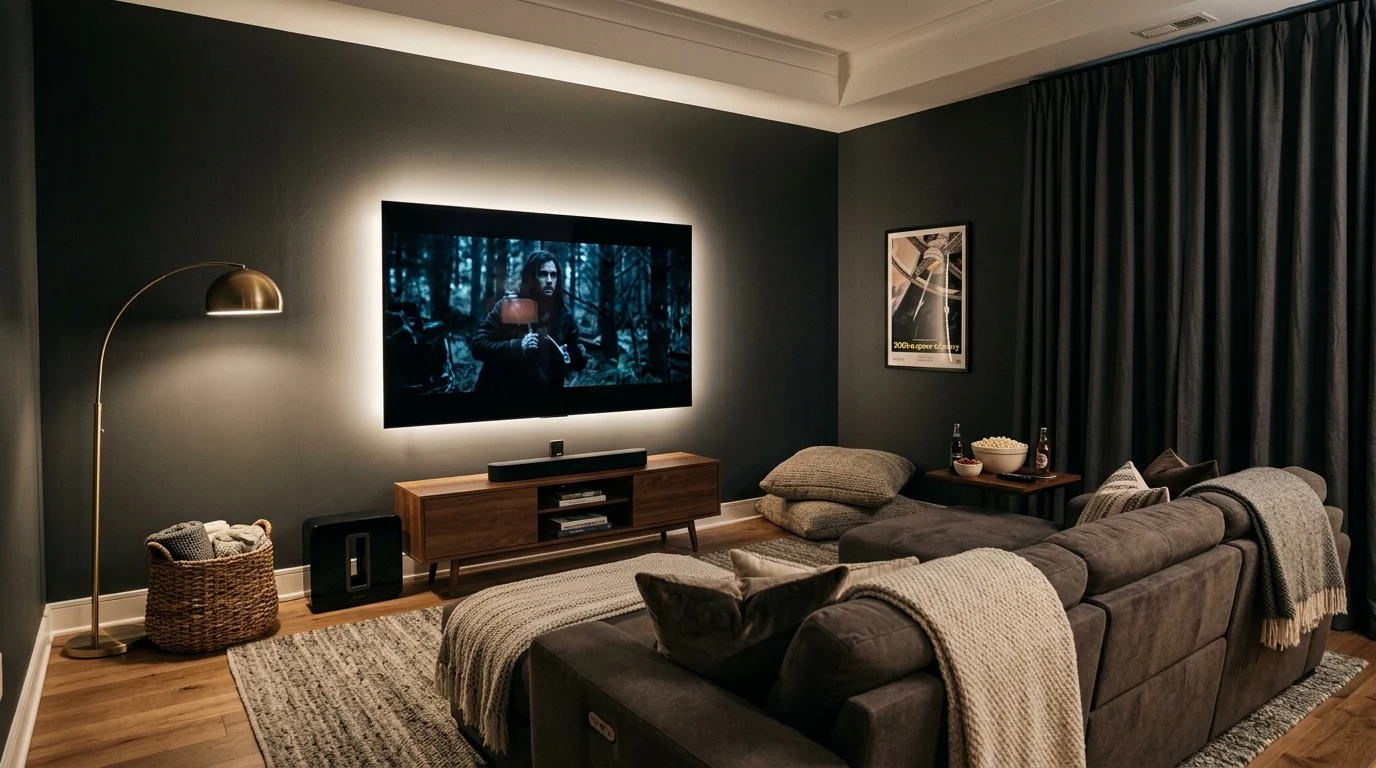
A couple of years ago, my friends and I started a monthly movie night tradition, rotating whose house we’d gather at each time. It didn’t take long before I noticed how differently the experience felt depending on the room. At one friend’s place, we were genuinely immersed, comfortable seating, good sound, the right lighting, while at another, we ended up straining to hear dialogue over an echoey room and squinting at a screen with terrible glare from a nearby window. That contrast got me thinking seriously about my own admittedly under-planned TV room, and eventually pushed me to redo it properly.
What I learned through that process, and through helping a couple of those same friends improve their own setups afterward, is that a genuinely great movie night room isn’t really about having the most expensive TV or the fanciest sound system, though those help. It’s about a combination of practical details, seating comfort, lighting control, acoustics, and small atmospheric touches, that most people don’t think about until they experience a room that gets it right.
Here are 21 TV room ideas I’ve personally implemented, tested at friends’ houses, or refined through genuine trial and error, all aimed at creating the ultimate movie night experience.
1. Get Your Seating Distance Right
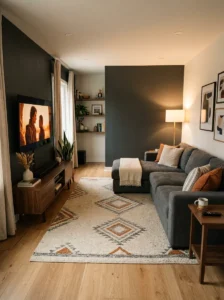
One of the first things I got wrong in my own TV room was sitting too close to my screen, which I’d initially done because it felt more “immersive” but actually made fast-moving scenes uncomfortable to watch and caused noticeable eye strain during longer movies. After doing some research, I measured my actual seating distance and adjusted my furniture layout to match recommended viewing distances for my screen size.
For a typical 55-inch television, a viewing distance of roughly seven to nine feet tends to be comfortable for most people, while larger screens can accommodate slightly greater distances. I moved my main seating back about eighteen inches from where it had originally been, which made an immediate, noticeable difference in how comfortable extended viewing felt, particularly during action-heavy films with a lot of camera movement.
This is a simple, free adjustment that doesn’t require any purchases, just some measuring and furniture rearranging, and it’s genuinely one of the most impactful changes for improving actual viewing comfort rather than just the room’s appearance.
2. Invest in Blackout Curtains
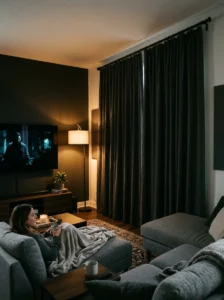
My TV room has a large window on one wall that, before I addressed it, caused significant glare on my screen during afternoon movie sessions and let in enough ambient light in the evening to wash out darker scenes. Installing proper blackout curtains solved this problem almost entirely, and the difference in picture quality and contrast was more dramatic than I expected from what seemed like a fairly simple fix.
I chose curtains with a triple-weave blackout lining rather than a single-layer blackout fabric, since the additional layer blocked light more completely, particularly around the edges where some light can otherwise leak in even with standard blackout curtains. Mounting the curtain rod slightly wider than the window frame and ensuring the curtains overlapped fully when closed also helped minimize light leakage at the sides.
For anyone without the budget for full custom blackout curtains, even a simple blackout curtain liner added behind existing curtains can achieve a similar light-blocking effect at a lower cost.
3. Add a Proper Sound System
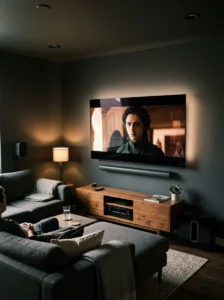
Built-in TV speakers, even on higher-end models, tend to fall short of providing genuinely immersive audio, something I didn’t fully appreciate until I added a simple soundbar with a wireless subwoofer to my own setup. The improvement in dialogue clarity and overall depth of sound was immediate and significant, particularly for movies with complex sound design.
I positioned the soundbar directly beneath my TV and placed the wireless subwoofer in a corner of the room, which research suggested tends to produce the most even bass response throughout the space. For anyone wanting to go further, a full surround sound system with rear speakers can create an even more immersive experience, though I found that a quality soundbar and subwoofer combination provided a substantial improvement over built-in speakers without the complexity of a full surround setup.
Cable management for any additional sound equipment matters too, I ran my subwoofer’s cable along the baseboard using adhesive clips, keeping the room looking tidy despite the additional equipment.
4. Choose Comfortable, Reclining Seating
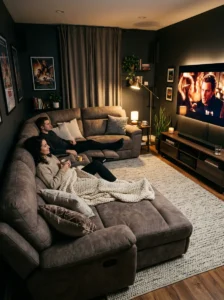
My original seating setup used a standard sofa that, while fine for shorter sessions, became genuinely uncomfortable during longer movie marathons. Replacing it with a reclining sectional made an enormous difference in how enjoyable extended movie nights actually felt, allowing everyone to stretch out and get properly comfortable rather than sitting upright for hours.
I specifically chose a sectional with a chaise section on one end, which gives at least one or two people the option to fully recline and stretch their legs out, while the rest of the sectional still provides more traditional upright seating for anyone who prefers it. This mix of seating options accommodates different comfort preferences within the same piece of furniture, which has worked well for our varied group of movie night regulars.
For anyone not ready to invest in an entirely new sofa, even adding a few oversized floor cushions or a couple of bean bag chairs can provide additional comfortable seating options for movie nights without requiring a full furniture replacement.
5. Use Bias Lighting Behind the TV
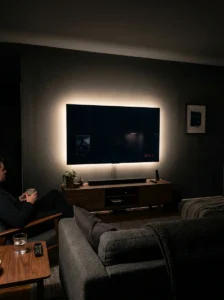
This is a smaller, less obvious detail that made a genuinely noticeable difference in viewing comfort. I added a simple LED bias light strip behind my television, which provides a soft, ambient glow that reduces the contrast between the bright screen and a dark room, something that can otherwise cause eye strain during extended viewing sessions.
Beyond the practical eye-strain benefit, the subtle glow also adds a nice atmospheric touch to the room during movie nights, similar to the effect of dimmed theater lighting. I chose a warm white bias light rather than anything colorful or dramatic, since the goal here is genuine visual comfort rather than a flashy lighting display.
This is a relatively inexpensive addition, and it’s one of those details that most people don’t think to add until they’ve experienced a room with it and noticed the difference in eye comfort during longer viewing sessions.
6. Create a Designated Snack Station
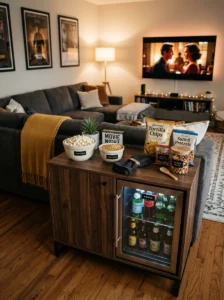
Constantly pausing movies for snack runs became enough of a recurring annoyance during our movie nights that I eventually dedicated a small side table and a nearby cabinet specifically to snacks and drinks, keeping everything within easy reach of the main seating area without needing to leave the room repeatedly.
I keep a few reusable popcorn bowls, napkins, and a small selection of shelf-stable snacks stocked in that cabinet, along with a small cooler or mini-fridge nearby for drinks, depending on the specific room’s layout and available space. This dedicated station has genuinely reduced the number of mid-movie interruptions during our gatherings.
For anyone with the space and interest, even a small popcorn machine as a permanent fixture near this snack station can add a fun, genuinely theater-like touch to movie nights, beyond just the practical convenience of having snacks readily available.
7. Add Dimmable Ambient Lighting
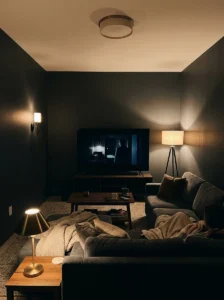
Beyond the bias lighting directly behind the TV, I added a dimmer switch to my room’s main overhead lighting, along with a couple of floor lamps on lower, warmer settings positioned away from direct sightlines to the screen. This layered, adjustable lighting setup lets me dim the room appropriately before starting a movie without leaving it in complete darkness, which some guests find uncomfortable for an extended period.
I found that completely dark rooms, while theoretically ideal for picture quality, aren’t always the most comfortable choice for a group setting, since people often want at least a little ambient light for moving around, finding snacks, or general comfort. A dim, warm ambient light setting strikes a better balance for most casual movie nights than either full brightness or complete darkness.
This flexibility, being able to adjust lighting levels easily depending on the specific movie or group’s preference, has made a genuine difference in how comfortable and adaptable our movie nights feel compared to my previous all-or-nothing lighting setup.
8. Manage Cable Clutter Behind the TV
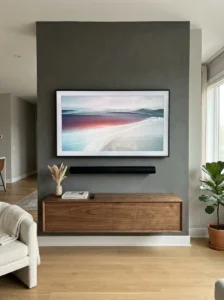
A cluttered mess of visible cables behind and around the TV undercuts even a well-planned room, something I didn’t fully address until a friend commented on it during one of our movie nights. I went through and organized every cable using adhesive clips and a cable sleeve, running everything along the wall and behind furniture rather than leaving it visibly tangled.
For anyone with a wall-mounted TV, running cables through the wall itself, using an in-wall cable management kit, provides the cleanest possible result, though this requires either some electrical comfort or a professional installer. For those without a wall-mounted setup, even a simple cable management box positioned behind the entertainment console can hide the bulk of a tangled cable mess from view.
This is a purely aesthetic improvement rather than a functional one, but it genuinely affects how polished and intentional the room feels, especially to guests seeing it for the first time during a movie night gathering.
9. Choose the Right Screen Size for Your Room
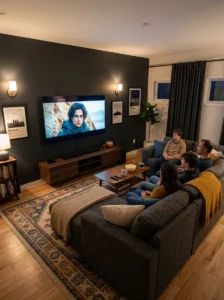
I initially assumed bigger was simply always better when it came to TV size, but after researching proper viewing distance guidelines relative to screen size, I realized my previous screen had actually been slightly too large for my room’s specific seating distance, causing some visual strain during fast-paced content.
Getting this balance right, matching screen size appropriately to your room’s actual dimensions and seating distance, rather than simply buying the largest screen your budget allows, makes a genuine difference in long-term viewing comfort. I’d recommend measuring your actual seating distance before purchasing a new television, then researching the appropriate screen size range for that specific distance rather than assuming bigger is always the better choice.
For rooms with more flexible seating arrangements, a larger screen paired with adjustable, movable seating can provide more flexibility to accommodate different needs on different movie nights, whether it’s an intimate two-person viewing or a larger group gathering.
10. Add Acoustic Treatment for Better Sound
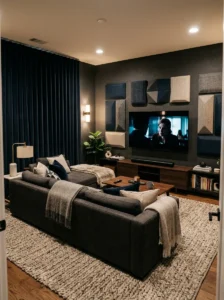
My TV room has hard flooring and mostly bare walls, which I eventually learned was causing some echo and sound reflection that muddied dialogue clarity, even after upgrading to a proper soundbar and subwoofer. Adding a large area rug and a couple of fabric wall hangings significantly improved the room’s acoustics, absorbing some of that reflected sound rather than letting it bounce around the hard surfaces.
For a more dedicated approach, actual acoustic panels, either purchased or DIY versions made from fabric-wrapped insulation board, can be strategically placed on walls to further reduce echo, particularly in rooms with a lot of hard, parallel surfaces that tend to amplify sound reflection issues.
This improvement is easy to overlook since it’s not visually obvious the way lighting or seating changes are, but the difference in dialogue clarity and overall sound quality was one of the most noticeable improvements our regular movie night group commented on after I made these changes.
11. Incorporate a Popcorn or Snack Bar Cart
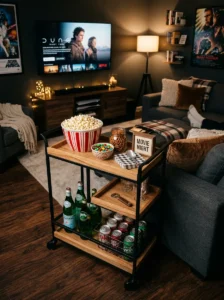
Beyond the fixed snack station I mentioned earlier, a friend with a smaller TV room used a mobile bar cart specifically for movie night snacks and drinks, which could be wheeled directly next to the seating area during movies and tucked away in a corner or closet the rest of the time when the room served other functions.
This mobile approach works particularly well for multi-purpose rooms that don’t have a permanently dedicated space for a fixed snack station, since the cart can be brought out specifically for movie nights without permanently occupying floor space the rest of the week. She stocked hers with a few reusable bowls, cocktail napkins, and a small ice bucket, everything needed for a comfortable movie night snack setup in one easily movable piece.
This is a good compromise for anyone without room for a permanent snack station but who still wants that same convenience of having everything within reach during actual movie nights.
12. Use Streaming-Friendly, Simplified Remote Control
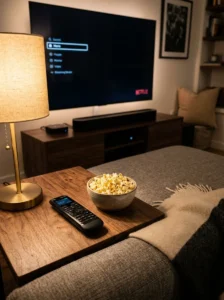
A small but genuinely annoying friction point during movie nights at several friends’ houses has been juggling multiple remotes, one for the TV, one for the sound system, one for a separate streaming device, which becomes a genuine hassle when trying to start a movie smoothly for a group of people. I consolidated my own setup using a universal remote programmed to control my TV, soundbar, and streaming device all from one device.
This small change removed a surprising amount of friction from starting movie nights, since I no longer needed to explain to guests which remote controlled which function or fumble between multiple devices myself. For anyone using a smart TV with built-in streaming apps rather than a separate streaming device, this consolidation becomes even simpler, often requiring just the TV’s own remote and a separate one for the sound system.
This is a relatively low-cost fix, universal remotes are widely available at a reasonable price point, but it makes a genuine, if somewhat mundane, difference in how smoothly movie nights actually start and run.
13. Add a Comfortable Throw Blanket Station
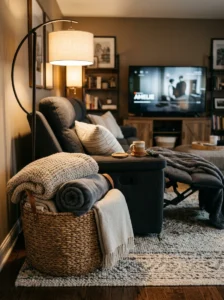
Similar to the blanket basket I added in my living room redo, I keep a small collection of throw blankets in a basket near my TV room seating, specifically for movie nights when the room’s temperature or a particularly chilly evening calls for some extra warmth and coziness.
This small addition consistently gets used during our movie nights, and it adds a genuinely cozy, welcoming touch to the room beyond its purely functional purpose. I chose blankets in a few different weights, lighter options for milder evenings and heavier, chunkier knits for colder nights, giving guests some choice depending on their own comfort preferences.
This is a low-cost, easy addition that consistently gets appreciated by movie night guests, particularly during colder months, and it ties into the overall comfortable, inviting atmosphere that makes a TV room feel genuinely suited for extended movie-watching sessions rather than just casual, short-term television viewing.
14. Choose Wall Colors That Reduce Glare and Reflection
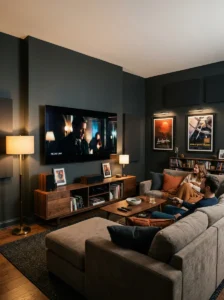
I hadn’t initially considered how much my TV room’s wall color might affect screen glare and overall viewing comfort, until I researched the topic further and learned that darker, matte wall colors tend to reduce unwanted light reflection compared to lighter, glossier paint finishes. I repainted my room in a deep charcoal gray with a matte finish, which noticeably reduced reflected glare on my screen during both daytime and evening viewing.
Beyond the practical benefit, this darker wall color also contributes to a more theater-like atmosphere overall, similar to how actual movie theaters use dark walls and finishes throughout their auditoriums specifically to minimize light reflection and maximize screen contrast. I balanced the darker walls with warmer lighting elsewhere in the room, similar to lessons learned in other rooms throughout my house, to avoid the space feeling overly stark or cave-like when the lights are actually on.
For anyone not ready to commit to repainting an entire room, even choosing a darker, matte-finish wall specifically behind or around the TV area, rather than the whole room, can achieve some of this same glare-reduction benefit on a smaller scale.
15. Add a Media Console With Proper Ventilation
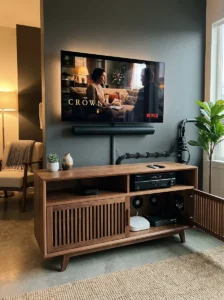
My original entertainment setup used a media console that, I eventually realized, wasn’t providing adequate ventilation for my sound equipment and streaming devices, causing some equipment to run warmer than ideal during extended movie marathon sessions. I replaced it with a console specifically designed with ventilation cutouts and adequate spacing between shelves.
Beyond the practical equipment-longevity benefit, a well-organized media console also keeps cables and devices tidy and out of view, tying into the overall cable management and visual tidiness points mentioned earlier in this list. I chose one with closed cabinet doors for equipment that doesn’t need a remote line of sight, like my router, while keeping devices requiring remote control, like my streaming box, on open shelving with clear sightlines.
This is a more involved, furniture-focused change compared to some other ideas here, but for anyone running equipment for extended movie marathon sessions regularly, proper ventilation genuinely matters for both performance and long-term equipment lifespan.
16. Incorporate a Small Bar or Beverage Station
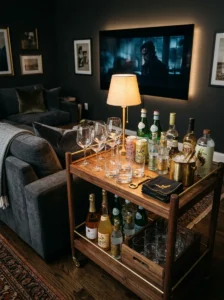
Beyond snacks, a friend added a small bar cart specifically for beverages during movie nights, stocked with a few wine and spirit options alongside mixers and proper glassware, positioned within easy reach of the main seating area. This addition elevated her movie nights from casual gatherings into something feeling slightly more like an actual event.
She kept the selection relatively simple, a couple of wine options, a few basic spirits, and some non-alcoholic alternatives, rather than an elaborate, fully-stocked bar, which kept the setup manageable and appropriate for casual, regular movie night gatherings rather than requiring extensive restocking or an overwhelming variety of options.
This is obviously an optional addition depending on your own preferences and your typical movie night group, but for anyone hosting regularly, having beverages readily available without needing repeated kitchen trips genuinely improves the flow and atmosphere of the evening.
17. Use a Projector for a True Cinema Feel
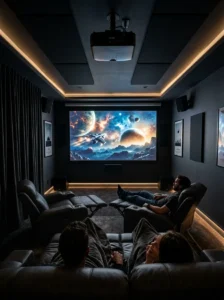
For anyone wanting to go beyond even a large television screen, a friend invested in a projector and retractable screen setup for her dedicated media room, which provides a genuinely larger-than-life viewing experience closer to an actual movie theater than any standard television could replicate.
This requires more significant investment and planning, proper room darkening becomes even more critical with a projector setup than with a standard TV, along with careful consideration of throw distance and screen size relative to the room’s actual dimensions. She researched her specific room’s measurements carefully before purchasing, ensuring the projector’s throw distance matched her available space and desired screen size.
This is a bigger commitment than most other ideas on this list, both in cost and setup complexity, but for anyone with a dedicated room specifically for movie nights and the budget to invest properly, it provides an experience that genuinely stands apart from even a high-quality television setup.
18. Add Comfortable Floor Seating for Larger Groups
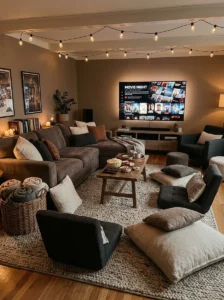
For movie nights with larger groups than my main seating can comfortably accommodate, I added a few oversized floor cushions and a low, cushioned floor seat that can be pulled out and positioned in front of or beside the main sectional when needed, then stored in a nearby closet the rest of the time.
This flexible additional seating has been genuinely useful for larger gatherings without requiring permanent furniture that would otherwise crowd the room during smaller, more typical movie nights. I chose floor cushions in a similar color palette to my main seating, so they coordinate visually rather than looking like a mismatched, thrown-together addition when they are brought out.
This kind of flexible, storable seating solution works particularly well for anyone whose movie night group size varies significantly from week to week, providing comfortable additional options without a permanent furniture commitment that would only be fully utilized occasionally.
19. Create a Pre-Movie Ritual With Lighting Cues
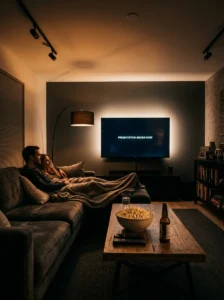
Something I picked up from watching how actual movie theaters handle the transition into a film, dimming the lights gradually rather than all at once, inspired me to set up a similar lighting sequence for my own movie nights using smart bulbs connected to a simple app-based scene setting.
I created a “movie mode” scene that gradually dims the room’s main lighting over about thirty seconds once triggered, while the bias lighting behind the TV stays on at a lower level throughout the film. This small ritual genuinely adds to the sense of occasion and anticipation before a movie starts, something our regular movie night group has commented on positively more than once.
This requires smart lighting compatible with scene-setting features, which is a modest additional investment beyond standard bulbs, but the atmospheric payoff, especially for a regular movie night tradition, has made it one of my favorite small details in the whole room.
20. Keep a Curated Movie Selection Visible
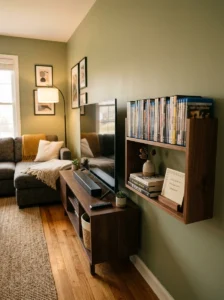
Rather than relying entirely on streaming services and endless scrolling to choose a movie, which can eat up a surprising amount of actual movie night time, I keep a small, curated shelf of physical movies and a printed list of streaming recommendations near the TV, giving guests some tangible, quick options to browse rather than starting from a blank search bar every time.
This small addition has genuinely reduced the amount of indecisive scrolling that used to eat into our actual movie-watching time during gatherings. I update the physical and printed selections periodically, rotating in recent favorites and removing titles that have run their course in terms of group interest.
Beyond the practical time-saving benefit, a nicely displayed collection of movies also adds a bit of personality and visual interest to the room, similar to how a curated bookshelf display works in other parts of a home, giving guests something to browse and discuss even before a movie actually starts.
21. Personalize the Space With Movie-Related Decor
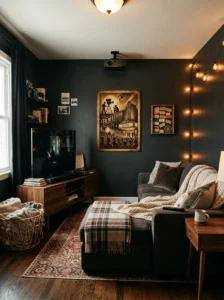
The final touch that’s made my TV room feel genuinely like our group’s dedicated movie night space, rather than just a functional living room with a television, has been adding a few personal, movie-related decorative touches, a small collection of ticket stubs from movies we’ve seen together, a framed poster from a favorite shared film, and a simple string light installation along one wall reminiscent of a small theater marquee.
These personal touches took time to accumulate naturally rather than being purchased all at once, and I think that gradual, genuine accumulation is part of what makes them feel meaningful rather than like generic movie-themed decor purchased from a catalog. Our regular movie night group has started contributing to this collection too, occasionally bringing a small addition from a movie we watched together as a group.
This final layer of personalization is really what elevates a well-planned TV room from simply a functional viewing space into a genuine tradition and gathering point, which, after all these practical improvements, is ultimately the whole point of creating the ultimate movie night experience in the first place.
Frequently Asked Questions
What’s the single most impactful upgrade for a movie night room? Based on my own experience, upgrading from built-in TV speakers to even a basic soundbar and subwoofer combination tends to provide the most noticeable improvement in overall viewing experience for a relatively modest cost.
Do I need a projector for a genuine cinema-like experience? Not necessarily. A properly sized television, good sound, appropriate seating distance, and controlled lighting can create a very satisfying movie night experience without the additional investment and setup complexity of a projector system.
How do I reduce echo in a room with hard flooring? Adding a large area rug, fabric wall hangings, or dedicated acoustic panels can all help absorb sound and reduce echo, significantly improving dialogue clarity without requiring major renovation.
What’s a low-cost way to improve movie night atmosphere? Bias lighting behind the TV, a curated blanket and snack station, and a consistent pre-movie lighting routine are all relatively inexpensive changes that meaningfully improve the overall movie night experience.
Final Thoughts
That first noticeably uncomfortable movie night at a friend’s poorly planned TV room ended up being the push I needed to actually think through my own space properly, and the process taught me that the best movie night experiences come from a combination of small, practical details rather than any single expensive purchase. Prioritize seating comfort, sound quality, and lighting control first, since those affect the actual viewing experience most directly, then layer in the atmospheric and personal touches gradually over time. Like most of the room projects I’ve tackled, the ultimate movie night room isn’t built in a single weekend, but the ongoing process of refining it has become almost as enjoyable as the movie nights themselve