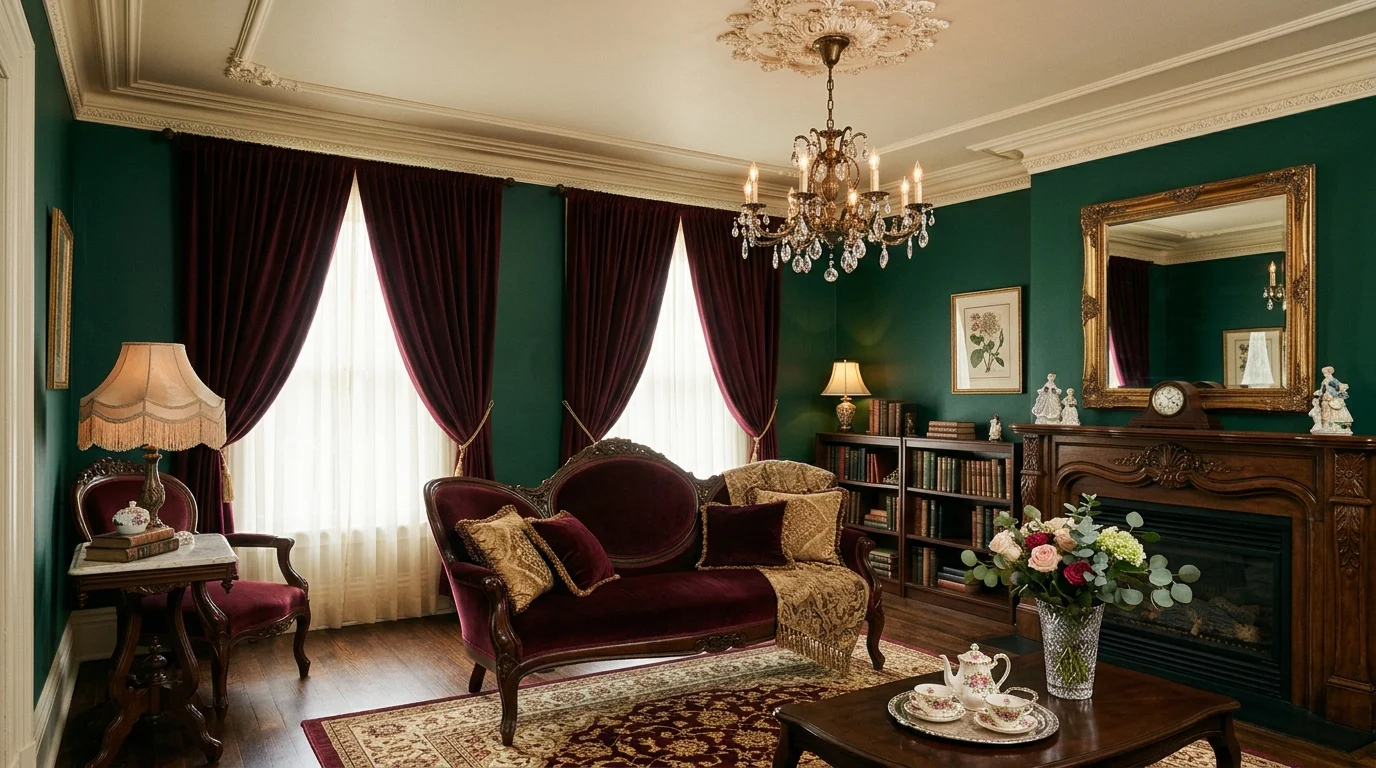
I inherited my grandmother’s old sitting room furniture a few years ago, a heavy carved wood settee, an ornately framed mirror, and a small marble-topped side table, all pieces that had been sitting in her formal, rarely used living room for as long as I could remember. I initially planned to sell most of it, assuming it wouldn’t fit my more contemporary taste, but something made me hesitate before listing the settee. I kept it, tucked it into a corner of my own living room, and found myself genuinely drawn to it every time I walked past.
That single piece eventually pulled me into a much deeper appreciation for Victorian-era design than I expected to have. Over the following year, I slowly built out a small corner of my living room, and eventually more of the room itself, around that inherited furniture, learning along the way what actually makes Victorian style feel elegant and intentional rather than like a dusty period room nobody uses. It took some real trial and error, a few pieces that felt more costume than genuine style, before I understood the balance.
Here are 17 ideas for bringing timeless Victorian elegance into a living room, based on my own project and a couple of friends’ similar renovations, all aimed at capturing that rich, layered beauty without the room feeling like an inaccessible museum piece.
1. Start With a Rich, Jewel-Toned Color Palette
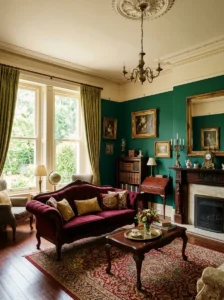
Victorian interiors are famous for their deep, saturated colors, burgundy, emerald green, navy, and warm gold, rather than the light, neutral palettes common in a lot of contemporary design. When I began styling my own space around my grandmother’s settee, I painted one wall a deep, rich emerald green, which immediately gave the corner a sense of old-world formality and depth.
I was careful to balance this rich color with enough lighter elements elsewhere in the room, my ceiling and trim stayed a soft cream, to avoid the space feeling overly dark or heavy. This contrast between deep, saturated wall color and lighter architectural details is something I noticed consistently in genuine Victorian interiors, rather than every surface being uniformly dark.
If committing to a full accent wall feels risky, even introducing this jewel-toned palette through upholstery, drapery, or accent pillows can bring in that same rich Victorian color sensibility on a smaller, lower-commitment scale.
2. Incorporate Ornate, Carved Wood Furniture
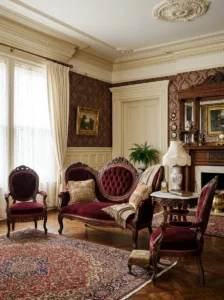
The carved detailing on my grandmother’s settee, intricate floral and scroll patterns along the wood frame, became the anchor piece I built the rest of the room’s furniture selections around. Victorian furniture typically features this kind of elaborate hand-carved detailing, quite different from the clean, simple lines common in more contemporary furniture styles.
When shopping for additional pieces, I specifically looked for similar carved wood detailing, eventually finding a matching pair of accent chairs at an antique shop with comparable scroll-work along their arms and legs. Mixing genuinely antique pieces with well-made reproductions is common in this style, as long as the overall level of ornamentation feels consistent throughout the room rather than mixing heavily carved pieces with completely plain, modern furniture.
For anyone without access to genuine antiques, several furniture retailers offer reproduction pieces specifically designed in this ornate style, which can achieve a similar visual effect at a more accessible price point and without the maintenance concerns of genuinely aged antique wood.
3. Add Luxurious, Heavy Drapery
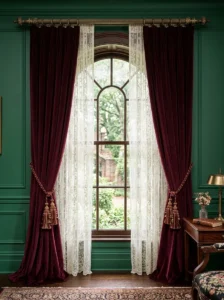
Victorian rooms are known for their substantial, often layered window treatments, and adding heavy, floor-length drapery in a rich fabric made an immediate difference in my own room’s sense of formality and depth. I chose a deep burgundy velvet, which pooled slightly at the floor rather than hanging perfectly straight, a detail that reads as more traditionally opulent than a precisely tailored modern curtain length.
I layered these heavier drapes over a simpler sheer curtain underneath, allowing for actual light control while maintaining the dramatic, layered look during the day when the heavier drapes are pulled back with ornate fabric tiebacks. This layered curtain approach, similar in principle to layering I’ve used in other rooms, but with heavier, richer fabrics specifically here, is a defining detail of genuine Victorian window treatment style.
If full velvet drapery feels like too significant an investment, even adding an ornate curtain rod with decorative finials and rich tiebacks to existing curtains can introduce some of that same formal, layered character.
4. Display an Ornate Gilt-Framed Mirror
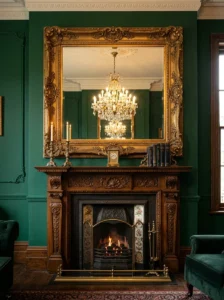
The gilt-framed mirror I inherited alongside the settee became one of the most striking focal points in my entire room. Victorian-style mirrors typically feature elaborate gold or gilt frames with scrollwork, floral motifs, or decorative beading, quite different from the simple, minimal mirror frames common in more contemporary design.
I positioned mine above the fireplace mantel, which is a classic placement for this kind of statement piece, allowing it to reflect light from the room’s chandelier while also serving as a genuine period-appropriate focal point above the fireplace. The gold tone of the frame also tied together nicely with other brass and gold accents I introduced elsewhere in the room.
For anyone without access to a genuine antique piece, reproduction gilt mirrors are widely available and can provide a similar visual statement, though I’d recommend prioritizing one with genuinely substantial, dimensional detailing rather than a flat, printed pattern that merely mimics the look of carved gilt without the actual texture.
5. Layer Multiple Patterns Thoughtfully
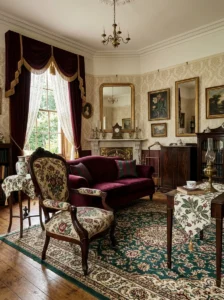
Unlike a lot of contemporary design, which often favors a single dominant pattern or solid colors throughout, Victorian interiors traditionally layer multiple patterns together, florals, damask, stripes, all within the same room. My first attempt at this felt chaotic and overwhelming, mixing too many bold patterns without any unifying thread between them.
I eventually learned to anchor my pattern mixing around a consistent color palette, my deep emerald and burgundy tones appearing across a floral upholstery fabric, a striped accent pillow, and a damask-patterned area rug, which allowed the different patterns to coexist without clashing, since they all pulled from the same restrained color family.
This kind of layered pattern mixing takes some genuine trial and error to get right, and I’d recommend starting with just two patterns in a shared color palette before gradually adding a third, rather than attempting a fully layered look all at once, which is likely to feel overwhelming rather than intentionally rich.
6. Add a Statement Fireplace Mantel
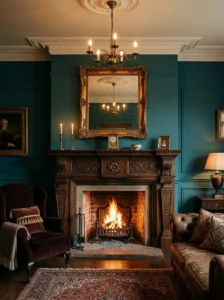
My living room already had a functional but plain, builder-grade fireplace surround when I began this project, which felt jarringly out of place against the increasingly ornate furniture and decor surrounding it. Replacing it with a more substantial, decoratively carved wood mantel made a significant difference in tying the whole room’s Victorian aesthetic together.
I chose a mantel with detailed corbels and a slightly raised center medallion, salvaged from an architectural reclamation yard, which added genuine period character that a brand-new, mass-produced mantel simply couldn’t replicate as convincingly. This became the room’s primary architectural focal point, anchoring the gilt mirror above it and the ornate furniture arranged around it.
For anyone not ready to replace an entire fireplace surround, even adding a substantial, ornately carved wood shelf as a faux mantel above an existing simpler fireplace can introduce some of that same architectural presence without the cost of a full renovation.
7. Incorporate Tufted, Upholstered Seating
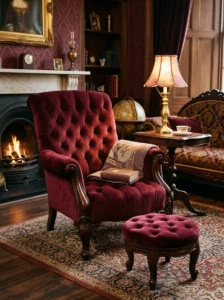
Beyond my inherited settee, I added a small tufted ottoman and eventually a larger tufted armchair in a rich burgundy velvet, both featuring the deep, buttoned tufting characteristic of genuine Victorian upholstery. This tufted detailing adds a sense of luxurious texture and craftsmanship that flat, simple upholstery doesn’t quite achieve.
I learned that the tufting pattern itself matters for authenticity, deep, diamond-pattern tufting with actual buttons reads as more genuinely period-appropriate than a shallow, quilted-style tufting sometimes used in more contemporary furniture that merely references this detail without the same depth and craftsmanship.
If reupholstering existing furniture in this style isn’t practical, even a single small tufted ottoman or footstool can introduce this signature Victorian texture into a room without requiring a full furniture replacement.
8. Display Curated Collections in Glass Cabinets
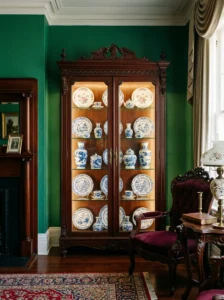
A friend who took her own Victorian-inspired living room project even further than mine incorporated a small glass-front curio cabinet, displaying a curated collection of antique porcelain and small decorative objects. This kind of formal, dedicated display cabinet is a genuine period feature, reflecting the Victorian era’s fascination with collecting and displaying curiosities.
She was careful to keep the collection cohesive, focusing specifically on blue and white porcelain pieces rather than a random assortment of unrelated antiques, which gave the display a sense of intentional curation rather than clutter. Lighting inside the cabinet, a small integrated light strip, helped highlight the collection in the evening, adding another subtle light source to the room’s overall layered lighting scheme.
This is a more involved, furniture-heavy addition compared to some other ideas on this list, but for anyone with an existing collection of small antique or vintage objects, it provides a genuinely elegant way to display them formally within the room.
9. Add Decorative Ceiling Details
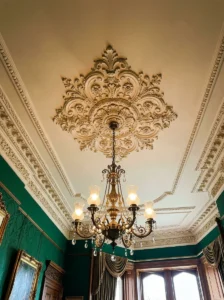
Beyond furniture and wall color, my friend’s more extensive Victorian renovation included adding a decorative ceiling medallion above her existing chandelier, along with simple crown molding around the room’s perimeter. These architectural details, largely absent in most contemporary homes, add a significant layer of period authenticity that furniture and color alone can’t fully replicate.
Ceiling medallions, decorative plaster or lightweight polyurethane discs installed around a ceiling light fixture, are relatively straightforward to install as a DIY project and provide an outsized visual impact for their modest cost. She chose a medallion with an ornate floral and scroll design that echoed the carved detailing on her furniture, tying the room’s architecture and furnishings together cohesively.
For anyone in a rental or otherwise unable to modify ceiling architecture, even removable, decorative ceiling stickers designed to mimic this look are available, though I’d recommend prioritizing this addition specifically if you own your home and can commit to the more substantial, genuinely dimensional version.
10. Choose a Statement Chandelier
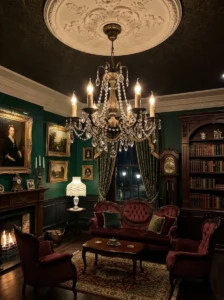
Lighting fixtures in Victorian-inspired rooms tend to be substantial and ornamental, quite different from the simpler, more minimal fixtures common in a lot of contemporary design. I replaced my living room’s plain flush-mount ceiling light with a small crystal chandelier, which became an immediate focal point and a significant contributor to the room’s overall elegant, formal atmosphere.
I chose a chandelier with an aged brass or bronze finish rather than bright, polished chrome or nickel, since the warmer, slightly antiqued metal tone fit the room’s overall palette far better than a starkly modern finish would have. Bulb choice mattered too, warm-toned, dimmable bulbs let me adjust the chandelier’s brightness for different times of day, similar to lighting layering principles I’ve applied in other rooms.
For anyone in a rented space or working with a lower ceiling height that can’t accommodate a full chandelier, a semi-flush mount fixture with similar ornamental detailing can achieve a comparable effect on a smaller scale.
11. Add a Fringed or Tasseled Lampshade
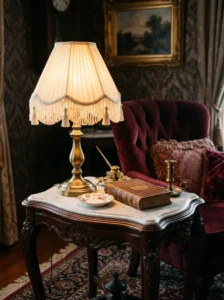
A small but genuinely charming detail I added to my side table lamps was switching from plain, modern lampshades to ones featuring decorative fringe or tassel trim along the bottom edge. This small textile detail, common in genuine Victorian-era lighting, adds a layer of old-world charm that a plain, unadorned lampshade simply doesn’t provide.
I chose a cream-colored shade with a subtle fringe in a matching tone, rather than anything overly bold or mismatched, keeping the detail elegant rather than overly costume-like. This kind of small textile detail is an easy, relatively low-cost way to introduce period character into existing lighting without needing to replace entire fixtures.
If a fringed shade feels too significant a departure from your existing lamp style, even a decorative trim added along the bottom edge of a plain existing shade, available at most fabric or craft stores, can achieve a similar smaller-scale effect.
12. Incorporate a Fainting Couch or Chaise
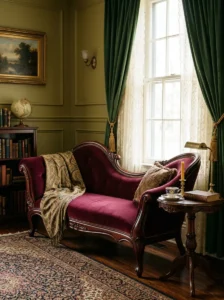
While not practical for every living room’s layout, a small fainting couch or chaise lounge, a Victorian furniture staple, can serve as a genuinely striking statement piece for anyone with enough room to accommodate one. A friend added a small, curved chaise upholstered in a deep burgundy velvet to a corner of her living room, which became both a functional reading spot and a significant visual anchor for the whole space.
This kind of statement furniture piece works particularly well in a room with enough square footage that it won’t feel overcrowded, and it pairs especially well with the tufted upholstery and rich color palette discussed elsewhere on this list. She positioned hers near a window, allowing natural light to highlight the piece’s curved silhouette and rich fabric texture throughout the day.
For anyone without room for a full chaise, a smaller accent chair with a similarly curved, elegant silhouette can introduce some of that same Victorian furniture character on a more modest scale.
13. Use Wallpaper With Botanical or Damask Patterns
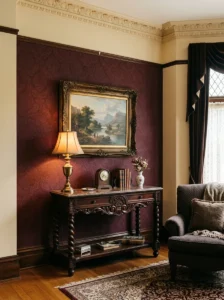
Wallpaper played a significant role in genuine Victorian interior design, and reintroducing it, particularly in botanical or damask patterns, can add substantial period character to a room. I used a subtle, tone-on-tone damask wallpaper on one wall of my living room, in a deep burgundy pattern that echoed my upholstery choices without introducing an entirely new, competing color.
Choosing a pattern with enough subtlety to avoid overwhelming the room took some trial and error, my first wallpaper choice featured a busier, more contrasting pattern that felt overpowering once fully installed, leading me to switch to a more tonal, subdued version that read as elegant rather than visually loud.
For anyone hesitant to commit to a full wall of wallpaper, applying it to a smaller area, the inside of a bookshelf’s back panel, or a small accent nook, can introduce this classic Victorian detail on a much smaller, lower-commitment scale.
14. Display Fresh or Dried Florals in Ornate Vases
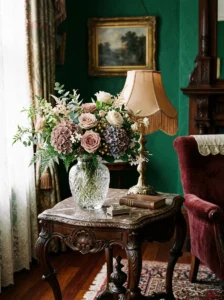
Victorian interiors frequently featured elaborate floral arrangements, and I incorporated this detail through a substantial cut-glass or porcelain vase filled with seasonal fresh flowers, positioned on my side table alongside the fringed lamp. This living, organic element softens the room’s otherwise formal, heavily furnished feel.
During colder months when fresh flowers become less practical or available, I switch to dried hydrangea or eucalyptus arrangements in the same vase, maintaining the same general silhouette and presence even without fresh blooms. Choosing an appropriately ornate vase, rather than a plain, modern glass container, matters here too, since the vessel itself contributes to the room’s overall period character.
This is a relatively low-cost, easily updated detail that adds genuine life and softness to what could otherwise become an overly formal, static-feeling room if every element were purely decorative furniture and fixed objects.
15. Add Decorative Trim and Molding to Furniture
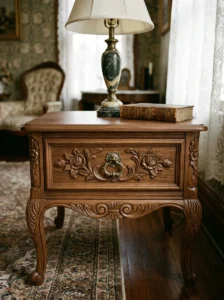
Beyond purchasing genuinely ornate furniture, I learned that adding decorative wood trim or applique molding to simpler, existing furniture pieces can achieve a similar carved, Victorian-appropriate look at a fraction of the cost. I added a simple decorative wood applique to the front of a plain side table, then painted the whole piece to match, creating the appearance of a more substantially carved piece without an entirely new furniture purchase.
This kind of DIY approach requires some patience and a willingness to work with wood glue and paint, but it’s a genuinely accessible way to bring Victorian detailing into a room without needing to source or afford entirely new, authentically carved furniture throughout the whole space.
I’d recommend this approach specifically for furniture pieces that are otherwise structurally sound and a good fit for the room, but simply lack the ornamental detail that ties into the overall Victorian aesthetic you’re building.
16. Choose Rich, Textured Area Rugs
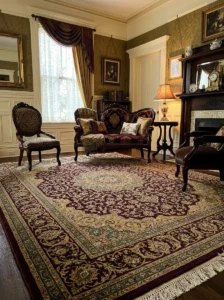
A plain, simple area rug can undercut an otherwise well-executed Victorian living room, so I chose a rug with a detailed, traditional pattern, a deep burgundy and gold medallion design, rather than anything overly minimal or contemporary in style. This kind of richly patterned, traditional rug design is a genuine period-appropriate detail that ties the whole floor into the room’s overall aesthetic.
I made sure the rug’s color palette coordinated with my existing upholstery and wall colors, rather than introducing an entirely separate color scheme, which helped the whole room feel cohesive despite incorporating several different patterned elements throughout, the rug, the wallpaper, the upholstery fabric.
For anyone working with a smaller budget, a rug in this style doesn’t need to be a genuine antique, many contemporary retailers offer traditional, Victorian-inspired rug patterns specifically designed to evoke this same historical aesthetic at a more accessible price point.
17. Balance Ornamentation With Breathing Room
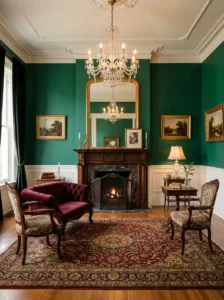
The final and most important lesson from this entire project is that even a genuinely ornate, richly decorated Victorian-style room needs some intentional restraint and breathing room to avoid feeling overwhelming or cluttered. My early attempts at this room included nearly every idea on this list simultaneously, which resulted in a space that felt more like a crowded antique shop than an elegant, livable living room.
I eventually removed a few pieces, an extra side table, some additional small decorative objects, and left more open floor and wall space than my initial instinct suggested, which allowed the remaining ornate pieces to actually stand out and be appreciated individually rather than competing for attention in an overly dense arrangement.
This balance between genuine, rich ornamentation and enough visual breathing room to let each piece shine is really the defining skill behind a successfully executed Victorian-inspired room, rather than any single furniture piece or color choice on its own.
Frequently Asked Questions
Is Victorian-style decor expensive to achieve? It can be, particularly for genuine antiques, but many of the key elements, rich paint colors, layered lighting, decorative trim additions, are relatively affordable. Mixing a few genuine antique or inherited pieces with more budget-friendly reproductions is a common, practical approach.
Can Victorian style work in a small living room? Yes, though it requires more careful editing and restraint. Focus on a few statement pieces, a rich wall color, an ornate mirror, rather than attempting every element on this list, which can quickly overwhelm a smaller space.
How do I keep a Victorian-inspired room from feeling too dark or heavy? Balance rich, deep colors and dark wood furniture with enough lighter architectural elements, ceiling and trim colors, adequate layered lighting, and some breathing room between furniture pieces, to keep the space feeling elegant rather than oppressive.
Where can I find authentic Victorian furniture and decor? Antique shops, estate sales, and architectural salvage yards are excellent sources for genuine period pieces. Several furniture retailers also offer well-made reproduction pieces specifically designed in this style for those without access to authentic antiques.
Final Thoughts
Inheriting my grandmother’s settee and nearly selling it turned out to be one of those small decisions that led somewhere genuinely unexpected, a deep appreciation for a design style I hadn’t previously considered my own taste at all. The core lesson from this whole project is that authentic Victorian elegance comes from a thoughtful combination of rich color, genuine craftsmanship, and layered detail, balanced carefully with enough restraint to keep the room feeling livable rather than like an inaccessible period display. Start with one meaningful piece, inherited, found, or simply loved, and build the rest of the room’s timeless beauty around it gradually.