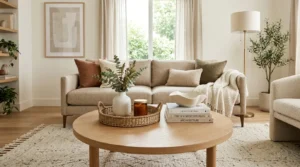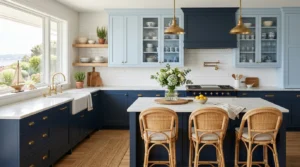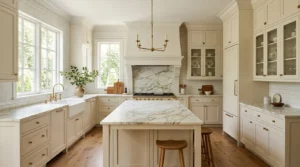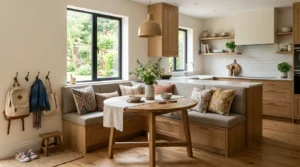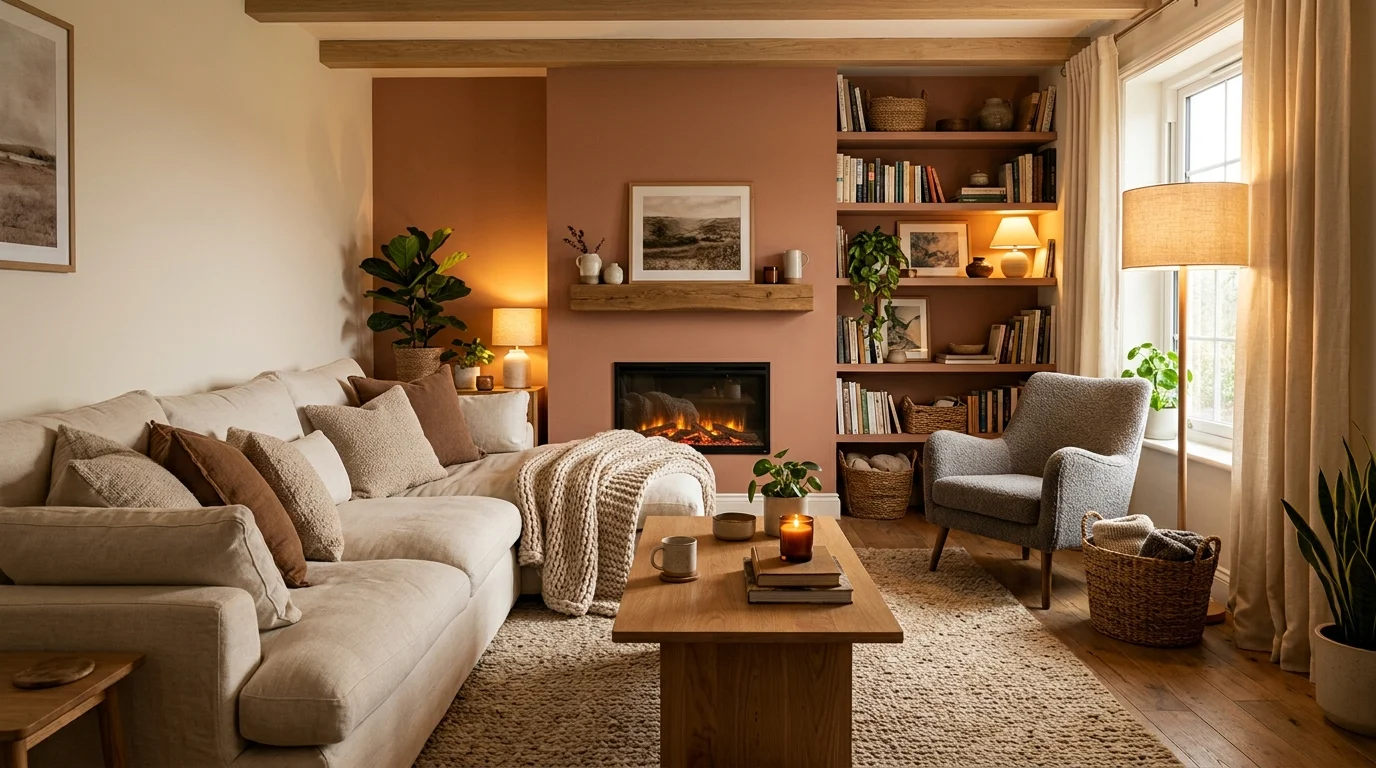
These cozy living room ideas start from a simple observation: a living room can be perfectly heated and still feel cold. That disconnect is almost always a design problem rather than a temperature problem: one harsh overhead light, glossy hard surfaces, flat matching textiles, and bare floors signal “showroom” to the senses instead of “sanctuary.” Coziness, on the other hand, is a sensory outcome — and it can be engineered on purpose.
Designers build cozy rooms from five overlapping layers: warm-spectrum lighting, contrasting textures, warm natural materials, human-scale furniture arrangements, and personal, lived-in detail. Miss a layer and the room reads as merely decorated; stack all five and it reads as inviting. This guide breaks down 17 cozy living room ideas across those layers, with specific dimensions, materials, bulb temperatures, and budget ranges, so you can diagnose your own space and fix it in order of impact.
The 5 Design Layers Behind Every Cozy Room
Before changing anything, it helps to understand what the eye and body actually respond to. When a room feels unwelcoming, designers check the same five principles:
- Warm, layered light. Bulbs at 2700–3000K (warm white) flatter skin tones and wood finishes; multiple low-level sources create pools of light instead of flat glare.
- Texture contrast. A room needs at least three contrasting textiles — nubby knit, smooth velvet, flat-weave linen — before the eye registers real softness.
- Material warmth. Wood, wool, leather, rattan, and clay read as warm; glass, chrome, glossy lacquer, and polished stone read as cool. Cozy rooms lean toward the first group.
- Human scale. Seat heights of 17–19 inches, coffee tables 16–18 inches high, and rugs large enough to gather furniture together all match the body’s proportions.
- Signs of life. Books mid-read, a plant that is clearly tended, objects with personal history — these details separate a lived-in room from a staged one.
Every idea below plugs into one or more of these layers. Start with the sections that address your room’s weakest layer first.
1. Layer Lighting Like a Designer

Lighting changes the emotional feel of a room faster than any other single decision, and it is the most common weakness in living rooms that feel cold. The standard mistake is relying on one central ceiling fixture — usually with cool-white bulbs — which flattens every surface and makes the space feel like an office after hours.
Instead, build three layers of light:
- Ambient: the general glow. Keep the ceiling fixture but put it on a dimmer, or replace it with a shaded pendant or arc floor lamp that bounces light off the ceiling.
- Task: focused light where it is used. A floor lamp beside the main seating (shade bottom roughly at seated eye level), plus table lamps on side tables.
- Accent: low, warm points that create atmosphere. Plug-in wall sconces, picture lights over art, or 2700K LED strips behind shelving.
Aim for at least three separate light sources in the main seating area. Swap every bulb to 2700K warm white: roughly 800 lumens for a floor lamp and 400–800 lumens per table lamp. Table lamps 22–26 inches tall pair well with side tables 24–28 inches high, keeping the bulb below eye level when seated. Plug-in dimmers or smart bulbs (about $15–$25 each) let the same room shift from bright daytime light to a dim evening glow without rewiring anything.
Budget: a multi-pack of 2700K LED bulbs costs around $15; quality floor or table lamps run $60–$150; plug-in sconces start near $40.
2. Choose a Sofa Built for Sinking Into

A sofa that looks sharp but seats like a park bench undermines everything else in the room. Seat depth matters most: 22–24 inches suits relaxed lounging, while 20 inches or less feels upright and formal. Seat height of 17–19 inches lets most adults sit with feet flat on the floor — a small detail that strongly affects how restful a seat feels.
Cushion construction determines whether comfort lasts. High-resiliency foam wrapped in a down-and-feather blend gives the coveted sink-in feel; pure down needs frequent plumping, while inexpensive standard foam flattens within a year or two. Bench cushions look tailored but show wear across the full span; individual T-cushions are easier to rotate and replace.
Pick a slightly relaxed silhouette — soft track arms or low rolled arms rather than stiff, knife-edge lines — and upholstery in a medium-tone performance fabric such as performance velvet, washed linen, or boucle. Medium tones and subtle texture hide everyday wear far better than flat light or dark solids.
Budget fix: if a new sofa is out of reach, a 2–3 inch foam cushion topper ($60–$120) plus two extra back pillows can meaningfully improve a firm existing sofa.
3. Layer Throws and Pillows With Intention

Textiles are the fastest way to add visual and tactile warmth, but weight and texture matter more than quantity. A thin, flat throw draped over a sofa arm reads as decoration; a heavy knit with real loft catches light and shadow and reads as comfort.
Keep two or three throws in rotation: a chunky knit (look for 3–5 pounds of weight in cotton or wool blends), a sherpa or faux-fur option for the coldest months, and a lighter woven throw for warmer seasons. Drape them loosely — folded over the sofa back or arm — rather than arranging them with military precision; slight imperfection is what makes them look inviting.

For pillows, skip the matching set. A curated mix in odd numbers — three or five per sofa — looks layered rather than staged. Combine sizes: 20–22 inch squares at the back, an 18-inch square in front, and a 12×20 to 12×24 inch lumbar pillow. Combine textures: washed linen, velvet, boucle, chunky knit. Hold the color story together with warm neutrals plus one or two deeper accents (rust, olive, cognac) so the variety feels intentional.
Extend the same treatment beyond the sofa: a smaller throw on the reading chair and one within reach of every seat keeps the cozy layer consistent across the whole room.

4. Get the Rug Right: Size, Pile, and Placement

Bare hard flooring is one of the biggest contributors to a cold-feeling room, and an undersized rug is one of the most common decorating mistakes. The rule is simple: the rug should be large enough that the front legs of all main seating pieces rest on it. For most living rooms that means 8×10 feet; large or open-plan rooms need 9×12. As a minimum, the rug should extend at least 6 inches beyond each side of the sofa.
Pile height drives the tactile payoff. A low, flat weave looks tailored but does little for coziness; a pile of half an inch or more genuinely changes how the room feels underfoot. Wool offers the best combination of softness, durability, and natural stain resistance, while high-quality polypropylene is the budget-friendly alternative. A quarter-inch felt rug pad underneath adds cushioning, extends the rug’s life, and prevents slipping.
Budget trick: layer a smaller, softer rug (5×7) over a larger, inexpensive flat-weave base (8×10 jute or sisal-look). The combination reads as plush and intentional for a fraction of the cost of one large high-pile rug.
5. Rethink the Center: Ottomans vs. Coffee Tables
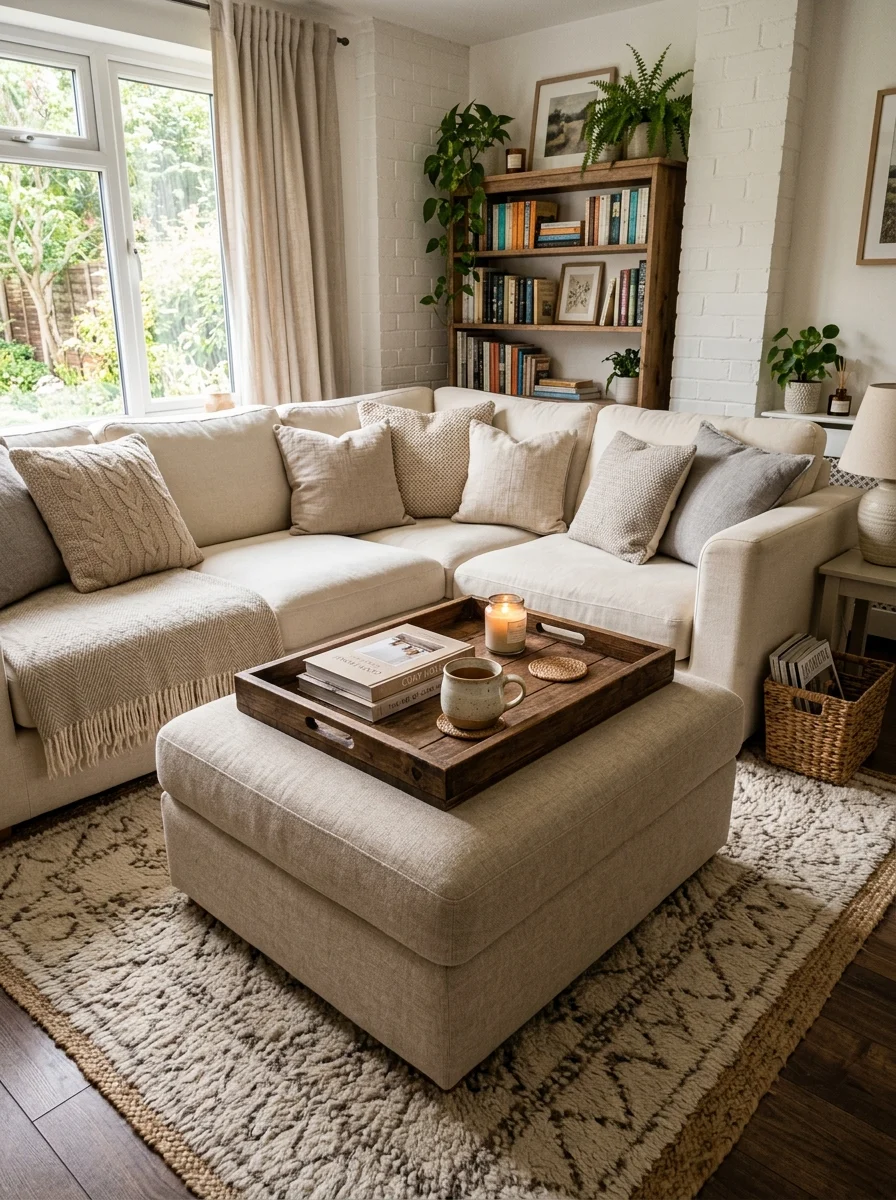
The coffee table is the room’s central gathering point, and swapping hard surfaces for soft ones here pays off disproportionately. A large upholstered ottoman — 36 to 48 inches wide — doubles as extra seating, provides a soft surface for feet, and can be topped with an 18–24 inch tray to hold drinks, remotes, and books. Storage ottomans add hidden space for the throw blankets that otherwise pile up on sofa arms.
If you prefer a traditional table, follow the standard dimensions: height 16–18 inches (1–2 inches lower than the sofa seat), length about two-thirds of the sofa, positioned 14–18 inches from the seating. Round tables and ottomans suit sectionals and small rooms because they ease traffic flow; rectangular pieces suit standard three-seat sofas.
6. Bring In Warm Wood Tones

Rooms dominated by glossy black, stark white, or chrome tend to feel sleek but chilly, because cool, reflective surfaces bounce light harshly and offer no visual warmth. Introducing warm wood — light oak, walnut, acacia — through the coffee table, side tables, media console, or a wood-framed mirror softens the entire palette.
Light to medium wood tones read as relaxed and contemporary; very dark, heavy woods can feel formal unless balanced with plenty of light textiles. For cohesion, repeat one wood tone at least two or three times across the room so the pieces feel related rather than random. If replacing furniture is not practical, smaller accents — a wooden tray, a turned bowl, picture frames — introduce the same warmth at minimal cost.
7. Dress Windows With Curtains, Not Just Blinds

Bare windows or blinds alone leave one of the room’s largest surfaces hard and architectural. Floor-to-ceiling curtains in a warm ivory, oatmeal, or soft greige soften the edges and add movement and texture that blinds cannot provide.
Mount the rod 4–6 inches above the window frame and 8–12 inches wider on each side; this makes windows look larger and lets the panels stack clear of the glass for maximum daylight. Choose linen or a cotton-linen blend with 1.5 to 2 times fullness (panel width totaling 1.5–2x the rod length) so the fabric hangs in soft folds rather than stretching flat. Layering curtains over existing blinds preserves light control and privacy while adding the softness layer.
8. Warm Up the Walls With Paint

Wall color sets the room’s baseline temperature. Cool, stark whites (with blue undertones) amplify the chilly feeling; warm off-whites, creams, and greiges with yellow or pink undertones immediately soften it. For accent walls, muted terracotta, warm clay, olive, or deep sage add enveloping depth without overwhelming the space.
Always test large swatches directly on the wall and observe them at morning, midday, and evening — paint shifts dramatically under different light. As a rough guide, warm neutrals with a Light Reflectance Value (LRV) between 60 and 75 keep the room bright while reading as warm. If repainting is not an option, switching all bulbs to 2700K offsets some of the coolness of stark white walls.
9. Create a Fireplace Focal Point (Real or Faux)

Flickering light is one of the strongest coziness cues there is, which is why fireplaces anchor so many inviting rooms. Without a chimney, an electric fireplace insert — fitted into an existing media console, built-in shelving, or a freestanding mantel cabinet — provides a realistic flame effect plus genuine supplemental heat (most models output around 1,500 watts, enough to warm a medium room).
Angle the main seating slightly toward the fireplace rather than lining everything up against the television wall; the room then has two focal points and feels designed for conversation as well as viewing. Style the mantel simply: a mirror or art above, a pair of candlesticks or a low garland, and nothing that competes with the flame itself.
No-fireplace alternative: group flameless LED candles of varying heights (3, 5, and 7 inches) on a large tray. The combined flicker approximates the same warm visual effect at a fraction of the cost.
10. Style Shelves So They Feel Collected, Not Staged

Visible books and personal objects are what separate a genuinely cozy room from a showroom. The difference between “collected” and “cluttered” comes down to a few styling rules:
- Follow a 60/40 ratio: roughly 60 percent books, 40 percent objects (ceramics, framed photos, small art, plants).
- Group in odd numbers and vary heights — a tall vase beside a short stack of books, for example.
- Leave breathing room. Not every shelf needs to be full; negative space lets individual pieces stand out.
- Mix orientations. Combine vertical book rows with horizontal stacks topped by a small object.
- Include genuinely personal items — travel finds, family photos, handmade pieces — rather than decor bought purely to fill space.
11. Add Greenery Matched to Your Light

Plants add organic texture and a sense of tended life that no object can replicate. The key is matching the plant to the room’s actual light: a fiddle-leaf fig or olive tree needs bright, indirect light near a large window; pothos, snake plants, and ZZ plants tolerate the dimmer corners where fussy plants die. Repeatedly replacing dead plants undermines the cared-for feeling faster than having no plants at all.
Use the three-size rule: one large floor plant (4–6 feet) in an empty corner, one medium plant on a shelf or plant stand, and one small plant on the coffee table or side table. Well-made faux plants with realistic veining are a legitimate fallback for very dark rooms.
12. Layer Scent and Candlelight

Scent is the invisible layer of coziness — it registers the moment someone walks in. Warm fragrance families (vanilla, sandalwood, amber, cedar, light woodsmoke) reinforce the feeling; sharp citrus or marine scents work against it. Choose candle vessels in ceramic or tinted glass that look good unlit, and group candles in odd numbers on trays rather than scattering singles across every surface. For a flameless option, reed diffusers provide a consistent, subtle scent layer with zero maintenance.
13. Carve Out a Reading Nook

A dedicated corner for reading or quiet conversation gives the room purposeful variety beyond screen-facing seating. The formula is compact: one comfortable armchair (seat depth 21–23 inches), a small side table 20–24 inches in diameter, and a floor lamp with the shade at seated eye level. Angle the chair slightly away from the television wall, and add a small basket for current books plus a dedicated throw. Even a 4×4-foot zone is enough to create the effect.
14. Corral Clutter With Baskets and Storage

Extra throws and pillows accumulate in every lived-in living room; the difference is whether they are corralled or scattered. A large woven basket (18–24 inches in diameter) beside the main seating holds spare blankets within reach while looking intentional. Tighter, finer weaves read as elevated; chunky rustic weaves suit farmhouse or boho rooms. Lidded storage ottomans and media consoles with closed cabinets hide remotes, chargers, and games — clutter control is a coziness strategy, because visual noise reads as the opposite of calm.
15. Cozy Living Room Budget Plans
Coziness does not require a full renovation. Three tiered plans, in order of impact:
- Under $150: swap all bulbs to 2700K LEDs, add one chunky knit throw, two textured pillow covers, a set of flameless candles, and a reed diffuser. Lighting plus textiles deliver the biggest change per dollar.
- Around $750: add an 8×10 area rug with pad, floor-to-ceiling curtain panels, two table or floor lamps with dimmers, a gallon of warm paint for an accent wall, and a large woven basket.
- Around $2,500: upgrade to a deep, well-constructed sofa; add an electric fireplace insert; complete the three-layer lighting plan with sconces and dimmers throughout.
Whichever tier fits, start with lighting and textiles — they consistently produce the most noticeable change for the least money and effort.
Mistakes That Make Living Rooms Feel Cold
- A single overhead light with cool-white (4000K+) bulbs — the fastest way to make a room feel like an office.
- An undersized rug that floats in the middle of the floor instead of anchoring the seating.
- Matching pillow and throw sets — tidy but flat; variety in texture reads as far more inviting.
- All hard, glossy surfaces with nothing soft, woven, or wooden to balance them.
- Over-staging: a room styled all at once to look finished often feels less cozy than one layered gradually with pieces chosen over time.
Frequently Asked Questions
What is the fastest way to make a living room feel cozier? Change the lighting: replace cool-white bulbs with 2700K warm LEDs and add two or three lamps so the room is lit by low, warm pools of light instead of one overhead fixture. It takes under an hour and costs as little as $15–$60.
Do I need a fireplace for a living room to feel cozy? No. Layered warm lighting, soft textiles, warm materials, and an appropriately sized rug achieve the same feeling. An electric insert or grouped flameless candles can add the flicker cue without a chimney.
How do I keep a cozy living room from feeling cluttered? Follow the 60/40 rule on shelves, group objects in odd numbers, leave deliberate empty space, and give every soft textile a home (baskets, storage ottomans). Quality and breathing room beat quantity.
Can a cozy living room still look modern? Yes. Warmth comes from light temperature, texture, and material — not from traditional styling. Clean-lined modern furniture pairs well with boucle, warm wood, and layered 2700K lighting.
What paint colors make a living room feel cozy? Warm off-whites and creams (LRV 60–75) for the main walls, plus a muted accent — terracotta, warm clay, olive, or deep sage — on one wall or an alcove. Always test swatches in morning and evening light before committing.
Final Thoughts

A cozy living room is not the result of a single purchase or trend — it is the sum of warm light, layered texture, natural materials, well-scaled furniture, and personal detail. Work through the layers in order of impact (lighting first, then textiles, then the larger pieces), and let the room develop gradually rather than chasing a finished look in one weekend. The rooms that feel most like home are the ones that were layered with intention over time.