When I finally got around to renovating my kitchen a couple of years ago, I went into the project torn between two directions I loved for very different reasons. I wanted the clean, uncluttered lines of a modern kitchen, but I also didn’t want to lose the warmth and character that drew me to older farmhouse-style spaces I’d admired over the years. It took some real trial and error, and honestly a few return trips to the tile and hardware store, before I found the actual balance between those two instincts rather than just picking one direction and abandoning the other.
What I eventually learned is that rustic modern design isn’t really a compromise between two competing styles, it’s its own distinct approach that uses natural, textured materials, wood, stone, wrought iron, alongside clean, simple lines and a restrained color palette. The result, done well, feels both current and genuinely warm, avoiding the coldness that a purely modern kitchen can sometimes have, while also avoiding the overly busy, cluttered feeling that a fully rustic or farmhouse kitchen can sometimes fall into.
Since finishing my own renovation, I’ve helped a couple of friends navigate similar rustic modern kitchen projects, each with their own specific space and budget constraints, which gave me a broader, more practical understanding of what actually works. Here are 22 rustic modern kitchen ideas I’ve personally tested, refined, or watched work well in real homes, all aimed at blending genuine warmth with clean, current design.
1. Choose Warm, Light Wood Cabinetry
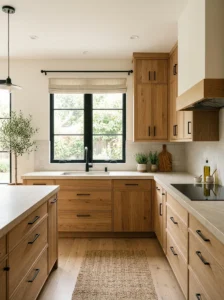
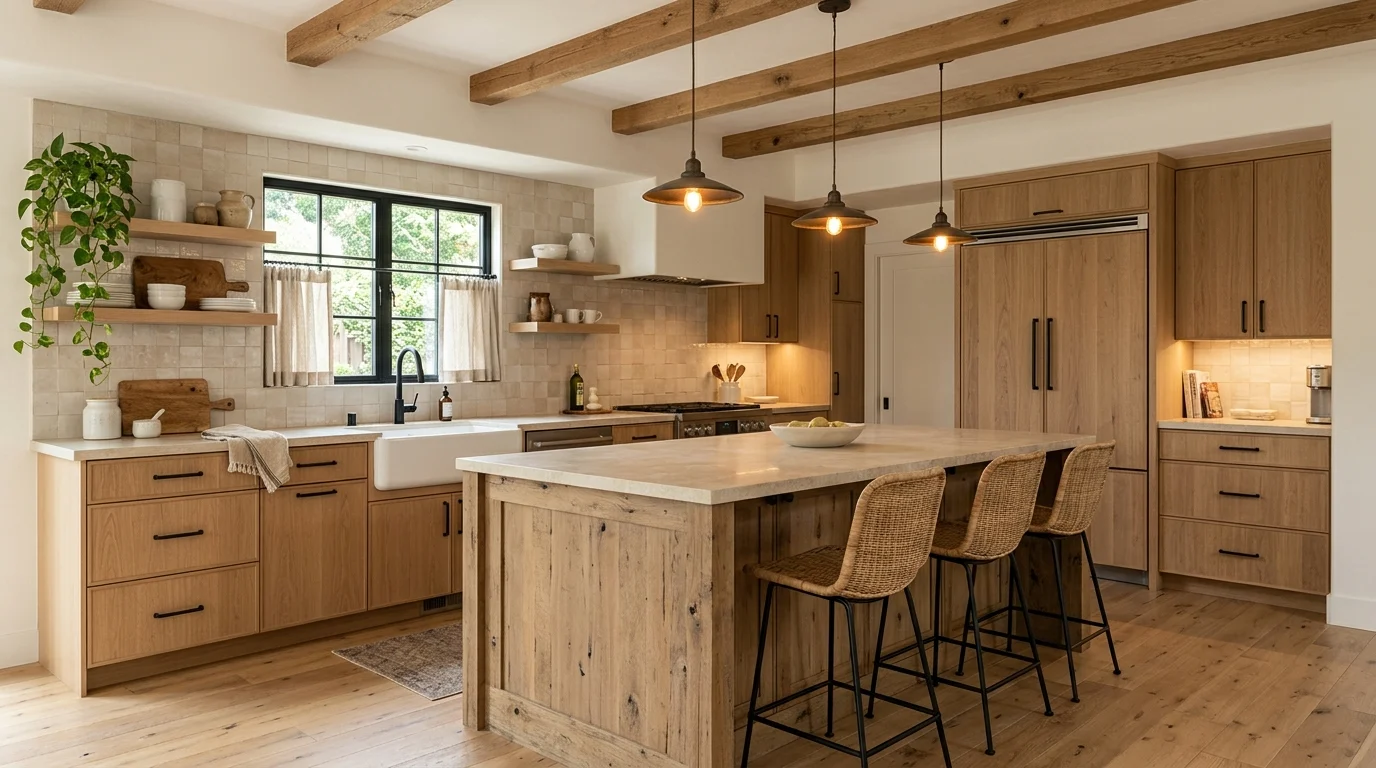
Rather than the painted white or dark, glossy cabinets common in a lot of purely modern kitchens, I chose light, natural wood cabinetry with a simple, clean-lined profile, no ornate carving or raised panel detailing, just flat, simple fronts in a warm oak tone. This combination of natural material with a clean, minimal shape is really the foundation of the entire rustic modern balance.
I specifically avoided a heavily distressed or reclaimed-looking finish, which would have pushed the look further into purely rustic territory, instead choosing a cabinet finish that highlighted the wood’s natural grain without excessive texture or aging effects. This kept the cabinetry feeling current and clean while still providing genuine warmth compared to painted or laminate alternatives.
If a full cabinet replacement isn’t in the budget, even refinishing existing cabinets to reveal or enhance natural wood grain, rather than painting them a flat, uniform color, can shift an existing kitchen’s feel toward this same warm, natural direction.
2. Add a Reclaimed Wood Island
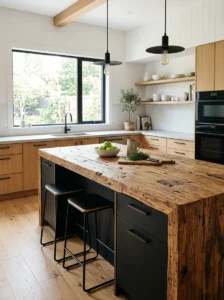
The centerpiece of my own kitchen renovation ended up being a large island topped with reclaimed wood, sourced from an old barn that had been dismantled a few states away. The visible grain, knots, and slight color variation in the reclaimed wood added genuine character and history that no new, uniform material could replicate.
I paired this rustic wood top with clean, simple cabinet fronts below and modern, unadorned hardware, which kept the island from tipping too far into purely rustic territory despite the reclaimed material’s inherently aged, textured character. This contrast, rustic material paired with clean modern lines, is really the core design principle running through the entire rustic modern aesthetic.
For anyone without access to genuine reclaimed wood, several manufacturers now produce new wood specifically treated and finished to mimic that same reclaimed character, offering a similar visual effect at a more predictable cost and without the potential structural concerns of genuinely aged salvage material.
3. Incorporate Black Metal Accents
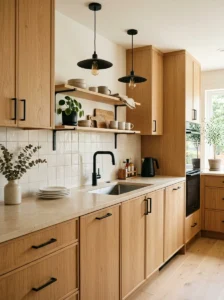
Throughout my kitchen, I used black metal accents, cabinet hardware, light fixtures, and a black metal shelf bracket, to introduce a clean, modern contrast against the warm wood tones throughout the space. This combination of black metal against light wood is one of the most recognizable and effective pairings within this particular design style.
I was careful to keep the black metal finish consistent across all these different elements, matte black rather than mixing in any glossy or textured black finishes, which kept the accent color feeling cohesive rather than randomly applied throughout the kitchen. This consistency mattered more than I initially expected in tying the whole room together visually.
If a full hardware replacement feels like too much at once, starting with just your cabinet pulls and light fixtures, the two most visually prominent metal elements in most kitchens, can introduce this contrast effectively without needing to address every single metal surface in the room simultaneously.
4. Use Exposed Wood Beams
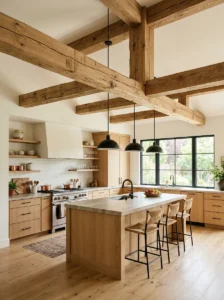
A friend with an older home incorporated her kitchen’s existing exposed wood ceiling beams directly into her rustic modern renovation, rather than covering them up with a flat, finished ceiling the way a purely modern renovation might have approached it. These beams became one of the room’s most striking architectural features, adding genuine rustic character overhead while the rest of the kitchen maintained clean, modern lines below.
For anyone without existing structural beams, decorative faux beams, made from lightweight materials but finished to look like genuine reclaimed wood, are widely available and can introduce a similar overhead architectural interest without requiring structural changes to an existing ceiling.
She paired her exposed beams with simple, unadorned white ceiling paint between them, rather than staining or painting the surrounding ceiling a competing color, which let the beams stand out clearly as an intentional feature rather than competing with additional ceiling detail.
5. Choose a Farmhouse Sink With Modern Fixtures
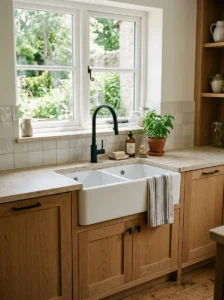
The classic apron-front farmhouse sink brings genuine rustic character to a kitchen, and pairing it with clean, modern faucet fixtures rather than an ornate, traditional faucet style keeps the overall look from leaning too heavily into a purely farmhouse aesthetic. I chose a simple white fireclay farmhouse sink paired with a sleek, single-lever matte black faucet, which balanced the two style directions effectively.
This pairing, a traditionally rustic sink style with clean modern hardware, is a good example of the broader principle running through this entire design approach, choosing one element from each style direction for a given feature rather than either overdoing the rustic character or overdoing the modern minimalism in any single area.
I’d recommend, for anyone considering this combination, testing a physical faucet sample against your chosen sink style before purchasing, since the specific proportions and finish combination can look quite different in person compared to how they appear in individual product photos.
6. Add Open Shelving in Natural Wood
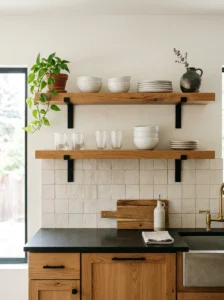
Rather than upper cabinets on every wall, I incorporated a run of open wood shelving on one side of my kitchen, using the same warm oak finish as my island to maintain consistency throughout the space. This open shelving displays a curated selection of everyday dishware and a few decorative objects, adding visual warmth and texture that solid upper cabinets wouldn’t provide.
I learned to keep the display genuinely curated rather than cluttered, grouping items thoughtfully and leaving some intentional breathing room between groupings, similar to shelf-styling lessons I’ve applied in other rooms throughout my house. This restraint keeps the open shelving feeling intentional and elegant rather than like disorganized overflow storage.
For anyone hesitant to give up full cabinet storage, even converting just one or two upper cabinet doors to open shelving, rather than replacing an entire wall’s worth of storage, can introduce this same warm, textural element on a smaller scale.
7. Use a Neutral, Earthy Color Palette
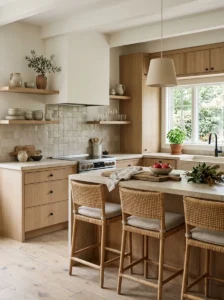
Beyond the wood and black metal combination, I kept my kitchen’s overall color palette restrained to warm whites, soft grays, and earthy neutral tones, avoiding any bold, saturated colors that might compete with the natural material warmth already present in the wood and stone elements throughout the space.
This restrained palette lets the natural materials themselves provide most of the room’s visual warmth and interest, rather than relying on paint color to do that work. I chose a soft, warm white for my walls specifically, rather than a stark, cool white, which would have undercut the overall warmth I was going for throughout the rest of the space.
I’d recommend testing paint swatches directly alongside your chosen wood tones and any stone or tile samples before committing, since undertones between these different natural materials can clash in ways that aren’t always obvious when viewed separately rather than together in the same space.
8. Incorporate Natural Stone Countertops
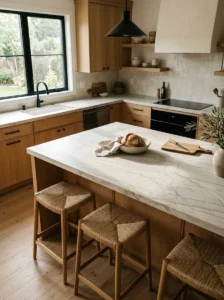
A friend’s rustic modern kitchen renovation used a honed, matte-finish natural stone countertop, rather than a polished, glossy finish, which kept the stone’s natural texture and subtle color variation feeling more organic and less formal than a highly reflective surface would have.
She chose a stone with visible, natural veining rather than a more uniform, engineered quartz alternative, specifically to introduce that same sense of natural material authenticity present in her reclaimed wood island and open shelving. The honed finish also proved more forgiving of everyday kitchen use, showing fewer visible fingerprints and water spots compared to a polished alternative.
For anyone concerned about natural stone’s maintenance requirements, several engineered quartz options now offer surprisingly convincing natural stone-look patterns with considerably less required maintenance, providing a reasonable alternative for those wanting the aesthetic without the sealing and care that genuine natural stone requires.
9. Add a Statement Range Hood
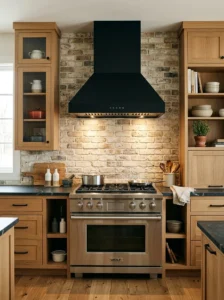
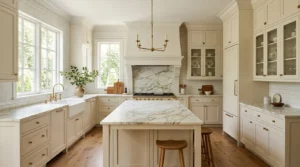
The range hood in my kitchen became an unexpected focal point, a simple, clean-lined metal hood in the same matte black finish as my other hardware, mounted over a rustic brick or stone tile backsplash behind the stove specifically. This combination, clean modern hood shape against a more textured, rustic backsplash material, created a nice contrast point within the kitchen’s cooking area.
I chose a hood with simple, unornamented lines rather than an elaborately shaped or decoratively trimmed alternative, which kept this particular element leaning toward the modern side of the balance, while the surrounding tile provided the rustic textural counterpoint.
This kind of intentional contrast, choosing which specific element within a given area leans more rustic versus more modern, is a strategy I’ve found genuinely useful throughout this whole design approach, rather than trying to blend both styles evenly within every single individual feature.
10. Use Wrought Iron or Aged Metal Light Fixtures
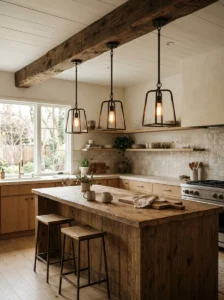
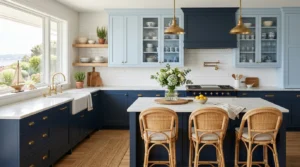
Beyond my black metal cabinet hardware, I chose pendant lights over my island with a slightly aged, wrought-iron-style finish and exposed Edison-style bulbs, which added genuine rustic character to the lighting specifically while still maintaining clean, simple fixture shapes that didn’t feel overly ornate or traditional.
This combination of a rustic material finish with a clean, modern fixture silhouette follows the same balancing principle I’ve applied throughout the rest of the kitchen. I chose three matching pendants spaced evenly above my island, rather than a single large fixture, which provided both better task lighting for food prep and a visually interesting repeated element along the island’s length.
For anyone wanting a similar effect without committing to hardwired pendant installation, several plug-in pendant light options are now available, which can be mounted with a simple hook and don’t require any electrical work, providing a good alternative for renters or those not ready for a more permanent lighting installation.
11. Choose Woven or Textured Bar Stools
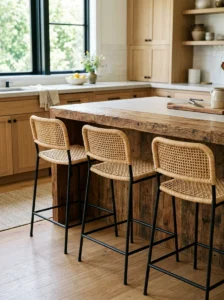
At my kitchen island, I chose bar stools with a woven rattan seat and simple black metal legs, rather than fully upholstered stools or plain wood alternatives. This combination introduced another natural, textured material into the space while maintaining the clean metal leg silhouette consistent with my other hardware choices throughout the kitchen.
The woven texture also proved genuinely practical, being easier to clean than upholstered fabric in a space where spills and crumbs are inevitable, while still providing more visual warmth and interest than a plain wood or solid metal stool would have offered on its own.
I’d recommend, when choosing seating for a kitchen island specifically, prioritizing both the material’s practical cleanability and how it fits into your overall material palette, since kitchen stools see more wear and potential spills than seating in almost any other room in the house.
12. Add Greenery for Organic Softness
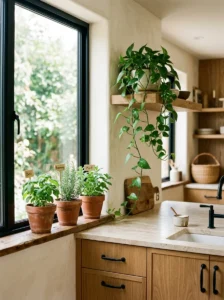
A kitchen filled entirely with hard surfaces, wood, metal, stone, benefits enormously from a few living plants to introduce genuine organic softness and life into the space. I added a small potted herb garden on my windowsill, along with a larger trailing plant on my open shelving, both of which added visual interest while also providing some functional benefit, fresh herbs readily available while cooking.
Choosing plants appropriate to your kitchen’s specific light conditions and humidity levels matters here, since kitchens often have more variable humidity than other rooms due to cooking steam and dishwashing, which can affect certain plant varieties differently than they’d perform elsewhere in the home.
This is a relatively low-cost, easily adjusted element that adds genuine warmth and life to an otherwise hard-surfaced room, tying together nicely with the natural material emphasis running throughout the whole design approach.
13. Use a Mix of Matte and Textured Tile
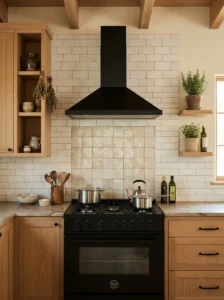
For my backsplash, rather than a single uniform tile throughout, I used a combination of a matte, subtly textured subway tile in most areas, paired with a small accent section of a more rustic, handmade-look tile behind the stove specifically, adding a focal point without overwhelming the entire kitchen with heavy texture.
This mixed approach let me introduce genuine rustic texture in a contained, intentional area while keeping the majority of the backsplash clean and simple, maintaining the overall balance between the two style directions rather than letting either one dominate the whole room.
I’d recommend, for anyone considering a similar mixed tile approach, choosing your accent tile area first and building the surrounding, simpler tile choice around it, rather than the reverse, since the accent area typically drives more of the room’s overall character and cost.
14. Incorporate a Vintage or Antique Item as a Focal Point
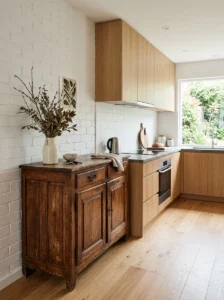
A friend incorporated a genuine antique cabinet, repurposed as a small buffet and storage piece along one wall of her rustic modern kitchen, positioned among otherwise entirely new, clean-lined cabinetry and appliances. This single antique piece added a layer of genuine history and character that no amount of new, rustic-finished material could quite replicate on its own.
She was careful to keep this single piece as the room’s primary “vintage” statement, rather than incorporating multiple different antique or vintage elements throughout the kitchen, which helped maintain the overall clean, modern feel of the rest of the space while still allowing this one piece to genuinely stand out and add character.
For anyone with an existing antique piece with sentimental value, sentimental furniture, an inherited item, incorporating just one such piece thoughtfully into an otherwise clean, modern kitchen renovation can add genuine, irreplaceable character that new materials alone can’t provide.
15. Choose Simple, Unadorned Cabinet Hardware
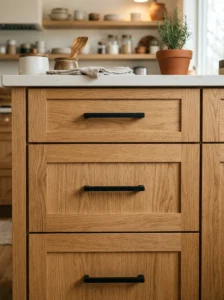
Throughout my kitchen, I chose simple, straight bar pulls in matte black rather than ornate, decorative knobs or handles, keeping the hardware itself firmly on the clean, modern side of the balance even while the cabinet material itself, warm wood, leaned more rustic. This restraint in hardware choice specifically helped prevent the kitchen from tipping too far into a purely rustic, farmhouse-style aesthetic.
I’d recommend, when selecting hardware for a rustic modern kitchen specifically, erring toward simpler, more geometric hardware shapes even if you’re drawn to more ornate options, since the natural material warmth from your cabinetry, countertops, and other textural elements typically provides plenty of rustic character on its own without needing ornate hardware to reinforce it further.
This is a relatively small, low-cost decision within a larger renovation, but it genuinely affects how the overall style balance reads, since hardware is one of the most visually prominent and frequently touched elements throughout any kitchen.
16. Add a Wood Accent Wall or Ceiling Detail
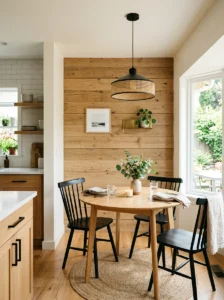
A friend incorporated a small accent wall of reclaimed shiplap-style wood paneling in her kitchen’s dining nook area, distinct from the rest of her kitchen’s painted walls, which added a focused area of genuine rustic texture without extending that same heavy texture throughout the entire cooking space.
This contained approach, limiting a more heavily textured rustic material to one specific accent area rather than applying it throughout the whole kitchen, is a strategy I’ve seen work well repeatedly across different rustic modern kitchen projects, allowing for genuine textural interest without overwhelming the overall clean, restrained feel of the larger space.
For anyone considering this approach, choosing a specific, contained area, a dining nook, behind open shelving, above a range hood, rather than an entire kitchen’s worth of walls, keeps the effect feeling intentional and balanced rather than excessive.
17. Use Woven Baskets for Functional Storage
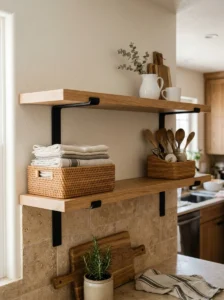
Beyond decorative purposes, I incorporated a couple of woven baskets into my open shelving specifically for functional storage, holding items like dish towels and smaller kitchen tools that didn’t need to be individually displayed but still needed easy access. These baskets added another layer of natural texture while solving a genuine practical storage need.
I chose baskets with a relatively fine, tight weave rather than anything overly chunky or rustic-looking, keeping them visually consistent with the overall balanced aesthetic rather than tipping too far toward a purely farmhouse storage solution. This attention to the specific weave and finish of even small, functional storage pieces matters more than it might initially seem for maintaining overall design consistency.
This is a low-cost, easily implemented detail that solves genuine practical storage needs while contributing positively to the kitchen’s overall natural material palette and textural interest.
18. Choose a Waterfall-Edge Island With a Wood Grain Finish
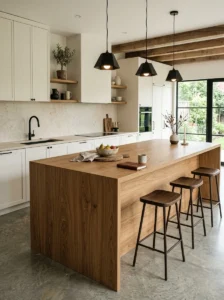
For anyone wanting a more dramatic modern statement while still maintaining the warm material palette central to this design style, a waterfall-edge island, where the countertop material continues down the sides to the floor, using a wood-look material rather than stone, can create a striking, clean-lined focal point that still incorporates genuine warmth.
A friend used an engineered wood-look material for this waterfall edge specifically because genuine solid wood can be more prone to warping and moisture damage in a kitchen environment, while the engineered alternative provided a similar visual warmth with more practical durability for daily kitchen use.
This is a more design-forward, dramatic choice compared to some other ideas on this list, and it requires more precise installation to achieve the clean, seamless waterfall effect properly, but for anyone wanting a genuine design statement within this style, it provides a striking result that clearly showcases both the clean modern lines and warm material choice simultaneously.
19. Add Simple, Linen Café Curtains
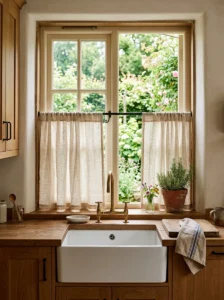
For kitchen windows, rather than heavier drapery or plain blinds alone, I added simple linen café curtains, covering just the lower half of my window, which provided some privacy and softness while still allowing ample natural light through the uncovered upper portion of the window.
This lighter, simpler window treatment fits the overall clean, restrained aesthetic of a rustic modern kitchen better than heavier, more formal drapery would, while the natural linen material still introduces genuine textural warmth consistent with the rest of the room’s material choices.
I chose a simple rod mounted at the window’s midpoint specifically for this café-style treatment, along with plain linen fabric in a warm, undyed natural tone rather than anything patterned or heavily processed, keeping the whole window treatment feeling understated and consistent with the kitchen’s overall restrained color palette.
20. Incorporate a Built-In Wood Bench for Dining
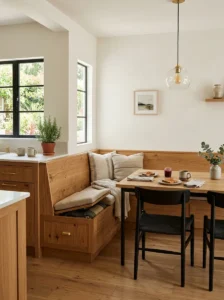
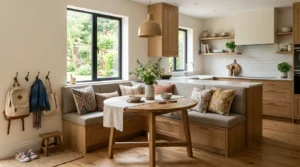
A friend’s kitchen renovation included a built-in wood bench along one wall of her breakfast nook, paired with simple modern chairs on the opposite side of the table, rather than matching chairs all the way around. This mixed seating approach, built-in rustic wood bench alongside clean modern chairs, is a nice smaller-scale example of the broader style-blending principle running throughout this whole design approach.
The built-in bench also provided some additional hidden storage underneath, with a lift-up seat revealing space for extra table linens and seasonal items, adding genuine function beyond just the seating itself. She topped the bench with simple cushions in a natural linen fabric, tying back into the same textural material palette used throughout the rest of her kitchen.
This kind of built-in seating requires more significant construction investment compared to simply purchasing furniture, but it provides a genuinely custom, space-efficient solution for anyone with a dedicated breakfast nook area within their kitchen.
21. Use Dimmable, Layered Lighting Throughout
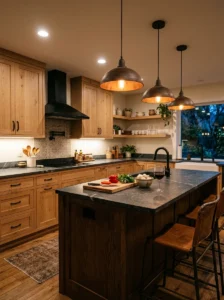
Similar to lighting lessons I’ve applied in other rooms throughout my house, I made sure my kitchen’s lighting included multiple layers, under-cabinet task lighting, the pendant fixtures over my island, and the main overhead lighting, all on separate dimmer switches, allowing me to adjust the room’s overall brightness and mood depending on the time of day and specific activity.
This layered approach matters particularly in a kitchen, where you need genuinely bright, functional lighting for tasks like chopping and food prep, but might prefer a dimmer, warmer atmosphere for evening entertaining or a more relaxed dinner. Having these different lighting zones independently adjustable provides that flexibility without compromising either function or atmosphere.
I’d recommend, for anyone planning a kitchen renovation, prioritizing this kind of layered, independently controlled lighting setup early in the planning process, since retrofitting additional dimmer switches or lighting zones after a renovation is complete tends to be considerably more disruptive and costly than planning for it from the start.
22. Balance Warmth and Cleanliness Through Ongoing Editing
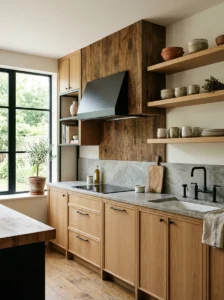
The final and perhaps most important lesson from my own kitchen renovation, and from helping friends with similar projects since, is that achieving this specific style balance, genuine warmth without clutter, clean lines without coldness, requires ongoing attention rather than a single, one-time set of design decisions. I’ve continued adjusting small details in my own kitchen well after the main renovation was complete, removing an item here, adding a plant there, based on how the space actually felt in daily use rather than how it looked immediately after installation.
My early instinct, similar to mistakes I’ve made in other rooms throughout my house, was to try to incorporate every rustic and modern element simultaneously, which resulted in a kitchen that initially felt somewhat busy and undecided rather than genuinely balanced. It took some editing, removing a few decorative objects, simplifying my open shelving display, before the space actually achieved the balance I’d originally been aiming for.
This ongoing willingness to reassess and edit, rather than considering a renovation permanently finished the moment construction wraps up, is really the skill that ties together everything else on this list, achieving a genuine, livable balance between rustic warmth and modern cleanliness isn’t a single decision, it’s a continuous process of paying attention to how the space actually feels and functions over time.
Frequently Asked Questions
What’s the key difference between rustic modern and farmhouse kitchen style? Rustic modern incorporates natural, textured materials like wood and stone but pairs them with clean, simple furniture lines and restrained ornamentation, while traditional farmhouse style often includes more ornate detailing, patterns, and a busier overall aesthetic.
Is reclaimed wood necessary for this style, or can new materials work? New materials specifically finished to mimic reclaimed wood’s texture and character can work well and often provide more predictable durability and cost than genuine reclaimed salvage material, which can vary significantly in quality and condition.
How do I keep a rustic modern kitchen from feeling cluttered? Focus on a restrained color palette, limit heavily textured rustic elements to a few focal areas rather than the whole kitchen, and maintain simple, clean-lined hardware and fixtures throughout to balance out the natural material warmth.
What’s the most budget-friendly way to start this style in an existing kitchen? Swapping cabinet hardware to simple matte black pulls and adding a few natural material accents, a woven basket, a wood cutting board display, open shelving, can introduce this aesthetic without a full renovation.
Final Thoughts
Balancing my own competing instincts toward both clean modern design and warm, natural rustic character taught me that these two directions aren’t actually in conflict, they genuinely complement each other when approached thoughtfully rather than treated as an either-or decision. The core lesson across all 22 of these ideas is really about intentional contrast, pairing rustic materials with modern shapes, and modern materials with rustic touches, rather than blending everything into an undefined middle ground. Start with your foundational choices, cabinetry and countertops, and layer in the smaller details gradually, editing as you go, and you’ll likely find, as I did, that the resulting kitchen feels both genuinely current and warmly inviting at the same time.