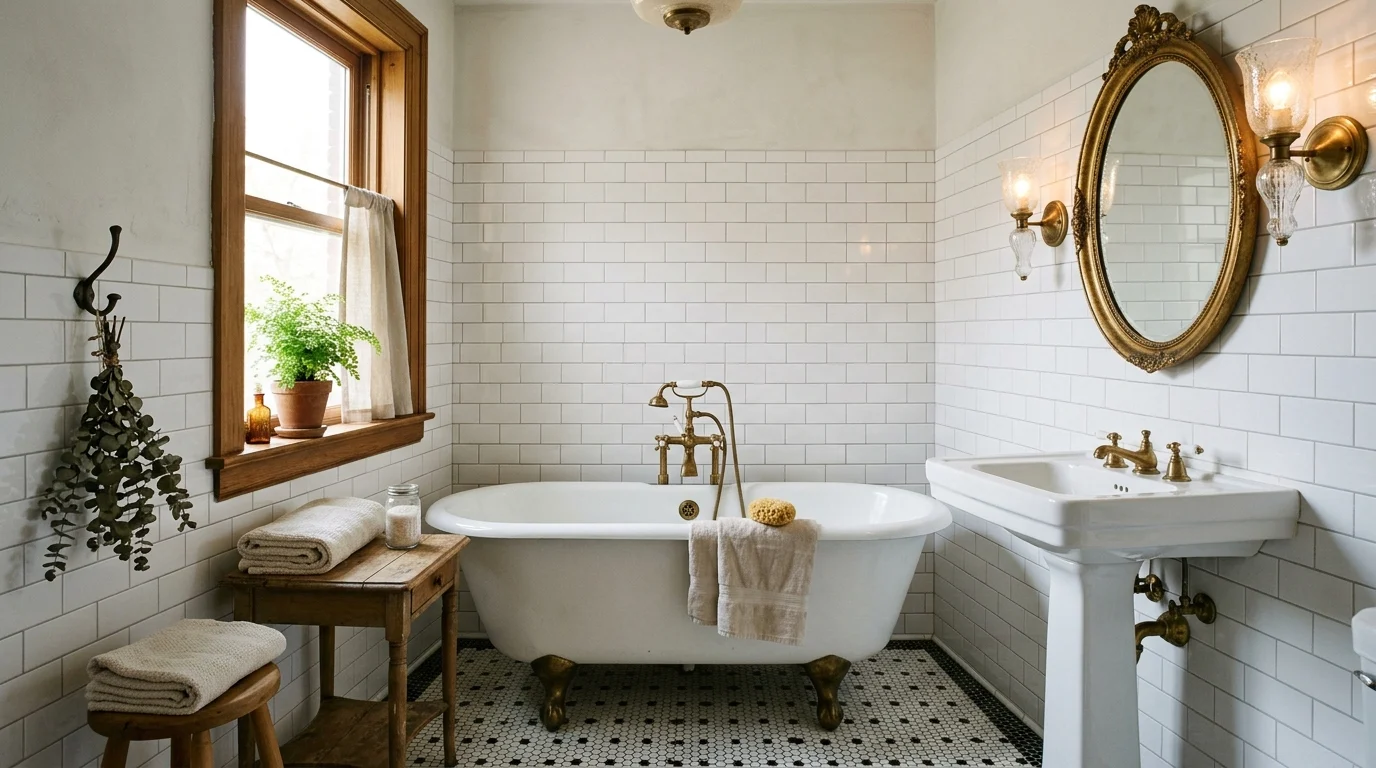
The house I grew up in had this old, slightly impractical bathroom with a claw-foot tub, black and white hexagon floor tiles, and a pedestal sink that constantly ran out of counter space for anything. As a kid, I honestly resented it a little, my friends had modern bathrooms with double vanities and walk-in showers, and mine felt stuck in another decade. It wasn’t until years later, after I bought my own house with a boring, builder-grade bathroom, that I found myself actively trying to recreate some of that old-world charm I’d once been embarrassed by.
That project taught me that vintage bathroom style isn’t really about age at all, it’s about specific design choices: certain fixtures, certain materials, certain small details that most modern bathrooms strip away in favor of sleek minimalism. I spent the better part of a year slowly working through my own bathroom, some weekends just swapping hardware, other times tackling bigger jobs like tile and lighting, and I picked up a lot of real, practical lessons about what actually reads as “vintage charm” versus what just looks dated in the wrong way.
Here’s what I learned, organized into the ideas that made the biggest difference in bringing genuine old-world character into a bathroom without it feeling like a costume or a themed room.
Start With a Clawfoot or Pedestal Tub
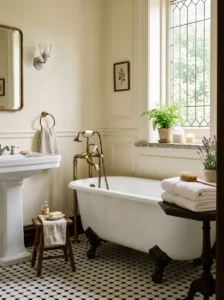
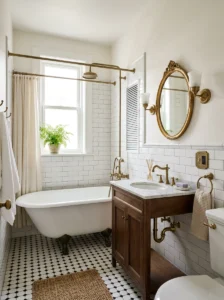
If there’s one single fixture that instantly signals vintage character, it’s a freestanding clawfoot tub. I didn’t have room in my own bathroom for a full clawfoot tub, but a friend who redid her larger bathroom installed one, and it completely transformed the room’s personality. She chose a classic white cast iron tub with dark bronze feet, positioned at a slight angle in the corner of the room rather than pushed flat against a wall, which gave it room to breathe as a genuine centerpiece.
What surprised her most was how much the tub’s material affected the vintage feel. Cast iron, with its heft and slightly imperfect enamel finish, reads as authentically old in a way that lighter acrylic reproduction tubs simply don’t, even when they’re styled to look similar. If budget allows, an actual reclaimed cast iron tub from an architectural salvage yard carries a level of authenticity that new reproductions can’t quite replicate.
For those without space or budget for a freestanding tub, a pedestal sink can achieve a similar effect on a smaller scale. I installed one in my own half bath, and the slim, elegant profile immediately made the room feel older and more considered than the boxy vanity it replaced, even though almost everything else in the room stayed the same.
Bring Back Hexagon and Subway Tile
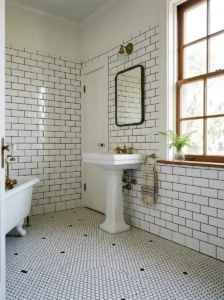
The black and white hexagon floor tile from my childhood bathroom turned out to be one of the most iconic vintage bathroom elements, and it’s genuinely one of the easier updates to make during a renovation. When I finally redid my own bathroom floor, I chose small white hexagon tiles with a scattered pattern of black hexagons mixed in, which recreated that exact look I remembered without needing custom, expensive tile work.
For the walls, classic white subway tile with dark, contrasting grout became my go-to choice. I initially used white grout, matching the tile, and honestly, it looked a bit flat and modern. Switching to a dark charcoal grout on my second attempt made a huge difference, suddenly the grid pattern of the tile became a visible design feature rather than disappearing into a uniform white wall.
If a full tile renovation isn’t in your budget, even a small area, a tiled backsplash behind the sink or a tiled inset around a mirror, can introduce this classic look without the cost of retiling an entire bathroom.
Choose Fixtures With Real Weight and Detail
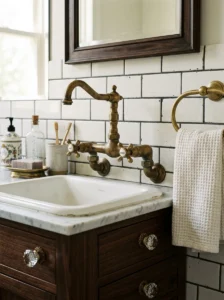
One thing I learned quickly is that modern bathroom fixtures, sleek, minimal faucets and handles, immediately undercut any vintage styling elsewhere in the room, no matter how good the tile or tub look. I replaced my builder-grade faucet with a cross-handle bridge faucet in an aged brass finish, and the difference in the sink area’s overall character was almost shocking.
Cabinet and drawer hardware mattered just as much. I swapped my plain brushed nickel pulls for ornate glass knobs, the kind with a slightly faceted, antique look, which I found at a local hardware shop that specializes in reproduction vintage pieces. These small, inexpensive swaps ended up making a bigger visual impact per dollar than almost anything else I did in the whole project.
For towel bars and toilet paper holders, I chose pieces with a bit of ornamental detail, gently curved brackets rather than straight, minimal bars, which tied together with the faucet and cabinet hardware to create a consistent, considered look throughout the room rather than a mix of styles.
Install a Statement Mirror
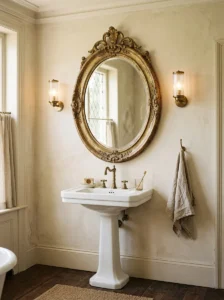
A plain, frameless mirror is probably the single fastest way to make an otherwise vintage-styled bathroom suddenly look modern again, since builder-grade mirrors are almost always simple and edge-to-edge. I replaced mine with an oval mirror in an ornate, slightly distressed gold frame, which became one of the first things people notice when they walk into the room now.
Scale matters a lot here. My first mirror attempt was too small for the space above my sink, which made it look like an afterthought rather than a statement piece. I sized up to a mirror that filled most of the available wall space above the vanity, which gave it the presence needed to actually function as a focal point rather than just a functional necessity.
If a large ornate mirror isn’t in the budget, even adding a simple wood or metal frame around an existing plain mirror, many home stores sell frame kits designed for exactly this purpose, can add a similar vintage touch without a full mirror replacement.
Add a Vintage-Style Chandelier or Sconce Lighting
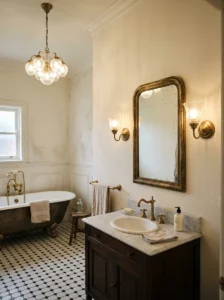
Lighting made a bigger difference than I initially expected. My bathroom originally had a single, harsh, modern flush-mount light, and no amount of vintage tile or fixtures could offset how sterile that lighting made the whole room feel. I replaced it with a small, glass-shaded chandelier, nothing overly grand, but with enough ornamental detail to feel period-appropriate.
For task lighting near the mirror, I added a pair of sconces with fluted glass shades on either side, rather than a single modern light bar above the mirror. This wall-flanking sconce arrangement is something I noticed repeatedly in older homes and hotels with that same vintage charm, and it makes a genuine functional difference too, providing more even, flattering light for grooming tasks than a single overhead source.
Bulb choice matters as well. I switched to warm-toned bulbs throughout the room, avoiding the cooler, bright white bulbs that tend to read as clinical and modern rather than warm and old-world.
Layer in Brass and Aged Metal Accents
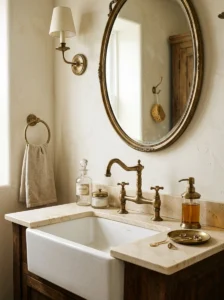
Beyond just the faucet and hardware, I started incorporating small brass and aged metal accents throughout the room, a brass soap dispenser, an aged bronze wastebasket, a small brass tray on the counter for jewelry and odds and ends. Individually, these are small, inexpensive purchases, but together they built a consistent metal palette throughout the room.
I learned to avoid mixing too many different metal finishes at once, which was a mistake in my early attempts. My first pass included brass fixtures, chrome accessories, and a bronze light fixture all in the same room, which ended up looking mismatched rather than intentionally eclectic. Settling on one primary metal tone, in my case an aged brass, with everything else either matching or staying neutral, created a much more cohesive look.
Vintage or reproduction vintage bottles for soap and lotion, often found at antique shops or reproduction home decor stores, added another layer of old-world character to the counter, replacing the plastic pump bottles that would have otherwise undermined the aesthetic.
Incorporate Antique or Reproduction Furniture Pieces
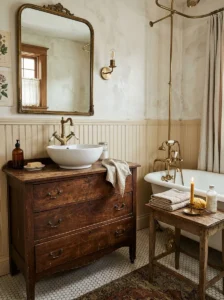
One detail that genuinely elevated my bathroom beyond typical renovation choices was adding an actual piece of furniture rather than only built-in cabinetry. I found a small antique wooden side table at an estate sale, refinished it slightly, and use it beside my tub to hold towels and a candle.
A friend went further in her own vintage bathroom project, incorporating an antique wooden dresser, retrofitted with a sink basin on top, as her actual bathroom vanity rather than a built-in cabinet. This kind of repurposed furniture piece is genuinely one of the most authentic ways to bring old-world charm into a bathroom, since it’s not a reproduction of a vintage look, it’s an actual vintage object being used in a new context.
If retrofitting antique furniture as a full vanity feels like too large a project, even a smaller antique stool, side table, or shelf unit can introduce that same sense of collected, old-world character into an otherwise standard bathroom layout.
Choose Vintage-Inspired Wallpaper
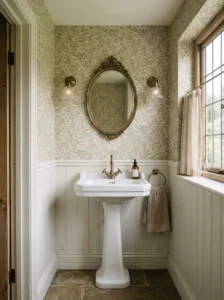
Wallpaper largely fell out of favor for a while, but it’s genuinely one of the most effective ways to bring vintage character into a bathroom, especially in a smaller space like a powder room where a bold pattern won’t feel overwhelming. I used a small floral botanical print in my half bath, in muted, slightly faded tones rather than a bright, modern color palette.
Choosing the right pattern took some trial and error. My first wallpaper choice, a busier, more saturated pattern, felt overwhelming once it was actually on the walls, despite looking fine as a small swatch. I switched to a more subdued, smaller-scale pattern with a soft, aged color palette, which read as vintage-elegant rather than overwhelming or costume-like.
For bathrooms with more moisture exposure, look specifically for wallpaper rated for high-humidity spaces, or apply it only to a portion of the room, like above a chair rail, rather than the full wall height, to reduce the risk of moisture damage over time.
Add Vintage Textiles and Linens
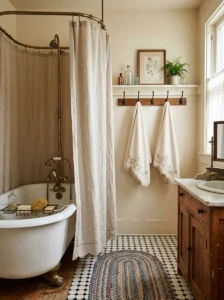
Small textile choices made a bigger difference than I expected. I swapped my plain white bath mat for a vintage-style braided rag rug in muted, faded colors, and switched my modern, plain towels for a set with a simple scalloped edge and subtle embroidered detail.
A vintage-style shower curtain, in a linen or cotton material rather than plastic, with a simple scalloped hem or a subtle vintage-inspired print, also made a noticeable difference in the overall feel of my shower area, which had previously been the most stubbornly modern-looking corner of the room despite everything else being updated.
I found several of these textile pieces secondhand, which not only fit the budget better but also added a genuinely aged, slightly worn character that brand-new reproduction textiles don’t quite replicate, even when the pattern and style are similar.
Display Curated Vintage Objects
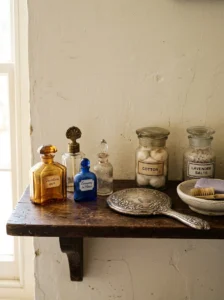
Beyond functional decor, adding a few genuinely old, curated objects brought a level of authenticity that no amount of new reproduction furniture could quite match. I display a small collection of vintage glass perfume bottles on my counter, along with an old hand mirror that belonged to my grandmother, both of which add real, personal history to the space.
A friend of mine displays a small collection of vintage apothecary jars on open shelving in her bathroom, filled with cotton balls and bath salts, which serves a genuine function while adding significant old-world character to the room.
I’d recommend visiting local antique shops or estate sales specifically looking for small bathroom-appropriate objects, vintage bottles, an old framed print, a small ceramic dish, rather than trying to source everything from a single big-box retailer, since these individually sourced pieces are what give a vintage bathroom its genuine, collected-over-time feeling.
Balance Old Charm With Modern Function
The biggest lesson I learned throughout this entire project is that a truly successful vintage bathroom still needs to function well by modern standards. My clawfoot-tub-owning friend, for example, made sure to install a modern, efficient water heater and proper ventilation fan behind the scenes, even though none of that is visible in the finished, vintage-styled room.
In my own bathroom, I kept modern plumbing and proper GFCI electrical outlets throughout, simply housing them behind vintage-style cover plates rather than trying to use actual outdated hardware, which would have created real safety and functionality issues. Similarly, I chose a reproduction clawfoot-style tub with modern insulation and drainage rather than sourcing a genuinely old, potentially problematic original.
This balance, authentic vintage style layered over solid modern function, is really what separates a good vintage bathroom renovation from one that just looks like an old, outdated bathroom nobody bothered to update. The goal is charm, not actual disrepair.
Frequently Asked Questions
Is a vintage bathroom more expensive than a modern one? It depends on the choices you make. Reclaimed and antique pieces can sometimes be less expensive than new fixtures, though certain elements, like an authentic cast iron clawfoot tub, do carry a higher cost than modern alternatives.
Can I achieve vintage charm in a small bathroom or powder room? Yes, and in some ways, smaller spaces are easier to transform. Bold wallpaper, a statement mirror, and vintage hardware can dramatically change a small room’s character without the scope of a full renovation.
Where can I find authentic vintage bathroom fixtures? Architectural salvage yards, estate sales, and antique shops are good sources for authentic pieces. Reproduction retailers also offer new fixtures designed specifically in vintage styles if authentic pieces aren’t available or practical.
How do I keep a vintage bathroom from looking outdated in a bad way? Focus on intentional design choices, like tile patterns, fixture finishes, and curated decor, rather than simply leaving old, worn elements untouched. Pair vintage style with modern plumbing, ventilation, and safety standards.
Final Thoughts
Bringing old-world charm back into my bathroom ended up being one of the most rewarding projects in my house, partly because it reconnected me with the bathroom I grew up resenting as a kid. The key lesson from the whole process is that vintage character comes from a combination of intentional choices, tile, fixtures, lighting, and curated objects, layered thoughtfully together, rather than any single dramatic change. Start with one or two elements that feel achievable, a hardware swap, a statement mirror, and build from there. Like most of the design projects I’ve taken on, the most successful vintage bathrooms are the ones built patiently, with genuine character added over time rather than all at once.