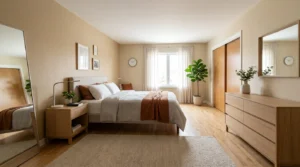
After spending the better part of two years slowly redoing different rooms in my house, my bedroom, my bathroom, even helping my nephew with his gaming setup, I eventually circled back to my bedroom again, this time wanting something different. My first redo had leaned heavily into that soft, coastal, movie-set look, and while I still love it, I found myself craving something cleaner, more current, more modern. So I tore into another round of changes, testing what actually makes a bedroom feel “modern” versus just minimal or cold.
What I learned is that modern bedroom design isn’t really about stripping a room bare or filling it with sharp black-and-white contrast, though that’s a common misconception. It’s about intentional choices: clean lines balanced with warmth, functional furniture that still feels considered, and a restrained but not empty color palette. I made plenty of mistakes along the way, bought furniture that looked right in photos but wrong in my actual room, picked a lighting fixture that was too harsh, and slowly corrected course through trial and error.
Here are 27 modern bedroom makeover ideas I’ve personally tested, refined, or watched friends and family execute successfully in their own homes, all aimed at giving a bedroom a genuinely fresh, current look without losing warmth or personality in the process.
1. Start With a Neutral Base Palette
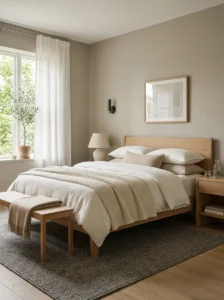
When I began this second redo, I made the mistake of trying to pick my “exciting” accent color before settling on the base palette, which led to a room that felt disjointed once everything came together. I eventually restarted, choosing a warm greige for my walls first, a color that reads as neither purely gray nor purely beige, and building everything else around that neutral foundation.
This base palette approach is something I now recommend to anyone starting a modern bedroom redo. Pick your wall color, your primary furniture tones, and your flooring first, before any accent colors or statement pieces enter the conversation. I settled on warm greige walls, a light oak bed frame, and a soft charcoal rug, all before choosing any accent pillows or artwork.
The reason this matters so much is that modern design relies heavily on a cohesive base to let a few carefully chosen accent pieces stand out. When I tried to layer in bold color too early, nothing had room to breathe, and the room felt busy rather than intentional. Once the neutral base was locked in, adding one or two accent colors later felt purposeful rather than random.
I’d suggest living with just your base palette for a week or two before adding anything else, which sounds excessive, but it genuinely helped me see the room clearly rather than rushing toward a finished look before the foundation was solid.
2. Choose a Statement Headboard
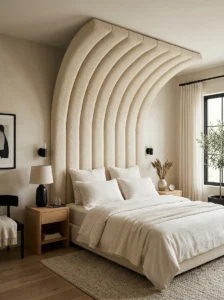
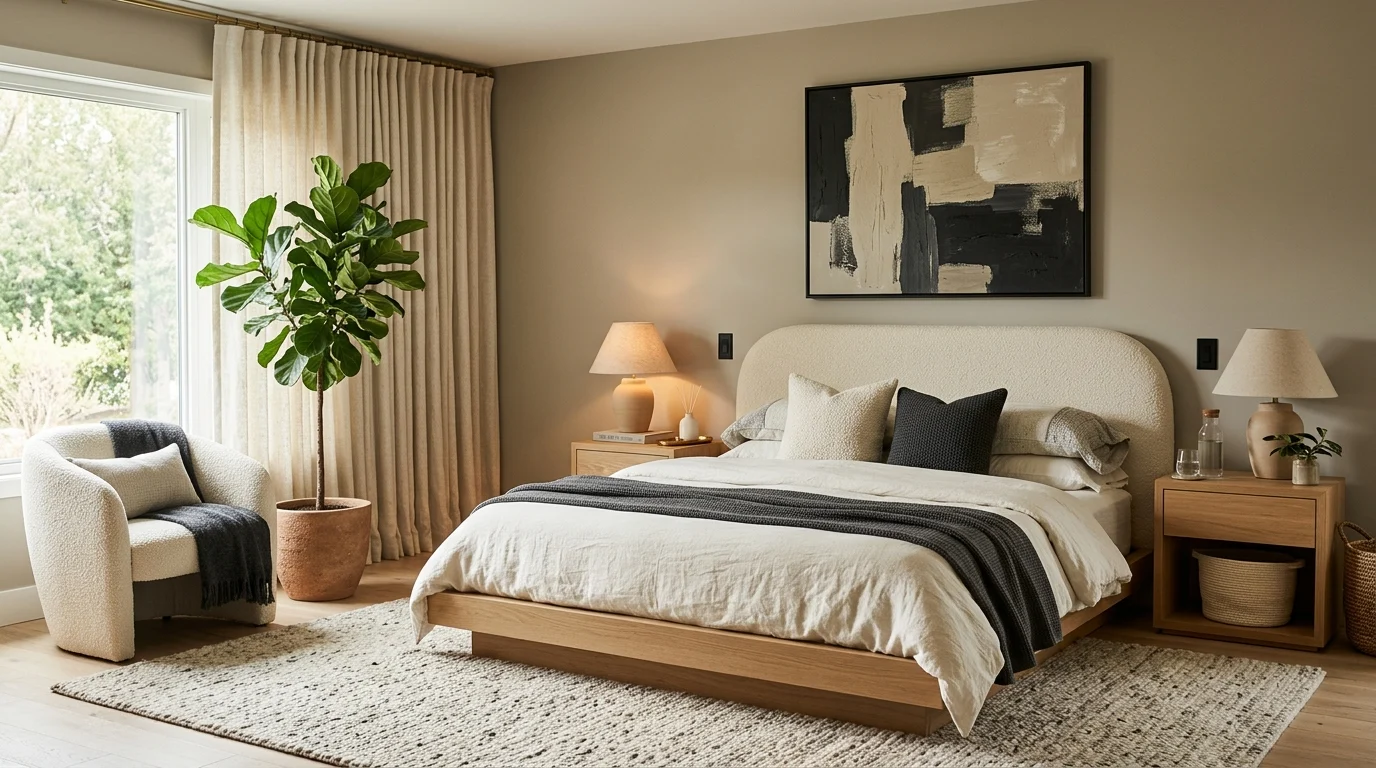
My old headboard was a plain, forgettable upholstered rectangle that had come with my original bed frame years earlier. Replacing it with a curved, channel-tufted headboard in a warm bouclé fabric ended up being one of the single biggest visual upgrades in the entire redo, and it didn’t require touching anything else in the room to make an impact.
I chose a curved silhouette specifically because straight, sharp-angled headboards, while technically modern, were starting to feel slightly dated to me after years of seeing them everywhere. The soft, rounded shape felt more current and also softened the room overall, balancing out the clean lines elsewhere in my furniture choices.
Fabric choice mattered as much as shape. I initially considered a smooth linen headboard, but the bouclé’s subtle texture added a layer of visual interest that a flat fabric wouldn’t have provided, which tied in nicely with other textured elements I added later in the process, like my throw blanket and rug.
If a full headboard replacement isn’t in the budget, even reupholstering an existing headboard frame in a new fabric, or adding a slipcover designed for that purpose, can achieve a similar refresh without the cost of an entirely new piece of furniture.
3. Simplify Your Nightstands
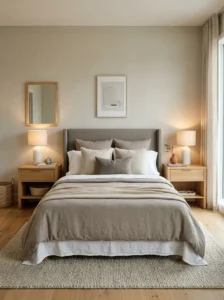
I used to have mismatched nightstands, one from an old bedroom set, one purchased separately years later, and while I hadn’t thought much about it before, replacing them with a matching pair of simple, clean-lined nightstands made an immediate difference in how organized and modern the room felt.
I chose nightstands with a single drawer and an open shelf beneath, rather than the bulkier, multi-drawer pieces I’d had before. This simpler silhouette fits the modern aesthetic much better and also forced me to be more intentional about what I actually kept on my nightstand surface and in that single drawer, since there was less room for accumulated clutter.
Symmetry played a role here too. Having a matching pair, rather than two different pieces, created a sense of visual balance on either side of the bed that instantly read as more polished and considered, even though functionally the nightstands work exactly the same as my old mismatched ones did.
For anyone hesitant to buy two new pieces of furniture, even just adding matching lamps and a similar decorative approach to two different nightstand shapes can create a sense of cohesion without requiring both pieces to be identical.
4. Invest in Layered, Warm Lighting
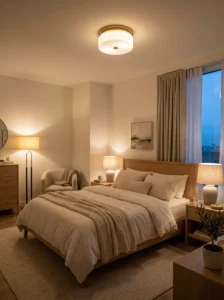
Similar to lessons I’d learned in my previous bedroom redo, lighting made an enormous difference in how modern and put-together the room felt. My mistake this time around was initially choosing lighting that was too cool and stark, thinking that crisp white light fit the modern aesthetic better than warmer tones.
After living with it for a couple of weeks, the room felt clinical rather than current, more like an office than a bedroom. I switched my bulbs to a warmer color temperature, around 2700K to 3000K, and added a floor lamp in the corner alongside my existing nightstand lamps, creating multiple layered light sources rather than relying on a single overhead fixture.
I also added a dimmer switch to my main overhead light, which let me shift the room’s mood from bright and functional during the day to soft and relaxed in the evening. This flexibility turned out to matter more than any single lighting fixture’s design.
The overall lesson I took from this is that “modern” doesn’t mean cold or harsh lighting. The most current, well-designed bedrooms I researched all used warm, layered lighting sources rather than a single bright overhead light, which is a common mistake in bedrooms that end up feeling more like a showroom than an actual place to relax.
5. Add a Textured Area Rug
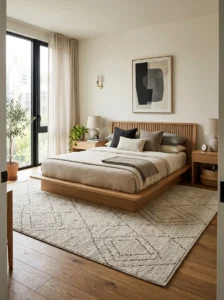
My bedroom has hardwood floors, which look great but can feel a bit cold and hard underfoot, especially first thing in the morning. Adding a large, textured area rug beneath my bed, extending well past the sides, grounded the room and added a layer of tactile warmth that había been missing.
I chose a rug with a subtle geometric pattern in tone-on-tone charcoal and cream, rather than a plain solid color, which added visual interest without introducing a bold, distracting pattern. This kind of subtle texture and pattern is something I noticed repeatedly in modern bedroom design, enough interest to avoid looking flat, but restrained enough to stay in the background rather than dominating the room.
Sizing, as I’d learned from my previous bedroom project, mattered a lot. I made sure my rug extended at least 18 inches beyond each side of the bed frame, which properly anchored the furniture arrangement rather than looking like an afterthought floating beneath just the center of the room.
For anyone on a tighter budget, a smaller rug placed just at the foot of the bed, rather than extending the full width, can still add warmth and texture to the room without the cost of a room-sized area rug.
6. Incorporate Matte Black Accents
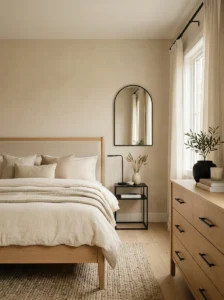
One trend I initially resisted, worried it would feel too trendy or short-lived, was incorporating matte black hardware and accents throughout my bedroom. After finally trying it on a smaller scale, swapping my dresser’s hardware to matte black pulls and adding a matte black-framed mirror, I understood the appeal.
Matte black accents add a strong, grounding contrast against a lighter, neutral palette, which is a big part of what makes many modern bedrooms feel current rather than flat or overly soft. I was careful not to overdo it though, my early attempt included a black bed frame in addition to the black hardware and mirror, which ended up feeling heavier and more severe than I wanted.
I eventually kept my bed frame in the lighter oak tone and limited the matte black accents to hardware, my mirror frame, and a single black metal side table in my reading corner. This restraint let the black accents function as intentional contrast points rather than overwhelming the room’s overall warmth.
If you’re nervous about committing to black accents throughout a room, starting with just one element, a mirror frame or a set of drawer pulls, is a low-commitment way to test how the contrast feels in your specific space before expanding further.
7. Choose Furniture With Clean, Simple Lines
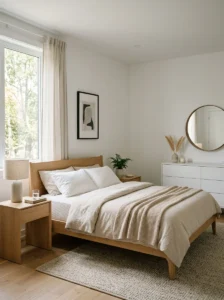
Beyond the headboard and nightstands, I went through my entire bedroom furniture collection specifically looking for pieces with ornate detailing, curved carved legs, decorative molding, that felt more traditional than modern, and either replaced or simplified them.
My dresser, which had slightly ornate drawer fronts from years earlier, got a straightforward update: I sanded down the raised panel detailing to create flat, simple drawer fronts, then repainted the whole piece in a matte white finish. This was a more involved project than simply buying new furniture, but it let me keep a piece with sentimental value while still achieving the clean-lined look I wanted.
For pieces I did replace, I specifically looked for furniture with straight or gently tapered legs, flat surfaces, and minimal ornamental detail. This doesn’t mean sterile or boring, the goal is clean rather than plain, which is a distinction that took me a while to understand through trial and error.
I’d recommend, before buying any new furniture piece, asking whether it has more than one or two decorative details. If a piece has ornate legs, decorative trim, and elaborate hardware all at once, it’s probably going to clash with an otherwise modern, restrained room, even if each individual detail seems small.
8. Create a Gallery Wall With Modern Art
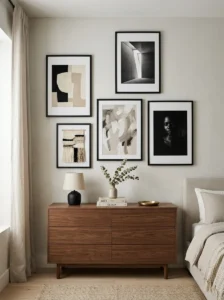
I used to have a single large framed print above my dresser, inherited from my previous bedroom redo, but for this modern refresh, I wanted something with a bit more visual interest and personality. I put together a small gallery wall using five different pieces, a mix of abstract prints, a black-and-white photograph, and one small textural fiber art piece.
The key to making this look modern rather than cluttered was consistency in framing. I used matching thin black metal frames across all five pieces, which unified the different art styles into a single cohesive display rather than looking like a random assortment of unrelated pieces.
Spacing mattered enormously too. I planned the layout on the floor first, using painter’s tape to map out the wall arrangement before committing to any nail holes, which saved me from the uneven, awkward spacing that plagued my first attempt at a gallery wall years earlier in a different room.
I’d recommend keeping the color palette within your gallery wall relatively restrained, mostly black, white, and one or two accent tones, rather than a wide range of bright, competing colors, which helps the whole arrangement read as intentional and modern rather than chaotic.
9. Add a Sculptural Accent Chair
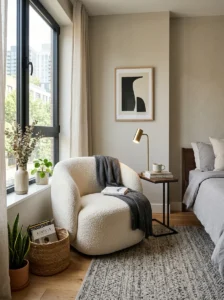
A friend of mine, redoing her own bedroom around the same time I was working on mine, added a sculptural, curved accent chair in a corner near her window, and it became one of my favorite details in her entire room. The chair’s organic, rounded shape contrasted beautifully against her otherwise linear furniture, adding visual softness without sacrificing the modern aesthetic.
She chose a chair in a bouclé fabric, similar to my headboard choice, which tied in nicely with the room’s overall texture story. The chair wasn’t purely decorative either, she uses it regularly for reading or getting dressed, which is an important consideration when adding statement furniture, it should earn its place functionally, not just visually.
Positioning the chair at a slight angle rather than squared off against the wall gave it a more dynamic, considered placement, something she picked up after noticing how professionally styled rooms rarely position furniture in strict, rigid alignment with the walls.
If a full accent chair doesn’t fit your space or budget, even a smaller stool or ottoman with an interesting shape can introduce a similar sculptural element into a corner of the room without requiring as much floor space.
10. Introduce Metallic Accents Sparingly
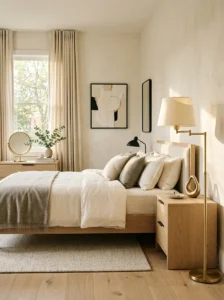
Beyond the matte black hardware, I found that adding a few carefully placed metallic accents, in my case a brushed brass floor lamp and a small brass-rimmed mirror on my dresser, added a subtle warmth and shine that balanced out the room’s cooler, more neutral tones.
I learned to keep metallics limited to one finish family rather than mixing brass, chrome, and black metal all in the same space, which was a mistake I made early on when I had a chrome lamp alongside my brass mirror. Settling on brass as my single metallic accent tone throughout the room created a much more cohesive, considered look.
The key with metallic accents in a modern bedroom is restraint, a little goes a long way. I limited myself to two or three metallic pieces total rather than incorporating brass into every single accessory, which would have tipped the room from “elegant modern” into something closer to overly glam or ornate.
If you’re unsure where to start, a single statement lamp in a warm metal finish is often the easiest, lowest-commitment way to test how a metallic accent feels in your specific room before expanding to additional pieces.
11. Use Oversized, Minimalist Wall Art
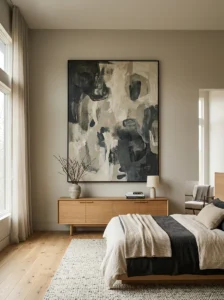
In addition to my gallery wall on one side of the room, I added a single oversized, minimalist piece of art on the opposite wall, a large abstract painting in muted charcoal and cream tones, with a completely plain black frame.
The scale here mattered enormously. My first attempt at this wall used a mid-sized print that ended up looking lost and undersized on the large, empty wall space. Sizing up to a genuinely oversized piece, roughly three feet wide, gave the wall the visual weight it needed to function as a proper focal point.
I chose an abstract piece specifically because representational art, landscapes, portraits, tends to feel busier and can compete with the room’s overall clean, restrained aesthetic. A simple, abstract composition in colors that matched my existing palette added visual interest without introducing any new competing color or subject matter.
For anyone hesitant about the cost of a single large art piece, some retailers offer oversized canvas prints at a fraction of the cost of an original painting, which is exactly the route I took, and the visual impact in the room was nearly identical to what an expensive original would have provided.
12. Swap Out Dated Ceiling Fixtures
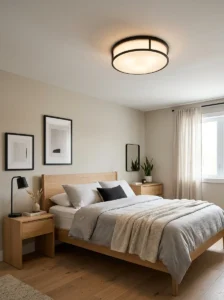
My bedroom’s original ceiling fixture was a builder-grade dome light that had been there since I moved in, and it was honestly one of the last things I got around to updating, mostly because I didn’t realize how much it was undermining the rest of my redo until I finally replaced it.
I chose a simple flush-mount fixture with a matte black frame and a frosted glass shade, which tied in with the matte black accents I’d already introduced elsewhere in the room. The new fixture cast a much softer, more even light across the ceiling compared to the old dome light’s harsher, more concentrated glow.
This was a bigger project than most of the other changes on this list, since it involved actually working with electrical wiring, and I’d recommend hiring an electrician if you’re not comfortable doing this yourself. It’s not a step to rush, but the visual and functional payoff was significant enough that I wish I’d tackled it earlier in the process rather than saving it for last.
If a full fixture replacement isn’t possible right now, even a simple fixture cover or shade swap, many are designed to fit over standard existing fixtures, can update the look for a fraction of the cost and effort of rewiring an entirely new fixture.
13. Choose a Platform Bed Frame
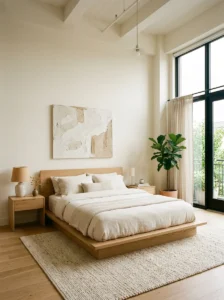
Replacing my old, boxier bed frame with a low-profile platform frame in the same light oak tone as my nightstands was another change that made a bigger difference than I initially expected. The lower profile immediately made my ceiling feel higher and the room feel more spacious, even though the actual square footage hadn’t changed at all.
Platform frames also eliminate the need for a box spring, which simplified my whole bed setup and gave the room a cleaner, more minimal appearance underneath the bed itself. I paired mine with a low-profile mattress specifically designed for platform frames, rather than a thicker, taller mattress that would have partially negated the low-profile benefit.
The clean, simple silhouette of a platform frame fits the modern aesthetic much better than a taller, boxier frame with a visible box spring underneath. I also appreciated the practical benefit of easier access for cleaning underneath the bed, since platform frames typically have less clearance-blocking structure than traditional frames.
If a full platform frame replacement isn’t in the budget, even removing a box spring and lowering an existing frame’s height, where possible, can create a somewhat similar lower-profile effect without the cost of new furniture.
14. Add Floating Shelves for Curated Display
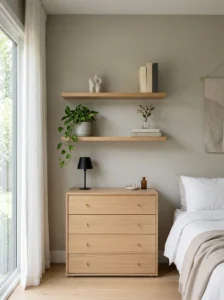
Rather than a bulky bookshelf, which felt too heavy and traditional for the look I wanted, I installed two simple floating shelves on the wall beside my dresser, using them to display a small, curated collection of books, a plant, and a single decorative object.
Floating shelves have a much lighter visual footprint than freestanding furniture, which fits the modern aesthetic’s emphasis on clean lines and open space. I was careful to style them sparingly though, my first attempt overloaded the shelves with too many small objects, which ended up looking cluttered rather than curated.
I settled on grouping items in odd numbers, similar to lessons I’d learned styling my bathroom shelf previously, three or four objects per shelf, varying in height, rather than a dense row of items lined up evenly. This restraint made the shelves feel intentional rather than like additional storage that happened to be visible.
Installation height and spacing mattered too, I positioned the shelves with enough vertical gap between them to avoid feeling cramped, and made sure the lower shelf was positioned above any furniture beneath it with enough clearance to avoid a crowded, stacked appearance.
15. Introduce a Bold but Restrained Accent Color
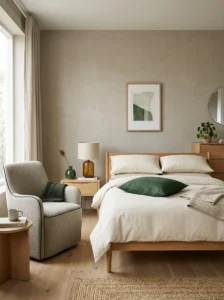
After committing to my neutral base palette, I eventually did introduce one accent color, a deep forest green, through a few carefully chosen pieces: a small accent pillow, a ceramic vase, and the aforementioned reading chair in my gallery wall area (in a different fabric than my main headboard).
The key lesson here, which took some real trial and error, is that a single accent color works best when it appears in at least two or three places throughout the room, rather than just once. My first attempt included the green only in a single throw pillow, which looked like an odd, isolated choice rather than an intentional design decision.
Repeating the color in multiple, smaller doses throughout the space, without introducing it as a dominant color anywhere, created a cohesive thread that tied the room together without overwhelming the otherwise neutral palette. This is a common technique in professionally designed modern spaces that I hadn’t fully understood until I saw the difference in my own room.
I’d recommend choosing an accent color you genuinely love, since you’ll likely be looking at it in several small doses throughout the room, and testing it in a small, low-commitment way first, a single pillow or small object, before expanding it further into the space.
16. Declutter Surfaces Aggressively
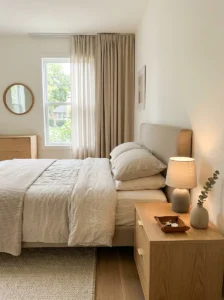
This might be the least glamorous item on this list, but it was genuinely one of the most transformative changes I made. My dresser and nightstand surfaces, before this redo, were covered in a mix of jewelry, spare change, old receipts, and general daily clutter that had accumulated over months without me really noticing.
I went through every surface in the room and removed anything that wasn’t either purely functional or intentionally decorative, moving loose items into drawers, a small catchall tray, or simply discarding things I didn’t actually need. The difference this made, even before any other design changes, was substantial, the room immediately felt calmer and more spacious.
Modern design relies heavily on negative space, empty, uncluttered areas that let the intentional design choices actually stand out. A beautifully chosen lamp or vase gets lost among clutter, but the same object on a clear, simple surface becomes a genuine design statement.
I now maintain this by keeping a small tray on my dresser specifically for daily catchall items, keys, spare change, which contains the inevitable daily clutter within a defined space rather than letting it spread across the whole surface, similar to the tray trick I’d used in my bathroom shelf styling project.
17. Choose Window Treatments That Match the Aesthetic
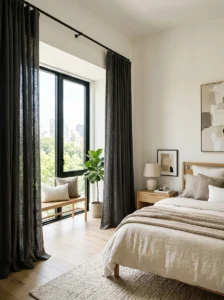
My old bedroom’s heavy, patterned curtains, leftover from a previous decorating phase, were one of the most obviously outdated elements once the rest of the room started coming together. I replaced them with simple, floor-to-ceiling linen curtains in a solid charcoal tone, hung from a slim black metal rod.
The floor-to-ceiling length made a significant difference in how tall and modern the windows appeared, compared to my old curtains, which stopped a few inches above the windowsill and made the whole wall feel visually cut off. I mounted the rod higher and wider than the window frame itself, a trick that consistently makes windows appear larger regardless of the overall style.
I chose a solid color rather than any pattern, which kept the window treatment from competing with the other textural and color elements I’d already introduced elsewhere in the room. The slightly heavier linen weight also blocked more light than my previous sheer curtains had, which was a functional improvement I hadn’t initially prioritized but ended up appreciating.
For anyone working with a tighter budget, even simple, ready-made curtain panels in a solid, neutral color can achieve a similar modern update, as long as they’re hung at the correct height and width to maximize the appearance of the window.
18. Add a Bench or Ottoman at the Foot of the Bed
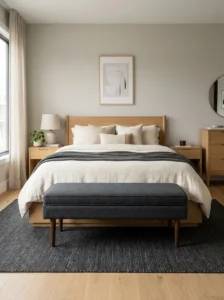
Similar to the bench I’d added during my previous bedroom project, I included a simple upholstered ottoman bench at the foot of my platform bed, this time in a slightly more structured, tailored fabric rather than the softer linen I’d used before, to fit the cleaner, more modern aesthetic of this particular redo.
The bench serves a genuine function, a spot to sit while putting on shoes, a place to lay out clothes, while also visually anchoring the foot of the bed, which can otherwise feel a bit empty and unfinished, especially with a lower-profile platform frame.
I chose a bench with simple, straight tapered legs rather than any ornate detailing, keeping consistent with the clean-lined furniture theme throughout the rest of the room. The upholstery color matched my accent color scheme loosely, a deep charcoal that coordinated with my rug and curtains without being an exact match, which added just enough visual interest without disrupting the room’s overall restraint.
If a full bench doesn’t fit your space or budget, even a simple, structured ottoman in a similar clean-lined style can provide a similar visual anchor at a smaller scale and lower cost.
19. Incorporate Smart Home Technology Discreetly
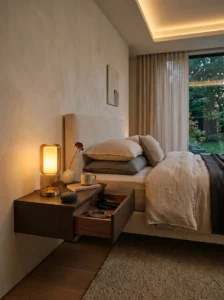
Modern design today often includes an element of genuine smart functionality, and I added a few smart home elements to my bedroom, smart bulbs in my main fixtures and lamps, and a small smart speaker tucked on a shelf, while being careful to keep the actual technology visually unobtrusive.
The smart bulbs let me control color temperature and brightness throughout the day without needing multiple different bulb types, shifting to a warmer, dimmer setting in the evening and a brighter, cooler tone in the morning, all through a simple phone app or voice command. This functional flexibility fits well with the layered lighting approach I mentioned earlier in this list.
I intentionally avoided adding overly visible tech gadgets, chargers, hubs, cables, to the room’s main surfaces, keeping them tucked in a drawer or behind furniture wherever possible. Visible technology and cables can undercut a modern room’s clean aesthetic just as easily as clutter can, so I treated cable management here with the same care I’d applied in my nephew’s gaming room setup previously.
A small charging station, hidden inside my nightstand drawer with a cutout for cable access, kept my phone charger and other small electronics completely out of sight while still being functionally convenient for daily use.
20. Layer in Natural Materials for Warmth
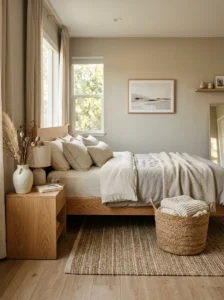
Even with a fairly minimal, modern approach overall, I made sure to include a few natural material elements, my light oak bed frame and nightstands, a woven jute basket for extra blankets, and a small ceramic vase with dried pampas grass, to keep the room from feeling too sterile or overly polished.
This balance between clean modern lines and warmer natural textures is really what separates a cozy, livable modern bedroom from one that feels more like a sparse, cold showroom. I learned this lesson partly by researching design examples and partly through direct trial and error, my room felt noticeably colder during the brief period when I’d removed too many textural elements while decluttering.
The woven basket in particular became both a functional storage solution and a textural anchor point in the corner of the room, softening what would have otherwise been an empty, hard-edged space beside my dresser. Dried botanicals, unlike fresh flowers, also fit well into a modern aesthetic since they add organic shape and texture without introducing bright, saturated color.
I’d recommend, after any decluttering or simplifying phase, doing a final walkthrough specifically checking for natural material balance, wood, woven fiber, ceramic, rather than only hard surfaces and fabric, to avoid the overly sterile feeling I initially ran into.
21. Create a Dedicated Reading or Relaxation Corner
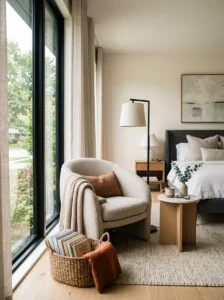
Beyond my accent chair, I dedicated a specific corner of my room to relaxation, positioning the chair near my window alongside a small round side table and a floor lamp, similar to the reading nook concept I’d built in my previous bedroom redo, but with a more streamlined, modern furniture selection this time.
This dedicated corner gives the room a sense of purposeful zoning, rather than every piece of furniture existing purely to fill space. I added a small basket beside the chair for current reading material and a folded throw blanket, keeping the corner functional and inviting rather than purely decorative.
Positioning mattered here too, I angled the chair slightly toward the window rather than directly facing into the room, which created a sense of privacy and focus for actual reading or relaxing, distinct from the main sleeping area of the room.
This kind of zoned layout, even within a single room, is something I’ve noticed consistently in well-designed modern bedrooms, distinct areas for sleeping, dressing, and relaxing, rather than one undifferentiated space, which genuinely changes how the room functions day to day, not just how it looks.
22. Use a Consistent Design Language Across Textiles
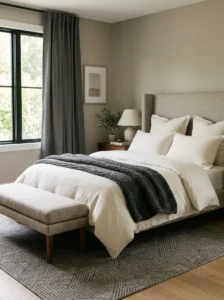
I made a conscious effort to ensure my bedding, curtains, rug, and upholstered furniture all shared a consistent design language, solid colors and subtle textures rather than any bold prints or patterns, which kept the whole room feeling cohesive despite incorporating several different fabric pieces.
My bedding stayed in the same neutral, warm-white tone as my previous redo’s linen sheets, though I added a textured knit throw in charcoal to tie in with my rug and curtain color. This consistency across textiles, even without exact color matching, created a sense of intentional design throughout the room rather than a collection of separately chosen pieces.
I did make one early mistake here, initially choosing a bedding set with a subtle geometric print that, while nice on its own, ended up competing visually with my rug’s pattern once both were in the room together. Simplifying back to solid, textured bedding solved this conflict and let the rug’s subtle pattern actually stand out as intended.
The overall principle I settled on: choose one element to carry visual pattern or print, in my case the rug, and keep everything else in solid, textural tones, which avoids the visually competing patterns that can quickly undermine an otherwise well-planned modern room.
23. Add a Full-Length Mirror
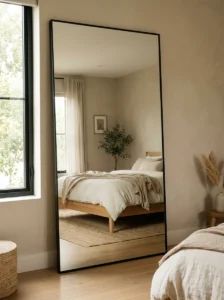
A simple full-length mirror, leaned against the wall in a corner rather than mounted flush, became both a genuinely useful daily tool and a subtle design element in my redone bedroom. I chose a mirror with a slim, matte black frame, tying in with the other black accents throughout the room.
Leaning the mirror against the wall, rather than hanging it, gave it a slightly more relaxed, current feel compared to a traditional flush-mounted mirror, and it also made it easy to reposition later if I rearrange the room’s layout down the line.
Beyond its practical function, the mirror reflects light and adds a sense of depth to the room, making the space feel larger than its actual square footage. I positioned mine to reflect a portion of my window, which bounces additional natural light into the room during the day.
For anyone with a smaller bedroom, a full-length mirror is one of the most functionally useful additions on this entire list, serving daily practical needs while also contributing genuine visual and spatial benefits to the room’s overall design.
24. Choose a Simple, Elegant Duvet Cover in a Solid Tone

Building on the textile consistency I mentioned earlier, my actual duvet cover choice mattered more than I initially expected. I settled on a matte, textured cotton duvet in a warm off-white, avoiding anything overly glossy or sateen, which tends to read as more traditional or formal rather than current and modern.
The texture of the fabric itself became an important design element, since the solid color alone needed some visual interest to avoid looking flat. A subtle waffle-weave or textured cotton, rather than a completely smooth, flat fabric, added just enough depth to keep the bed from looking plain despite the restrained, solid color choice.
I layered a single textured throw blanket, folded at the foot of the bed, and two accent pillows in complementary textures rather than patterns, keeping the overall bedding arrangement simple but not sparse. This measured approach, enough layering to feel intentional, not so much that it becomes fussy, took some real trial and error to get right.
If you’re working with an existing duvet you’re not ready to replace, even simplifying the surrounding pillow arrangement, fewer, more intentional pillows rather than a large decorative pile, can modernize the overall look of the bed without a full bedding replacement.
25. Incorporate Indoor Plants for Life and Texture
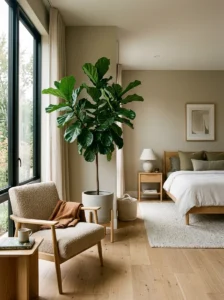
Beyond the dried botanicals I mentioned earlier, I added one larger, real indoor plant, a fiddle leaf fig, positioned in the corner near my window, which added a genuine sense of life and organic shape to the room’s otherwise structured, clean-lined furniture arrangement.
Choosing the right plant mattered, my bedroom gets decent but not abundant natural light, so I researched varieties that tolerate moderate light conditions rather than assuming any large plant would thrive in the space. The fiddle leaf fig has done reasonably well, though I’ve had to rotate it periodically to encourage even growth toward the light.
A larger plant like this serves a similar function to a piece of sculptural furniture, adding height and organic shape to a corner of the room that might otherwise feel empty or underutilized. I positioned mine specifically to avoid blocking the window or crowding my reading chair, giving it enough visual space to stand out as its own design element.
For anyone without the natural light or plant-care confidence for a larger plant, a few smaller, low-maintenance varieties, like pothos or snake plants, grouped together on a shelf or dresser, can achieve a similar textural and organic benefit on a smaller, more manageable scale.
26. Keep Technology and Entertainment Minimal and Hidden
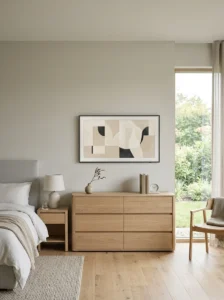
I made a deliberate choice during this redo to avoid a prominent TV or entertainment setup in my bedroom, which is admittedly a personal preference rather than a universal rule, but it significantly contributed to the calm, restful feeling I was going for throughout the space.
For anyone who does want a TV in their bedroom, I’d recommend, based on what I’ve seen work well in friends’ rooms, mounting it flush on the wall rather than using a bulky stand, and choosing a wall color or a piece of art that can visually recede the screen when it’s not in use, some frame-style TVs are specifically designed to display artwork when off, which fits well into a modern bedroom’s overall design intention.
Cable management, similar to points I’ve made throughout other projects, matters enormously here too. A TV with visible cables and a tangle of streaming devices undercuts even the most carefully designed modern bedroom, so routing everything through the wall or a concealed cable channel is worth the extra effort if you do choose to include a screen in the space.
The broader principle behind this point is that a modern bedroom should feel like a place for rest first, entertainment second, if at all, which is a shift I’ve noticed in a lot of current design thinking compared to bedrooms designed a decade or more ago.
27. Personalize the Space Without Overcrowding It
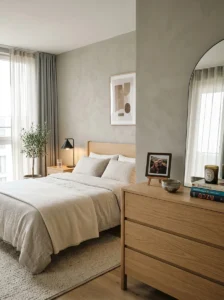
After all the structural, color, and furniture decisions were finalized, the very last step in my redo was adding just a few genuinely personal touches, a small framed photo, a specific ceramic piece I’d bought while traveling, a scented candle in a fragrance I genuinely love, rather than purely trend-driven decorative objects.
This final layer of personalization is what keeps a modern bedroom from feeling like a generic showroom display, which is a trap I definitely fell into during the middle stages of this project when I was following design inspiration a bit too literally without considering what actually felt like “me.”
I limited myself to just a handful of these personal items though, remembering the lessons about restraint and negative space from earlier in the process. Each object earned its place specifically because it held genuine meaning or usefulness, rather than filling space simply because an empty surface felt unfinished.
My overall takeaway from this entire process, and really from all the room makeovers I’ve tackled over the past couple of years, is that the most successful modern spaces balance careful, intentional design principles with just enough personal history and warmth to actually feel like a real, lived-in home rather than a photograph from a design magazine.
Frequently Asked Questions
What defines a “modern” bedroom style compared to other design styles? Modern bedroom design generally emphasizes clean lines, a restrained neutral color palette, minimal ornamentation, and a mix of natural materials with occasional metal or matte black accents, prioritizing function and simplicity over ornate detail.
Is a modern bedroom makeover expensive? It depends entirely on your approach. Many of the most impactful changes, decluttering, lighting adjustments, hardware swaps, cost relatively little, while larger furniture replacements naturally require a bigger investment.
How do I keep a modern bedroom from feeling cold or sterile? Layer in warm lighting, natural materials like wood and woven fiber, and a few genuinely personal objects. Avoid overly harsh white lighting and completely bare surfaces, which tend to push a room from “modern” into “cold.”
Can I achieve a modern look without repainting my walls? Yes. Many of the ideas above, lighting, textiles, hardware, art, and furniture choices, can shift a room’s overall feel significantly even if the wall color stays the same, especially if your existing wall color is already a neutral tone.
Final Thoughts
This second bedroom redo taught me that “modern” isn’t a single fixed look, it’s really a set of design principles, restraint, clean lines, intentional layering of texture and warmth, that can be applied in countless different ways depending on your own taste and space. Start with your base palette, prioritize lighting and decluttering early, and add personal touches last, once the structural decisions are settled. Like every other room I’ve worked on, the process took longer and involved more trial and error than I initially expected, but the end result, a room that finally feels both current and genuinely comfortable, was worth every adjustment along the way.