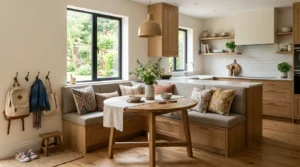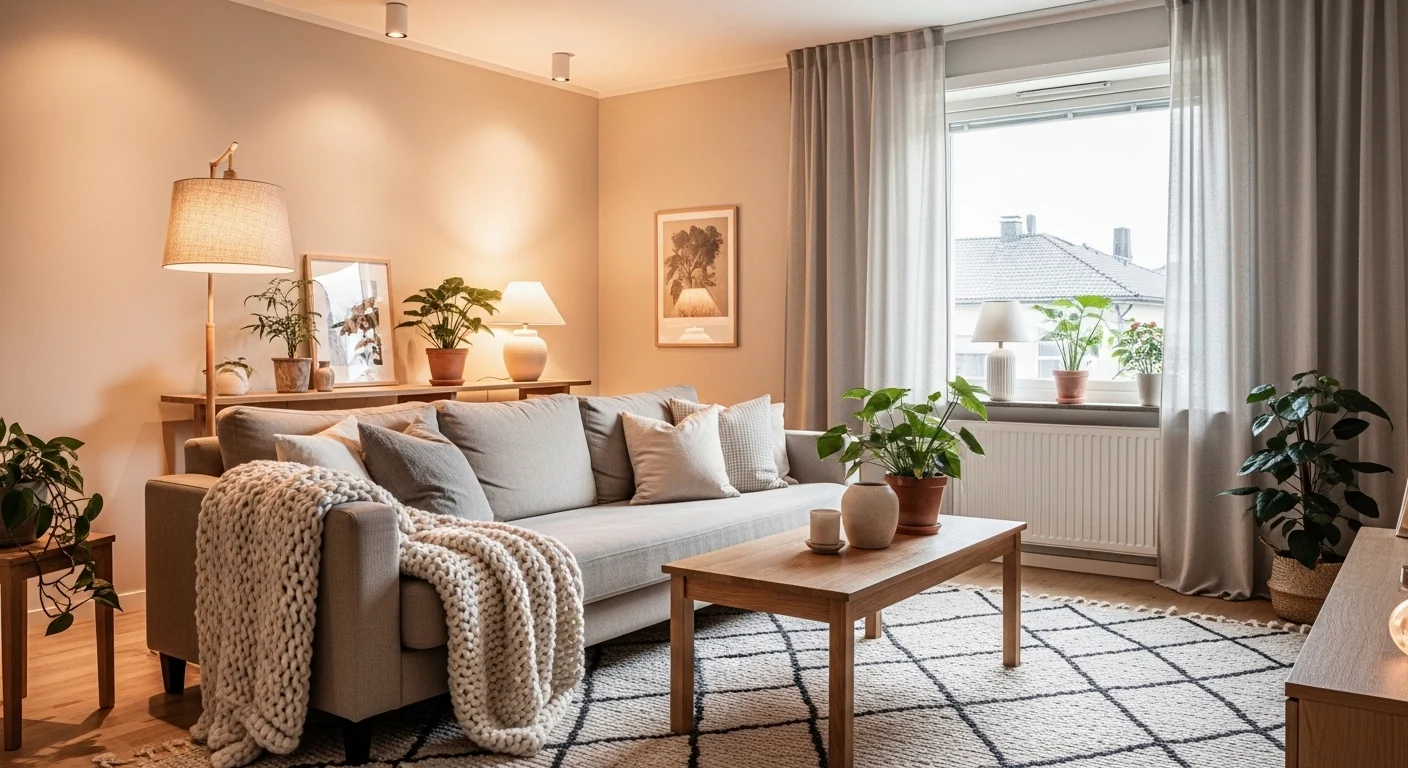
Scandinavian living rooms always seem calm without feeling empty. There’s warmth in the textures, softness in the lighting, and just enough decor to make the room feel lived in.
It’s simple, but not cold.
And honestly, that balance is probably why the style never really goes out of fashion.
1. Layer Soft Neutral Tones
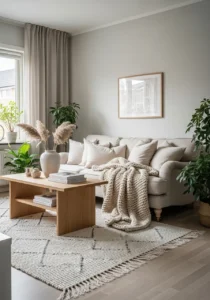
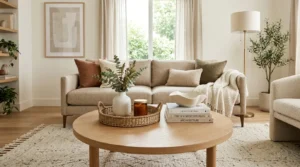
Scandinavian spaces usually start with a calm palette. Soft whites, warm beige, pale grey, and creamy tones help the room feel bright without becoming too stark. Layering similar shades through cushions, rugs, and curtains creates a relaxed look that feels connected. A light linen sofa paired with textured throws works especially well. The room ends up feeling airy and cozy at the same time, which is really the charm of Scandinavian design.
2. Add Light Wood Furniture
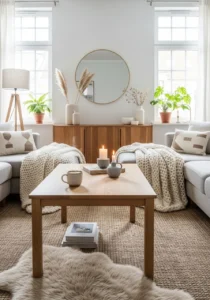
Light oak or ash wood instantly warms up a Scandinavian living room. A simple coffee table, open shelving, or wooden sideboard can soften all the lighter walls and fabrics around it. Keep the wood finish natural rather than glossy. It makes the room feel more relaxed and organic. Even small wooden accents help break up the neutral palette without making the space feel busy or heavy.
3. Use Warm Layered Lighting
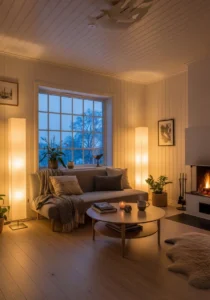
Lighting matters a lot in Scandinavian interiors because the atmosphere is meant to feel soft and comfortable. Instead of relying on one overhead fixture, mix floor lamps, table lamps, and warm wall lighting throughout the room. Warm white bulbs work best here. In the evening, the softer glow changes the mood completely and makes the living room feel much more inviting.
4. Keep Decor Minimal but Meaningful
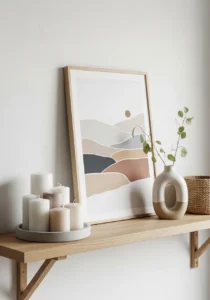
Scandinavian rooms usually avoid overcrowding surfaces with too many decorative pieces. A candle, a framed print, or one ceramic vase often feels like enough. Leave some empty space between objects so the room still feels calm and breathable. The focus is less about filling shelves and more about choosing pieces that quietly add warmth or personality.
5. Add a Chunky Knit Throw Blanket
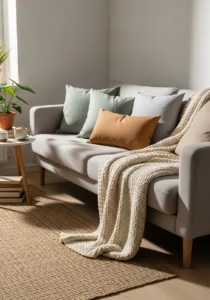
A thick knit throw instantly makes the sofa area feel softer and more comfortable. Drape it casually over the arm of the couch or layer it with linen cushions in neutral tones. Textures like wool, boucle, and cotton work beautifully together in Scandinavian spaces. It doesn’t need to look perfectly styled either. Slightly relaxed arrangements usually feel more natural and cozy.
6. Bring in Greenery Naturally
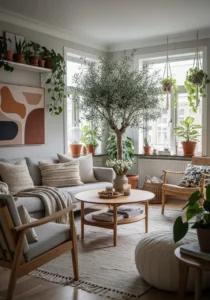
Plants add life to Scandinavian interiors without disrupting the calm palette. A tall olive tree in the corner or small trailing plants on shelves soften all the clean lines around the room. Keep planters simple in neutral ceramic or woven baskets. Even one plant can make the whole space feel fresher and less rigid. Natural elements really help balance the minimal design style.
7. Choose Simple Linen Curtains
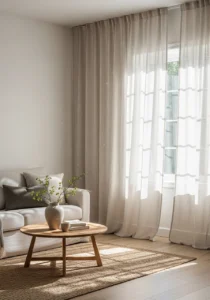
Heavy curtains can make Scandinavian living rooms feel too dark or formal. Light linen curtains allow natural light to filter softly into the space while still adding texture. Stick to white, ivory, or warm oatmeal shades for a relaxed look. Let the curtains hang slightly longer for a softer effect. It’s subtle, but it changes how the whole room feels during the day.
8. Mix Clean Lines with Soft Textures
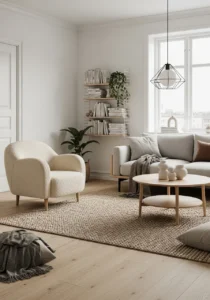
The balance between sharp lines and soft textures is what keeps Scandinavian design from feeling cold. Pair a structured sofa with woven rugs, boucle chairs, or soft pillows. Smooth surfaces mixed with textured fabrics create depth without needing strong colors. The contrast feels calm instead of dramatic. It’s one of the easiest ways to make minimalist spaces feel more welcoming.
9. Use a Large Neutral Rug
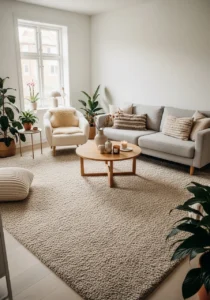
A large rug helps anchor the furniture while making the room feel warmer underfoot. Choose soft patterns or simple woven textures in cream, beige, or light grey tones. Scandinavian living rooms usually avoid overly bold rugs because the focus stays on comfort and simplicity. Let the rug extend slightly under the sofa and chairs so the layout feels more connected.
10. Add Black Accents for Contrast
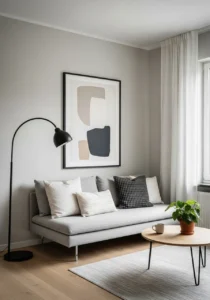
A little black detail can stop an all-neutral room from feeling too flat. Thin black frames, a matte floor lamp, or small hardware accents add quiet contrast without overpowering the softness of the space. Keep the black elements minimal and spread them lightly throughout the room. It gives the design more structure while still feeling calm overall.
11. Create a Cozy Reading Corner
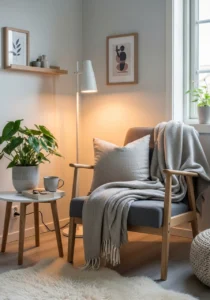
A reading corner fits perfectly into Scandinavian living rooms because the style naturally leans toward comfort. Place a soft chair near a lamp or window and add a small side table for books or coffee. A textured throw blanket nearby makes the setup feel even more inviting. It doesn’t need much space either. Even a small corner can become a quiet cozy spot.
12. Use Open Shelving Sparingly
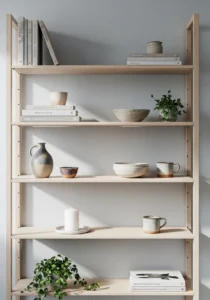
Open shelving works best when it’s lightly styled. Stack a few books, add one ceramic vase, maybe a candle or small framed print. Leave enough empty space around objects so the shelves still feel airy. Scandinavian interiors rely heavily on visual calmness, so less usually works better here. It’s storage, but it still feels soft and intentional.
13. Let Natural Light Stay the Focus
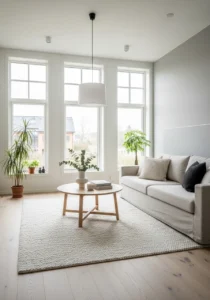
Scandinavian interiors are designed around natural light as much as possible. Keep window areas open and avoid heavy decor blocking sunlight. Mirrors can help reflect light deeper into the room too. During the day, soft sunlight bouncing off pale walls and wood textures creates that calm atmosphere Scandinavian homes are known for. It feels simple, but really comfortable at the same time.