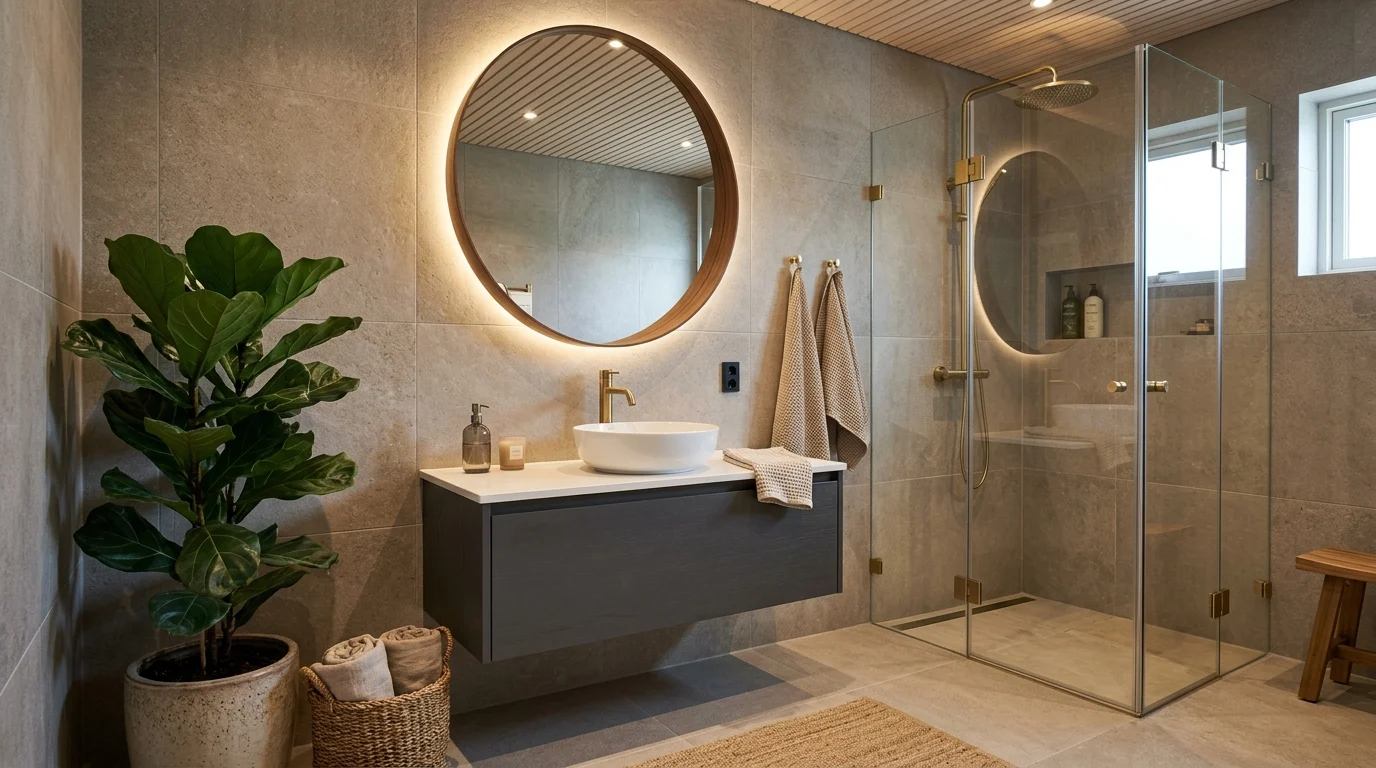
A few years back, when we finally got around to renovating our main bathroom, I went into the project completely set on an all-white, spa-like look. That was the plan right up until I stood in the tile aisle at our local showroom and got completely drawn in by a soft warm gray porcelain tile that felt more sophisticated and current than anything in the white or beige sections. On a whim, I switched my entire plan halfway through the design process, and honestly, it ended up being one of the best last-minute decisions I’ve made in any home project. I remember standing there comparing samples under the showroom lighting, and no matter how many times I tried to talk myself back into the white plan I’d been so committed to for months, the gray option kept pulling my eye back.
What I didn’t expect was how much depth and personality gray could bring to a bathroom compared to the all-white look I originally wanted. It wasn’t cold or clinical the way I worried it might be, it felt layered, modern, and surprisingly warm once I paired it with the right accents. I think a lot of people, myself included at the time, assume gray automatically reads as sterile or corporate, but the right undertone completely changes that perception. Since finishing that bathroom, I’ve gone on to help two friends incorporate gray into their own bathroom designs, refining what actually works and what tends to fall flat along the way.
If you’re considering gray for your own bathroom but aren’t sure where to start, here are 13 ideas I’ve personally used, seen succeed in other homes, or researched carefully enough to stand behind.
Why Gray Has Become Such a Popular Bathroom Choice
Gray sits in this interesting middle ground between the starkness of white and the heaviness of darker colors, which is part of why it’s become such a go-to choice in modern bathroom design. It’s neutral enough to pair with almost any accent color, yet has enough depth to avoid feeling flat or sterile the way an all-white bathroom sometimes can. In my own renovation, I found that gray gave me more flexibility to change up accents seasonally without ever needing to touch the tile or paint again, which has genuinely saved me money over the years since I haven’t felt the urge to redo the whole room every time my taste shifts slightly. It’s also a color that photographs well in almost any lighting condition, which matters more than people expect if you ever plan to sell your home down the line.
1. Warm Gray Porcelain Tile
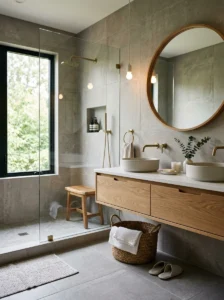
Not all grays are created equal, and warmer gray tones, as opposed to cool, blue-toned grays, tend to feel cozier and more inviting. This was the exact tile choice that changed my entire renovation plan, and years later, I still think it was the right call. I’ve since learned to always bring tile samples home and view them under my actual bathroom lighting before committing, since showroom lighting can make undertones look noticeably different than they will once installed in your own space. I made a habit of setting the sample on the actual floor or wall where it would eventually go and checking it both in daylight and after dark with the bathroom lights on, since the two conditions revealed slightly different undertones each time.
2. Charcoal Gray Vanity With White Countertop
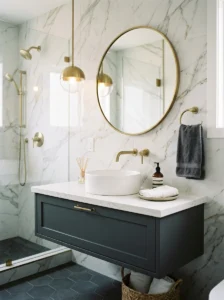
Pairing a dark charcoal vanity with a lighter white or light gray countertop creates contrast without feeling too heavy. A friend of mine did this in her powder room, and the combination looks both bold and balanced at the same time, giving the small space a surprising amount of visual weight without making it feel cramped. She mentioned that choosing a matte finish on the charcoal cabinetry, rather than a glossy one, kept fingerprints and water spots from showing as easily, which matters quite a bit in a powder room that gets frequent guest use.
3. Gray Herringbone Tile Pattern
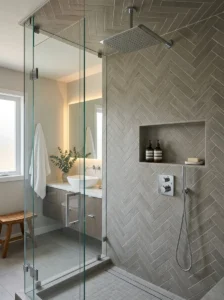
A herringbone layout adds movement and visual interest to gray tile, keeping the space from feeling flat despite the neutral color palette. I considered this for my own shower floor and ultimately regret not going with it, since I’ve seen it done beautifully elsewhere and it adds a level of craftsmanship that a standard grid layout simply doesn’t achieve. If I ever tackle a secondary bathroom renovation, this is the first pattern change I plan to make, since the visual texture it adds is hard to replicate with a plain gray tile laid in a standard grid.
4. Light Gray Walls With White Trim
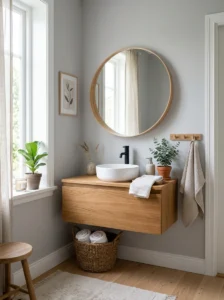
Soft, light gray walls paired with crisp white trim and baseboards create a clean, modern contrast that still feels bright. This was the wall treatment I ultimately chose, and it strikes a nice balance between the moodiness of gray and the brightness of white, giving the room definition without making it feel dark or closed in. I tested three different gray paint swatches side by side for almost a full week before settling on the final shade, since the difference between a slightly blue-gray and a warmer greige tone turned out to be more noticeable in person than it had appeared on the paint chips at the store.
5. Gray Shiplap Accent Wall
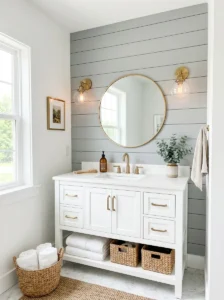
Shiplap painted in a soft gray tone adds texture and a slightly relaxed, coastal feel to an otherwise modern gray bathroom. I’ve seen this used in a guest bathroom belonging to a family member, and it softened what could have otherwise felt like a very sleek, formal space, adding a bit of casual warmth to balance out the more polished elements in the room like the vanity and mirror. She specifically chose a slightly wider plank width than the traditional narrow shiplap style, which she said helped the small bathroom feel less busy than a tighter, more traditional pattern might have.
6. Gray Marble or Marble-Look Countertops
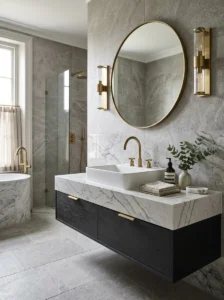
Gray-veined marble, or a more durable marble-look quartz, adds a subtle, high-end texture that pairs beautifully with both matte black and brushed gold fixtures. I chose a marble-look quartz for my own vanity specifically to avoid the staining issues that come with real marble, and years later I still don’t regret prioritizing durability over the marginal difference in authenticity. The veining pattern on the quartz slab was actually more consistent than several of the natural marble samples I looked at, which made it easier to plan the seam placement without worrying about mismatched veining across the counter’s surface.
7. Black and Gray Color Scheme
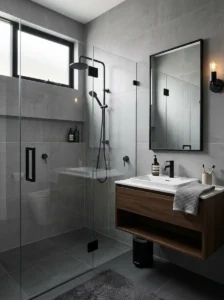
Combining black fixtures or accents with a gray tile or wall base creates a moody, modern look without going fully dark. I added black hardware and a black-framed mirror to my gray bathroom, and it gave the space a more grounded, intentional feel that tied everything together in a way flat gray alone hadn’t quite achieved. I’d recommend introducing the black gradually, starting with hardware and a mirror frame, and then assessing whether the room needs more contrast before committing to something larger like a black vanity or window frame.
8. Warm Wood Accents to Balance Cool Gray Tones
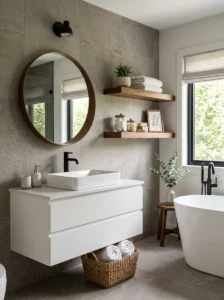
Adding warm wood elements, whether a vanity, a mirror frame, or open shelving, helps balance out any coolness from gray tile or walls. I added a walnut-framed mirror to my mostly gray bathroom, and it warmed up the whole space instantly, proving that even a small wood accent can shift the entire mood of a predominantly gray room. I’ve since added a small wood stool near the tub as well, and the combination of the two wood tones, even though they’re not an exact match, still reads as intentional rather than mismatched because they share similar warm undertones.
9. Gray and Brass Combination
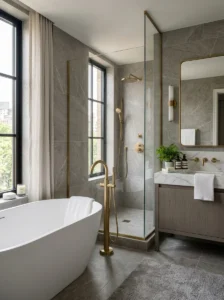
Pairing gray tile or walls with brass fixtures and hardware creates a warm, slightly glamorous contrast that’s become increasingly popular in modern bathroom design. A friend used this combination in her recent renovation, and it elevated what could have been a fairly plain gray palette into something much more elegant, almost boutique-hotel in feel. She specifically chose an aged or slightly brushed brass finish rather than a high-polish version, noting that the more subdued finish felt more current and was easier to keep looking clean between deep cleanings.
10. Layered Grays With Varying Undertones
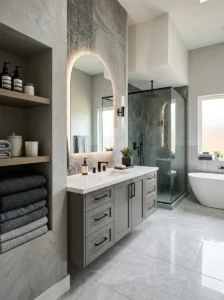
Using multiple shades of gray, a warm gray wall, a cooler gray tile, a mid-tone gray towel, adds depth rather than sticking to one flat tone throughout. This was a lesson I learned partway through my own renovation, realizing that variation in undertone actually made the space feel more intentional rather than mismatched, almost like the different grays were in conversation with one another rather than competing for attention. I now think of this the same way I’d think about layering neutrals in an outfit, aiming for tones that complement rather than exactly match, which keeps the whole room from feeling flat or one-dimensional.
11. Gray Bathroom With Greenery for Contrast
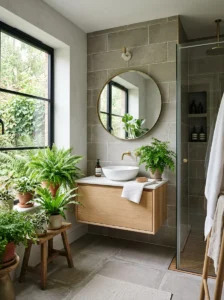
Adding real or artificial plants introduces a natural green contrast that keeps an all-gray palette from feeling too monochromatic or cold. I keep a small potted fern on my bathroom windowsill, and it’s a simple, affordable way to soften the overall color scheme, adding a touch of life to what could otherwise feel like a very hard-surfaced room. I’ve found that plants tolerant of humidity and lower light, like pothos or certain fern varieties, tend to hold up far better in a bathroom setting than options that need direct sun, which most bathrooms simply don’t offer.
12. Concrete-Look Gray Tile for an Industrial Feel
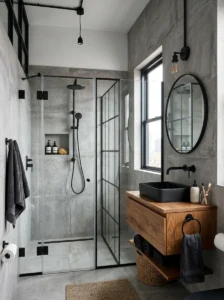
Tile designed to mimic the look of polished concrete brings an industrial-modern edge to a gray bathroom while still being far more practical and water-resistant than actual concrete. I’ve seen this used in a more urban-style loft renovation, and it fits that aesthetic particularly well, especially when paired with exposed pipe fixtures or raw metal accents throughout the rest of the room. The tile itself required very little maintenance compared to real concrete, which needs regular resealing to avoid staining, making it a practical choice for anyone drawn to the look without wanting the upkeep.
13. Gray Bathroom With Warm Ambient Lighting
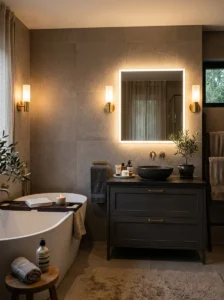
Cool-toned overhead lighting can make gray tile feel colder than intended, so opting for warmer bulb temperatures helps maintain a cozy feel even with a predominantly gray palette. This was a lesson I learned the hard way, switching from cool white bulbs to warmer ones made an immediate difference in how inviting my finished bathroom felt, correcting what had briefly felt like a design misstep after the renovation was otherwise complete. I’d recommend testing a warm bulb in your existing fixtures before finalizing any gray tile or paint decision, since the interaction between lighting temperature and gray undertones can dramatically change how the finished room actually feels day to day.
How to Choose the Right Gray for Your Specific Bathroom
One thing I wish someone had told me before my own renovation is just how dramatically lighting conditions can shift the appearance of gray. A gray that looks warm and inviting in a north-facing bathroom with lots of natural light might read as flat or even slightly blue in a windowless powder room lit entirely by artificial bulbs. Before committing to any tile, paint, or fixture in gray, it’s worth testing a sample directly in your own bathroom, at different times of day if possible, rather than trusting how it looked in a showroom or on a screen. I now keep a small stack of paint swatches taped to the wall for at least a few days before making any final decision, since colors that looked perfect in the store have surprised me more than once once actually installed at home.
It’s also worth thinking about how gray will interact with your existing fixtures if you’re not doing a full renovation. Swapping in a gray-heavy design around fixtures you’re keeping, an older white tub, existing brass hardware, can either clash or complement depending on the undertone you choose, so it helps to bring a photo or sample of your existing fixtures with you when shopping for tile or paint.
Mistakes I Made Along the Way
- Not considering undertones carefully enough – My first tile sample looked warm in the store but read slightly cooler once installed under my bathroom’s lighting.
- Using cool white lighting with gray tile – This combination initially made my bathroom feel colder than I wanted until I switched to warmer bulbs.
- Sticking to just one shade of gray throughout – The space felt flatter until I intentionally layered in different gray tones through towels, accents, and fixtures.
- Almost skipping warm wood accents – I nearly kept everything cool-toned before realizing how much a simple wood-framed mirror warmed up the whole room.
- Rushing the tile decision without testing samples at home – My near-miss with the white plan taught me to always live with a sample in the actual room before finalizing any big material choice.
Frequently Asked Questions
Does gray make a small bathroom feel darker than white? It can, depending on the specific shade and lighting, but a soft, warm gray paired with adequate lighting generally maintains a bright, open feel similar to white while adding more depth and character.
What accent colors work best with a gray bathroom? Black, brass, warm wood tones, and soft greens all pair beautifully with gray, depending on whether you want a modern, industrial, or slightly warmer traditional feel.
Is gray tile harder to keep clean than white tile? Gray tile often shows less visible dirt and water spots compared to white tile, making it a practical choice for busy, frequently used bathrooms.
Should I choose a warm or cool gray for my bathroom? This largely depends on your room’s natural lighting and existing fixtures, but warm grays tend to feel cozier and more universally flattering, while cool grays can feel more sleek and modern in bright, well-lit spaces.
Can I introduce gray into a bathroom without a full renovation? Yes, smaller changes like gray grout with existing white tile, a gray shower curtain, or gray towels and bath mats can bring in the color gradually without requiring any structural or tile work.
Final Thoughts
Looking back at that spontaneous tile aisle decision, I’m genuinely glad I deviated from my original all-white plan, because the gray palette we ended up with gave our bathroom far more depth and personality than I initially expected. Gray isn’t just a safe, neutral fallback color, when layered thoughtfully with the right accents, lighting, and textures, it can create a genuinely modern, sophisticated bathroom that still feels warm and inviting rather than cold or clinical.