When we started planning our master bathroom renovation, I genuinely underestimated how much of the entire project would come down to a single decision: tile. I walked into that first tile showroom thinking I’d pick something quickly, maybe white subway tile since that’s what everyone seemed to be using at the time, and be done with it in an afternoon. Four visits and what felt like a hundred samples later, I finally understood that tile isn’t just a background detail, it’s arguably the single most defining element of a bathroom’s entire look and feel.
That process taught me a lot about how tile choices affect not just aesthetics but also things like maintenance, perceived room size, and even resale value. Since finishing our own bathroom, I’ve helped a couple of friends navigate their own tile decisions, and I’ve developed a much clearer sense of what actually creates a cohesive, modern look versus what ends up feeling dated or mismatched. Here are 20 bathroom tile design ideas I’ve personally used, seen succeed in other renovations, or researched thoroughly enough to recommend with confidence.
Why Tile Choice Matters So Much in Bathroom Design
Unlike most rooms in a home, bathrooms are almost entirely defined by hard surfaces, tile floors, tile walls, tile shower surrounds, which means tile choices carry disproportionate visual weight compared to other design elements. In our own renovation, I realized that even with beautiful fixtures and a well-planned layout, the wrong tile choice could have undermined the entire modern aesthetic we were going for.
1. Large-Format Porcelain Tile
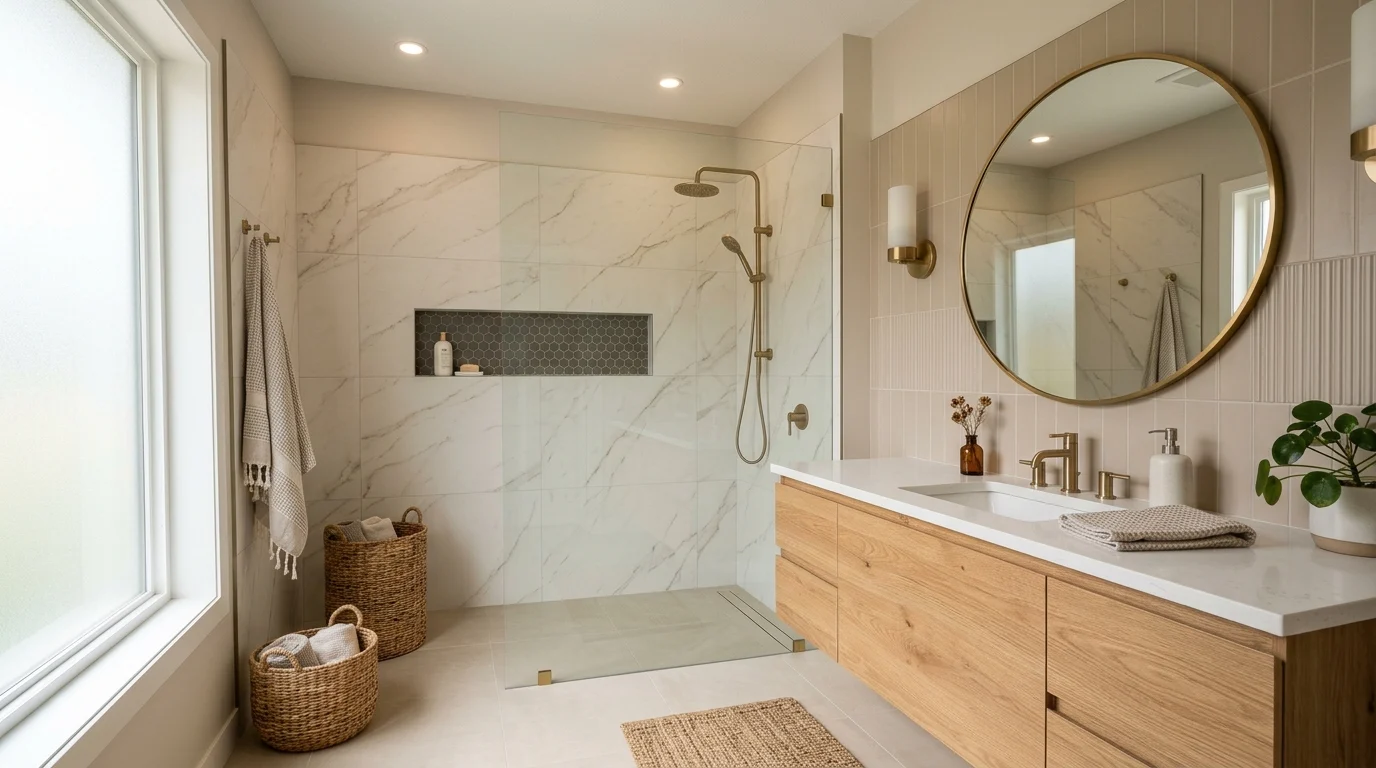
Oversized porcelain tiles, often 24×24 inches or larger, minimize grout lines and create a clean, expansive look that’s become a hallmark of modern bathroom design. This is exactly what we chose for our bathroom floor, and the reduction in visible grout lines made the whole room feel more seamless.
2. Marble-Look Porcelain Tile
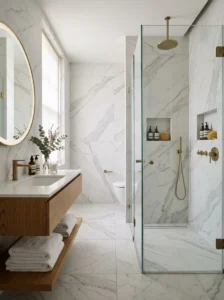
Porcelain tile designed to mimic natural marble veining offers the elegant look of real marble without the staining and sealing concerns that come with the genuine material. I chose this for our shower walls specifically to avoid the maintenance headaches a friend had warned me about with real marble.
3. Matte Finish Tile
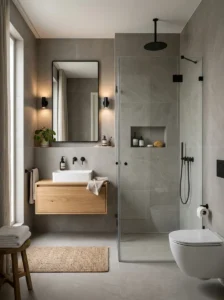
Matte tile has become increasingly popular over glossy finishes, largely because it hides water spots and fingerprints far better, an underrated but important practical consideration. We used matte tile throughout most of our bathroom, and cleaning has genuinely been easier since making that choice.
4. Geometric Patterned Floor Tile
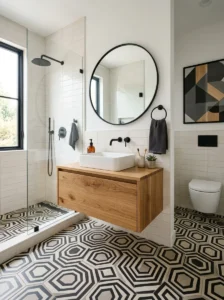
A bold geometric pattern on the floor, paired with simpler wall tile, adds visual interest without overwhelming the entire room. A friend of mine used a striking geometric pattern in her powder room floor, and it’s become the focal point of an otherwise simple space.
5. Vertical Stacked Subway Tile
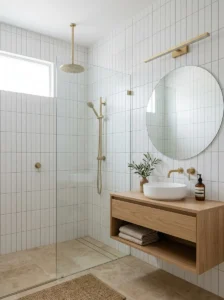
Rather than the traditional horizontal brick-lay pattern, stacking subway tile vertically creates a more modern, updated look while keeping the classic subway shape. I used this pattern in a secondary bathroom, and it felt fresher than the more common horizontal layout.
6. Herringbone Tile Pattern
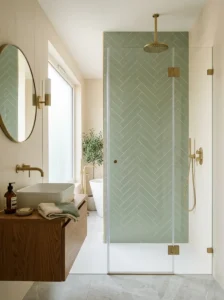
A herringbone layout, whether in the shower, on the floor, or as a backsplash, adds movement and sophistication to an otherwise simple tile choice. I regret not using this in our main shower and have it on my list for a future guest bathroom project.
7. Black and White Contrast Tile
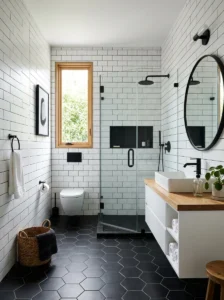
Pairing white wall tile with black floor tile, or vice versa, creates a striking, graphic contrast that reads as distinctly modern. We used a black hexagon floor tile against white subway wall tile in our powder room, and the contrast has consistently been a conversation starter with guests.
8. Concrete-Look Tile
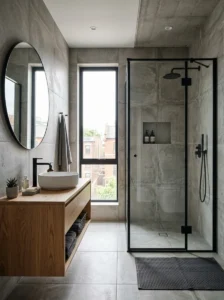
Tile designed to mimic the look of polished concrete offers an industrial-modern aesthetic while being far more practical and water-resistant than the genuine material. I’ve considered this for a future basement bathroom project, since it fits well with more contemporary, minimalist design goals.
9. Textured 3D Wall Tile
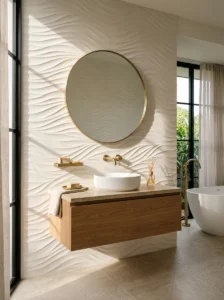
Dimensional tile with a subtle 3D texture adds depth and visual interest to an accent wall without introducing additional color. A friend used this on a single accent wall in her shower, and the texture catches light beautifully throughout the day.
10. Zellige-Inspired Tile
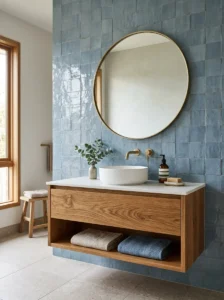
Zellige tile, known for its slightly irregular, handmade look and subtle color variation, has become increasingly popular for adding organic texture to otherwise clean, modern bathrooms. I used a soft blue zellige-inspired tile as a backsplash behind our vanity, and it added warmth without competing with the room’s overall simplicity.
11. Large-Format Tile With Minimal Grout Color Contrast
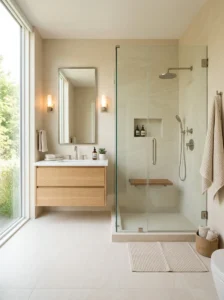
Choosing grout that closely matches the tile color (rather than a strongly contrasting grout) reinforces the clean, seamless look associated with modern design. This was a lesson I learned during our own renovation, initially planning a contrasting grout before realizing how much busier it made the large tile look.
12. Bold Contrasting Grout for Smaller Tile
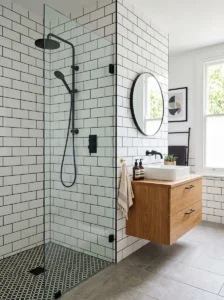
Conversely, for smaller tile like subway or penny tile, a contrasting grout color can add graphic definition that suits a more playful modern aesthetic. I used charcoal grout with white subway tile in a guest bathroom, and it added just enough edge to keep the space from feeling too plain.
13. Vertical Tile on Shower Walls to Add Height
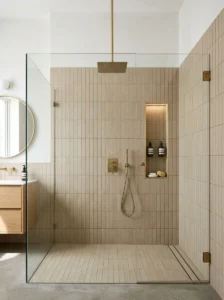
Running tile vertically rather than horizontally on shower walls can create the illusion of higher ceilings, a helpful trick in bathrooms with standard or lower ceiling heights. We used this technique in our main shower, and it made the space feel noticeably taller than it actually is.
14. Mixed Tile Sizes Within the Same Palette
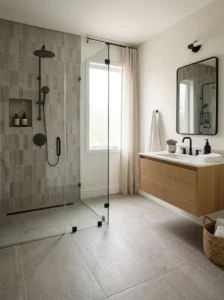
Using two different tile sizes within the same color family, a larger tile on the floor and a smaller version on an accent wall, adds subtle variation while maintaining overall cohesion. This is an approach I’ve used successfully in a couple of projects to avoid a flat, single-note look.
15. Terrazzo-Style Tile
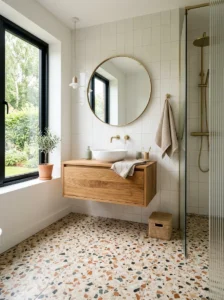
Terrazzo, with its flecked, speckled appearance, has made a strong comeback in modern bathroom design, offering a playful yet sophisticated texture. A friend used terrazzo-style tile in her powder room floor, and it’s become one of the standout features of her entire home.
16. Fluted or Ribbed Tile
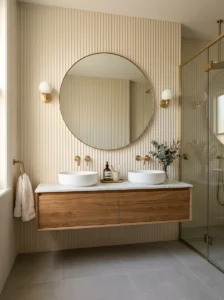
Fluted tile, with its vertical ribbed texture, adds a refined, almost furniture-like quality to shower walls or accent areas. I’ve seen this used beautifully in newer bathroom renovations and would consider it for a future project focused on a slightly more upscale aesthetic.
17. Muted Earth-Tone Tile
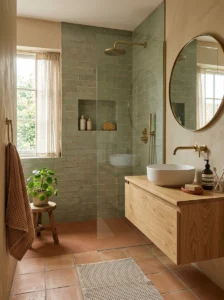
Moving away from stark white or gray, muted earth tones, soft terracotta, warm clay, sage green, have become popular for bathrooms wanting a warmer, more organic modern feel. I used a soft sage green tile in a small powder room, and it’s added a calming, distinctive character that a neutral palette wouldn’t have achieved.
Mistakes I Made Along the Way
- Almost choosing a strongly contrasting grout with large tile – This would have made our large-format tile look far busier and less seamless than intended.
- Underestimating how much tile size affects perceived room size – Our earlier plan used smaller tile that, in hindsight, would have made the bathroom feel more cramped.
- Not considering vertical tile orientation early enough – This was a late addition to our shower design, but it made a meaningful difference in how tall the space felt.
- Overlooking texture in favor of pattern alone – I focused heavily on tile pattern before realizing texture (like our 3D accent option) plays just as important a role in modern design.
Frequently Asked Questions
Is large-format tile harder to install than smaller tile? Yes, generally speaking, large-format tile requires a more level substrate and more precise installation, which can sometimes increase labor costs compared to smaller tile options.
Does matte tile scratch more easily than glossy tile? Not necessarily, though it can show scratches slightly more visibly on certain darker matte finishes. Overall durability depends more on the tile material itself than the finish.
What tile size works best for a small bathroom? Large-format tile with minimal grout lines tends to make small bathrooms feel more spacious, though very large tile can occasionally be difficult to fit into extremely tight or oddly shaped rooms.
Should shower floor tile match the shower wall tile? Not necessarily. Many modern designs intentionally use a different (often smaller) tile on the shower floor for slip resistance, while keeping the walls in a larger, more seamless format.
Final Thoughts
Looking back at those multiple tile showroom visits, I’m genuinely glad we took the time to get this decision right, because tile ended up shaping the entire character of our bathroom far more than I initially expected. Choosing the right tile for a modern bathroom isn’t just about picking something trendy, it’s about understanding how size, finish, pattern, and grout choice work together to create a space that feels cohesive, intentional, and genuinely current rather than simply following whatever look happens to be popular at the moment.