When we bought our house, the main bathroom was stuck firmly in the early 2000s, ornate faucet fixtures, a heavily patterned tile border running around the entire room, and a light fixture with more brass detailing than I knew what to do with. It wasn’t necessarily poorly made, it just felt busy and dated in a way that made the room feel smaller and more cluttered than its actual size. Every time I walked in, my eye didn’t know where to land first, the border, the fixture, the faucet, and that visual noise made even simple morning routines feel slightly chaotic.
I’d always admired the clean, almost minimalist look of modern bathrooms I’d seen in magazines and online, but I honestly assumed that style required an enormous budget and a full gut renovation to achieve. It wasn’t until I started researching the actual principles behind modern bathroom design that I realized how much of that clean look comes down to simplicity, restraint, and a few key material choices rather than expensive custom everything. That realization changed how I approached the entire project, shifting my mindset from “what do I need to add” to “what can I remove or simplify.”
Over the course of about a year, tackling the renovation in phases as our budget allowed, I transformed that dated, busy bathroom into a space that finally matched the calm, modern aesthetic I’d been drawn to for years. Since then, I’ve helped a couple of friends apply the same principles to their own bathrooms, and I’ve refined my sense of which changes actually matter most versus which ones just look nice in photos. Here are 13 modern bathroom design ideas I’ve personally used, seen succeed elsewhere, or researched thoroughly enough to recommend confidently.
What “Modern” Really Means in Bathroom Design
Before jumping into specific ideas, it’s worth clarifying what modern design actually means, since it’s often confused with just picking trendy finishes. True modern design is rooted in simplicity: clean lines, minimal ornamentation, a restrained color palette, and an emphasis on function alongside form. In my own renovation, the biggest shift wasn’t buying new “modern-looking” items, it was removing unnecessary detail and clutter that had accumulated in the original design. It took me longer than I expected to internalize that lesson, since my instinct throughout the process kept pulling me toward adding one more decorative touch rather than trusting that fewer, better-chosen elements would do more work visually.
1. Choose a Simple, Frameless Mirror
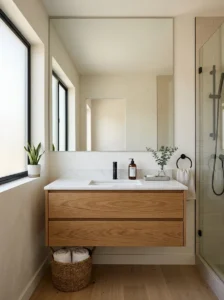
Swapping an ornate, framed mirror for a simple frameless one is one of the easiest ways to modernize a bathroom instantly. This was one of the first changes I made, and it immediately reduced the visual “busyness” of the room. I was honestly surprised by how much visual weight the old mirror’s frame had been carrying, once it came down, the whole wall felt lighter even before any of the bigger renovation work had started.
2. Use Large-Format Tile With Minimal Grout Lines
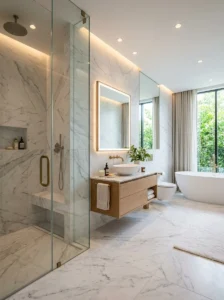
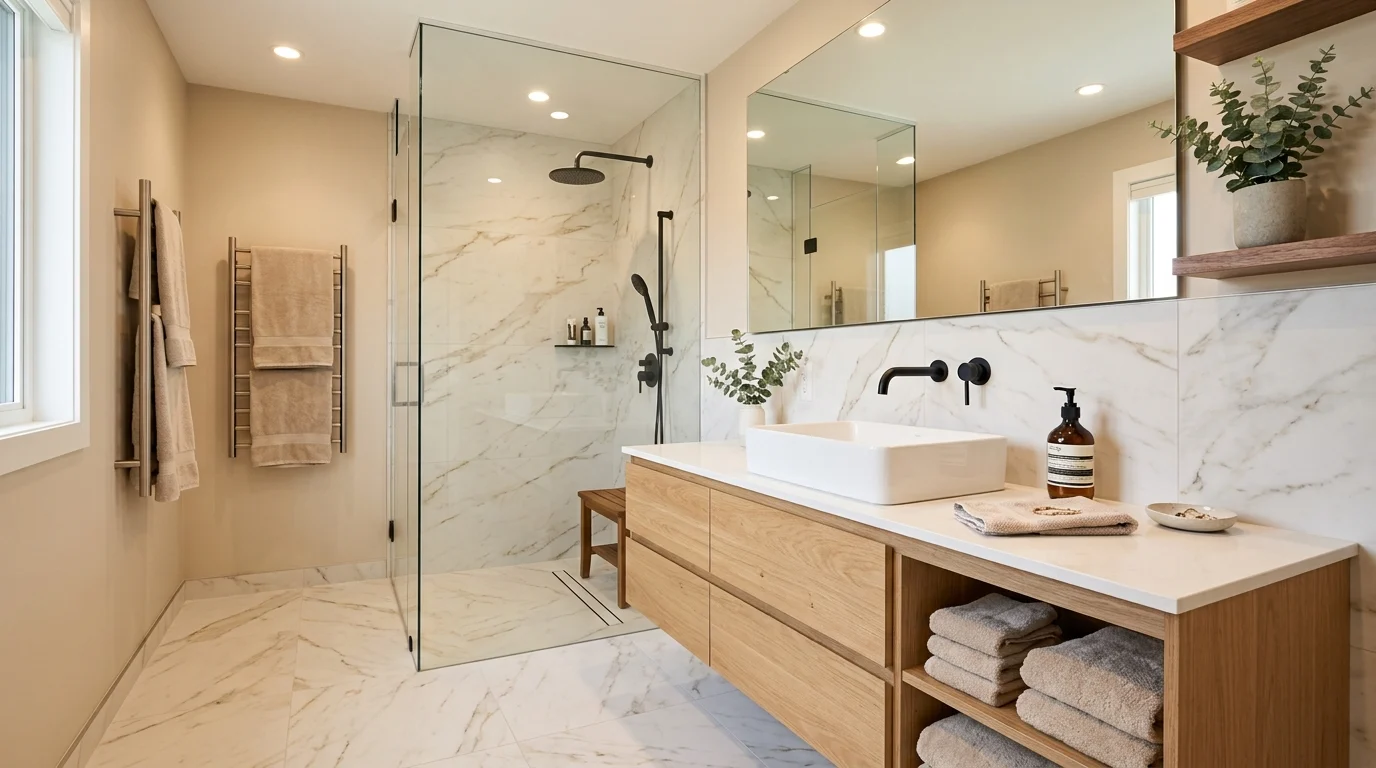
Large tiles create fewer visible seams, giving the room a cleaner, more streamlined look compared to smaller, more traditional tile sizes. I replaced our small mosaic floor tile with large-format porcelain, and the difference in overall visual calm was immediate. Beyond the aesthetic benefit, I also found the larger tiles noticeably easier to keep clean, since there was simply less grout overall for dirt and grime to collect in over time.
3. Install a Floating Vanity
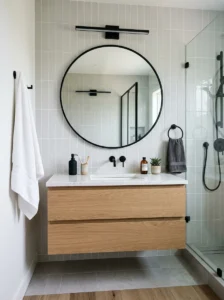
A wall-mounted, floating vanity is almost a signature feature of modern bathroom design, both for its clean look and the way it visually opens up the floor space. This was one of the more involved changes in our renovation, but it made the single biggest visual impact of anything we did. It required some additional wall reinforcement during installation since the vanity needed to support real weight without a cabinet base touching the floor, so this is one upgrade I’d recommend budgeting a bit more time and labor for compared to some of the simpler swaps on this list.
4. Choose Matte Black or Brushed Nickel Fixtures
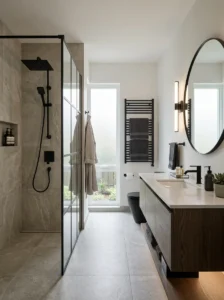
Moving away from shiny brass or chrome toward matte black or brushed nickel fixtures instantly updates the feel of a bathroom. We replaced our ornate brass faucet with a simple matte black one, and it tied the whole vanity area together. I ended up matching this fixture finish across the faucet, towel bar, and cabinet hardware, since even a small mismatch between finishes was enough to make the space feel slightly unfinished once I noticed it.
5. Stick to a Neutral, Restrained Color Palette
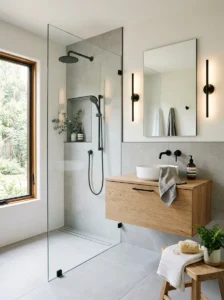
Modern design tends to favor a limited palette, often whites, grays, and blacks, with maybe one accent material like wood or a single bold tile choice. I had to consciously resist the urge to add too many colors during our renovation, since restraint was actually key to achieving the look I wanted. Every time I was tempted to add a bold accent wall color or a patterned textile, I asked myself whether it was truly necessary or just an old habit from our previous, busier design, and more often than not, leaving it out was the right call.
6. Use a Curbless Walk-In Shower
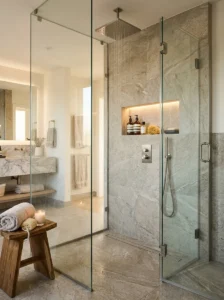
A curbless shower with a level entry creates a seamless, uninterrupted look between the shower and the rest of the bathroom floor. This required more construction work than most of our other updates, since it involved adjusting the subfloor to maintain proper drainage without a raised threshold, but it’s become one of my favorite features of the finished space. It also turned out to be a practical upgrade beyond the visual appeal, since it made the shower far more accessible for older family members visiting during the holidays.
7. Choose Geometric Tile Patterns
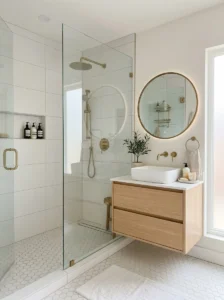
Simple geometric patterns, like a subtle hexagon or a clean grid layout, add interest without introducing the kind of ornate detail associated with more traditional bathroom styles. I chose a simple hexagon tile for our shower floor, and it added just enough texture without clashing with the room’s overall simplicity. I specifically avoided anything with an intricate multi-color pattern, since even a subtle geometric shape in a single neutral tone kept the design feeling calm rather than busy.
8. Use Recessed Lighting Instead of Ornate Fixtures
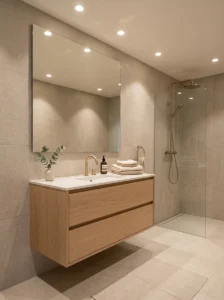
Recessed can lighting provides clean, even illumination without the visual clutter of an ornate overhead fixture. We replaced our old brass fixture with simple recessed lighting, and it immediately made the ceiling feel less busy. This change alone, before any of the tile or vanity work had even started, made the room feel noticeably more current, which told me just how much a single dated fixture can drag down an entire space.
9. Add a Single Statement Pendant Light
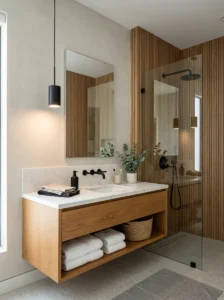
While recessed lighting handles general illumination, adding one simple, modern pendant light above the vanity provides a design focal point without overcrowding the space. I added a single black pendant above our sink, and it’s become a small detail that guests consistently notice. I made sure to keep it as the only standout lighting fixture in the room, since I learned that pairing it with another bold fixture elsewhere would have diluted its impact as a focal point.
10. Choose Handleless or Minimal-Hardware Cabinetry
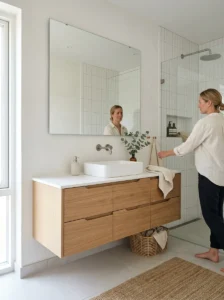
Cabinets with integrated finger pulls or minimal hardware maintain clean lines without visible knobs or handles breaking up the surface. We chose simple recessed pulls for our vanity, and it kept the cabinetry looking sleek and understated. This was a detail I almost skipped in favor of standard knobs simply because they were more readily available, but the difference in overall visual cleanliness once installed convinced me it was worth the extra search for the right hardware style.
11. Use a Single Bold Material as an Accent
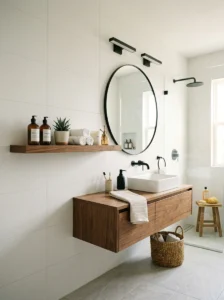
Rather than mixing several accent materials, modern design often relies on just one standout material, a slab of natural stone, a wood vanity top, to add warmth or interest against an otherwise neutral backdrop. We used a single walnut wood shelf as our one bold material choice, and it warmed up what could have otherwise felt like a stark space. I intentionally resisted adding a second contrasting material once the shelf was in place, since I’d learned by that point in the renovation that restraint mattered just as much as the choice of material itself.
12. Install a Frameless Glass Shower Enclosure
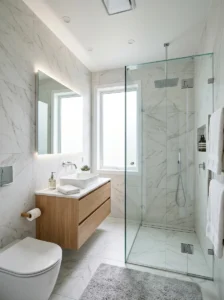
Clear, frameless glass shower doors maintain open sightlines throughout the bathroom, reinforcing the clean, uncluttered feel central to modern design. This was one of the more impactful upgrades in our renovation, replacing a framed, frosted door with simple clear glass. Beyond the visual improvement, it also made the whole bathroom feel more open on a purely practical level, since the eye could now travel uninterrupted from one side of the room to the other rather than stopping at a framed, opaque barrier.
13. Keep Countertops Clear of Clutter
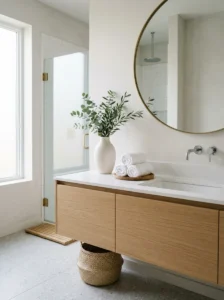
Modern bathrooms rely heavily on visual restraint, and cluttered counters undermine that no matter how well the rest of the room is designed. I adopted a simple habit of keeping only a couple of items visible on our counter at any time, everything else goes into drawers, and it’s made a noticeable difference in how clean the space feels day to day. This ended up being less about a design purchase and more about an ongoing habit shift, one that mattered just as much as any of the bigger renovation choices in maintaining the modern look we’d worked toward.
Phasing a Modern Bathroom Renovation on a Budget
One thing I learned firsthand is that a modern bathroom transformation doesn’t have to happen all at once. Because we tackled our renovation over roughly a year, we were able to prioritize the changes that made the biggest visual difference first, the mirror swap, the lighting update, and the faucet replacement, before saving up for the more expensive structural work like the floating vanity and curbless shower. This phased approach also gave me time to live with each change before committing to the next, which helped me avoid a few impulsive choices I might have regretted had I rushed the entire renovation in a single push. If your budget doesn’t allow for a full renovation right now, I’d genuinely recommend starting with fixture finishes and lighting, since those two categories offered the most noticeable transformation for the lowest relative cost in our own experience.
Mistakes I Made Along the Way
- Initially wanting to keep too many original details – I held onto a decorative tile border longer than I should have, simply out of hesitation about full removal.
- Choosing glossy tile before switching to matte – My original tile sample looked fine in the showroom but showed water spots constantly once installed.
- Overloading the counter with decorative items – This was a habit I had to consciously break, since it worked against the clean look I was trying to achieve.
- Underestimating how much a single fixture finish change could do – Swapping just the faucet from brass to matte black made a bigger difference than I expected before tackling any bigger renovation work.
Frequently Asked Questions
Does modern bathroom design require an entirely new renovation? Not necessarily. Many modern updates, like fixture finishes, mirror styles, and lighting, can be swapped without a full gut renovation, making it possible to modernize a bathroom in phases.
What color palette works best for a modern bathroom? Neutral palettes, whites, grays, and blacks, paired with one warm accent material like wood, tend to define the modern bathroom look most effectively.
How can I modernize a bathroom on a smaller budget? Focusing on fixture finishes, lighting updates, and reducing visual clutter tends to offer the most noticeable transformation for the lowest cost compared to full tile or cabinetry replacements.
Is a floating vanity difficult to install in an older home? It can require additional wall reinforcement to properly support the weight, especially in older homes without existing blocking in the wall, so it’s worth having a contractor assess the wall structure before committing to this upgrade.
Final Thoughts
Looking back at that dated, busy bathroom we started with, it’s genuinely rewarding to see how much a shift toward simplicity and restraint transformed the space into something that finally matches the clean, modern aesthetic I’d admired for years. Modern bathroom design isn’t about chasing every new trend, it’s about paring back unnecessary detail, choosing quality over quantity in your finishes, and allowing a few well-chosen elements to define the space rather than overwhelming it with detail.