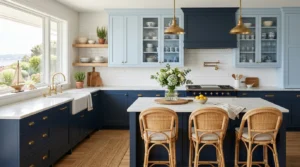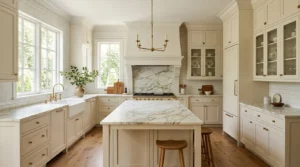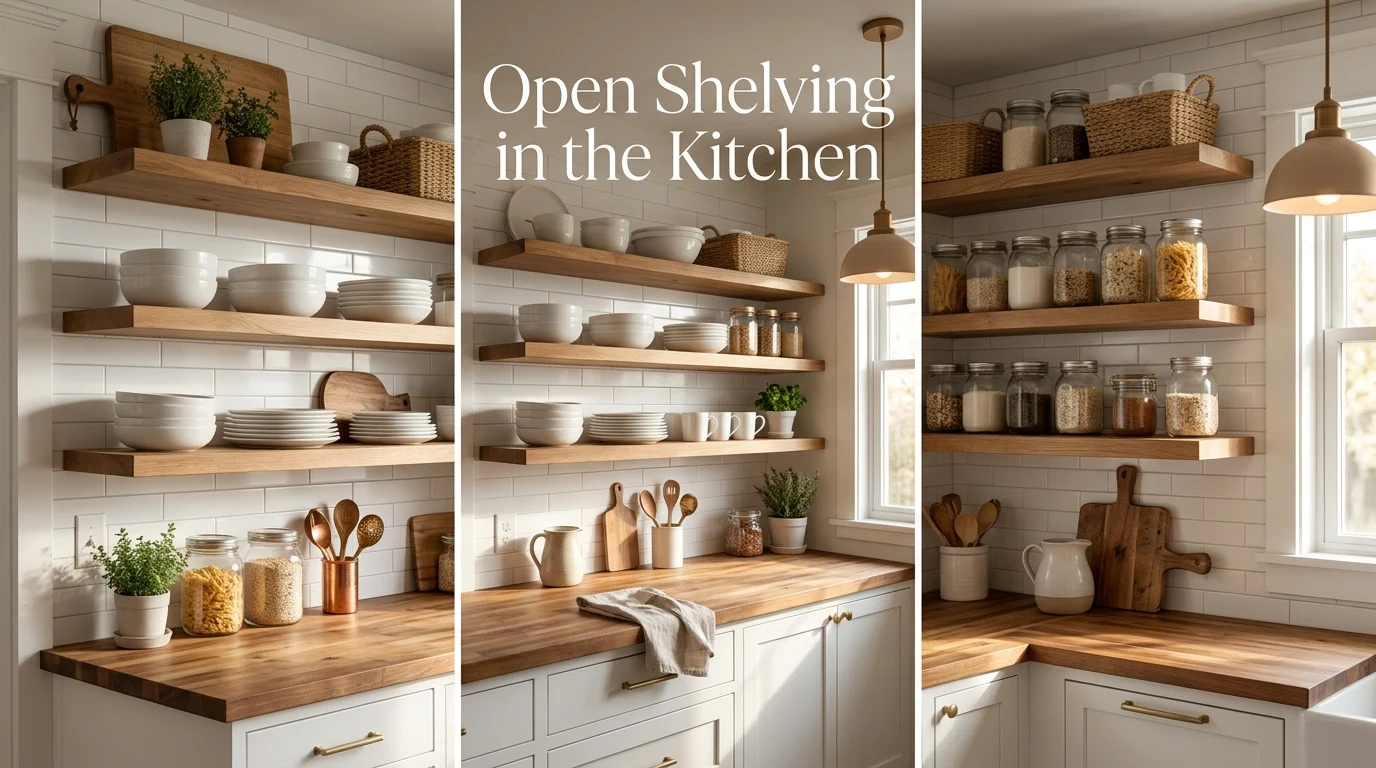
Open shelving in the kitchen looks beautiful in photos. It can make a kitchen feel lighter, more open, and more personal while giving everyday dishes and decor a stylish place to be displayed. Many people love the relaxed and airy feeling that open shelves create, especially in modern farmhouse, coastal, Scandinavian, and cozy kitchens.
But what most people don’t talk about is the reality of living with open shelving every day. Dust, clutter, mismatched dishes, and constant styling worries often make homeowners nervous about trying it in their own kitchens.
The good news is that open shelving can absolutely work in real life without becoming stressful or messy. The secret is understanding what actually belongs on the shelves, how to organize them properly, and what mistakes to avoid before you start.
Here’s what no one really tells you about open shelving in the kitchen — and how to make it look beautiful without constantly restyling it every day.
1. Open Shelving Looks Better When You Use It for Everyday Items
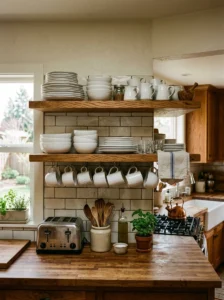
One of the biggest misconceptions about open shelving is that everything has to look perfectly staged all the time. In reality, open shelves work best when they hold items you actually use every day. Constantly removing decorative objects just to grab a plate or mug quickly becomes frustrating.
The most successful open shelving setups are practical first and decorative second. Everyday dishes naturally create a lived-in and welcoming look when they’re grouped neatly together.
Items that work especially well include:
- White dishes
- Neutral mugs
- Drinking glasses
- Wooden cutting boards
- Everyday bowls
When the items coordinate in color or style, the shelves automatically look more organized without much effort.
Using everyday essentials also means the shelves stay functional instead of becoming purely decorative storage that collects dust.
The truth is that perfectly styled kitchens seen online are usually unrealistic for daily life. Real kitchens feel warmer and more authentic when shelves are designed around actual routines and habits instead of photo-perfect styling.
2. Not Everything Should Be Displayed
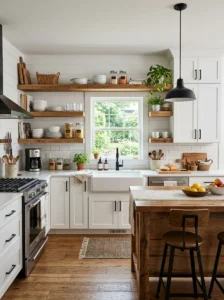
One thing people quickly learn about open shelving is that not every kitchen item deserves to be visible. Some things naturally look beautiful on shelves, while others instantly create visual clutter no matter how organized they are.
The key is being selective about what stays out in the open.
Items that usually work best include:
- Matching dishes
- Ceramic bowls
- Glass jars
- Wooden utensils
- Neutral cookware
Meanwhile, overly colorful packaging, random plastic containers, and mismatched kitchen gadgets often look messy very quickly.
This is why combining open shelving with closed cabinets works so well. Hidden storage keeps less attractive essentials out of sight while open shelves display the prettier everyday items.
A major mistake people make is trying to force all kitchen storage onto open shelving. In reality, the best kitchens use a balance between open and closed storage.
Once you stop trying to display everything, open shelving becomes much easier to maintain and style naturally.
3. Open Shelves Can Actually Make Small Kitchens Feel Bigger
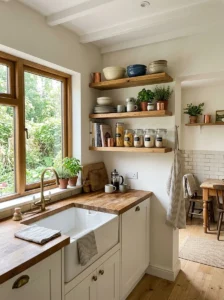
One reason open shelving became so popular is because it visually opens up the kitchen. Traditional upper cabinets can sometimes make small kitchens feel heavy and boxed in, especially in spaces with limited natural light.
Replacing bulky cabinets with open shelves instantly creates a lighter and airier atmosphere.
Open shelving helps by:
- Exposing more wall space
- Allowing light to travel freely
- Reducing visual heaviness
- Making ceilings appear taller
This effect works especially well in compact kitchens and apartments where every inch matters.
Lighter wood shelves and neutral dishware enhance the open feeling even more. Floating shelves also create cleaner lines compared to bulky cabinetry.
Of course, organization becomes more important in smaller kitchens because clutter is more noticeable. But when styled thoughtfully, open shelving can make even tiny kitchens feel brighter, calmer, and more spacious.
4. You’ll Need to Be More Intentional About Organization
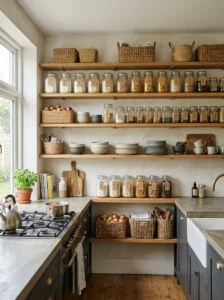
Open shelving forces you to stay more intentional with organization because everything remains visible. Unlike closed cabinets where clutter can be hidden behind doors, open shelves instantly reveal disorganization.
This sounds stressful at first, but many people actually find it helpful because it encourages simpler kitchen habits and less unnecessary clutter.
Grouping similar items together makes a huge difference.
For example:
- Plates stacked together
- Baking items in jars
- Coffee supplies grouped in baskets
- Glassware arranged by type
The shelves feel cleaner when items are organized in clear categories instead of randomly placed.
Baskets, ceramic containers, and glass jars are especially useful because they hide smaller messy items while still maintaining a cohesive look.
The goal is not perfection — it’s consistency. Once everything has a designated place, maintaining open shelves becomes much easier than most people expect.
5. Dust Isn’t as Big of a Problem as People Think
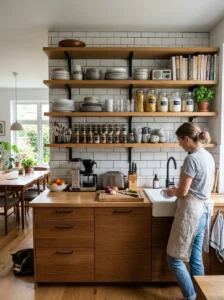
One of the most common concerns about open shelving is dust. While shelves do collect some dust over time, everyday kitchen items usually get used often enough that this becomes far less noticeable than people imagine.
Plates, bowls, mugs, and glasses that are used regularly rarely sit untouched long enough to become dusty.
The real issue is decorative items that never move.
Items more likely to collect dust include:
- Fake plants
- Decorative signs
- Rarely used serving dishes
- Unused cookbooks
Keeping shelves functional naturally reduces maintenance because items are constantly rotated through regular use.
Good kitchen ventilation and regular light cleaning also help minimize dust buildup.
The reality is that open shelving often requires far less maintenance than people fear, especially when designed around practical daily use instead of excessive decoration.
6. Matching Items Make Everything Easier
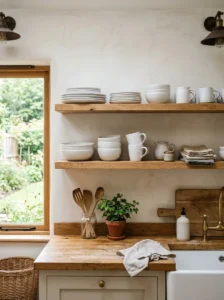
One secret behind beautiful open shelving is coordination. Kitchens instantly look calmer and more organized when dishes and accessories share similar colors, materials, or styles.
This doesn’t mean everything has to match perfectly, but some visual consistency helps shelves feel intentional instead of chaotic.
White dishes are especially popular because:
- They reflect light
- Always look clean
- Match any kitchen style
- Feel timeless
Natural materials like wood, ceramic, linen, and glass also pair beautifully together.
When colors and textures coordinate naturally, shelves remain visually balanced even after dishes are used and restacked throughout the week.
This is why many designers recommend slowly building collections over time instead of buying random pieces separately.
Coordinated shelves require much less styling effort because the items naturally work together.
7. Open Shelving Creates a More Relaxed Kitchen Atmosphere
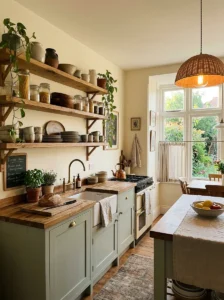
One unexpected benefit of open shelving is how much more relaxed and lived-in the kitchen feels. Closed cabinets can sometimes create a formal or overly structured appearance, while open shelves make kitchens feel softer and more personal.
Open shelving allows everyday items to become part of the decor itself.
Things like:
- Stacked dishes
- Coffee mugs
- Wooden boards
- Glass jars
- Cookbooks
all help create warmth and personality.
This relaxed feeling works especially well in cozy, farmhouse, coastal, and Scandinavian kitchens where comfort and simplicity are important.
Open shelves also encourage slower and more thoughtful styling choices because fewer items are hidden away behind doors.
The result is a kitchen that feels more welcoming, functional, and connected to everyday life rather than overly perfect or staged.
8. Styling Once Properly Is Better Than Constant Rearranging
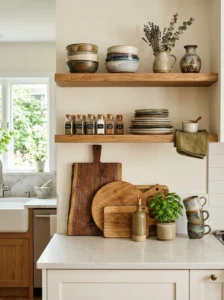
A lot of people assume open shelving requires daily styling, but the truth is that well-designed shelves usually stay looking good with very little effort. The key is setting them up properly from the beginning.
Once you create a balanced layout with coordinated items and organized groupings, maintaining the shelves becomes surprisingly simple.
Helpful styling tips include:
- Group similar items together
- Keep color palettes simple
- Use baskets for smaller items
- Mix heights and textures
- Leave some empty space
Overcrowded shelves are much harder to maintain because they quickly start looking messy.
The best open shelving feels natural rather than overly styled. Real kitchens should still feel functional and comfortable for daily use.
When shelves are organized intentionally from the start, they continue looking beautiful without constant rearranging or perfectionism.
CONCLUSION
Open shelving in the kitchen can absolutely work in real life — but only when it’s designed with practicality in mind.
The most successful shelves combine organization, everyday functionality, and simple styling rather than unrealistic perfection.
By displaying useful items, keeping clutter hidden, and creating balanced groupings, open shelving becomes easier to maintain than most people expect.
When done thoughtfully, open shelves can make kitchens feel brighter, warmer, and far more welcoming every single day.