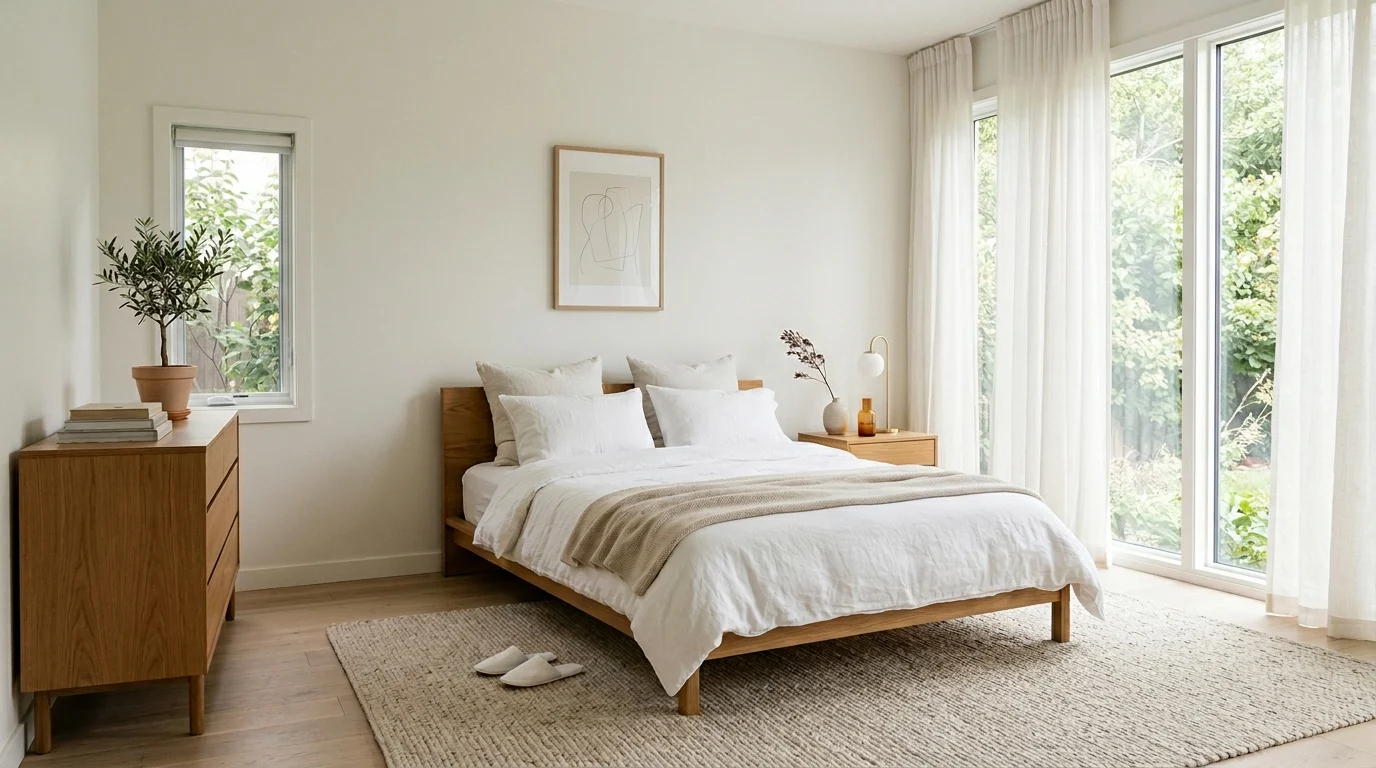
A minimal bedroom doesn’t have to feel cold or empty. Some of the most beautiful spaces are actually the simplest ones, with fewer distractions and more room to breathe.
A few years ago, I started removing unnecessary decor from my own bedroom, and the difference was immediate. The room felt calmer, brighter, and somehow easier to keep organized.
If you’re craving that fresh, uncluttered look, these minimal bedroom ideas can help you create a space that feels effortlessly clean every day.
1. Start With an All-White Foundation
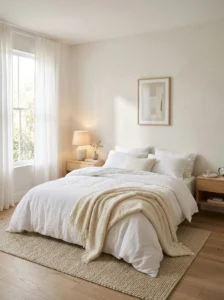
One of the easiest ways to create a minimal bedroom is by starting with a soft white foundation. White walls, white bedding, and light-colored furniture instantly make a room feel larger and more open. The trick is adding subtle layers so the space doesn’t feel flat or sterile.
I learned this after repainting a small guest room in warm white instead of bright white. The difference was surprising. The room still looked clean, but it felt much more inviting. Soft linen bedding, a textured throw blanket, and cream-colored curtains added depth without creating visual clutter.
Natural light becomes a major design feature in a white bedroom. During the day, sunlight reflects across the room and highlights simple details like woven baskets, wood grain furniture, or crisp bedding folds. Even a small room can feel airy when there aren’t too many competing colors.
To keep the space balanced, stick to two or three neutral shades throughout the room. Think white, beige, and light oak. This simple palette creates a calm atmosphere while maintaining the clean, effortless look that makes minimal bedroom design so appealing.
2. Choose Low-Profile Furniture
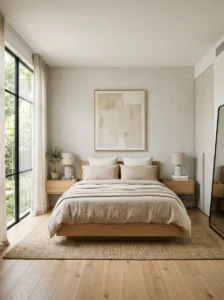
Low-profile furniture is one of those design choices that quietly changes the entire feel of a bedroom. Beds that sit closer to the floor, streamlined nightstands, and simple dressers create a sense of openness that instantly makes a room look less crowded.
What I like most about this approach is how it allows the room itself to stand out. Instead of furniture dominating the space, your eye notices the clean lines, natural light, and balanced layout. A platform bed with a simple wooden frame often works better than bulky traditional designs in a minimalist bedroom.
The visual weight of furniture matters more than many people realize. Heavy pieces can make a room feel busy even when there isn’t much inside it. Lower furniture creates more visible wall space, which naturally gives the room a lighter appearance.
Pair these pieces with minimal hardware and simple finishes. Matte wood, white lacquer, or soft neutral tones work especially well. A small bedside lamp and one carefully chosen decorative object are often all that’s needed.
The result feels relaxed rather than staged. Everything has a purpose, and the room maintains a clean look without feeling empty or unfinished.
3. Use Hidden Storage to Eliminate Visual Clutter
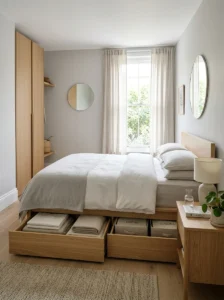
Minimal bedrooms aren’t necessarily free of belongings. The difference is that most items are stored out of sight. Hidden storage keeps daily necessities accessible while preserving the calm, uncluttered appearance that makes minimalist spaces so attractive.
One of the best upgrades I made in my own bedroom was switching to a storage bed. Extra bedding, seasonal clothing, and miscellaneous items suddenly had a dedicated place. The room looked cleaner almost overnight because surfaces stayed clear.
Look for furniture that works harder. Beds with built-in drawers, nightstands with enclosed storage, and storage benches at the foot of the bed can dramatically reduce visible clutter. Even simple woven baskets tucked inside a closet can make a difference.
The goal isn’t perfection. It’s creating enough storage that everyday items don’t end up scattered around the room. A phone charger, a book, and a glass of water are normal. Piles of clothes and random accessories quickly interrupt the peaceful feeling.
When everything has a home, cleaning becomes easier too. The room feels intentional rather than busy, which is exactly what gives minimal bedroom ideas their timeless appeal.
4. Layer Soft Neutral Textures

A common mistake in minimalist design is focusing only on reducing items. Texture is what prevents a simple bedroom from feeling flat. Layering different materials creates warmth while still maintaining a clean, uncluttered appearance.
Think linen duvet covers, chunky knit throws, woven rugs, and soft cotton pillows. Even though the color palette stays neutral, the room feels rich because each material brings a different visual and tactile quality. This approach creates interest without relying on bold colors or excessive decor.
I once stayed in a hotel room that used only beige, cream, and light gray tones. On paper it sounded boring, yet it felt incredibly luxurious because every surface had a different texture. That experience completely changed how I approached minimal decorating.
Natural materials work especially well. Linen, cotton, wool, rattan, and light wood all contribute to a relaxed atmosphere. These elements age beautifully and often become more attractive over time.
When choosing textures, keep the palette restrained. Too many competing patterns can undermine the minimalist aesthetic. A few carefully layered materials create a bedroom that feels cozy, sophisticated, and effortlessly clean without sacrificing comfort.
5. Keep Nightstands Intentionally Simple
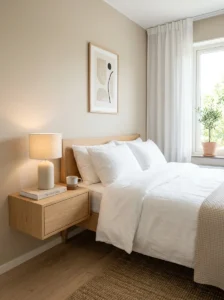
The nightstand is often one of the first places where clutter begins to accumulate. Books, charging cables, receipts, water bottles, and random items can quickly make an otherwise clean bedroom feel messy.
A minimalist approach focuses on keeping only the essentials within reach. A lamp, a book you’re currently reading, and perhaps a small tray for personal items are usually enough. Everything else can be stored inside drawers or nearby cabinets.
I noticed a huge difference when I cleared my own nightstand. The room immediately felt calmer each morning because there was less visual noise competing for attention. It’s a small change that has a surprisingly large impact.
Choose nightstands with clean lines and minimal detailing. Floating designs are particularly effective because they create a lighter appearance and make the floor seem more open. Light wood and neutral finishes blend naturally into most minimalist bedroom designs.
The goal isn’t making the space look untouched. It’s creating a functional surface that supports daily routines without becoming a storage zone. When the bedside area stays organized, the entire room feels more balanced and intentionally designed.
6. Let Natural Light Become the Main Feature
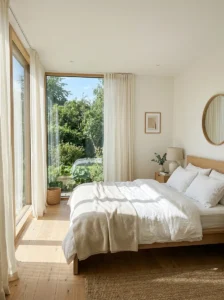
Sometimes the most beautiful thing in a bedroom isn’t the furniture or decor at all. It’s the natural light. A minimal bedroom feels cleaner when sunlight has room to move freely throughout the space instead of being blocked by heavy curtains, oversized furniture, or too many decorative accessories.
One change I made years ago was replacing thick dark drapes with simple linen curtains. The room instantly felt larger and fresher. Morning light filtered softly through the fabric, creating a calm atmosphere that no decorative piece could replicate. It became one of my favorite parts of the room.
To maximize natural light, keep window treatments simple and choose light-colored fabrics whenever possible. Sheer panels, linen curtains, or streamlined roller shades work beautifully in minimalist interiors. Position furniture so it doesn’t obstruct windows or create unnecessary shadows.
Light also highlights textures in a subtle way. A linen duvet, natural wood nightstand, or woven rug becomes more noticeable when sunlight moves across the room during the day. These details add visual interest without creating clutter.
The result is a bedroom that feels open, airy, and naturally inviting. And honestly, few design elements make a space feel cleaner than abundant natural light.
7. Decorate With One Statement Piece
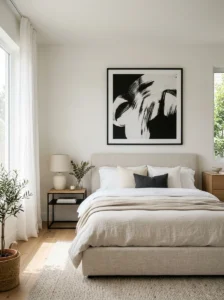
Minimalism doesn’t mean eliminating personality. In fact, a single statement piece often has more impact than a room filled with decorations. Instead of displaying many small items, focus on one feature that naturally draws attention.
A large framed artwork above the bed works beautifully. So does an oversized mirror, a sculptural pendant light, or a unique upholstered headboard. The key is allowing that piece to stand on its own without competing against dozens of accessories.
I remember helping a friend redesign her bedroom. She removed multiple wall decorations and replaced them with one large black-and-white landscape photograph. The room suddenly felt more sophisticated, and surprisingly, much larger. Sometimes less really does create a stronger visual effect.
Choose something that reflects your personal style while fitting the overall color palette. Neutral tones often work best in minimalist bedrooms because they maintain a calm, cohesive look. However, a carefully chosen accent color can also create beautiful contrast.
When the eye has a clear focal point, the entire room feels more organized. The space appears intentional rather than crowded, which is one of the defining characteristics of successful minimal bedroom design.
8. Use a Neutral Color Palette Throughout
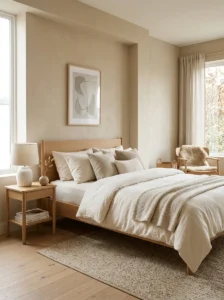
A consistent color palette is one of the easiest ways to create a bedroom that feels effortlessly clean. Too many competing colors can make even an organized room feel visually busy. Neutral shades help everything blend together in a calm and cohesive way.
Soft whites, warm beige, greige, taupe, and light wood tones are all excellent choices. These colors create a soothing backdrop that allows textures and natural materials to shine. They also make rooms feel brighter, especially when paired with good natural light.
When I first started simplifying my bedroom, I removed several colorful accessories and replaced them with neutral pieces. Nothing dramatic changed, yet the room immediately felt calmer. It was one of those small adjustments that made a surprisingly big difference.
This doesn’t mean every item must match perfectly. Slight variations in tone actually make the room feel more layered and interesting. A cream duvet, beige throw blanket, and light oak furniture can work together beautifully without looking overly coordinated.
The goal is visual harmony. When colors flow naturally throughout the room, the space feels more relaxing and easier on the eyes. That’s a major reason neutral minimal bedrooms remain popular year after year.
9. Keep Wall Decor Thoughtfully Minimal
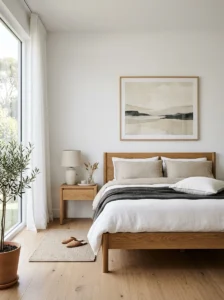
Walls play a huge role in the overall feeling of a bedroom. Too much artwork, shelving, or decorative accents can quickly make a space feel crowded. Minimal wall decor allows the room to breathe while maintaining a polished appearance.
Instead of filling every empty section of wall, choose a few meaningful pieces. One large artwork above the bed often works better than several smaller frames. A simple mirror can also add character while helping reflect natural light throughout the room.
I used to think blank walls felt unfinished. Over time, I realized that carefully chosen empty space can actually enhance a room’s design. It gives the eye a place to rest and helps important pieces stand out more effectively.
If you enjoy displaying personal items, consider limiting them to one dedicated area rather than spreading them throughout the room. This creates a curated look instead of visual clutter.
Clean wall space contributes significantly to the airy atmosphere associated with minimalist bedrooms. The room feels lighter, calmer, and more intentional. And because fewer decorations require maintenance, it’s much easier to keep everything looking neat on a daily basis.
10. Bring Nature Indoors With Simple Greenery
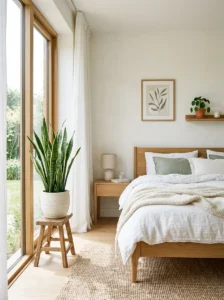
A touch of greenery can soften a minimalist bedroom without disrupting its clean aesthetic. Plants introduce natural texture, subtle color, and a sense of life that makes a room feel more welcoming.
The key is keeping things simple. One large plant in a corner often creates more impact than several small plants scattered throughout the room. Popular choices include snake plants, olive trees, rubber plants, and peace lilies because they pair beautifully with neutral interiors.
I added a single snake plant beside my bedroom window a few years ago. It wasn’t a dramatic design change, but the room immediately felt more balanced. The organic shape provided contrast against the straight lines of furniture and architecture.
Choose simple planters in neutral colors such as white, beige, black, or natural clay. This keeps the overall design cohesive while allowing the plant itself to become the focal point.
Plants also complement the natural materials commonly found in minimalist interiors. Combined with wood furniture, linen bedding, and woven textures, greenery helps create a calm environment that feels both fresh and effortless.
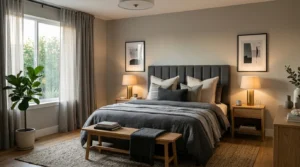
11. Create Symmetry Around the Bed
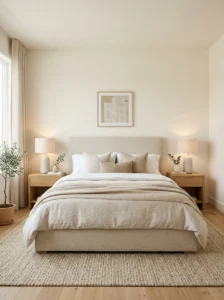
Symmetry has a subtle way of making a room feel organized and peaceful. In a minimalist bedroom, balanced arrangements help create visual order without requiring additional decorations or furniture.
One of the easiest ways to achieve symmetry is around the bed. Matching nightstands, identical table lamps, or evenly placed wall sconces create a sense of structure that immediately makes the room feel more intentional.
I’ve noticed that hotel bedrooms often use symmetry exceptionally well. Even simple spaces feel polished because furniture and lighting are balanced from side to side. Bringing that concept into a home bedroom can have a similar effect.
Symmetry doesn’t need to be perfect. The goal is simply creating visual balance. If matching furniture isn’t possible, choose pieces with similar proportions or colors to maintain consistency.
This approach works especially well in minimalist spaces because it reduces visual distractions. Everything feels calmer and more predictable, which naturally contributes to the clean atmosphere people seek when designing a minimalist bedroom.
12. Embrace Empty Space

Perhaps the most overlooked element of minimalist design is empty space itself. Many people focus on what should be added to a room, but minimal bedrooms often succeed because of what isn’t there.
Open floor areas, uncluttered surfaces, and clear pathways create a sense of calm that’s difficult to achieve in crowded spaces. Empty space allows furniture, textures, and natural light to stand out without competition.
This was probably the hardest lesson for me personally. Whenever a corner looked bare, I felt tempted to fill it with something. Eventually I realized the room felt better when certain areas remained intentionally open. The space looked cleaner and somehow more relaxing.
Try resisting the urge to decorate every surface. Leave room between furniture pieces. Allow walls to breathe. Let natural light move freely through the room. These small decisions contribute significantly to the overall feeling.
A well-designed minimalist bedroom doesn’t feel empty. It feels balanced. Every item serves a purpose, and the open space around those items becomes part of the design itself. That’s what creates the effortlessly clean look so many homeowners love.