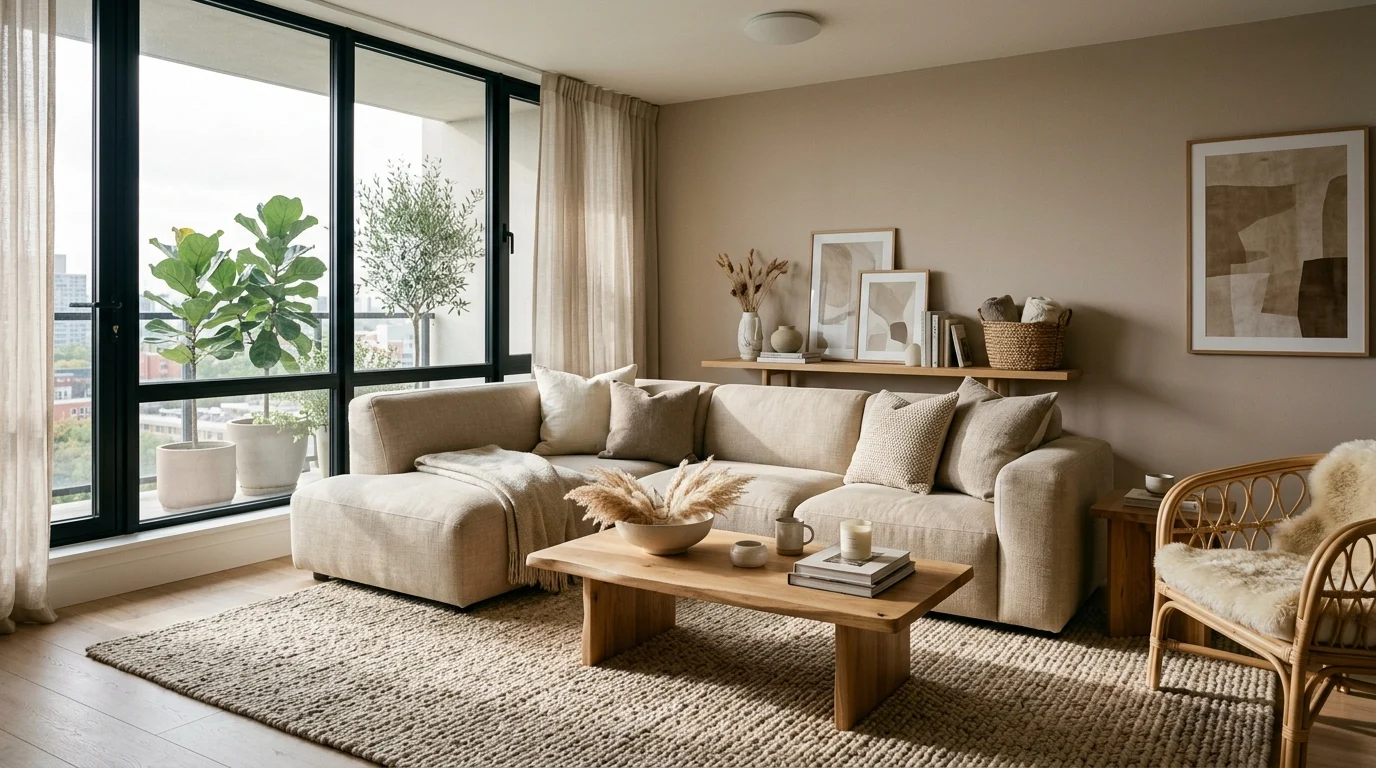
Finding the right rug size for a living room sounds simple until you actually start measuring things. Somehow the rug either ends up way too tiny or so oversized that the room feels crowded instantly. I’ve definitely made both mistakes before. But once the proportions feel right, the whole space suddenly looks calmer, warmer, and much more pulled together. A good rug doesn’t just sit under furniture. It quietly connects the entire room.
Use an 8×10 Rug for Most Standard Living Rooms
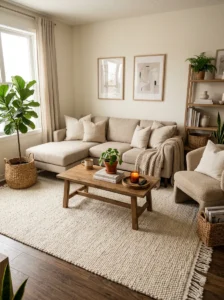
An 8×10 rug is usually the safest choice for a standard-sized living room because it creates enough coverage without overwhelming the space. It works especially well when the front legs of the sofa and accent chairs sit comfortably on the rug while leaving some floor visible around the edges. That balance makes the room feel connected but still open.
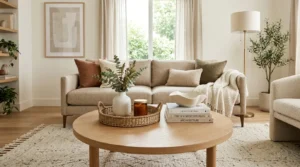
I personally love soft neutral rugs in this size because they instantly ground the furniture without making the layout feel heavy. Cream, taupe, faded olive, or warm beige tones all work beautifully in modern living rooms, especially paired with oak wood furniture and linen upholstery.
One mistake people make is choosing a rug that’s too small for the seating area. Tiny rugs can actually make the room feel smaller because everything looks disconnected. An 8×10 usually gives enough visual weight to tie the sofa, coffee table, and chairs together naturally.
Layered textures matter too. A slightly distressed rug paired with soft knit throws and woven baskets creates that cozy Pinterest-style atmosphere people always try to recreate. And honestly, once the proportions feel right, the whole living room instantly looks more intentional.
Try a 9×12 Rug for Open Concept Spaces
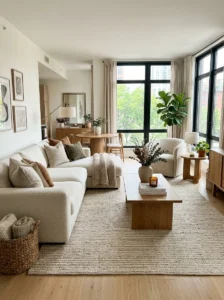
Open-concept living rooms usually need a larger rug because the seating area has to feel visually anchored inside a bigger layout. That’s where a 9×12 rug works beautifully. It gives enough room for almost all the furniture to sit partially or fully on the rug, which helps define the space naturally.
I love this rug size in homes with wide layouts, large windows, and airy modern interiors because it keeps everything feeling connected instead of scattered. Warm neutral rugs with subtle texture work especially well here. Think faded ivory, sandy beige, or soft gray with slightly distressed patterns that don’t overpower the room.
A large rug also softens hard flooring visually, especially when paired with layered linen curtains and warm wood furniture nearby. And honestly, the room feels more expensive once the furniture no longer looks like it’s floating awkwardly across the floor.
Natural sunlight hitting a large textured rug during the day creates so much warmth too. Add a low wood coffee table, oversized cushions, and maybe a soft boucle chair in the corner for balance.
It’s one of those details people don’t notice immediately. But they absolutely feel the difference once the layout looks properly grounded.
Small Living Rooms Usually Need Bigger Rugs Than Expected
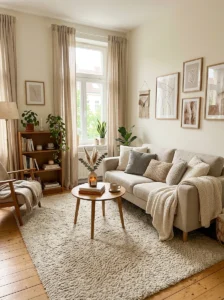
It sounds backward at first, but small living rooms almost always look better with larger rugs instead of tiny ones. A rug that’s too small visually cuts the room apart and makes everything feel cramped. Bigger rugs actually create a smoother flow because the furniture feels connected instead of crowded into separate little zones.
In compact apartments or narrow living rooms, I usually prefer rugs large enough for at least the front legs of every seating piece to sit comfortably on top. That instantly makes the layout feel calmer and more open.
Soft textured rugs in light neutral shades help even more. Cream, warm ivory, pale gray, or sandy beige tones reflect natural light beautifully and make tight spaces feel brighter. Pair those colors with slim furniture legs, soft linen fabrics, and warm oak accents for an airy look that still feels cozy.
One detail I personally love is leaving equal floor spacing around the rug edges whenever possible. It creates visual balance without making the room feel boxed in.
And honestly, oversized rugs often make small living rooms feel more luxurious too. The space suddenly looks thoughtfully designed instead of squeezed together piece by piece.
Leave 12 to 18 Inches of Floor Around the Rug
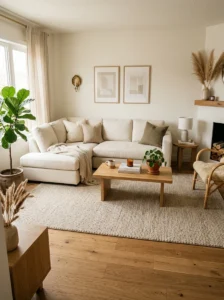
One of the easiest ways to make a rug look properly sized is leaving enough visible flooring around the edges of the room. Usually around 12 to 18 inches works beautifully in most living rooms because it frames the rug naturally without making the space feel crowded.
I’ve noticed rooms start feeling awkward when the rug stretches wall to wall without breathing room. The layout loses definition somehow. But when there’s a border of exposed flooring, especially warm wood or textured laminate, the entire seating area feels more balanced.
This works especially well in modern and organic-style living rooms where layered textures already play a big role. A cream rug framed by warm oak flooring creates such a calm inviting contrast. Add woven baskets, soft linen curtains, and matte black lighting nearby, and the whole room suddenly feels more intentional.
If your living room is extra small, don’t stress about exact measurements though. Even slightly visible floor space helps visually separate the rug from the walls.
And honestly, these little spacing details matter more than expensive furniture most of the time. Good proportions quietly make a room feel comfortable before anyone even notices why.
Round Rugs Work Beautifully in Small Seating Areas
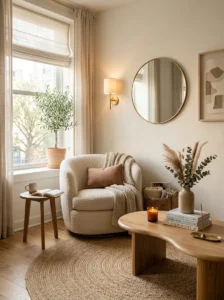
Round rugs can completely soften a living room layout, especially in smaller spaces where square furniture already creates lots of straight lines. They work beautifully under compact coffee tables, reading corners, or apartment seating areas because they make the room feel more relaxed and open.
I personally love round jute rugs layered beneath soft neutral furniture because the texture adds warmth instantly. A curved rug paired with boucle chairs, linen curtains, and warm wood accents creates this cozy organic feeling that photographs beautifully on Pinterest.
Smaller living rooms benefit from round rugs because the shape naturally improves movement through the room. Sharp corners disappear visually, so the space feels less boxed in. And when sunlight hits woven textures during the day, the room feels even softer.
Try pairing a round rug with a curved coffee table or rounded accent chair for extra balance. Even tiny styling details like ceramic vases, candles, or stacked books nearby help the space feel more layered.
Honestly, round rugs make living rooms feel more welcoming somehow. A little less formal. And sometimes that relaxed feeling is exactly what a small cozy space needs.
Layer Smaller Rugs for a Cozy Collected Look
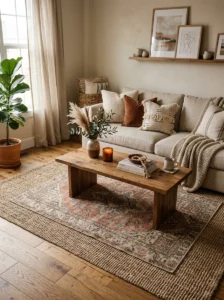
Layering rugs is one of those styling tricks that instantly makes a living room feel warmer and more lived in. Instead of relying on one expensive oversized rug, you can layer smaller affordable rugs together to create depth and texture without stretching the budget too much.
I really love starting with a large neutral jute rug underneath, then layering a softer vintage-style rug on top near the coffee table area. The contrast between woven natural texture and softer distressed fabric creates such a cozy relaxed atmosphere.
This approach works especially well in boho, organic modern, and farmhouse-inspired living rooms where slightly imperfect layering makes the space feel collected over time. Warm beige, faded terracotta, muted olive, or soft charcoal tones all blend beautifully together.
One thing that helps is keeping the color palette fairly cohesive so the room doesn’t start feeling visually busy. Layered rugs should soften the layout, not overwhelm it.
And honestly, layering also helps define zones inside larger living rooms. A smaller patterned rug under the coffee table creates intimacy while the larger neutral base keeps the room grounded overall.
It feels cozy instantly. Almost effortless.
Rugs Should Extend Beyond the Sofa Width
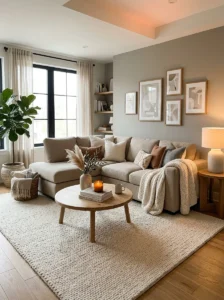
A rug that stops before the edges of the sofa almost always looks too small visually. One of the easiest layout tricks designers use is making sure the rug extends several inches beyond both sides of the sofa. That extra width helps the entire seating area feel larger and more balanced.
I usually prefer rugs that extend at least 6 to 12 inches wider than the sofa whenever possible. It creates this softer visual frame around the furniture instead of making everything feel squeezed together.
This looks especially beautiful in neutral living rooms where layered textures already play a big role. A cream textured rug beneath a warm beige sofa instantly creates that cozy Pinterest-style atmosphere people love. Add a wood coffee table, linen throw pillows, and soft ambient lighting nearby, and the room feels naturally finished.
Even smaller apartments benefit from this trick because wider rugs create smoother sightlines across the floor. The space feels calmer somehow.
And honestly, once the rug properly frames the seating area, the furniture suddenly looks more expensive too. The room stops feeling random and starts feeling thoughtfully arranged.
Match Rug Shape to the Furniture Layout
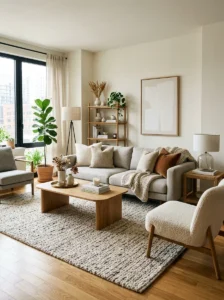
The shape of the rug matters just as much as the size. A rectangular rug usually works best in traditional seating layouts with sofas and coffee tables lined up across the room. But round or square rugs can feel much softer in smaller apartments or unusual layouts.
I personally love rectangular rugs in longer living rooms because they naturally guide the eye through the space. Meanwhile, round rugs work beautifully beneath curved chairs or compact reading corners where the layout feels more relaxed.
Square rugs can also look surprisingly good in perfectly square rooms because they help the proportions feel balanced. Pair them with modular sectionals or centered furniture arrangements for the cleanest look.
Texture matters here too. A woven jute rug creates warmth in organic modern spaces, while soft distressed rugs add coziness in more traditional or layered interiors. And lighter tones usually help small living rooms feel more open overall.
One detail I’ve noticed designers do often is matching rug shape to furniture flow instead of forcing standard layouts into awkward rooms. It sounds small, but the entire living room instantly feels more natural when the shapes work together.
That quiet balance changes everything visually.
Dining and Living Areas Need Separate Rug Zones
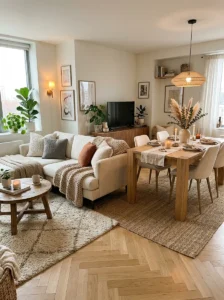
In open-concept homes, rugs help separate spaces without needing actual walls. That’s why living and dining areas usually look better with separate rugs instead of one giant rug covering everything.
A textured neutral rug beneath the sofa area instantly defines the living room, while a second rug under the dining table creates visual structure nearby. The room feels organized without losing openness.
I really love keeping the rugs connected through color instead of matching them perfectly. For example, a warm beige rug in the living room paired with a slightly darker vintage-style rug under the dining table creates cohesion while still giving each area its own identity.
Natural materials work beautifully in open layouts too. Jute rugs, faded wool textures, and woven patterns all help soften large spaces without making them feel overly formal.
And honestly, layered lighting matters even more here. Warm floor lamps near the living room rug and pendant lighting above the dining area help each zone feel cozy in its own way.
Open spaces can start feeling cold pretty quickly without visual anchors. Rugs quietly fix that problem while making the whole home feel warmer and more intentional.
Always Measure Before Buying a Rug
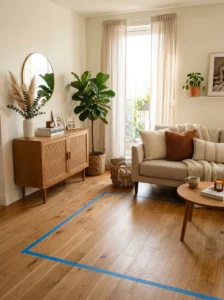
Honestly, guessing rug sizes almost never works out well. A rug might look perfect online, but once it arrives, the proportions can feel completely different inside the actual room. That’s why measuring first makes such a huge difference.
I usually recommend outlining the rug size directly on the floor with painter’s tape before buying anything. It sounds simple, but it instantly helps visualize how much space the rug will actually cover. You can walk around it, check furniture placement, and see whether the room still feels balanced.
This is especially important in small living rooms where even a few inches can change the entire layout visually. A properly measured rug makes the furniture feel connected while still leaving enough breathing room around the edges.
Soft neutral rugs are usually the safest option if you’re unsure about patterns or colors. Cream, taupe, faded gray, or warm earthy tones blend naturally with most furniture styles and help the room feel calmer overall.
And honestly, measuring first saves money too. Returning oversized rugs is never fun. Neither is living with one that feels awkward every single time you walk into the room.
A little planning makes the whole process so much easier.