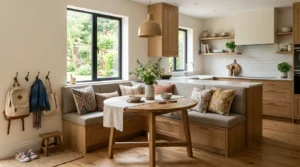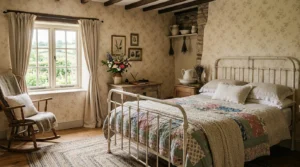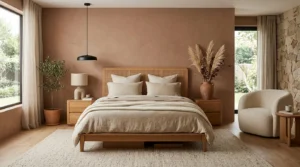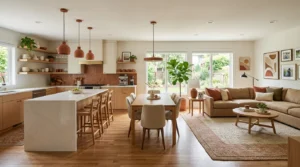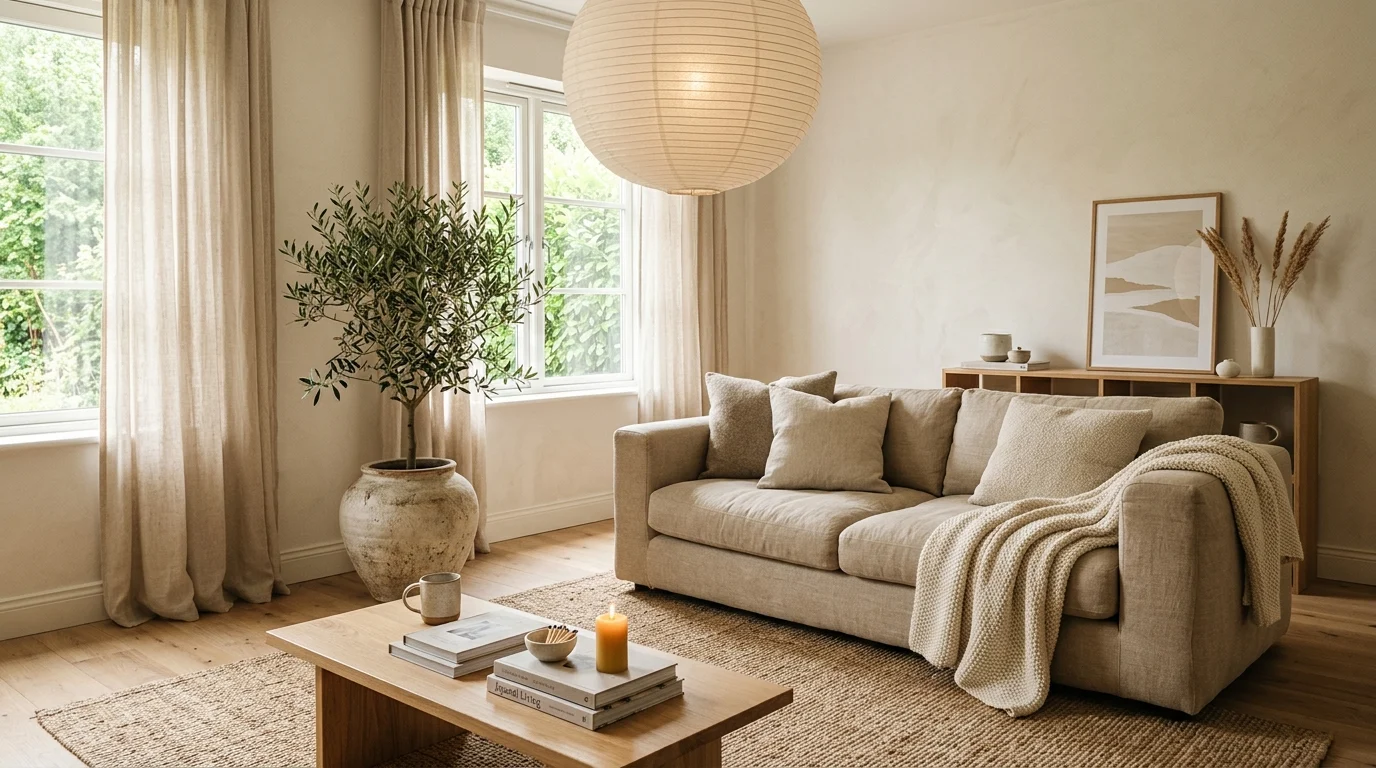
Some homes feel minimal but still soft and welcoming at the same time, and honestly, that’s exactly why Japandi Scandinavian interiors work so beautifully. The mix of warm wood, calming neutrals, and simple styling creates rooms that feel peaceful without looking empty. Nothing feels overly trendy or loud. Just quiet textures, natural light, and cozy balance. And once the layers start coming together, the whole home suddenly feels lighter and easier to live in.
1. Use Warm Beige and Soft White Wall
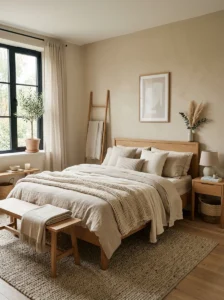
Warm neutral walls are usually the foundation of a cozy Japandi Scandinavian interior because they instantly make the room feel calm without looking cold. Soft whites, creamy beige, muted oatmeal, and warm greige tones work beautifully because they reflect natural light while still adding warmth to the space.
I personally love slightly textured paint finishes because they soften the walls naturally during the daytime. Pair those tones with oak furniture, woven rugs, and linen curtains for an even cozier layered look. The room starts feeling brighter without losing warmth.
One thing that really helps is avoiding harsh cool gray paint shades. Japandi interiors usually feel softer when the undertones stay warm and earthy instead of icy or overly modern.
And honestly, neutral walls quietly make everything else look more expensive too. Ceramic decor, warm wood furniture, and textured fabrics suddenly stand out naturally once the background feels calm and balanced instead of visually busy.
2. Choose Low Wooden Furniture With Clean Lines
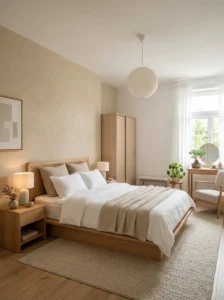
Low-profile furniture instantly creates that relaxed Japandi Scandinavian atmosphere because the room starts feeling open and grounded at the same time. Simple oak coffee tables, low platform beds, and clean-lined sofas help the layout feel calm without unnecessary heaviness.
I really love warm oak or walnut finishes because natural wood quietly becomes the main texture throughout the room. And honestly, softer rounded edges usually work better than sharp modern furniture because the space feels warmer overall.
Pair low furniture with textured linen upholstery, woven baskets, and soft neutral rugs nearby so the room still feels cozy instead of overly minimal. Natural sunlight hitting warm wood surfaces during the day also adds so much softness to the atmosphere.
One detail that makes Japandi interiors feel especially peaceful is leaving breathing room between furniture pieces. The layout should feel intentional, not crowded.
Simple furniture with natural materials usually creates more warmth than oversized decorative pieces ever could.
3. Layer Linen Textures Throughout the Room
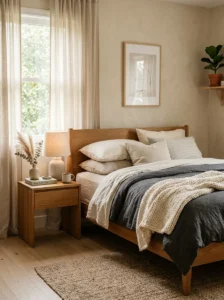
Linen quietly changes how a room feels. Soft linen curtains, relaxed bedding, textured pillow covers, and lightweight throws all help Japandi Scandinavian interiors feel calm and lived in without adding visual clutter.
I personally love layered neutral linens in warm cream, sandy beige, muted olive, or soft taupe tones because the textures create depth naturally even when the palette stays simple. Slight wrinkles honestly make the room feel softer too.
Bedrooms especially benefit from linen layering because the space instantly feels more relaxed and organic. Pair the fabrics with warm wood nightstands, ceramic lamps, and woven rugs nearby for even more warmth.
And natural sunlight filtering through sheer linen curtains during the morning creates the prettiest soft glow across the entire room.
One thing Japandi homes do really well is making minimal decor still feel welcoming. Texture is usually the reason why.
4. Add Soft Lighting Instead of Harsh Ceiling Lights
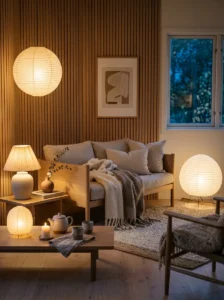
Lighting completely changes the mood of a Japandi Scandinavian home. Harsh overhead lighting usually makes minimal interiors feel colder than they actually are, while softer layered lighting instantly creates warmth and comfort.
I really love linen lampshades, paper lantern pendants, and warm table lamps because they diffuse light gently throughout the room. Warm-toned bulbs matter too. Soft amber lighting makes wood textures and neutral fabrics feel richer and calmer at night.
Try layering multiple light sources together instead of relying only on one ceiling fixture. Floor lamps near reading chairs, candles on shelves, and bedside lamps all help create a quieter atmosphere.
And honestly, Japandi interiors feel most beautiful during the evening once the softer lighting starts reflecting across natural textures like oak wood, woven baskets, and linen fabrics.
The room suddenly feels peaceful in the best way.
5. Keep Decor Minimal but Intentional
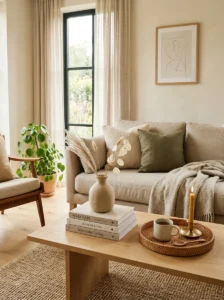
Japandi Scandinavian homes rarely feel cluttered because every decorative piece usually has breathing room around it. Instead of filling shelves with accessories, the styling stays simple and layered naturally over time.
I personally love oversized ceramic vases, stacked books, woven trays, and one or two branches in a sculptural vase because they create softness without overwhelming the room visually. And honestly, fewer decor pieces often make spaces feel more luxurious.
Neutral color palettes help here too. Warm ivory, beige, charcoal, muted olive, and soft wood tones blend together quietly instead of competing for attention.
One detail that really changes the atmosphere is leaving empty space intentionally. Japandi interiors feel calm partly because the eye has room to rest naturally throughout the space.
Minimal styling doesn’t mean the room feels unfinished. It simply feels balanced.
6. Use Woven and Natural Materials
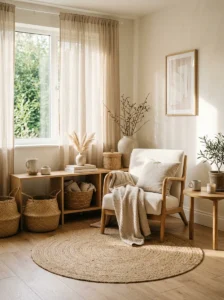
Natural textures are one of the biggest reasons Japandi Scandinavian interiors feel warm instead of sterile. Woven baskets, jute rugs, rattan lighting, and raw wood surfaces all help soften minimalist spaces beautifully.
I really love mixing different organic materials together because the room starts feeling layered even without bold colors. A woven rug beneath an oak coffee table paired with linen curtains and ceramic decor creates such a cozy balanced atmosphere.
Natural materials also age beautifully over time. Slight imperfections in wood grain or woven textures honestly make the space feel more personal and relaxed.
And sunlight hitting those earthy textures during the day creates soft shadows that make the room feel even warmer naturally.
One thing that helps is keeping the materials fairly neutral so the textures become the focus instead of loud patterns or colors.
7. Style Open Shelves With Breathing Room
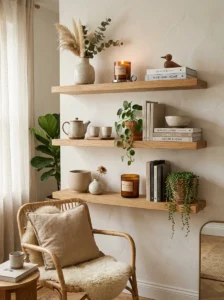
Open shelving works beautifully in Japandi Scandinavian homes when the styling stays simple and airy. Crowded shelves can quickly ruin the calm atmosphere, so spacing matters just as much as the decor itself.
I personally love floating oak shelves styled with stacked books, ceramic bowls, candles, and one trailing plant. The room instantly feels softer once there’s a little empty space between objects instead of every shelf being packed completely full.
Neutral decor also keeps open shelving feeling calm. Warm beige ceramics, matte black accents, and soft wood tones all blend naturally into Japandi interiors without creating visual clutter.
And honestly, open shelves usually feel more relaxed when the styling looks slightly imperfect instead of overly staged.
A little asymmetry makes the room feel lived in.
8. Bring Nature Indoors With Simple Greenery
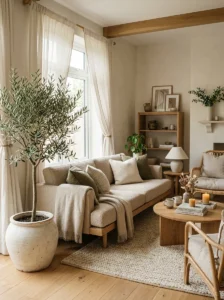
Japandi Scandinavian interiors almost always feel connected to nature somehow, even when the decor stays minimal overall. Indoor plants quietly soften the room and add life without disrupting the calm neutral palette.
I really love olive trees, snake plants, and trailing pothos because they work beautifully with warm wood furniture and layered neutral decor. Simple ceramic planters usually look best since the greenery itself becomes the main focus naturally.
Natural sunlight makes plants feel even more beautiful during the day too. A soft green plant beside linen curtains or warm oak furniture instantly creates that peaceful organic atmosphere Japandi homes are known for.
And honestly, one healthy oversized plant often looks better than lots of tiny scattered ones.
The room feels calmer when the greenery stays intentional.
9. Mix Scandinavian Simplicity With Japanese Warmth
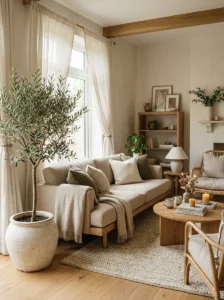
The reason Japandi interiors work so beautifully is because they combine Scandinavian simplicity with softer Japanese warmth. Clean lines keep the room uncluttered, while natural textures and earthy tones prevent the space from feeling cold.
I personally love mixing Scandinavian-style sofas with Japanese-inspired low wood furniture because the combination feels balanced and timeless. Add textured linen fabrics, paper lighting, and handcrafted ceramics nearby for warmth.
And honestly, Japandi interiors always feel best when they lean slightly imperfect instead of perfectly polished. Handmade textures and natural materials create that quiet relaxed atmosphere people naturally gravitate toward.
The balance between simplicity and comfort is really what makes the style work.
10. Choose Soft Curved Shapes Over Sharp Edges
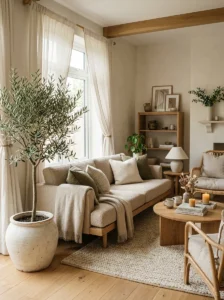
Curved furniture and decor instantly soften Japandi Scandinavian interiors because they create movement without adding clutter. Rounded coffee tables, curved armchairs, arched mirrors, and sculptural ceramics all help the room feel calmer visually.
I personally love mixing softer shapes with clean-lined furniture because the balance keeps the space minimal without feeling too rigid. Curves also reflect natural light beautifully throughout the room during the daytime.
Pair rounded decor with layered neutral textures and warm wood finishes for an even softer atmosphere. And honestly, curved shapes make minimalist homes feel much more welcoming overall.
The room starts feeling relaxed instead of overly structured.
11. Keep the Color Palette Earthy and Calm
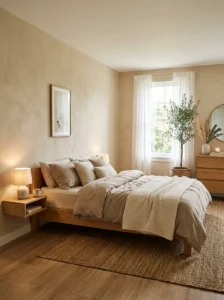
Japandi Scandinavian interiors usually avoid bright bold colors because the mood depends more on warmth and texture than strong contrast. Earthy neutrals create that calm layered feeling naturally.
Warm beige, mushroom, muted olive, soft charcoal, creamy white, and sandy brown all work beautifully together because they feel connected to nature without overwhelming the room visually.
I really love layering several similar neutral shades together instead of matching everything perfectly. Slight tonal variation makes the space feel softer and more collected.
And honestly, earthy palettes age much better than trend-heavy colors. The room stays timeless while still feeling cozy every day.
12. Use Paper Lantern Lighting for Softness
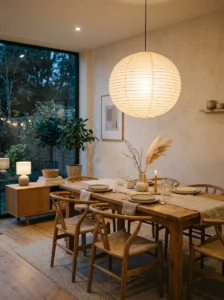
Paper lantern lighting instantly adds softness to Japandi interiors because the glow feels warm and diffused instead of harsh. Large rice paper pendants work especially beautifully above dining tables, beds, or cozy reading corners.
I personally love how lightweight paper lighting balances heavier wood furniture naturally. The room starts feeling airy while still staying warm overall.
And honestly, few lighting styles make a home feel calmer this quickly. Once the warm glow hits layered neutral textures and soft fabrics during the evening, the whole atmosphere changes completely.
13. Add Handmade Ceramic Decor
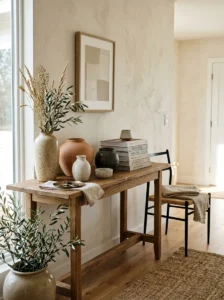
Handmade ceramics fit perfectly into Japandi Scandinavian interiors because the slight imperfections create warmth and personality naturally. Matte ceramic vases, bowls, mugs, and candle holders all help minimal spaces feel softer and more lived in.
I really love neutral ceramic finishes in warm ivory, charcoal, sand, or earthy brown tones because they blend beautifully into layered neutral homes.
And honestly, handmade pieces often feel more meaningful than overly polished decor. The texture quietly adds character without overwhelming the room.
14. Let Natural Light Stay Part of the Design
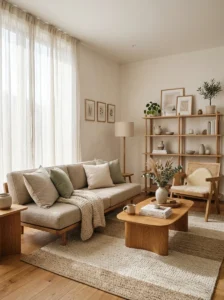
Natural light quietly becomes part of the decor in Japandi homes. Sheer linen curtains, soft wall colors, and uncluttered layouts all help sunlight move naturally throughout the space during the day.
I personally love keeping windows fairly open whenever possible because sunlight across warm wood textures and layered fabrics creates so much softness naturally.
And honestly, Japandi interiors feel most beautiful when the lighting changes gently throughout the day instead of relying only on artificial brightness.
The atmosphere feels calmer automatically.
15. Use Black Accents Sparingly for Contrast
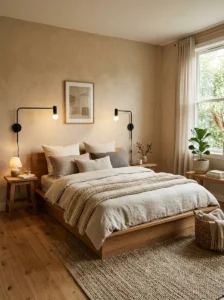
Small black accents help anchor Japandi interiors without making the room feel heavy. Matte black sconces, thin picture frames, or slim table legs create enough contrast to balance all the softer neutrals naturally.
I personally love using black carefully instead of everywhere because restraint keeps the room feeling warm instead of industrial.
And honestly, even tiny dark details make layered beige interiors feel more polished and intentional visually.
16. Focus on Calm Comfort Over Trends
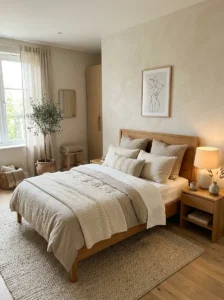
The best Japandi Scandinavian interiors usually feel timeless because comfort matters more than following fast-moving trends. Soft linen bedding, warm wood furniture, layered neutral rugs, and gentle lighting all help the room feel peaceful long term.
I personally think that’s why people connect to this style so much. Nothing feels overly perfect or difficult to maintain. The home simply feels calm, cozy, and easy to live in every day.
And honestly, that warm minimal atmosphere never really goes out of style.