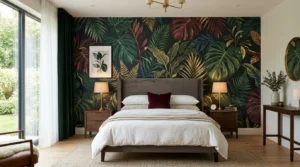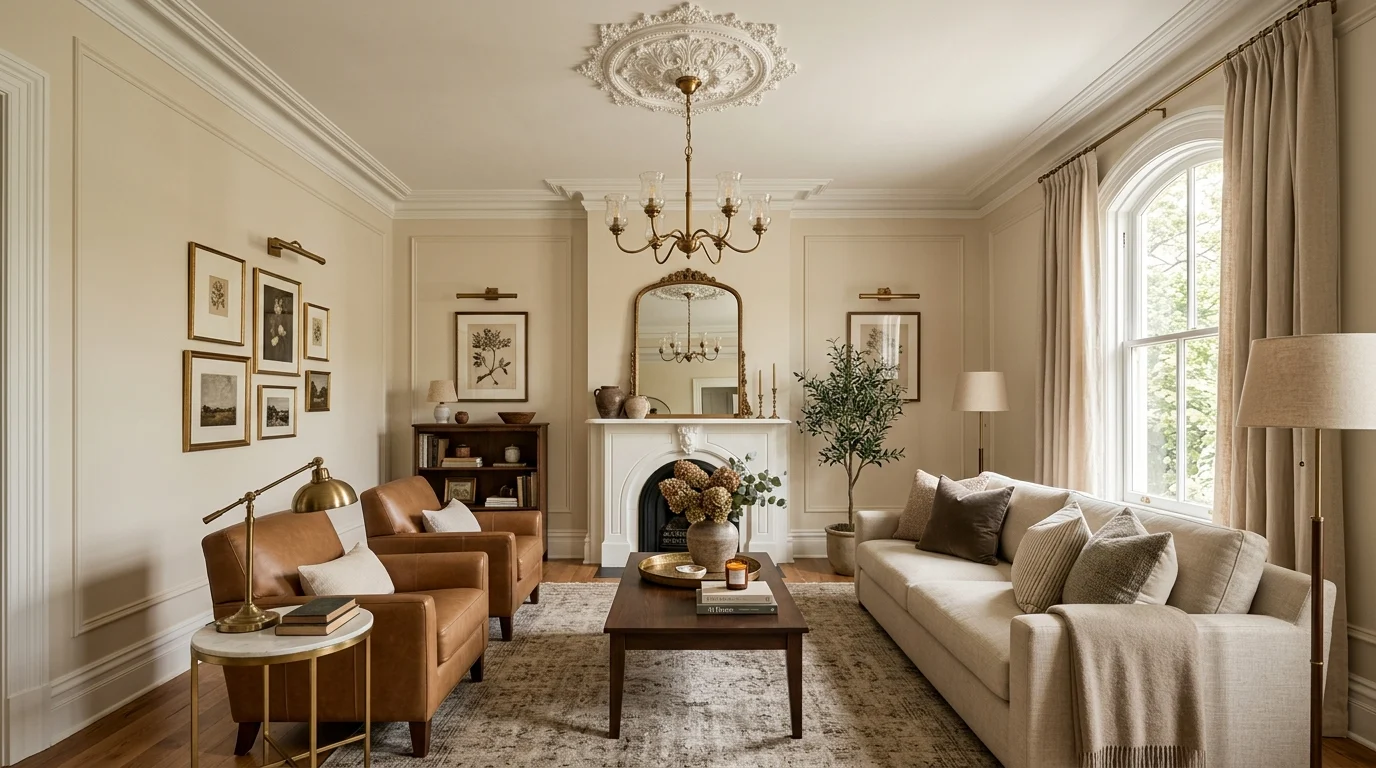
Ceiling details quietly change a room more than people expect. A simple medallion above a light fixture or soft molding along the ceiling edges can make even plain spaces feel layered and thoughtful. And honestly, these kinds of architectural details don’t always need huge renovations or old historic homes to work beautifully.
The right molding, warm paint color, and lighting combination can make a room feel richer almost instantly.
Sometimes the ceiling ends up becoming the part people notice most without even realizing why.
1. Use Ceiling Medallions to Frame Statement Lighting
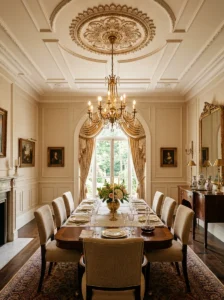
Ceiling medallions instantly draw attention upward and make lighting fixtures feel much more intentional. Even simple pendant lights or chandeliers suddenly look richer once they’re framed with soft architectural detail overhead. White medallions paired with warm neutral ceilings create a subtle layered look that doesn’t overwhelm the room. In older homes, slightly ornate floral designs feel timeless, while smoother minimalist medallions work beautifully in modern spaces. And honestly, medallions don’t need to be oversized to create impact. A medium-sized design centered above a dining table or entryway light often feels the most balanced visually. Warm brass lighting, soft cream paint, and textured linen curtains nearby help the ceiling detail feel cohesive instead of disconnected from the rest of the room.
2. Add Crown Molding for Softer Ceiling Transitions

Crown molding quietly softens the line where walls meet the ceiling, and the entire room usually feels more finished afterward. Even simple flat molding profiles can make builder-grade spaces feel warmer and more detailed without becoming overly formal. Soft white molding paired with creamy beige walls creates a layered look that feels subtle but still noticeable. Taller crown molding works especially well in living rooms and dining spaces where ceilings already feel open. And honestly, crown molding changes how lighting moves through a room too because soft shadows naturally form around the edges during the evening. Warm table lamps and natural sunlight both highlight the detail beautifully throughout the day.
3. Paint Ceiling Molding the Same Color as the Walls
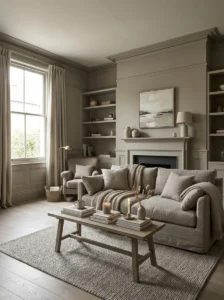
Matching molding and wall colors can create a softer more modern look compared to bright white trim everywhere. Warm greige, muted taupe, dusty olive, or creamy beige tones make architectural details feel blended and relaxed instead of overly sharp. This works especially beautifully in cozy bedrooms, reading rooms, or smaller living spaces where softer contrast feels calming. Matte paint finishes help the molding look even richer because the texture catches light naturally without becoming too glossy. And honestly, monochromatic molding often makes ceilings feel taller since the eye moves through the room more smoothly.
4. Use Simple Molding in Modern Homes
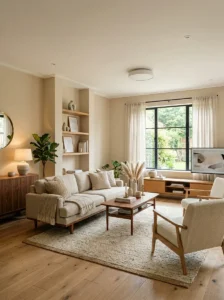
Modern homes can still feel warm and detailed without ornate traditional trim. Thin flat molding, minimalist ceiling framing, or clean geometric trim patterns create architectural interest while keeping the overall room calm and contemporary. Pair simple molding with warm wood furniture, textured rugs, and layered neutral tones so the room doesn’t feel cold or overly minimal. Soft lighting also helps modern ceiling details stand out naturally at night. And honestly, subtle molding often works better in modern interiors because it adds quiet depth instead of becoming the main focus immediately.
5. Add Ceiling Panels for Extra Depth
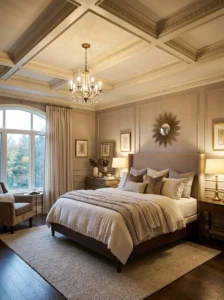
Ceiling panel molding adds dimension that instantly makes rooms feel more expensive and layered. Soft square or rectangular panel designs painted in warm white tones create subtle texture overhead without overwhelming the space visually. This works especially beautifully in dining rooms, offices, or bedrooms where ceilings otherwise feel plain. Pair the molding with soft linen curtains, warm oak furniture, and vintage-inspired lighting for balance. And honestly, paneled ceilings always create a quieter more custom feeling inside a room because the eye naturally notices the extra architectural rhythm above.
6. Highlight Medallions with Warm Lighting
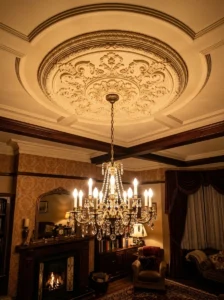
Lighting placement completely changes how ceiling medallions feel inside a room. Warm brass chandeliers, soft globe pendants, or vintage-inspired sconces nearby help the details feel richer once evening lighting starts casting shadows across the ceiling. Cool bright bulbs usually flatten decorative molding visually, while warm lighting softly highlights the curves and texture instead. Layering dimmable lighting creates even more depth during the evenings. And honestly, ceiling details often look their best at night once the softer lighting starts creating subtle contrast around the molding naturally.
7. Use Ceiling Detail in Small Spaces Too
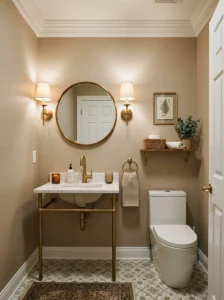
Small rooms can actually benefit from ceiling molding more than larger spaces because the detail helps draw the eye upward. Thin crown molding, compact medallions, or narrow trim framing make powder rooms, entryways, and small bedrooms feel more intentional without taking up physical space. Stick with lighter neutral paint colors so the room still feels airy overall. Warm wood accents and textured fabrics nearby help soften the architectural lines naturally too. And honestly, smaller rooms often feel much more custom once ceiling details are layered in thoughtfully.
8. Pair Molding with Vintage-Inspired Decor
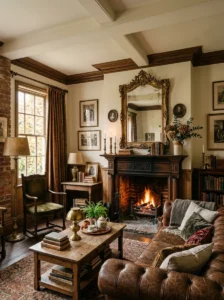
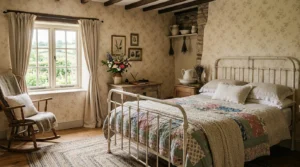
Ceiling molding naturally works beautifully alongside slightly vintage or collected decor styles. Antique mirrors, brass sconces, warm wood furniture, faded rugs, and linen curtains all help architectural detail feel lived in instead of overly formal. Soft cream paint colors usually tie everything together best because they keep the room feeling relaxed and warm. And honestly, molding often feels most beautiful when the room around it doesn’t look overly perfect. Slightly worn textures and layered decor create balance against cleaner trim lines.
9. Keep Ceiling Colors Soft and Warm
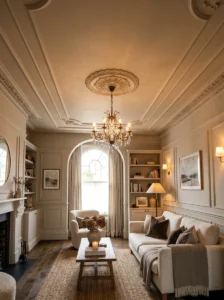
Soft ceiling colors help molding and medallions stand out naturally without relying on heavy contrast. Warm white, pale beige, muted mushroom, or light greige ceilings create a cozy atmosphere while still keeping rooms bright. Cooler bright whites can sometimes make decorative molding feel too sharp or sterile instead of layered and inviting. Matte paint finishes soften everything even more because the light reflects gently across the ceiling surface. And honestly, warmer ceilings often make architectural details feel richer during both daytime and evening lighting.
10. Add Architectural Detail Graduall
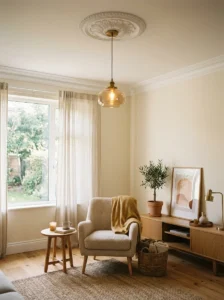
One of the best things about ceiling medallions and molding is that they can be added slowly over time instead of during one huge renovation. Start with a small medallion in the dining room or simple crown molding in one bedroom before committing to larger projects throughout the house. This keeps the process feeling manageable while helping you figure out which styles actually fit your home naturally. And honestly, smaller updates often create the biggest visual difference because architectural detail changes the mood of a room quietly instead of dramatically.
11. Let the Details Feel Natural and Lived In
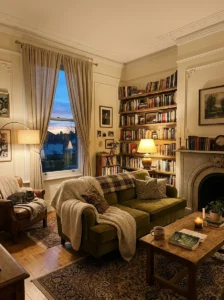
The most beautiful molding and medallion designs usually feel connected to the home instead of looking overly staged. Slight imperfections in paint texture, warm evening lighting, vintage wood furniture, and layered neutral fabrics help architectural details feel softer and more authentic. Rooms with molding shouldn’t feel untouchable or formal all the time. Cozy textures, books, woven baskets, and natural sunlight balance decorative ceilings beautifully. And honestly, lived-in spaces make architectural detail feel timeless because the room still feels comfortable enough to actually enjoy every day.