Small bedrooms can feel surprisingly cozy when they’re styled the right way. The trick usually isn’t adding more things. It’s choosing details that make the room breathe a little easier while still feeling warm and personal.
A few layout changes, softer colors, and smart storage ideas can completely shift the mood of a tiny bedroom. And honestly, some of the prettiest rooms are the smallest ones because everything feels intentional.
1. Use Light Neutral Colors to Open the Space
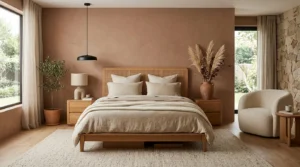
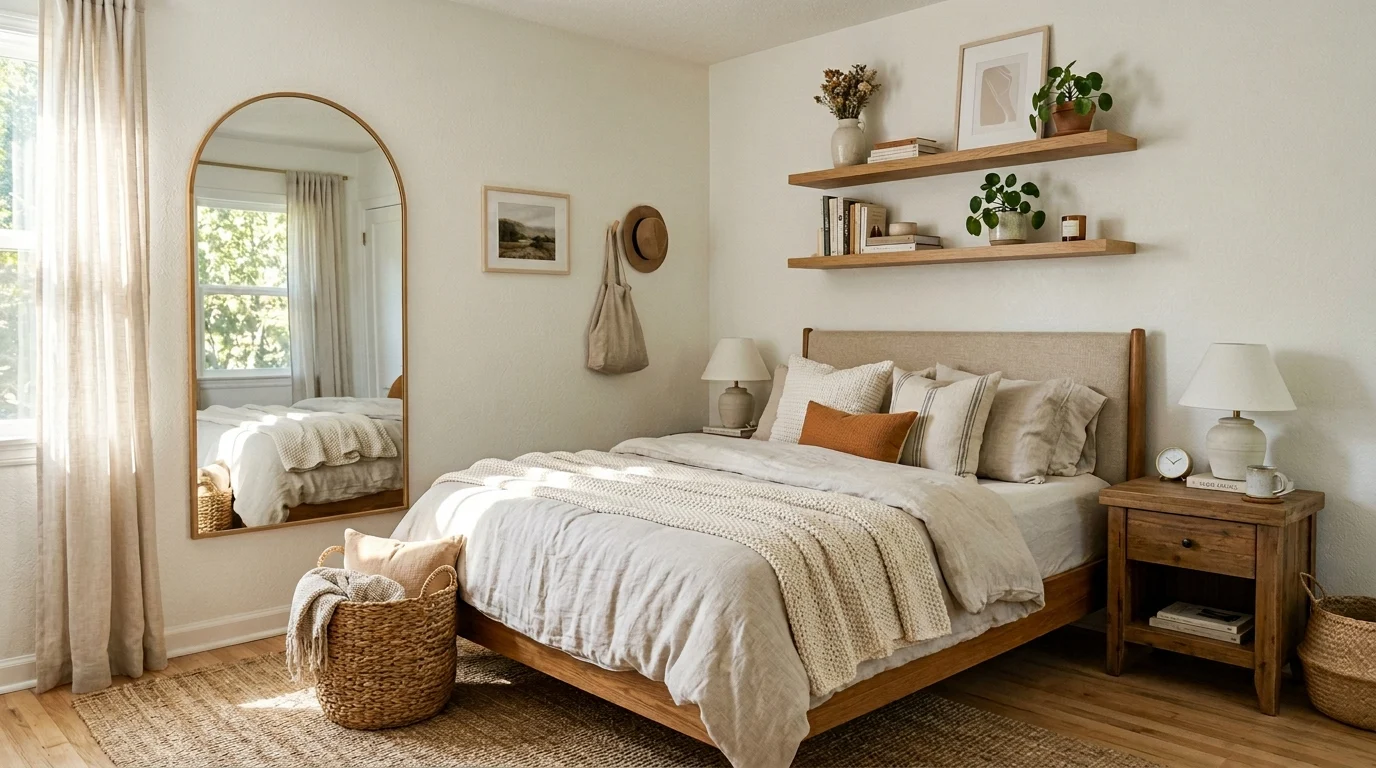
Small bedrooms instantly feel larger when the color palette stays soft and airy. Warm whites, light beige, pale taupe, and soft greige tones reflect natural light instead of absorbing it, which helps the room feel less boxed in. Walls, bedding, and curtains don’t need to match perfectly, but keeping them within the same calm color family creates a smoother visual flow. Linen bedding works especially well because the slight texture keeps the room from feeling flat or sterile. A light oak bed frame paired with cream bedding and woven accents creates warmth without heaviness. And honestly, dark colors can sometimes make small rooms feel tighter unless the lighting is really good. Try using darker tones only in small details like a throw pillow or framed art. Sheer curtains also help natural sunlight spread across the room during the day, which makes the space feel brighter and more open. Soft neutral bedrooms always photograph beautifully because they feel calm instead of cluttered. Sometimes simplicity really is what makes a room feel expensive and relaxing.
2. Choose Furniture with Slim Legs and Open Space
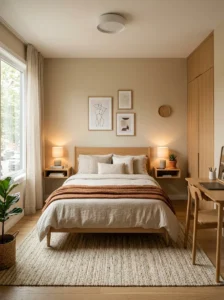
Bulky furniture can make a small bedroom feel crowded almost immediately. Pieces with slimmer legs and open space underneath create a lighter look because more of the floor stays visible. Even visually, the room feels less heavy. A low-profile oak bed frame with narrow black legs works beautifully beside a compact nightstand and a soft textured rug. Floating nightstands are another great option because they free up floor space and make cleaning easier too. Bedrooms usually feel bigger when furniture doesn’t completely block sightlines across the room. And oversized dressers often take up more visual weight than people realize. A tall narrow dresser tends to work better than a wide bulky one in tight spaces. Soft natural wood finishes keep things warm while still feeling modern and airy. It’s also nice when furniture pieces have a little breathing room around them instead of touching every wall. Rooms feel calmer that way. A small bedroom doesn’t need less personality. It just needs furniture that allows the space itself to stay visible.
3. Add Mirrors Where They Reflect Natural Light
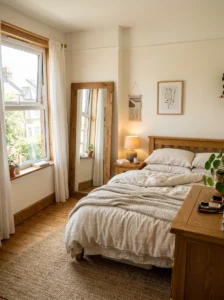
Mirrors can completely change the feel of a tiny bedroom when they’re placed thoughtfully. Instead of treating them like just decor, use them to bounce sunlight around the room and create a brighter atmosphere. A tall leaning mirror near a window works especially well because it reflects light throughout the day and visually expands the space. Smaller bedrooms benefit from mirrors with thin frames in wood, black metal, or soft brass finishes because they don’t feel bulky. And honestly, mirrored closet doors can sometimes feel too harsh unless balanced with softer textures nearby. Pairing mirrors with linen curtains, cozy bedding, and warm lighting helps the room stay relaxed instead of overly modern. Round mirrors above dressers also soften sharper furniture lines beautifully. One thing that makes small rooms feel cramped is visual heaviness, so reflective surfaces help break that up naturally. Even a tiny mirror placed across from a lamp creates more depth during evenings. The room starts feeling layered and open without needing extra furniture or decor everywhere.
4. Keep Bedding Soft but Not Overly Heavy
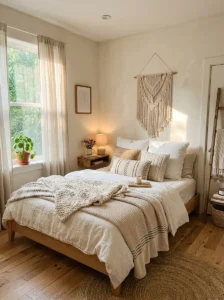
A giant bulky comforter can swallow an entire small bedroom visually. Softer layered bedding usually works better because it still feels cozy without overpowering the room. Linen duvets, lightweight quilts, and textured cotton blankets create warmth while keeping the bed looking relaxed and airy. Neutral bedding tones help too, especially warm cream, sand, muted olive, or soft gray shades. Bedrooms instantly feel calmer when the bedding palette stays simple. And honestly, slightly wrinkled linen often looks better than perfectly tucked hotel-style bedding because it feels lived in and natural. Layering different textures matters more than adding lots of colors. A knit throw at the end of the bed and two oversized pillows already create enough depth. Platform beds also help visually because they sit lower and make ceilings feel taller somehow. Soft morning sunlight across neutral bedding creates that Pinterest-inspired atmosphere people love. Cozy doesn’t have to mean crowded. The prettiest small bedrooms usually feel relaxed, breathable, and just slightly imperfect in the best way possible.
5. Use Wall Sconces Instead of Table Lamps
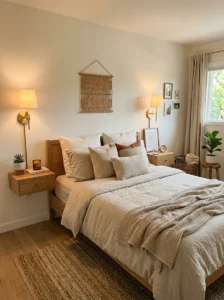
Nightstands in small bedrooms fill up fast, especially when table lamps take most of the usable surface area. Wall sconces free up space immediately while also making the room feel cleaner and more intentional. Matte black sconces look modern and minimal, while warm brass finishes add softness against neutral walls. Swing-arm styles work especially well because they’re practical for reading without needing bulky bedside lighting. And honestly, layered lighting makes tiny bedrooms feel far cozier than one harsh overhead fixture. Warm lighting softens corners and highlights textures like linen curtains, knit throws, and wood grain furniture. Bedrooms feel calmer when lighting comes from different heights instead of just the ceiling. Plug-in sconces are also renter-friendly, which makes them easier than many people expect. One small detail that works beautifully is placing sconces slightly lower beside the bed for a relaxed boutique-hotel feel. The room instantly feels styled without adding clutter. Small spaces benefit most from pieces that are both practical and visually light at the same time.
6. Let Curtains Hang Higher Than the Window
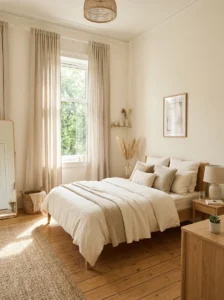
One of the easiest tricks for making a small bedroom feel taller is hanging curtains higher than the actual window frame. Mounting curtain rods closer to the ceiling naturally draws the eyes upward and creates the illusion of height. It sounds small, but it changes the entire feel of the room. Floor-length linen curtains work best because they add softness without feeling heavy. Warm white or light beige fabrics keep the space airy while still filtering sunlight beautifully during the day. Tiny windows can actually feel larger this way too. And honestly, short curtains usually make ceilings feel lower and the room more cramped. Bedrooms feel calmer when fabrics gently pool near the floor instead of stopping abruptly halfway down the wall. Thin black curtain rods or light wood finishes blend especially well with modern cozy interiors. Natural sunlight passing through soft curtains adds warmth across bedding and rugs in a really subtle way. Sometimes the smallest design decisions create the biggest difference in how spacious a room feels overall.
7. Try Floating Shelves Instead of Bulky Furniture
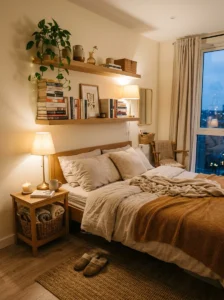
Storage matters in small bedrooms, but heavy furniture can quickly eat up valuable space. Floating shelves help keep storage functional without making the room feel crowded or visually heavy. A couple simple wood shelves above a dresser or beside the bed create room for books, candles, framed art, and small decor pieces without taking up floor space. Warm oak shelves paired with soft beige walls usually look cozy and modern at the same time. And honestly, open shelving works best when it’s styled lightly instead of packed full. Leaving small empty spaces between objects helps the room breathe visually. Bedrooms often feel calmer when storage blends into the decor naturally. Floating shelves also allow smaller bedrooms to feel taller because they keep more floor visible underneath. One woven basket or ceramic vase adds enough texture without cluttering everything up. It’s those softer details that make compact spaces feel intentional instead of cramped. Small rooms don’t need giant storage systems. They just need smarter ways to use the vertical space already available.
8. Keep the Floor as Open as Possible
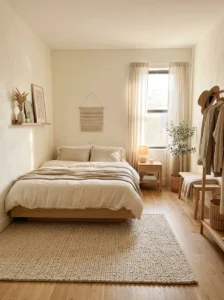
Small bedrooms instantly feel bigger when more floor remains visible. Too many baskets, stools, storage bins, or random decor pieces on the ground can make even a beautiful room feel crowded quickly. Furniture with open legs helps, but simplifying what stays on the floor matters too. A single textured rug under the bed creates warmth without breaking up the space visually. Bedrooms usually feel cleaner when cables, shoes, and extra storage are tucked away instead of constantly visible. And honestly, tiny rooms benefit more from negative space than large rooms do. Empty corners aren’t always a bad thing. They help the eye rest and make the room feel less busy overall. A slim bench at the foot of the bed or one woven basket near a dresser is usually enough. Soft wood flooring paired with light rugs reflects sunlight beautifully during the day as well. Rooms feel more breathable when there’s less visual interruption. Sometimes the smartest decorating choice is simply leaving a little more open space than you think you need.
9. Add Vertical Storage Beside the Bed
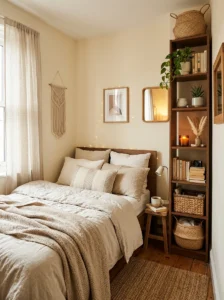
When floor space is limited, vertical storage becomes incredibly useful. Tall narrow shelving beside the bed gives you room for books, candles, baskets, and folded blankets without making the room feel packed. It’s a better solution than oversized dressers in many tiny bedrooms because it keeps the footprint smaller while still adding function. Light wood finishes or soft matte white shelving usually work best since they blend into the room naturally instead of feeling heavy. And styling matters here too. A mix of practical storage and soft decor keeps everything feeling warm instead of purely functional. Small woven baskets on lower shelves help hide clutter while upper shelves can hold framed art or ceramic pieces. Bedrooms often feel more organized when storage goes upward rather than outward. One thing that works beautifully is adding a tiny wall sconce above the shelving for layered lighting at night. It creates depth and makes the room feel cozy without needing extra furniture everywhere. Vertical storage quietly makes small bedrooms feel far more spacious.
10. Use a Low Bed to Make Ceilings Feel Taller
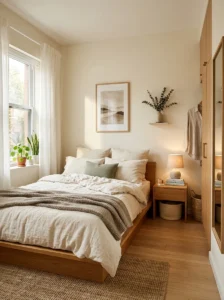
Low platform beds can make surprisingly small bedrooms feel more open because they visually create more space above the furniture. Taller beds sometimes chop the room in half visually, especially in spaces with lower ceilings. A low oak platform bed paired with soft neutral bedding keeps everything grounded and airy at the same time. Bedrooms feel calmer when the eye naturally travels upward without interruption. And honestly, minimalist bed frames tend to work best in smaller spaces because they don’t compete with the room itself. Layered linen bedding, warm lighting, and a textured rug already create enough visual warmth. Low beds also pair beautifully with oversized framed art hung slightly lower on the wall. That combination makes the room feel relaxed and balanced somehow. Warm natural sunlight across low furniture creates that cozy editorial-style look people save constantly on Pinterest. Simple layouts usually work better than complicated ones in tight spaces. The goal isn’t making the room look empty. It’s making it feel comfortable without visual heaviness everywhere.
11. Keep Decor Minimal but Personal
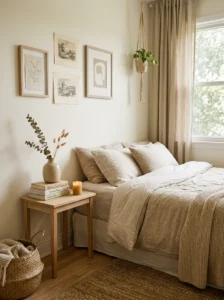
Small bedrooms can feel cluttered fast when every surface is filled with decor. Keeping styling simple usually creates a more peaceful atmosphere while still allowing personality to show through. A couple framed prints, a candle, stacked books, or one ceramic vase often feels warmer than shelves crowded with accessories. Bedrooms look more expensive when there’s room for the eye to rest naturally. And honestly, personal items matter more than trendy decor pieces. Vintage frames, favorite books, soft knit blankets, or handmade pottery create a more lived-in feeling than matching store-bought sets. Warm neutral tones help tie everything together quietly without overwhelming the room. One small plant beside a window can also soften the space beautifully. Tiny bedrooms benefit from intentional styling because every object becomes more noticeable. A few meaningful pieces always feel calmer than too much decoration. Cozy spaces don’t need constant visual noise to feel inviting. Sometimes softness, warmth, and a little simplicity create the strongest atmosphere of all.
12. Use Multi-Functional Furniture Whenever Possible
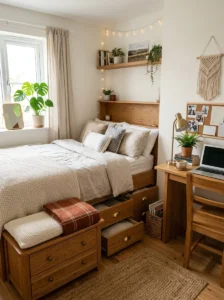
Small bedrooms work best when furniture can serve more than one purpose. Storage benches, beds with drawers underneath, or compact desks that double as nightstands help maximize space without making the room feel overcrowded. Multi-functional pieces reduce visual clutter because fewer separate items are needed overall. And honestly, modern furniture designs have become much better at blending storage into cozy aesthetics naturally. A warm wood storage bench at the end of the bed can hold extra blankets while also acting as seating. Floating desks beside windows work beautifully in tiny bedrooms because they keep the floor visible underneath. Bedrooms feel more organized when every piece has a reason for being there. Soft neutral colors and natural textures help practical furniture feel stylish instead of overly functional too. One thing that works especially well is using woven baskets inside open shelving for hidden storage. Rooms instantly feel calmer when there’s less visible clutter everywhere. Smart furniture choices quietly make tiny spaces feel more relaxed and far easier to live in daily.
13. Add One Statement Piece Instead of Many Small Ones
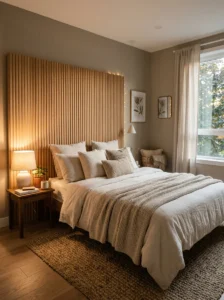
A small bedroom usually feels more balanced when there’s one clear focal point instead of several competing decorative pieces. That statement could be an oversized headboard, a large framed artwork, or a textured pendant light hanging above the bed. One strong feature creates visual interest without cluttering the room. And honestly, tiny spaces often look better when decor stays edited and intentional. Too many little accessories can make the room feel chaotic even when everything matches. Large-scale pieces actually help smaller rooms feel more sophisticated because they simplify the visual layout. A dramatic linen headboard paired with soft neutral bedding creates warmth instantly without needing much else around it. Bedrooms also benefit from statement lighting because it draws the eyes upward naturally. Warm wood textures and soft fabrics help balance bolder focal points so the room still feels cozy and relaxed. Pinterest-inspired small bedrooms usually succeed because they focus on one memorable detail rather than trying to fill every inch with decoration. Simplicity often feels far more luxurious.
14. Keep the Entire Room Light and Airy
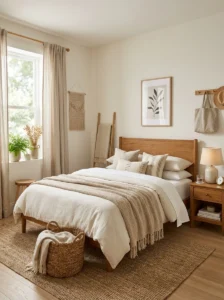
The biggest secret to making a small bedroom feel larger is keeping the overall atmosphere light, calm, and breathable. Heavy furniture, dark cluttered corners, and too many contrasting colors can make tight spaces feel overwhelming quickly. Bedrooms usually feel more open when the palette stays soft and the textures stay natural. Linen curtains, woven baskets, light wood furniture, and cozy neutral bedding all help create that relaxed airy feeling people love. Natural sunlight matters too. Keeping windows uncovered during the day instantly makes the room feel fresher and more spacious. And honestly, tiny bedrooms don’t need perfect styling to feel beautiful. Slightly wrinkled bedding, stacked books near the bed, or a casually folded throw blanket often makes the room feel warmer and more real. Soft lighting during evenings also changes everything. Table lamps or wall sconces create depth that harsh ceiling lighting usually cannot. Small spaces feel best when they feel peaceful instead of overly designed. Comfort and simplicity almost always make the room feel bigger naturally.