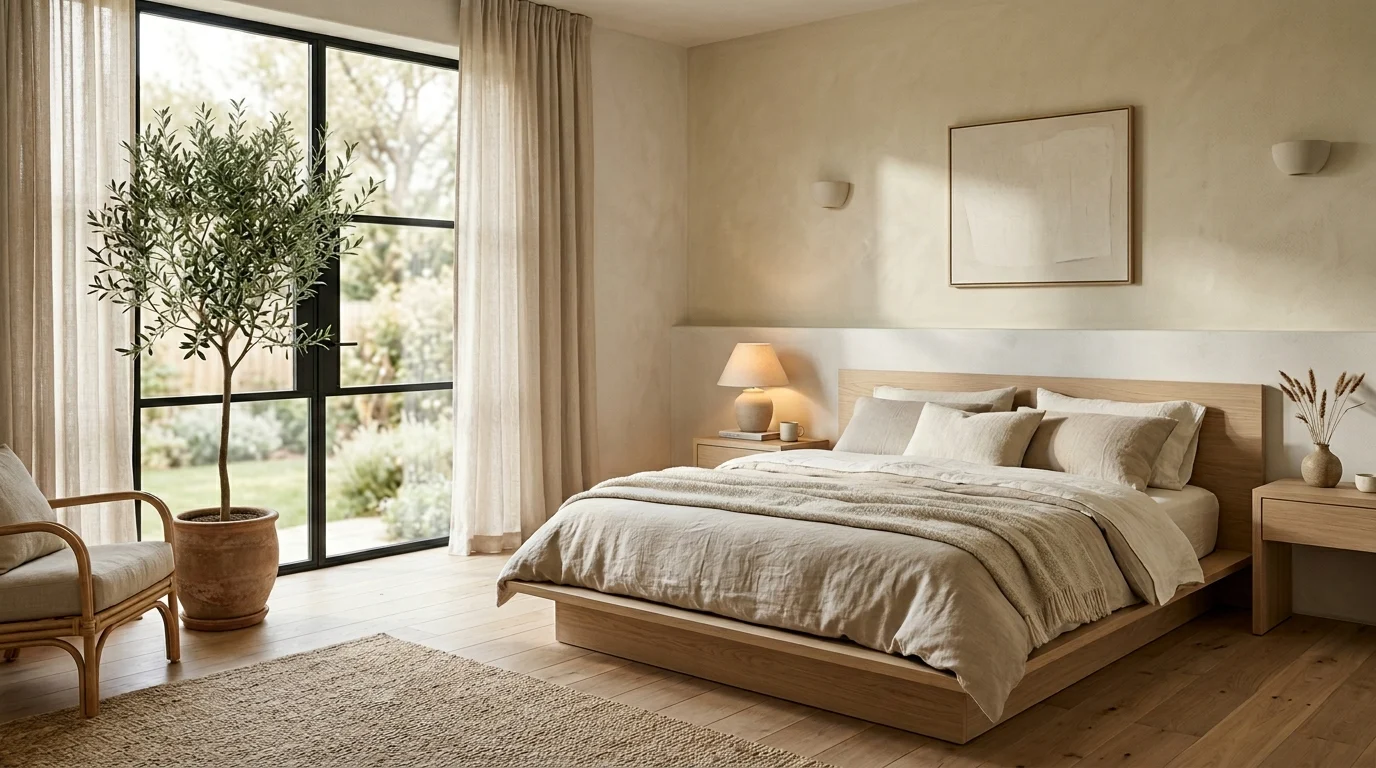
Some bedrooms look beautiful in photos but don’t actually feel relaxing to live in. A minimalist bedroom is different. It focuses on creating a peaceful atmosphere where your mind can slow down and your space feels easy to maintain.
A few years ago, I started removing unnecessary decor from my own bedroom, and honestly, the room immediately felt calmer. Less visual clutter meant less distraction.
If you’re looking for a bedroom that feels restful, clean, and effortlessly stylish, these minimalist bedroom designs might help you find your perfect retreat.
1. Soft White Minimalist Bedroom
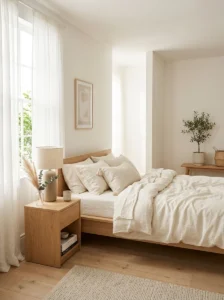
A soft white minimalist bedroom never really goes out of style. There’s something calming about walking into a room where the walls, bedding, and larger furniture pieces work together in a light and cohesive palette. Instead of feeling plain, the room feels bright and open, especially when natural sunlight moves through the space during the day.
The secret is layering different shades of white and cream rather than using one flat color. A white linen duvet, ivory throw blanket, and textured cream pillows create depth without introducing visual clutter. Light oak furniture helps warm up the room while keeping the overall design simple.
I tried this approach in a guest room once and was surprised by how much larger the space felt. Nothing dramatic changed. The room simply felt lighter and easier to relax in.
Minimal wall decor works best here. One framed artwork or a simple mirror is often enough. Add a small ceramic lamp and a woven basket beside the bed for subtle texture.
The result is a minimalist bedroom design that feels clean, welcoming, and peaceful from morning until night.
2. Japandi-Inspired Retreat
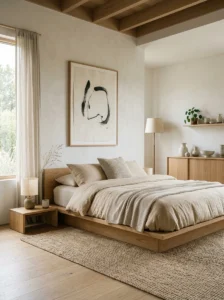
Japandi design combines two styles that naturally complement each other: Japanese simplicity and Scandinavian comfort. Together they create a bedroom that feels balanced, uncluttered, and deeply relaxing.
A typical Japandi bedroom includes a low wooden bed frame, neutral bedding, and furniture with clean lines. Colors remain muted throughout the space. Warm beige, soft gray, natural wood, and creamy white tones work together to create a quiet atmosphere that never feels overwhelming.
One thing I love about Japandi interiors is how intentional everything feels. Every object seems to have a purpose. Decorative pieces are limited, but the ones that remain often have beautiful craftsmanship that draws attention without creating clutter.
Texture plays an important role as well. Linen bedding, woven rugs, handcrafted pottery, and natural wood finishes add warmth while maintaining simplicity. These details keep the room from feeling sterile.
Natural light enhances the design even more. Large windows, simple curtains, and open floor space help the room feel airy and calm.
For anyone who wants a minimalist bedroom that still feels cozy, Japandi design offers a perfect balance of warmth and simplicity.
3. Warm Neutral Minimalist Bedroom
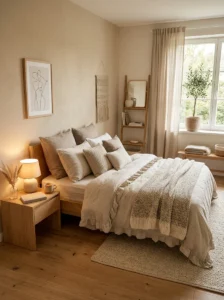
Not every minimalist bedroom has to feel bright white. Warm neutral tones can create an equally calming retreat while adding a little extra coziness to the space.
Imagine soft beige walls, oatmeal-colored bedding, and natural wood furniture arranged in a clean, uncluttered layout. The room feels inviting from the moment you step inside. Everything works together without competing for attention.
I noticed this style becoming more popular after many homeowners started moving away from cool gray interiors. Warm neutrals feel softer and more welcoming, especially in bedrooms where comfort matters most.
Layering is key. Mix linen sheets, textured blankets, and woven accents in similar tones to create visual depth. The subtle variation keeps the room interesting while maintaining a peaceful look.
A simple bedside table, warm ceramic lamp, and one piece of oversized artwork are often enough to complete the space. There’s no need to overdecorate.
This minimalist bedroom design proves that simplicity doesn’t have to feel cold. It can feel warm, comfortable, and effortlessly beautiful at the same time.
4. Minimalist Bedroom With Natural Wood Accents
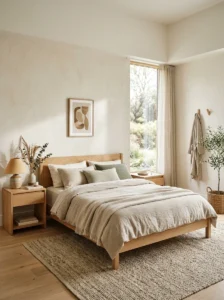
Natural wood has a unique way of bringing warmth into minimalist spaces. Even the simplest bedroom can feel more inviting when wood tones are incorporated thoughtfully throughout the design.
Picture a platform bed crafted from light oak, matching nightstands, and a simple wooden bench at the foot of the bed. Against soft white walls and neutral bedding, these pieces become subtle focal points that add character without overwhelming the room.
I once replaced dark furniture with lighter wood pieces in my bedroom and immediately noticed the difference. The room felt brighter and more connected to nature. It still looked minimal, but it no longer felt stark.
Wood grain also introduces texture naturally. Unlike busy patterns, it adds visual interest in a quiet way. This makes it perfect for minimalist bedroom designs where every detail matters.
Pair wood furniture with linen fabrics, woven baskets, and ceramic accessories for a cohesive look. Keep decorative items to a minimum and allow the materials themselves to stand out.
The overall effect is calm, grounded, and timeless. It’s the kind of bedroom that feels relaxing no matter what trends happen to come and go.
5. Floor-to-Ceiling Window Bedroom

Sometimes the most beautiful design feature in a minimalist bedroom isn’t furniture or decor. It’s the view outside the window. Large windows allow natural light to become part of the room’s design, creating an open and airy atmosphere.
Floor-to-ceiling windows work particularly well in minimalist spaces because they reduce the need for excessive decoration. Nature becomes the artwork. Trees, sky views, and changing daylight provide visual interest throughout the day.
The furniture can remain simple. A low-profile bed, clean-lined nightstands, and neutral bedding are often enough. The room feels luxurious because of the openness rather than because of decorative details.
I stayed in a vacation rental with oversized windows once, and I remember how peaceful the bedroom felt. There wasn’t much furniture, yet the room felt complete because the natural surroundings became part of the experience.
Simple linen curtains help soften the space while still allowing plenty of light to enter. Light-colored flooring and neutral walls further enhance the airy feeling.
This minimalist bedroom design creates a retreat-like atmosphere that feels connected to nature and wonderfully relaxing.
6. Minimalist Bedroom With Hidden Storage
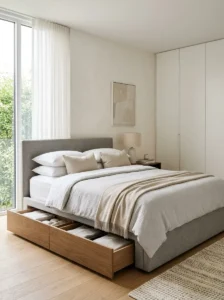
One of the biggest challenges in maintaining a minimalist bedroom is managing everyday clutter. Hidden storage helps solve that problem without sacrificing style. The room stays clean and open because belongings remain tucked away instead of sitting on visible surfaces.
A storage bed is often the star of this design. Extra bedding, seasonal clothing, and rarely used items can disappear neatly into built-in drawers. Pair that with streamlined nightstands that include concealed storage and the entire room instantly feels more organized.
I switched to a storage bed several years ago and honestly wished I had done it sooner. My bedroom looked cleaner almost overnight because things finally had a dedicated place. The furniture did the work instead of relying on constant tidying.
Visually, the room remains simple. White or beige bedding, minimal accessories, and clean-lined furniture allow the architecture and layout to stand out. Decorative elements are limited to a few meaningful pieces.
The beauty of this design is practicality. It supports real life while maintaining the calm appearance associated with minimalist interiors. Less visible clutter means less visual stress, which helps transform the bedroom into a genuine retreat.
7. Monochromatic Gray Bedroom
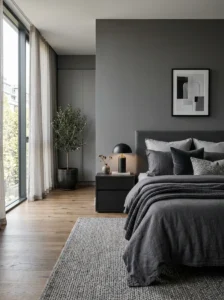
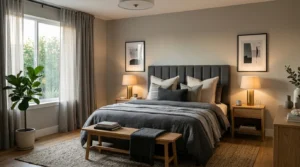
A monochromatic gray bedroom can feel surprisingly peaceful when done well. The key is working with multiple shades rather than relying on a single tone throughout the room.
Light gray walls paired with charcoal accents, soft gray bedding, and textured fabrics create depth without overwhelming the space. The room feels cohesive because every element belongs to the same color family, yet the variations prevent it from looking flat.
I used to think gray interiors felt cold. Then I visited a beautifully designed boutique hotel where layers of warm gray created an incredibly relaxing atmosphere. It completely changed my perspective on the color.
Texture becomes especially important in monochromatic spaces. Linen bedding, knitted throws, upholstered headboards, and woven rugs add interest without introducing additional colors. These layers create warmth and comfort.
Black accents can provide subtle contrast. A sleek bedside lamp or simple picture frame helps ground the design while maintaining its minimalist character.
For people who prefer understated elegance, a monochromatic gray bedroom offers sophistication, simplicity, and a sense of calm that never feels trendy or temporary.
8. Scandinavian-Inspired Minimalist Bedroom
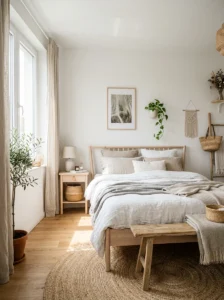
Scandinavian design has become a favorite among minimalists because it balances simplicity with comfort. Unlike some minimalist spaces that can feel stark, Scandinavian bedrooms maintain warmth through texture, natural materials, and thoughtful styling.
Imagine crisp white walls, pale wood furniture, and soft linen bedding illuminated by natural sunlight. A chunky knit throw rests casually across the bed while a woven basket provides practical storage in the corner. Everything feels useful and welcoming.
What stands out most about Scandinavian interiors is their livability. The design never feels overly precious. It’s beautiful, but it also feels comfortable enough for everyday life.
Neutral colors dominate the palette. White, beige, light gray, and natural wood tones create a bright foundation that reflects light throughout the room. Decorative accessories remain minimal, but each item contributes to the overall atmosphere.
Simple wall art and warm lighting complete the look without adding clutter. The room feels effortless rather than heavily designed.
This minimalist bedroom style works particularly well for anyone who wants a calm retreat that still feels cozy and lived-in.
9. Black and White Minimalist Bedroom
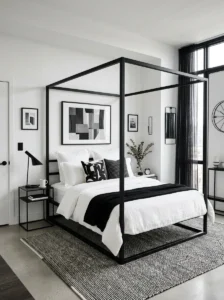
Black and white is one of the most timeless color combinations in interior design. When applied thoughtfully in a minimalist bedroom, it creates a look that feels modern, crisp, and sophisticated.
The contrast is what makes this style so striking. White walls and bedding provide brightness, while black accents create structure and visual definition. A black metal bed frame, slim bedside lamps, or simple framed artwork can introduce contrast without overwhelming the room.
I once helped a friend redesign a bedroom using only black, white, and natural wood accents. The finished space felt dramatically different from before. It looked cleaner, more organized, and surprisingly calming despite the stronger contrast.
Balance is important. Too much black can make the room feel heavy, while too much white can feel sterile. The goal is finding a comfortable middle ground where both colors support each other.
Texture also plays a role. Soft bedding, woven rugs, and upholstered furniture help soften the sharper visual contrast.
This minimalist bedroom design feels fresh and modern while remaining simple enough to stay relevant for years.
10. Minimalist Bedroom With Statement Lighting
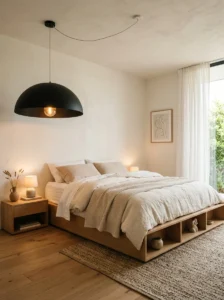
Minimalism doesn’t mean every element has to disappear into the background. Sometimes a single statement piece can elevate the entire room. Lighting is one of the easiest ways to achieve that effect.
A sculptural pendant light, oversized paper lantern, or modern chandelier can become the focal point while the rest of the room remains intentionally simple. The contrast creates visual interest without introducing clutter.
I remember seeing a minimalist bedroom where nearly everything was neutral and understated. The only dramatic feature was a large woven pendant hanging above the bed. Somehow it made the room feel complete without needing additional decoration.
Furniture should remain clean-lined and functional. Neutral bedding, simple nightstands, and uncluttered surfaces allow the lighting fixture to shine. The room feels curated rather than busy.
Lighting also influences mood. Warm bulbs create a softer atmosphere that feels more relaxing during the evening. Combined with natural textures and a restrained color palette, the result is a peaceful retreat with a touch of personality.
This approach proves that minimalist design can still make a strong visual statement while maintaining a calm and balanced environment.
11. Minimalist Bedroom With a Single Piece of Art
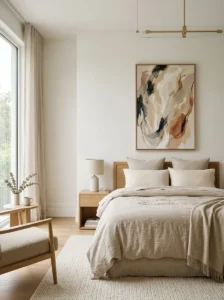
A minimalist bedroom doesn’t need a gallery wall to feel complete. Sometimes one carefully chosen piece of artwork creates more impact than an entire collection. The room feels calmer because the eye has a clear focal point rather than multiple competing elements.
Imagine a large neutral-toned canvas hanging above the bed. The artwork might feature abstract brushstrokes, a simple landscape, or a black-and-white photograph. Against clean walls and understated furniture, it immediately draws attention without overwhelming the space.
I learned this lesson after removing several smaller frames from a bedroom wall. The arrangement always felt slightly cluttered. Replacing everything with one oversized print transformed the room almost instantly. The space felt more balanced and intentional.
The rest of the decor should remain restrained. Soft bedding, simple lighting, and natural materials help support the artwork rather than compete with it. Color palettes tend to stay neutral, allowing the room to maintain its peaceful atmosphere.
This minimalist bedroom design proves that less really can be more. One beautiful focal point is often all that’s needed to create a polished and calming retreat.
12. Minimalist Bedroom With Indoor Greenery
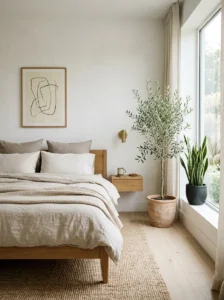
Plants bring life into a minimalist bedroom without disrupting its simplicity. In fact, greenery often enhances minimalist spaces because the organic shapes create contrast against clean furniture lines and uncluttered surfaces.
A single olive tree in a corner, a snake plant beside a window, or a trailing pothos on a floating shelf can completely change the mood of the room. The greenery introduces color naturally without requiring bold decorative accents.
I’ll admit that I wasn’t always great at keeping plants alive. That’s why I started with low-maintenance varieties. Even one healthy plant made my bedroom feel fresher and more welcoming. It added warmth without adding visual noise.
Planters should remain simple. Ceramic pots, woven baskets, and matte finishes work particularly well in minimalist interiors. These materials complement the overall design while allowing the plant itself to become the focal point.
Natural light helps complete the look. Sunlight filtering through leaves creates subtle movement throughout the day, making the room feel more connected to nature.
For anyone who wants a calm retreat with a little personality, indoor greenery is an easy and beautiful addition.
13. Hotel-Inspired Minimalist Bedroom
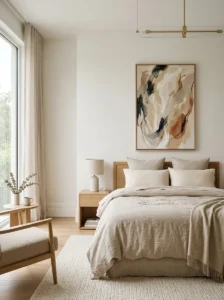
Some of the most relaxing bedrooms are found in boutique hotels. They feel clean, uncluttered, and carefully designed, yet they remain comfortable enough to spend hours in. Bringing that atmosphere home is easier than many people think.
Start with high-quality bedding in neutral colors. Crisp white sheets, plush pillows, and a soft duvet immediately elevate the room. Layering textures rather than colors creates a luxurious appearance while maintaining simplicity.
One thing I often notice in hotel bedrooms is the lack of unnecessary decor. Every item seems intentional. Lighting is soft, furniture is functional, and surfaces remain mostly clear. That balance creates a feeling of calm that many homeowners try to recreate.
A padded headboard, matching bedside lamps, and a simple bench at the foot of the bed can enhance the hotel-inspired aesthetic. Artwork should remain subtle and cohesive with the room’s color palette.
The overall goal isn’t luxury for the sake of luxury. It’s comfort. A hotel-inspired minimalist bedroom feels restful, organized, and welcoming every day. And honestly, waking up in a room that feels like a boutique retreat never gets old.