Some rooms are designed more for connection than anything else. You sit down, the lighting feels soft, and somehow everyone stays longer than planned.
That’s really the charm of a good conversation room.
It doesn’t need to be huge or overly styled, just comfortable enough to make people slow down a little.
1. Sunken Seating for a Cozy Feel
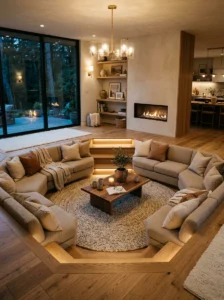
A sunken conversation area instantly creates a more intimate atmosphere. The lowered seating naturally pulls people closer together, which makes the room feel relaxed without trying too hard. Use soft neutral sofas with layered cushions and maybe a textured rug in the center. Warm lighting works especially well here, especially in the evening. Even a small built-in ledge for books or candles adds character. It feels slightly retro, but still modern enough to work beautifully in today’s interiors.
2. Circular Seating Arrangement
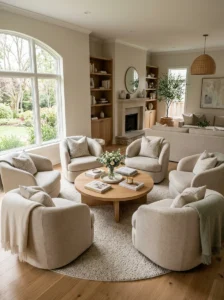
A circular layout changes the energy of a room completely. Instead of everything facing a TV, the seating faces each other, which naturally encourages conversation. Use curved sofas or mix armchairs around a round coffee table. Keep the center open and uncluttered. Soft fabrics and muted tones help the room feel calm instead of formal. It’s simple, but people actually interact more in spaces arranged this way.
3. Warm Lighting with Layered Lamps
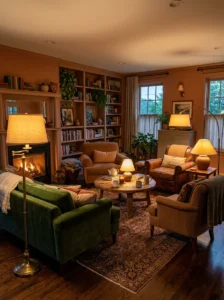
Lighting matters more than people realize in a conversation room. One bright ceiling light can make everything feel stiff. Instead, use layered lighting with floor lamps, table lamps, and warm bulbs. Place lights at different heights around the room so the glow feels softer and more relaxed. A dim corner instantly feels more inviting. And honestly, people tend to stay longer when the room feels comfortable at night.
4. Low Furniture for an Open Atmosphere
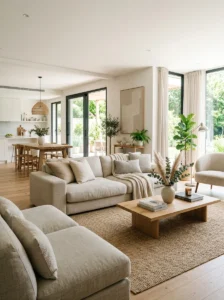
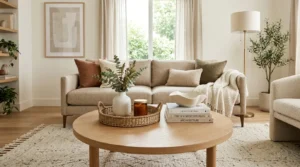
Low-profile sofas and chairs can make a conversation room feel more open without losing comfort. The lower height keeps sightlines clear, so the space feels connected rather than blocked off. Pair light-colored seating with a soft area rug underneath to anchor everything. A simple coffee table in wood or stone works well in the center. The room ends up feeling grounded and easy to move through.
5. Fireplace as the Natural Focal Point
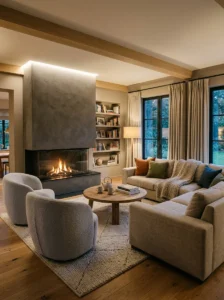
A fireplace gives people something subtle to gather around. Even in a modern room, it adds warmth that feels comforting without needing extra decoration. Arrange seating in a loose semicircle around it rather than lining furniture against walls. Add textured throws or soft cushions nearby. The movement of firelight makes the whole room feel calmer. It becomes less about design and more about how the room feels when you’re actually sitting in it.
6. Soft Neutral Color Palette
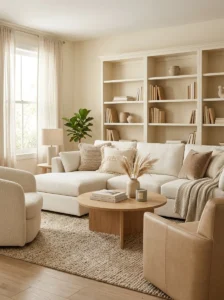
Neutral tones help conversation rooms feel quieter and less distracting. Shades like warm beige, cream, soft taupe, or muted grey work beautifully together. Layer different textures so the room still has depth. Linen curtains, woven rugs, and plush cushions keep it from feeling flat. The simplicity makes the room feel more relaxing overall. And it’s easier to refresh later with smaller decor changes.
7. Built-In Bench Seating
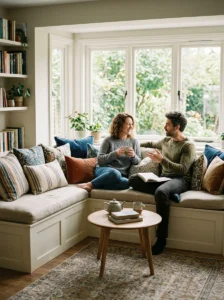
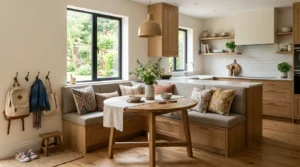
Built-in benches are great for smaller conversation spaces because they maximize seating without adding bulky furniture. Add oversized cushions and layered pillows to soften the look. You can tuck the bench near a window or along a wall to create a cozy corner. It feels casual and welcoming rather than formal. And the extra storage underneath is always useful, even if it’s just for blankets.
8. Mix Vintage and Modern Pieces
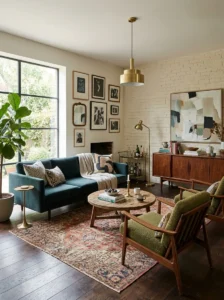
A conversation room feels more personal when everything doesn’t match perfectly. Try pairing a modern sofa with a vintage wood coffee table or older accent chairs. The contrast adds warmth and character without feeling staged. Keep the palette somewhat connected so it still feels balanced. It’s these slightly unexpected combinations that make a room memorable instead of overly polished.
9. Oversized Rug to Define the Space
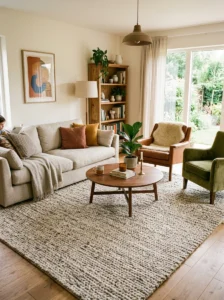
A large rug can quietly pull the entire room together. It helps define the seating area, especially in open-plan homes. Choose something soft underfoot with subtle texture or muted patterns. Make sure all the furniture sits partly on the rug so the arrangement feels connected. It’s one of those details people don’t always notice directly, but the room feels more complete because of it.
10. Window-Focused Seating Area
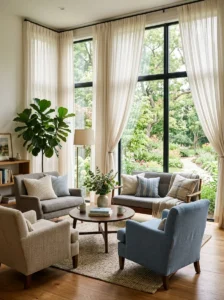
Placing seating near large windows makes a conversation room feel naturally calmer. Daylight softens the space during the day, while evening light creates a cozy mood later on. Use sheer curtains or light fabrics so the room still feels airy. A couple of chairs facing outward slightly can create a relaxed setup that feels less structured. It works especially well in apartments or smaller homes.
11. Textured Fabrics for Warmth
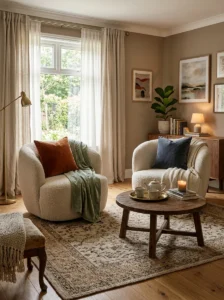
Texture changes the mood of a room quietly. Bouclé chairs, velvet cushions, linen sofas, or chunky knit throws can make the seating feel softer and more inviting. Keep the color palette fairly calm so the textures stand out naturally. It doesn’t need to look perfect. A slightly layered, lived-in feel actually works better in conversation spaces.
12. Minimal Decor with Personal Touches
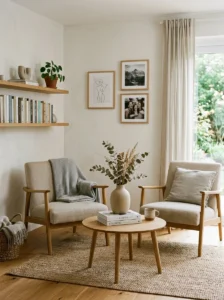
Too much decor can make a room feel busy. Instead, keep accessories simple and meaningful. A stack of books, a ceramic vase, or framed photos can add personality without cluttering the space. Leave empty areas too. The room feels calmer when every surface isn’t filled. It creates a more relaxed atmosphere where people can actually focus on being together.
13. Indoor Plants for a Relaxed Atmosphere
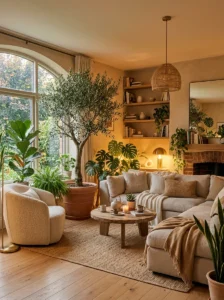
Plants soften conversation rooms almost instantly. A tall olive tree in the corner or smaller plants near shelves bring life into the space without overwhelming it. Natural greenery works especially well with neutral furniture and warm lighting. You don’t need many. Just enough to make the room feel fresh and comfortable. It subtly makes everything feel less formal and more lived in.