A living room feels completely different when textures are done right. It’s not just how things look, but how they feel when you actually sit down.
Soft layers, warm fabrics, and a bit of contrast can make even a simple space feel cozy.
Sometimes it’s those small touches that you notice the most.
1. Layered Throw Blankets for Warmth
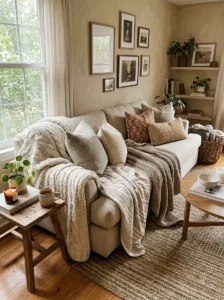
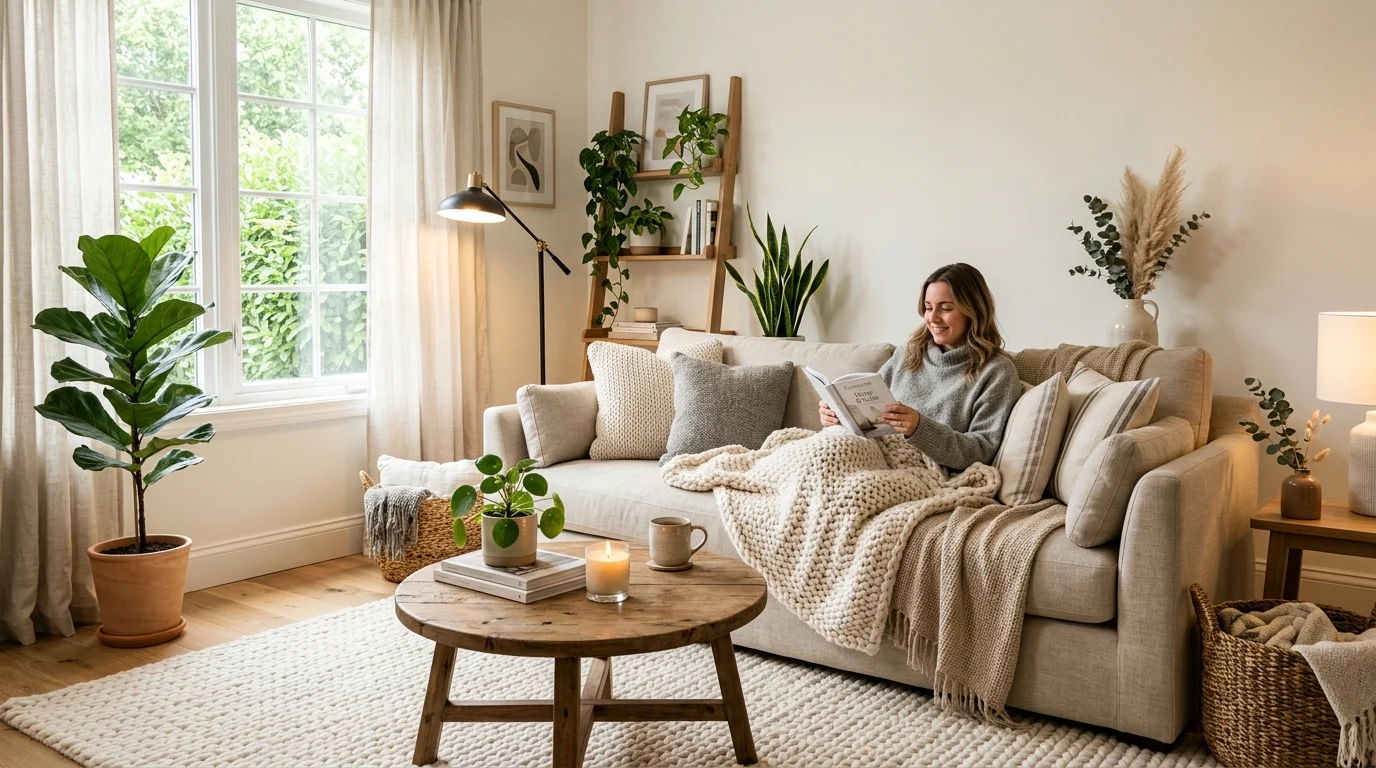
Throw blankets are one of the easiest ways to add softness to a living room. Drape one casually over the sofa or fold it neatly on the armrest. Choose materials like knit, fleece, or soft cotton for a cozy feel. Mixing two different textures can make it look more styled without trying too hard. Even on warmer days, they add visual warmth. It’s a small detail, but it makes the whole space feel more inviting and lived in.
2. Plush Area Rugs Underfoot
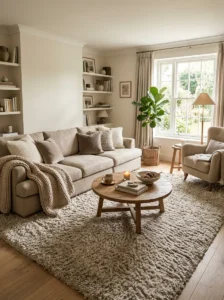
A soft rug can change how a room feels instantly. Go for something plush or slightly thick so it feels comfortable when you walk on it. Neutral tones work well, but subtle patterns can also add interest. Place it under your seating area to anchor the space. It adds warmth, especially if you have hard flooring. And honestly, it just makes everything feel a bit more complete.
3. Linen Sofas with Relaxed Texture
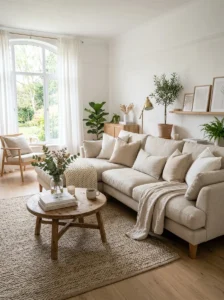
Linen sofas have a slightly wrinkled, natural look that feels relaxed and easy. They’re not overly polished, which actually makes them more comfortable. Pair them with soft cushions and maybe a textured throw. Light colors like beige or off-white work best for that airy feel. It’s simple, but it creates a calm and welcoming atmosphere without needing too many extra pieces.
4. Mix of Cotton and Knit Cushions
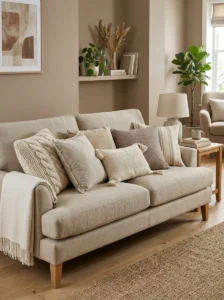
Cushions are a simple way to layer textures without changing the whole room. Try mixing cotton covers with chunky knit ones. Keep the colors within the same palette so it doesn’t feel messy. A few well-placed cushions can make the sofa feel more comfortable and styled. It’s an easy update that doesn’t take much effort but still makes a noticeable difference.
5. Soft Curtains for Gentle Light
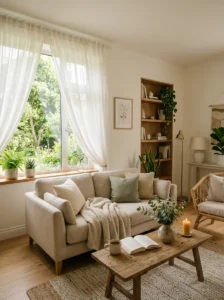
Curtains can soften both light and the overall feel of a room. Sheer or lightweight fabrics allow sunlight to filter through gently. This creates a calm and cozy atmosphere during the day. Stick to neutral tones for a clean look. Even a simple curtain setup can make the windows feel more finished and the space more relaxed.
6. Textured Wall Panels or Wallpaper
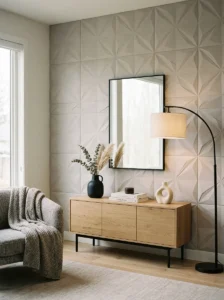
Adding texture to walls can make a room feel more layered without adding clutter. Subtle wallpaper or soft wood panels work well. Keep the design light so it doesn’t overpower the space. It adds depth quietly, which is often better than bold patterns. You notice it, but it doesn’t take over the room.
7. Cozy Floor Cushions for Extra Seating
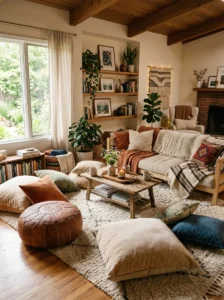
Floor cushions bring a relaxed, informal feel to a living room. They’re perfect for extra seating when needed. Choose soft fabrics like cotton or velvet for comfort. You can stack them in a corner or spread them out when guests arrive. It’s flexible and adds a cozy vibe without needing bulky furniture.
8. Woven Baskets for Storage and Texture
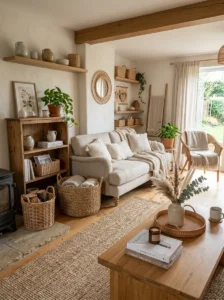
Woven baskets are both practical and decorative. Use them to store blankets, magazines, or even small items. Natural materials like rattan or wicker add warmth to the room. Place one beside the sofa or under a table. It’s simple, but it adds a layer of texture that makes the space feel more complete.
9. Velvet Accents for Soft Contrast
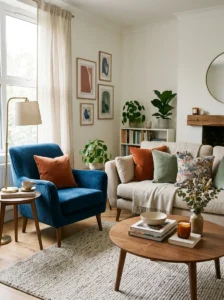
Velvet adds a slightly richer texture without being too heavy. A velvet cushion or chair can stand out nicely against softer fabrics like linen. Stick to muted tones for a balanced look. It adds a bit of contrast, but still keeps the room feeling comfortable. Just a small touch is enough.
10. Layered Rugs for Depth
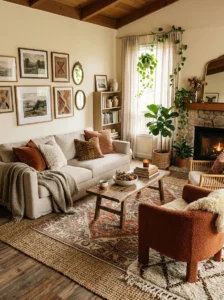
Layering rugs can create a more relaxed and styled look. Start with a larger neutral rug, then add a smaller one on top. Choose different textures to make it interesting. It works especially well in larger living rooms. It’s a subtle detail, but it adds depth without needing extra furniture.
11. Soft Upholstered Ottomans
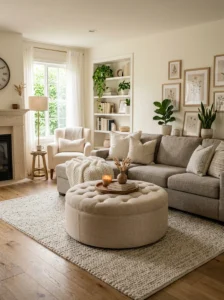
An upholstered ottoman adds both comfort and function. It can be used as a footrest, extra seat, or even a small table. Choose soft fabrics like fabric or suede. Neutral tones keep it easy to match with the rest of the room. It’s practical, but also adds to the overall softness.
12. Natural Wood Coffee Tables
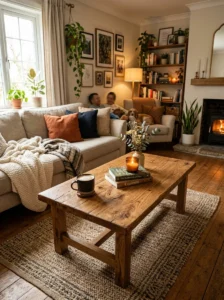
Wood brings warmth in a very natural way. A wooden coffee table with visible grain adds texture without needing extra decor. Pair it with softer elements like rugs or cushions. It creates a nice balance between soft and solid materials. It’s simple, but it grounds the space.
13. Soft Neutral Color Palette
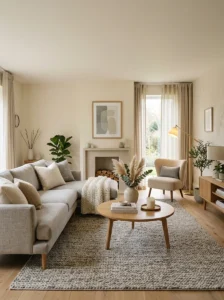
Using soft colors like beige, cream, and light grey helps highlight textures. When the colors are calm, the materials stand out more. It makes the room feel peaceful and connected. You can still add small accents, but keeping the base neutral works best.
14. Chunky Knit Poufs
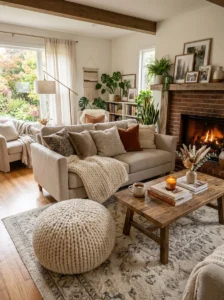
Chunky knit poufs add a playful but cozy texture. They work well as extra seating or a footrest. Place one near the sofa or in a corner. The thick knit material stands out without feeling too bold. It’s a small piece, but it adds personality.
15. Layered Lighting for Soft Ambience
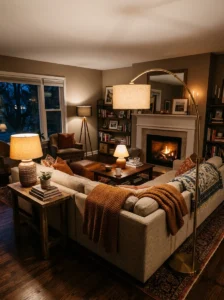
Lighting can enhance textures in a subtle way. Use multiple light sources instead of one overhead light. Table lamps and floor lamps with warm bulbs create a softer glow. It highlights fabrics and textures without being harsh. The room feels more relaxed, especially in the evening.
16. Textured Wall Art and Decor
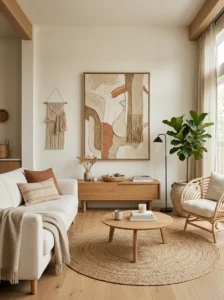
Wall art doesn’t always have to be flat. Try pieces with raised textures or fabric elements. Even a woven wall hanging can add depth. Keep it simple so it blends with the room. It’s a small touch, but it adds interest without cluttering the space.