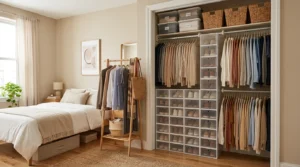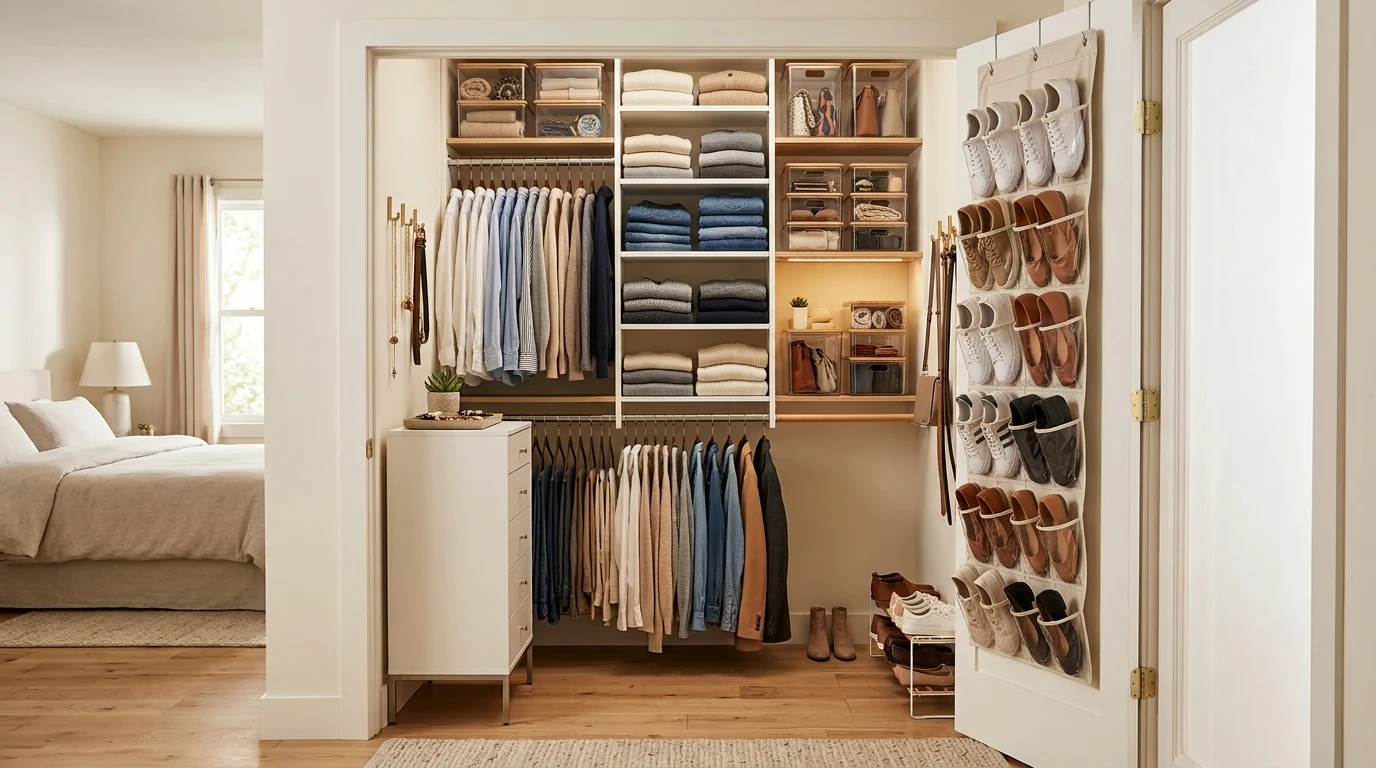
When my roommate and I split our two-bedroom apartment, I ended up with the smaller room, which came with what the listing generously called a “walk-in closet” that turned out to be barely big enough to actually walk into and turn around in, closer to four feet by four feet than any genuine dressing room. I remember standing in it on move-in day, mentally trying to figure out how my entire wardrobe was supposed to fit into what felt more like a large cabinet than an actual closet, and genuinely considering just giving up and using a rolling garment rack in my bedroom instead.
I didn’t give up, though it took several rounds of trial and error, and honestly a bit of stubbornness, before that tiny space actually started functioning well. Since then, I’ve helped two different friends tackle their own similarly cramped walk-in closets, and between all three projects I’ve developed a real, tested sense of what genuinely works in these smaller spaces versus what just looks nice in photos taken in a considerably roomier closet than most people actually have. Here are 24 small walk-in closet ideas, based on real, lived experience in genuinely tight spaces, all focused on maximizing every single inch you’ve got.
1. Use Slim, Velvet Hangers Throughout
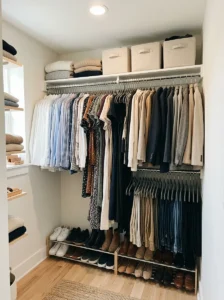
This was the very first change I made, and it genuinely surprised me how much space it freed up. Swapping my bulky plastic and wire hangers for slim velvet ones reclaimed what felt like several extra inches of rod space, simply because each hanger takes up considerably less width.
The velvet coating also keeps clothes from sliding off, which matters more in a tight closet where you’re inevitably squeezing items closer together than you would in a more generous space. I probably fit close to twenty percent more clothing on the same rod length after this single swap.
I’d recommend this as literally your first move in any small closet project, since it costs relatively little and requires no actual construction or installation, just an afternoon spent transferring your wardrobe onto new hangers.
2. Add a Second, Lower Hanging Rod
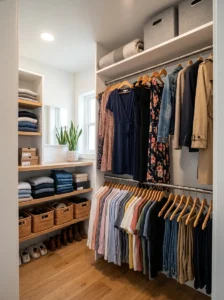
My closet’s single existing rod left a huge amount of dead space underneath shorter items like shirts and folded pants on hangers. Adding a second rod beneath the first, specifically sized for these shorter pieces, roughly doubled my usable hanging capacity within the same wall space.
I installed mine myself with a simple rod and bracket kit from the hardware store, positioning it based on my actual shortest hanging items’ length rather than guessing at a generic height. That precision mattered, since even a couple of inches of miscalculation would have wasted space I genuinely couldn’t spare.
I’d recommend measuring your own shortest hanging items specifically before installing a second rod, rather than assuming a standard height will work perfectly for your particular wardrobe’s actual proportions.
3. Install Shelves Above the Hanging Rod
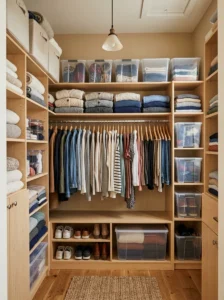
The space above my main rod, all the way up to the ceiling, had been sitting completely empty until I added a couple of shelves specifically for folded sweaters and off-season storage bins. That vertical space had genuinely been there the whole time, just unused.
I keep a small step stool tucked in the corner of my bedroom specifically for reaching this upper shelving, which sounds like a minor inconvenience but honestly became a non-issue within a week of actually living with the new system.
I’d recommend this addition for nearly any small closet with unused vertical space above the rod, since this is genuinely one of the most straightforward ways to add real storage capacity without expanding your closet’s actual footprint.
4. Use Stackable, Clear Storage Bins
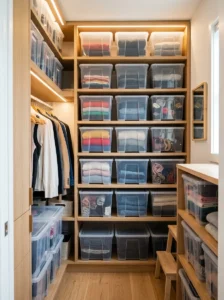
For anything not hanging, I switched entirely to clear, uniformly sized stackable bins, replacing a mismatched collection of boxes and bags that had been eating up considerably more space than necessary through their inconsistent shapes and sizes.
Being able to see contents through clear bins also saved me from needing to open several boxes just to find one specific item, which in a closet this small, where you’re often standing practically on top of your own storage, made a genuine daily difference.
I’d recommend measuring your specific shelf depth before buying bins, since an ill-fitting size either wastes space or simply won’t fit at all, a mistake I made once before returning and re-measuring properly.
5. Add a Door-Mounted Shoe Organizer
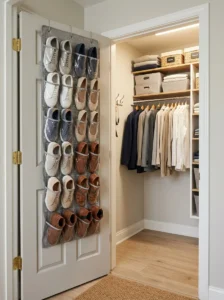
My closet door’s interior sat completely unused until I added a simple, fabric over-the-door shoe organizer, and it single-handedly solved what had been my biggest ongoing frustration, a pile of shoes constantly underfoot with nowhere organized to put them.
This reclaimed genuinely valuable floor space that shoes had previously occupied, freeing up room for other storage while also making my shoes considerably easier to actually see and choose from each morning.
I’d recommend this addition specifically if your closet door swings open into a hallway or bedroom rather than into the closet itself, since you need that clearance for the organizer’s pockets to hang without hitting anything once installed.
6. Use Corner Space With Angled Shelving
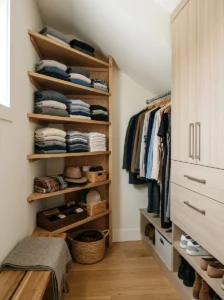
My closet has one slightly awkward corner that had been sitting completely wasted until a friend suggested angled corner shelving, essentially a small unit designed specifically to fit that dead triangular space rather than a standard rectangular shelf.
This felt like a small, almost too-simple fix, but it added a genuinely meaningful amount of extra storage from a space I’d basically written off as unusable. I now keep folded items there that I don’t need daily access to.
I’d recommend checking your own closet for any similar awkward corners or gaps before assuming your space is simply too small to improve further, since these overlooked areas often hold real, reclaimable storage potential.
7. Choose a Slim, Freestanding Drawer Unit
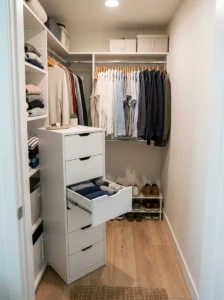
For folded clothing, rather than a bulky traditional dresser that wouldn’t have fit at all, I found a narrow, slim-profile drawer unit specifically designed for tight spaces, tucked into the one open floor area my closet had.
This required some careful measuring before purchase, since even a couple of extra inches of depth would have made the unit impossible to fit while still leaving room to actually walk in and use the rest of the closet.
I’d recommend measuring your exact available floor footprint before shopping for anything like this, bringing a tape measure with you if you’re purchasing in person, since a piece that looks compact in a showroom can still be too large for a genuinely small closet’s specific dimensions.
8. Add Hooks for Frequently Grabbed Items
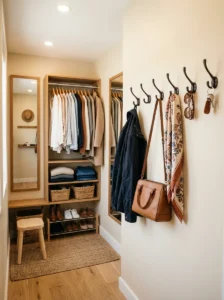
Beyond hanging rods and shelves, I added a small row of hooks along one otherwise bare section of wall, specifically for items I grab daily, my go-to jacket, a scarf, a bag, rather than making these accessible items compete for hanger space with the rest of my wardrobe.
This small addition genuinely sped up my morning routine, since I wasn’t digging through a packed rod each day for the same few items I reach for constantly. Having them right there, visible and instantly accessible, made a bigger difference than I expected from something so simple.
I’d recommend identifying your own most frequently grabbed items and giving them this kind of dedicated, easy-access spot, rather than treating your whole closet as one undifferentiated storage zone.
9. Use Under-Shelf Baskets for Extra Capacity
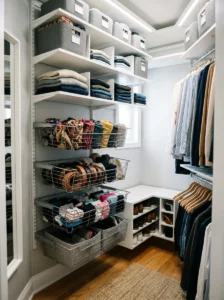
Similar to a trick I’ve since used in kitchens, I added small wire baskets that hang directly underneath my existing shelves, reclaiming the previously wasted gap between a shelf’s surface and whatever sat on top of it.
This created genuinely new storage capacity from space that had existed the whole time but wasn’t being used for anything, specifically for smaller accessories, belts, folded scarves, that didn’t need a full shelf of their own.
I’d recommend checking the actual clearance height beneath each of your shelves before buying these baskets, since inadequate clearance means the basket simply won’t fit properly once whatever’s stored on the shelf above is put back in place.
10. Choose a Fold-Down Ironing Board
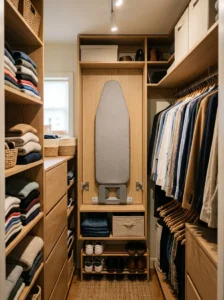
Rather than a separate, floor-space-consuming ironing board stored elsewhere, a friend with an equally tiny closet installed a fold-down model built directly into her closet wall, which stays completely flat and hidden until she actually needs it.
This solved a genuine space problem for her, since a standalone ironing board simply couldn’t fit anywhere in her already cramped closet or bedroom without becoming a permanent, in-the-way obstacle.
I’d recommend this specifically if you iron regularly and have been struggling to find storage for a standard ironing board within your own tight space, since this built-in solution essentially creates function from space that would otherwise sit completely empty.
11. Add a Small Mirror to the Back Wall
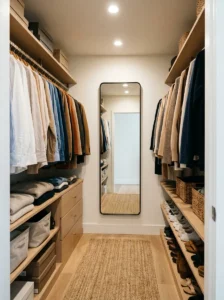
I mounted a slim, full-length mirror on my closet’s back wall, and beyond the obvious practical benefit of actually being able to see my outfits, it genuinely made the whole small space feel less cramped and claustrophobic.
This is a trick that works in small rooms generally, mirrors bounce light around and create a sense of visual depth, but it felt especially valuable in a closet this size, where every small trick toward feeling less boxed-in genuinely mattered to my daily experience of using the space.
I’d recommend choosing a slim, wall-mounted style specifically rather than a bulky standing mirror, since floor space is exactly what you can’t spare in a closet this size.
12. Use Slimline, Cascading Hangers for Multiple Items
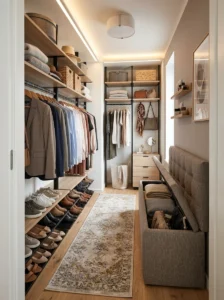
For items I don’t wear daily but still want easily accessible, I use cascading hangers, the kind that let several garments hang vertically from a single hook point, which let me store considerably more on the same amount of actual rod space.
This works particularly well for pieces like scarves or lighter cardigans that don’t need their own dedicated, full hanger space, letting me consolidate several items into essentially one hanger’s worth of rod length.
I’d recommend this specifically for lighter-weight items, since heavier pieces can cause these cascading hangers to tangle or become difficult to actually access the item you want without disturbing everything else hanging below it.
13. Add a Small Bench That Doubles as Storage
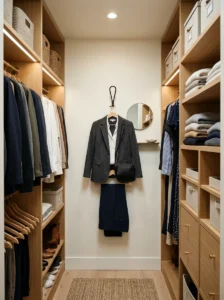
A friend with a slightly larger but still genuinely small walk-in closet added a narrow storage bench along one wall, giving her somewhere to sit while putting on shoes while also providing hidden storage inside the bench itself for out-of-season items.
This kind of dual-purpose furniture genuinely matters in a small space specifically, since every piece needs to justify its footprint through more than one single function if you’re going to make the most of genuinely limited square footage.
I’d recommend this addition only if your specific closet has the floor space to spare, since in mine, this would have blocked the walkway entirely, making it impractical despite how nice the idea sounds in theory.
14. Use Vertical Space With a Hanging Shoe Rack
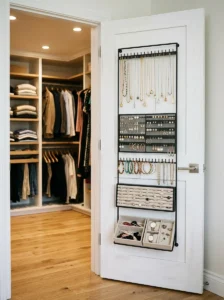
Rather than a floor-based shoe rack, which would have consumed precious walking space, I use a hanging shoe organizer that clips directly onto my main rod, keeping my most-worn shoes vertically stored and completely off the floor.
This freed up genuine floor space for actually standing and moving within the closet, which in a space this tight, made a bigger practical difference than almost any other single change I made throughout this whole project.
I’d recommend this specifically over a floor-based shoe rack for anyone dealing with a genuinely small walk-in closet, since floor space is exactly the resource you can least afford to give up to shoe storage specifically.
15. Add a Slim Jewelry Organizer to the Door
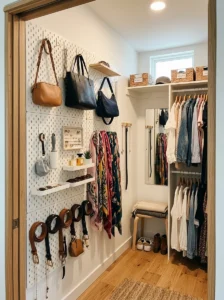
Beyond the shoe organizer mentioned earlier, I added a separate, slimmer jewelry organizer to a different section of my closet door, keeping necklaces and earrings tangle-free and easily visible without requiring any counter or shelf space at all.
This solved a genuine daily frustration, digging through a tangled jewelry box, while adding zero footprint to my already tight floor and shelf space, making it one of the most efficient additions on this entire list relative to the space it actually requires.
I’d recommend this addition for anyone with a meaningful jewelry collection and a closet door with any remaining unused space, since it’s a genuinely easy way to add real function without sacrificing any of your already limited storage elsewhere.
16. Choose Slim Storage Boxes for Under-Hanging Space
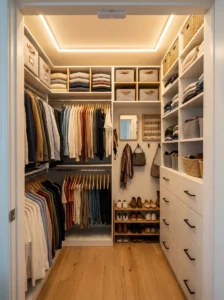
Beneath my lower hanging rod, I added a row of flat, slim storage boxes specifically sized to fit that particular clearance height, holding smaller folded items that didn’t need their own dedicated shelf or drawer space.
This required precise measuring of the exact gap beneath my lower rod before purchasing, since even boxes that seemed reasonably slim in a store didn’t always actually fit the specific, genuinely tight clearance I had available in my own particular closet configuration.
I’d recommend measuring this space carefully with your actual hung items in place, rather than measuring the empty rod alone, since garments hanging down can reduce your usable clearance more than you’d expect before actually testing it.
17. Use a Pegboard for Fully Customizable Storage
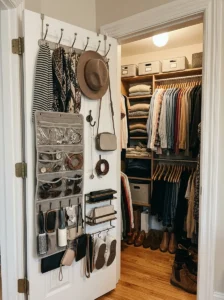
A friend installed a small pegboard section on one wall of her tiny closet, allowing her to customize hook and small shelf placement exactly to her specific belongings, adjusting the configuration as her actual storage needs changed over time.
This kind of flexible system genuinely outperforms fixed shelving in a small space specifically, since you can reconfigure it precisely as you figure out what’s actually working versus what isn’t, rather than committing to a fixed layout that might not suit your real habits.
I’d recommend this option for anyone still figuring out their ideal small closet configuration, since the ability to adjust and experiment matters more in a tight space where getting the layout wrong wastes precious inches you genuinely can’t spare.
18. Add Motion-Sensor Lighting
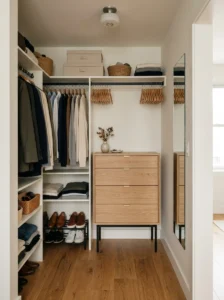
My original closet had no dedicated lighting at all, just whatever spilled in from my bedroom, which made distinguishing between dark colors genuinely difficult, especially getting dressed before sunrise. Adding a simple, battery-powered motion-sensor light solved this without requiring any actual electrical work.
This was a genuinely easy weekend fix, and the improved visibility made using the space considerably more pleasant on a daily basis, beyond just the practical benefit of actually seeing my clothes clearly for the first time since moving in.
I’d recommend this battery-powered option specifically for anyone renting or hesitant to take on electrical work, since it provides real functional improvement without any of the complexity a hardwired installation would require.
19. Use Every Bit of Door-Back Space
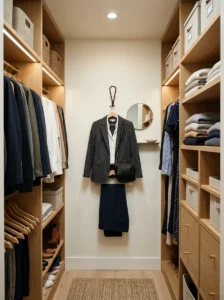
Beyond the shoe and jewelry organizers already mentioned, I added a small hook specifically for hanging tomorrow’s outfit the night before, using literally every remaining inch of my closet door’s back surface rather than leaving any of it unused.
This kind of comprehensive door utilization matters enormously in a genuinely small closet, since this single surface, easily overlooked in a larger space, represents real, meaningful storage potential when every other surface is already stretched to its limit.
I’d recommend walking through your own closet door specifically looking for any remaining unused space, similar to how I approached mine, since even small additions here add up to meaningful extra function over time.
20. Choose Furniture With Legs Rather Than Solid Base
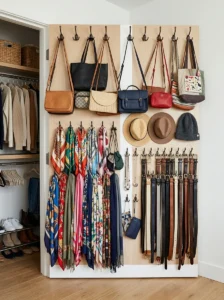
My slim drawer unit specifically has visible legs rather than a flush, solid base, which lets a small strip of floor show beneath it, making the whole closet read as more open and less visually cramped than a solid-based piece would have created.
This is a small detail, but similar tricks work in small bedrooms too, letting some floor remain visible beneath furniture genuinely helps a tight space feel less boxed-in, even though the actual usable floor space technically stays the same either way.
I’d recommend considering this detail specifically when choosing any furniture for your own small closet, since it’s a free visual trick that costs nothing extra but genuinely affects how spacious the room feels to actually stand in.
21. Add a Small Valet Hook for Outfit Planning
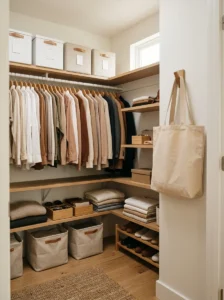
I installed a single hook specifically for hanging out my next day’s planned outfit, keeping it separate from my main hanging storage, which sounds minor but genuinely streamlined my evening routine in a closet too small for a proper valet rod.
Before this, I’d awkwardly drape tomorrow’s clothes over whatever was closest, which in a space this tight often meant it ended up in the way. Having one dedicated spot solved that small but genuinely recurring frustration.
I’d recommend this simple addition for anyone who plans outfits in advance, since it requires almost no space, just a single hook, while providing real, daily functional value.
22. Use Multi-Directional Hooks for Bags and Accessories
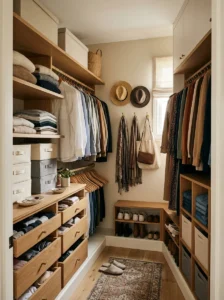
Rather than standard single hooks, I chose a few multi-directional versions specifically for hanging bags and belts, letting me fit several items onto what would otherwise have required multiple separate hooks and considerably more wall space.
This small swap let me consolidate a genuinely cluttered collection of accessories into a much smaller footprint, freeing up wall space for other storage needs elsewhere throughout my already tight closet.
I’d recommend this option specifically for anyone with a larger bag or accessory collection relative to their available wall space, since these multi-directional hooks genuinely punch above their weight in terms of storage efficiency.
23. Keep a Donation Bag Inside the Closet Itsel
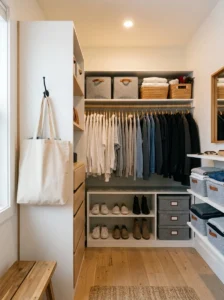
I keep a simple bag hanging inside my closet specifically for items I’m ready to donate, adding to it gradually as I notice things I’m no longer wearing, rather than letting these items continue occupying space while I put off actually dealing with them.
This habit genuinely matters more in a small closet than a larger one, since every single item taking up space here needs to earn its place, and having an easy, immediate outlet for things that don’t keeps the whole system from slowly filling back up over time.
I’d recommend this simple habit for anyone maintaining a genuinely small closet long-term, since ongoing editing matters as much as the initial organizational setup for keeping the space actually functional month after month.
24. Accept That Perfect Organization Takes Time to Find
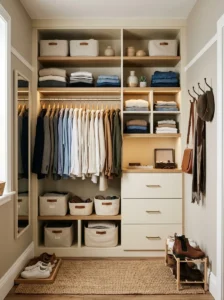
It took me honestly close to a year of small adjustments, moving a shelf here, trying a different hanger system there, before my tiny closet actually started working the way I needed it to. I wasted money on a couple of organizers that seemed perfect in the store but just didn’t suit my actual specific space and habits once I got them home.
Looking back, I think that trial and error was genuinely necessary rather than something to feel bad about, since every closet’s specific quirks, and every person’s specific wardrobe and habits, are different enough that no single system works perfectly right out of the gate for everyone.
My honest advice, don’t expect to nail your own small closet’s organization on the first attempt. Give yourself permission to adjust as you actually live with it.
Frequently Asked Questions
What’s the single most space-saving change for a small walk-in closet? Based on real experience, switching to slim velvet hangers provides the most immediate, low-cost space gain, often freeing up noticeably more hanging capacity within the very first afternoon of making the swap.
How do I organize shoes in a closet with almost no floor space? A hanging or over-the-door shoe organizer keeps shoes vertically stored and completely off the floor, freeing up genuine walking space that a floor-based shoe rack would otherwise consume.
Is it worth installing built-in shelving in a small closet, or should I use freestanding units? It depends on your specific space and whether you’re renting. Built-ins maximize every inch more precisely, while freestanding, slim-profile units offer flexibility and work well for renters who can’t make permanent changes.
How much can double hanging rods really increase storage capacity? In many small closets, adding a second rod beneath the first can roughly double usable hanging space for shorter items like shirts and folded pants, since it reclaims previously wasted vertical space underneath the original single rod.
Final Thoughts
That first, slightly discouraging moment standing in my genuinely tiny walk-in closet on move-in day feels a long way off now, mostly because the space actually works for me these days, even if it took real trial and error to get there. The biggest thing I’ve learned across this project and the two friends’ closets I’ve since helped with is that small spaces reward genuine patience and specific, tested solutions over generic advice pulled from a much larger closet’s inspiration photo. If your own small closet has been frustrating you, take it one change at a time, and trust that it’ll come together.