For years, my “reading spot” was really just whichever corner of the sofa happened to be free, books stacked on the floor beside me because we never had a proper shelf, let alone a dedicated space to actually curl up and read. It wasn’t until I converted a genuinely awkward, unused corner of our spare room into a small home library that I understood how much a dedicated reading space changes the actual habit of reading. Having a specific spot, comfortable, well-lit, surrounded by books, made me pick up a book far more often than I used to, simply because the environment was already set up and waiting rather than something I had to assemble each time.
Since that first small project, I’ve helped a couple of friends carve out their own reading nooks too, in spaces ranging from a spare bedroom corner to a converted stair landing. Below are 18 cozy home library ideas based on real spaces I’ve either built myself or helped design, focused on creating something you’ll genuinely want to sit in for hours, not just something that photographs nicely for a few minutes.
1. A Built-In Window Seat Surrounded by Shelves
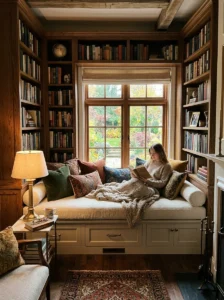
A window seat, built directly beneath a window and flanked on either side by floor-to-ceiling bookshelves, might be the single most classic and effective home library layout I’ve come across, and it’s the design I ultimately chose for my own space. Natural light pours in directly onto the seat itself, making it a genuinely pleasant spot to read during the day without needing extra lighting, while the surrounding shelves keep your entire book collection within arm’s reach the moment you sit down.
We built ours with a hinged seat cushion base, which added valuable hidden storage underneath for extra blankets and a few books that didn’t fit on the shelves, without sacrificing any of the seat’s comfort or appearance. I’d recommend a seat depth of at least twenty inches if you want to comfortably curl up with your legs tucked beneath you, rather than just perching on the edge, since a seat that’s too shallow ends up feeling more like an awkward bench than a genuinely cozy reading spot.
Cushioning matters enormously here too. We used a dense foam base topped with a plush cushion cover, and added several throw pillows for back support, since a hard, thin cushion becomes uncomfortable fairly quickly during longer reading sessions. If your window doesn’t get a lot of natural light, or you plan to use the space in the evenings, I’d suggest adding a small reading lamp mounted directly to one of the flanking shelves, positioned to shine down onto the seat without creating glare on the window itself.
2. Floor-to-Ceiling Shelving on a Single Wall

Dedicating one entire wall to floor-to-ceiling bookshelves creates an immediate, dramatic sense of a proper library, even in a fairly small room, simply through the sheer volume and visual density of books on display. I helped a friend convert a spare bedroom this way, and even without any other major changes to the room, that single wall of shelving completely transformed how the space felt the moment you walked in.
The key to making this work in a smaller room is choosing shelving with a relatively shallow depth, standard book depth rather than anything overly deep, so the wall doesn’t eat significantly into the room’s usable floor space. We used a modular shelving system that let us adjust individual shelf heights, which meant we could accommodate everything from small paperbacks to oversized art books without wasted vertical gaps between shelves.
For genuinely tall installations reaching toward the ceiling, I’d recommend a simple rolling library ladder, both for practical access to your highest shelves and for the undeniable charm it brings to the whole setup. If a full ladder system isn’t practical for your space or budget, reserving the topmost shelves for less frequently accessed books or purely decorative objects means you won’t need to reach them often, reducing how much a step stool becomes a genuine daily inconvenience.
3. A Cozy Corner Nook with a Single Armchair
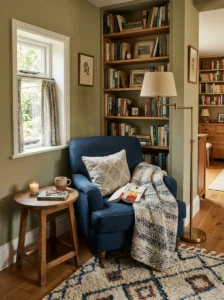
Not every home has the space for a dedicated room or a full wall of shelving, and a single, well-chosen armchair tucked into an underused corner, paired with a small side table and a nearby lamp, can create a genuinely satisfying reading nook with a surprisingly small footprint. I set this up in a narrow hallway alcove that had sat completely empty for years before, and it’s become one of the most used spots in our entire home despite taking up barely more space than the chair itself.
The chair itself matters more than any other single element in this setup, since it’s genuinely the whole point of the space. I’d recommend prioritizing a deep seat and a high back that supports your head and neck during longer reading sessions over a chair chosen purely for its appearance, since a beautiful but uncomfortable chair defeats the entire purpose of building a space specifically meant for settling in and staying a while.
A small side table within easy reach for your current book, a cup of tea, and perhaps a small stack of books you’re planning to read next rounds out the essentials without requiring much additional space. I’d suggest adding a compact, adjustable floor lamp positioned just behind and slightly to the side of the chair, rather than directly overhead, since this angle reduces glare on the page while still providing genuinely adequate light for reading, even well into the evening.
4. A Ladder-Accessed Loft Library
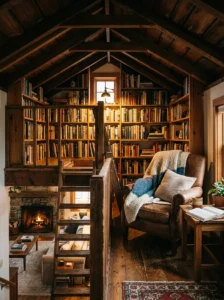
For homes with genuinely high ceilings, building a small loft level specifically for a library, accessed by a ladder or narrow staircase, creates an entirely separate, almost secret reading retreat that feels distinctly different from the rest of the home below it. A client of mine did this above their living room, and the sense of tucking away into a completely separate little world, despite it technically being open to the room below, made it one of the most genuinely magical spaces I’ve helped design.
This is obviously a more significant undertaking than most ideas on this list, requiring structural assessment to confirm your ceiling height and existing structure can safely support the addition, along with careful planning for safe, comfortable ladder or stair access. I’d strongly recommend working with a structural engineer and experienced contractor for this specific project, given the genuine safety considerations involved in any elevated structure within a home.
The payoff, for the right space, is considerable though. A loft library naturally limits itself to a cozy, contained footprint, which actually works in its favor here, you’re not trying to fill a large open room but rather creating an intentionally snug, enclosed reading spot elevated above the busier activity of the main living area. Low, angled ceilings within the loft itself, rather than feeling cramped, tend to reinforce this sense of a genuinely cozy, den-like retreat.
5. Layered, Warm Lighting for Evening Reading
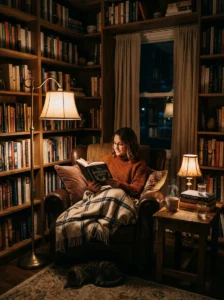
Good lighting is arguably more important to a genuinely usable reading nook than any other single design element on this list, and it’s the detail I see overlooked most often in otherwise beautifully styled spaces. A gorgeous reading chair beneath harsh, cool overhead lighting, or worse, with no dedicated lighting at all beyond a distant ceiling fixture, simply doesn’t get used nearly as often as one with proper, warm, layered illumination.
I’d recommend a minimum of two light sources for any dedicated reading spot: one for general ambient light in the surrounding area, and a second, more focused task light specifically positioned for actually reading the page in front of you without strain. In my own nook, this means a floor lamp positioned just behind my shoulder for focused reading light, plus a smaller, dimmer table lamp nearby that keeps the immediate area softly lit without needing the brighter reading lamp on for casual moments spent simply relaxing rather than actively reading.
Bulb temperature matters enormously here too. I’d strongly recommend warm white bulbs, generally in the 2700K range, over cooler daylight bulbs, since warm light genuinely feels more relaxing and inviting for a space meant for unwinding, while cooler light tends to feel more clinical and alert, better suited to a workspace than a cozy reading corner. Dimmable fixtures are a worthwhile investment too, letting you brighten the space for daytime reading and dim it down considerably for a softer, more atmospheric evening session.
6. A Library Ladder for Tall Shelving
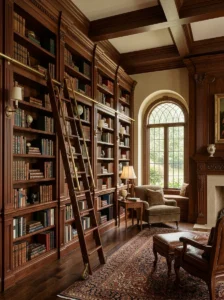
Beyond its practical necessity for accessing genuinely tall shelving, a proper rolling library ladder brings a specific, old-world charm to a home library that few other single additions can match. I installed one in my own space once our shelving reached a height that made the top two shelves genuinely difficult to access safely without it, and beyond the practical benefit, it’s become a detail that visitors consistently comment on and admire.
The ladder attaches to a horizontal rail mounted at the top of the shelving unit, allowing it to roll smoothly along the entire length of the wall, giving you access to any section of your shelving without needing to reposition a separate step stool each time. I’d recommend having this professionally installed, since the rail and ladder mounting hardware need to be genuinely secure and properly weight-rated, given that you’ll be climbing on it directly.
For anyone considering this addition, I’d suggest choosing a ladder finish that complements your shelving’s wood tone or metal hardware, rather than treating it as a purely utilitarian afterthought, since a well-matched ladder becomes a genuine design feature in its own right rather than simply a practical tool. This is a detail best suited to shelving that’s at least eight feet tall, since the whole point is safely accessing genuinely high shelves, and it can feel like an unnecessary, oversized addition in a more modestly sized library setup.
7. Built-In Shelving Around a Fireplace

The wall space flanking a fireplace is often already a natural gathering point in a home, making it a particularly fitting location for built-in library shelving, combining the cozy draw of a fire with the equally cozy appeal of being surrounded by books. I designed this combination for a client’s living room, with shelving built into the alcoves on either side of their fireplace, and the resulting space has become the clear favorite reading spot in their entire home.
This layout works particularly well because it doesn’t require carving out an entirely separate room or zone, it simply enhances a space that was likely already a comfortable, frequently used part of the home. I’d recommend positioning a comfortable chair or a small loveseat directly facing or angled toward the fireplace within this shelving alcove setup, creating a natural, warm reading spot that takes full advantage of both the fire’s warmth and the surrounding books.
I’d suggest keeping the shelving’s finish and trim details consistent with your fireplace’s existing mantel and surround, so the whole combination reads as one cohesive, built-in feature rather than two separate elements that happen to be positioned near each other. This consistency in finish and detailing is often what separates a space that feels like a genuinely considered architectural feature from one that simply has a bookshelf placed near a fireplace as an afterthought.
8. A Hanging or Suspended Reading Chair
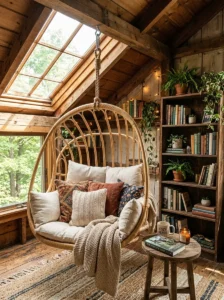
For a reading nook with a bit more visual whimsy and movement, a hanging or suspended chair, whether a woven rattan design or a simple fabric hammock-style chair, brings a distinctly playful, cozy quality that a standard armchair doesn’t quite replicate. I set one up in a client’s converted attic reading corner, and the gentle swaying motion while reading became something she specifically mentioned as one of her favorite parts of unwinding in the space.
Installation requires securing the chair’s mounting point into an actual structural beam or joist, rather than relying on drywall alone, given the weight involved once someone is actually seated. I’d strongly recommend having this professionally installed and confirming the specific weight rating of both the chair and its mounting hardware before use, since a hanging chair carries genuine safety considerations that a standard floor-based chair doesn’t.
I’d suggest pairing a hanging chair with a plush cushion and a few extra pillows, since many hanging chair designs, particularly woven rattan styles, aren’t especially soft or cushioned on their own. A small side table or a nearby low shelf for your current book and a drink is also worth planning for, since a suspended chair doesn’t offer the same built-in surface a standard armchair with attached side tables might. This is a particularly good option for a slightly more playful, less formal reading nook, especially appealing in a converted attic, sunroom, or similarly relaxed, informal space.
9. A Library with a Rolling Book Cart
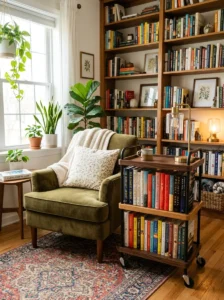
For smaller spaces where a full wall of built-in shelving isn’t practical, a rolling book cart offers a flexible, movable alternative that still creates a genuine sense of a curated personal library, without requiring permanent installation or a dedicated room. I use one in my own smaller apartment specifically for my current reading pile and a rotating selection of favorites, keeping the rest of my larger collection in a more traditional bookshelf elsewhere.
The mobility is genuinely useful beyond just flexibility in placement. I regularly roll mine closer to whichever spot I’m reading in that day, sometimes near the window during daylight hours, sometimes beside my armchair in the evening, which means my books are always within easy reach regardless of exactly where in the room I’ve settled to read. This kind of flexibility simply isn’t possible with fixed, built-in shelving.
I’d recommend choosing a cart with at least two tiers, using the lower level for larger or heavier books and the upper level for your current, more frequently accessed reading material. A cart with a solid, sturdy wood or metal frame tends to hold up better over years of regular movement than a flimsier, purely decorative option, and smooth, quality casters make a genuine difference in how easily and quietly the cart actually rolls across your specific flooring.
10. A Library Wall with a Rolling Sliding Ladder Track
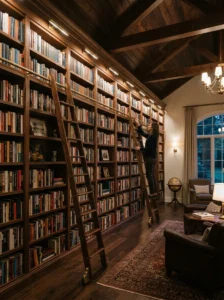
Beyond the standalone library ladder mentioned earlier, a full sliding ladder track system, spanning an entire wall of shelving, deserves its own mention as a distinct design feature specifically for larger, more ambitious home library projects. I helped install one of these full systems for a client with a genuinely extensive book collection spanning nearly twenty linear feet of shelving, and the track itself became almost as much a design statement as the books it provided access to.
Unlike a simpler ladder that might lean against a single section of shelving, a full track system lets the ladder glide smoothly along the entire wall’s length, providing safe, easy access to any section regardless of how far it sits from where the ladder happens to be resting. This becomes genuinely valuable in larger libraries where organizing books by category across a long wall means you’ll need reliable access to sections throughout the space, not just one concentrated area.
I’d recommend this specifically for larger-scale library projects, given both the cost and the structural planning involved in a full-length track installation, rather than a smaller reading nook where a simpler, standalone step stool or a shorter ladder would be more proportionate and cost-effective. For the right space, though, a full sliding track system genuinely transforms how a large personal library functions day to day, making even the most distant, hard-to-reach shelves feel just as accessible as those within easy arm’s reach.
11. A Library Nook with a Skylight
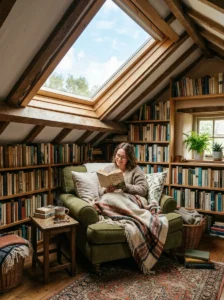
Positioning a reading nook directly beneath a skylight, or adding one specifically to illuminate an existing reading corner, brings a genuinely wonderful quality of natural light that a standard side window doesn’t quite replicate, soft, even illumination throughout much of the day without the direct glare a side-facing window can sometimes create. A friend added a skylight above her attic reading nook specifically for this purpose, and the difference in how naturally bright and pleasant the space felt afterward was considerably more significant than she’d expected from what seemed like a fairly modest addition.
If you’re adding a skylight specifically for this purpose rather than working with an existing one, I’d recommend consulting with a contractor about your roof’s specific structure and the best skylight placement and size for your particular reading nook’s location and orientation, since factors like roof pitch and the direction the light enters from significantly affect the final result. A skylight positioned to catch morning light suits a nook you primarily use earlier in the day, while one capturing more afternoon light benefits a space used mainly later on.
I’d suggest pairing a skylight with some form of shade or blind specifically designed for angled skylight installation, since direct, unfiltered overhead sun can create uncomfortable glare on a page during certain times of day or year, even though the overall quality of skylight illumination is generally superior to a standard window for reading purposes. This addition works particularly well in attic or upper-floor reading nooks specifically, where a skylight is often structurally more feasible than it would be in a ground-floor room.
12. A Library Corner with a Chaise Lounge
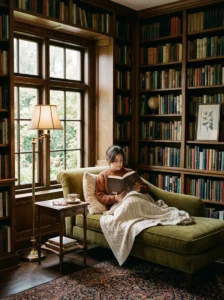
For readers who prefer to stretch out fully rather than sit upright, a chaise lounge specifically positioned within a book-filled corner offers a genuinely different, more relaxed reading posture than a standard armchair provides. I set this up in a client’s converted sunroom library, and she specifically mentioned that being able to fully recline while reading, rather than sitting upright for hours, made a noticeable difference in how long and how comfortably she could actually stay immersed in a book.
The chaise’s positioning matters considerably for genuine usability here. I’d recommend placing it with your head end nearest a window or a dedicated reading lamp, ensuring good light falls directly onto the page regardless of whether you’re reading during the day or in the evening, rather than positioning it in a way that leaves your reading light coming from an awkward angle or distance. A small side table positioned near the head end, rather than the foot, similarly keeps your current book, drink, and glasses within easy reach without needing to sit up to access them.
I’d suggest choosing a chaise with a slightly reclined, rather than fully flat, backrest specifically for reading purposes, since a completely flat surface makes holding a book at a comfortable angle for extended periods considerably more awkward than a moderately reclined position does. A soft throw draped over the foot of the chaise adds both practical warmth for longer sessions and a genuinely inviting, cozy visual detail to the overall corner.
13. A Small Library with a Rolling Library Steps Bench
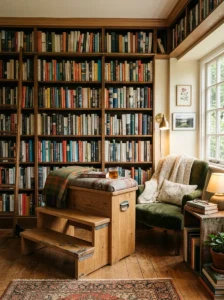
A dual-purpose library steps bench, which functions as both practical seating and a small set of steps for reaching higher shelves, is a particularly clever solution for smaller home libraries where a full rolling ladder might feel like overkill for a more modest collection. I recommended this specifically for a client with a compact reading nook and a shelving unit reaching just slightly beyond comfortable standing reach, where a full ladder system would have felt disproportionately large for the actual need.
The bench typically folds or unfolds between its two functions, sitting as a simple, low bench or ottoman for everyday use, then unfolding or flipping to reveal a small set of steps when you specifically need to reach a higher shelf. This dual functionality makes genuinely efficient use of a small nook’s limited floor space, avoiding the need for both a separate step stool and additional seating taking up room independently.
I’d recommend this option specifically for reading nooks where shelving reaches modestly beyond comfortable reach, roughly one to two feet, rather than genuinely tall, floor-to-ceiling installations where a proper ladder system remains the safer, more practical choice. For the right modest-scale space, though, this dual-purpose piece is a genuinely smart, space-efficient solution that most visitors don’t immediately recognize as serving two distinct functions until they see it in actual use.
14. A Library Nook with a Dedicated Tea or Coffee Station
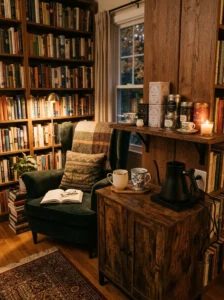
Positioning a small tea or coffee station directly within or immediately adjacent to your reading nook removes the friction of needing to leave your cozy spot every time you want a warm drink to accompany your reading session. I added a small shelf with an electric kettle, a few favorite mugs, and a small tin of tea directly beside my own reading chair, and it’s a small addition that’s genuinely increased how long I tend to settle in and stay in the space during any given session.
I’d recommend positioning this station close enough to be genuinely convenient, but far enough from your primary seating and any books to avoid spills or steam becoming a real concern for your collection. A small side table or narrow shelf specifically dedicated to this purpose, rather than trying to balance everything precariously on your main reading table alongside your book and reading lamp, keeps the whole setup considerably more practical and tidy.
If your reading nook is positioned near an outlet already, for a reading lamp or other lighting, extending that same outlet’s use to power an electric kettle keeps the whole station self-contained without needing additional wiring or extension cords running across the room. This is a genuinely small addition in terms of space and cost, but it consistently ranks among the details that make the biggest practical difference in how often a reading nook actually gets used for extended, comfortable sessions rather than just brief visits.
15. Open Shelving Styled with Objects Between Books
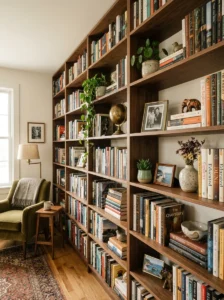
Rather than filling every single shelf edge to edge purely with books, leaving intentional gaps styled with small decorative objects, a favorite mug, a small plant, a meaningful trinket, breaks up the visual density of a large book collection and gives the eye natural resting points throughout the shelving. I styled my own shelves this way after an early version, packed completely full with books alone, started to feel visually overwhelming rather than warm and inviting.
The specific objects you choose to interspersed matter less than simply ensuring genuine variety in height and visual weight throughout the shelving. I used a mix of small framed photos, a couple of meaningful travel souvenirs, and a few small plants, spaced roughly every third or fourth section rather than on every single shelf, which kept the overall effect feeling curated rather than either too sparse or too cluttered.
I’d recommend against overdoing this styling to the point where it starts competing with the books themselves for attention, since the fundamental purpose of a home library shelf is still, first and foremost, to hold and display your actual book collection. A general guideline I’ve found useful is keeping roughly seventy to eighty percent of visible shelf space dedicated to books, with the remaining smaller portion reserved for these styling objects, striking a balance between a genuinely functional library and one that also feels personally curated and visually interesting.
16. A Library Corner with Layered, Soft Textiles
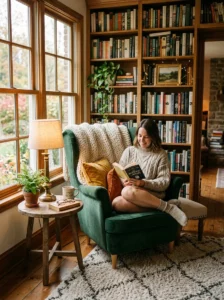
Beyond the seating itself, layering multiple soft textiles throughout a reading nook, a plush throw blanket, several varied throw pillows, perhaps a small area rug beneath the seating, adds genuine tactile comfort and visual warmth that a single chair alone, however nice, doesn’t fully achieve on its own. I gradually added these layers to my own nook over several months, and the cumulative effect of soft textures surrounding the space made a noticeably bigger difference than I expected from what felt like fairly minor individual additions.
I’d recommend varying texture specifically, not just color or pattern, when selecting these textiles, a chunky knit throw alongside a smoother velvet pillow, for instance, creates more genuine tactile interest than several pieces that all feel roughly the same to the touch. This variation in texture is part of what makes a reading nook feel genuinely cozy and inviting to actually settle into, rather than just visually coordinated but somewhat flat in feel.
A small area rug beneath your reading chair, even in a nook too small for a large rug, helps ground the space and adds a layer of softness underfoot, particularly appreciated if you tend to read barefoot or with your shoes off, as many people do when genuinely settling in for a longer session. I’d suggest choosing a rug with a plush, comfortable pile specifically for this purpose, rather than a flatter, more decorative weave better suited to higher-traffic areas of the home.
17. A Library Wall with Hidden Storage Behind Shelving
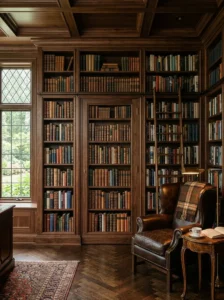
For home libraries that also need to accommodate less attractive practical storage, extra linens, seasonal items, papers, incorporating a section of shelving that conceals hidden storage behind what otherwise looks like a continuous run of book display lets you maintain the library’s polished appearance while still addressing genuine household storage needs. I built a section like this into my own library wall, where three adjacent “shelves” are actually a single hinged panel that swings open to reveal a concealed storage cavity behind it.
This kind of hidden storage works particularly well in a library that also needs to double as general storage within a smaller home, letting you avoid the visual clutter of obviously mismatched storage bins or boxes sitting among your book display. I’d recommend working with a carpenter specifically experienced in hidden or secret storage installations if you want this feature to genuinely blend seamlessly, since a poorly executed hidden panel tends to be fairly obvious upon close inspection, undermining the whole point of the concealment.
I’d suggest reserving this hidden storage specifically for items you need accessible but don’t necessarily want on display, rather than your everyday, frequently used books, since accessing this concealed space does require slightly more effort than simply reaching for a book on an open shelf. For the right household genuinely needing extra concealed storage, though, this feature lets a library wall serve double duty without compromising its primary visual and functional purpose as a book display.
18. A Minimalist Reading Nook with a Single Statement Chair
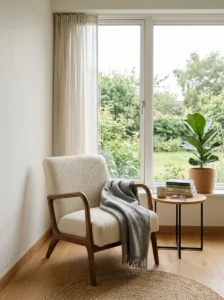
Sometimes the most effective reading nook is also the simplest, a single, genuinely well-chosen statement chair, positioned thoughtfully near a window or a small selection of favorite books, without the additional layers and features covered elsewhere on this list. I designed a version of this for a client who specifically wanted a calm, uncluttered reading spot rather than an elaborate library setup, and the resulting simplicity turned out to be exactly right for both her space and her personal style.
The success of this minimalist approach depends almost entirely on the quality and character of the single chair you choose, since it’s carrying the entire visual and functional weight of the space without additional shelving, textiles, or decor to support it. I’d recommend investing more of your available budget into a genuinely well-made, comfortable, visually striking chair specifically because it’s the sole focal point, rather than spreading a similar budget thinly across many smaller elements that a more elaborate library setup might otherwise include.
I’d suggest pairing this single statement chair with just one or two other carefully chosen elements, a small side table, a single meaningful plant, rather than trying to fill the surrounding space with additional decor purely to avoid it feeling sparse. Genuine restraint, rather than more decoration, is what makes this minimalist approach feel intentional and calm rather than simply underdeveloped or unfinished, and it’s a particularly good option for anyone who finds more elaborately styled spaces visually overwhelming rather than genuinely relaxing.
Final Thoughts
Every reading nook I’ve helped create that actually gets used regularly, rather than just admired occasionally, shared the same foundation: genuine comfort and good lighting prioritized ahead of purely visual styling. Before choosing any of these ideas for your own space, think honestly about how and when you actually read, during the day or mostly in the evening, curled up or sitting upright, alone in silence or with a cup of tea close at hand, and let those real habits guide your choices more than what simply looks best in a photograph.
A beautifully styled nook that doesn’t actually suit how you read will end up decorative rather than genuinely used, while even a fairly simple corner, set up thoughtfully around your real habits, can become the spot in your home you look forward to settling into every single day