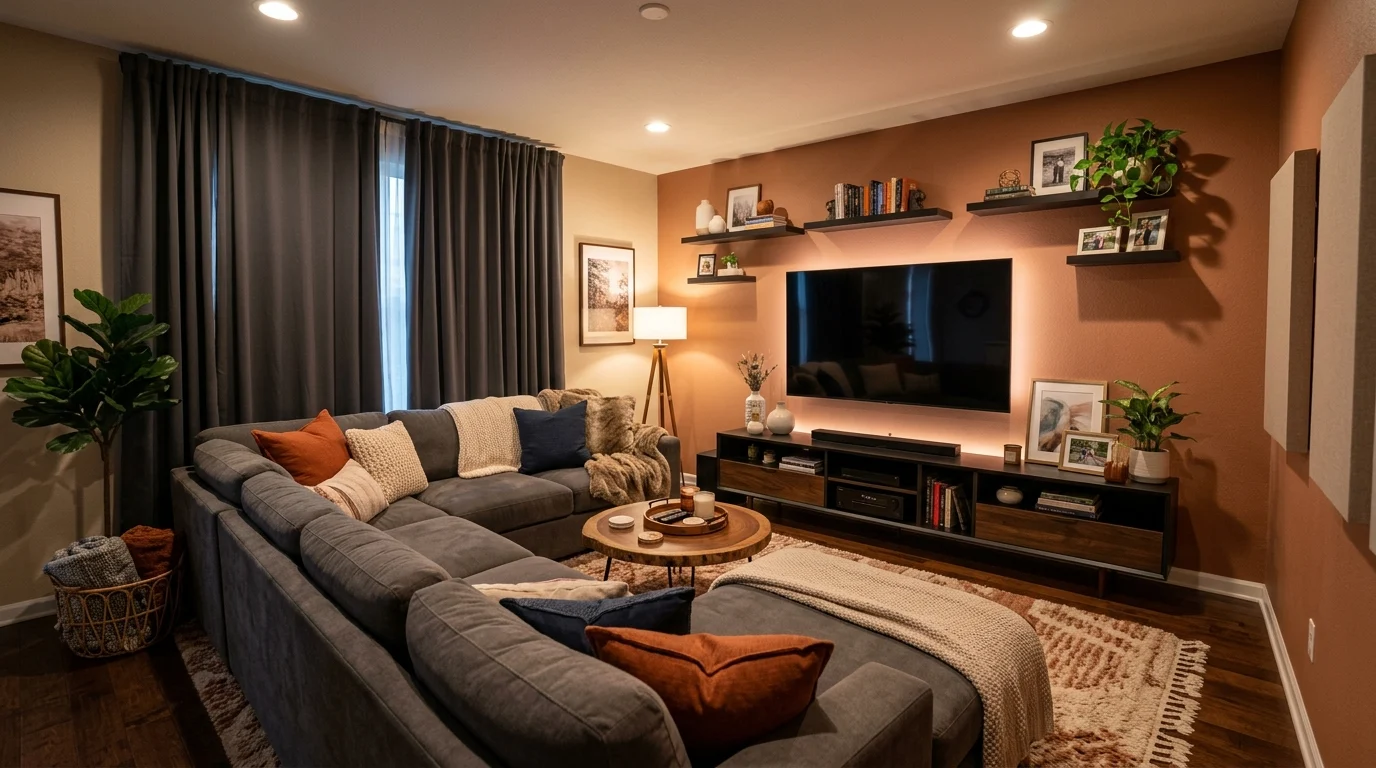
For years, our TV room was really just a sofa positioned across from a television with almost no other thought put into it, functional in the most basic sense, but never a space I actually looked forward to spending an evening in. It wasn’t until I helped a friend redesign her actual media room, thinking carefully about seating comfort, screen glare, sound, and genuine atmosphere, that I understood how much better a dedicated TV room can feel when it’s planned specifically around how people actually watch television, rather than just furniture pushed toward a screen as an afterthought.
Since that project, I’ve paid far more attention to designing TV rooms properly, both in our own home and for a few friends since. Below are 23 TV room design ideas based on real spaces I’ve worked on, each one aimed at making a genuinely comfortable, well-considered spot for actually settling in and watching something, not just a room that happens to contain a television.
1. A Deep, Oversized Sectional
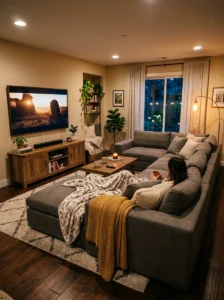
A genuinely deep sectional sofa, with seats deep enough to fully stretch out or curl up on rather than simply sit upright, is probably the single most important piece of furniture for a dedicated TV room, since comfort here matters more than almost anywhere else in the home. We replaced our previous, more formal sofa with a deep sectional a couple of years ago specifically for this room, and the difference in how much longer and more comfortably we actually settle in for an evening of watching something has been genuinely significant.
I’d recommend a seat depth of at least twenty-three to twenty-four inches specifically, rather than a standard twenty-inch depth designed more for upright sitting, since this extra depth is what actually allows for fully reclining or curling up sideways with your legs tucked beneath you. A chaise section built into the sectional adds even more of this fully reclined option, letting at least one or two people stretch out completely rather than everyone remaining upright throughout an entire viewing session.
I’d suggest a durable, family-friendly fabric specifically for this piece, given how much genuine daily use a TV room sofa receives compared to more formal seating elsewhere in the home, a performance fabric or a durable, easily cleaned weave tends to hold up considerably better than something more delicate chosen purely for appearance.
2. Blackout Curtains for True Screen Clarity
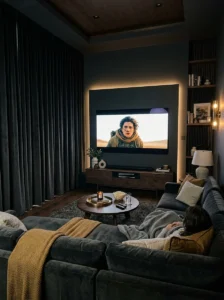
Daytime glare on a television screen is one of the most common, easily overlooked frustrations in a TV room, and properly fitted blackout curtains solve this almost entirely, letting you actually watch something during the day without straining to see past reflections and washed-out colors. We added blackout curtains to our own TV room specifically for this reason, and being able to fully darken the room for a daytime movie, rather than only watching comfortably after sunset, has genuinely expanded when we actually use the space.
I’d recommend curtains that extend fully to the floor and mount wide enough to completely cover the window frame when closed, rather than a narrower curtain that still lets light leak in around the edges, since even a small gap can undermine the whole point of a blackout treatment for genuine screen visibility. A double-curtain approach, a sheer panel for regular daytime use paired with a blackout panel specifically for movie watching, offers flexibility for both bright, everyday light and fully darkened viewing sessions.
I’d suggest testing your specific curtain choice during an actual daytime viewing session before considering the job finished, since it’s easy to underestimate how much residual light still affects screen clarity until you’re actually sitting down to watch something with the curtains closed.
3. Layered, Dimmable Lighting
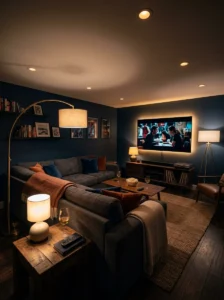
Similar to the lighting principles discussed for bedrooms elsewhere, a TV room benefits enormously from layered, dimmable lighting rather than a single bright overhead fixture, since you need genuinely different lighting levels for actively watching something versus simply relaxing in the room between shows. We installed a dimmer switch on our TV room’s main overhead light years ago, and being able to lower it to a soft, ambient level during an actual movie, rather than either fully bright or fully dark, made watching anything in the room noticeably more comfortable.
I’d recommend at least one additional light source beyond the main overhead fixture, a floor lamp or a couple of table lamps positioned behind or beside the seating area, providing gentle bias lighting that reduces eye strain during extended viewing without creating glare directly on the screen itself. This kind of subtle backlighting, positioned behind the television specifically, has genuinely been shown to reduce eye fatigue during long viewing sessions compared to watching in complete darkness.
I’d suggest warm-toned bulbs throughout this room specifically, consistent with recommendations offered elsewhere regarding cozy, relaxing spaces, since cooler lighting tends to feel less suited to the relaxed, unwinding mood a TV room is generally meant to support.
4. A Media Console with Proper Cable Management
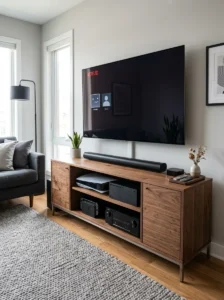
A dedicated media console, with actual thought given to cable routing and ventilation rather than simply a flat surface to set the television on, keeps a TV room looking considerably more polished while also genuinely protecting your equipment from overheating or accumulated dust. We had a custom media console built for our own TV room, incorporating a cable management channel along the back and proper ventilation gaps for our equipment, and the difference in how tidy the whole setup looks, without a tangle of visible cords, has been genuinely significant.
I’d recommend a console with adjustable or open-backed shelving specifically for any equipment that generates heat, a cable box, a gaming console, ensuring adequate airflow rather than sealing electronics into a fully enclosed cabinet that can cause them to run considerably hotter than intended. Built-in cable routing holes or channels, positioned specifically where your equipment sits, let cords run cleanly to a nearby outlet without draping visibly across the front or sides of the console.
I’d suggest a console sized appropriately for your specific television and equipment collection, rather than something either too small, leaving equipment awkwardly stacked, or too large, leaving excessive empty space that makes the whole setup look sparse and underfurnished.
5. Acoustic Panels for Better Sound
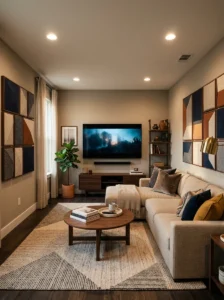
Hard surfaces, bare walls, large windows, uncarpeted floors, create noticeable echo and a harsher overall sound quality in a TV room, something that’s easy to overlook until you’ve actually experienced a properly acoustically treated space by comparison. We added a few fabric-wrapped acoustic panels to our own TV room’s walls, and the improvement in how genuinely crisp and clear dialogue sounded, without needing to constantly adjust the volume, was more noticeable than I expected from what seemed like a fairly minor addition.
I’d recommend positioning acoustic panels specifically at the first reflection points, the spots on your side and rear walls where sound would bounce directly back toward your main seating position, rather than simply scattering them randomly around the room without genuine consideration for how sound actually travels and reflects within your specific space.
I’d suggest fabric-wrapped panels in a color or pattern that complements your room’s existing decor, rather than purely utilitarian foam panels that read as more obviously function-first, since these fabric versions genuinely blend into a well-designed room while still providing meaningful acoustic improvement.
6. A Properly Positioned, Anti-Glare Television Placement
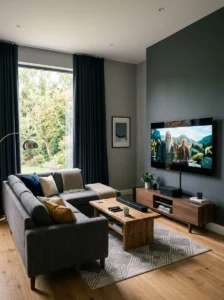
The specific wall and angle you mount your television matters considerably more than most people initially consider, since a screen positioned directly across from a window or a bright light source will suffer from persistent glare regardless of how good the television itself might be. I helped a friend reposition her television entirely during a room redesign, moving it to a wall perpendicular to her main window rather than directly across from it, and the improvement in actual picture clarity, without the previous constant glare washing out the image, was immediate and significant.
I’d recommend evaluating your room’s natural light sources carefully before finalizing television placement, ideally positioning the screen on a wall that doesn’t directly face a window, or ensuring you have adequate blackout curtain coverage if that placement genuinely isn’t possible given your room’s specific layout and other constraints.
I’d suggest testing your planned television position during the brightest part of the day before committing to permanent mounting, since a spot that seems fine during an evening viewing session can reveal genuine glare problems once actual daylight is factored into the equation.
7. Recliner Chairs Integrated into the Seating Plan
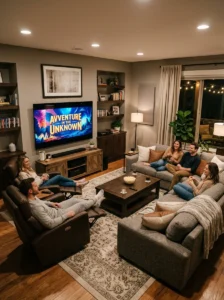
Incorporating one or two proper recliner chairs alongside a main sofa, rather than relying purely on standard seating throughout the entire room, gives at least some household members access to a genuinely reclined, fully relaxed viewing position without needing to redesign the whole room around this single seating style. We added a pair of leather recliners to our own TV room a couple of years back, positioned to the side of our main sectional, and they’ve consistently become the most requested seats in the entire room for anyone settling in for a longer viewing session.
I’d recommend positioning recliners at a slight angle toward the television rather than directly, straight-on facing, particularly if they’re placed to the side of a central sofa, ensuring everyone in the room has a genuinely comfortable, direct sightline to the screen regardless of their specific seat.
I’d suggest choosing a recliner style and fabric that coordinates with your main sofa, rather than something jarringly different in either color or material, so the overall seating arrangement reads as a considered, cohesive design choice rather than mismatched furniture pieces gathered from different sources without much thought to how they’d look together.
8. A Popcorn or Snack Station
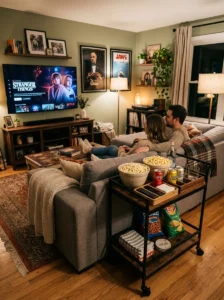
Dedicating a small section of the room, a side table, a narrow cart, or a built-in nook, specifically for snacks and drinks during viewing sessions removes the friction of constantly pausing whatever you’re watching to head to the kitchen. I set up a small rolling cart in our own TV room specifically for this purpose, stocked with bowls, napkins, and whatever snacks we’re currently enjoying, and it’s a small addition that’s genuinely increased how relaxed and settled our actual movie nights feel.
I’d recommend positioning this station close enough to your main seating to be genuinely convenient, but far enough that spills or crumbs don’t become a real concern for your furniture or nearby electronics. A small tray specifically for holding remotes and phones alongside the snacks keeps everything you need within arm’s reach without needing to get up at all once you’re actually settled in for a viewing session.
I’d suggest a station with some form of concealed storage as well, extra napkins, a stash of your family’s preferred snacks, keeping everything genuinely ready to go rather than needing a separate kitchen trip every single time you want to start something new.
9. A Sound Bar or Proper Home Theater Audio System
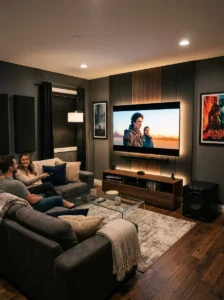
Television speakers alone, even on higher-end models, rarely deliver genuinely satisfying audio quality, and a dedicated sound bar or a fuller home theater audio setup makes a significant difference in how immersive and enjoyable actual viewing sessions feel. We added a sound bar with a separate subwoofer to our own TV room years ago, and the improvement in both dialogue clarity and the overall depth of sound during movies was considerably more noticeable than I’d expected from what seemed like a relatively modest audio upgrade.
I’d recommend at minimum a soundbar with a separate subwoofer for most households, offering meaningfully better sound than built-in television speakers without requiring the more significant investment and installation complexity of a full surround sound system with multiple separate speakers positioned throughout the room.
I’d suggest positioning your soundbar directly beneath or above your television, centered specifically with the screen, rather than off to one side, ensuring dialogue and sound effects feel properly anchored to what’s actually happening visually on screen rather than feeling disconnected or off-center.
10. A Gallery of Movie Posters or Ar
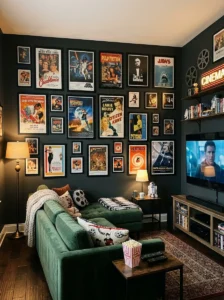
For film and television enthusiasts specifically, a curated gallery of movie posters, whether original vintage pieces or well-chosen reproductions, brings genuine personality and thematic cohesion to a dedicated TV room that generic decor doesn’t achieve in the same way. A client of mine built a small gallery of framed vintage film posters throughout her media room, each one genuinely meaningful to her own film history and taste, and the collection has become one of the most personal, conversation-starting details in her entire home.
I’d recommend consistent framing throughout this kind of collection, similar to gallery wall guidance offered elsewhere, even if the posters themselves vary considerably in era, color palette, or specific film genre, since matching frames tie a varied collection together as a cohesive display rather than a random assortment.
I’d suggest choosing pieces that genuinely mean something to you personally, favorite films, meaningful viewing memories, rather than generic decorative posters chosen purely because they look visually appealing, since the personal connection is really what makes this kind of display feel authentic rather than simply themed decoration.
11. Cozy Textiles for Extended Comfort
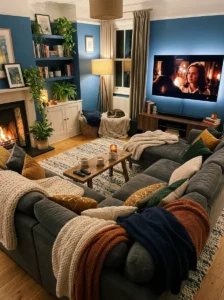
Layering in plenty of soft textiles throughout a TV room, substantial throw blankets, an assortment of varied pillows, a plush area rug, adds genuine tactile comfort that makes longer viewing sessions considerably more pleasant, particularly important in a room specifically designed around settling in for extended periods. We’ve gradually added these layers to our own TV room over several years, and the cumulative effect of soft textures surrounding the main seating area has made a noticeably bigger difference to how genuinely cozy the room feels than I initially expected from what seemed like fairly minor individual additions.
I’d recommend varying texture specifically, not just color, when selecting these textiles, a chunky knit throw alongside a smoother velvet pillow creates more genuine tactile interest than several pieces that all feel roughly the same to the touch, adding real variety to the room’s overall comfort and sensory experience.
I’d suggest a substantial rug beneath your main seating area specifically, both grounding the furniture visually and adding a layer of softness underfoot, particularly appreciated if household members tend to sit on the floor occasionally or kick off their shoes during longer viewing sessions.
12. A Wall-Mounted Television for Cleaner Sightlines
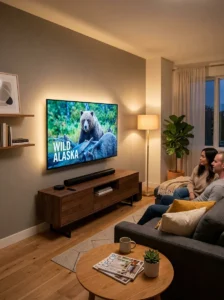
Mounting your television directly to the wall, rather than placing it on a stand or console, keeps sightlines cleaner throughout the room and often allows for a more optimal viewing height than a stand-based setup typically achieves. We wall-mounted our own television a few years back, and beyond the cleaner overall look, being able to position the screen at genuinely ideal eye height for our specific seating arrangement made a real difference in how comfortable extended viewing sessions felt on our necks and shoulders.
I’d recommend a full-motion mount specifically, rather than a fixed mount, if your seating arrangement includes viewing angles from multiple different positions around the room, letting you adjust the screen’s angle slightly depending on where people are actually sitting for a given viewing session.
I’d suggest professional installation for wall-mounted televisions specifically, ensuring the mount is properly anchored into wall studs and rated appropriately for your television’s specific weight, given the genuine safety considerations involved in a heavy, wall-mounted object positioned above where people regularly sit and move through the room.
13. A Dedicated Gaming Corner Within the Room
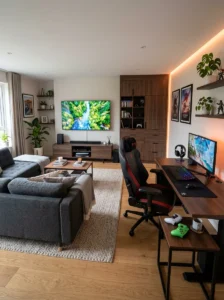
For households that use their TV room for gaming as much as watching shows and movies, incorporating a dedicated gaming corner, a comfortable gaming chair, a small side table for controllers, ensures this specific use is genuinely accommodated rather than gaming equipment simply cluttering the main viewing area. I set this up for a client’s teenage son’s TV room specifically, positioning a gaming chair slightly to the side of the main sofa with its own small table for controllers and accessories, keeping the gaming setup organized without disrupting the room’s overall design for general television and movie watching.
I’d recommend this kind of dedicated zone specifically for households where gaming and passive viewing happen with roughly similar frequency, rather than trying to force a single seating and setup arrangement to serve both purposes equally well, since gaming often benefits from a slightly different chair positioning and control accessibility than relaxed movie watching does.
I’d suggest concealed storage specifically for controllers, cables, and other gaming accessories, a drawer, a small basket, keeping this equipment tidy and out of view when not actively in use, rather than left scattered visibly around the main seating area.
14. Warm, Earthy Wall Colors for Cinema-Like Atmosphere
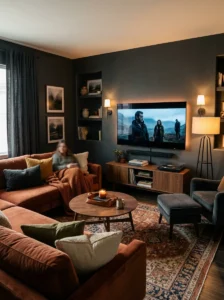
Painting a TV room in warm, deep, earthy tones, terracotta, deep charcoal, rich burgundy, creates a genuinely cinema-like atmosphere that enhances screen contrast and makes the whole viewing experience feel more immersive than a bright, pale wall color would achieve. I painted a client’s dedicated media room in a deep charcoal specifically for this reason, and the improvement in how rich and vivid the picture appeared on her television, simply due to the darker surrounding wall color improving perceived contrast, was genuinely noticeable.
I’d recommend darker, more saturated colors specifically for rooms used primarily for movie and television watching, rather than the brighter, more neutral tones that might suit a more general-purpose living space, since darker walls genuinely reduce ambient light reflection that can otherwise wash out perceived screen contrast and color depth.
I’d suggest this approach specifically for rooms with adequate supplementary lighting elsewhere, floor lamps, table lamps, ensuring the room doesn’t feel entirely dark and uninviting when the television itself isn’t on, striking a balance between cinema-like viewing conditions and a room that’s still comfortable to simply sit in during non-viewing moments.
15. A Fireplace as a Secondary Focal Point
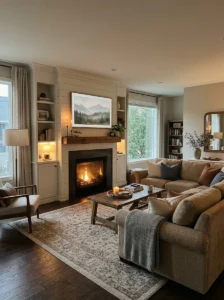
For TV rooms with an existing fireplace, or the option to add one, positioning the television and fireplace together as complementary rather than competing focal points creates a genuinely cozy, layered atmosphere that suits both active viewing and simply relaxing in the room without anything specific playing on screen. We have a fireplace positioned near our own television, and being able to switch between actively watching something and simply enjoying the fire’s ambiance on a quieter evening gives the room genuine flexibility beyond just its primary television-watching function.
I’d recommend positioning the television either directly above the fireplace or to one side at a similar height, rather than in a completely disconnected part of the room, letting both focal points work together within a single, cohesive sightline from the main seating area rather than requiring people to look in two entirely different directions depending on what they’re currently focused on.
I’d suggest a fireplace with a remote-controlled or app-controlled ignition specifically if you’re incorporating this feature into a room used regularly for television watching, since the convenience of easily adding ambiance without getting up matches the overall relaxed, low-effort mood a good TV room is meant to support.
16. Blackout Roller Shades for a Cleaner Look
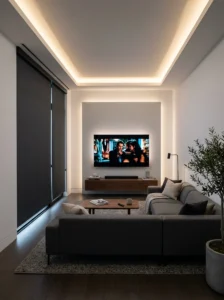
For anyone wanting the light-blocking benefit of blackout curtains but preferring a cleaner, more minimal window treatment, blackout roller shades achieve much the same practical function with a noticeably sleeker, less visually heavy appearance. I installed these in a client’s more modern, minimalist TV room specifically, and the clean, streamlined look suited her overall aesthetic considerably better than the fuller, more traditional curtain treatment we’d initially discussed.
I’d recommend this option specifically for more contemporary or minimalist room designs, where heavier curtain fabric might feel visually inconsistent with the room’s broader aesthetic direction, while roller shades integrate more seamlessly into a cleaner, more streamlined overall look.
I’d suggest motorized shades specifically if your budget allows, letting you darken the room instantly via remote or smart home control without needing to get up and manually adjust anything, a small convenience that genuinely suits the relaxed, low-effort spirit of settling in for a movie or show.
17. A Built-In Media Wall with Integrated Shelving
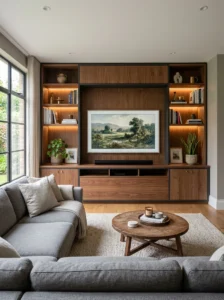
Rather than a standalone media console, a full built-in media wall, incorporating the television, shelving, and often concealed storage all within a single, cohesive architectural feature, creates a genuinely polished, considered look for a dedicated TV room. We built one of these during a more significant renovation of our own TV room, and the resulting wall, with the television seamlessly integrated alongside display shelving and closed cabinet storage, transformed what had been a fairly disjointed collection of separate furniture pieces into one cohesive, intentional feature.
I’d recommend incorporating both open display shelving and closed storage within this kind of built-in, giving you a spot to showcase decorative items or a book collection while still concealing less attractive necessities like extra cables, game controllers, or media discs within closed cabinet sections.
I’d suggest working with a carpenter experienced specifically in media wall installations, given the additional planning required for proper ventilation around electronics, adequate cable routing, and precise measurements to accommodate your specific television size within the overall built-in design.
18. A Genuine Home Theater Riser for Tiered Seating
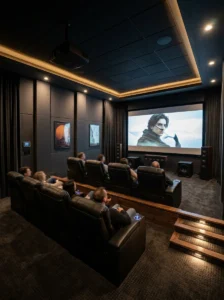
For households with a dedicated, larger media room specifically, building a raised platform or riser for a second row of seating creates genuine, unobstructed sightlines for everyone in the room, similar to stadium-style seating found in commercial movie theaters. A client with a larger, dedicated media room in his basement had this built specifically, and the improvement in how everyone could actually see the screen clearly, regardless of which row they were seated in, made a genuine difference for the household’s frequent movie nights with multiple family members.
I’d recommend this specifically for larger, dedicated media rooms rather than a more general-purpose living space that also happens to include a television, since a riser requires genuine floor space and a room used exclusively or primarily for this specific purpose to justify the structural investment involved.
I’d suggest consulting with a contractor about proper riser height and depth specifically calculated for your room’s dimensions and seating plan, ensuring the elevation genuinely improves sightlines from the rear row without making the platform itself feel unstable or awkwardly proportioned relative to the room’s overall size.
19. Smart Lighting Synced to Viewing Content
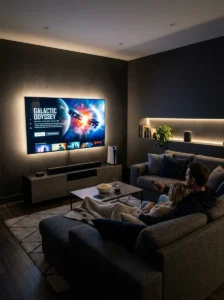
For a genuinely immersive, modern touch, smart lighting systems that can sync with on-screen content, dimming and shifting color subtly based on what’s actually playing, bring a level of atmosphere that standard lighting simply can’t replicate. We set this up in our own TV room using a smart lighting system with this specific syncing capability, and the way the room’s ambient lighting subtly shifts during an actual movie, dimming during darker scenes, brightening slightly during more vivid ones, adds a genuinely noticeable layer of immersion to the whole viewing experience.
I’d recommend this specifically as an enhancement layered on top of your room’s other, more foundational lighting choices discussed elsewhere on this list, rather than relying on syncing lights as your only lighting solution, since you’ll still want standard, reliable lighting options for moments when you’re not actively watching something with this specific syncing feature engaged.
I’d suggest researching compatibility carefully before investing in this kind of system, since not every smart lighting brand offers genuine content-syncing capability, and confirming this specific feature works reliably with your particular streaming devices and television before committing to a full room setup.
20. A Wet Bar or Beverage Station
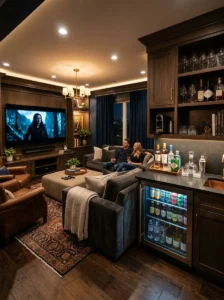
For households that regularly host movie nights or entertain in their TV room, incorporating a small wet bar or dedicated beverage station adds genuine convenience and a touch of elevated hospitality to the space. A client had a compact wet bar built into a corner of her media room, complete with a small refrigerator and simple cabinet storage for glassware, and it’s become a genuinely appreciated feature for her regular movie nights with friends, eliminating repeated trips to the kitchen throughout an evening.
I’d recommend this addition specifically for larger, dedicated media rooms with adequate space to accommodate the plumbing and electrical work involved, rather than trying to force this feature into a smaller, more general-purpose living room where the space might be better used for additional seating or storage instead.
I’d suggest keeping the bar area visually consistent with your room’s other design choices, matching cabinet finishes or metal hardware with what’s used elsewhere throughout the space, ensuring this addition feels like a genuinely integrated part of the room’s overall design rather than a disconnected feature.
21. A Cozy Window Seat as Secondary Seating
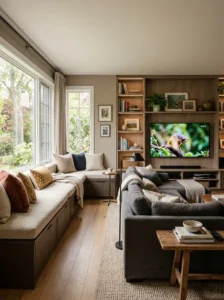
For TV rooms with an existing window, incorporating a built-in window seat provides additional casual seating without requiring extra floor space for standalone furniture, while also giving the room a naturally bright spot for daytime activities beyond just television watching. I built one of these in a client’s media room, and beyond its practical function as extra seating during larger gatherings, it’s become a favorite reading spot during the day when the television isn’t in use at all.
I’d recommend a hinged seat cushion specifically for this addition, adding valuable hidden storage underneath for extra blankets or throw pillows without sacrificing the seat’s comfort or overall appearance, similar to guidance offered regarding window seats in other room contexts throughout related design projects.
I’d suggest positioning this window seat somewhere it doesn’t interfere with sightlines to the television from your main seating area, ensuring it functions as genuine secondary, flexible seating rather than competing with or blocking views from your primary viewing spot.
22. Floating Shelves for Personal Touches
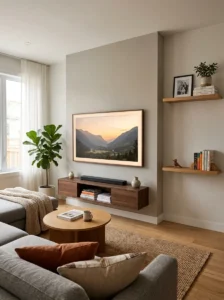
Beyond a media wall’s more substantial built-in shelving, adding a few simple floating shelves elsewhere in a TV room provides a spot for personal touches, framed photos, a small plant, a few favorite books, that keep the space feeling like a genuinely lived-in, personal room rather than purely a functional media-watching space. We added a couple of floating shelves to an otherwise plain wall in our own TV room, and the small personal details displayed there have made the room feel considerably more like an actual living space rather than simply a room built around a television.
I’d recommend positioning these shelves somewhere they don’t compete visually with the television itself, an adjacent wall rather than directly beside or above the screen, ensuring the room’s main focal point remains clear while still incorporating these smaller, more personal decorative touches elsewhere.
I’d suggest keeping styling on these shelves relatively restrained rather than densely packed, similar to guidance offered regarding open shelving throughout other room types, letting each individual item genuinely be seen and appreciated rather than blurring together into a visually busy, overcrowded display.
23. A Genuinely Comfortable Ottoman for Footrest Flexibility
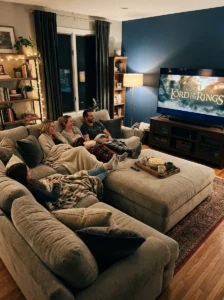
A substantial ottoman, positioned in front of your main seating and ideally topped with a soft, durable fabric, provides genuine footrest flexibility that turns an already comfortable sofa into something considerably more suited to truly settling in for an extended viewing session. We added a large, upholstered ottoman to our own TV room a while back, and being able to fully prop up our feet rather than simply sitting with them flat on the floor has made a genuine, noticeable difference in how comfortable longer movie nights actually feel.
I’d recommend an ottoman sized generously enough to accommodate multiple people’s feet simultaneously if your household regularly watches together, rather than something too small that only comfortably fits one person’s legs at a time, limiting its usefulness during group viewing sessions.
I’d suggest a durable, easily cleaned fabric for this piece specifically, similar to guidance offered regarding sofa fabric choices earlier in this list, given how much regular contact and occasional spills an ottoman used as a genuine footrest during snack-heavy movie nights is likely to encounter over time.
Final Thoughts
Every TV room I’ve genuinely enjoyed spending time in, my own included, succeeded because it was planned specifically around how people actually watch things, comfortable seating that supports genuinely long viewing sessions, proper attention to glare and lighting, and enough personal, cozy touches that the room feels like a real living space rather than simply a screen with some chairs pointed at it.
Before choosing any of these ideas for your own space, think honestly about your household’s actual viewing habits, how many people typically watch together, whether gaming is a regular use alongside movies and shows, how long your typical viewing sessions tend to run, and let those genuine daily patterns guide your choices more than simply what looks most impressive in a photo. A TV room built around your household’s real habits will get used and loved for years, while one designed purely for appearance often ends up less comfortable than it looks.