A friend of mine went through a genuinely intense decluttering phase a couple of years ago, the kind where she donated literally truckloads of belongings over a single weekend, and while I fully supported the impulse, once the dust settled her living room walls were left almost entirely bare, stark and strangely empty in a way that started to feel less like peaceful minimalism and more like something was genuinely missing. She called me a few months later, admitting she missed having some personality on her walls but was terrified of sliding back into the cluttered space she’d worked so hard to leave behind.
Floating shelves became our answer, a way to bring back just enough personality and warmth without inviting the chaos she’d genuinely feared returning to. We spent a full afternoon experimenting with different configurations before landing on something that felt intentional rather than accumulated, and that project taught me a lot about how differently floating shelves can function depending on exactly how you use them, as a minimalist’s careful reintroduction of personality or as a maximalist’s dream display wall. Here are 24 floating shelf ideas, pulled from her actual living room and a few other friends’ projects since, all aimed at styling your walls thoughtfully rather than just filling empty space.
1. Start With Just One Shelf and Live With It First
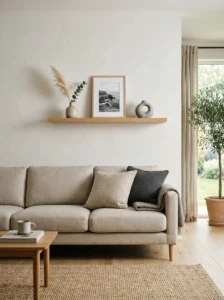
For my friend specifically, we installed a single floating shelf above her sofa first, deliberately resisting the urge to add more all at once. Living with just that one shelf for a few weeks let her genuinely feel out what she actually wanted to display before committing to any larger arrangement.
This approach mattered enormously given her specific fear of sliding back into clutter, and I’d recommend this same patient, one-at-a-time approach for anyone nervous about overcommitting to a bigger shelf installation before understanding how it’ll actually feel in daily life.
2. Group Shelves in an Asymmetrical Cluster
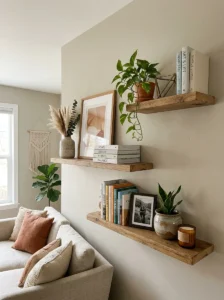
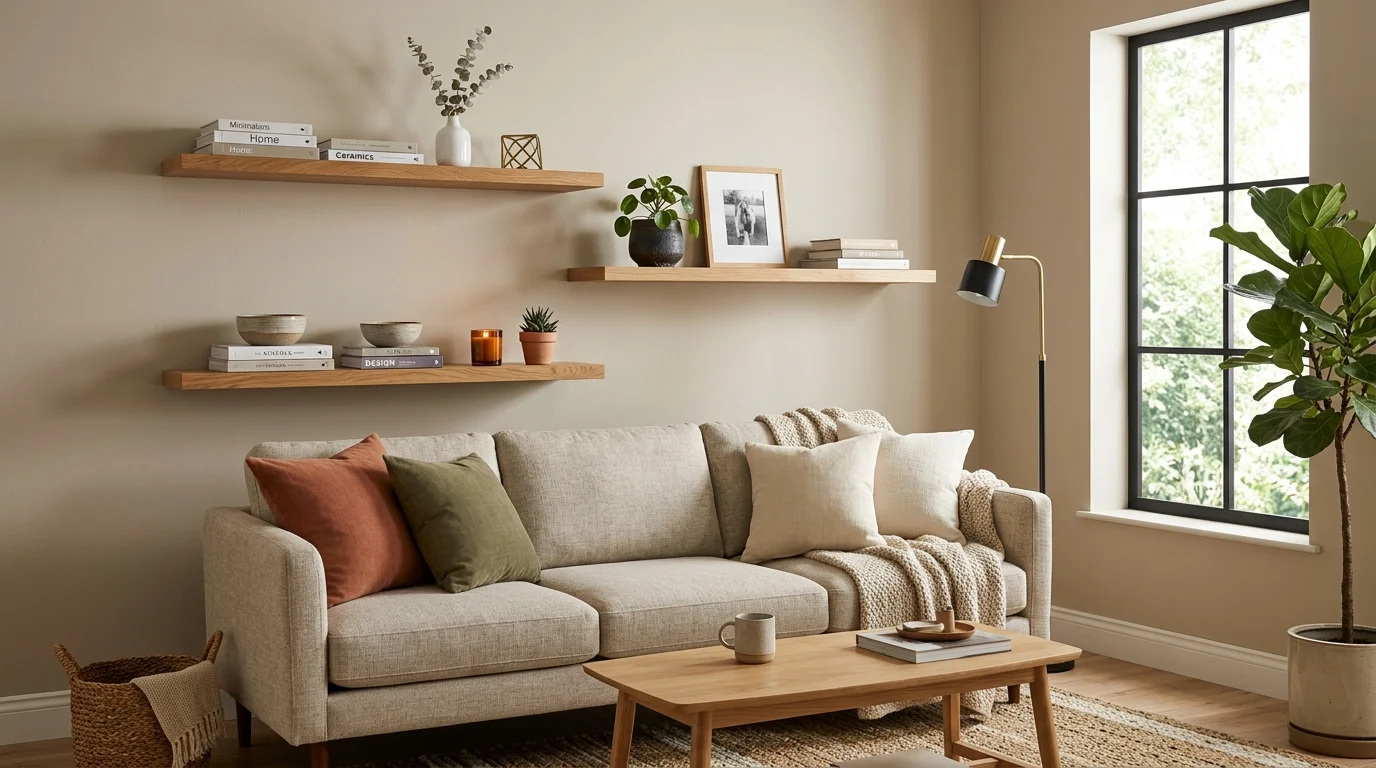
Once my friend felt ready to add more, we arranged three shelves of varying lengths in a deliberately asymmetrical cluster rather than a uniform, evenly spaced row, creating genuine visual interest and movement across the wall.
This kind of intentional asymmetry reads as considerably more curated and artistic than a rigid, matching arrangement, and I’d recommend sketching out a few different configurations on paper before actually drilling into your wall, since this specific arrangement benefits enormously from careful upfront planning.
3. Limit Each Shelf to Just Three or Four Objects
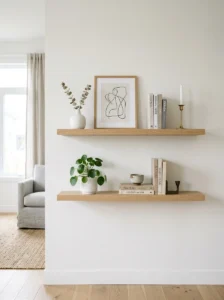
The single biggest lesson from helping my friend style her shelves was learning genuine restraint, limiting each individual shelf to just three or four objects maximum, similar to the way she’d learned to evaluate her belongings during her original decluttering process.
This restraint prevents floating shelves from becoming exactly the kind of accumulated clutter she’d worked so hard to eliminate, and I’d recommend this same limit for anyone genuinely worried about shelves becoming just another place for things to pile up over time.
4. Vary Object Heights Within Each Shelf
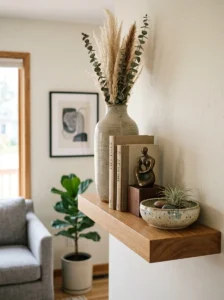
On each individual shelf, we specifically varied the height of displayed objects, a taller vase positioned behind a shorter stack of books, creating genuine visual rhythm rather than a flat, uniform arrangement across the shelf’s surface.
This height variation prevents shelves from looking static or boring, and I’d recommend actively arranging your own objects with this kind of intentional height difference in mind, rather than simply lining items up at a single, uniform height throughout.
5. Incorporate a Single Meaningful Object Per Shelf
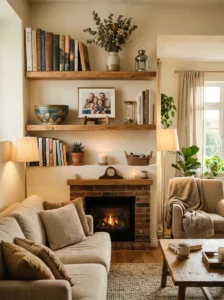
Rather than purely decorative purchases, we made sure each of my friend’s shelves included at least one genuinely meaningful item, a small pottery piece from a trip, a framed photo, something with real personal history rather than purely aesthetic function.
This detail mattered enormously for making the shelves feel like an authentic reflection of her life rather than a generic, showroom-style display, and I’d recommend this same approach for anyone wanting their shelves to feel genuinely personal.
6. Use Bookends to Create Defined Sections
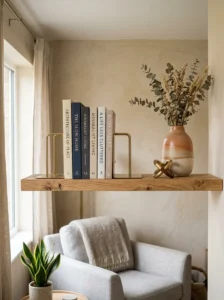
For a shelf holding a small book collection, we used simple, understated bookends to define that section clearly, preventing books from sliding into the rest of the shelf’s more purely decorative arrangement.
This kind of clear sectioning helps keep mixed-use shelves, part books, part decor, feeling organized rather than jumbled together randomly, and I’d recommend this approach for anyone combining functional and purely decorative items on the same shelf.
7. Add a Small Plant for Organic Life
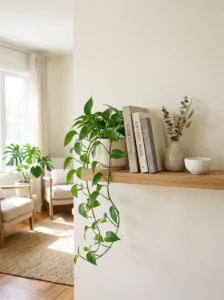
On one of her shelves specifically, we added a small, easy-care trailing plant, its leaves gently draping over the shelf’s edge and softening what could otherwise feel like a very rigid, object-focused arrangement throughout the wall.
This organic element genuinely balances the more static, purely decorative items elsewhere on the shelves, and I’d recommend incorporating at least one plant into any floating shelf arrangement for this same softening, life-bringing effect.
8. Choose Shelves With a Hidden Mounting System
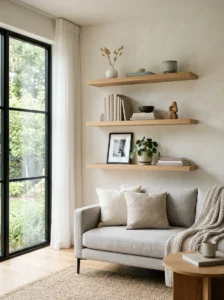
For a genuinely clean, minimalist look, specifically important given my friend’s broader aesthetic goals, we chose shelves with a completely hidden mounting bracket system, no visible support arms interrupting the shelf’s clean lines.
This kind of invisible mounting reads as considerably more sophisticated and intentional than shelves with obvious visible brackets, and I’d recommend this style specifically for anyone pursuing a similarly clean, minimalist overall aesthetic throughout their living room.
9. Stagger Shelf Placement at Different Heights
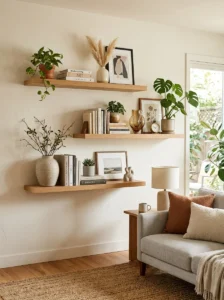
Rather than a single horizontal row, we staggered our three shelves at slightly different heights across the wall, creating a more dynamic, gallery-like composition than a uniform row would have achieved.
This kind of staggered placement genuinely elevates the whole arrangement beyond simple, predictable shelving, and I’d recommend experimenting with this approach specifically if you’re working with multiple shelves rather than just a single piece.
10. Incorporate a Small Piece of Art Leaned Against the Wall
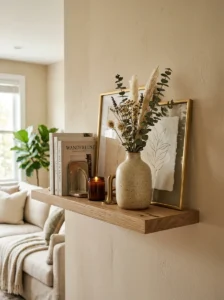
Behind one of my friend’s smaller decorative objects, we leaned a small framed print directly against the wall rather than hanging it separately, creating a layered, effortless look that a perfectly flat, evenly spaced arrangement wouldn’t achieve.
This leaning technique, borrowed from gallery styling, adds genuine depth and a slightly more relaxed, curated feeling, and I’d recommend trying this specifically for shelves where you want a touch more visual layering without adding actual clutter.
11. Use a Consistent Color Palette Across Displayed Items
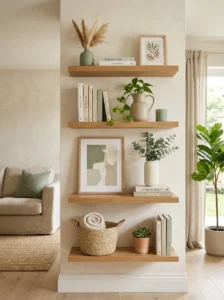
Throughout my friend’s shelves, we kept displayed objects within a restrained, consistent color palette, mostly cream, warm wood tones, and a touch of sage green, ensuring the whole arrangement felt genuinely cohesive rather than randomly assembled.
This kind of color restraint matters enormously for how polished the finished shelves actually read, and I’d recommend auditing your own potential display items for this same kind of color harmony before finalizing your arrangement.
12. Add a Small Woven Basket for Concealed Storage
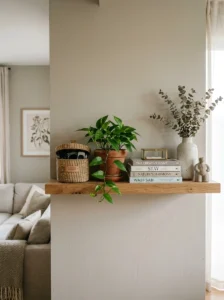
On one shelf, we included a small woven basket specifically for less attractive necessities, remote controls, spare chargers, giving these items a genuine home without requiring them to sit out, visibly disorganized, on the shelf’s open surface.
This kind of concealed storage solution lets floating shelves serve genuine daily function alongside their decorative purpose, and I’d recommend this addition for anyone wanting their shelves to be practical as well as beautiful.
13. Choose Shelves in a Material That Matches Existing Furniture
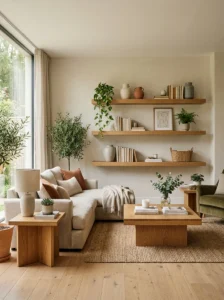
We specifically chose shelving in the same warm oak tone as my friend’s existing coffee table and side tables, ensuring genuine material cohesion throughout her living room rather than introducing a mismatched, disconnected wood tone through the shelving specifically.
This kind of material coordination matters more than people initially expect, and I’d recommend bringing a photo or sample of your existing furniture with you while shopping for shelving specifically to ensure a genuine match.
14. Add a Small Collection of Coordinating Vases
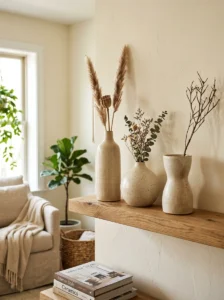
Rather than one large vase, we arranged a small grouping of three coordinating vases in varying heights, similar in tone but slightly different in shape, creating genuine visual interest through this deliberate but restrained collection.
This kind of small, curated grouping reads as considerably more intentional than a single large piece or a scattered, mismatched collection, and I’d recommend this approach for anyone wanting a simple but genuinely elevated shelf display.
15. Incorporate a Framed Photo Leaned Casually
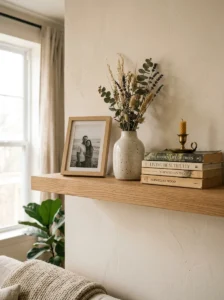
Among my friend’s more decorative objects, we included one small framed photo, propped casually rather than perfectly centered, adding a genuine personal touch that purely purchased decor items alone wouldn’t achieve.
This kind of personal inclusion matters enormously for making shelves feel authentically lived-in rather than purely staged, and I’d recommend including at least one meaningful photo within your own shelf arrangement for this same genuine, personal warmth.
16. Use Uneven Shelf Lengths for Visual Variety
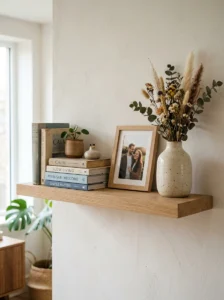
Rather than three identical shelf lengths, we specifically chose varying widths, a longer shelf paired with two shorter ones, creating genuine visual rhythm and preventing the arrangement from feeling too uniform or predictable.
This kind of length variation adds real sophistication to the overall composition, and I’d recommend considering this approach specifically if you’re installing multiple shelves rather than defaulting to identical, matching lengths throughout.
17. Add a Small Candle for Warmth and Ambiance
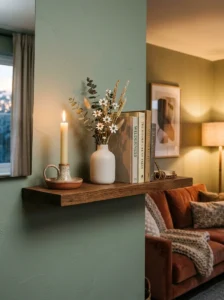
On one shelf, we included a simple, unscented candle in a quality ceramic holder, adding genuine warmth to the arrangement both visually and, once lit in the evening, atmospherically throughout the room.
This kind of small, functional addition brings genuine daily use to what could otherwise remain a purely static, look-but-don’t-touch display, and I’d recommend incorporating at least one candle into your own shelf styling for this same warming effect.
18. Choose a Statement Object as a Clear Focal Point
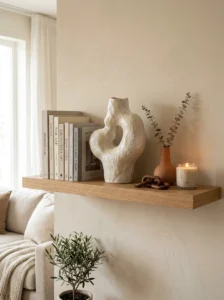
Among my friend’s more restrained collection, we included one genuinely statement piece, a substantial ceramic sculpture she’d been drawn to for years but never had a proper place to display, giving the whole arrangement a clear visual anchor.
This kind of single standout piece provides genuine focus amid the smaller, more understated surrounding objects, and I’d recommend identifying one meaningful statement piece of your own to anchor your shelf arrangement similarly.
19. Add Negative Space Deliberately
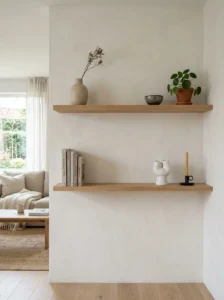
Perhaps the most important lesson from helping my friend, given her specific decluttering journey, was learning to genuinely embrace empty space on each shelf rather than feeling compelled to fill every available inch with something.
This deliberate restraint is what ultimately kept her shelves feeling calm and intentional rather than sliding back toward the clutter she’d worked so hard to eliminate, and I’d recommend this same discipline for anyone genuinely prioritizing a calm, uncluttered result.
20. Incorporate a Small Stack of Coffee Table Books
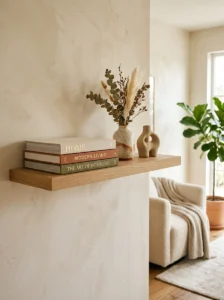
On one shelf, we included a small, curated stack of two or three books chosen partly for their cover color, tying into the shelf’s broader palette while also reflecting my friend’s actual genuine reading interests.
This kind of thoughtful book inclusion adds both personality and functional visual weight to a shelf arrangement, and I’d recommend choosing titles that genuinely reflect your own interests rather than books selected purely for their spine color alone.
21. Add a Small Mirror to Reflect Light
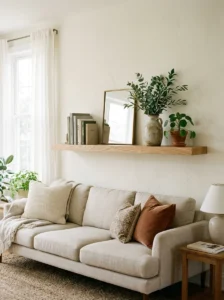
Above her sofa specifically, we included a small, simply framed mirror among the shelf’s other objects, reflecting light around the room and adding a subtle sense of depth beyond what purely opaque objects would achieve.
This kind of light-reflecting addition genuinely brightens the whole display, and I’d recommend this detail specifically for shelves positioned in rooms that could benefit from a bit of additional perceived brightness and spaciousness.
22. Use Shelf Placement to Frame a Window or Architectural Feature
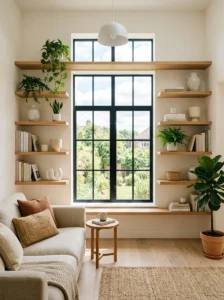
Rather than positioning shelves purely based on available wall space, we specifically arranged my friend’s shelving to frame and draw attention to her living room’s existing window, rather than competing with or ignoring this architectural feature entirely.
This kind of thoughtful positioning relative to existing architecture matters enormously for how intentional the whole room feels, and I’d recommend considering your own room’s architectural features before finalizing shelf placement.
23. Rotate Displayed Items Seasonally
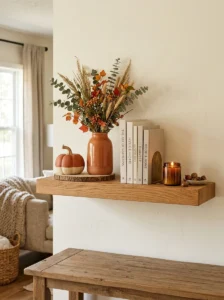
Rather than a permanently fixed display, my friend now rotates a few specific items on her shelves seasonally, swapping in a small pumpkin during fall or a sprig of greenery around the winter holidays, keeping the arrangement feeling fresh throughout the year.
This kind of seasonal rotation keeps shelves from feeling static or forgotten over time, and I’d recommend building in this same flexibility, choosing a couple of “swap” spots specifically designated for seasonal or rotating items.
24. Reassess Regularly and Resist the Urge to Overfill
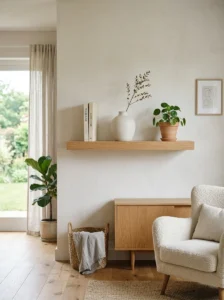
The final and most important lesson from this whole project, given my friend’s specific journey, is that floating shelves genuinely benefit from periodic reassessment, removing items that have lost their meaning or simply accumulated without real purpose.
She now does a quick shelf review every few months, similar in spirit to her original decluttering process but on a much smaller, more manageable scale, ensuring her shelves stay genuinely intentional rather than slowly sliding back toward clutter over time.
My honest advice, whatever your own relationship with clutter and minimalism, let your shelves stay a living, evolving display rather than a fixed, forgotten arrangement.
Frequently Asked Questions
How many items should I put on a single floating shelf? Generally three to four objects per shelf strikes the best balance between genuine visual interest and a calm, uncluttered feeling, though this can vary slightly depending on the shelf’s actual length.
What height should I mount floating shelves above a sofa? A common guideline suggests roughly eight to ten inches above the sofa’s back, though this can be adjusted based on your ceiling height and the specific scale of your chosen shelves.
How do I keep floating shelves from looking cluttered over time? Reassess your display every few months, removing items that have lost their meaning or simply accumulated, and maintain the discipline of leaving genuine negative space rather than filling every available inch.
Should floating shelves match my other furniture exactly? They don’t need to match exactly, but coordinating wood tone or finish helps maintain cohesion, similar to how you’d coordinate any other significant furniture piece within the same room.
Final Thoughts
Helping my friend rebuild just enough personality on her walls, without sliding back into the clutter she’d worked so hard to eliminate, taught me that floating shelves genuinely walk a careful line between minimalism and warmth when styled with real intention. Whatever your own relationship with your living room’s walls looks like right now, empty and searching for personality or overwhelmed and looking for restraint, my honest advice is to start with just one shelf, live with it, and let the rest of your arrangement grow slowly and thoughtfully from there.