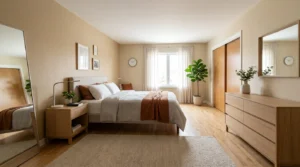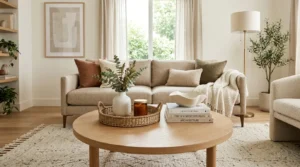
Empty walls can feel a bit awkward, like something is missing but you’re not sure what.
The good thing is, wall art doesn’t have to be complicated or expensive to look right.
Sometimes it’s just about finding pieces that feel natural in your space.
1. Minimal Gallery Wall with Soft Neutrals
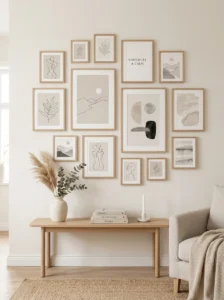
A gallery wall doesn’t need bold colors to stand out. Try using soft neutral prints—beige, off-white, light grey—and simple frames in similar tones. Keep the spacing slightly uneven so it feels relaxed, not too perfect. You can mix small and medium sizes for a layered look. Hang it above a sofa or bed where it naturally draws attention. It’s calm, simple, and works well if your room already has a lot going on.
2. Oversized Statement Artwork
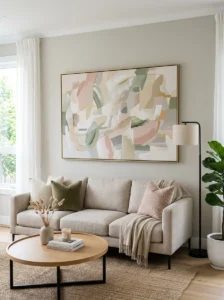
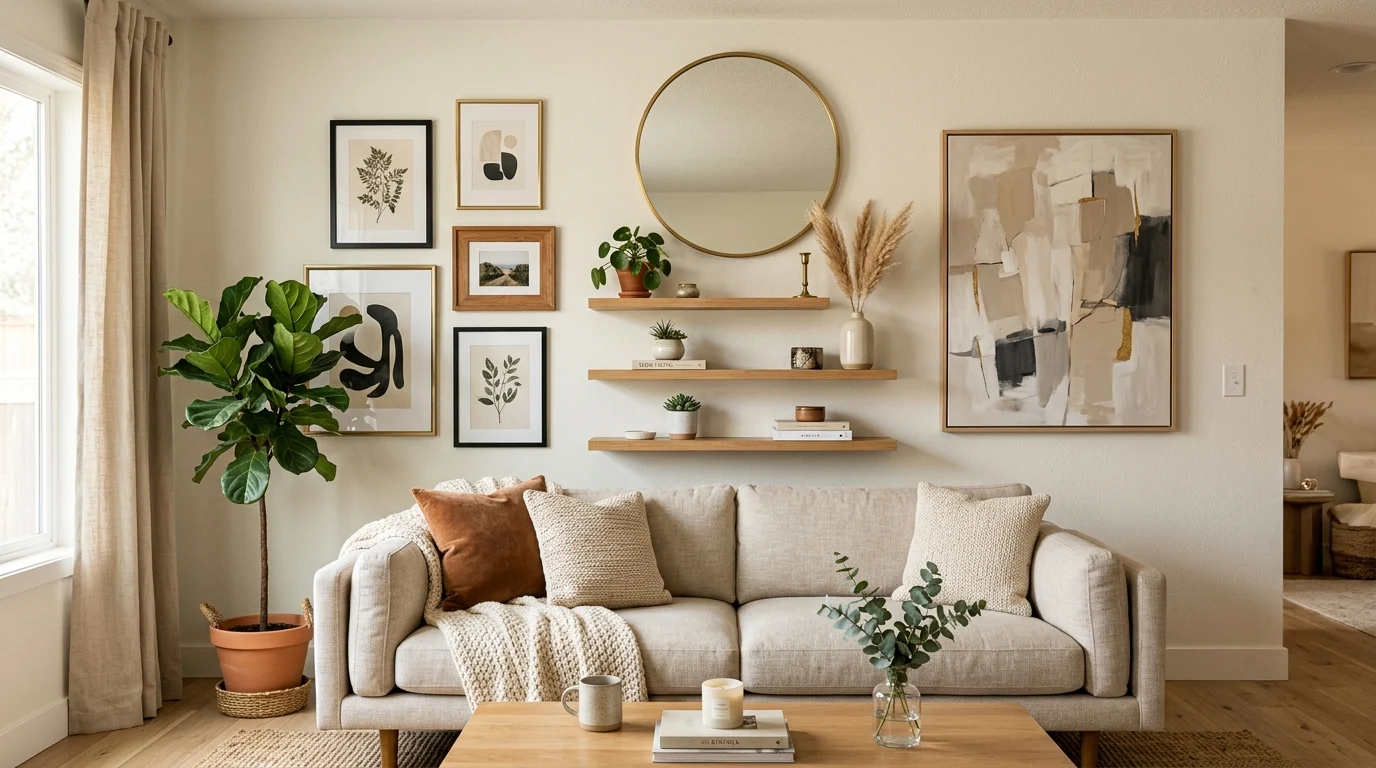
One large piece can fill an empty wall without needing anything else. Choose something with soft movement or subtle color so it doesn’t overpower the room. It could be abstract, landscape, or even a textured canvas. Place it where it can breathe—don’t crowd it with furniture. It creates a focal point instantly. And honestly, it’s one of the easiest ways to make a space feel complete.
3. Floating Shelves with Layered Art
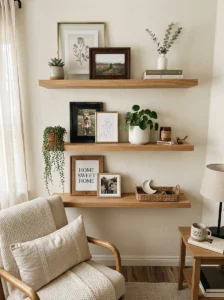
Instead of hanging everything, try leaning art on floating shelves. Layer different frame sizes slightly overlapping each other. Add a small plant or a candle to break it up. It feels more flexible because you can move things around anytime. The look is a bit casual, but still styled. It works especially well in living rooms or bedrooms where you want something less fixed.
4. Black and White Photography Wall
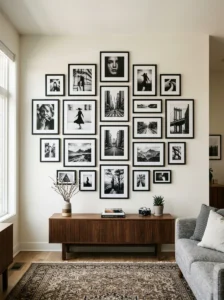
Black and white photos have a quiet elegance that fits almost anywhere. Use simple frames, maybe all black or all white, to keep it consistent. You can go for personal photos or prints, both work. Arrange them in a grid if you like structure, or keep it slightly loose. It’s timeless, and it doesn’t compete with the rest of your decor.
5. Large Mirror as Wall Art
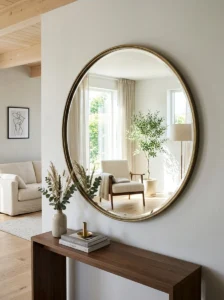
A mirror can double as wall art without feeling like decor. It reflects light and makes the room feel a bit bigger. Choose a shape that stands out slightly—arched, round, or even asymmetrical. Keep the frame simple so it blends in. Place it across from a window if possible. It’s practical, but also adds depth in a subtle way.
6. Textured Wall Hangings
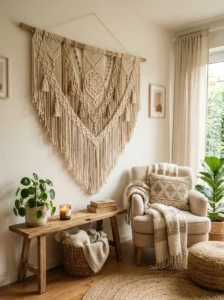
Wall hangings made of fabric or woven materials bring in softness that framed art sometimes lacks. Think macramé, woven panels, or even a simple textile piece. They work well in neutral spaces where you want texture without color. Hang one above a bed or in a quiet corner. It adds warmth, and the slight imperfections make it feel more personal.
7. Abstract Art with Soft Colors
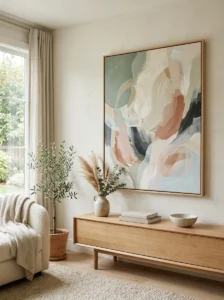
Abstract pieces can feel a bit intimidating, but softer tones make them easier to live with. Look for muted blues, dusty pinks, or warm beige shades. The shapes don’t have to mean anything specific. It’s more about how it feels in the space. Hang it where it can stand on its own. It adds interest without being too loud.
8. Mixed Frame Gallery Wall
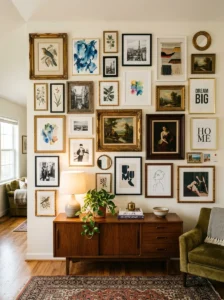
Mixing frame styles can create a more collected look. Combine wood, black, maybe even a metallic finish. Keep something consistent though—either the artwork style or color palette. It helps everything feel connected. The arrangement doesn’t have to be perfect. A slightly uneven layout often looks better. It feels like something built over time, not done all at once.
9. Botanical Prints for Freshness
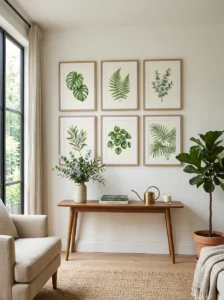
Botanical prints bring a bit of nature indoors without needing maintenance. Soft green tones work well with most color schemes. You can frame a set of two or three and place them side by side. Keep frames simple so the prints stand out. It’s a light, refreshing look that works in almost any room.
10. Wall Art with LED Backlighting
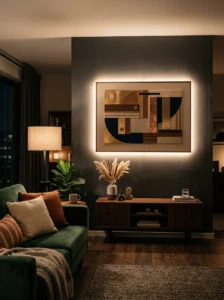
Adding soft backlighting behind art creates a subtle glow that feels modern. It works best with simple pieces or minimal frames. The light doesn’t need to be strong, just enough to highlight the shape. It’s a small detail, but it changes how the wall looks in the evening. And it adds a slightly elevated feel without much effort.
11. Personal Photo Wall
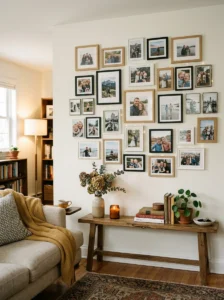
Using your own photos makes the space feel more personal. They don’t have to be perfect shots. Even simple moments work. Print them in similar tones or edit them slightly so they match. Arrange them loosely or in a line. It feels real, not staged. And it’s something you won’t get tired of easily.
12. Canvas Triptych Layout
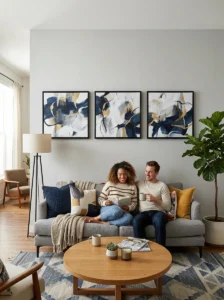
A triptych—three panels forming one image—can fill a large wall nicely. It creates balance without needing multiple different pieces. Choose something calm, like a landscape or abstract design. Keep spacing even between panels. It feels structured, but still soft. And it works well above sofas or beds where you need something wider.
13. Metal Wall Art for Contrast
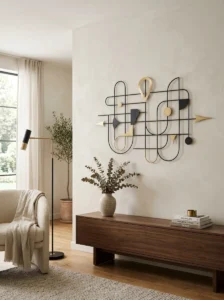
Metal wall pieces add a different texture compared to prints. Thin black or gold designs work best if you want something subtle. They cast small shadows, which adds depth during the day. Keep the rest of the wall simple so it doesn’t feel busy. It’s a quiet way to add interest without using color.
14. Leaning Large Frames on the Floor
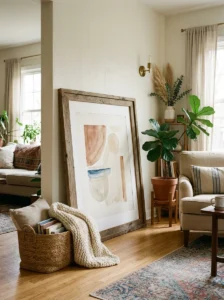
Instead of hanging everything, try leaning a large frame against the wall. It feels more relaxed and slightly unexpected. Works well in bedrooms or corners that feel empty. Choose a piece that isn’t too busy so it doesn’t overpower the space. It’s easy to move around too, which makes it practical.
15. Minimal Line Art Display
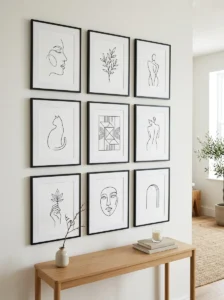
Line art has a simple charm that fits modern interiors. Thin black lines on a white background feel clean and easy to style. You can hang one large piece or a couple of smaller ones together. Keep frames minimal. It doesn’t demand attention, but it quietly completes the wall.