I bought my first real tapestry from a street vendor in Bali during a solo trip I took right after finishing college, mostly on impulse because the colors caught my eye and I liked the idea of bringing something genuinely meaningful home rather than another generic souvenir. I had absolutely no plan for it, no bedroom to hang it in yet, just a rolled-up piece of fabric stuffed into my backpack for the rest of the trip. It sat in a box for almost two years after I got home, through two different moves, before I finally had a bedroom worth hanging it in.
That first tapestry became the genuine starting point for what’s turned into a years-long, ongoing collection, and along the way I’ve learned a lot about what actually makes a tapestry-filled bedroom feel effortlessly boho rather than like a college dorm room that never grew up. I’ve helped a couple of friends build out their own tapestry walls too, each with a different specific vibe they were chasing. Here are 24 tapestry bedroom ideas, based on real, lived-in rooms rather than just aspirational travel photos, all about capturing that relaxed, collected boho feeling.
1. Start With One Meaningful Piece, Not a Full Wall
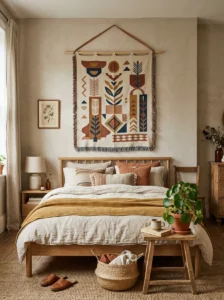
That Bali tapestry sat alone on my wall for almost a year before I added anything else, and honestly, I think that patience mattered. Rather than buying a matching set all at once, I let my collection grow slowly, piece by piece, each one actually meaning something rather than being chosen purely to fill space.
This slower approach genuinely shaped the whole aesthetic of my room over time, since every piece has an actual story attached to it, which is a big part of what makes a boho tapestry room feel authentic rather than like a themed rental property.
I’d recommend starting with just one piece you genuinely love, living with it for a while before deciding what, if anything, needs to join it, rather than rushing to fill your entire wall all at once.
2. Choose a Large Statement Tapestry as a Headboard
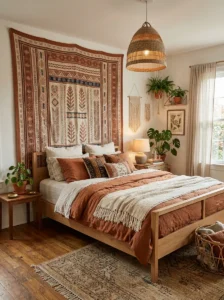
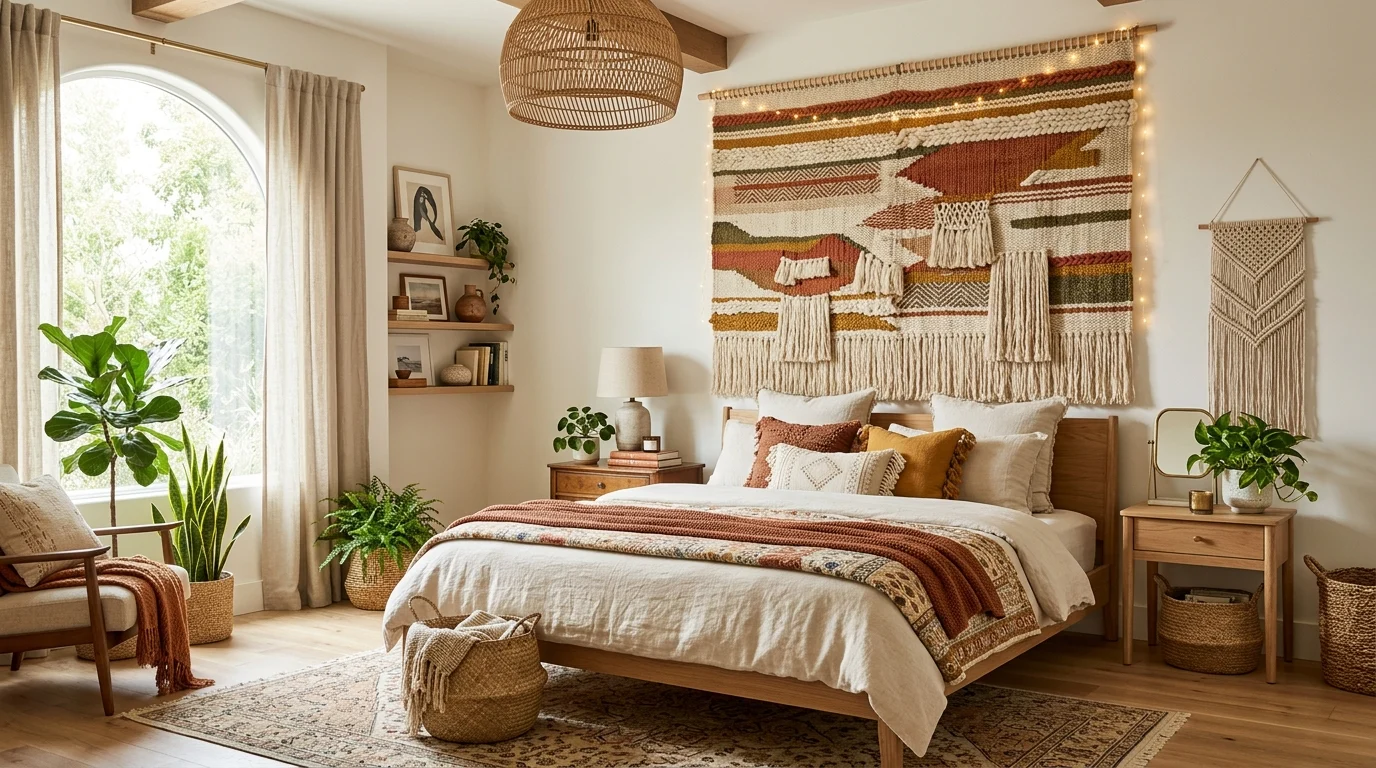
Beyond wall decor generally, I eventually hung my largest tapestry directly behind my bed, essentially using it as a soft, fabric headboard rather than buying an actual furniture piece.
This trick solved two problems at once, it gave my bed genuine visual presence without the cost of a real headboard, and it let that specific tapestry become the room’s clear focal point rather than competing with several smaller pieces scattered elsewhere.
I’d recommend measuring your bed’s width carefully before choosing a tapestry for this specific purpose, since one that’s too narrow will look awkward and undersized once your bed is actually positioned in front of it.
3. Layer Multiple Tapestries at Varying Heights
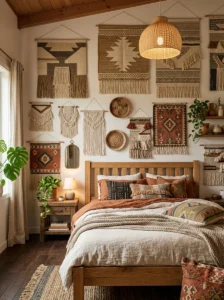
Once I had a small collection, I started layering pieces at genuinely different heights rather than lining them all up evenly, letting some hang higher near the ceiling and others lower, closer to furniture height, creating a much more dynamic wall than uniform placement would achieve.
This took some real trial and error with removable adhesive hooks before I found an arrangement that felt balanced rather than random, moving pieces around several times before settling on my current layout.
I’d recommend experimenting with removable hanging methods first, similar to what I did, before committing to permanent nail holes, since finding the right height variation genuinely takes some hands-on adjustment.
4. Add a Ceiling Tapestry for a Canopy Effect
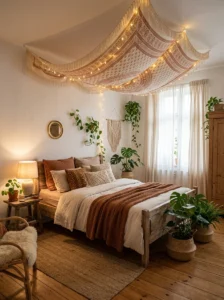
A friend hung a lightweight tapestry across her ceiling above her bed, creating a soft, canopy-like effect that transformed her whole sleeping area into something considerably more dramatic and cozy than a bare ceiling ever provided.
She used a simple curtain rod mounted at two points specifically, letting the fabric drape gently rather than pulling it perfectly taut, since that slightly relaxed drape reads as considerably more boho and effortless than a stiff, stretched installation would.
I’d recommend this addition specifically for anyone with adequate ceiling height and structural support for the mounting hardware, choosing a genuinely lightweight fabric so the whole installation doesn’t feel heavy or precarious overhead.
5. Mix Patterns Within a Cohesive Color Family
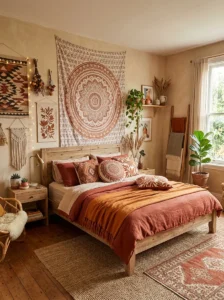
My own collection includes mandala prints, simple geometric patterns, and one botanical piece, genuinely different designs that work together specifically because they all share a similar warm, earthy color palette, rust, cream, deep orange.
I learned this the hard way after an early attempt mixing patterns with completely unrelated colors, which just looked chaotic rather than intentionally eclectic. Once I started restraining myself to a consistent color family, even wildly different patterns started working together beautifully.
I’d recommend choosing your color palette before your specific patterns, similar to how you might plan any room’s color story, then selecting tapestries that fit within that established range regardless of how different their actual designs might be.
6. Use a Tapestry as an Alternative to Curtains
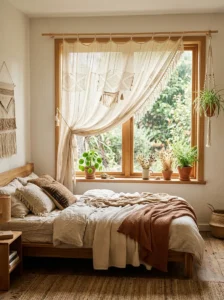
Rather than traditional curtains, I hung a lightweight, sheer tapestry over my bedroom window, letting soft, filtered light through during the day while still providing genuine privacy and that same boho pattern character throughout the room.
This worked particularly well because the fabric was thin enough to let real light through without feeling like I was living in total darkness, something worth testing before committing a specific tapestry to this particular function rather than pure wall decor.
I’d recommend choosing a genuinely lightweight, more open-weave tapestry specifically for this use, since a heavier, densely woven piece would block too much light to function well as an actual window treatment.
7. Add Fringe or Tassel Detail Tapestries
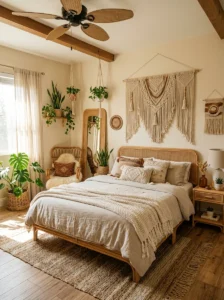
A few pieces in my collection have genuine fringe trim along the bottom edge, and that small detail adds a layer of texture and movement that a plain, straight-edged tapestry simply doesn’t provide on its own.
These fringed pieces catch even a small breeze from an open window or a ceiling fan, adding a subtle, gentle motion to the room that genuinely enhances that relaxed, boho atmosphere beyond what a static, unmoving piece achieves.
I’d recommend incorporating at least one or two fringed pieces into your own collection specifically, since this small textural detail provides genuine visual interest that plain-edged tapestries alone don’t quite capture.
8. Choose Natural, Earthy Dye Colors
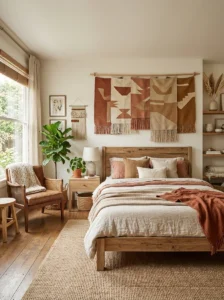
My favorite pieces in my whole collection use natural, plant-based dyes rather than bright, synthetic colors, giving them a genuinely soft, slightly muted quality that fits the relaxed boho aesthetic considerably better than more saturated, artificial-looking tones would.
I’ve noticed this distinction matters a lot when shopping, since two tapestries with essentially the same pattern can look completely different in person depending on whether their coloring leans toward this softer, natural quality or a brighter, more synthetic one.
I’d recommend looking specifically for naturally dyed or naturally toned pieces when building your own collection, since this detail genuinely affects how authentically boho the finished result reads once everything is actually hung together.
9. Add a Small Tapestry as a Nightstand Runner
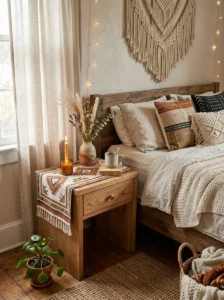
Beyond wall use, I’ve draped a smaller tapestry scrap, leftover from a piece I trimmed to fit a different space, across my nightstand as a simple runner, adding that same pattern and texture even to a smaller, functional surface.
This is a genuinely low-cost way to extend your tapestry aesthetic beyond just your walls, and I’d recommend saving any trimmed fabric scraps specifically for this kind of smaller, secondary use rather than throwing them away once you’ve resized a larger piece.
I’d recommend this addition for anyone with fabric scraps already on hand from resizing a larger tapestry, since it’s essentially free and adds a nice, cohesive detail throughout the room beyond just the main wall display.
10. Use a Tapestry to Define a Reading Corner
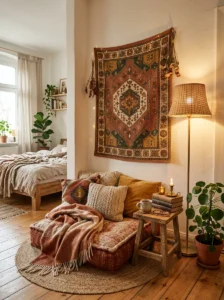
In a corner of my bedroom, I hung a medium-sized tapestry specifically behind a floor cushion and small side table, creating a distinct, cozy reading nook that felt genuinely separate from my main sleeping area despite there being no actual wall dividing the space.
This zoning trick, using a tapestry to visually anchor and define a specific area within a larger room, has become one of my favorite ways to add structure to an open bedroom layout without any actual construction or furniture dividers.
I’d recommend this approach for anyone wanting to create distinct zones within a single bedroom, choosing a tapestry specifically sized and positioned to anchor that particular corner’s function.
11. Layer a Tapestry Over Existing Curtains
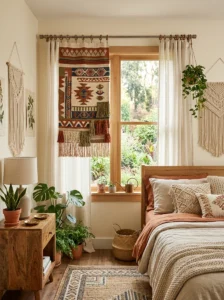
Rather than replacing curtains entirely, a friend layered a decorative tapestry over her existing plain curtains, adding pattern and texture without sacrificing her curtains’ actual light-blocking function, which a thinner tapestry alone wouldn’t have provided as effectively.
This hybrid approach let her test the tapestry-as-window-treatment look without fully committing, and she’s kept this layered setup permanently since, appreciating both the functional light control and the added boho visual interest this combination provides.
I’d recommend this layering approach specifically for anyone wanting genuine light control alongside tapestry styling, rather than choosing between full function and full aesthetic impact.
12. Choose a Tapestry With Fringe for a Rug Instead
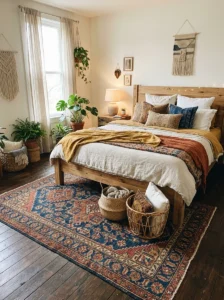
A friend actually used a sturdier, more densely woven tapestry as a floor rug rather than wall decor, appreciating how the pattern and colors worked from this different orientation and adding genuine warmth underfoot in her bedroom.
This only works with genuinely durable, floor-appropriate material, since a lightweight, delicate wall tapestry simply wouldn’t hold up to foot traffic the way a rug specifically needs to, so this substitution requires choosing your piece with this dual potential use in mind from the start.
I’d recommend this creative reuse specifically for sturdier, more substantial tapestries, checking the material’s actual durability before committing it to this considerably more demanding floor application.
13. Add Macrame Alongside Woven Tapestries
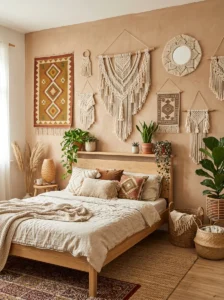
Beyond flat, woven tapestries specifically, I incorporated a few macrame wall hangings into my collection too, adding genuine three-dimensional texture that flat tapestries alone don’t provide, creating more visual depth across my wall as a whole.
This combination of flat woven pieces and more dimensional macrame has become one of my favorite aspects of how my collection has evolved over the years, since the variety in texture keeps the whole wall from feeling one-note despite everything sharing a similar color palette.
I’d recommend mixing in at least one or two macrame pieces alongside traditional flat tapestries, since this combination provides genuine textural variety that a wall of exclusively flat pieces doesn’t quite achieve on its own.
14. Choose Mandala Patterns for Classic Boho Character
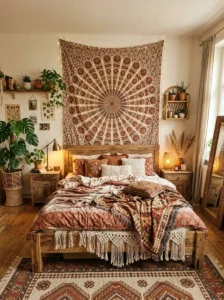
My very first Bali tapestry featured a large, detailed mandala pattern, and this particular design remains one of the most immediately recognizable symbols of the boho aesthetic for genuinely good reason, its intricate, symmetrical detail provides real visual richness from a single piece.
I’ve since learned that mandala designs vary enormously in complexity and color, from simple, minimal line work to incredibly dense, richly colored patterns, giving you real flexibility depending on how bold or subtle you want this particular element to read within your room.
I’d recommend choosing at least one genuine mandala piece for your own collection if you’re chasing this classic boho look specifically, since this pattern type carries real, recognizable weight within the aesthetic overall.
15. Add a Tapestry Behind Open Shelving
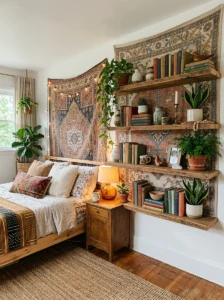
Rather than a plain wall backing a set of open shelves, I hung a smaller tapestry behind mine, adding pattern and color that makes the displayed items on the shelves themselves pop considerably more than a flat, plain wall would allow.
This approach requires choosing a tapestry with a pattern scale that doesn’t overwhelm whatever you’re actually displaying on the shelves in front of it, something I learned through one earlier attempt using a pattern too busy for the smaller objects I wanted to showcase.
I’d recommend choosing a relatively subtle, smaller-scale pattern specifically for this particular use, reserving your boldest, most dramatic tapestries for open wall space instead.
16. Use Vintage or Secondhand Tapestries for Authentic Character
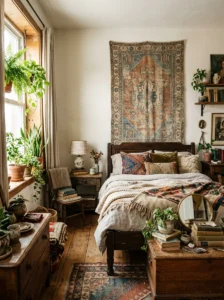
Some of my favorite pieces came from secondhand shops rather than new retailers, carrying a genuinely worn, slightly faded quality that new tapestries simply don’t have, adding a layer of authentic history that fits the collected-over-time boho aesthetic particularly well.
I’d recommend checking secondhand shops and estate sales specifically when building your own collection, since these older pieces often carry considerably more character and a lower price tag than comparable new options from a retail store.
This approach also genuinely connects to the whole ethos behind boho style in the first place, valuing pieces with real history and story over anything mass-produced and perfectly uniform.
17. Add a Tapestry to Cover an Unattractive Wall Feature
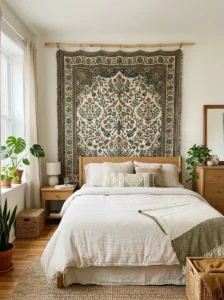
A friend used a large tapestry specifically to cover an ugly, non-functional built-in shelf she couldn’t remove in her rental bedroom, turning a genuine eyesore into an intentional-looking design feature instead.
This practical use case matters considerably for renters specifically, since a tapestry provides real camouflage for architectural features you can’t change without any permanent modification, unlike paint or wallpaper which might not be permitted at all.
I’d recommend this approach for anyone dealing with a similar unfixable eyesore in a rental space, measuring carefully to ensure your chosen tapestry genuinely covers the problem area completely rather than leaving awkward, visible edges.
18. Choose a Tapestry With Fringe Trim for Bed Skirting
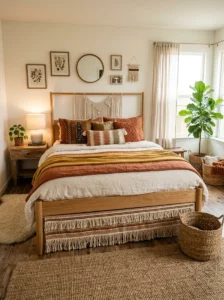
Rather than a traditional bed skirt, I’ve seen a friend drape a long, narrow tapestry along the base of her bed frame, hiding under-bed storage while adding that same pattern and texture even to this often-overlooked area.
This creative substitution works particularly well for beds without a proper skirt already, providing a genuinely more interesting, boho-appropriate alternative to the plain fabric bed skirts typically sold for this specific purpose.
I’d recommend this addition specifically for anyone whose bed frame currently shows unattractive under-bed storage, using a tapestry to solve this practical problem while extending your room’s overall pattern story even to this lower, easily overlooked area.
19. Add String Lights Along Your Tapestry Wall
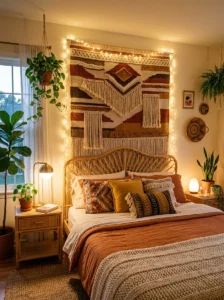
Weaving simple string lights along the edges of my main tapestry wall added genuine evening ambiance, the warm glow catching the fabric’s texture and pattern in a way that flat overhead lighting simply doesn’t achieve.
I secured the lights with small removable clips specifically, avoiding any actual damage to the tapestries themselves while still achieving that soft, layered lighting effect throughout the evening hours when I spend the most time actually relaxing in my room.
I’d recommend this addition for nearly any tapestry wall, since the combination of pattern and warm, ambient light genuinely elevates the whole display beyond how it reads under standard daytime lighting alone.
20. Use a Tapestry to Add Color to an All-White Rental
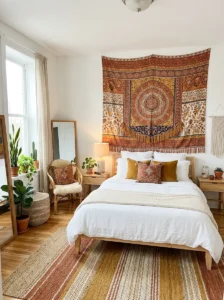
For a friend in an all-white rental with no ability to paint, a large, boldly colored tapestry became her primary way of introducing genuine color and personality into an otherwise blank, sterile space.
This approach genuinely transformed her whole room’s feeling without violating any lease restrictions, proving that tapestries can solve a real decorating problem beyond just contributing to an already-established boho aesthetic specifically.
I’d recommend this strategy for anyone in a similar situation, renting with color restrictions, since a large tapestry provides one of the most impactful, fully reversible ways to introduce genuine personality into a space you can’t otherwise modify.
21. Choose Tapestries With Personal or Cultural Significance
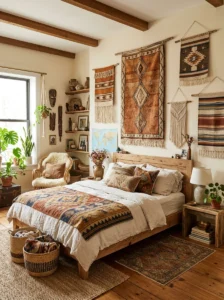
Beyond purely decorative choices, several pieces in my own collection carry genuine personal significance, gifts from friends, pieces from specific trips, rather than being selected purely for how they’d look on a wall.
This distinction matters enormously for how authentic the final room actually feels, a wall of tapestries with real personal stories behind them reads completely differently than an equally beautiful wall assembled purely from a single shopping trip without this deeper connection.
I’d recommend prioritizing pieces with genuine personal meaning wherever possible, even if it means your collection grows more slowly, since this authenticity is ultimately what separates a genuinely effortless boho room from one that merely looks the part.
22. Add a Tapestry to Soften a Stark, Modern Bedroom
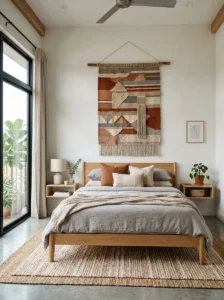
A friend with an otherwise sleek, minimalist bedroom added just one, carefully chosen tapestry above her bed, and the resulting warmth and softness balanced out what had previously felt like a slightly cold, overly austere space.
This proves the boho tapestry aesthetic doesn’t require abandoning a more modern overall style entirely, sometimes just one well-chosen piece provides enough warmth and personality to meaningfully soften an otherwise minimal room without fully committing to a maximalist boho direction throughout.
I’d recommend this restrained, single-piece approach for anyone hesitant about a full boho commitment but still drawn to what a genuine tapestry can add to an otherwise cooler, more minimal space.
23. Rotate Your Tapestries Seasonally
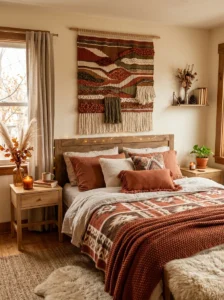
I’ve started swapping a couple of my lighter, brighter tapestries for warmer, deeper-toned pieces during colder months, similar to how you might rotate other textiles seasonally throughout a home, keeping the room feeling responsive to the actual time of year.
This requires owning enough pieces to genuinely rotate between, which took me a couple of years of slow collecting to build up, but even swapping just one or two key pieces seasonally makes a noticeable difference in how the room feels throughout the year.
I’d recommend this rotation specifically once your own collection has grown large enough to support it, treating your tapestry wall as a living, evolving display rather than a single, permanently fixed arrangement.
24. Let Your Collection Tell Its Own Real Story
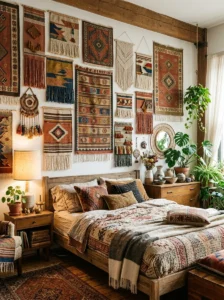
Looking at my wall now, years after that first impulsive Bali purchase, what strikes me most isn’t any single piece, it’s how the whole collection genuinely tells the story of where I’ve been and what I’ve valued enough to bring home over this whole span of years.
That’s really the heart of what makes a tapestry bedroom feel effortlessly boho rather than like a themed room assembled in a single weekend, it’s not really about the specific patterns or colors at all, it’s about letting a genuine collection grow slowly and honestly over real time.
My honest advice, don’t rush this. Buy the first piece because you genuinely love it, then let the rest follow naturally as you actually find things that mean something to you.
Frequently Asked Questions
How many tapestries do I need to achieve a genuine boho look? There’s no fixed number, even a single, well-chosen statement piece can meaningfully shift a room’s feeling. A fuller wall display simply takes more time and pieces to build authentically rather than requiring a specific quantity from the start.
What’s the best way to hang a tapestry without damaging walls? Removable adhesive hooks or a simple curtain rod both work well without requiring permanent holes, making it easy to experiment with placement before committing to anything more permanent.
Can tapestries work well outside of a boho-specific bedroom style? Yes, a single, carefully chosen tapestry can add warmth and softness to more minimal or modern bedrooms too, without requiring you to commit to a fully maximalist boho aesthetic throughout the whole space.
Should I buy new tapestries or look for secondhand ones? Both work well, though secondhand and vintage pieces often carry more authentic character and history, which tends to suit the collected-over-time boho aesthetic particularly well compared to uniformly new pieces.
Final Thoughts
That first tapestry, bought on a whim with no actual plan for it, ended up becoming the genuine start of something that’s shaped my bedroom for years since. What I’ve learned throughout this whole slow collecting process is that the effortless part of “effortless boho” isn’t really effortless at all, it comes from genuine patience and letting a room’s story unfold honestly over real time rather than being assembled all at once. If you’re just starting your own tapestry collection, my advice is simple, buy what you actually love, and let the rest come together slowly.