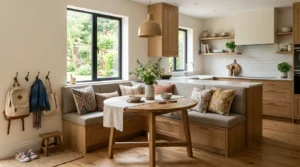
I still remember the exact moment my obsession with cottage kitchens started. I was staying at a tiny rented cottage in the countryside for a friend’s wedding weekend, and the kitchen there had absolutely nothing fancy about it, chipped enamel sink, mismatched chairs, a bunch of herbs drying upside down from a low wooden beam, and somehow it felt more welcoming than any sleek, expensive kitchen I’d ever stepped into. I spent way more time in that kitchen than I probably should have during a wedding weekend, just sitting there with a cup of tea, soaking in how genuinely cozy the whole space felt.
That trip planted a seed, and a couple of years later when I finally got the chance to redo my own kitchen, I chased that exact storybook feeling, warm, a little imperfect, full of character. It took some real trial and error to get right, since “cottage style” can easily tip into looking either too costume-y or just cluttered if you’re not careful. Here are 17 ideas I’ve genuinely tested, either in my own kitchen or while helping friends chase this same dreamy aesthetic, that actually deliver that charming, straight-out-of-a-storybook feeling without looking like a theme park.
1. Start With a Farmhouse Sink as Your Anchor
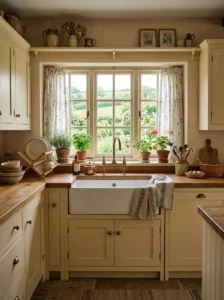
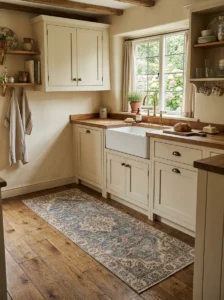
When I finally installed my own farmhouse sink, deep, white, with that lovely exposed apron front, it instantly became the heart of my kitchen in a way my old undermount sink never was. There’s something about the sheer scale of it that just says “cottage” the moment you walk in.
I went with a fireclay version specifically because I’d read that cheaper acrylic options tend to yellow and chip faster, and after two years of daily use, mine still looks brand new despite constant washing up, muddy vegetables from my little garden, all of it. If you’re on a budget, even a secondhand farmhouse sink from a salvage yard can work beautifully once it’s properly installed, and honestly, a slightly imperfect vintage one adds even more character than a pristine new one would.
Positioning matters too. I made sure mine sits under my kitchen’s only window, so I get a view out to the yard while doing dishes, which sounds like a small thing but genuinely changed how I feel about the least favorite chore in the house.
2. Add Open Shelving With a Slightly Imperfect Collection
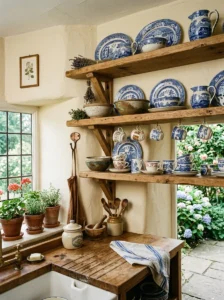
I’ll admit I was nervous about open shelving at first, mostly because everything I saw online looked so perfectly curated it felt unattainable. What actually worked for me was embracing a slightly mismatched collection, a few pieces of blue and white transferware I inherited from my grandmother, some plain stoneware bowls, a scattering of mismatched teacups.
The trick I learned through trial and error is that cottage shelving doesn’t need to be color-coordinated the way a modern kitchen’s would be. It just needs pieces that feel collected over time rather than bought all at once from the same store. I actually started haunting local flea markets specifically looking for pieces that felt like they had a story, and slowly built up a collection that genuinely reflects years of finding things rather than a single shopping trip.
I installed simple wooden brackets rather than anything fancy, since part of the cottage charm comes from things looking a little handmade rather than machine-perfect. My shelves aren’t perfectly level, if I’m honest, and somehow that adds to the feeling rather than detracting from it.
3. Hang Dried Herbs and Flowers From the Ceiling or Beams
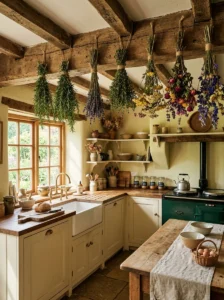
That first cottage kitchen that started this whole obsession had bundles of lavender and rosemary hanging upside down from a beam, and it’s genuinely one of the easiest, cheapest details to recreate. I started small, just a couple of bundles from my own garden’s rosemary bush, tied with plain kitchen twine and hung from a simple hook near my window.
Since then I’ve expanded to include dried flowers too, mostly from bouquets I don’t want to fully throw away once they’ve faded, hanging them upside down lets them dry naturally and gives them a genuinely lovely second life rather than tossing them straight in the trash.
Beyond the visual charm, dried herbs hanging in the kitchen are genuinely useful, I regularly pull a sprig of dried rosemary or thyme right off the bundle when I’m cooking, which feels wonderfully practical in a way that purely decorative touches don’t. If you don’t have exposed beams, even hanging small bundles from an open shelf or a simple ceiling hook works just as well.
4. Choose a Butcher Block or Reclaimed Wood Countertop
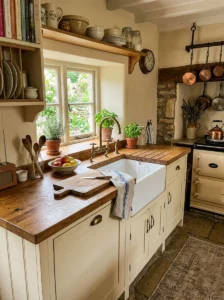
My countertops are butcher block, and I’ll be honest, everyone told me they’d be a nightmare to maintain. Two years in, with regular oiling every couple of months, mine still look warm and lived-in rather than damaged, and the slight marks and water rings that have appeared genuinely just add to that storybook, well-used character I was going for.
A friend of mine went a different route and used reclaimed wood salvaged from an old barn for her countertops, and the variation in tone and the visible nail holes and wear marks gave her kitchen a level of authentic character that new material simply can’t replicate no matter how well it’s finished.
If wood countertops feel too high-maintenance for your lifestyle, honestly, that’s a fair concern, cooking daily with hot pans and acidic ingredients does require some care. A good compromise I’ve seen work well is using butcher block just on a kitchen island or a smaller section, paired with a more durable stone or laminate elsewhere for the heavier daily wear areas.
5. Add a Vintage or Vintage-Style Stove
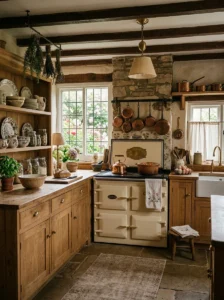
Nothing signals cottage kitchen quite like a stove with genuine curves and character rather than a flat, modern stainless steel front. I couldn’t afford an actual antique range, so I went with a reproduction model in a soft cream color, and it’s become the second biggest personality piece in my kitchen after the sink.
A friend of mine had better luck than me sourcing an actual vintage stove through a local appliance restoration company, and while it took some patience and a few repairs to get fully functional, she says the extra effort was worth it for the genuine, one-of-a-kind character it brought to her kitchen.
If a full stove replacement isn’t in the cards, even swapping your oven’s knobs for something more classic-looking, or adding a simple decorative rail nearby for hanging towels, can nod toward this same vintage warmth without the bigger investment.
6. Use Soft, Muted Colors Rather Than Stark Whit
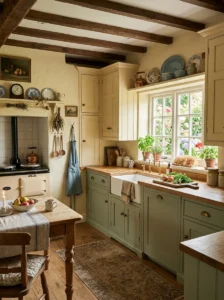
I made the mistake early on of painting my kitchen a stark, bright white, thinking it would feel clean and cottage-appropriate. It actually felt cold and slightly clinical, nothing like that original cottage kitchen that started this whole journey. Repainting with a soft, warm cream completely changed the feeling.
Since then I’ve noticed this pattern across every genuinely charming cottage kitchen I’ve seen in person, they lean toward warmer, slightly muted tones, soft sage greens, buttery creams, dusty blues, rather than crisp, bright whites that read as more modern and sterile.
I’d genuinely recommend testing paint samples directly on your wall and living with them for a few days before committing, since undertones can shift dramatically depending on your kitchen’s specific lighting. What looked perfectly warm on the paint chip looked colder once actually painted across my whole wall, until I adjusted to a slightly warmer shade.
7. Incorporate Gingham or Floral Textiles
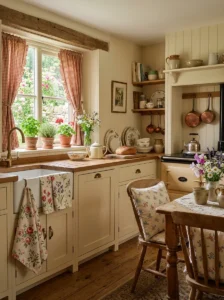
My grandmother’s old gingham curtains, faded slightly from years of sun, ended up being one of my favorite finds when I was clearing out her house, and I brought them straight into my own kitchen without a second thought. There’s something about that simple checked pattern that instantly reads as cottage without trying too hard.
I’ve since added a floral tea towel or two into the rotation, nothing matching exactly, just pieces that feel like they belong to the same warm, slightly worn-in world. A friend of mine went further and reupholstered her kitchen chairs in a small floral print, and honestly the effect throughout her whole kitchen was gorgeous.
The key I’ve found is keeping these patterns small-scale and slightly muted rather than bold and modern, a tiny gingham check or a small ditsy floral reads as genuinely storybook, while a large, saturated pattern can tip things into looking more like a costume than a real, lived-in space.
8. Add a Farmhouse Table With Mismatched Chairs
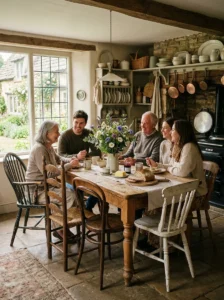
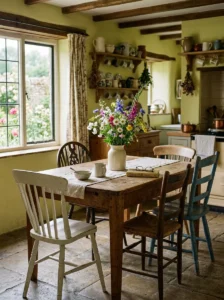
My kitchen table came from an estate sale, a solid, slightly battered farmhouse table that seats six comfortably, and I paired it with four completely different chairs I collected over about a year from various secondhand shops. Nothing matches, and that’s genuinely the entire point.
This mismatched approach terrified me a little at first, I kept wanting to buy a matching set just to feel “done,” but every time I saw a genuinely charming cottage kitchen in person, the chairs never matched exactly. There was always variation, different woods, different shapes, sometimes even different heights, that gave the space a sense of having been collected and loved over years rather than furnished in a single afternoon.
If buying entirely different chairs feels overwhelming, even starting with a matching set and slowly swapping one or two out over time as you find pieces you love creates that same evolving, collected character without requiring you to commit to full mismatch all at once.
9. Choose Warm, Layered Lighting Over Harsh Overheads
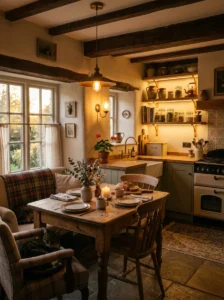
My kitchen’s original lighting was a single, bright overhead fixture that made everything feel flat and a bit clinical, nothing like the soft, golden glow I remembered from that original cottage kitchen. Swapping to a mix of a warm pendant light over my table and a couple of small wall sconces made an enormous difference.
I specifically chose warmer bulbs too, around 2700K, since even the right fixtures can feel cold under the wrong light temperature. This small, relatively cheap change ended up mattering more than almost anything else I did throughout the whole renovation.
A friend of mine added a simple strand of warm string lights along her open shelving, and the effect in the evening is genuinely magical, soft and glowing in exactly the way you’d picture a cottage kitchen from an illustrated storybook, rather than the harsh, even lighting most modern kitchens default to.
10. Add a Window Herb Garden
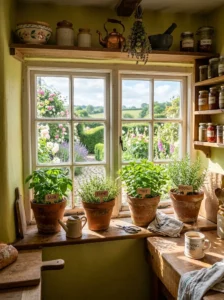
Beyond the hanging dried herbs mentioned earlier, I keep a small collection of potted herbs, basil, thyme, mint, right on my kitchen windowsill, both for the genuine visual charm and because I actually use them constantly while cooking.
This was honestly one of the easiest and cheapest additions to my whole kitchen, just a few small terracotta pots and some seedlings from the garden center. The window gets decent morning light, which has been enough to keep most of them thriving, though I did lose a rosemary plant or two before figuring out which specific spot got the right amount of sun.
If your kitchen window doesn’t get much natural light, even a small grow light tucked discreetly nearby can keep a herb garden thriving, and the payoff, both in genuine cottage charm and in having fresh herbs at arm’s reach while cooking, makes it worth troubleshooting your specific light situation.
11. Use a Plate Rack for Both Storage and Charm
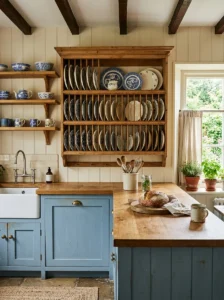
I picked up a simple wooden plate rack at a flea market for almost nothing, and it’s become one of those details visitors always comment on. Displaying my everyday plates vertically instead of stacked in a cabinet somehow makes even ordinary dishware feel intentional and pretty.
Beyond the visual appeal, it’s genuinely practical too, I use these plates daily, so having them right there, already dry and ready to grab, saves me a step compared to digging through a cabinet. I’ve noticed this same detail in nearly every genuinely charming cottage kitchen I’ve come across since, it’s a small thing but it does a lot of work.
If you don’t have room for a full plate rack, even a small two or three plate version tucked onto an existing shelf can bring in a bit of that same charm without requiring a dedicated section of wall space.
12. Add a Cozy Window Seat or Breakfast Nook
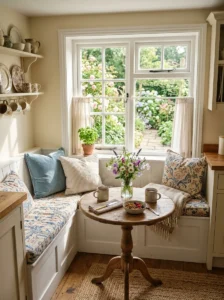
My kitchen didn’t originally have room for this, but a friend of mine transformed an awkward corner near her window into a small breakfast nook with a cushioned bench and a tiny round table, and it’s become genuinely her favorite spot in the entire house.
There’s something about a cottage kitchen that always seems to include somewhere to actually sit and linger, not just at a formal dining table, but somewhere smaller and cozier specifically for morning coffee or a quiet cup of tea. She used a simple upholstered cushion in a small floral fabric, tying back into the textile ideas mentioned earlier, and added a couple of throw pillows for good measure.
If you don’t have an obvious nook, even a single comfortable chair tucked into a corner with a small side table can capture some of that same storybook, pause-and-linger feeling within your own kitchen space.
13. Incorporate Exposed Beams or Beam-Style Details
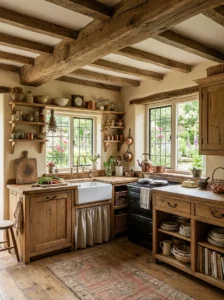
Genuine exposed wooden beams are honestly a bit of a luxury, not every kitchen has them, mine certainly doesn’t. But a friend renovating a newer build added faux beams specifically to bring in this classic cottage architectural detail, and once painted and properly finished, they looked convincingly real.
This is a bigger project than most other ideas on this list, but the payoff in genuine architectural character is significant. Even a single beam positioned above an island or a sink area can add a surprising amount of storybook charm without requiring you to beam the entire ceiling.
If a structural addition like this feels like too much, even a wooden shelf styled to look slightly beam-like above a window or doorway can nod toward this same rustic, architectural charm on a much smaller and more affordable scale.
14. Choose Brass or Aged Bronze Hardware
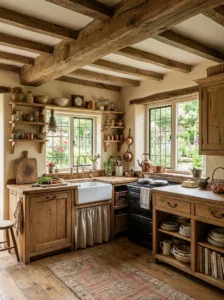
Swapping my kitchen’s plain modern cabinet pulls for aged brass ones was a small, weekend-afternoon project that made a genuinely outsized difference. There’s something about that warm, slightly tarnished metal tone that instantly feels older and more storybook than sleek chrome or matte black.
I specifically looked for hardware described as “unlacquered” brass, since it naturally develops a soft patina over time with use, which actually adds to the charm rather than looking worn out. A few years in, mine has developed exactly that lovely, slightly aged look I was hoping for.
This is genuinely one of the cheapest, easiest updates on this entire list, and I’d recommend it as a starting point for anyone wanting to test this cottage aesthetic without committing to a bigger renovation first.
15. Add a Vintage-Style Rug for Warmth Underfoot
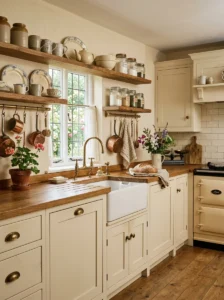
My kitchen floor is a plain, functional tile, nothing special on its own, but adding a worn-looking, vintage-style runner rug in front of my sink completely changed how the whole space feels underfoot and visually.
I specifically looked for a rug with a slightly faded, antique pattern rather than anything with crisp, modern colors, since that softer, aged look ties in so much better with the rest of the cottage details throughout the kitchen. A genuinely vintage rug works beautifully too if you can find one in decent condition, though a well-made reproduction holds up better to daily kitchen spills and wear.
I’d recommend choosing something machine washable or at least easily spot-cleaned if it’s going near your sink or stove specifically, since a genuinely gorgeous rug loses its charm fast if you’re too afraid to actually use the space around it.
16. Display Fresh or Dried Flowers Somewhere Daily
I keep a small vase of whatever’s blooming in my garden, or a simple grocery store bouquet during colder months, on my kitchen table pretty much year-round. It’s such a small thing, but it’s one of those details that makes the whole room feel cared for and alive.
During the off-season, I switch to dried flowers or even just a few branches of eucalyptus, which last for weeks without wilting and still bring in that same soft, storybook feeling. This habit costs very little but it’s genuinely one of the details people notice and comment on most when they visit.
If fresh flowers aren’t practical for your budget or schedule, even a single quality faux stem in a simple vase can capture some of the same charm, though I’d gently recommend real or dried over plastic-feeling artificial versions whenever possible for genuine authenticity.
17. Let the Space Feel Collected, Not Decorated
The single biggest lesson from my whole cottage kitchen journey is that the most charming spaces never feel like they were designed and finished in one go. They feel gathered, over years, through flea markets, hand-me-downs, and small changes made slowly rather than all at once.
I made the mistake early on of trying to buy my whole “cottage look” in a single weekend, and the result felt oddly staged despite using genuinely lovely individual pieces. It wasn’t until I slowed down, let the kitchen evolve piece by piece over a couple of years, that it actually started to feel like the storybook space I’d been chasing since that very first wedding weekend.
My honest advice, don’t rush it. Let your cottage kitchen tell a story that’s actually true, pieces you’ve found, things you’ve inherited, small changes made slowly, rather than a single expensive shopping trip.
Frequently Asked Questions
Do I need an old house to get a genuine cottage kitchen look? Not at all. Several of the kitchens mentioned here, including a friend’s newer build with added faux beams, achieved a genuinely convincing cottage feel through paint, textiles, and furniture choices rather than actual old architecture.
Is cottage kitchen style expensive to achieve? It doesn’t have to be. Some of the most impactful changes here, hardware swaps, textiles, dried herbs, cost very little, while bigger investments like a farmhouse sink or wood countertops can be added gradually over time.
How do I keep a cottage kitchen from looking cluttered rather than charming? Curate what you display rather than showing everything you own, and keep colors and patterns within a soft, muted family so pieces feel cohesive even when mismatched.
Can a cottage kitchen still be practical for daily cooking? Yes, genuinely. Most of the choices here, farmhouse sinks, butcher block counters, open shelving, hold up perfectly well to real daily cooking as long as you choose good quality materials and keep up with basic maintenance.
Final Thoughts
That first cottage kitchen I fell in love with wasn’t perfect, and honestly, that was the whole point. My own kitchen still isn’t perfect either, my shelves aren’t quite level, my chairs don’t match, my countertops have a few water rings I’ve stopped worrying about. But it feels exactly like the kind of kitchen you’d picture in a storybook, warm, a little imperfect, and genuinely loved. If you’re chasing this same feeling in your own home, my honest advice is to slow down and let it happen gradually. The charm really is in the collecting.