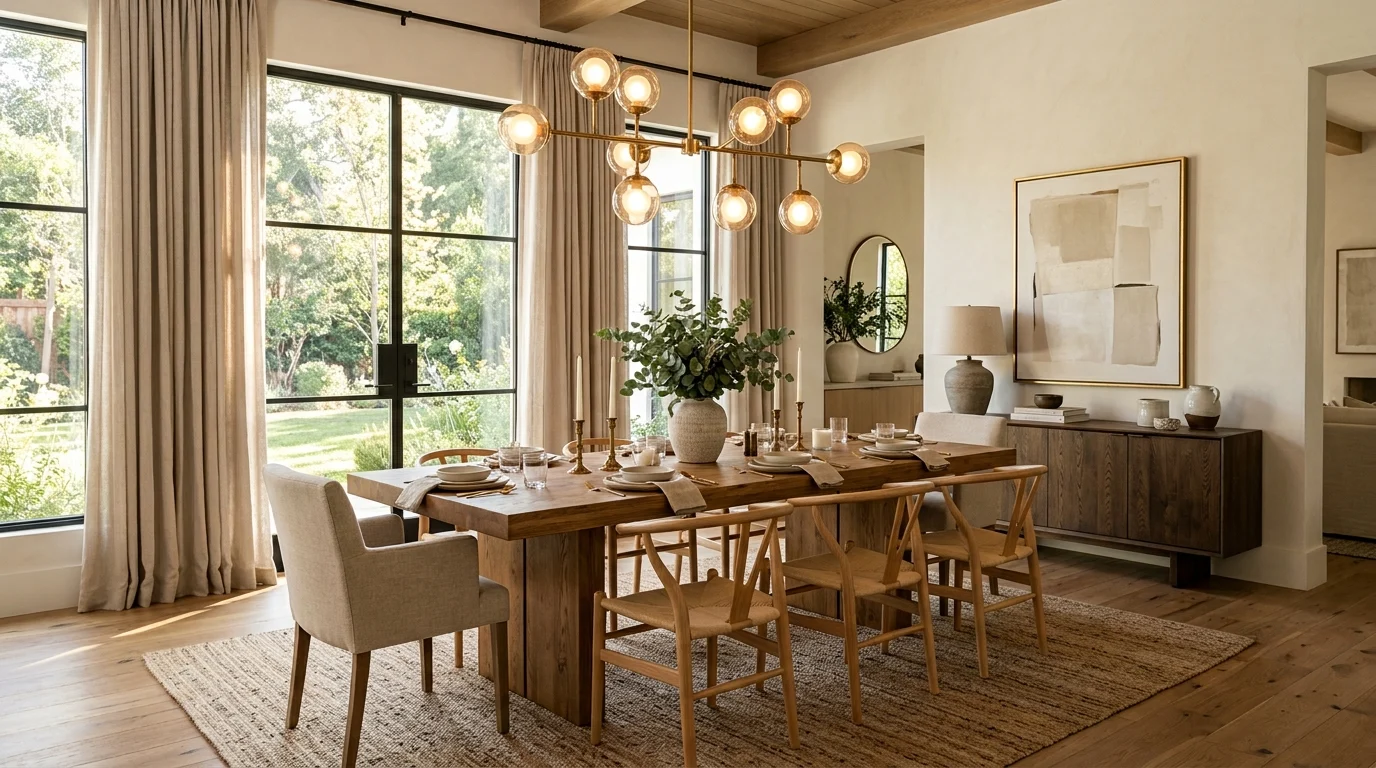
Dining rooms are among the most underused spaces in many homes — often defaulting to storage zones because daily meals happen in the kitchen or living room. Yet a well-designed dining room gets used far more once it actually feels inviting. This guide brings together 30 dining room ideas for creating a dining space that works for both everyday meals and memorable gatherings, covering lighting, furniture, color, texture, and styling.
Use this list as a menu rather than a checklist: start with the one or two changes that address your biggest frustration — usually lighting or seating comfort — and build from there.
1. Choose a Statement Light Fixture
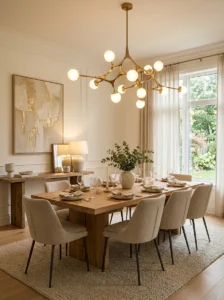
Nothing transforms a dining room faster than replacing a builder-grade fixture with something that has real character — a brass chandelier, a sculptural pendant, an oversized lantern. The fixture is the room’s natural focal point, visible from every seat.
Size it correctly: as a guideline, the fixture’s diameter should be roughly half the table’s width, and it should hang about 30 to 36 inches above the tabletop for standard 8-foot ceilings (slightly higher for taller ceilings). Put it on a dimmer switch — the ability to shift from bright functional light for weeknight dinners to a warm, low glow for formal gatherings changes how the room feels more than almost any other single upgrade.
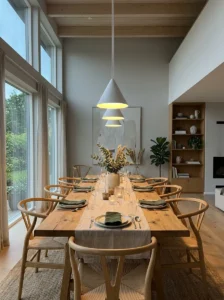
For longer tables, consider a row of two or three pendants instead of one central chandelier; multiple sources distribute light more evenly along the table’s length, which suits long, narrow dining rooms particularly well.
2. Add Wall Sconces for Layered Lighting
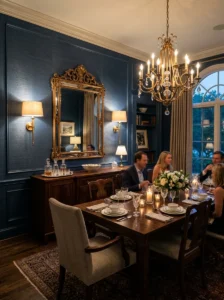
An overhead fixture alone leaves most dining rooms feeling flat after dark. A pair of wall sconces — flanking a sideboard, buffet, or mirror — adds depth and warmth that a chandelier by itself cannot achieve.
Mount sconces at roughly seated eye level, about 60 inches from the floor, and choose shaded designs in brass or fabric to soften the light. If your electrical setup allows, put sconces on a separate dimmer from the chandelier so you can balance the two: sconces low with the chandelier dimmed for dinner parties, the reverse for everyday family meals.
3. Use Candlelight for Evening Ambience
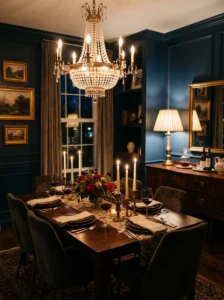
Candlelight remains the fastest way to make a dining room feel special. Use unscented tapers or pillars on the table — scented candles compete with the food’s aroma — and layer heights down the table’s center, supplemented by a few pillars on the sideboard or windowsill for glow throughout the room rather than in one spot.
Once candles are lit, bring the overhead fixture down to roughly 20–30 percent and let the warmer, flickering light do most of the work. This combination reads as genuinely magical compared with either source alone.
4. Invest in the Right Dining Table
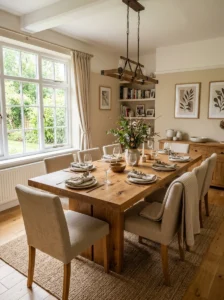
The table is the room’s largest piece of furniture and deserves real thought. Choose the shape for the room, not just the look: a long rectangle suits long rooms and maximizes seating, while a round table encourages conversation and navigates tight or awkward spaces far better.
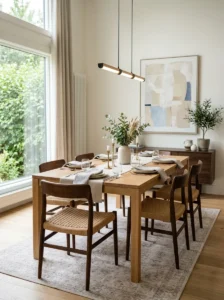
Match the material to your lifestyle — solid wood is beautiful but shows wear; engineered wood or stone composites forgive daily use more readily. And don’t overlook secondhand: refinished vintage or antique tables often deliver more character per dollar than anything new at the same price.
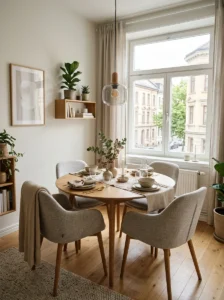
In smaller dining spaces, a round table is frequently the smarter choice — it eliminates sharp corners in tight circulation paths and keeps every diner in easy conversation range.
5. Choose Comfortable, Cushioned Chairs
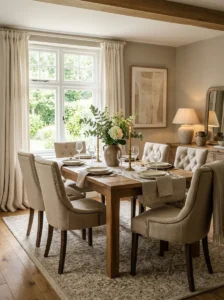
Chairs that look good but punish sitters will quietly ruin dinner parties. Prioritize cushioning and supportive backs — upholstered seats in linen, cotton, or performance fabric read as elegant while keeping guests comfortable through long meals. Test-sit for at least ten minutes before committing, and allow roughly 24 inches of table width per person so elbows aren’t competing for space.
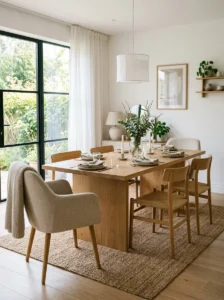
Instead of a perfectly matched set, try intentionally mixing chair styles — upholstered armchairs at the heads of the table with simpler side chairs along the sides, for example. The mix adds visual rhythm; keep one unifying element (wood tone, color family) so it reads as curated rather than accidental.
6. Try a Bench on One Side of the Table
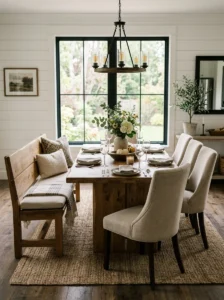
Replacing chairs with a bench along one side of the table saves floor space, seats extra holiday guests flexibly, and lends a relaxed, casual feel. A simple wood bench also tucks partially under the table when not in use. Pair it with standard chairs on the opposite side to keep the arrangement from feeling too rustic for the room’s overall style.
7. Consider a Built-In Banquette
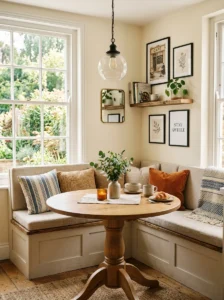
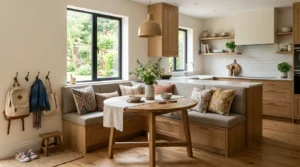
Where space and budget allow, a built-in banquette creates a cozy, café-like dining nook that often becomes the most-used seat in the house. It works especially well in kitchen-adjacent dining areas or bay windows. Upholster the bench for comfort, add storage underneath if possible, and keep the table pedestal-based so knees clear it easily.
8. Anchor the Room with a Statement Rug
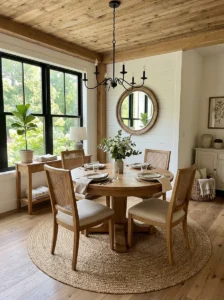
A rug under the dining table defines the gathering zone, softens chair clatter, and adds warmth — especially over hard flooring. Sizing is critical: extend the rug at least 24 to 36 inches beyond the table’s edge on all sides so chairs stay fully on the rug even when pulled out; an undersized rug catches chair legs constantly.
Choose a flat-weave wool or other low-pile, cleanable material — dining rooms and spills are inseparable. Keep the pattern complementary to the table rather than competing with it; the table setting should remain the visual focus.
9. Paint a Dark, Moody Accent Wall
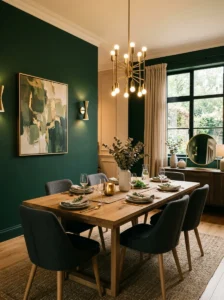
Dining rooms are used mostly in the evening under warm artificial light, which makes them ideal candidates for deep, enveloping color — navy, forest green, charcoal, or oxblood. Dark walls create an intimate, restaurant-like atmosphere that candlelight loves.
If full commitment feels risky, start with a single accent wall or paint below a chair rail while keeping the upper wall lighter. Pair dark paint with reflective elements — a mirror, brass fixtures, glassware — so the room feels rich rather than heavy.
10. Add Wainscoting or Millwork
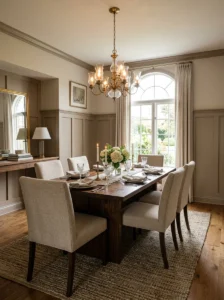
Wainscoting gives a dining room architectural character that flat drywall can’t match. Simple board-and-batten in MDF — or even peel-and-stick panel kits — has made this a realistic weekend project rather than a contractor-only job. Paint it the same color as the wall above for a cohesive, monochromatic look with subtle shadow lines, or contrast it for a more traditional feel.
On a tighter budget or timeline, a single picture rail or simple perimeter trim delivers a hint of the same architectural interest in an afternoon.
11. Make a Statement of the Ceiling
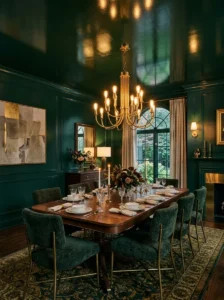
The ceiling is the most overlooked surface in the dining room. Painting it a deep, even glossy, version of the wall color creates an enveloping, intentional feeling; ceiling wallpaper turns it into a fifth wall for smaller, intimate rooms. For a lighter touch, add a ceiling medallion around the light fixture or paint the crown molding a contrasting color — small gestures that signal the whole room was considered.
12. Try Bold Wallpaper
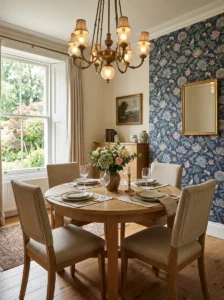
Because dining rooms are occupied for shorter stretches than living rooms or bedrooms, they’re an excellent place to take wallpaper risks that might feel overwhelming elsewhere. A bold print on one or all walls adds instant personality; in smaller dining rooms, an enveloping pattern can make the space feel intentionally jewel-box rather than merely small.
13. Layer in a Sideboard or Buffet
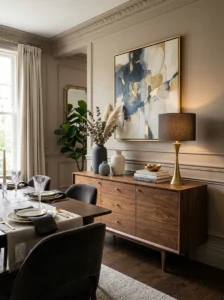
A sideboard earns its footprint twice: practical storage for linens, serving pieces, and overflow dishware, plus a styled surface for lamps, art, and seasonal decor. During dinner parties it doubles as a serving station, freeing the main table for place settings and the centerpiece. Secondhand sideboards are plentiful and refinish beautifully — look for solid construction over perfect finish.
14. Add a Console Table for Extra Surface
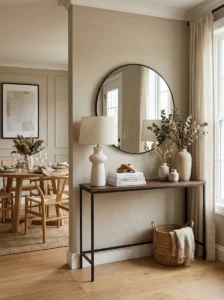
If the room has an empty wall, even a narrow console table adds styling surface, small-scale storage, and overflow serving space during larger gatherings. Keep it visually light — a slim profile with a styled top — so it reads as intentional rather than filler furniture.
15. Create a Bar Cart or Drink Station
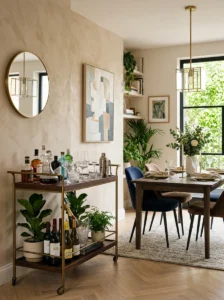
A bar cart in the corner keeps drink service out of the kitchen during parties and adds a hospitality focal point year-round. Style it with restraint — a curated selection of glassware, a few bottles, a small tray — since an edited cart reads as far more elegant than an overflowing one. Tight on floor space? A wall-mounted bar shelf or a bar cabinet section within the sideboard achieves the same function.
16. Display Dinnerware in a Glass Cabinet
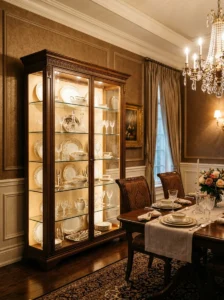
A glass-front cabinet turns beautiful dishware into a permanent focal point rather than something boxed away between uses. Style shelves with breathing room — some pieces stacked, some facing forward, a few decorative objects mixed in — and add interior lighting if the cabinet allows it; a softly lit cabinet becomes one of the room’s prettiest evening features. Thrifted or vintage dishware in a cohesive palette works just as well as heirloom china.
17. Hang Floor-to-Ceiling Curtains
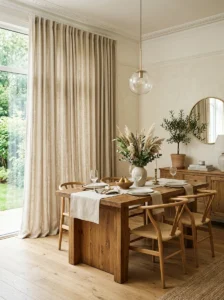
Mount curtain rods as close to the ceiling as possible — at least 4 to 6 inches above the window frame — rather than directly above the trim. The extra height makes the room feel taller and more formal. Choose a soft, substantial fabric like linen, which also absorbs sound during lively dinners, and let panels puddle slightly on the floor for a luxurious rather than tailored feel.
18. Incorporate a Statement Mirror
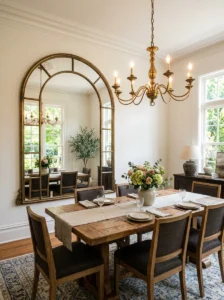
A large mirror amplifies natural light and makes the dining room feel significantly larger while functioning as wall art. Go generous with scale — at least 36 inches in the shortest dimension — and hang it to reflect something worth doubling: a window, the chandelier, or an interesting artwork on the opposite wall. Match the frame to the room’s metal story (brass, black, gilded) for cohesion.
19. Build a Gallery Wall with Vintage Frames
A gallery wall lets the dining room tell a personal story. Collect genuinely vintage or secondhand frames over time — gilded, black wood, unusual shapes — and unify them with a consistent finish family (warm golds and brasses, for example) so the eclectic mix feels collected rather than chaotic. Fill frames with botanical prints, family photos, or found artwork, and let the wall evolve gradually instead of completing it in one shopping trip.
20. Hang Art That Sets the Mood
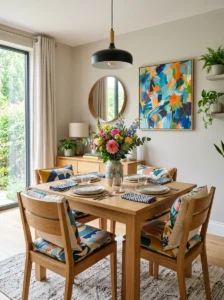
A single large piece of art often carries more weight in a dining room than a cluster of small ones — especially above a sideboard, where it needs to hold its own against the furniture below. Dining rooms suit slightly moodier, more evocative art than bright kitchens do; consider how the piece will look under warm evening light, where richer tones glow beautifully. Size the art to the wall and the furniture beneath it, not to the frame you happened to find.
21. Mix Metal Finishes Intentionally
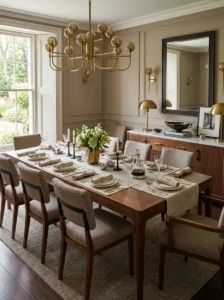
Matching every metal in the room perfectly can read as flat; a considered mix — say, a brass chandelier with black chair frames and silver flatware — looks more collected and sophisticated. The method: choose one dominant metal that appears most often, then let one or two others play supporting roles in smaller doses. Existing fixtures don’t need replacing — add new metals through accessories and serving pieces around what’s already there.
22. Layer Texture Throughout the Room
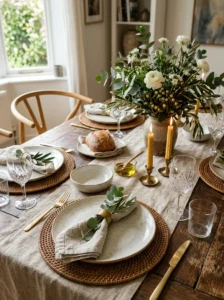
Texture is what separates an elegant dining room from one that merely has nice furniture. Aim for at least four distinct tactile materials — linen curtains, velvet or bouclé upholstery, a wool rug, woven placemats, a leather-topped sideboard — and the room gains a richness no single dramatic element can deliver. Inexpensive additions (a wool throw, a woven basket) layer in beautifully alongside investment pieces.
23. Invest in Quality Table Linens
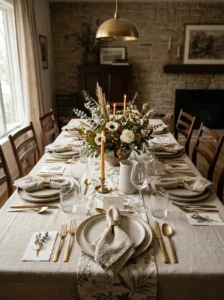
Real linen or cotton tablecloths, runners, and cloth napkins elevate every meal — not just holidays — in a way synthetic blends never quite manage. Keep a small rotating collection (a neutral everyday cloth, a couple of seasonal runners, several napkin sets) rather than a large drawer of mediocre pieces, and press linens before dinners that matter; fifteen minutes of ironing visibly sharpens the whole table.
24. Style a Low Greenery or Floral Centerpiece
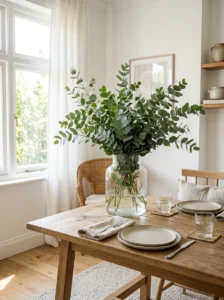
A centerpiece signals intention, but keep it low — anything tall blocks sightlines and forces guests to lean around it to converse. A simple vase of eucalyptus or seasonal stems often outperforms fussy arrangements, and greenery alone (ferns, olive branches) lasts far longer than cut flowers between refreshes.
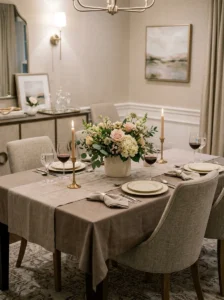
For occasions that call for more, choose low, wide floral arrangements in seasonal, locally available blooms — they look more natural and cost considerably less than out-of-season imports forced into a specific palette.
25. Add Personal Touches with Restraint
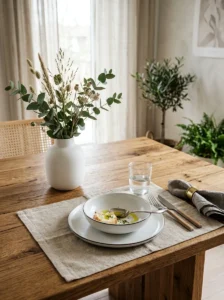
The difference between a sophisticated dining room and a sterile one is personality — but restraint is the skill. Choose three or four meaningful pieces (travel souvenirs, family photos, heirlooms) and give them prominent, uncrowded placement rather than scattering a dozen small objects where none gets proper attention. Rotate pieces seasonally to keep the room feeling alive.
26. Incorporate Vintage or Antique Pieces
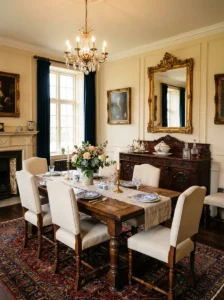
A vintage sideboard, mirror, or set of chairs introduces character and history that brand-new matching sets rarely achieve. Estate sales, antique shops, and secondhand markets are the hunting grounds; look for solid bones and refinishable surfaces. One or two storied pieces will do more for the room’s personality than an entire room of new furniture.
27. Use a Neutral Base with Colorful Accents
Keeping walls and major furniture neutral while introducing color through cushions, art, rugs, and table accessories makes seasonal refreshes nearly effortless — swap textiles and small decor instead of repainting or reupholstering. This approach also keeps bolder experiments low-risk: a colorful runner is a weekend change, not a renovation.
28. Add Scent Subtly
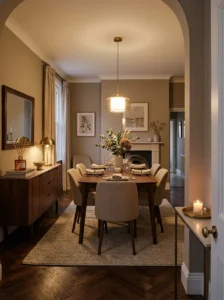
Scent contributes quietly to a room feeling considered. Keep a reed diffuser in the corner — warm, subtle fragrances like sandalwood, amber, fig, or citrus, swapped seasonally — positioned away from the table so it never competes with the food. At the table itself, stick to unscented candles. Guests may not consciously notice the scent, but it layers into the overall impression of a thoughtfully finished room.
29. Create Zones for Multi-Purpose Dining Rooms
When the dining room doubles as a home office or study area, define zones visually so the room doesn’t feel chaotic: a large rug under the dining set, a distinct lighting choice over the work area, or a console that marks the boundary. Clear zoning lets one room serve two functions without either feeling like an afterthought.
30. Keep Everyday Settings Simple
Design for two states: the everyday table and the occasion table. Day to day, keep it minimal — a low vase with greenery, a small stack of books — so the room feels usable rather than precious. Save elaborate styling for actual gatherings; the contrast makes dressed-up dinners feel genuinely special instead of incrementally nicer than usual.
Mistakes to Avoid
- Choosing uncomfortable chairs for looks alone. Guests shifting through a long meal undermines every other design choice — prioritize cushioning and test-sit before buying.
- Leaving lighting as an afterthought. The chandelier swap and dimmers deliver the biggest visual return in the room; plan them early, not last.
- Buying a table that fights the room’s proportions. Measure the room first and choose the shape (round vs. rectangular) that suits its actual dimensions.
- Treating the room as special-occasion-only. Dining rooms earn their keep through regular use — design for Tuesday dinner, not just Thanksgiving.
- Undersizing the rug. A rug that chair legs catch on reads as a mistake every single day; when in doubt, go larger.
Frequently Asked Questions
What size rug works best under a dining table?
Extend the rug at least 24 to 36 inches beyond the table’s edge on all sides so chairs remain fully on the rug even when pulled out.
Should dining room chairs match the table exactly?
No — intentionally mixing chair styles or materials adds character, as long as one cohesive element (color, wood tone, or formality level) ties everything together.
How high should a chandelier hang above the table?
About 30 to 36 inches above the tabletop for standard 8-foot ceilings, adjusting upward slightly for taller ceilings. The fixture’s diameter should be roughly half the table’s width.
How can I make a small dining room feel more spacious?
A round table, a lighter palette, a generously sized mirror reflecting natural light, and floor-to-ceiling curtains that emphasize height all help.
What’s the easiest way to make a dining room feel more elegant on a budget?
Dimmer switches, unscented candles, pressed linens, and a styled bar cart deliver an elegant feel for very little money — atmosphere is mostly lighting and restraint.
Final Thoughts
A stylish, elegant dining room doesn’t require a full renovation or an unlimited budget. It comes from intentional choices layered over time: a well-sized light fixture on a dimmer, comfortable seating, one or two confident moves (a dark wall, a statement ceiling, real wainscoting), and the restraint to let personal pieces breathe. Design the room for the meals you’ll actually eat there — weeknight dinners included — and it will stop being the most underused room in the house.