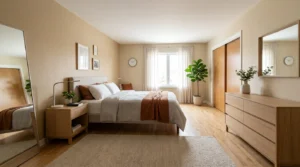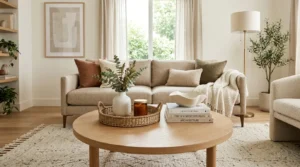
My first apartment out of college had a living room that, if I’m being generous, could be described as “cozy.” In reality, it was tiny, barely large enough for a loveseat, a small TV stand, and a coffee table that I constantly bumped my shins on. For the first year, I made the classic mistake of trying to fit in as much furniture as I could, thinking more pieces meant more comfort. I added a second armchair I didn’t really need, a bulky bookshelf that blocked half the window, and a rug that was honestly too small for any of it to feel connected. It backfired completely. The room felt cramped, cluttered, and honestly a little stressful to sit in after a long day, which is the opposite of what a living room is supposed to feel like.
It wasn’t until a friend visited and casually mentioned that my apartment felt “full” rather than “cozy” that I started rethinking the whole space. That single comment stung a little at first, but it also sent me down a deep dive into small-space design, and over the next few months I completely reworked the room using tricks that had nothing to do with buying new furniture and everything to do with how I arranged, lit, and styled what I already had. I returned that extra armchair, swapped the bookshelf for something narrower, and finally invested in a rug that actually fit the room’s proportions.
Since then, I’ve lived in two more small apartments and applied what I learned each time, refining the approach along the way and picking up new tricks from each space’s unique quirks. I’ve also helped a couple of friends rework their own tight living rooms, which has given me an even better sense of what consistently works across different layouts, lighting conditions, and furniture styles. If you’re dealing with a tight living room that feels more cramped than cozy, here are 21 ideas that have genuinely worked for me and others I’ve helped along the way.
Why Small Living Rooms Feel Cramped (And How to Fix the Root Cause)
Before jumping into specific ideas, it helps to understand why small rooms often feel smaller than they actually are. In most cases, it’s not the square footage that’s the real problem, it’s poor furniture scale, lack of visual flow, and clutter that draws the eye downward and inward rather than out and up. A room can be genuinely small in terms of square feet and still feel airy and open, or it can be a moderately sized room that feels claustrophobic simply because of how it’s arranged.
In my first apartment, my mistake wasn’t necessarily having too much furniture, it was having furniture that was the wrong scale and arranged in a way that blocked natural walking paths. Once I understood this, small changes made a much bigger visual impact than I expected. It also helped to realize that “spacious” isn’t really about how much empty floor you have, it’s about how easily your eye and your body can move through the room without obstruction.
1. Choose Furniture That’s Slightly Smaller in Scale
Oversized furniture is one of the fastest ways to make a small room feel even smaller. When I replaced my bulky loveseat with a slightly smaller two-seat sofa, the entire room instantly felt more breathable, even though the difference in size was fairly modest. It’s worth actually measuring your room and comparing it against furniture dimensions before buying, rather than relying on how a piece looks in a showroom, since showrooms are almost always much larger than the average living room.
2. Float Furniture Away From the Walls
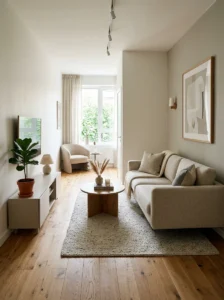
It sounds counterintuitive, but pushing every piece of furniture against the wall doesn’t always create more space, it can actually make a room feel more boxed in. Floating my sofa just a few inches away from the wall created a sense of depth I hadn’t expected, almost like the room had an extra layer to it rather than being flat against the perimeter.
3. Use Mirrors to Reflect Light and Space
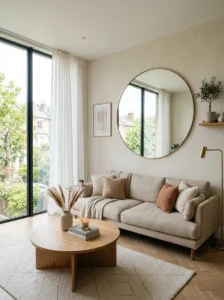
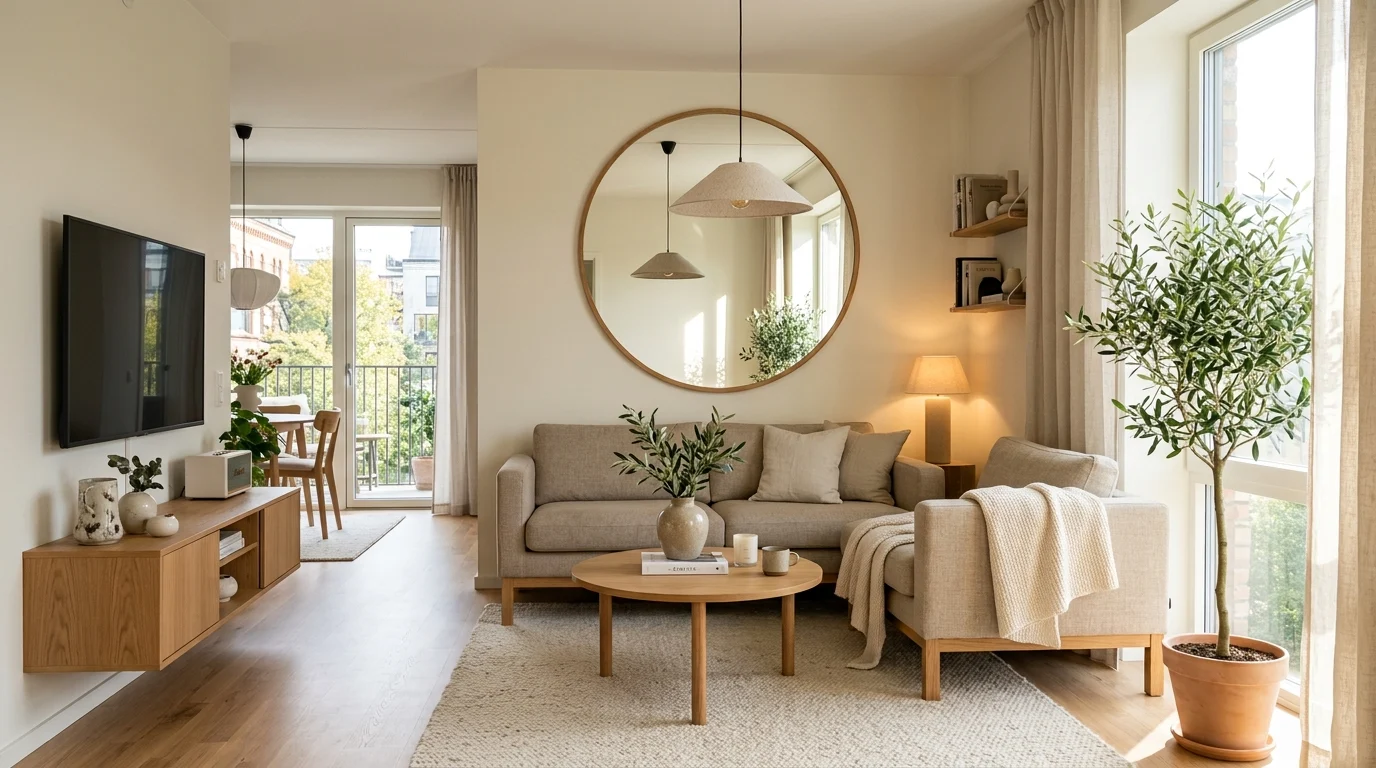
Adding a large mirror across from a window is one of the oldest small-space tricks, and for good reason, it genuinely works. I added an oversized round mirror to my first apartment’s living room, and it visually doubled the amount of light bouncing around the space, especially in the late afternoon when direct sun would hit it just right.
4. Stick to a Light, Neutral Color Palette
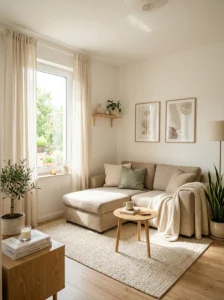
Dark colors can make small rooms feel cozier in some cases, but in truly tight spaces, light and neutral tones tend to open things up more effectively. I repainted my walls from a deep gray to a soft warm white, and the room felt noticeably larger within days, mostly because the walls stopped visually closing in from every direction.
5. Use Vertical Storage Instead of Floor Space
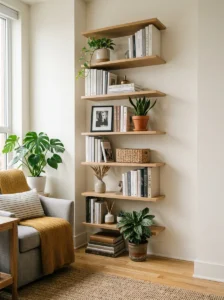
Tall, narrow bookshelves draw the eye upward and use wall space rather than eating into your floor area. Swapping my low, wide media console for a tall narrow shelving unit freed up an enormous amount of visual floor space, and it also gave me more actual storage capacity than the wider piece it replaced.
6. Choose Multi-Functional Furniture
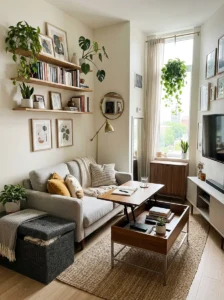
A coffee table with hidden storage, an ottoman that doubles as extra seating, or a sofa bed for guests all reduce the need for extra furniture pieces. I bought a storage ottoman early on, and it eliminated the need for a separate side table and storage bin entirely, which meant one less piece of furniture competing for floor space.
7. Keep Window Treatments Simple and High
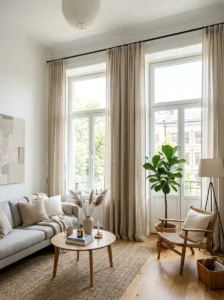
Hanging curtains close to the ceiling rather than directly above the window frame creates the illusion of higher ceilings and a larger room. This was one of the cheapest changes I made, just re-hanging the same curtains a few inches higher, and it made a surprisingly noticeable difference in how tall the entire room felt.
8. Use a Large Area Rug Instead of a Small One
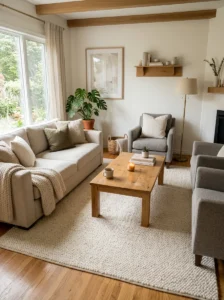
A common small-space mistake (one I made myself) is choosing a rug that’s too small for the room, which visually chops up the space. Upgrading to a larger rug that extends slightly under the front legs of my furniture instantly made the layout feel more cohesive, since all the furniture suddenly seemed to belong to one unified grouping rather than floating separately.
9. Limit Your Color Palette to 2-3 Main Tones
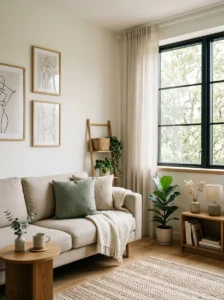
Too many competing colors can make a small room feel busy and chaotic. I simplified my color scheme to soft whites, warm wood tones, and a single accent color, and the room immediately felt calmer and more spacious, since the eye wasn’t constantly jumping between clashing hues.
10. Add Layered Lighting Instead of One Overhead Fixture
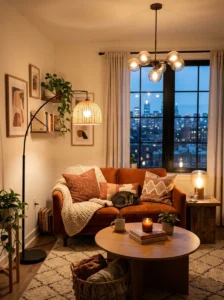
Relying on a single overhead light tends to flatten a room and make corners feel dark and cramped. Adding a floor lamp and a small table lamp alongside my existing overhead light created a warmer, more dimensional feel throughout the space, and it also meant I could adjust the mood depending on the time of day.
11. Use Glass or Acrylic Furniture Pieces
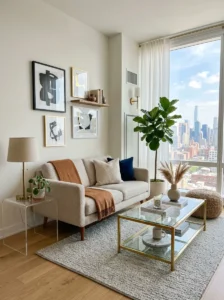
Transparent furniture, like a glass coffee table or acrylic side table, takes up visual space without actually blocking sightlines. I added a small glass side table to my first apartment, and it felt almost invisible in the room while still being fully functional, which made a real difference in a space where every piece of furniture mattered.
12. Hang Artwork at the Right Height
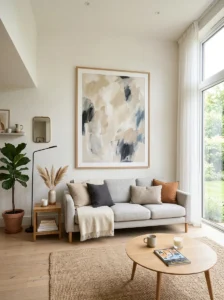
Hanging art too high or too low can throw off the visual balance of a small room. I re-hung several pieces at proper eye level (roughly 57 inches to the center of the piece), and it made the walls feel more intentional rather than randomly decorated, which subtly improved how organized the whole room felt.
13. Create a Single Focal Point Instead of Multiple Distractions
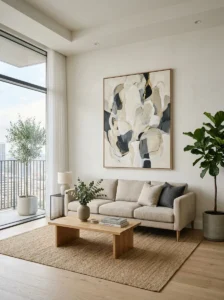
Rather than trying to make every wall interesting, choosing one focal point (a piece of art, an accent wall, or a statement light fixture) allows the eye to rest rather than jumping between competing details. This was a lesson I learned the hard way after over-decorating my first apartment’s walls with too many small frames and shelves that competed with one another for attention.
14. Use Curved Furniture to Improve Flow
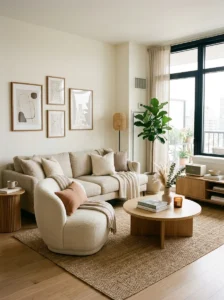
Sharp-edged furniture can make small spaces feel more rigid and harder to navigate. When I eventually upgraded to a slightly curved accent chair, it softened the overall flow of the room and made movement around furniture feel more natural, especially in a tight corner where sharp angles had previously made walking through feel awkward.
15. Keep Surfaces Mostly Clear
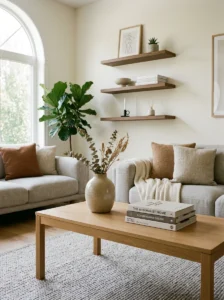
Cluttered coffee tables, shelves, and console tops make a small room feel chaotic no matter how well the furniture itself is arranged. I started following a simple rule for myself, only a few curated items on any visible surface, and it made a bigger difference than almost any other change, since clutter is often the first thing the eye notices in a tight space.
16. Use Built-In or Custom Shelving Where Possible
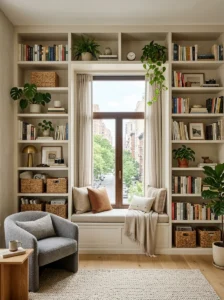
If you’re able to make structural changes, built-in shelving around a window or along an awkward wall uses space more efficiently than freestanding furniture. I haven’t done this myself due to renting restrictions, but a friend added built-ins to her small living room, and it functions beautifully as both storage and display space, essentially turning a previously wasted alcove into one of the most useful parts of her room.
17. Add Greenery to Bring Life Into the Space
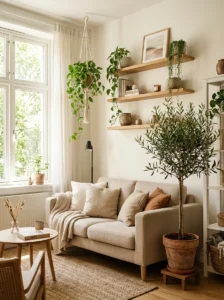
Plants add color and texture without taking up much actual floor space, especially when placed on shelves or hung from the ceiling. I added two medium-sized plants to empty corners of my first apartment, and it made the room feel more finished without adding visual clutter, since greenery tends to read as “alive” rather than “busy” the way decorative objects sometimes can.
18. Choose a Sofa With Exposed Legs
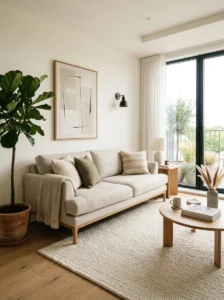
Furniture with visible legs, rather than a solid base touching the floor, allows light to pass underneath and makes the piece feel lighter overall. This was a small detail I didn’t consider until my second apartment, but it made a noticeable difference in how open the room felt, since you could see the floor continue underneath the sofa rather than the piece reading as one solid block.
19. Use Vertical Stripes or Patterns Sparingly
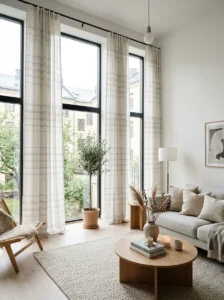
A subtle vertical element, whether in wallpaper, curtains, or even a striped rug, can draw the eye upward and make ceilings feel taller. I used this trick with a single striped accent pillow rather than committing to full wallpaper, and it added just enough visual lift without overwhelming the rest of the room’s simpler palette.
20. Keep Pathways Clear and Intentional
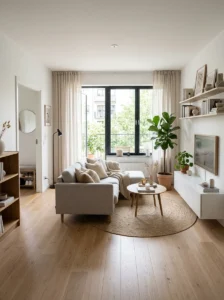
Furniture arranged in a way that blocks natural walking paths makes a room feel smaller and more frustrating to move through. Rearranging my furniture around a clear, direct path from the entryway to the seating area solved most of my “bumping into things” problem, and it also made the room feel more welcoming to guests who could move through it easily.
21. Add a Statement Piece Instead of Many Small Accents
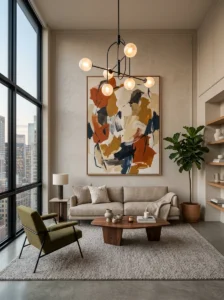
Rather than filling a small room with lots of small decorative items, choosing one or two larger statement pieces (an oversized piece of art, a bold light fixture) creates more visual impact with less clutter. This shift, moving from many small trinkets to a few meaningful pieces, was one of the biggest style upgrades I made across all three of my apartments, and it consistently gets noticed by guests more than any of my smaller decorative choices ever did.
Additional Small-Space Habits That Made a Difference
Beyond the specific furniture and decor choices above, a few ongoing habits made a real difference in how spacious my living rooms have felt over the years. Regularly reassessing what’s actually being used versus what’s just taking up space has helped me avoid the slow creep of clutter that tends to happen in any home over time. I also make a point of rotating decorative items seasonally rather than keeping everything out year-round, which keeps surfaces from feeling permanently full. Finally, I’ve learned to be more intentional about what I bring into a small space in the first place, asking myself whether a new item earns its spot before it ever crosses the threshold.
Mistakes I Made in My Small Living Rooms
- Buying furniture before measuring properly – I returned more than one piece early on because it simply didn’t fit the scale of the room, which taught me to always measure both the space and the furniture before committing to a purchase.
- Overcrowding surfaces with decor – My first apartment had cluttered shelves that made the whole room feel busier than it needed to be, and paring back to a handful of meaningful items made a noticeable difference.
- Choosing a rug that was too small – This visually chopped up my floor space until I upgraded to a properly sized rug that tied the furniture grouping together.
- Ignoring vertical space – I didn’t utilize tall shelving until my second apartment, and it made an immediate difference in perceived space once I finally did.
- Adding furniture just because I had the budget for it – A few early purchases were driven more by having extra money than an actual need, and I later realized restraint would have served the room better.
Frequently Asked Questions
Does painting a small room white always make it feel bigger? Not necessarily. While light, neutral colors generally help small spaces feel more open, the right choice depends on natural light and existing furniture tones. Warm whites often work better than stark whites in rooms with limited natural light.
Is it better to have less furniture in a small living room? Generally yes, but it’s more about scale and arrangement than sheer quantity. A few well-scaled, multi-functional pieces usually work better than many small, mismatched items competing for attention.
What rug size works best in a small living room? As a general rule, a rug should be large enough for at least the front legs of your furniture to sit on it, which helps unify the space rather than making it feel chopped up into disconnected zones.
Do mirrors actually make a room feel bigger? Yes, when placed correctly, particularly across from a window, mirrors reflect natural light and create a visual sense of depth that can make a small room feel noticeably larger without any structural changes.
How often should I reassess my small living room’s layout? It’s worth revisiting your layout every few months, especially after acquiring new furniture or decor, since small spaces can accumulate clutter and lose their sense of flow more quickly than larger rooms.
Can wallpaper work in a small living room, or will it make the space feel smaller? It depends on the pattern and application. A bold pattern across every wall can feel overwhelming in a tight room, but wallpaper used on a single accent wall, or a subtle, small-scale pattern throughout, can actually add depth and personality without shrinking the perceived size of the space.
How to Prioritize If You Can Only Make a Few Changes
Not everyone has the time, budget, or energy to tackle all 21 of these ideas at once, and that’s completely fine. If I had to narrow things down to the handful of changes that made the biggest difference across all three of my apartments, I’d start with lighting, since layered, warm lighting consistently transformed how every room felt regardless of its actual size. After that, I’d focus on rug sizing and furniture scale, since both of these tend to be the most common mistakes people make without realizing it, and correcting them tends to have an immediate, visible payoff. Decluttering surfaces comes in as a close third, since it costs nothing beyond a bit of time and consistently makes a space feel calmer almost overnight.
It’s also worth remembering that small-space design isn’t a one-time project you finish and never revisit. As your life changes, new furniture comes in, decor accumulates, priorities shift, it’s worth periodically stepping back and reassessing whether your space still reflects the principles that made it feel open in the first place. I still catch myself occasionally overcrowding a shelf or holding onto a piece of furniture that no longer fits the room’s proportions, and giving the space a fresh look every so often helps me catch those slips before they snowball into the kind of clutter that took over my very first apartment.
Final Thoughts
Looking back at that first tiny apartment, I’m almost grateful for how challenging it was to decorate, because it forced me to learn small-space design principles that I still use today, even in larger homes. A small living room doesn’t have to feel cramped or compromised. With the right furniture scale, thoughtful lighting, and a bit of restraint when it comes to clutter, even the tightest spaces can feel open, calm, and genuinely enjoyable to spend time in.