When my husband and I bought our first house, the living room had this awkward blank wall staring at us, and a TV mounted right in the middle of it with wires hanging visibly down to the outlet. It looked like an afterthought rather than an intentional part of the room. For almost two years, we lived with it exactly like that, telling ourselves we’d “get to it eventually.” Eventually turned into a full weekend project after we hosted a family gathering and I overheard someone jokingly say our TV wall looked like a college dorm setup.
That comment stung a little, but it also lit a fire under me. I spent the next few weeks researching TV wall designs, testing paint samples, and eventually landed on a wood accent wall with hidden wire management that completely transformed the room. Since then, I’ve helped two friends redesign their own TV walls, and I’ve realized this is one of those living room details that people either get completely right or completely overlook.
If your TV wall currently feels more like an accident than a design choice, here are 22 ideas I’ve personally used, seen work well in real homes, or researched thoroughly enough to recommend with confidence.
Why the TV Wall Deserves Real Design Attention
The TV wall is often the focal point of an entire living room, whether we intend it to be or not. Our eyes are naturally drawn to screens, and if that wall isn’t designed intentionally, it can throw off the balance of an otherwise beautifully decorated room. In my case, everything else in the living room was styled nicely, furniture, rugs, lighting, but that one blank wall with visible wires undid a lot of that effort.
Once I addressed it properly, the entire room felt cohesive rather than having one “unfinished” corner.
1. Wood Accent Wall Behind the TV
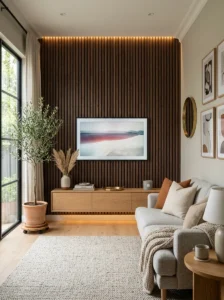
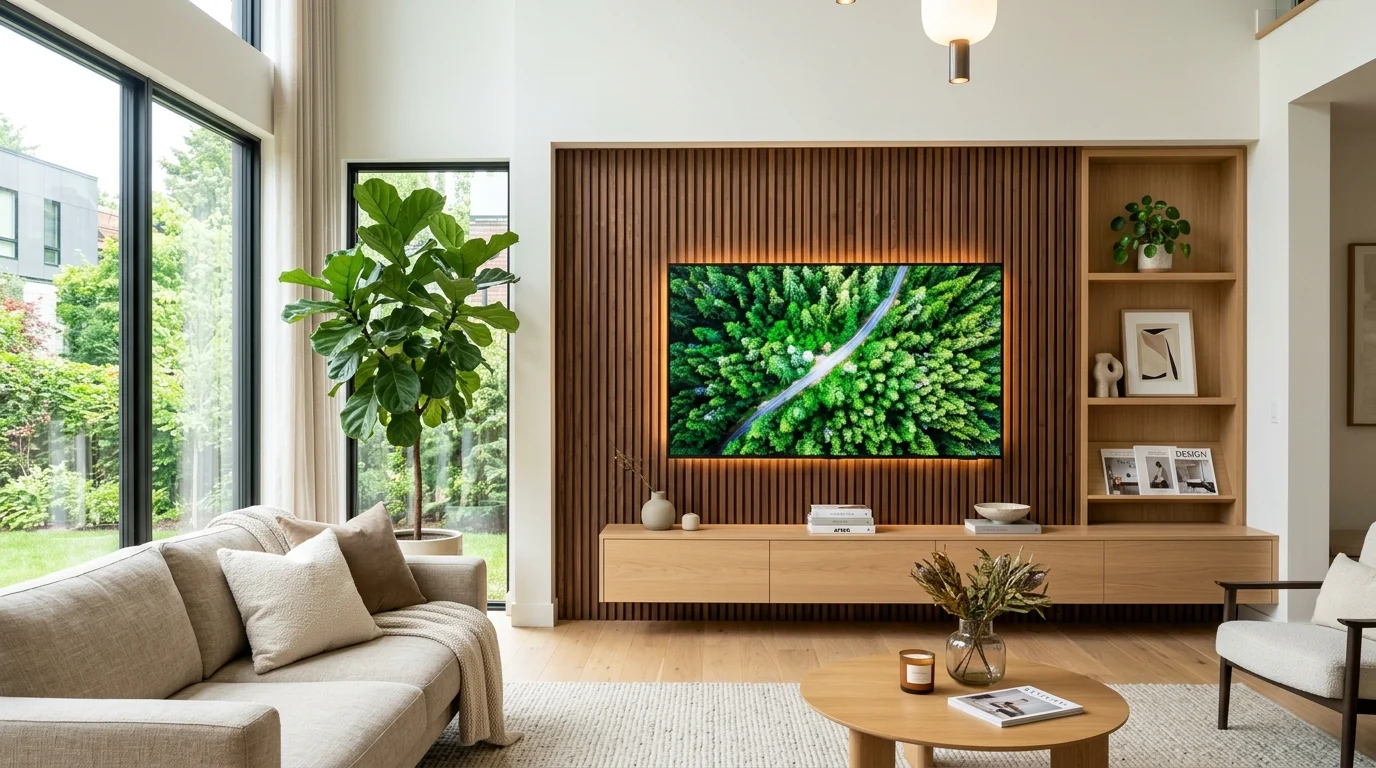
This is exactly what we ended up doing in our own living room, using vertical wood slats stained a warm walnut tone. It added texture and warmth, and the TV almost blends into the design rather than looking like a plain black rectangle stuck to the wall.
2. Floating Wood Shelf Under the TV
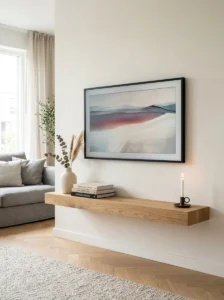
Adding a floating shelf below the TV instead of a bulky media console keeps the wall looking sleek. I installed one in our redesign, and it’s become the perfect spot for a small speaker and a few decorative items without cluttering the floor space.
3. Hidden Wire Management Channel
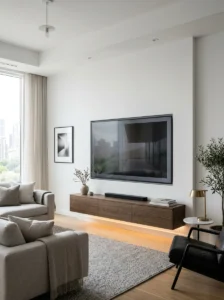
This might be the single most impactful change we made. Running wires through the wall (or using a cord-hiding channel if drilling isn’t an option) eliminates that messy, unfinished look almost instantly. It’s a small technical detail, but it made the single biggest visual difference in our redo.
4. Gallery Wall Around the TV
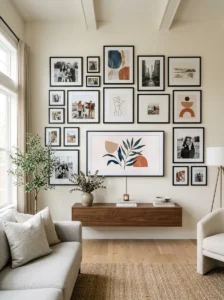
Instead of treating the TV as the sole focal point, surrounding it with framed art or photos in a gallery layout can make it feel like part of a bigger design story. A friend of mine did this, mixing family photos with abstract prints, and it genuinely disguises how much attention the TV itself draws.
5. Board and Batten TV Wall
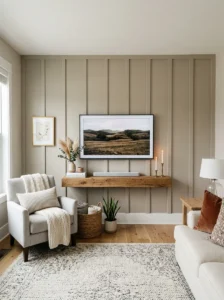
Board and batten paneling, painted in a bold or neutral color, adds architectural interest behind the television. This is on my list for a future guest room redesign since I loved how structured and intentional it looks in homes I’ve seen use it.
6. Fireplace and TV Combination Wall
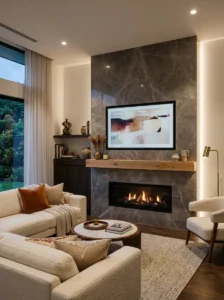
If your living room has a fireplace, mounting the TV above it (or beside it at eye level) creates a natural dual focal point. My parents did this in their home, and it works particularly well in colder climates where the fireplace gets regular use during winter months.
7. Built-In Cabinetry Around the TV
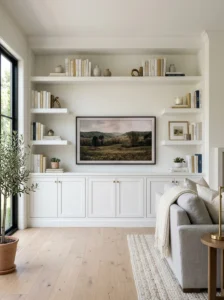
Custom built-ins on either side of the TV provide storage while making the entire wall feel like a designed feature rather than just a mounting spot. This was actually our original plan before budget led us toward the wood accent wall instead, but I still think about doing built-ins eventually.
8. Textured Wallpaper Behind the TV
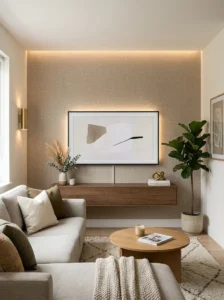
A bold or textured wallpaper can add depth without requiring structural changes. I tested a peel-and-stick textured wallpaper sample in our home before committing to the wood wall, and while we went a different direction, it’s a fantastic renter-friendly option for anyone who can’t make permanent changes.
9. Stone or Brick Veneer Wall
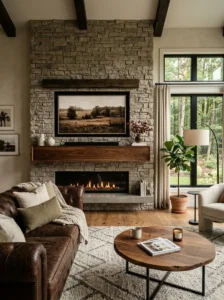
A stone or brick accent wall behind the TV adds a rustic, grounded feel to the living room. I’ve seen this used beautifully in homes with more industrial or farmhouse-style interiors, and it pairs particularly well with darker furniture tones.
10. Minimalist Floating TV with No Visible Furniture
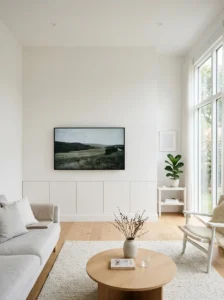
Some homeowners are opting for a fully minimalist look, mounting the TV directly on a plain wall with absolutely no shelving or console beneath it, relying on hidden storage elsewhere in the room. It’s not the direction we went, since we wanted a bit more visual interest, but it works incredibly well in modern, clean-lined interiors.
11. TV Wall with Integrated Lighting
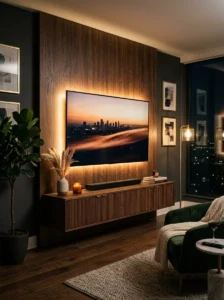
Adding LED strip lighting behind or around the TV creates a subtle glow that enhances the viewing experience and adds a modern touch. We added a simple LED backlight behind our TV, and it’s made a noticeable difference during evening movie nights.
12. Statement Ceiling Paired with TV Wall
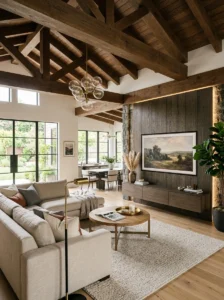
While not directly part of the wall itself, pairing a bold ceiling treatment (like exposed beams or a painted ceiling) with the TV wall design ties the whole room together. This is something I noticed in a home tour once, and it’s stuck with me as an idea for a future renovation.
13. Symmetrical Shelving Flanking the TV
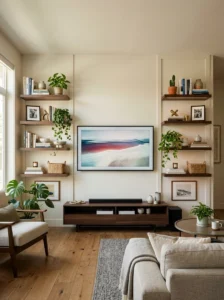
Matching shelves or cabinets on either side of the television create a balanced, intentional look. My sister did this in her apartment using inexpensive floating shelves, and it instantly made her TV wall look custom-designed rather than an afterthought.
14. TV Wall with a Bold Paint Color
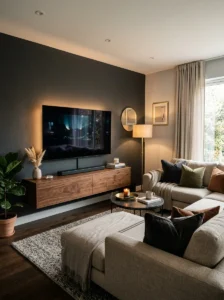
Sometimes the simplest fix is paint. Choosing a deep, moody color for just the TV wall (while keeping the rest of the room lighter) creates contrast and depth. This is a low-cost option I’d recommend to anyone not ready for a full renovation project.
15. Slatted Wood Panel with Fluted Texture
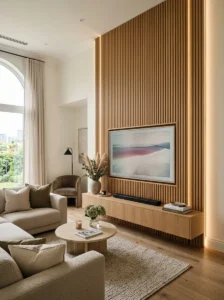
A more refined take on the wood accent wall, fluted wood paneling adds a subtle vertical texture that feels upscale without being overly bold. I actually considered this over our current wall design and may switch to it during a future refresh.
16. TV Wall with a Console Table and Decorative Styling
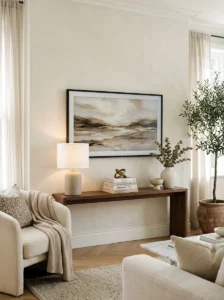
Rather than treating the space below the TV as purely functional, styling a console table with books, a lamp, and small decor items makes the whole wall feel curated. This is one of the easiest low-cost updates I made early on, well before the bigger accent wall project.
17. Recessed TV Niche
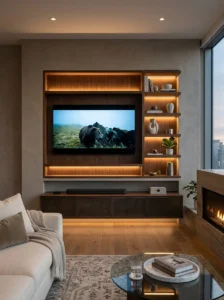
For a truly seamless look, recessing the TV into the wall (if structurally possible) creates an almost art-like frame around the screen. This requires more construction work, but the payoff is a wall that looks intentionally designed around the television rather than the other way around.
18. Mixed-Material TV Wall
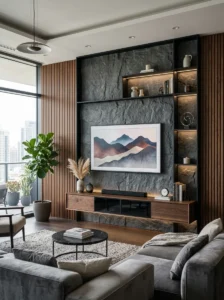
Combining wood, stone, and metal accents on the same wall creates visual interest and depth. I’ve seen this done in newer builds, layering a wood panel section with a stone strip, and it adds a custom, high-end feel.
19. TV Wall with Wall-Mounted Sconces
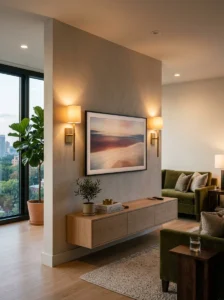
Adding sconces on either side of the TV provides ambient lighting while framing the screen visually. This is a detail I added after our initial redo was complete, and it’s made evening viewing feel cozier without harsh overhead lighting.
20. Curved or Arched Accent Wall
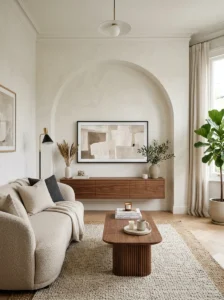
Arched or curved wall details behind the TV are becoming increasingly popular in modern interior design, softening the typically rigid, rectangular feel of a media wall. It’s not something I’ve personally attempted, but it’s a growing trend I’ve been keeping an eye on.
21. TV Wall with a Faux Fireplace Insert
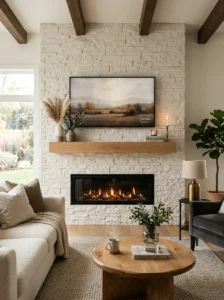
For homes without a real fireplace, an electric or faux fireplace insert built into the TV wall adds warmth and a focal point without the need for venting or gas lines. A friend added this to her apartment, and it’s a clever way to get a similar effect to option six without structural changes.
22. Nature-Inspired TV Wall with Greenery
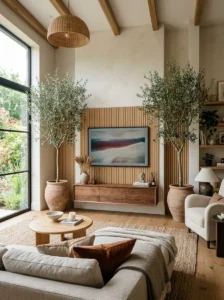
Incorporating a vertical plant wall or simply framing the TV with tall potted plants softens the technology-heavy feel of the space. I added two large plants on either side of our media console, and it’s a simple, affordable way to make the wall feel more organic and less like a display case for electronics.
Mistakes I Made With Our TV Wall
- Waiting too long to fix visible wires – This was the number one complaint from guests, and it was also the easiest fix once we actually did it.
- Choosing a wood tone that didn’t match our existing furniture – I had to return my first stain sample after realizing it clashed with our floors.
- Not planning for cable box and router placement – I didn’t think through where these components would go until after the wall was finished, which meant a slightly awkward workaround.
- Underestimating how much a rug and lighting change would matter – The wall redesign made the biggest difference, but small changes elsewhere in the room amplified the effect even further.
Frequently Asked Questions
What is the best height to mount a TV on a wall? Most designers recommend mounting the TV so the center of the screen is at eye level when seated, typically around 42-48 inches from the floor, depending on your seating height.
How can I hide TV wires without cutting into the wall? Cord-hiding channels or raceway kits that mount directly on the wall’s surface are a great renter-friendly option if drilling into the wall isn’t possible.
Do I need a media console under my TV? No, it’s entirely a style preference. Floating shelves, built-in cabinetry, or even a fully minimalist wall with no furniture underneath can all work depending on your storage needs and design goals.
What is a budget-friendly way to upgrade a plain TV wall? Painting an accent color, adding floating shelves, and installing a simple wire-hiding channel are some of the most affordable updates that make a noticeable difference.
Final Thoughts
Looking back, that offhand comment about our TV wall looking unfinished ended up being one of the best pushes we needed to actually invest in the space. A TV wall doesn’t have to be purely functional, it can become one of the most defining design features of your entire living room. Whether you go bold with a stone accent wall or keep it simple with paint and smart cable management, a little intentional design goes a long way in making the space feel finished rather than accidental.