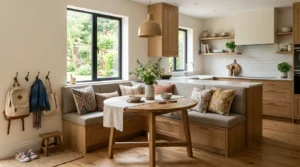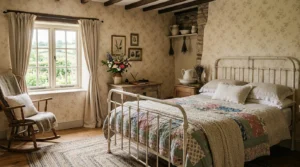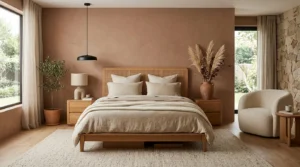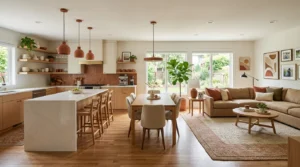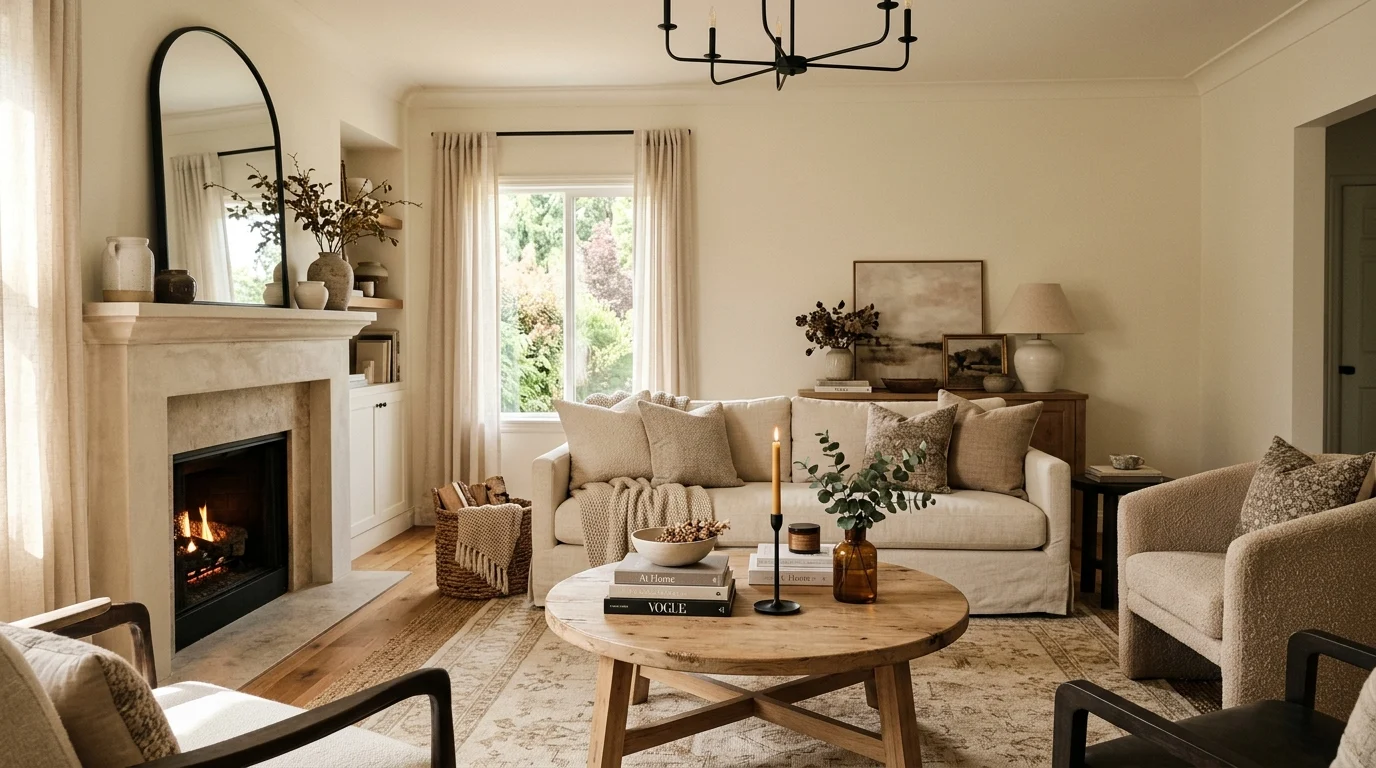
Some homes feel modern but still warm at the same time, and that balance is usually where transitional home decor style works best. It mixes clean lines with softer traditional details so rooms feel elegant without becoming too formal or cold. Warm neutrals, layered textures, and timeless furniture pieces quietly do most of the work.
Honestly, it’s one of the easiest styles to live with long term because it rarely feels overly trendy.
Everything just feels calm, comfortable, and collected in a very natural way.
1. Start with a Soft Neutral Color Palette
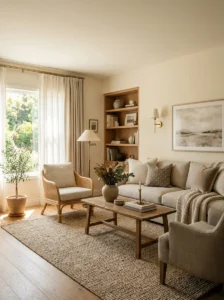
Transitional home decor style almost always begins with a calm neutral foundation because the entire look depends on balance rather than bold contrast. Warm whites, creamy beige, soft taupe, muted greige, and gentle mushroom tones help rooms feel layered without becoming visually overwhelming. Instead of relying on strong colors, this style builds warmth through texture and subtle variation. Linen curtains, woven rugs, textured upholstery, and matte finishes all quietly add depth while keeping the palette soft overall. And honestly, neutral transitional spaces usually feel more relaxing because nothing competes too aggressively for attention. Warm sunlight bouncing across layered beige tones during the afternoon creates that cozy polished feeling people naturally gravitate toward in transitional interiors.
2. Mix Traditional Shapes with Cleaner Lines
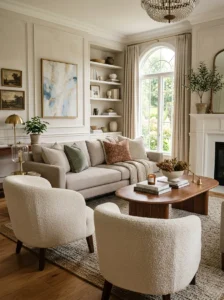
One thing that makes transitional interiors feel timeless is the balance between classic furniture and modern simplicity. Curved armchairs, traditional wood tables, or slightly detailed cabinetry pair beautifully with cleaner-lined sofas and softer minimalist decor. The room feels elegant without becoming heavy or overly formal. Warm wood tones help connect the older and newer pieces naturally too. And honestly, transitional spaces work best when they don’t lean too far into either style. A vintage-inspired coffee table beside a simple neutral sofa usually feels far more relaxed than perfectly matched furniture everywhere. The slight contrast is what creates warmth and personality.
3. Layer Texture Instead of Bold Color
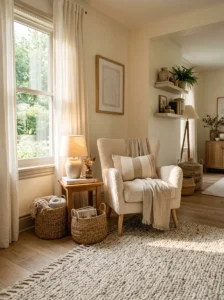
Texture quietly becomes the main focus in transitional home decor because the color palette usually stays soft and neutral. Boucle chairs, linen drapes, woven baskets, wool rugs, oak furniture, and matte ceramics all help create depth without adding visual clutter. Soft texture layering keeps the room feeling warm even when the decor stays minimal overall. And honestly, transitional rooms almost always feel richer once multiple natural materials start working together. The combination of wood grain, fabric texture, and stone finishes creates a collected atmosphere that feels cozy without becoming overly rustic or traditional.
4. Keep Furniture Balanced and Comfortable
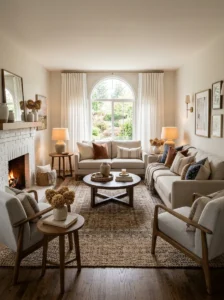
Furniture placement in transitional interiors usually feels calm and symmetrical without looking too stiff. Sofas often face each other naturally around a coffee table while accent chairs soften the layout nearby. Oversized sectionals can sometimes overwhelm transitional rooms because the style works best with breathing space between pieces. Neutral upholstery in cream, oatmeal, or warm grey tones keeps the furniture feeling timeless too. Add layered pillows and soft throws for warmth without overcrowding the seating area. And honestly, transitional spaces always feel more inviting when comfort matters just as much as appearance.
5. Use Warm Wood Finishes Throughout the Space
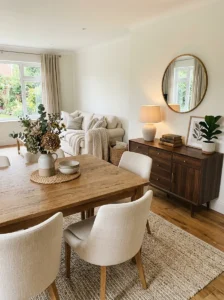
Warm wood tones quietly ground transitional interiors and prevent neutral rooms from feeling too cold or flat. Oak dining tables, walnut consoles, wood ceiling beams, or vintage-inspired sideboards all add warmth naturally while still fitting within a modern layout. Matte or lightly weathered finishes usually work better than overly glossy wood because the room feels softer overall. Pair the wood with lighter upholstery and textured fabrics to maintain balance visually. And honestly, natural wood textures are often what make transitional rooms feel comfortable enough to actually live in every day.
6. Add Black Accents Carefully for Contrast
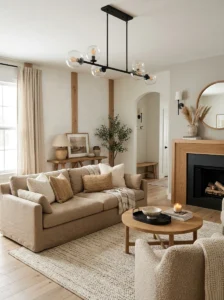
Transitional rooms usually include a little contrast to keep the softer neutral palette from feeling washed out. Matte black light fixtures, slim picture frames, cabinet hardware, or iron table legs create structure without overwhelming the room visually. The darker accents help anchor lighter furniture and decor naturally. But honestly, restraint matters here. Too much black can quickly shift the room toward a modern industrial look instead of transitional warmth. Thin lines and smaller details usually feel enough to create that balanced contrast quietly.
7. Use Timeless Lighting Instead of Trendy Fixtures
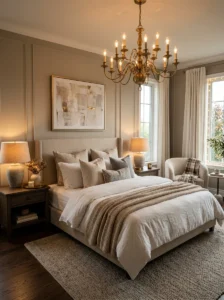
Lighting in transitional home decor tends to feel classic but still relaxed. Warm brass chandeliers, soft linen lampshades, globe pendants, and vintage-inspired sconces work especially beautifully because they bridge traditional and modern styles naturally. Layered lighting also matters a lot in transitional spaces. Table lamps, floor lamps, and softer evening lighting help create warmth after sunset instead of relying only on bright ceiling fixtures. And honestly, lighting quietly changes how every texture and neutral tone feels throughout the room.
8. Keep Decor Minimal but Layered
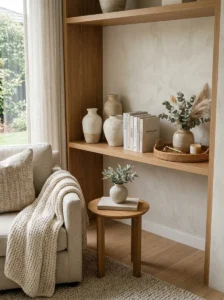
Transitional interiors rarely feel overcrowded with decor, even though the rooms still feel warm and lived in. A few carefully chosen pieces usually create more impact than shelves packed with accessories. Large ceramic vases, stacked books, vintage frames, woven trays, and soft greenery all work beautifully together when spaced naturally throughout the room. Leave open breathing room between objects too. And honestly, transitional styling feels best when it looks collected slowly over time instead of heavily decorated all at once.
9. Blend Modern and Vintage Pieces Together

One reason transitional home decor feels timeless is because it comfortably mixes older and newer elements within the same space. Vintage mirrors beside modern sofas, antique wood cabinets paired with contemporary lighting, or traditional rugs layered under cleaner furniture all help the room feel more personal. Slight imperfections in older pieces often soften modern interiors beautifully too. And honestly, transitional rooms usually become more interesting once they stop feeling perfectly matched. The mix creates warmth naturally.
10. Let Natural Light Stay Part of the Design
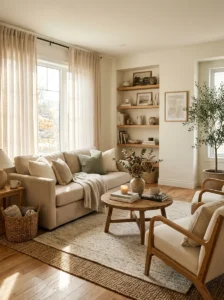
Natural light plays a huge role in transitional interiors because the softer palette and layered textures respond beautifully to sunlight throughout the day. Sheer linen curtains, light wall colors, and reflective neutral surfaces help rooms feel open without becoming overly bright or stark. Keep heavy furniture away from windows when possible so the light moves naturally across the space. Warm sunlight hitting wood textures, textured rugs, and neutral upholstery honestly creates most of the cozy atmosphere transitional homes are known for.
11. Focus on Timeless Comfort Over Trends
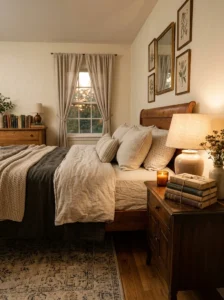
The best transitional home decor style usually feels calm enough to age well over time. Instead of chasing fast-changing trends, the focus stays on comfortable furniture, layered neutrals, natural textures, and architectural balance. Slightly wrinkled linen pillows, vintage books, warm wood finishes, and soft evening lighting all help the home feel lived in rather than staged. And honestly, transitional interiors work so well because they quietly combine elegance and comfort without trying too hard in either direction.