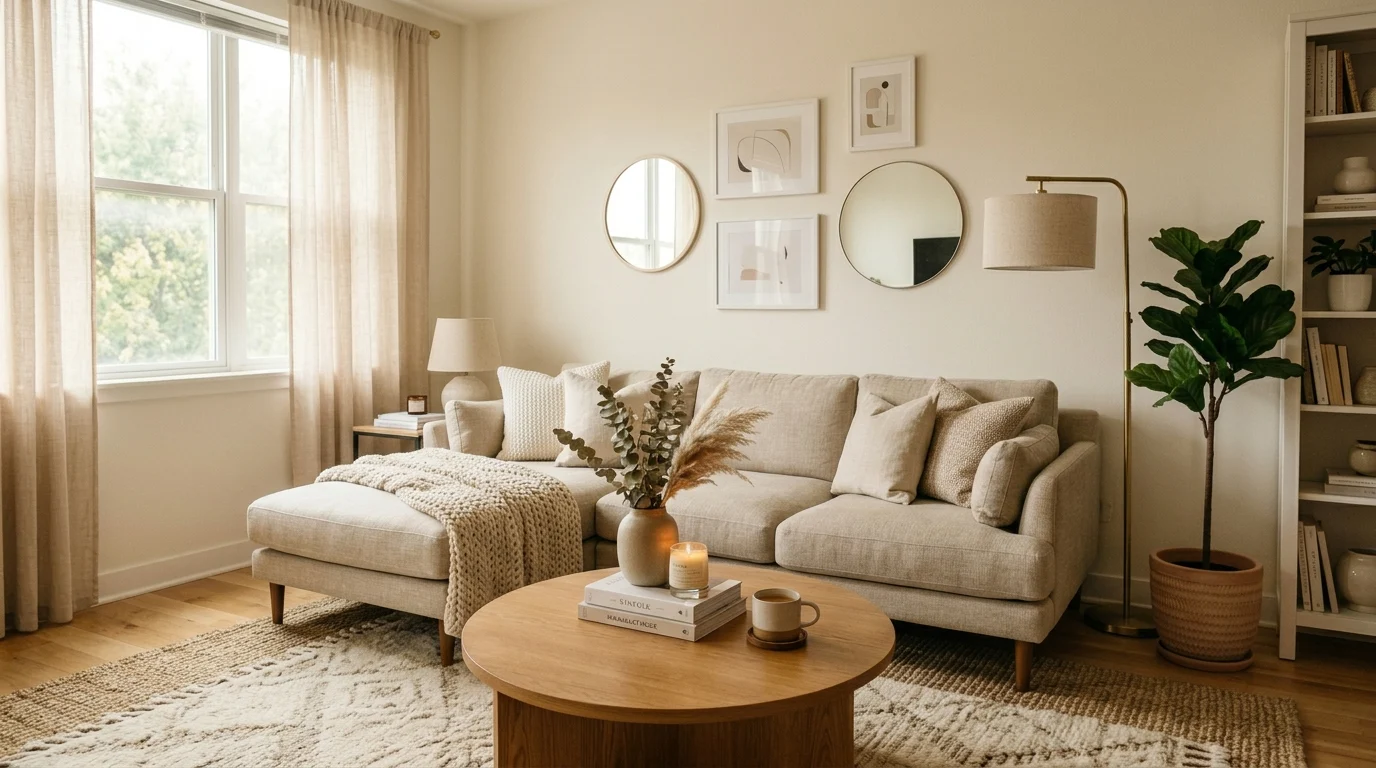
Buying a sofa sounds simple until you actually start measuring the room. Suddenly every couch online either looks way too tiny or completely oversized for the space. I’ve definitely taped furniture outlines on the floor before trying to picture how a sofa would actually fit. And honestly, the right sofa size changes the entire feeling of a room. Once the proportions feel balanced, the space instantly looks calmer, cozier, and much easier to decorate.
Small Apartment Living Room: 72–84 Inch Sofas
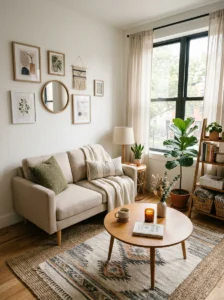
Smaller apartment living rooms usually feel best with sofas between 72 and 84 inches wide. Anything much larger can quickly overwhelm the room and block natural walkways, especially in open layouts where every inch matters.
I personally love slim-profile sofas with visible legs in compact spaces because they feel lighter visually. Warm beige linen upholstery, soft textured pillows, and light oak coffee tables help smaller rooms feel cozy without looking crowded.
One thing that really helps is leaving at least 18 inches between the sofa and coffee table whenever possible. That little breathing room keeps the layout feeling open and easy to move through.
Pair apartment-sized sofas with layered neutral rugs, soft lighting, and woven textures nearby so the room still feels warm instead of minimal. And honestly, smaller living rooms usually look much better once the furniture stops trying to fill every empty corner.
Natural sunlight also makes lighter-colored sofas feel even softer during the day, which quietly helps compact rooms appear larger overall.
Medium Family Rooms: 84–96 Inch Sofas
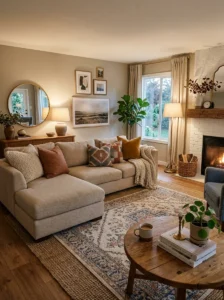
Medium-sized family rooms usually handle standard 84 to 96 inch sofas beautifully because the space has enough width to support larger seating without feeling cramped. This size range honestly works for most everyday homes.
I personally love deep neutral sofas in family rooms because they instantly make the space feel more relaxed and inviting. Soft cream, warm taupe, muted olive, or sandy beige upholstery all layer beautifully with textured throws and warm wood furniture.
One thing that helps balance medium-sized sofas is pairing them with lighter accent chairs nearby instead of oversized matching furniture sets. The room instantly feels softer and less bulky.
Large textured rugs underneath also help ground the furniture beautifully. Pair the sofa with warm lighting, woven baskets, linen curtains, and layered neutral decor so the room feels cozy and lived in instead of overly formal.
And honestly, medium-sized living rooms usually feel best when the sofa feels comfortable without visually dominating every wall.
Balanced proportions quietly make everything easier to decorate afterward.
Long Rectangular Rooms: Use Sectionals Carefully
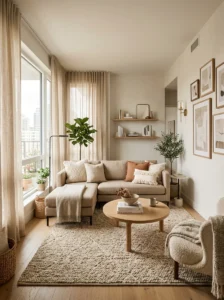
Sectionals can work beautifully in rectangular living rooms, but honestly, size matters a lot here. Oversized sectionals often make narrow rooms feel blocked off instead of cozy.
I personally love smaller L-shaped sectionals with slimmer arms because they create enough seating while still leaving the room feeling open. Warm neutral fabrics paired with textured pillows and layered rugs help soften the larger furniture shape naturally.
One thing that really helps is floating the sectional slightly away from the walls instead of pushing it tightly into corners. That little breathing space instantly makes rectangular rooms feel calmer.
Pair sectionals with warm wood coffee tables, soft lighting, and woven baskets nearby for a relaxed layered atmosphere. Natural sunlight moving through linen curtains also helps break up longer layouts visually during the day.
And honestly, rectangular rooms almost always feel more balanced once the furniture creates conversation zones instead of one giant seating wall stretching across the room.
The layout matters just as much as the sofa size itself.
Small Bedrooms: Loveseats or Apartment Sofas Work Best
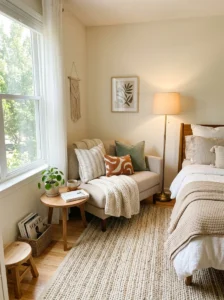
Bedrooms with sitting areas honestly feel much cozier once the seating stays scaled appropriately. Oversized sofas in bedrooms usually make the entire space feel crowded surprisingly fast.
I personally love compact loveseats or apartment sofas between 60 and 72 inches wide because they add softness without overwhelming the room. Boucle fabrics, warm linen upholstery, and lighter neutral colors work especially beautifully in cozy bedrooms.
Place smaller sofas near windows, reading corners, or opposite the bed whenever possible. Pair them with soft throw blankets, warm floor lamps, and textured rugs nearby for a relaxed layered atmosphere.
One thing I’ve noticed is how much calmer bedrooms feel once the seating feels secondary instead of competing visually with the bed itself. Cozy balance matters more than maximum seating.
Natural sunlight also makes compact seating areas feel incredibly peaceful during the day, especially with soft curtains moving nearby.
And honestly, bedrooms almost always benefit from furniture that feels soft and airy instead of oversized and bulky.
Open Concept Homes Need Airy Sofa Layouts
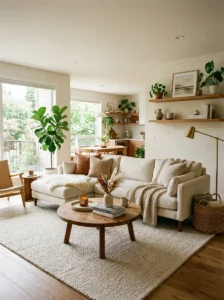
Open concept spaces honestly require more breathing room around furniture because the eye sees multiple areas at once. Oversized sofas can quickly make open layouts feel visually heavy.
I personally love medium-depth sofas with slimmer silhouettes in open homes because they help define the living area without blocking sightlines across the room. Warm neutral upholstery layered with textured pillows creates softness while still keeping the layout feeling open.
One thing that helps is leaving clear walkways around the sofa whenever possible. Open layouts instantly feel calmer once movement through the room stays natural and uncluttered.
Pair airy sofas with warm wood accents, woven textures, oversized rugs, and layered lighting nearby for an inviting relaxed atmosphere. Floating the sofa slightly inward also helps separate living areas without needing walls or dividers.
And honestly, open concept homes usually look best once the furniture feels intentionally spaced instead of packed tightly together.
Soft balance quietly makes large open spaces feel more comfortable.
Tiny Living Rooms Need Sofas With Visible Legs
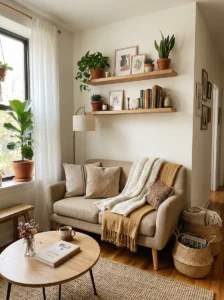
Visible sofa legs honestly make tiny living rooms feel noticeably larger because more floor stays visible underneath the furniture. Heavy sofas sitting directly on the floor can quickly make compact rooms feel visually crowded.
I personally love mid-century-inspired sofas with slim wood legs and lighter fabrics because they create this airy relaxed feeling even in small apartments. Soft beige, cream, or warm gray upholstery also reflects natural light beautifully.
One thing that helps is choosing sofas with narrower arms instead of oversized bulky cushions. Tiny layout details quietly save more space than people expect.
Pair lighter sofas with textured rugs, warm lighting, woven baskets, and floating shelves nearby so the room still feels layered and cozy overall. And honestly, tiny living rooms usually feel calmer once the furniture appears slightly lifted instead of visually heavy.
Natural sunlight moving underneath raised furniture also helps small rooms feel brighter during the day.
The lighter the furniture feels visually, the larger the room starts feeling.
Formal Living Rooms Can Handle Larger Sofas
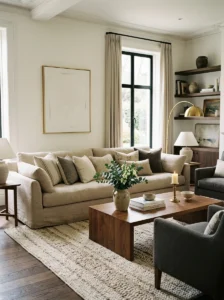
Formal living rooms usually have enough space for larger sofas between 90 and 100 inches wide, especially when the room isn’t used for heavy daily traffic. Bigger seating can actually make these spaces feel warmer and less empty.
I personally love structured sofas in textured neutral fabrics because they feel elegant without becoming overly stiff. Warm ivory, muted taupe, or soft gray upholstery layered with linen pillows and wood accents creates such a calm timeless atmosphere.
One thing that really helps is balancing larger sofas with lighter decor around them. Oversized furniture paired with delicate lighting, textured curtains, and airy coffee tables keeps the room from feeling too formal.
Pair large sofas with oversized rugs, warm wood furniture, and layered lighting nearby so the room still feels cozy instead of showroom-perfect. And honestly, formal spaces feel much more inviting once the seating encourages comfort instead of just appearance.
Soft textures always matter more than furniture size alone.
Always Measure Walkways Before Buying
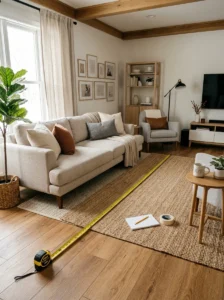
Honestly, one of the biggest sofa mistakes has nothing to do with style at all. It’s buying a sofa without properly measuring the room and walkways first.
I personally try to leave at least 30 to 36 inches for major walking paths whenever possible. Rooms instantly feel calmer once people can move naturally around the furniture without squeezing between tables or corners.
One thing that helps is using painter’s tape on the floor before ordering a sofa online. Seeing the real footprint changes everything surprisingly fast.
Pair practical measurements with softer decor choices afterward. Warm rugs, layered pillows, woven baskets, and textured lighting help the room feel inviting once the layout works properly underneath.
And honestly, even beautiful sofas can make a room feel stressful if the proportions block movement or overcrowd the space visually. Good furniture layouts quietly support everyday life.
Comfort usually comes from spacing just as much as the sofa itself.
Use This Simple Sofa Size Formula
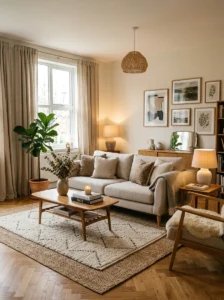
A simple rule that honestly works surprisingly well is choosing a sofa that measures about two-thirds the width of the wall it sits against. That proportion usually creates enough visual balance without making the room feel either empty or overcrowded.
For example, a 12-foot wall often works beautifully with a sofa around 84 to 96 inches wide. Smaller walls naturally feel better with apartment-sized seating instead.
I personally love using this formula as a starting point before adjusting for coffee tables, walkways, windows, or nearby furniture. Every room still needs breathing space around the sofa itself.
One thing that really helps is balancing sofa depth too. Deep oversized sofas can sometimes overwhelm smaller rooms even if the width technically fits.
Pair proportional furniture with layered rugs, warm wood textures, linen curtains, and cozy lighting nearby for an inviting atmosphere overall. And honestly, rooms almost always feel calmer once the furniture sizes relate naturally to the architecture instead of overpowering it.
Good proportions quietly make decorating everything else much easier afterward.