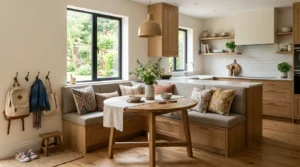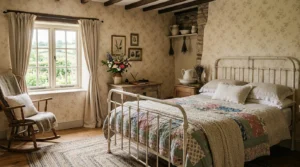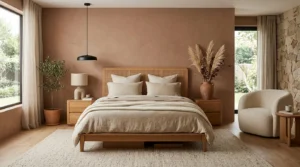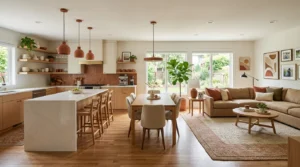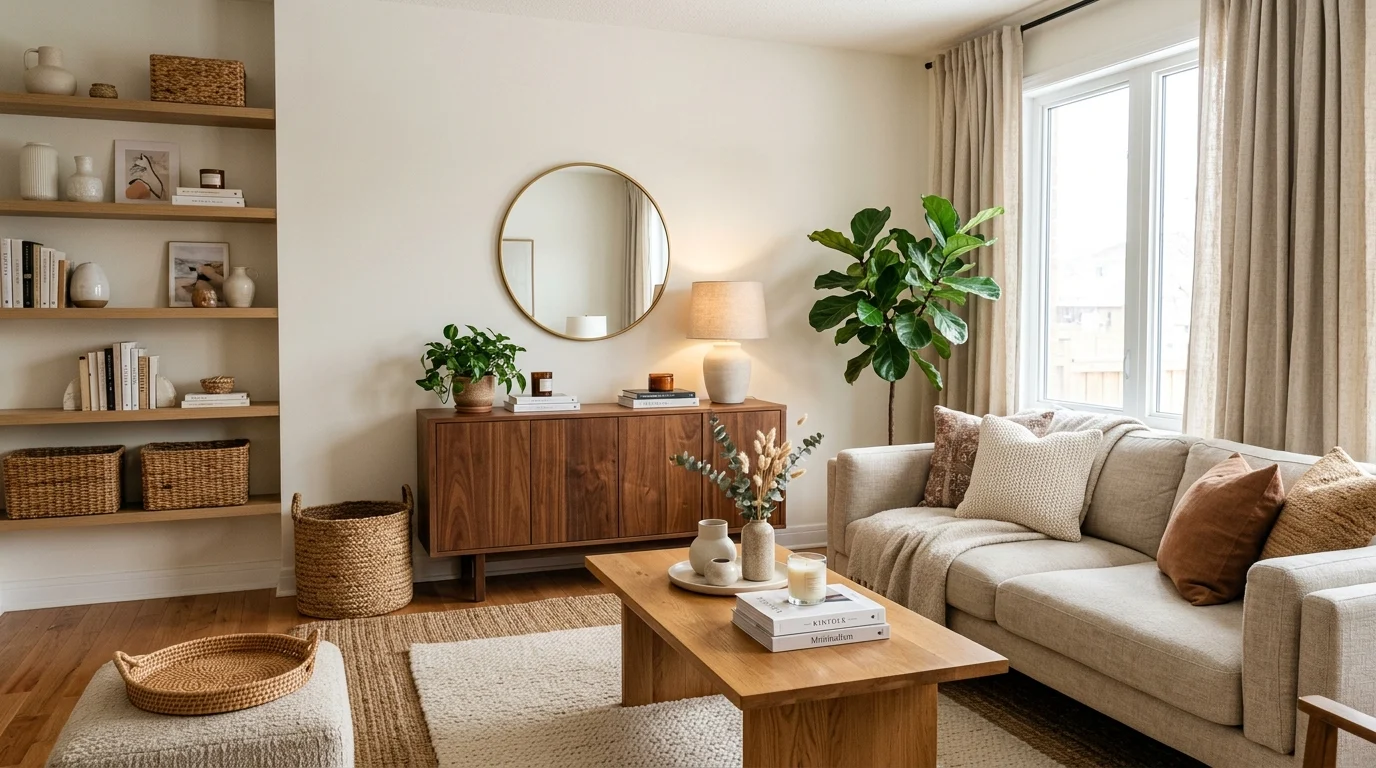
Mixing wood tones used to confuse me so much. I thought every single piece of furniture had to match perfectly or the room would look chaotic. But honestly, homes feel warmer and more natural once different wood finishes start working together instead of looking identical. The trick is balance. Once the tones, textures, and colors feel layered in a softer way, the whole room suddenly looks collected and cozy instead of flat and overly coordinated.
Start With One Dominant Wood Tone
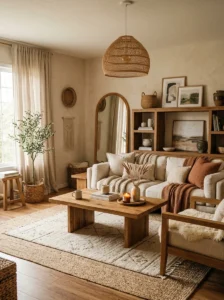
The easiest way to mix wood tones without the room feeling chaotic is choosing one main wood finish first. That dominant tone becomes the anchor for everything else in the space. Honestly, once one wood tone leads visually, the other finishes feel much easier to layer naturally.
I personally love warm medium oak because it blends beautifully with both lighter and darker woods. Floors, dining tables, or larger furniture pieces usually work best as the dominant wood since they already take up the most visual space.
Then smaller accents can slowly introduce variation. A walnut side table, lighter wood shelving, or woven wood decor pieces instantly add depth without competing too heavily.
One thing that really helps is keeping the undertones fairly connected. Warm woods tend to blend best with other warm finishes, while cooler gray-toned woods feel calmer together too.
Pair mixed woods with layered neutral decor, textured rugs, linen curtains, and warm lighting so the room still feels cohesive overall. And honestly, homes almost always feel cozier once the wood tones look collected over time instead of perfectly matched from one furniture set.
Mix Light and Dark Woods for Contrast
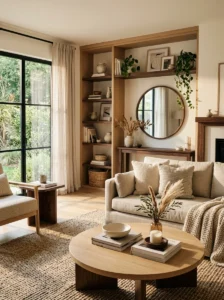
Rooms honestly feel much more interesting once lighter and darker wood tones get layered together. Too much of one identical finish can sometimes make the space feel flat or overly showroom-perfect.
I personally love pairing warm oak furniture with deeper walnut accents because the contrast creates depth while still feeling balanced. A dark coffee table beside lighter wood flooring instantly grounds the room beautifully.
One thing that helps is spreading the darker tones throughout the room instead of keeping all the contrast in one corner. Maybe dark picture frames on the wall, a walnut side chair nearby, or darker floating shelves across the room. The eye naturally moves through the space more smoothly that way.
Neutral layered decor also softens wood contrast beautifully. Cream linen curtains, woven baskets, textured rugs, and soft beige upholstery help tie different finishes together without making the room feel busy.
Natural sunlight during the day changes wood tones constantly too, which honestly makes mixed woods feel even warmer and more relaxed. The space starts feeling layered instead of perfectly staged.
A little contrast usually makes homes feel more alive.
Repeat Each Wood Tone at Least Twice
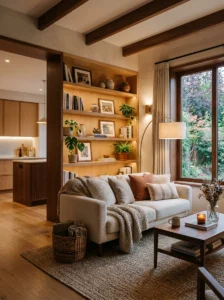
One reason mixed wood furniture sometimes feels messy is because one random finish appears only once in the room. Repeating each wood tone at least two or three times helps everything feel intentional instead of accidental.
I personally love using small decor pieces to quietly repeat wood finishes across the space. A walnut coffee table might connect with walnut picture frames or darker wood lamp bases nearby. Light oak shelving can pair beautifully with woven stools or lighter wood trays elsewhere in the room.
And honestly, repeating tones softly makes the whole room feel calmer because nothing looks visually isolated anymore.
One thing that helps is varying the furniture sizes while repeating the finish. Larger pieces combined with smaller accents keep the room feeling balanced without becoming overly coordinated.
Pair layered woods with warm neutral colors, textured fabrics, and soft lighting so the finishes blend naturally into the overall atmosphere. Cozy homes usually feel connected through repetition and texture more than perfect matching.
The room starts feeling thoughtfully layered once the wood tones quietly echo each other throughout the space.
Use Rugs and Textiles to Soften Wood Contrast
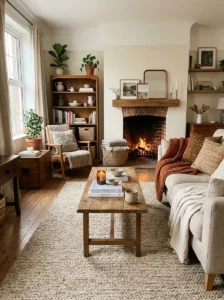
Textiles honestly make mixed wood tones feel much easier to balance. Without softer fabrics and layered textures, strong wood contrasts can sometimes feel too sharp or disconnected visually.
I personally love large neutral rugs beneath mixed wood furniture because they create one softer foundation underneath everything. Cream, beige, taupe, or muted earthy rugs instantly help different finishes blend together naturally.
Linen curtains, boucle chairs, woven baskets, and textured throw blankets also soften the transition between lighter and darker woods beautifully. Warm fabrics create visual breathing room between the furniture pieces.
One thing I always notice in cozy homes is how layered textures quietly balance stronger materials like wood, metal, or stone. Nothing feels overly harsh because the softer fabrics smooth everything out visually.
Natural sunlight during the day also highlights different wood grains and fabric textures in such a warm relaxed way. And honestly, homes feel much cozier once the focus shifts toward overall texture instead of perfectly matching furniture finishes.
Soft layers quietly connect everything together.
Keep the Undertones Consistent
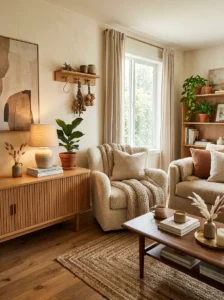
Undertones honestly matter more than exact wood colors when mixing finishes successfully. Two completely different wood shades can still look beautiful together if the undertones feel connected.
I personally try to keep warm woods paired with other warm finishes whenever possible. Honey oak, walnut, chestnut, and warm pine all blend naturally because they carry softer golden or reddish undertones underneath.
Cool gray-toned woods usually work best together too. Mixing cool gray woods with overly orange woods can sometimes feel disconnected unless softer textures help bridge the contrast carefully.
One thing that really helps is testing wood tones together in natural sunlight before fully decorating the room. Lighting changes wood finishes constantly throughout the day, and honestly, some combinations look much softer once natural light hits them.
Pair mixed woods with warm neutral walls, textured fabrics, and layered lighting nearby so the undertones feel even more balanced overall.
And honestly, undertones quietly control whether mixed woods feel cozy and intentional or visually confusing. That little detail changes everything.
Use Black or White Decor to Create Balance
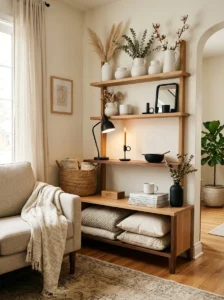
Black and white accents honestly help mixed wood furniture feel much more grounded visually. They create small neutral breaks between different finishes so the room doesn’t start feeling overly busy.
I personally love matte black lighting, white ceramic decor, or soft ivory upholstery layered around mixed wood tones because the contrast keeps everything feeling balanced. Black frames, lamps, or cabinet hardware especially help anchor warmer woods beautifully.
White walls or lighter textiles also give the eye a place to rest when several wood finishes appear in the same space. The room instantly feels calmer once neutral contrast gets layered throughout.
One thing that helps is keeping black accents fairly subtle instead of overwhelming the room. Tiny details usually feel softer and more timeless.
Pair black and white decor with warm wood furniture, woven textures, linen curtains, and layered rugs for an even cozier atmosphere. And honestly, neutral accents often make mixed woods feel more intentional because they visually connect everything together.
Simple contrast quietly creates structure underneath all the warmth.
Don’t Try to Match Wood Floors Exactly
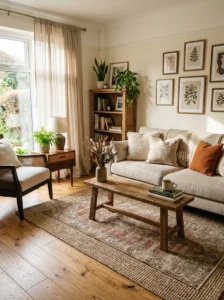
Trying to perfectly match furniture to existing wood floors honestly creates more stress than necessary. Most beautifully layered homes actually include several different wood tones working together instead of one exact finish repeated everywhere.
I personally love treating floors as their own separate foundation. Once the flooring stays fairly neutral visually, furniture finishes can vary much more naturally on top.
Warm oak floors pair beautifully with darker walnut furniture, lighter ash wood shelves, or even painted pieces mixed throughout the room. The key is balance instead of perfect matching.
One thing that really helps is using rugs to soften transitions between the flooring and furniture tones. Textured neutral rugs instantly break up strong contrasts while adding warmth at the same time.
Natural sunlight changes wood flooring constantly throughout the day too, which honestly makes exact matching nearly impossible anyway.
And honestly, homes almost always feel more collected and relaxed once the wood tones stop trying so hard to perfectly coordinate. Real layered spaces usually look better because the finishes vary naturally.
Mix Wood Finishes Slowly Over Time
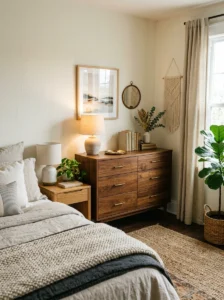
The easiest way to mix wood tones naturally is honestly not buying everything all at once. Rooms usually feel much warmer and more personal when furniture gets collected gradually over time instead of purchased as one perfectly matching set.
I personally love mixing vintage wood pieces with newer furniture because the variation instantly adds depth and character. A thrifted walnut dresser beside lighter oak nightstands somehow feels much more lived in and relaxed.
One thing that helps is keeping the overall room palette fairly soft while the woods vary. Warm neutral walls, textured rugs, linen fabrics, and woven baskets create enough consistency underneath the different finishes.
And honestly, layered homes usually feel cozier because the imperfections and variations make the room feel real instead of overly styled.
Natural textures also help bridge mixed woods beautifully. Woven decor, ceramic pieces, soft upholstery, and matte metals all soften the transitions naturally.
The room slowly starts feeling collected instead of perfectly coordinated. And honestly, that’s usually what makes homes feel most inviting in the end.