When I went back to school part-time a few years ago while still working full-time, I quickly discovered that my old approach to studying, hunched over my kitchen table with whatever books happened to be nearby, simply wasn’t sustainable for the kind of sustained, focused work graduate coursework actually required. I ended up converting an underused corner of my spare room into a genuine, dedicated study space, and the process taught me considerably more about what actually supports focus and motivation than I expected going into what I’d initially assumed would be a fairly simple desk-and-chair setup.
What surprised me most was how much small, specific details affected my actual willingness to sit down and study consistently, not just my productivity once I’d already started, but my genuine motivation to begin a study session in the first place rather than procrastinating or working somewhere less ideal simply because getting started felt like less friction. I’ve since helped my own nephew set up a similar study space for his high school work, and a friend build one for her home-office job that required considerable independent, focused work, which broadened my sense of what specifically matters across different ages and specific study or work needs.
Here are 21 study room ideas, based on real, lived experience rather than just aspirational study space photography, all aimed at creating a space that genuinely makes you want to sit down and actually study, rather than one you find yourself avoiding despite its careful design.
1. Choose a Location With Minimal Distraction
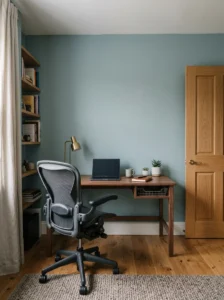
My first attempt at a study space used a corner of my living room, which seemed convenient but ultimately failed because the television, general household activity, and general visual clutter from that shared space made genuine sustained focus considerably more difficult than I’d anticipated when initially choosing this particular location.
I eventually moved my study setup to a more isolated corner of my spare room specifically, away from the main household activity and general visual distraction, which made an immediate, noticeable difference in how easily I could actually settle into focused work once I sat down, compared to my previous, more distraction-prone location choice.
I’d recommend, for anyone setting up their own dedicated study space, prioritizing this location decision above nearly every other consideration on this list, since even the most beautifully designed, thoughtfully furnished study space will struggle to support genuine focus if positioned within a household’s main traffic and activity flow, where distraction and interruption remain constantly, unavoidably present throughout any actual study session.
2. Invest in a Genuinely Comfortable, Supportive Chair
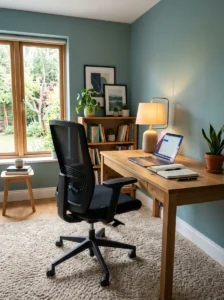
Similar to comfort-prioritizing lessons I’ve applied throughout other dedicated-use room projects, I learned that my study chair mattered more than almost any other single element, my initial budget chair became genuinely uncomfortable during longer study sessions, undermining my ability to sustain focus regardless of how well-designed the rest of my study space actually was.
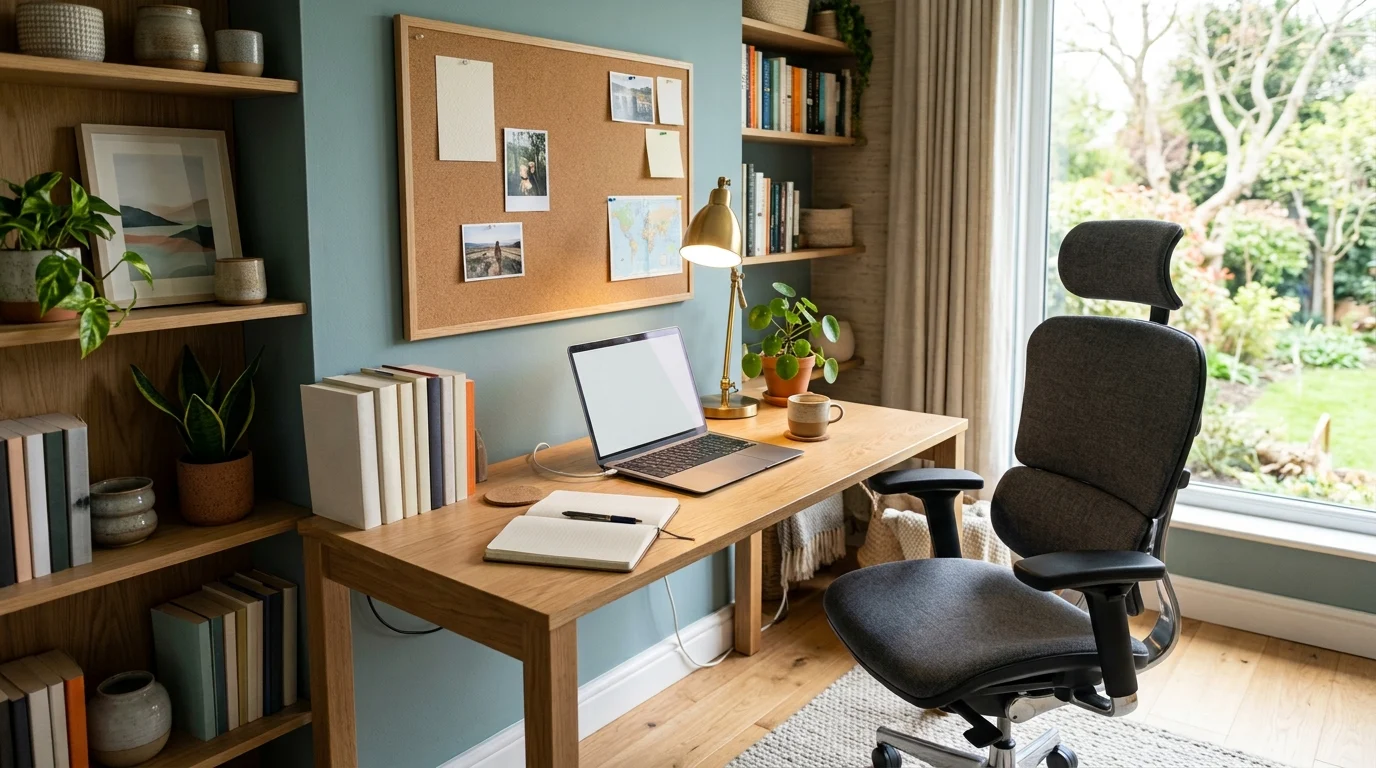
I eventually invested in a proper ergonomic office chair, with genuine lumbar support and height adjustability, testing several options in person specifically for extended sitting comfort before purchasing, rather than judging purely on price or appearance, a mistake my earlier budget chair selection had genuinely represented before I understood how significantly this particular choice affects actual sustained study capacity.
I’d recommend, for anyone setting up a genuine study space, prioritizing chair quality and comfort considerably more than most people initially expect to need, since the physical discomfort an inadequate chair introduces genuinely undermines your ability to sustain focus during longer study sessions, regardless of how motivating or well-organized the rest of your study space’s design and setup might otherwise be.
3. Add Task Lighting That Reduces Eye Strain
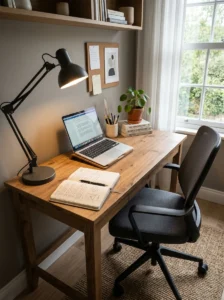
My original study setup relied on a single overhead light that created genuine eye strain during extended reading and writing sessions, a problem I didn’t fully understand until adding a proper, adjustable desk lamp specifically positioned to illuminate my actual work surface without the glare and shadow issues my previous, purely overhead lighting arrangement had created.
I researched proper task lighting positioning specifically, similar to reading lamp placement research I’ve applied throughout other dedicated reading space projects, learning that light should come from the side opposite your dominant writing hand, reducing shadow interference during actual note-taking and reading tasks throughout typical study sessions.
I’d recommend, for anyone setting up their own study space, prioritizing this kind of proper task lighting early in your planning process, since inadequate or improperly positioned lighting genuinely contributes to physical discomfort and fatigue during longer study sessions, undermining your actual capacity for sustained focus regardless of how motivating or well-organized the rest of your specific study space design might otherwise provide.
4. Keep the Desk Surface Genuinely Clear
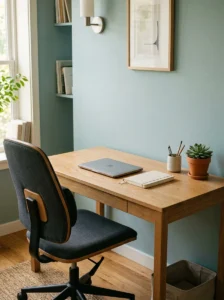
Beyond furniture and lighting, I learned that maintaining a genuinely clear, uncluttered desk surface, similar to decluttering principles I’ve applied throughout several other room projects, significantly affected my actual willingness to sit down and begin studying, since a cluttered desk created a subtle but genuine psychological resistance to starting work each time I approached it.
I established a simple habit of clearing my desk completely at the end of each study session, rather than allowing materials to accumulate for the next session, ensuring I always encountered a genuinely clean, inviting surface each time I sat down to begin new work, rather than facing the small but real friction a cluttered desk consistently introduced during my earlier, less disciplined approach to desk maintenance.
I’d recommend, for anyone struggling with study motivation specifically, considering whether desk clutter might be contributing to this resistance, since this genuinely low-cost, purely habit-based change, simply clearing your desk consistently, provided a more meaningful improvement to my own actual study motivation than several of the more elaborate, purchased additions covered elsewhere throughout this list.
5. Add a Motivational Vision Board or Goal Display
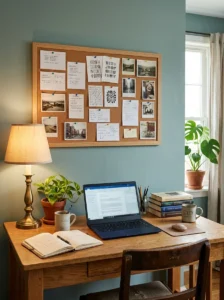
A small addition that genuinely helped sustain my motivation throughout a fairly demanding academic program was a simple cork board positioned above my desk, displaying my specific academic goals, an inspiring quote, and small notes about why I’d chosen to pursue this particular educational path in the first place.
This kind of visible, ongoing reminder of my genuine underlying motivation proved particularly valuable during the inevitable moments when actual motivation felt low despite my study space’s otherwise thoughtful design, providing a small but meaningful nudge back toward remembering my broader purpose during these specific, more challenging moments throughout the longer academic journey.
I’d recommend this kind of goal or motivation display for anyone whose study space serves a longer-term, personally meaningful pursuit specifically, whether academic coursework, a professional certification, or another sustained personal goal, since this visible reminder provides genuine psychological support during the inevitable motivation dips any sustained, demanding pursuit will eventually include throughout its overall duration.
6. Choose a Desk With Adequate Surface Space

My first study desk, chosen partly for its compact footprint within my available space, proved genuinely too small once I actually began working with multiple textbooks, a laptop, and notes spread out simultaneously during actual coursework, creating ongoing frustration that undermined my ability to work efficiently and comfortably.
I eventually replaced it with a considerably larger desk, measuring my actual typical working setup, laptop, open textbook, notebook, before finalizing the new desk’s specific dimensions, ensuring genuine adequate surface space for how I actually needed to work rather than the more compact footprint my initial, space-conscious first choice had provided.
I’d recommend, for anyone setting up their own study space, actually measuring your typical working materials’ combined footprint before choosing desk dimensions, similar to furniture-scaling lessons I’ve applied throughout several other room projects, ensuring your desk genuinely accommodates your actual study habits and materials rather than choosing based purely on available space without this important functional consideration.
7. Add Plants for a Calming, Focus-Supporting Atmosphere
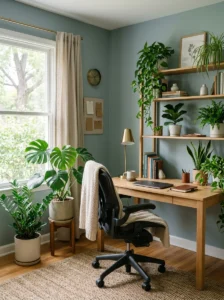
Similar to greenery additions I’ve made throughout several other room projects, I added a couple of low-maintenance plants to my study space specifically, providing genuine organic life and a subtle, calming atmospheric quality that research suggests can support focus and reduce stress during demanding cognitive tasks like extended studying.
I chose varieties specifically suited to my study space’s actual light conditions, prioritizing genuinely low-maintenance options given my already demanding schedule during this particular period, recognizing that a struggling, poorly chosen plant would introduce more stress and visual disappointment than the calming benefit a thriving, appropriately chosen plant would actually provide throughout regular use.
I’d recommend this kind of thoughtful plant addition for anyone setting up their own study space, researching your specific room’s actual light conditions before selecting varieties, since even this relatively simple, low-cost addition can meaningfully contribute to the overall calming, focus-supporting atmosphere a genuinely effective study space benefits from throughout regular, sustained use.
8. Incorporate Noise-Reducing Elements
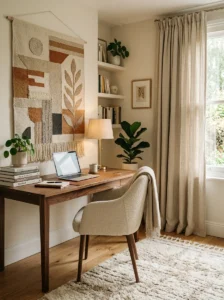
My study space’s location near a shared wall meant I dealt with genuine ambient noise issues during my initial setup, which I addressed through a combination of a soft area rug, fabric wall hangings, and eventually a white noise machine, similar to acoustic-improvement strategies I’ve applied throughout several other focus-dependent room projects covered elsewhere.
This combination approach, addressing both the room’s inherent acoustic qualities through textiles and adding active noise masking through the white noise machine, provided considerably better focus support than either approach alone would have achieved, similar to layered problem-solving strategies I’ve applied throughout several other multi-faceted room challenges.
I’d recommend, for anyone whose study space faces similar ambient noise challenges, considering this same layered approach, addressing your room’s acoustic qualities through textiles while also considering active noise masking tools specifically, since genuine focus during actual studying depends considerably on adequate acoustic conditions that many people underestimate during their initial study space planning process.
9. Add a Whiteboard or Large Note Surface

Beyond my desk’s more limited surface area, I added a substantial whiteboard mounted on an adjacent wall, providing genuine additional space for working through complex problems, mapping out study schedules, or simply brainstorming, distinct from my desk’s more limited surface that couldn’t accommodate this kind of larger-scale visual thinking and organization.
This addition proved particularly valuable for certain types of coursework specifically, mathematics and statistics courses especially, where working through problems on this larger surface genuinely supported my thinking process in a way that my desk’s more limited space and my laptop’s screen alone couldn’t adequately provide throughout these particular kinds of demanding cognitive tasks.
I’d recommend this whiteboard addition specifically for anyone whose studying regularly involves this kind of larger-scale problem-solving, planning, or brainstorming, while acknowledging that this particular addition provides less universal value for study types relying more purely on reading and written note-taking, where a whiteboard’s specific benefits matter somewhat less to your own particular study habits and needs.
10. Choose a Color Scheme That Supports Focus
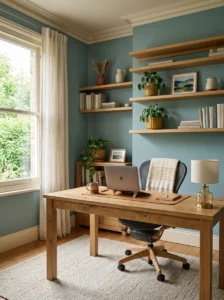
Similar to color psychology research I’ve applied throughout bedroom color projects, I chose a muted, calming blue-green for my study space’s walls specifically, research suggesting this particular color family tends to support concentration and reduce stress better than more visually stimulating, saturated color choices would likely provide throughout an actual demanding study environment.
I balanced this calming base with a few small, more energizing accent colors through my motivational display and a couple of decorative objects, similar to color-balancing strategies I’ve applied throughout several other room color projects, providing enough visual interest to avoid the space feeling flat or uninspiring while maintaining this overall calming, focus-supporting foundation throughout the room’s primary color story.
I’d recommend, for anyone planning their own study space’s color scheme, researching this kind of focus-supporting color psychology specifically, similar to broader color psychology principles I’ve applied throughout other room projects, while also considering your own personal color associations and preferences, since genuine individual response to color varies meaningfully alongside these general research-supported principles.
11. Add a Small Snack and Water Station
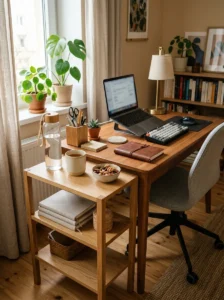
A practical addition that genuinely reduced my study session interruptions was a small shelf specifically stocked with a water bottle and a few healthy snacks, positioned within reach of my desk, eliminating the need to leave my study space and potentially encounter distractions elsewhere in the house during longer study sessions.
This small logistical consideration made a bigger difference than I initially expected, since even brief trips to the kitchen for water or a snack often turned into longer interruptions once I encountered other household activity or distractions along the way, undermining the sustained focus I was specifically trying to protect through my dedicated study space’s overall careful design and setup.
I’d recommend this kind of small, practical addition for anyone setting up their own study space, considering what specific interruptions typically pull you away during your own study sessions and proactively addressing these within your space’s actual setup, rather than assuming willpower alone will prevent these genuinely common, understandable interruptions from occurring during your regular study routine.
12. Incorporate a Comfortable Reading Corner for Breaks
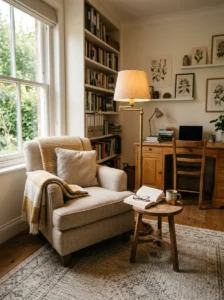
Beyond the main desk area, I added a small, separate reading chair in a different corner of my study space, providing a distinct spot for taking genuine breaks, reading for pleasure, or simply resting my eyes, without needing to fully leave my dedicated study space and risk encountering the household distractions I’d specifically designed this space to avoid.
This zoning approach, similar to zone-defining strategies I’ve applied throughout several other multi-purpose room projects, provided genuine psychological benefit beyond its purely practical function, allowing me to take legitimate breaks while remaining within my focus-supporting environment, rather than needing to choose between continuous, potentially counterproductive study sessions or fully leaving my study space and risking losing momentum entirely.
I’d recommend this kind of dedicated break zone for anyone with adequate space to accommodate it within their own study room, recognizing that genuine, regular breaks actually support sustained cognitive performance better than continuous, unbroken study sessions, making this addition a genuinely functional element rather than a purely optional luxury within an effective overall study space design.
13. Add a Timer or Visual Progress Tracker
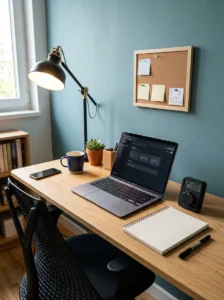
A simple addition that genuinely helped structure my study sessions was a visible kitchen timer, used for implementing focused work intervals with scheduled breaks, similar to established productivity techniques that many students and professionals find genuinely effective for sustaining focus during demanding cognitive tasks over longer periods.
I positioned this timer prominently on my desk specifically, making the passage of time and my current interval genuinely visible throughout each study session, which provided helpful structure and a sense of genuine progress that working without this visible tracking tool hadn’t previously provided during my earlier, less structured approach to managing study session length and break timing.
I’d recommend this kind of visible timer or progress tracking tool for anyone who struggles with maintaining consistent focus during longer study sessions, researching specific interval techniques that might suit your own particular study habits and cognitive preferences, since this kind of structured approach genuinely helped sustain my own motivation and focus throughout what was otherwise a fairly demanding, extended academic commitment.
14. Choose Storage That Keeps Materials Organized
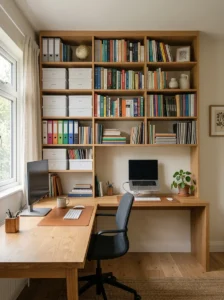
Beyond my desk itself, I added dedicated shelving and a small filing system specifically for organizing course materials, textbooks, notes, and handouts, similar to organizational principles I’ve applied throughout several other storage-focused room projects, ensuring I could quickly locate needed materials rather than wasting study time searching through disorganized piles.
This organizational investment required some genuine upfront time and thought, categorizing materials by course and establishing a consistent filing system, but the ongoing time savings and reduced frustration this organization provided throughout my actual coursework made this investment genuinely worthwhile relative to the alternative, less organized approach I’d initially been using before establishing this more systematic solution.
I’d recommend, for anyone setting up a study space intended for sustained, ongoing use, prioritizing this kind of organizational system early in your planning process, since the cumulative time and frustration this organization saves throughout regular, ongoing use genuinely justifies the upfront investment required to establish a functional, genuinely useful organizational system for your specific study materials and needs.
15. Add Personal Touches That Make the Space Feel Like Yours
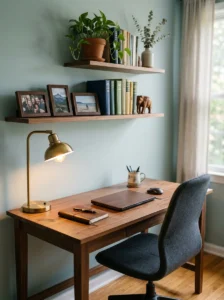
Beyond purely functional elements, I incorporated a few genuinely personal touches throughout my study space, a photo from a meaningful trip, a small memento connected to my reasons for pursuing this particular academic path, similar to personal-touch principles I’ve applied throughout several other room projects, ensuring the space felt authentically mine rather than a purely generic, could-belong-to-anyone study setup.
This kind of personal connection to the space genuinely mattered for my sustained motivation throughout a fairly demanding, multi-year academic commitment, providing small, meaningful reminders of my broader purpose and personal story each time I sat down to study, beyond what purely functional furniture and organizational systems alone could provide throughout this longer, sustained pursuit.
I’d recommend this kind of genuine personalization for anyone setting up their own dedicated study space, resisting the urge to create a purely generic, Pinterest-inspired setup without this important personal dimension, since these smaller, meaningful details ultimately contribute to whether the space genuinely feels like somewhere you want to spend time, rather than simply an efficiently functional but somewhat impersonal work environment.
16. Position Your Desk to Face a Window if Possible
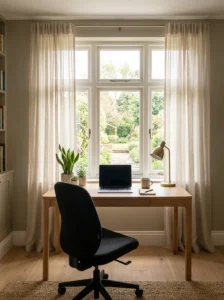
I specifically positioned my desk to face my study space’s window, providing access to natural light and a pleasant view during study breaks, rather than facing a blank wall, which research and my own direct experience both suggested provides genuine psychological benefit compared to a more visually confined, wall-facing desk orientation.
This positioning choice did require some adjustment to avoid screen glare on my laptop during certain times of day, which I addressed through simple sheer curtains that diffused direct sunlight without eliminating the window’s overall pleasant natural light and view benefit throughout my regular study sessions and general use of the space.
I’d recommend this window-facing desk orientation for anyone with a study space including a window option, similar to natural light prioritization I’ve applied throughout several other room projects, while also planning for appropriate glare management through window treatments specifically, ensuring you can genuinely benefit from natural light and view without this introducing new problems for actual screen-based study work.
17. Add a Comfortable Temperature Control Solution
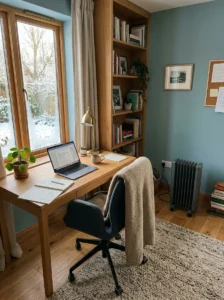
A practical detail that genuinely affected my ability to sustain focus was my study space’s temperature, which ran noticeably cooler than the rest of my house given its specific location, and adding a small, dedicated space heater resolved this issue and meaningfully improved my actual comfort and focus capacity during longer study sessions, particularly during colder months.
This kind of practical, environmental consideration is easy to overlook during the more visually focused aspects of study space planning, but genuine physical comfort, including appropriate temperature, significantly affects sustained cognitive focus and general willingness to remain in a space for extended study periods, beyond what purely aesthetic or organizational considerations alone can address.
I’d recommend, for anyone setting up their own study space, genuinely assessing your specific room’s temperature and comfort throughout different seasons and times of day, addressing any significant discomfort through appropriate heating, cooling, or ventilation solutions, since this practical environmental consideration matters just as much for sustained study capacity as the more commonly discussed furniture and lighting elements covered throughout the rest of this list.
18. Choose Wall Art or Decor That Inspires Rather Than Distracts
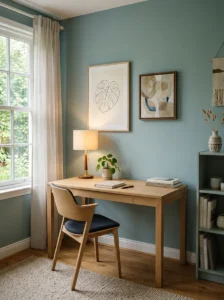
I learned through direct experience that overly busy, visually complex wall art near my study desk actually undermined my focus during demanding cognitive tasks, and I eventually replaced a more elaborate, detailed print with simpler, more calming artwork specifically chosen to provide gentle visual interest without becoming a genuine source of distraction during actual studying.
This distinction, between inspiring versus distracting decorative choices, matters more specifically within a study space than it might in a purely social or relaxation-focused room, since the space’s core function genuinely depends on supporting sustained focus, making this particular consideration worth more deliberate attention than purely aesthetic preference alone might suggest during your initial decorating decisions.
I’d recommend, for anyone selecting art or decor for their own study space specifically, testing your chosen pieces during actual study sessions before finalizing their placement, similar to genuine trial-and-error approaches I’ve applied throughout several other room projects, ensuring your decorative choices genuinely support rather than inadvertently undermine your specific study space’s core focus-supporting function and purpose.
19. Add a Dedicated Charging Station for Devices
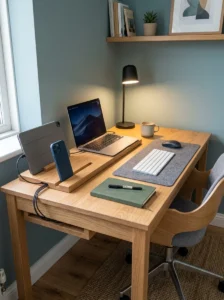
A small but genuinely useful addition to my study space was a dedicated charging station for my laptop, phone, and other devices, positioned specifically to keep these charging cables organized and out of the way, similar to charging station concepts I’ve applied throughout several other room projects, rather than a tangled mess of cables competing for space on my actual desk surface.
This organizational detail, while small, contributed meaningfully to my desk’s overall clean, focus-supporting appearance, similar to the decluttering principles discussed earlier throughout this list, ensuring my genuinely necessary technology remained charged and accessible without creating the visual clutter that a less organized charging solution would have introduced into my carefully considered study space design.
I’d recommend this kind of dedicated charging station for anyone whose studying involves regular device use, positioning it thoughtfully to keep cables organized and your primary desk surface genuinely clear, similar to broader clutter-management strategies covered throughout this list, ensuring this necessary technology integration doesn’t undermine your study space’s overall clean, focus-supporting design and daily function.
20. Establish Clear Boundaries With Household Members

Beyond the physical space itself, I found that establishing genuine, clear boundaries with my own household about my study space and specific study hours mattered as much as any physical design element covered throughout this list, since even the most thoughtfully designed space struggles to support genuine focus if regularly interrupted by household members unaware of or not respecting these boundaries.
I specifically communicated my typical study schedule and the importance of minimal interruption during these periods, which required some genuine, direct conversation but ultimately provided meaningful protection for my actual focused study time, beyond what the physical space’s design and organization alone could provide without this important social and communication component.
I’d recommend, for anyone sharing a household while establishing their own dedicated study space, having this kind of direct, clear conversation about your specific needs and boundaries, recognizing that this social dimension matters just as significantly as the physical space’s actual design and furnishing throughout your genuine ability to sustain focus and protect dedicated study time within a shared living environment.
21. Regularly Reassess and Adjust Your Space
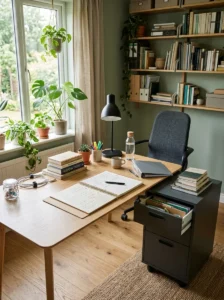
The final and perhaps most important lesson from my own study space project, developed and refined throughout a multi-year academic program, is that this particular space benefits from genuine, ongoing reassessment and adjustment, rather than being designed once and never meaningfully revisited despite your actual, evolving study needs and habits throughout an extended educational or professional pursuit.
I made several adjustments to my own study space over the following years, addressing new frustrations as they emerged and incorporating new strategies as my specific coursework and study habits evolved, rather than assuming my initial setup would remain perfectly suited to every subsequent phase of what became a genuinely lengthy, evolving academic commitment throughout multiple years of study.
I’d recommend, for anyone setting up their own study space, planning for this kind of ongoing reassessment from the very beginning, remaining genuinely open to adjusting elements that aren’t working as well as anticipated, rather than treating your initial setup as a permanently fixed, unchangeable configuration that shouldn’t evolve alongside your own genuinely changing study needs and habits throughout whatever extended pursuit your particular study space specifically supports.
Frequently Asked Questions
What’s the most important element of an effective study space? Based on real experience, location matters most, choosing a genuinely quiet, low-distraction area, followed closely by chair comfort and proper task lighting, since these fundamentals affect your actual capacity for sustained focus more than purely decorative choices.
How do I stay motivated to actually use my study space regularly? Personal touches connecting the space to your genuine reasons for studying, along with maintaining a consistently clear, inviting desk surface, both genuinely help reduce the psychological friction that can undermine regular use of even a well-designed study space.
Is it worth investing significant money in a study space setup? Prioritizing a few key items, chair, lighting, desk size, tends to provide the best return on investment, while many other beneficial elements, decluttering, personal touches, organization systems, cost relatively little beyond genuine time and thought.
How do I create a study space in a shared or small living situation? Even a small, clearly defined corner can work well if you address the fundamentals, minimal distraction, comfortable seating, adequate lighting, and establish clear boundaries with anyone you share your living space with regarding your specific study time and needs.
Final Thoughts
That initial, somewhat improvised kitchen-table studying approach that clearly wasn’t sustainable ended up leading me toward a genuinely thoughtful study space project that taught me considerably more about focus, motivation, and sustained productivity than I expected from what I’d initially assumed would be a fairly simple desk-and-chair setup. The core lesson across all 21 of these ideas is that genuine study motivation depends on addressing both practical fundamentals, comfort, lighting, organization, and psychological factors, personal connection, minimal friction, clear boundaries, working together throughout a thoughtfully designed space. Build these elements thoughtfully into your own study space, and you may find, as I did, that you genuinely look forward to sitting down and getting to work, rather than dreading or avoiding it.