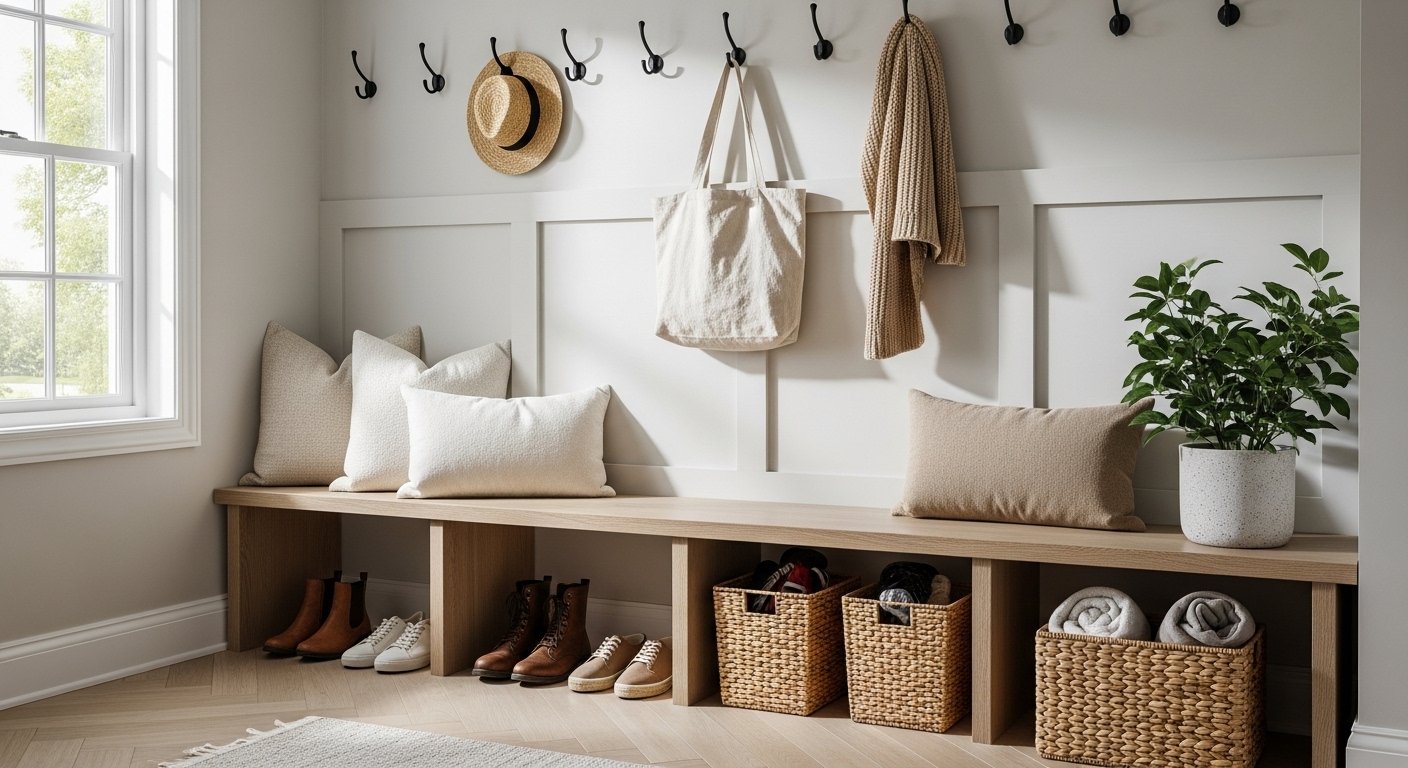
The entryway is the hardest-working zone in the home — and usually the first to dissolve into clutter. Shoes, bags, jackets, and mail land there daily. But with a few smart mudroom ideas, even a small entry can feel calm, organized, and welcoming. These 12 mudroom ideas cover benches, hooks, hidden storage, and styling tricks that keep everyday chaos contained.
1. Built-In Bench with Hidden Storage

A built-in bench quietly solves a lot of clutter problems. You get a place to sit while putting on shoes, plus hidden storage underneath for things you don’t want lying around — think baskets or lift-up lids for seasonal items. Add soft cushions so it feels inviting, not just practical. It works especially well in small entryways where every inch matters.
2. Wall Hooks for Everyday Essentials

Hooks seem simple, but they make a huge difference. Install a row of sturdy wall hooks at different heights so both adults and kids can reach them. Jackets, bags, even hats get hung instead of tossed on a chair. Choose wood or matte black finishes to suit your style — and on busy mornings, everything is right where you need it.
3. Open Cubbies for Easy Access

Open cubbies bring a structured yet relaxed look to a mudroom. Give each family member a section for shoes, bags, or small baskets. It’s not about perfection — it’s about containment. Light wood or white finishes keep the area from feeling heavy, and since everything is visible, staying organized takes less effort.
4. Slim Console for Narrow Entryways

Not every home has room for a full mudroom. A slim console table against the wall — with a tray for keys and a small basket underneath for shoes — brings just enough structure to tighter spaces. Keep it simple so it doesn’t crowd the walkway, and hang a mirror above to open things up visually.
5. Mudroom Lockers for a Structured Look

Lockers give each person a dedicated section for coats, bags, and shoes without everything mixing together. Add name labels or small baskets inside for smaller items — especially useful for families. The look is structured but stays warm with wood tones or soft paint colors, and everything having a place makes the space feel settled.
6. Baskets for a Soft, Flexible Setup

Baskets are one of the easiest ways to keep things tidy without making the space feel stiff. Slide them under a bench or into cubbies for shoes, scarves, and items without a clear home. Woven textures add warmth, and when things get messy, everything tucks inside quickly.
7. Floating Shelves for a Light Look

Floating shelves keep a mudroom feeling open instead of crowded. Install a couple above a bench for small storage boxes, decor, or daily essentials, keeping the styling minimal. A small plant or framed photo adds personality without clutter — a nice balance of function and style that uses zero floor space.
8. Shoe Storage That Stays Hidden

Shoes take over an entryway when left out. A closed cabinet or storage bench keeps them out of sight and instantly makes the space feel cleaner. Choose a finish that blends with the wall color so it recedes visually — a small change with big impact for multi-pair households.
9. Hooks and Shelf Combo Wall

A shelf above a row of hooks adds flexibility: coats and bags hang below while bins or decor sit above. The layered look feels intentional without being complicated. Keep it minimal or add personal touches like photos or small plants — practical, but styled.
10. Mudroom with a Mirror for Openness

A mirror above a bench or console makes even a small mudroom feel more open by reflecting light around the space — plus a quick check before heading out. Choose a simple frame that matches your decor; it doesn’t need to be large to change how the whole area feels.
11. Color-Coordinated Storage for a Clean Look

A consistent palette — two or three tones like white, beige, and soft gray — makes a mudroom feel organized even when it isn’t perfect. Matching baskets, hooks, and storage boxes create a calm, cohesive look where everyday items blend in instead of adding visual noise.
12. Small Mudroom Corner Setup

Even a small corner works as a mudroom with the right setup: a compact bench, a few hooks above, a basket underneath. Keep everything close together so it feels intentional, and use light colors to avoid a cramped feeling. It’s not a full mudroom, but it keeps things organized — sometimes that’s all you need.
Final Thoughts
An organized mudroom isn’t about perfection — it’s about giving every everyday item a designated home. Start with the fundamentals (a bench, hooks, and shoe storage), then layer in baskets, color coordination, and personal touches. Even a single well-planned corner can transform how the entire entry feels.
Three More Mudroom Problems, Solved
The twelve ideas above build the bones of the room. The three below deal with the mess that still sneaks in afterwards: wet shoes by the door, keys that vanish, and baskets that quietly turn into junk drawers. Each one is cheap, quick to set up, and easy to undo if it does not suit your household. If you want the wider view first, our roundup of entryway ideas that make a strong first impression shows how these small zones fit into the hall as a whole.
13. A Washable Runner That Catches Dirt at the Door
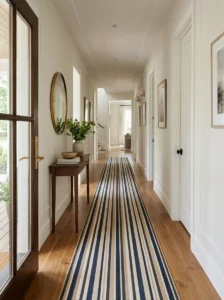
A bare floor in front of the door takes the full hit of grit, rain and mud, and then feet carry it through the rest of the house. A washable runner laid from the door towards the bench gives shoes a place to shed dirt before anyone steps further in. Choose a low, flat weave that the door can swing over without catching, and pick a pattern with a few tones in it, because a plain pale runner will look tired within a week in a busy house.
Set it up in three moves. Measure the door swing first and leave a finger’s width of clearance. Lay a non-slip pad underneath so the runner does not creep across the floor. Then shake it outside twice a week and wash it when the pattern starts to look dull rather than waiting until it looks dirty. One mistake to avoid: buying a runner that is too short. It should cover the first three or four steps into the house, not just the doormat patch. The same thinking helps outside, too — these small front porch ideas keep a lot of dirt from ever reaching the door.
14. A Shallow Tray for Keys, Post and Sunglasses
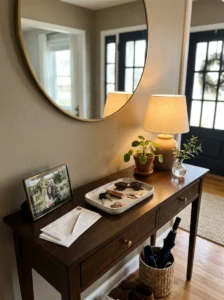
Most mudroom clutter is small: keys, loose post, sunglasses, a hair tie, coins tipped out of a pocket. None of it belongs on the bench cushion. A shallow tray with a raised lip, no bigger than a hardback book, gives those bits one landing spot on top of the console or a shelf. When the tray is full, that is your signal to sort it, which is a far easier rule to keep than tidying the whole entryway.
Put the tray where your hand naturally drops things as you walk in, usually within one step of the door and at about elbow height. Keep a tiny second dish beside it for outgoing things only: letters to post, a library card, the spare key a neighbour is collecting. The mistake to avoid is choosing a deep box instead. Deep containers hide things and invite dumping; a shallow tray stays honest because you can see everything in it at a glance.
15. One Labelled Basket per Person
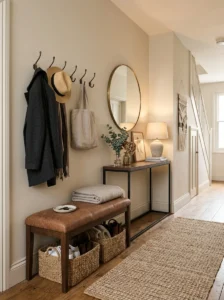
Baskets already appear earlier in this list, but they work much harder when each person owns exactly one. Give every household member a labelled basket — a luggage tag, a clip-on label, or a name written on masking tape inside the rim all work — and agree that anything of theirs found loose in the mudroom goes into their basket. School bits, gloves, chargers and dog leads stop migrating across the room because each thing gains an owner and an address.
Start with baskets that match in size even if the contents do not, because equal sizes stack and line up neatly under a bench. Once a month, tip each basket out and carry anything that has not been touched back to its proper room. If your entry doubles as the laundry route, the layout notes in our guide to mudroom and laundry room combo ideas are worth a look before you fix anything to the wall.
The Habit That Keeps an Entryway Honest
I judge a mudroom on a wet Tuesday, not on the day it was tidied for a photo. The habit that has held up best in practice is a two-minute reset at the same time each day: shoes paired and put away, coats onto hooks, the tray cleared of anything that does not belong there. It sounds almost too small to matter, yet it stops the slow drift that turns an organised corner back into a pile. My other rule is just as plain: nothing new earns a place by the door until something else leaves. Entryways fill up one ‘just for now’ at a time, and that rule is the only thing I have found that quietly stops it.
Mudroom Questions People Ask Most
How big does a mudroom need to be?
It does not need to be a room at all. A stretch of wall about 1.2 metres wide can hold hooks, a narrow bench and a runner. What matters is the order things happen in: somewhere to sit, somewhere to hang, somewhere for shoes to go. Bigger spaces simply hold more of each.
What flooring survives a mudroom best?
Porcelain tile, luxury vinyl and sealed stone cope best with wet shoes and grit. Timber can work if it is well sealed, but add a washable runner by the door and wipe up standing water quickly. Avoid pale grout if you can; a mid-grey hides the everyday marks far better.
How do I fit a mudroom into a rental?
Lean on things that need no screws: an over-door hook rail, a freestanding bench with baskets under it, a shoe cabinet that stands on its own, and a runner to mark out the zone. Every idea in this extra section can be packed up and taken with you when you move. For wider whole-home thinking, browse our home interior design ideas for renters and owners alike.
How many hooks does a family need?
Two per person is a workable rule — one for a coat and one for a bag — plus a spare hook for guests. Mount a lower row at child height instead of expecting small arms to reach the adult row. Hooks that get used are the ones within easy reach; the rest become decoration.