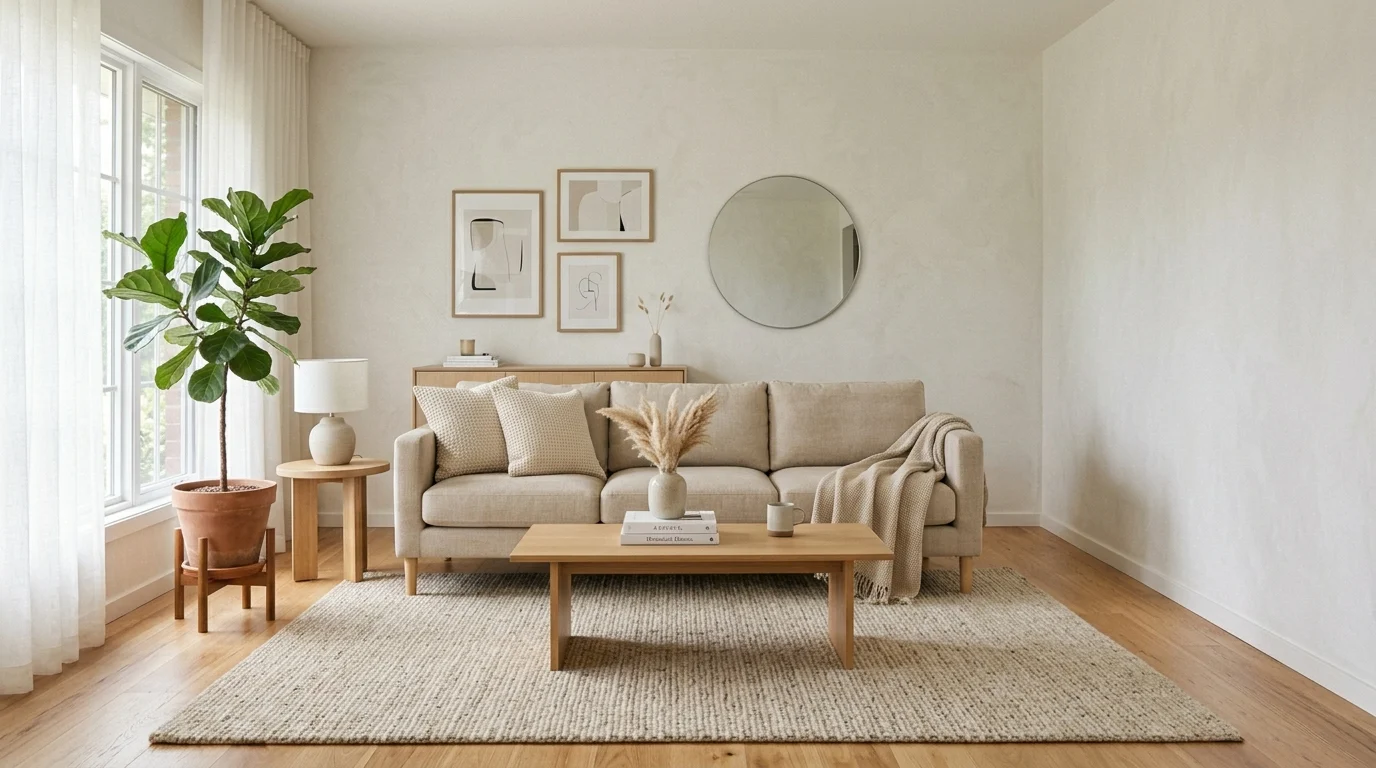
A minimalist living room isn’t about having less for the sake of it. It’s more about keeping what feels right and letting everything else go.
The space feels lighter, easier to sit in, easier to think in.
And once it’s done well, you really don’t miss the extra stuff.
1. Neutral Base with Soft Layers
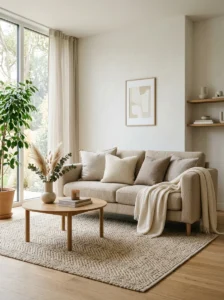
Start with a neutral base, something like off-white walls and a light beige sofa. From there, build gently. Add a soft rug underfoot, maybe in a slightly warmer tone, and a couple of cushions with subtle texture. Nothing loud. The idea is to create depth without adding visual noise. A linen throw folded casually on the side can make the whole setup feel lived in. It doesn’t look empty, just calm. And that balance is what makes minimalist living room ideas feel comfortable instead of cold.
2. Keep Furniture Low and Simple
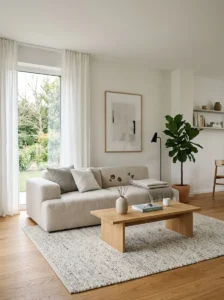
Low-profile furniture makes a room feel more open without changing the size at all. A sofa that sits closer to the ground, a simple coffee table with clean edges, and maybe a compact media unit. Avoid bulky shapes. When everything stays visually lower, the ceiling feels higher. It’s a small trick, but it works. The room breathes a little more. And honestly, it feels easier to relax in a space that isn’t crowded with heavy pieces.
3. Use One Statement Piece Only
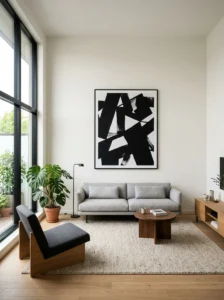
Instead of filling the room with decor, choose one piece that stands out. It could be a large artwork, a textured wall, or even a unique coffee table. Then let everything else stay quiet. This approach keeps the space interesting without making it busy. The eye naturally knows where to look. And it gives the room a bit of personality without losing that clean, minimalist feel. Sometimes less really does make a stronger impression.
4. Let Natural Light Do Most of the Work
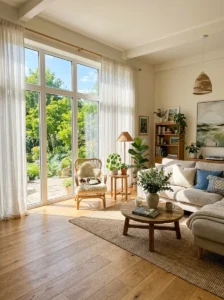
Natural light changes everything in a minimalist living room. Keep window treatments light—sheer curtains or nothing at all if privacy allows. Let the daylight move through the space freely. It softens edges and makes neutral tones feel warmer. Even a simple room looks more complete when it’s filled with light. And during the day, you won’t need much else. It’s one of the easiest ways to make a space feel open without adding anything.
5. Hidden Storage for a Clean Look
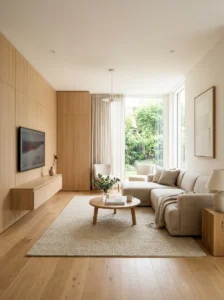
Clutter is what usually breaks a minimalist look. So hidden storage becomes really important. Use furniture with built-in storage like ottomans or cabinets with closed fronts. Keep everyday items tucked away but easy to reach. The surface areas stay clean, which makes the whole room feel more peaceful. It’s not about owning less, just about keeping things out of sight. And that makes a big difference in how the space feels.
6. Soft Textures Instead of Bold Decor
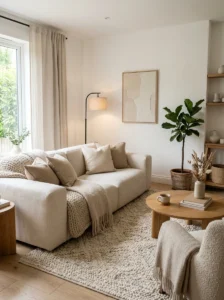
Minimal doesn’t mean flat. Instead of adding more items, bring in texture. A woven rug, a boucle chair, or a soft fabric sofa can add depth quietly. Even a matte ceramic vase can shift the feel slightly. Stick to similar tones but different finishes. That way, the room feels layered without looking busy. It’s subtle, but it keeps the space from feeling too plain.
7. Stick to a Limited Color Palette
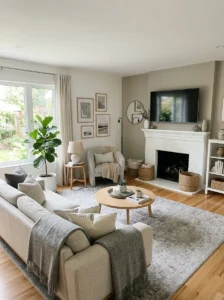
Keeping colors consistent helps everything feel connected. Choose two or three main tones and repeat them across the room. Maybe white, beige, and a soft grey. You can add a small accent if needed, but keep it minimal. This approach avoids visual clutter and makes the room feel more put together. It’s easier on the eyes. And it helps maintain that calm, simple look.
8. Floating Furniture for More Space
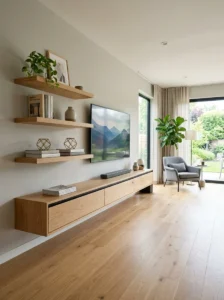
Floating furniture, like wall-mounted shelves or a media console, keeps the floor visible. That alone makes a room feel bigger. It’s especially useful in smaller spaces. The design looks lighter, less grounded. And cleaning becomes easier too, which is a small bonus. It’s a simple shift, but it changes how the room is perceived.
9. Minimal Decor with Meaning
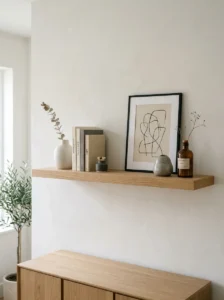
Instead of filling shelves with random items, choose a few pieces that actually matter. A book you enjoy, a simple sculpture, or a small plant. Keep spacing between them. Let each item stand on its own. It feels more intentional. And the room looks cleaner without feeling empty. That’s usually the sweet spot.
10. Light Wood for Warmth
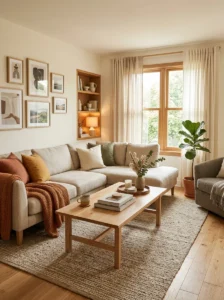
Light wood tones can soften a minimalist space instantly. A wooden coffee table or side table adds warmth without adding visual weight. It balances out white and neutral tones nicely. The grain brings a natural feel that doesn’t need extra styling. It’s simple, but it keeps the room from feeling too stark.
11. Simple Lighting Layers
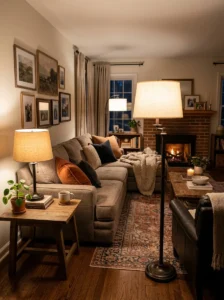
Instead of one overhead light, use a mix. A floor lamp in one corner, maybe a small table lamp near the sofa. Keep the designs simple. Warm light works best here. It creates a softer atmosphere in the evening. The room feels more relaxed, less harsh. And it adds depth without adding clutter.
12. Keep Walls Mostly Empty
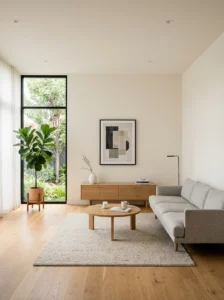
Empty walls can feel intentional when done right. Instead of filling every space, leave some areas blank. Add one or two pieces of art, but give them room. This creates balance. The room doesn’t feel crowded. And it highlights what’s there instead of overwhelming it.
13. Add a Single Indoor Plant
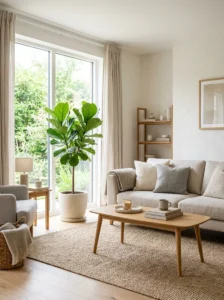
One well-placed plant can bring life into a minimalist living room. Choose something simple, like a tall leafy plant in a neutral pot. Place it near a window or in an empty corner. It adds color without disrupting the palette. And it softens the overall look just enough.
14. Keep Layout Open and Uncluttered
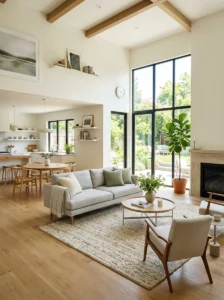
The way furniture is arranged matters just as much as what you choose. Leave space between pieces. Avoid pushing everything together. Let the layout feel open. It makes movement easier and the room more breathable. Even small living rooms can feel bigger when the layout is simple and not overcrowded.
15. One Large Rug to Hold the Seating Together
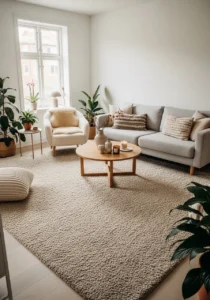 A minimalist room can still feel unfinished when the sofa, chairs and coffee table seem to float apart from each other. One large, plain rug solves that quietly. It gives the seating a shared base, softens a hard floor and lets you keep the rest of the room bare without it feeling empty. Choose a flat weave or a low pile in a tone close to the floor or the sofa, with no busy border fighting for attention.
To size it, measure the seating group first, then pick a rug that reaches at least under the front legs of the sofa and any chairs. Leave a border of bare floor, roughly 20 to 30 centimetres, between the rug edge and the walls so the room still breathes. Lay it, sit down, and check the coffee table does not wobble on a thick edge. The common mistake is buying too small: a postage-stamp rug makes good furniture look lost. More rug-led rooms sit inside our living room ideas hub, alongside the rest of the looks in this list.
16. Hide the Tech and Give Every Cable a Door
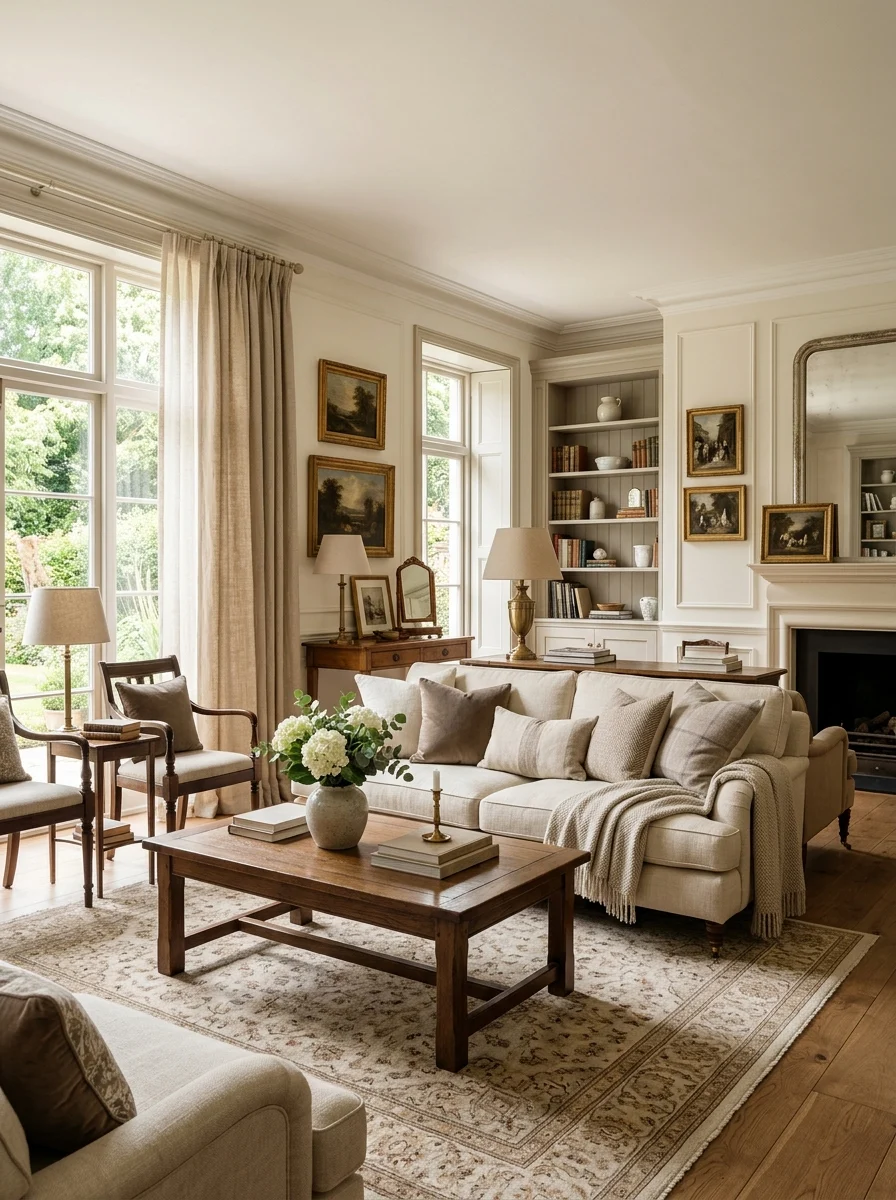 Television cables, chargers, remotes and controllers undo a calm room faster than any colour choice. None of them is ugly on its own. Together, trailing across a sideboard, they become the first thing you see when you walk in. A low, closed sideboard or media unit gives that whole tangle a door to disappear behind, which is why this one piece earns its floor space in a room that otherwise owns very little.
Set it up in one afternoon. First, unplug everything and group the cables by device, tying each bundle loosely with a velcro strap. Second, feed them through the back of the unit or into a simple cable box so only one plug reaches the wall. Third, give remotes and chargers one drawer or basket inside, always the same one, so putting them away needs no thought. Avoid sealing a power strip inside a closed box with no airflow, and never run cables under a rug where feet will wear through them. The Scandinavian living room ideas in this collection treat storage as part of the styling, not an afterthought.
17. A Reading Corner That Is Not Aimed at the TV
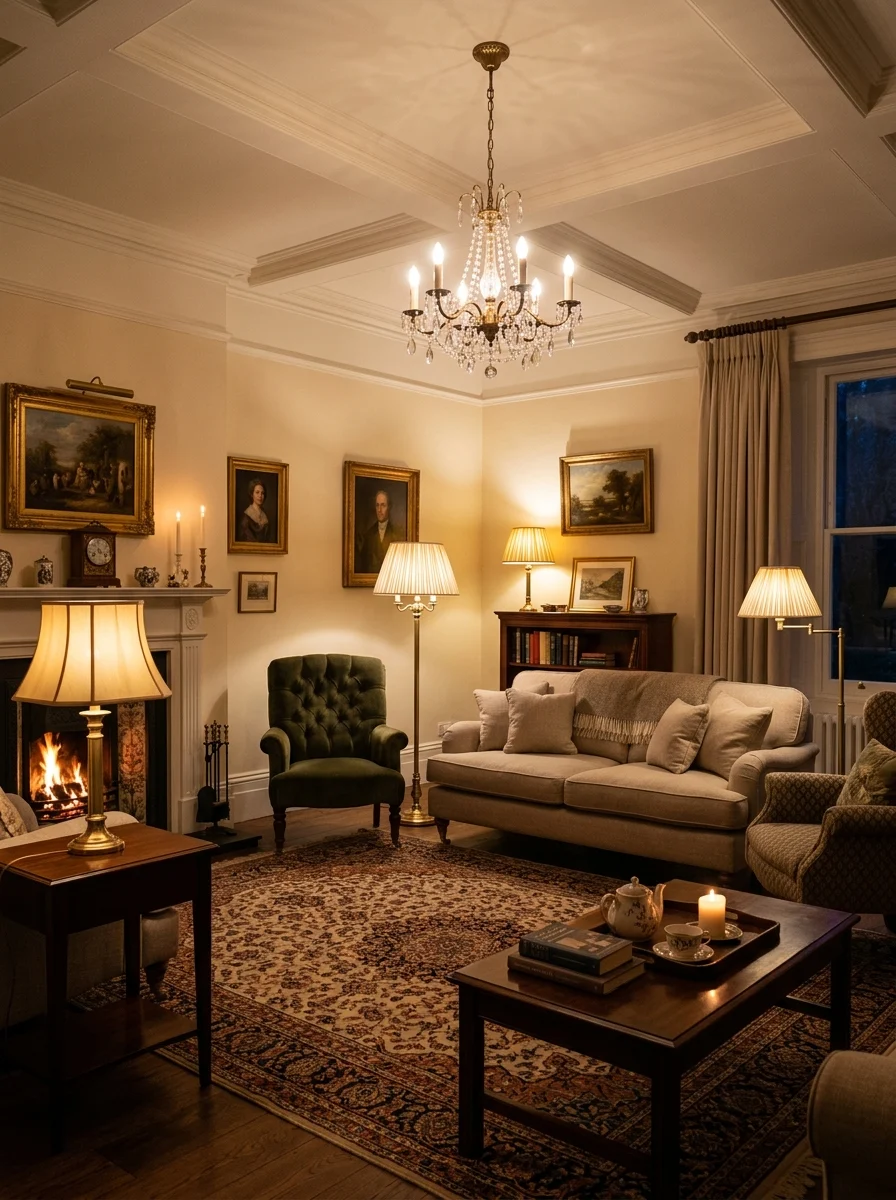 Every living room benefits from one seat that is not aimed at the television. A single chair, a small side table and a lamp in a quiet corner give the room a second job — somewhere to read, drink coffee or sit with a laptop — while adding almost nothing to the visual load. Keep the pieces light in frame and colour so the corner reads as calm, not as extra furniture squeezed into a gap.
Place the chair where daylight falls during the day, angled slightly into the room rather than pushed flat against the wall. Add the table within easy reach, big enough for a book and a cup and nothing more, then set the lamp beside the chair so light falls over your shoulder and onto the page. Two small mistakes ruin it: a deep, low chair you cannot get out of gracefully, and a lamp that shines straight into your eyes. For a warmer take on the same three pieces, the Japandi home ideas here work in wood and linen.
The Ten-Minute Reset I Trust
When a room like this starts to drift, I do not redecorate it. I set a timer for ten minutes and put things back where they already belong: cushions straight, remotes in their drawer, post off the sideboard, one basket carried out for anything that lives in another room. Working this way taught me something plain. The calm in these photos is not really about owning less. It is about every object having a home you can reach without thinking, and about spotting the one item that never gets put away. That item, not the room, is the problem. It is also why I keep the walls almost bare and let a single piece from our wall art ideas do the talking.
Minimalist Living Room Questions, Answered
How many colours should a minimalist living room have?
Two or three main tones is a workable limit, repeated across the sofa, walls, rug and wood so nothing stands alone. You can add one accent colour, but let it appear in small places — a cushion, a book spine, a plant pot — rather than on a whole wall or a large piece of furniture.
Can a minimalist living room still feel cosy?
Yes, and warmth is the part people skip. Texture does the job that extra objects would do elsewhere: a woven throw, a boucle cushion, light wood, a rug underfoot and lamps instead of one bright ceiling light. If the room feels cold, add a softer layer before you add another item.
What should I remove first?
Start with duplicates and with anything that lives on the floor. Two side tables where one works, three remotes for one television, decor you kept only because it was a gift. Clearing surfaces and floor edges changes the feel of the room in a single pass, before you spend anything.
Does a minimalist living room have to hide the television?
No. A television is fine on a low unit or mounted flat on the wall. What breaks the look is the tangle around it — cables, boxes and chargers on show. Route the cables behind the unit, keep the screen off when you can, and let it read as one dark rectangle among the furniture.