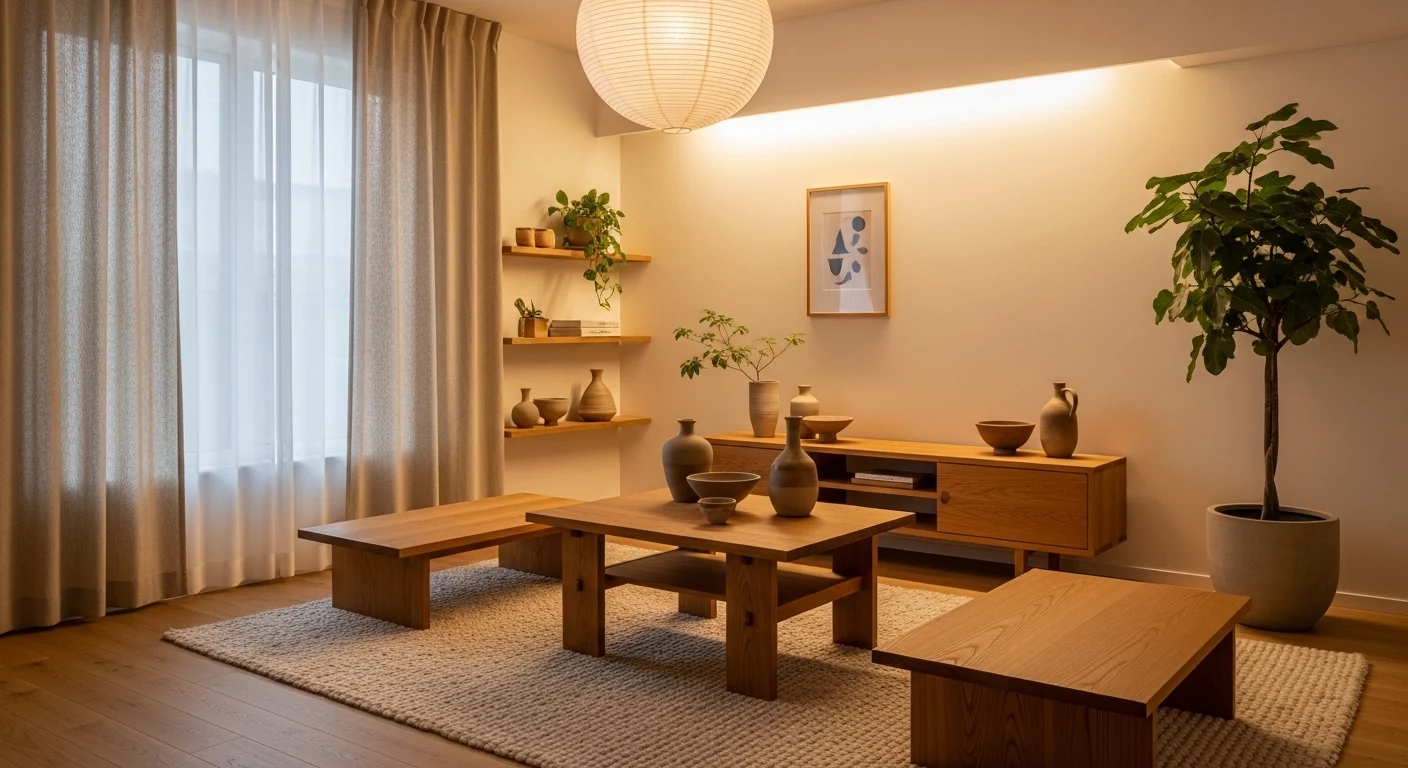
Japandi homes always seem to feel calm without looking empty. The mix of soft minimalism and warm natural textures makes rooms feel peaceful but still comfortable to live in.
Nothing feels too perfect or overly styled.
And honestly, that relaxed simplicity is probably why people love the look so much.
1. Use Soft Neutral Color Layers
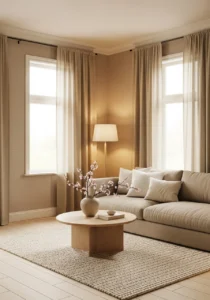
Japandi interiors usually stay grounded in soft earthy shades like warm white, beige, sand, and muted grey. Layering similar tones together keeps the room feeling calm instead of flat. Linen curtains, textured rugs, and matte walls all help add quiet depth without needing bold colors. The palette feels airy but still warm enough to feel inviting every day. It’s simple, though never cold.
2. Choose Low Wooden Furniture
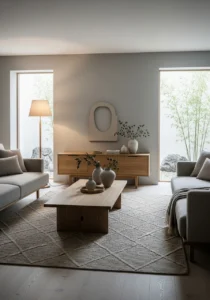
Low-profile furniture creates that relaxed Japandi feeling almost instantly. A low oak coffee table, platform bed, or simple bench helps rooms feel more open and balanced. Natural wood finishes work best because they add warmth without making the space heavy. Keep the shapes clean and minimal, but not overly sharp. The room should still feel comfortable enough to actually relax in.
3. Keep Decor Minimal but Meaningful
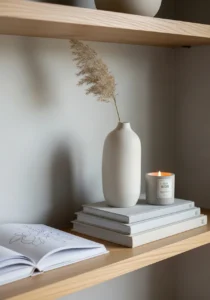
Japandi spaces usually feel calm because there’s less visual clutter overall. Instead of filling shelves and tables with decor, focus on just a few pieces that feel intentional. A ceramic vase, a small stack of books, or one candle is often enough. Empty space is part of the design too. It helps the room breathe visually and feel more peaceful.
4. Add Warm Wood Textures Everywhere
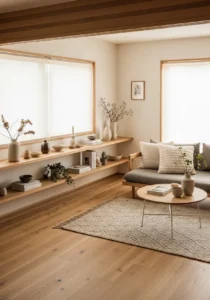
Wood is one of the main things that keeps Japandi interiors from feeling too stark. Light oak, walnut, or ash tones work beautifully across furniture, shelving, and flooring. Mixing different wood grains makes the room feel softer and more natural over time. Pair wood with linen or stone textures so the space still feels layered instead of overly minimal.
5. Use Soft Ambient Lighting
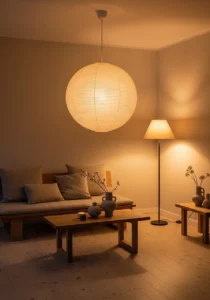
Bright overhead lights can quickly ruin the calm feeling of a Japandi room. Softer lighting works much better here. Use table lamps, paper lanterns, wall sconces, or warm floor lamps to create a gentle glow in the evenings. Warm white bulbs help soften the clean lines and natural materials around the room. It instantly feels more relaxing and comfortable.
6. Bring Nature Indoors
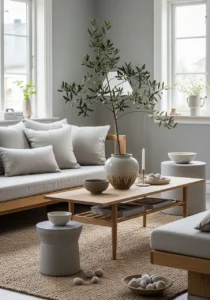
Japandi homes often feel connected to nature in small quiet ways. A simple olive branch, bonsai tree, or ceramic planter with greenery softens the room naturally. You don’t need large dramatic plants either. Even one small branch in a textured vase can make the whole space feel calmer. Natural elements help balance all the cleaner minimalist surfaces.
7. Mix Japanese Simplicity with Scandinavian Comfort
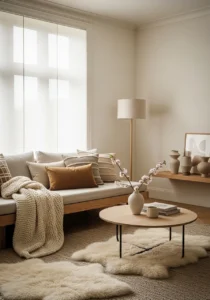
The beauty of Japandi design comes from balancing two styles together. Japanese interiors bring simplicity and calm, while Scandinavian spaces add warmth and comfort. Soft fabrics, natural wood, and functional furniture all work together quietly. The room should feel practical but still cozy enough for everyday life. Nothing looks overly decorative, yet everything feels thoughtful.
8. Use Linen and Woven Fabrics
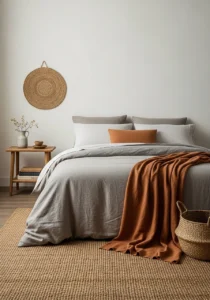
Soft fabrics make Japandi interiors feel much warmer and more lived in. Linen curtains, woven rugs, and textured cushions help soften all the cleaner furniture lines. Stick to muted earthy tones like oatmeal, clay, or warm ivory so everything blends naturally together. The textures quietly add comfort without making the room feel busy or crowded.
9. Keep Open Space Around Furniture
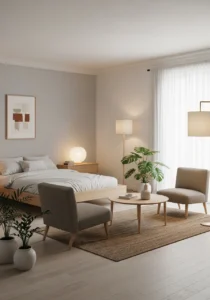
Japandi rooms usually feel airy because furniture isn’t pushed too closely together. Leaving small open areas around pieces helps the room feel lighter visually. It also makes everyday movement easier and calmer somehow. Instead of filling every corner, focus on fewer items with better placement. Simplicity tends to feel much more luxurious over time.
10. Add Handmade Ceramic Decor
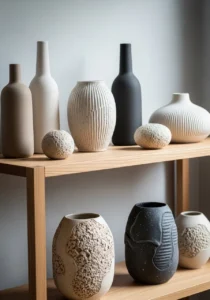
Handmade ceramics fit beautifully into Japandi interiors because slight imperfections actually add character. Matte vases, textured bowls, or uneven pottery pieces bring softness to modern minimal spaces. Neutral ceramic tones work especially well against wood and linen textures. These small details help the room feel personal instead of overly polished.
11. Use Sliding Panels or Light Curtains
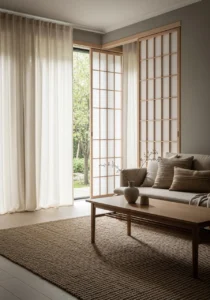
Soft curtains or sliding panels help separate spaces without making rooms feel closed off. Linen fabric works especially well because it filters natural light gently throughout the day. Light neutral tones keep the atmosphere feeling airy and calm. It’s a subtle detail, but it changes how peaceful the entire room feels.
12. Stick to Functional Furniture
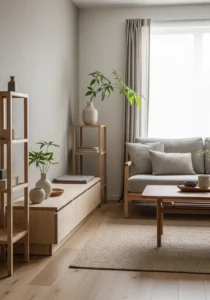
Furniture in Japandi homes usually serves a purpose beyond just decoration. Simple storage benches, low shelving, or clean-lined sideboards help keep rooms organized while still looking beautiful. Avoid oversized furniture that makes the room feel crowded. Functional pieces with natural textures tend to blend into the space much more naturally.
13. Add Stone and Matte Finishes
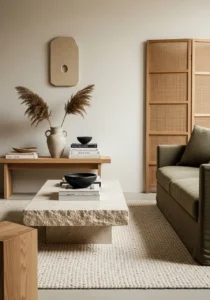
Stone textures and matte finishes help Japandi rooms feel grounded and calm. A stone coffee table, matte kitchen counter, or textured vase quietly adds depth without overpowering the room. Shiny surfaces can sometimes feel too harsh in minimalist spaces, so softer finishes usually work better. The room ends up feeling balanced and relaxed overall.
14. Keep the Bedroom Calm and Simple
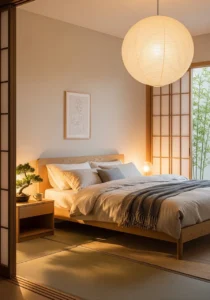
Japandi bedrooms usually focus on comfort without excess decoration. A low bed frame, soft bedding, and warm lighting create a peaceful setup that feels easy to unwind in. Stick to neutral colors and natural textures so the room stays visually calm. Even a small bedroom can feel much more spacious with this softer minimalist approach.
15. Style Shelves with Restraint
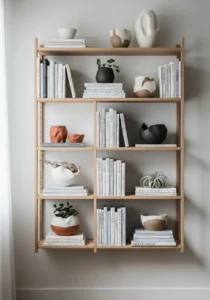
Open shelves look best in Japandi homes when they’re not overcrowded. Leave space between books, ceramics, and decor pieces so everything feels balanced. The mix of open space and texture creates a softer minimalist look that feels more natural. It’s less about styling perfectly and more about creating visual calm throughout the room.
16. One Branch in a Tall Vase, Nothing More

Bringing nature indoors appeared earlier in this list, but the Japandi version is stricter than a shelf of houseplants. One branch — eucalyptus, olive, or whatever your garden or florist has — stood in a tall, plain vase becomes the single green note in the room. Because there is only one, you actually look at it: the bend of the stem, the shape of the leaves, the shadow it throws on the wall in the evening.
Choose a vase with some height and weight so a long branch cannot tip it, and cut the branch at an angle so it drinks properly. Set the pair where they will be seen against a plain background — a wall corner, beside a low cabinet — and let them stand alone rather than grouping other objects around them. Change the water twice a week and recut the stem when the leaves dull. The mistake to avoid is treating the vase as the start of a collection. The day a second and third vase join it, the calm single statement turns back into ordinary decoration.
17. A Low Wooden Stool That Works Three Jobs

Ask which piece of furniture earns its keep in a Japandi home and a plain wooden stool is a fair answer. It is a side table beside the sofa in the morning, extra seating when a friend stays for tea, and a stand for a plant or a stack of books when the room needs height. It weighs little, asks for no assembly, and its honest joinery is decoration enough.
Look for solid wood with rounded edges and a finish you can feel — oil or wax rather than thick varnish. Around 40 to 45 centimetres tall puts it level with most sofa seats, which is what makes it so flexible. Keep one in the room where you spend evenings and move it as the day asks, instead of buying a fixed table for each spot. Avoid stools with cross-bars low enough to catch your ankles in the dark. The same stool logic suits the bathroom end of this style too, as our Japanese-style bathroom ideas show.
18. A Paper or Linen Pendant Hung Lower Than Feels Safe
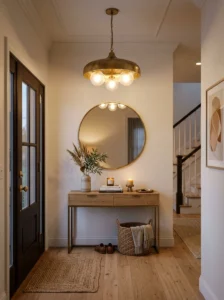
Soft ambient light was covered earlier, but one detail decides whether it works: height. A paper or linen pendant hung at ceiling height spreads thin, flat light and leaves the room feeling exposed. Dropped lower — so the shade sits closer to the table or seating it serves — it makes a pool of warm light that pulls people in, and the rest of the room relaxes into shadow at the edges.
Over a dining table, aim for the bottom of the shade around 70 to 80 centimetres above the tabletop. Over a reading corner, lower still, as long as nobody walks through that spot. Fit a warm bulb, around 2700K, and put it on a dimmer if you can; Japandi evenings run on dimmers. The mistake to avoid is a bare or overly bright bulb inside a paper shade, which turns a soft lantern into a glare source. For the full side-by-side of this style with its Scandi parent, see our Japandi and Scandinavian interior ideas, and compare the lighting in our Scandinavian living room ideas.
The Habit Behind the Calm
People imagine this look is maintained by owning very little. In practice, I find it is maintained by putting things away properly, every time, in homes that are designed for it: a basket where the blankets actually live, a closed cabinet for the ugly necessities, one clear surface that is defended. My own test each evening is the doorway pause — stand at the door for ten seconds and remove anything that does not belong to the room’s calm version of itself. Ninety nights out of a hundred, that pause is all the maintenance this style needs. It also travels between rooms; the bedroom version of the same discipline is set out in our natural bedroom ideas.
Japandi Questions, Answered
What is the difference between Japandi and Scandinavian style?
Scandinavian design brings the light colours, pale wood and function; Japanese design brings the lower profiles, the restraint, and empty space treated as a material in its own right. Japandi is the overlap: warm minimalism. If a room is pale but busy, it leans Scandi. If it is serene to the point of spareness, the Japanese side is winning.
Can I do Japandi in a rented flat?
Mostly, yes. The big moves are furniture height, textiles, lighting and editing — none of which touch the walls or floors. A low bed base, a paper pendant on the existing fitting, linen curtains and a serious clear-out get you most of the way. Save the fixed joinery ideas for a home you own.
Which wood tones work best?
Light to mid woods — oak, ash, beech, bamboo — with a matte finish and visible grain. Mixing two tones is fine if one clearly leads. Very orange pine and very dark stained wood are the hardest to settle into this palette; both can work as a single accent, rarely as the main act.
How do I stop it looking empty or cold?
Add warmth through texture, not objects: a woven rug, slubby linen, a wool throw, one piece of handmade pottery with an uneven glaze. Then check your light bulbs — half the cold Japandi rooms online are simply lit with daylight-white bulbs. Warm light and rough textures fix the chill without adding clutter.