Sometimes a living room just needs a small shift to feel more modern. Not a full redesign, just a few thoughtful updates.
A cleaner layout, softer textures, maybe better lighting.
It’s those little details that quietly change everything.
1. Neutral Base with Layered Textures

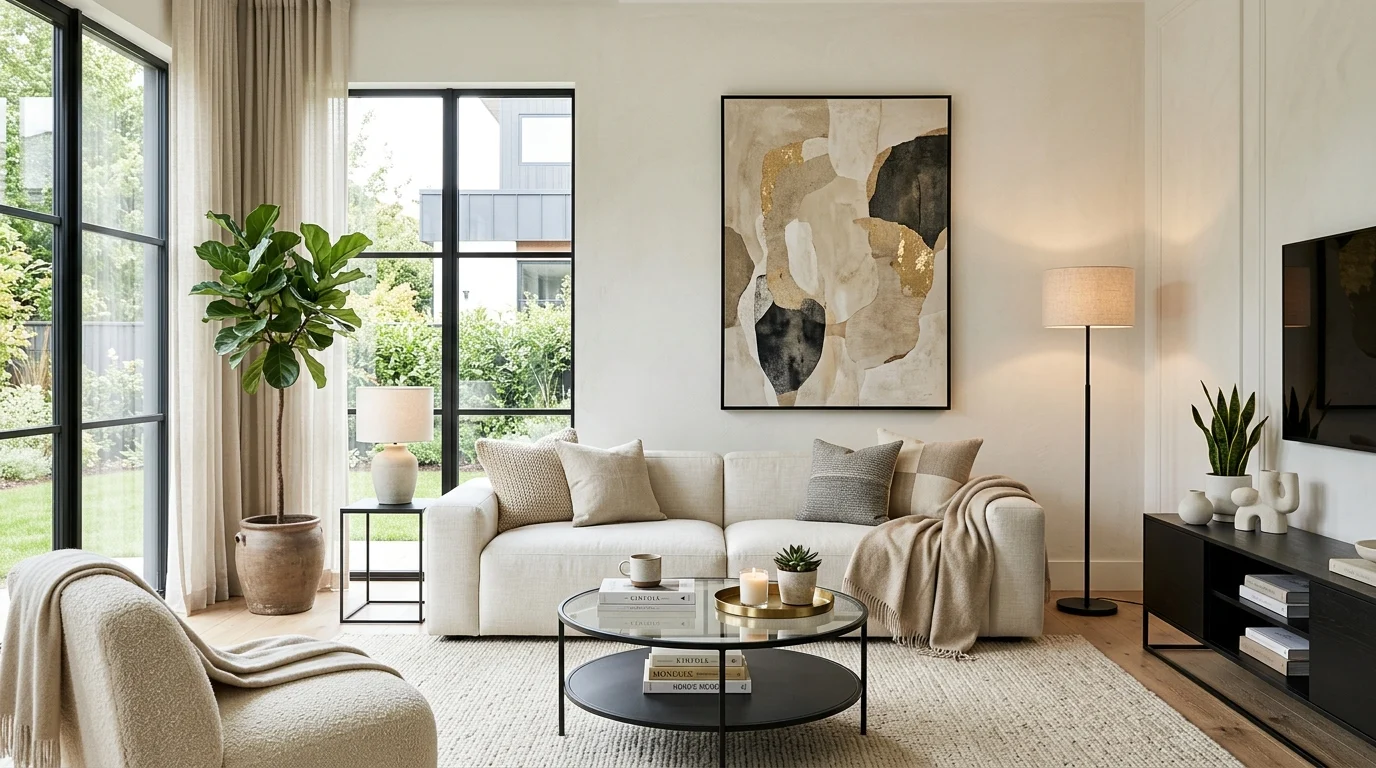
A contemporary living room often starts with a neutral base, but it’s the textures that keep it from feeling flat. Think a soft beige sofa, a woven rug, and maybe a linen throw draped casually. Add a wooden coffee table or a ceramic piece for contrast. Keep colors within the same family so it feels calm. It’s not about adding more items, just mixing materials in a way that feels natural and slightly relaxed.
2. Low Profile Furniture for a Sleek Look

Low seating instantly gives a room that modern, grounded feel. A sofa that sits closer to the floor with clean lines can make the ceiling feel higher. Pair it with a simple coffee table and minimal decor. Keep everything a bit spaced out so it doesn’t look crowded. It’s subtle, but it changes how the room feels when you walk in. Less bulky, more open, and easier on the eyes.
3. Statement Lighting as a Focal Point

Lighting can quietly take center stage in a contemporary space. A sculptural floor lamp or a modern pendant can draw attention without overwhelming the room. Keep the rest of the decor simple so the light stands out. Warm bulbs help soften the look, especially in the evening. It’s one of those upgrades that feels both functional and stylish at the same time.
4. Minimal Color Palette with Bold Accents

Keeping most of the room neutral makes it easier to add one or two bold accents. A deep blue cushion, a dark chair, or even a single piece of art can stand out beautifully. The trick is not to overdo it. Let those few items carry the color. It creates balance without making the space feel busy. And it keeps the overall look modern and clean.
5. Open Space Layout with Clean Lines

A contemporary living room often feels open, even if the space isn’t huge. Arrange furniture in a way that allows easy movement. Avoid pushing everything against the walls. Leave a bit of breathing room between pieces. Clean lines and simple shapes help keep the look uncluttered. It’s more about how the space flows than how much you put in it.
6. Glass and Metal Accents

Adding glass or metal elements can give the room a slightly polished edge. A glass coffee table or a metal lamp works well without feeling too heavy. These materials reflect light, which helps brighten the space. Keep the finishes subtle, like brushed metal or soft chrome. It’s a small detail, but it adds a modern touch without making the room feel cold.
7. Large Art Piece for Visual Impact

Instead of multiple small frames, try one large artwork. It becomes a natural focal point and keeps the wall from looking cluttered. Choose something simple, maybe abstract or with soft tones. Hang it at eye level so it feels balanced. It’s an easy way to make the room look more intentional without adding too many elements.
8. Soft Lighting Layers for Evening Comfort

One overhead light isn’t always enough. Adding layers of lighting can make a big difference. A floor lamp in one corner, a small table lamp near the sofa, maybe even wall lighting. Keep the light warm so it feels cozy. It softens the modern look just enough. And it makes the room more usable in the evenings.
9. Built-In Shelving for a Clean Finish

Built-in shelves help keep things organized without adding extra furniture. They blend into the wall, which makes the room feel more seamless. Use them for books, a few decor items, and leave some space empty. It keeps the look balanced. And it avoids that cluttered feeling that can happen with standalone shelves.
10. Textured Rugs for Warmth

A textured rug can anchor the space while adding warmth. Choose something subtle, like a low-pile pattern or a woven design. Keep colors soft so it doesn’t overpower the room. It’s one of those details that you notice more through feel than sight. And it helps make the space feel more comfortable overall.
11. Indoor Plants for a Fresh Touch

Even a modern living room benefits from a bit of greenery. A tall plant in a corner or a small one on a table can soften the look. Choose simple pots that match your color palette. It adds life without needing much effort. And it balances out the clean lines with something a little more organic.
12. Minimal Decor with Intentional Placement

Instead of filling every surface, choose a few pieces that actually matter. A vase, a book, or a small sculpture can be enough. Place them with a bit of space around them so they stand out. It feels more thoughtful that way. And it keeps the room from looking crowded. Sometimes less really does feel better in a contemporary setup.
13. One Soft Silhouette to Break Up the Straight Lines
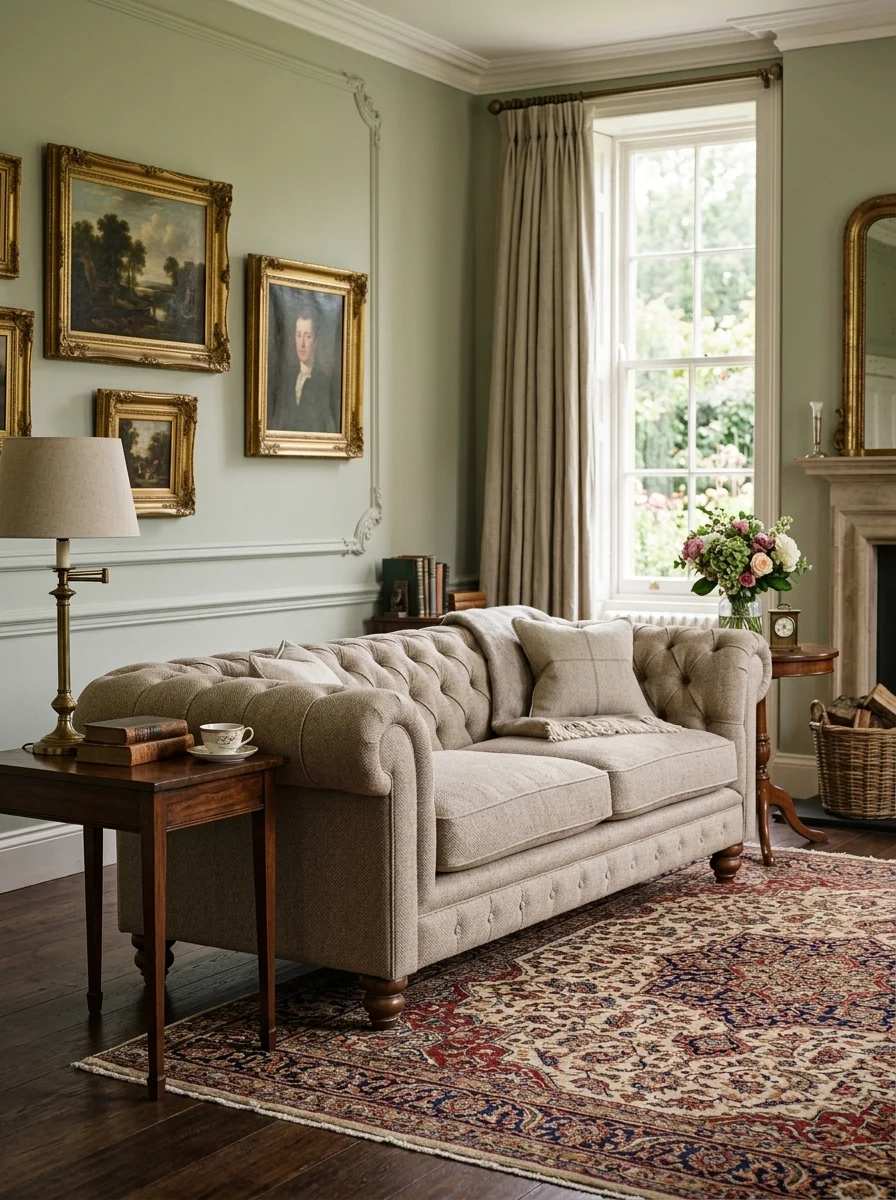
Contemporary rooms lean on straight edges: boxy sofas, square coffee tables, flat-front cabinets. That is part of the look, but a room built only from right angles can feel hard to relax in. One piece with a softer outline — a rolled-arm sofa, a curved accent chair, a round side table — takes the edge off without undoing the clean feel. Think of it as the one friendly shape in a tidy room.
Do it in this order. First, count the straight-edged pieces you already own; most people find five or six before they reach the rug. Next, swap or add just one curved piece, and let it be a piece you touch every day, like the main sofa or the chair you read in. Keep everything else as it is for a week before deciding whether the room needs more softness. The mistake to avoid is adding curves everywhere at once. Three round pieces in a row stops looking intentional and starts looking like a showroom theme. If you are weighing up seating, these accent chair ideas for the living room include plenty of softer shapes that sit well next to a low, boxy sofa.
14. Curtains Hung High and Wide, Not Just Over the Glass
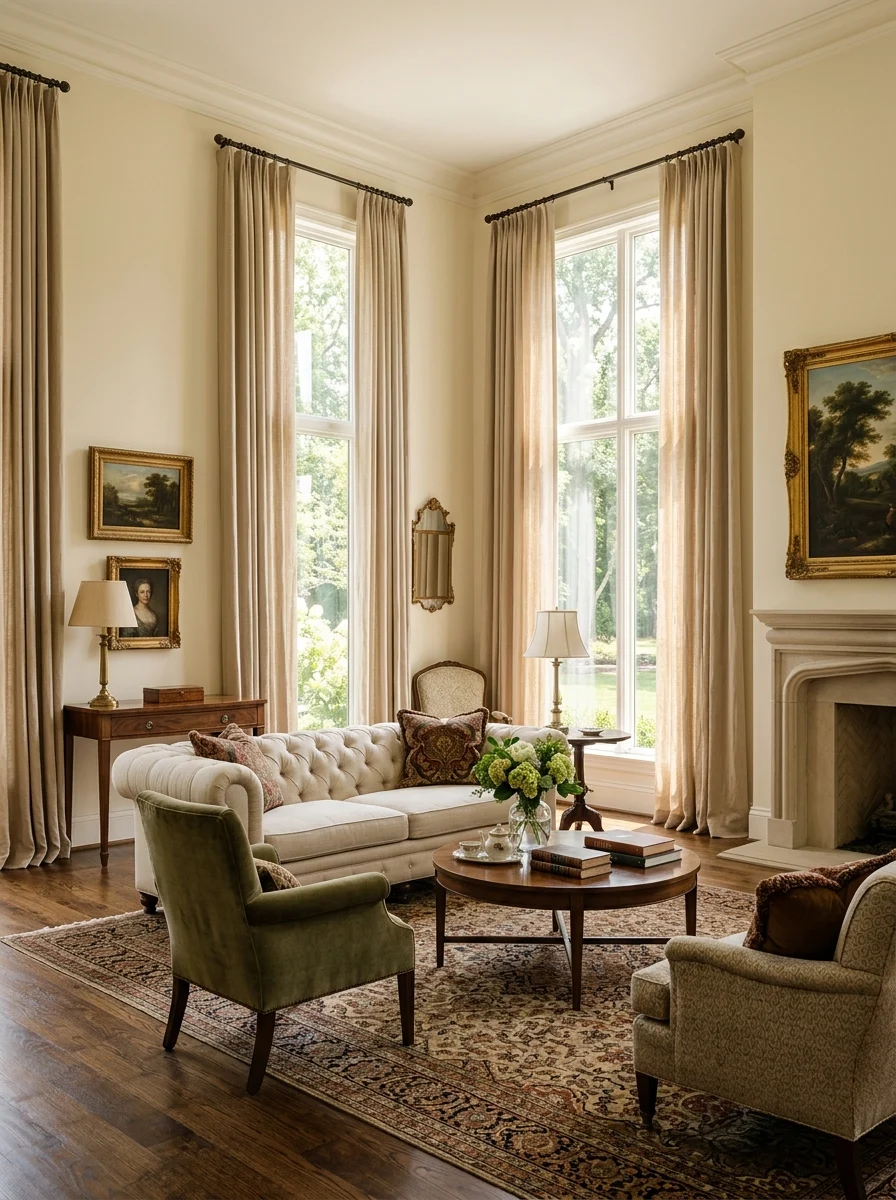
Where the curtain rod sits changes how big a contemporary room feels. A rod fixed just above the window frame chops the wall into strips and makes the ceiling look lower. Move the rod up, close to the ceiling line, and out beyond the sides of the window, and the same window reads taller and wider. The curtains then fall in long, clean folds, which suits this style far better than short drapes hovering above the sill.
Measure the wall, not the window: the rod wants to sit roughly 10 to 15 centimetres below the ceiling and extend 15 to 20 centimetres past each side of the frame. Choose a fabric with some weight, like a linen-look weave, so the folds hang straight instead of flapping. Let the hem just kiss the floor or stop a centimetre above it. The common mistake is buying curtains before moving the rod, then finding the new height leaves them swinging short. Rod first, measurements second, fabric last. Rooms that borrow tricks from classic living room ideas often get this detail right, because traditional rooms have always hung curtains this way.
15. A Rug Big Enough to Hold the Whole Conversation
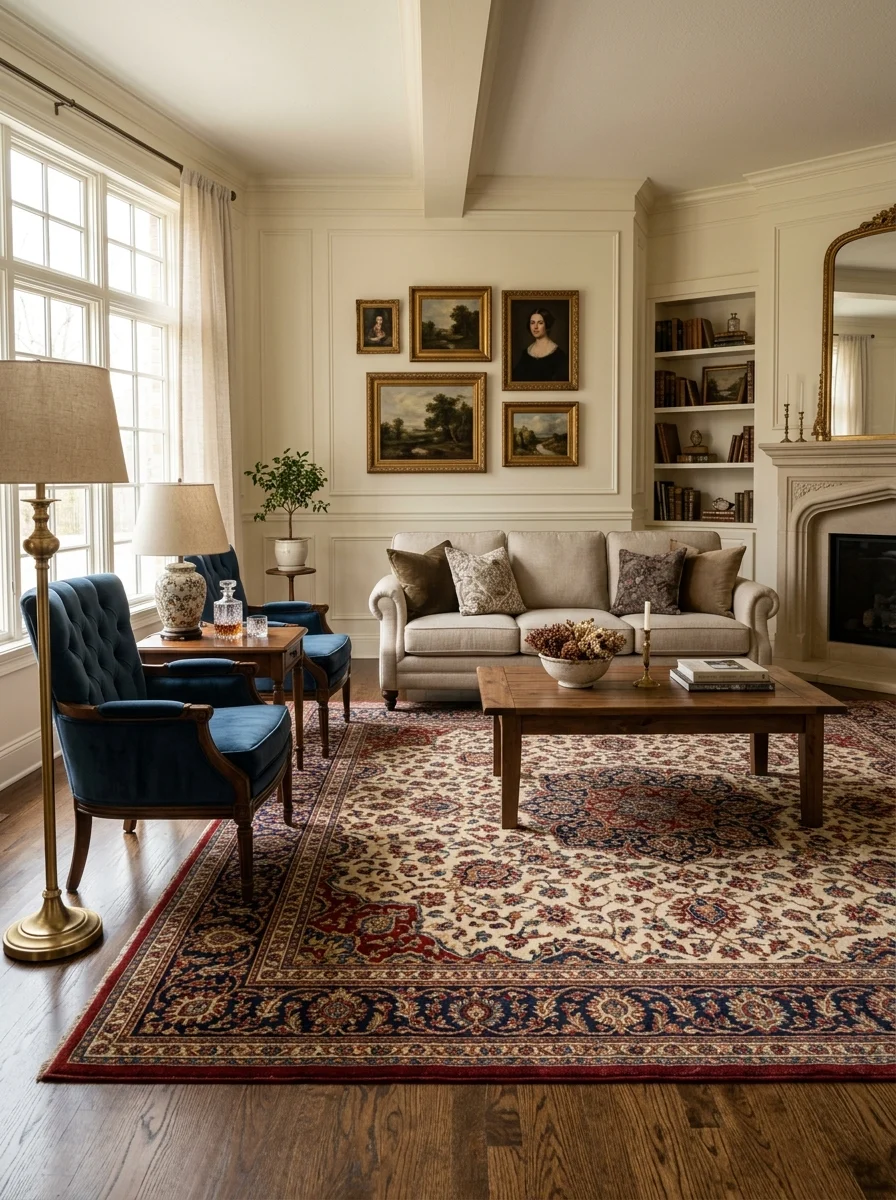
Small rugs are the quiet reason many contemporary rooms feel unfinished. A rug that floats under the coffee table alone leaves the sofas looking stranded. The rug’s job is to hold the seating group together as one island, so it needs to reach at least under the front legs of every seat around it. In an average room that usually means a 200 by 300 centimetre rug rather than the 160 by 230 most people first pick up.
Lay masking tape on the floor in the outline of the rug you are considering and live with it for a day. Check that the front feet of the sofa and chairs land on the tape, that doors still swing clear, and that the coffee table sits comfortably inside it. Styling the table itself matters too, and these round coffee table styling ideas show how to keep a generous table arrangement from tipping into clutter. Avoid the bargain in the smaller size: an undersized rug will annoy you daily, while the right size disappears into the room in the best way.
A Note from My Own Living Room
The change that taught me the most was not a purchase. I pulled every piece of furniture off the walls by about ten centimetres and angled nothing — just floated the group on the rug. The room instantly looked like it had been arranged on purpose rather than parked around the edges. I have done the same in long, awkward rooms since, and the layout notes in our guide to long living room layouts follow the same thinking. If a contemporary room feels cold to you, try moving things before buying things. Half the time, the room was never cold — it was just spread too thin.
Contemporary Living Room Questions, Answered
How is a contemporary living room different from a modern one?
Modern, strictly speaking, refers to a set period — roughly the middle of the last century — with its own fixed furniture shapes. Contemporary simply means what is current now, so it borrows more freely: clean lines and low profiles, softened with warmer woods, curved pieces and layered textiles. If a room mixes both happily, it is probably contemporary.
How do I stop a contemporary room feeling cold?
Work on texture before colour. Add a rug that covers more floor, curtains with visible weave, one piece of real wood, and cushions in two or three different fabrics. Then bring the lighting down to lamp height in the evening. Most ‘cold’ rooms are short on soft surfaces and lit from a single ceiling point.
Which colours suit a contemporary living room?
Start with a calm base of warm white, soft grey or greige, then commit to one accent colour and repeat it three times — a cushion, an artwork, one object on a shelf. Single appearances look like accidents; three looks like a decision. Swap the accent seasonally if you like change without repainting.
Can I mix metals in a contemporary room?
Yes, if you keep it to two finishes and repeat each one at least twice. Brushed brass with matte black is a pairing that rarely fights. What looks messy is four finishes appearing once each. Count your metals the way you count accent colours, and edit until the numbers are small.