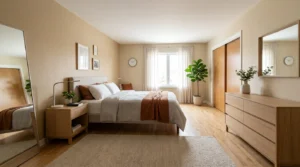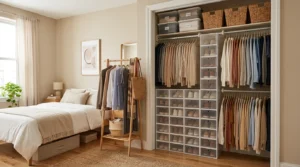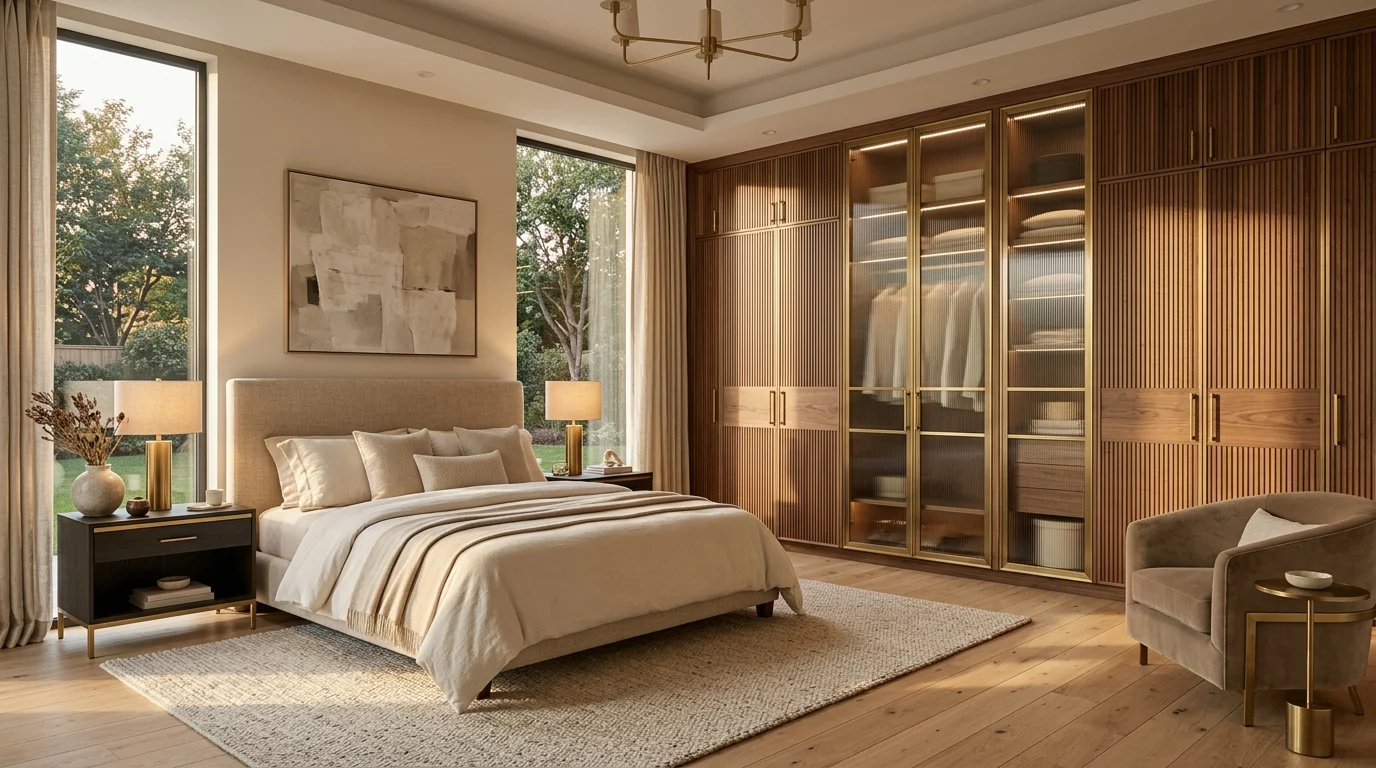
For the longest time, I genuinely didn’t think about closet doors at all. Ours were plain, slightly dented white bifold doors that came with the house, and it never occurred to me they were actually affecting how the whole room looked until I finally swapped them out during a small bedroom refresh. The difference honestly surprised me. Everything else in the room stayed exactly the same, same furniture, same wall color, same rug, and yet the room read as noticeably more finished and considered the moment those doors changed. Closet doors take up a genuinely significant amount of visual space in most bedrooms, and I think that’s exactly why they get overlooked, they’re so present that we stop actually seeing them.
Since that first swap, I’ve paid a lot more attention to closet doors in every room I’ve worked on, and picked up plenty of practical lessons about which styles genuinely hold up to daily use versus which ones only look good for the first few months. Below are 25 closet door ideas based on real installations I’ve done or seen done well, each one capable of shifting a room’s whole feel without requiring a full renovation.
1. Mirrored Sliding Doors
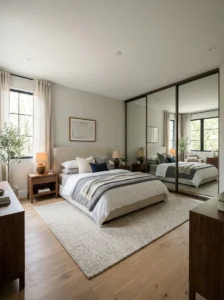
Mirrored sliding doors solve two problems at once, they eliminate the need for door-swing clearance in front of the closet, and they give you a genuinely useful full-length mirror without sacrificing any additional wall space elsewhere in the room. We installed these in a smaller bedroom years ago specifically because the room was too tight for hinged doors to open without hitting the bed, and the mirrored surface also made the whole room feel noticeably larger and brighter by reflecting light back into the space.
The main consideration with mirrored doors is frame style, since a plain, frameless mirror reads as more modern and minimal, while a slim metal or wood frame around each panel gives a slightly more finished, traditional look. I’d recommend a frame specifically if your room already leans toward a more classic or transitional style, since a completely frameless mirror can occasionally feel a bit stark or clinical against warmer, more traditional furniture and decor.
Track quality matters enormously here too, since sliding mirrored doors get used multiple times daily. I’d suggest investing in a genuinely smooth, quality track system rather than the cheapest option available, since a sticking or noisy track quickly becomes one of those small daily annoyances that undermines an otherwise successful upgrade. Regular cleaning also matters more with mirrored doors than most other styles, since fingerprints and smudges show considerably more visibly on a reflective surface than on a solid wood or painted door.
2. Barn-Style Sliding Doors
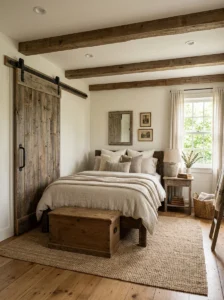
A barn door, mounted on an exposed rail above the closet opening, brings a distinctly rustic, farmhouse character to a room that standard hinged or bifold doors simply can’t achieve. I installed one in a guest bedroom a couple of years ago, choosing a reclaimed wood door with visible grain and a few authentic knots, and it immediately became the room’s most noticeable, complimented feature.
Because the door slides along an exposed track rather than disappearing into a wall cavity, it requires enough clear wall space beside the closet opening for the door to slide into when open, which is worth measuring carefully before committing to this style, since a barn door needs roughly the same width as the opening itself in adjacent wall space. I’d recommend this option specifically for rooms with that available wall space, rather than trying to force it into a tighter layout where the door would end up blocking a window, outlet, or other fixture when slid open.
Hardware finish matters considerably for the overall look here too, a matte black rail and rollers lean more modern and industrial, while an aged bronze or brass hardware finish suits a warmer, more traditional farmhouse aesthetic. I’d suggest choosing hardware that complements your room’s other metal finishes, light fixtures, cabinet pulls, so the barn door hardware feels like part of a cohesive design rather than an isolated, mismatched addition.
3. French Doors with Glass Panels
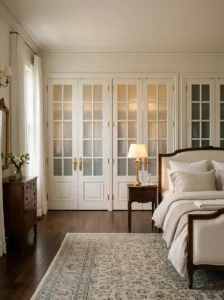
French-style closet doors, hinged and featuring multiple small glass panes, bring an elegant, slightly formal character to a bedroom that solid doors don’t achieve, while also allowing a hint of what’s inside to be visible without fully exposing the closet’s contents. I used frosted glass panels specifically, rather than clear glass, in a client’s bedroom closet, which softened the view into the closet just enough to keep things looking tidy without needing everything inside to be perfectly organized at all times.
I’d recommend frosted or reeded glass over completely clear panels for most bedroom applications, since clear glass tends to reveal the closet’s actual contents in a way that requires considerably more consistent organization than most households genuinely maintain day to day. Frosted or textured glass gives you the elegant visual effect of glass paneling while remaining considerably more forgiving of everyday closet clutter.
This style does require adequate floor clearance for the doors to swing open fully, similar to any hinged door style, so I’d suggest measuring your available space carefully before committing, particularly if your closet sits near a bed or other furniture that might interfere with the door’s swing radius. For rooms with adequate space, though, French doors bring a genuinely elegant, slightly old-world character that few other closet door styles achieve to the same degree.
4. Bold, Contrasting Paint Color
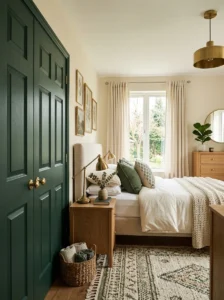
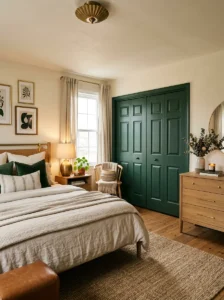
Simply painting existing closet doors in a bold color that contrasts with the surrounding wall is one of the most affordable, low-commitment upgrades on this entire list, and it can make a genuinely significant visual difference without any structural changes at all. I painted a set of plain white bifold doors in a deep forest green in my own home office, and the transformation from forgettable to genuinely striking took an afternoon and a fairly small amount of paint.
I’d recommend a color that complements, rather than exactly matches, your room’s existing accent colors, since a closet door painted in a shade that’s clearly related to but distinct from your other design choices tends to read as more intentional than either an exact match or a completely unrelated, clashing color. Deep, saturated tones, navy, forest green, deep terracotta, tend to work particularly well for this specific application, giving the doors enough visual weight to genuinely stand out as a considered design choice.
Surface preparation matters more than people typically expect for a durable result here, I’d suggest a light sanding and a proper primer coat before applying your chosen color, particularly on doors with any existing glossy finish, since paint applied directly over a slick factory finish without proper prep tends to chip and peel considerably faster than a properly prepared surface would.
5. Wallpapered Door Panels
For closet doors with recessed panels, applying wallpaper specifically within those recessed sections, rather than across the entire flat door surface, creates a genuinely custom, boutique-hotel quality detail that a simple paint job doesn’t achieve on its own. I did this in a client’s nursery closet, using a soft botanical print within the door’s existing panel recesses while keeping the surrounding door frame painted in a simple, complementary solid color.
This technique works particularly well on older, more traditional paneled doors, where the existing recessed panel sections provide a natural, framed area for the wallpaper application, essentially turning each door into a small piece of framed art. I’d recommend a durable, wipeable wallpaper specifically for this application, given that closet doors receive regular contact and handling, rather than a delicate, purely decorative paper better suited to a wall that sees less direct daily touching.
Precise measuring and cutting matters considerably for a professional-looking result here, I’d suggest either working with an experienced installer for this specific application, or being prepared for a genuinely careful, patient DIY approach with a sharp blade and a steady hand, since visible seams or slightly misaligned edges are considerably more noticeable on a smaller, closely viewed panel than they might be across a larger wall surface.
6. Woven Cane or Rattan Panel Inserts
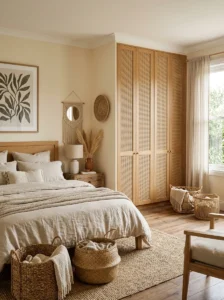
Replacing solid panel sections with woven cane or rattan inserts brings a natural, textural quality to closet doors that suits a bohemian, coastal, or relaxed traditional aesthetic particularly well. I had this done on a set of closet doors in a beach-adjacent client’s bedroom, and the light, airy texture of the woven panels suited the room’s overall relaxed, natural material palette considerably better than solid wood panels would have.
This modification generally requires removing existing solid panels and having new cane webbing professionally fitted into the resulting frame openings, so I’d recommend working with a carpenter or door specialist experienced in this specific kind of installation, rather than attempting it as a first-time DIY project, since properly securing and tensioning cane webbing takes genuine skill to execute cleanly.
I’d suggest this option specifically for households without young children or pets prone to poking or pulling at the woven material, since cane webbing, while durable under normal handling, isn’t as resistant to determined poking or scratching as a solid wood panel would be. For the right space and household, though, this detail brings a genuinely distinctive, textural quality that few other closet door options achieve.
7. Slatted or Fluted Wood Door Panels
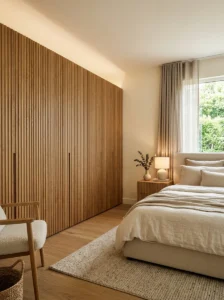
Vertical wood slats, either as a full door surface or as a section within an existing panel, bring warmth and texture to closet doors while suiting a wide range of aesthetics, from mid-century modern to contemporary minimalist to warmer, more organic styles. I installed slatted oak panels on a set of closet doors in my own home office, replacing plain flat panels, and the vertical grooves added genuine visual interest to what had previously been one of the room’s most overlooked, forgettable surfaces.
This style can be achieved either through custom millwork, having new slatted panels built specifically for your existing door frames, or through more affordable pre-made slatted panel products designed to be applied over existing flat doors. I’d recommend the pre-made panel option specifically for anyone working with a more modest budget, since it achieves a very similar visual effect at a fraction of the cost of full custom millwork.
Consistent spacing and slat width matter considerably for a polished, professional look here, uneven or inconsistent gaps between slats tend to look unfinished or amateur, even if the individual slats themselves are well made. I’d suggest working with a template or precise measuring guide throughout installation, whether you’re doing this yourself or hiring it out, to ensure the finished result reads as genuinely considered and well-executed rather than slightly haphazard.
8. Curtain Panels Instead of Solid Doors
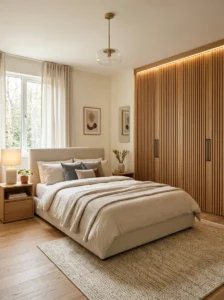
For a softer, more relaxed alternative to solid doors entirely, hanging simple curtain panels across a closet opening brings genuine textile warmth to a room while also being one of the most affordable and easily reversible options on this entire list. I used this approach in a small studio apartment closet, where the previous sliding doors had actually broken and become more of a hassle than a help, and simple linen curtain panels on a tension rod solved the problem for a fraction of the cost of replacement doors.
I’d recommend choosing a fabric that coordinates with your room’s other window treatments or textiles, since curtain-style closet doors essentially become another textile element within the room’s overall design, rather than reading as a separate, purely functional closet cover. A slightly heavier fabric, linen or a substantial cotton, tends to hang and drape more attractively than something very lightweight or sheer, which can look a bit flimsy for this specific application.
This option works particularly well for renters or anyone not wanting to commit to a permanent structural change, since curtain panels can typically be installed without any drilling if you use a properly sized tension rod, and they’re easily swapped out entirely if your taste or the room’s overall styling changes down the line. I’d suggest a curtain rod mounted slightly wider than the closet opening itself, so the panels can be pulled fully clear of the opening when you need complete, unobstructed access to the closet’s contents.
9. Two-Tone Painted Doors
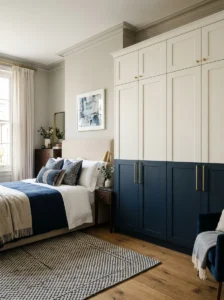
Painting the upper and lower sections of a closet door, or individual panels within a paneled door, in two complementary but distinct colors adds a custom, boutique quality to otherwise standard doors without requiring any structural modification at all. I did this on a set of bifold doors in a client’s bedroom, using a deep navy on the lower half and a warm white on the upper half, and the resulting look read as considerably more custom and considered than the plain, single-color doors they replaced.
I’d recommend keeping the darker color on the lower section and the lighter color above, mirroring the same general principle discussed in other two-tone furniture applications, since this arrangement tends to read as more visually balanced and grounded than the reverse. A clean, straight line at the color transition point, achieved with careful masking tape application, matters considerably for a polished final result, so I’d suggest taking genuine care and patience with this step rather than rushing it.
This technique works particularly well on doors with an existing horizontal design element, a mid-rail on a paneled door, for instance, which provides a natural, already-existing guide for where to transition between colors, rather than needing to measure and mask an entirely arbitrary line partway up a completely flat door surface.
10. Frosted or Textured Glass Sliding Doors
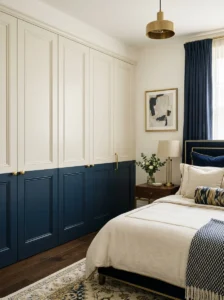
Frosted or textured glass sliding doors bring a soft, diffused quality of light and privacy to a closet that solid doors don’t offer, letting a hint of ambient light through while still fully concealing the closet’s actual contents from view. I installed a set of these in a client’s small bedroom, specifically because the closet sat directly beside the room’s main window, and the frosted glass allowed some natural light to pass through into the closet space itself during the day, rather than leaving it in complete darkness whenever the doors were closed.
I’d recommend this option specifically for closets positioned near a natural light source, since the practical light-diffusing benefit is most noticeable in that specific scenario, though the aesthetic appeal of frosted glass certainly still applies even in closets without adjacent natural light. Various frosting patterns and textures are available, from a simple uniform frost to more decorative etched patterns, letting you choose a level of visual interest that suits your room’s overall style.
Sliding hardware quality matters here just as much as with the mirrored sliding doors discussed earlier, given the regular daily use these doors receive. I’d suggest investing in a quality, smooth-gliding track system specifically, since a glass door that sticks or feels difficult to slide becomes a genuine daily frustration regardless of how attractive the frosted glass itself looks.
11. Reeded or Fluted Glass Panels
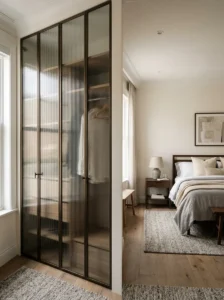
Reeded glass, featuring narrow, evenly spaced vertical ridges, creates a distinctive rippled visual effect that’s become an increasingly popular alternative to plain frosted glass for closet door panels, bringing genuine texture and visual interest along with its privacy-providing function. I used reeded glass panels in a recent bedroom project, and the way light catches and refracts through the vertical ridges throughout the day adds a subtle, ever-changing quality that flat frosted glass doesn’t quite achieve.
This style works particularly well within a French door or paneled door frame, similar to the frosted glass application discussed earlier, rather than as a single large uninterrupted pane, since the vertical ridge pattern tends to look more intentional and proportioned when broken up across multiple smaller panel sections rather than one very large expanse of glass.
I’d recommend this option specifically for anyone drawn to a slightly more contemporary, design-forward aesthetic, since reeded glass has become closely associated with more current interior design trends, distinguishing it somewhat from the more traditional character of plain frosted glass. Cleaning requires a bit more attention to the ridged texture compared to flat glass, so I’d suggest a soft cloth and gentle cleaning approach that reaches into the small grooves rather than a quick wipe that might leave streaking within the ridges themselves.
12. Statement Wallpaper Across the Full Door
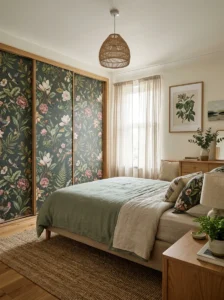
For a bolder approach than the panel-specific wallpaper application discussed earlier, covering an entire flat closet door surface in a striking, statement wallpaper pattern turns what’s often an overlooked element into a genuine focal point within the room. I did this in a child’s bedroom, using a playful botanical print across the full surface of simple flat bifold doors, and it became one of the room’s most immediately noticeable and delightful details.
I’d recommend this bolder, full-coverage approach specifically for smaller closet door surfaces, like bifold panels, rather than very large sliding doors, since a bold pattern across a genuinely large surface area can start to feel overwhelming within the broader room, while the same pattern across a more modestly sized door reads as a fun, contained design moment instead.
A durable, wipeable wallpaper matters even more for this full-coverage application than for the smaller panel application discussed earlier, given the significantly larger surface area receiving regular contact and handling. I’d suggest a paste-the-wall style wallpaper specifically for easier, cleaner application and eventual removal, compared to older paste-the-paper varieties that can be considerably messier and more difficult to work with, particularly for a first-time DIY wallpaper project.
13. Matte Black Doors for Modern Drama
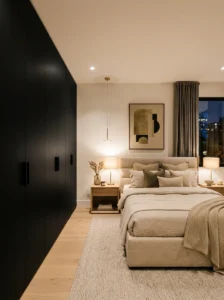
Painting closet doors in a matte black finish brings genuine drama and a distinctly modern, sophisticated quality to a bedroom, particularly effective when paired with lighter surrounding walls that let the black doors read as a clear, intentional focal point rather than simply disappearing into an already-dark room. I painted a set of closet doors matte black in my own bedroom a couple of years ago, and the contrast against our warm white walls has remained one of the room’s most consistently complimented details.
I’d recommend matte or eggshell finish specifically over anything glossier for this application, since a glossy black finish tends to show fingerprints, smudges, and minor surface imperfections considerably more visibly than a matte finish, an important practical consideration given how frequently closet doors get touched and handled throughout daily use.
Hardware choice matters significantly here too, matte black hardware, hinges, pulls, creates a seamless, cohesive look, while a contrasting brass or chrome hardware finish against the black doors adds a bit more visual interest and a slightly more elevated, considered quality. I’d suggest choosing based on your room’s other existing metal finishes, keeping the closet door hardware consistent with your broader hardware choices throughout the space rather than introducing an entirely new, unrelated metal tone.
14. Applied Molding for a Custom, Paneled Look
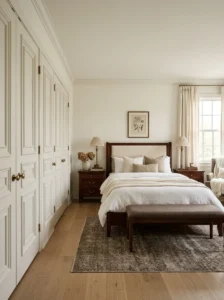
Adding simple applied molding strips to plain, flat closet doors creates the appearance of custom paneled doors at a fraction of the cost of actually replacing flat doors with genuine paneled ones. I did this on a set of plain flat bifold doors in a client’s bedroom, applying simple rectangular molding strips in a symmetrical pattern across each door panel, and the resulting look convincingly mimicked considerably more expensive, traditionally paneled doors.
This is a genuinely accessible DIY project for anyone reasonably comfortable with basic tools, involving measuring and cutting simple molding strips, then attaching them to the door surface with wood glue and small finish nails before caulking the edges and painting the entire door a single, unified color. I’d recommend planning your molding layout carefully on paper first, ensuring the proportions and spacing look balanced before cutting any actual material, since molding placed with poor proportions can look more amateur than the plain flat door it’s meant to improve upon.
I’d suggest a classic rectangular panel arrangement for the most traditional, timeless result, though more contemporary geometric patterns are certainly possible too, depending on your room’s overall style direction. Once installed and painted in a single, cohesive color, these applied molding doors are genuinely difficult to distinguish from authentic, more expensive paneled doors, making this one of the best value-for-effort upgrades on this entire list.
15. Sliding Barn Door with Glass Insert Panels
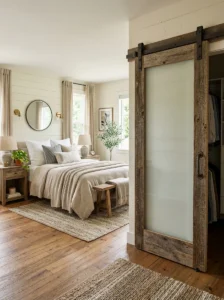
Combining the rustic character of a barn door with a section of glass paneling creates a hybrid style that brings both natural light transmission and the distinctive sliding barn door aesthetic to a single closet feature. I installed one of these in a client’s home office closet, using a reclaimed wood frame with a central section of frosted glass, and the combination let a bit of light filter through while maintaining the door’s overall rustic, substantial character.
I’d recommend this hybrid approach specifically for closets that would benefit from some light transmission but where you still want the specific visual character a barn door brings, rather than choosing between a fully solid barn door or a fully glass French door option. The glass section can be sized and positioned flexibly, a small central pane, a full upper section, depending on how much visual interest and light transmission you’re specifically after.
As with the standalone barn door option discussed earlier, this style requires adequate adjacent wall space for the door to slide into when open, so I’d suggest confirming this measurement carefully before committing, particularly given that this hybrid version, with its glass insert, tends to be a somewhat more significant investment than a fully solid barn door alternative.
16. Painted Ombre or Gradient Doors
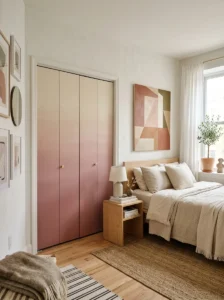
For a more artistic, custom approach to closet door paint, an ombre or gradient effect, transitioning smoothly from one color to another across the door’s height, brings genuine visual interest and a slightly whimsical, artistic quality that a single flat color doesn’t achieve. I did this on a set of bifold doors in a teenager’s bedroom, transitioning from a deep dusty rose at the bottom to a soft cream at the top, and the resulting effect became a genuinely striking, personal feature of the room.
This technique requires careful blending between color transitions, typically achieved by working while the paint is still wet and using a dry brush technique to soften the boundary between colors, or through a more gradual, layered approach using several intermediate blended shades. I’d recommend practicing this blending technique on a scrap piece of wood or cardboard first, since achieving a smooth, professional-looking gradient takes some genuine practice to execute confidently on the actual doors themselves.
I’d suggest choosing two colors that share some underlying tonal relationship, different shades within the same general color family, rather than two completely unrelated colors, since a gradient between related tones tends to blend more smoothly and read as more intentional than one attempting to transition between very different hues.
17. Woven Rope or Textile Wrapped Panels
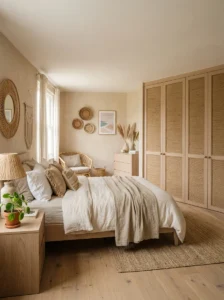
Wrapping door panel sections in woven rope or a substantial textile material brings a distinctly coastal, bohemian texture to closet doors that few other options on this list achieve. I saw this done beautifully in a beach house client’s bedroom, where the closet doors’ recessed panel sections were wrapped in a natural jute rope, creating a genuinely tactile, textured surface within an otherwise simple painted door frame.
This is a more involved DIY or custom project than most other ideas on this list, generally requiring the panel section to be wrapped and secured carefully around a solid backing, ensuring the rope or textile stays taut and evenly spaced throughout the wrapping process. I’d recommend this specifically for households drawn to a genuinely coastal or bohemian aesthetic throughout the rest of their home, since this detail works best as part of a broader, cohesive style direction rather than an isolated addition within an otherwise very different overall room style.
I’d suggest natural jute or a similar durable rope material specifically for longevity and authentic texture, securing it with a strong adhesive suited for the specific backing material you’re working with. This is a detail that requires more hands-on effort than most other ideas on this list, but the resulting tactile, distinctive texture is genuinely difficult to replicate through any simpler, more conventional door treatment.
18. Full-Length Mirror Panels Without a Frame
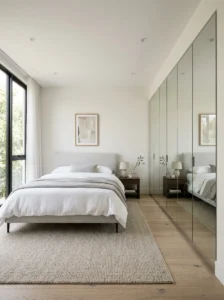
For the cleanest, most minimal version of the mirrored door concept discussed earlier, a completely frameless mirror panel, extending edge to edge across the door surface, creates an almost seamless, disappearing effect that suits very modern, minimalist bedrooms particularly well. I installed this style in a client’s contemporary bedroom, and the frameless mirror essentially made the closet doors visually vanish into the room, reflecting the surrounding space rather than drawing attention to themselves as a distinct architectural element.
This specific frameless installation typically involves mounting the mirror directly to the door’s surface using a specialized adhesive and mechanical clips for additional security, given the mirror’s weight and the safety considerations involved in a large glass panel mounted on a door that opens and closes regularly. I’d strongly recommend professional installation for this specific style, given both the weight involved and the precision needed for the mirror’s edges to align perfectly with the door’s actual physical edges for that clean, seamless look to genuinely succeed.
I’d suggest this option specifically for bedrooms already leaning toward a minimal, contemporary aesthetic, since the frameless mirror’s visual disappearing act works best within a room that isn’t relying on the closet doors themselves as a source of texture or visual interest, unlike several other, more decorative options throughout this list.
19. Chevron or Herringbone Wood Paneling
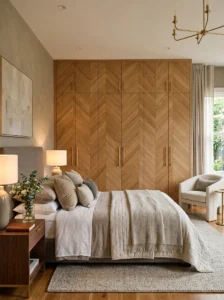
Applying wood strips in a chevron or herringbone pattern across a closet door surface brings genuine sophistication and craftsmanship-forward visual interest, echoing the same appeal discussed earlier regarding herringbone flooring, but applied at the smaller, more contained scale of a single door surface. I designed this for a client’s statement closet doors, using thin oak strips arranged in a classic chevron pattern, and the resulting doors became a genuine architectural feature within the bedroom, rather than simply a functional element that happened to also look nice.
This technique requires precise, careful measuring and cutting to achieve clean, symmetrical angles throughout the pattern, so I’d recommend working with an experienced carpenter for this specific application unless you’re genuinely confident in your own precision woodworking skills, since visible gaps or misaligned angles are considerably more noticeable in a geometric pattern like this than they might be in simpler, more forgiving door treatments.
A clear or lightly tinted finish, rather than a heavily painted surface, tends to suit this style particularly well, since the whole appeal comes from showcasing the wood grain and the geometric precision of the pattern itself, both of which would be considerably diminished beneath a solid, opaque paint finish covering the wood’s natural texture and detail.
20. Cork or Fabric Bulletin Board Panels
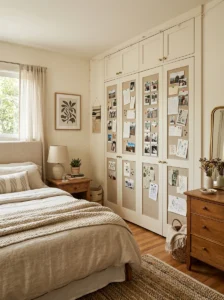
For a household with genuine practical need for a bulletin board or memo space, incorporating a section of cork or fabric-wrapped bulletin board material directly into a closet door panel combines functional utility with a distinctive, personalized visual detail. I did this for a college student’s bedroom closet doors, wrapping one panel section in a soft linen fabric over cork backing, giving her a dedicated spot for photos, notes, and small mementos directly integrated into her existing closet doors.
I’d recommend this option specifically for bedrooms belonging to students, hobbyists, or anyone with a genuine ongoing need for this kind of display and organization space, rather than purely for decorative purposes, since the panel’s practical function is really the whole point of this particular modification. A simple cork panel, cut to fit within an existing door’s recessed panel area and secured with strong adhesive, achieves the basic functional goal, while wrapping it in fabric first adds a softer, more considered visual finish.
I’d suggest choosing a fabric that coordinates with your room’s existing textiles, bedding, curtains, so this functional addition feels like a genuinely integrated part of the room’s overall design rather than a purely practical element that clashes visually with everything else around it.
21. Vintage or Antique Salvaged Doors

Sourcing a genuinely old, salvaged door, from an architectural salvage yard or antique dealer, and repurposing it as a closet door brings authentic character and history that no new door, however well-designed, can fully replicate. I did this for my own home office closet, finding a beautifully weathered, slightly distressed panel door at a local salvage yard, and its genuine age and wear brought a level of character to that corner of the room that a brand new door simply couldn’t have achieved.
I’d recommend measuring your existing closet opening very carefully before shopping for a salvaged door, since these pieces come in whatever dimensions they happened to be originally built for, and finding one that fits your specific opening, or is close enough to modify without compromising its character, takes some patience and flexibility compared to ordering a new door built to exact specifications.
Structural soundness matters more than cosmetic perfection when evaluating a salvaged door, I’d suggest checking specifically for warping, rot, or serious structural damage, since minor surface wear, chipped paint, or small dents generally add to a salvaged door’s authentic character rather than detracting from it, while genuine structural problems can make a piece difficult or costly to properly install and use.
22. Sliding Doors with Exposed Industrial Hardware
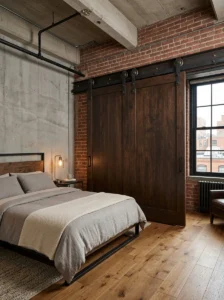
For a more overtly industrial aesthetic than a traditional barn door achieves, sliding doors mounted with exposed, visibly mechanical track hardware, thick metal rails, substantial visible rollers, bring a distinctly urban, loft-style character to a bedroom closet. I installed this style in a converted warehouse apartment, pairing simple flat black steel doors with a substantial, visibly industrial track system, and the overall effect suited the building’s existing exposed brick and ductwork considerably better than a softer, more traditional door style would have.
I’d recommend this option specifically for homes with an existing industrial or loft-style architectural character, similar to the earlier discussion of exposed structural elements in high-ceiling living rooms, since this hardware style works best as an authentic reflection of a building’s genuine character rather than an artificially manufactured industrial look layered onto a space that doesn’t naturally support it.
Hardware weight rating matters considerably here too, given that genuinely substantial industrial-style track systems can be quite heavy in their own right, separate from the weight of the doors themselves. I’d suggest professional installation specifically for this style, ensuring the mounting is genuinely secure into proper structural support, given both the hardware’s weight and the safety considerations involved in any sliding door system used regularly over many years.
23. Doors Painted to Match and Disappear Into the Wall
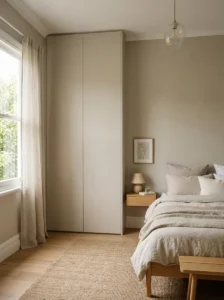
For a completely different approach than any of the bold, statement-making options discussed throughout this list, painting closet doors the exact same color as the surrounding wall makes them essentially disappear visually, letting the rest of the room’s design take full focus without any competing visual element at all. I did this in a small guest bedroom where wall space was already limited and visually busy, and removing the closet doors as a distinct visual element genuinely helped the room feel calmer and less cluttered overall.
I’d recommend this option specifically for smaller rooms or spaces where you’re trying to minimize visual clutter and maximize a sense of openness, rather than rooms where you’d actually welcome the closet doors serving as an additional decorative focal point. Matching the exact wall color, including matching sheen level between the wall and door paint, matters considerably for this effect to genuinely succeed, since a noticeable difference in either color or finish undermines the intended seamless, disappearing effect.
Hardware choice matters here too, minimal, low-profile pulls or a push-to-open mechanism, similar to the handleless cupboard designs discussed in earlier home projects, help maintain this disappearing effect considerably better than larger, more visually prominent hardware would, which would otherwise draw attention back to the doors despite the matching paint color.
24. Doors with a Subtle Metallic Finish
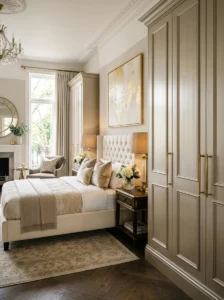
A closet door finished in a subtle metallic paint or specialty finish, a soft pewter, a muted champagne gold, brings understated glamour and visual interest without the boldness of a fully mirrored surface or a saturated bright color choice. I used a muted champagne metallic finish on a set of closet doors in a client’s more glamorous, elevated bedroom design, and the subtle shimmer catches light beautifully throughout the day without ever feeling overly flashy or theatrical.
I’d recommend a specialty metallic paint specifically formulated for durability on frequently touched surfaces, rather than a purely decorative craft paint, given how much regular contact and handling closet doors receive compared to a wall or other less frequently touched surface. Testing the finish on a sample board first, and viewing it under your room’s actual lighting conditions, matters considerably here too, since metallic finishes can shift noticeably in appearance depending on the specific quality and direction of light hitting them throughout the day.
This option works particularly well for bedrooms already incorporating other metallic details, brass hardware, a mirrored side table, ensuring the closet doors’ subtle shimmer feels like a natural extension of the room’s existing material palette rather than an isolated, unrelated addition competing with entirely different existing metal tones elsewhere in the space.
25. Doors Featuring a Custom Hand-Painted Mural
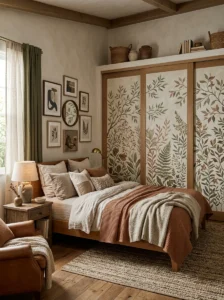
For the most personal, one-of-a-kind option on this entire list, commissioning or creating a hand-painted mural directly on a set of closet doors turns them into genuine art, completely unique to your specific space and personal taste. I worked with a talented friend to hand-paint a soft, abstract botanical design across a set of closet doors in a client’s nursery, and the resulting piece became the emotional centerpiece of the entire room, something genuinely impossible to replicate with any purchased decor.
I’d recommend working with a professional muralist or a genuinely skilled amateur artist for this specific project, given how prominently closet doors typically feature within a room and how permanent this kind of investment tends to be once completed. Discussing your vision thoroughly beforehand, including specific colors, style references, and the overall mood you’re hoping to achieve, helps ensure the final result genuinely matches what you had in mind, rather than leaving too much open to interpretation during the actual painting process.
I’d suggest this option specifically for a room or space with genuine long-term stability in its intended use, a permanent bedroom rather than a frequently changing guest room, given both the cost involved and the deeply personal, specific nature of a custom mural, which won’t suit every subsequent use or occupant of the room in the way a more neutral door treatment might over the years ahead.
Final Thoughts
Looking back across every closet door project I’ve worked on, the ones that made the biggest genuine difference weren’t necessarily the most expensive or elaborate, they were the ones chosen specifically to suit the room’s actual existing style and daily function, rather than picked purely because a particular look seemed trendy or impressive in a photo. A closet door upgrade succeeds when it stops being something you look past and starts being something you actually notice and appreciate every time you walk into the room.
Before choosing any of these ideas for your own space, take a moment to consider your room’s actual available clearance, your household’s daily habits, and how much investment genuinely makes sense for what’s often a purely functional element most people never think to upgrade at all. Even a modest change, a fresh coat of paint, new hardware, can genuinely transform how a room feels, proving that closet doors deserve far more consideration than most of us typically give them.