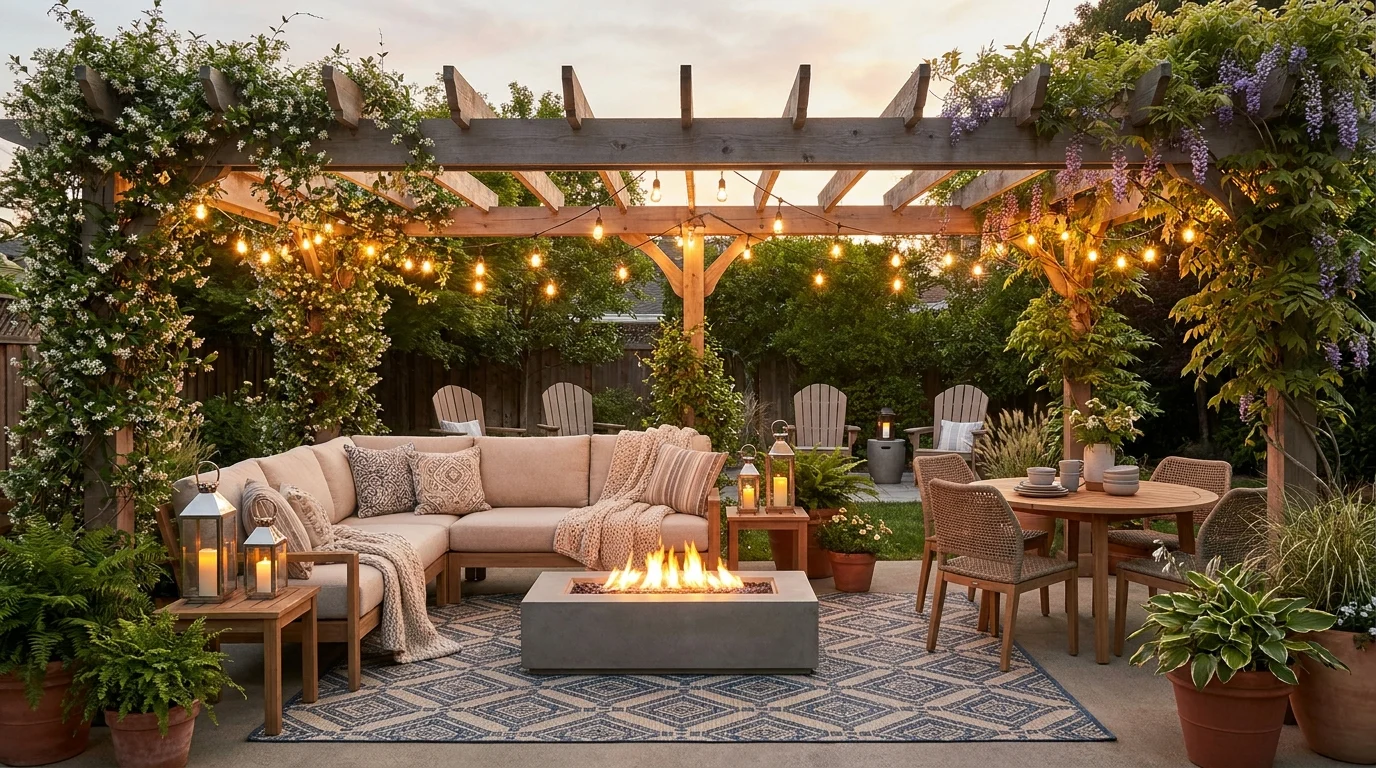
Our patio used to be nothing more than a slab of cracked concrete with a rusty grill parked in the corner, the kind of space you walk past on your way to somewhere else rather than somewhere you’d actually choose to sit. It took about two summers of slow, budget-friendly changes before it finally became the spot where we now spend most of our warm-weather evenings, coffee in hand every morning and drinks with friends most weekends. Below are 12 ideas that made the biggest difference for us, along with a few things I picked up from neighbors and friends who transformed their own outdoor spaces long before I got around to mine.
1. String Lights Overhea
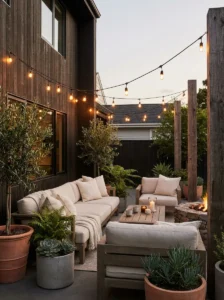
String lights were the very first thing I added to our patio, mostly on a whim after seeing them at a friend’s backyard party, and they ended up being the single cheapest, highest-impact change I made in the entire process. A single strand of warm white bulbs strung between two posts instantly made the space feel like somewhere worth lingering after dark.
I ran mine from the corner of our house to a single post I installed specifically to anchor the other end, creating a gentle diagonal line rather than a perfectly straight one, which actually looks more natural and less like a store display once it’s lit up in the evening.
Spacing matters more than people think here. I initially bought a strand with bulbs spaced too closely together, and it read as a little busy and overdone once fully lit, whereas a slightly wider gap between bulbs (roughly 12 inches) creates a softer, more scattered glow that feels considerably more relaxed.
Solar-powered versions have improved enormously over the last few years if running an extension cord isn’t practical for your layout. I switched a section of my patio to solar strands specifically for an area far from any outlet, and the light quality is nearly indistinguishable from the plug-in versions I use elsewhere.
2. Outdoor Rug
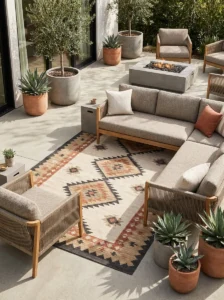
Adding an outdoor rug to our patio was the change that finally made the space feel like an actual room rather than just a slab of concrete with furniture scattered on top of it. It sounds like a small addition, but defining the seating area with a rug underneath genuinely anchors the whole layout in a way that’s hard to replicate any other way.
I chose a polypropylene rug specifically for its weather resistance, since it holds up to rain, direct sun, and the occasional spilled drink without fading or growing mildew the way a natural fiber rug would in an uncovered outdoor space exposed to the elements year-round.
Pattern is where I’d encourage taking more risks outdoors than you might indoors. A bold geometric or striped pattern hides dirt and wear far better than a solid color, and it holds up visually against the busier, more textured backdrop of plants, furniture, and natural light that an outdoor space naturally has going on around it.
Sizing follows the same basic principle as indoor rugs — go bigger than feels comfortable, ideally large enough that at least the front legs of your seating furniture sit on top of it, which ties the whole arrangement together rather than leaving the rug looking like an isolated square floating on the patio.
3. Cozy Seating Area with Weatherproof Furniture
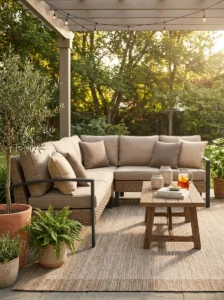
Investing in genuinely comfortable, weatherproof seating was the update that turned our patio from a place we occasionally sat to a place we actively chose over our living room most warm evenings. Our first attempt used cheap plastic chairs that were fine in a pinch but never invited anyone to actually stay very long.
I eventually saved up for a proper outdoor sectional with quick-dry foam cushions, meaning even after a surprise rain shower, we’re back to sitting comfortably within about twenty minutes rather than dealing with soggy cushions for days, which was a constant frustration with our old furniture setup.
Material matters enormously for longevity here. Woven resin wicker and powder-coated aluminum have both held up beautifully through multiple seasons in our yard, while a cheaper untreated wood set we tried early on warped and faded within a single summer of direct sun exposure.
I’d recommend arranging seating in a way that encourages actual conversation rather than everyone facing the same direction toward a TV or a view, similar to how you’d think about an indoor living room layout. A slight curve or an L-shaped arrangement facing inward has made our gatherings feel considerably more social.
4. Fire Pit as a Gathering Spot
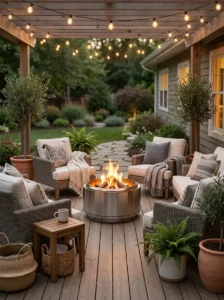
A fire pit has become the genuine centerpiece of our patio, and it’s the single feature that extends our outdoor season by a solid two extra months on either side of summer, since the warmth means we’re still gathering outside comfortably well into fall evenings that would otherwise be too chilly to sit outdoors.
We went with a simple, portable propane fire pit rather than a built-in wood-burning version, mostly for convenience and because our local regulations restrict open wood fires in our specific neighborhood. It lights instantly, has no smoke to deal with, and cleanup is essentially nonexistent compared to a traditional fire.
Positioning matters considerably for both safety and enjoyment. We placed ours with enough clearance from our seating and any overhanging trees, following the manufacturer’s recommended distance guidelines closely, and arranged chairs in a loose circle around it rather than a straight line, which encourages much more natural conversation.
If a full fire pit isn’t in the budget or practical for your specific yard, a simple set of tabletop fire bowls scattered across your existing furniture achieves a similar cozy, flickering ambiance on a much smaller scale, which is exactly what we used for an entire summer before eventually upgrading to the larger version.
5. Pergola or Shade Structure
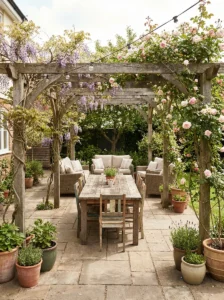
Building a simple pergola over our dining area solved the single biggest complaint we had about our patio for years — the complete lack of shade meant we were avoiding the space entirely during the hottest parts of summer afternoons, no matter how nicely we’d decorated it otherwise.
We opted for a basic wooden pergola kit rather than a custom-built structure, which kept the cost considerably lower and the installation manageable over a single weekend with two people and a rented post-hole digger, rather than requiring a full contractor and a much larger budget commitment.
Adding a climbing vine, like wisteria or a flowering clematis, across the top has been my favorite addition since installing it, since the natural greenery deepens the shade coverage over time while adding genuine beauty that a bare wooden structure alone doesn’t provide on its own.
For those not ready for a full structural project, a large cantilever umbrella or a simple shade sail stretched between two anchor points offers similar relief from direct sun with a fraction of the cost and effort, and both options remain fully removable if you ever want to reconfigure your layout down the road.
6. Outdoor Kitchen or Grill Station
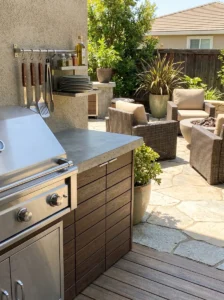
Building out even a modest outdoor kitchen station changed how often we actually cooked and ate outside, since having a dedicated counter space, proper storage, and our grill all in one organized area removed the constant back-and-forth trips into the house that used to make outdoor cooking feel like more hassle than it was worth.
We started small, adding a simple weatherproof cabinet next to our existing grill for storing utensils, plates, and condiments, along with a small prep counter built from outdoor-rated countertop material, rather than committing to a full custom outdoor kitchen build from the very beginning of this project.
This modular approach let us expand gradually as our budget allowed, eventually adding a small outdoor refrigerator a year later, which has been genuinely life-changing for hosting, since nobody needs to keep running inside for drinks or forgotten ingredients mid-meal preparation anymore.
I’d recommend positioning your grill or cooking station somewhat away from your main seating area if possible, both for safety reasons and because smoke and cooking smells can otherwise linger uncomfortably close to where people are actually sitting and trying to relax and enjoy conversation.
7. Potted Plants and Greenery
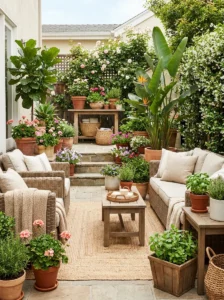
Filling our patio with a mix of potted plants was one of the most affordable, flexible ways we brought genuine life and color into the space, and unlike permanent landscaping, pots let us completely rearrange or swap out plants seasonally without any real commitment or ongoing maintenance headache.
I lean heavily on varying heights and sizes when arranging our pots, clustering a few taller plants in corners for visual anchoring while scattering smaller pots of herbs and flowers along tables and steps, rather than lining everything up uniformly, which tends to look more staged than naturally collected.
Drought-tolerant varieties have become my go-to for anything in direct sun on our patio, since I’ve killed more than my fair share of delicate plants that needed more consistent watering than my actual schedule allowed for during particularly busy stretches of the summer months.
Grouping herbs specifically near our outdoor dining and cooking area has been both decorative and genuinely useful, since fresh basil, rosemary, and mint are all right there whenever we’re grilling or mixing drinks, saving regular trips inside and adding a wonderful, fresh scent to the whole seating area.
8. Water Feature
Adding a small water feature, even something as modest as a tabletop fountain, brought a genuinely calming quality to our patio that I underestimated until we actually had it running. The gentle sound of moving water does real work masking street noise and creating a more secluded, peaceful feeling in the space.
We started with a simple solar-powered tabletop fountain rather than anything requiring plumbing or electrical work, which kept both the cost and installation effort minimal while still providing that same soothing ambient sound throughout the day whenever there’s enough sunlight to keep it running.
For anyone wanting something more substantial, a small recirculating pondless waterfall feature can be installed without an actual standing pond, avoiding both the maintenance and the safety concerns that come with open water, especially relevant for households with young kids or curious pets running around the yard.
I’d recommend positioning any water feature relatively close to your main seating area, since the sound doesn’t carry as far as you might expect outdoors, and a fountain tucked too far into a corner of the yard won’t provide nearly the same ambient benefit as one placed within easy earshot of where people actually gather.
9. Outdoor Dining Set
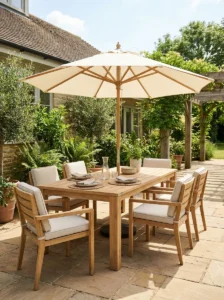
Investing in a proper outdoor dining set, rather than continuing to drag chairs and a folding table out from the garage every time we wanted to eat outside, made outdoor meals a genuinely regular habit rather than an occasional, effort-heavy event reserved for special occasions throughout the summer.
We chose a teak table specifically for its natural weather resistance, since the wood develops a lovely silvery patina over time without requiring the regular sealing and maintenance that other wood types demand, which matters a lot to me given how little spare time I actually have for upkeep projects.
Sizing the table appropriately for your actual patio footprint matters more than people expect going in. We initially bought a table too large for comfortable movement around it, and downsizing to a more appropriately scaled option the following year made the whole space feel considerably less cramped and more functional.
An umbrella built directly into the table, rather than a separate freestanding shade structure, has been particularly convenient for us, since it provides shade exactly where we need it during meals without requiring any additional floor space or a separate structure competing for room in an already compact patio area.
10. Hammock or Swing
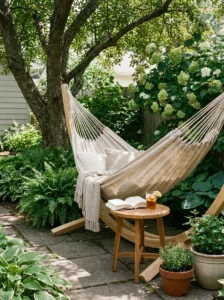
Adding a hammock to the corner of our yard gave us a genuinely different kind of outdoor spot than our main seating area provides, somewhere specifically for reading or an afternoon nap rather than socializing, and it’s become one of the most-used features on our entire property since we installed it.
We went with a freestanding hammock stand rather than hanging it between two trees, mostly for flexibility, since it can be relocated anywhere in the yard without needing two perfectly spaced mature trees in exactly the right configuration to support it, which our yard simply didn’t have available.
For a more social alternative, a porch swing or a suspended daybed can accommodate multiple people at once, making it a better fit for households wanting a shared, conversational spot rather than the more solitary experience a traditional single hammock naturally tends to provide for whoever’s using it.
I’d recommend positioning either option somewhere with at least partial shade, since direct, unfiltered sun for an extended lounging session can get uncomfortably hot fast, and the whole appeal of a hammock or swing is lingering there for a while rather than a quick five-minute sit before moving elsewhere.
11. Privacy Screening
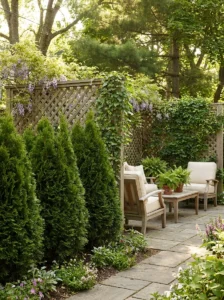
Our patio backs directly onto a fairly busy street, and adding privacy screening was the change that finally made the space feel like our own private retreat rather than somewhere we felt slightly on display every time we sat outside, which had been quietly bothering us for longer than I’d like to admit.
We used a combination of tall, dense shrubs along the property line and a simple lattice panel closer to our seating area, layering a few different heights and materials rather than relying on a single tall fence, which created a more natural, gradual sense of enclosure instead of one abrupt, solid barrier.
Bamboo screening rolls have become a popular, budget-friendly option for renters or anyone not wanting a permanent structural addition, since they can be attached directly to an existing fence or railing with simple zip ties and removed just as easily if you ever move or change your mind about the layout.
I’d recommend thinking through exactly which sightlines bother you most before adding screening everywhere, since full enclosure isn’t always necessary or even desirable. We left one section of our yard completely open toward a nice view of trees while screening only the section facing directly toward the street and neighboring windows.
12. Ambient Lighting/Lanterns
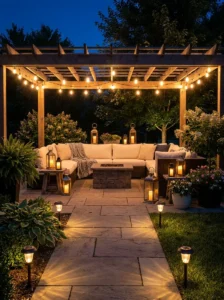
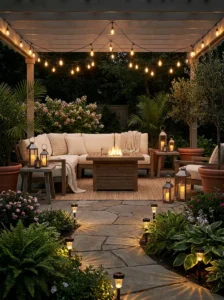
Beyond the overhead string lights already mentioned, layering in additional ambient lighting at a lower level — lanterns, path lights, candles — has made our patio feel genuinely inviting after dark rather than relying on a single light source that leaves most of the space in shadow once the sun goes down.
I scatter a mix of battery-operated lanterns across our side tables and the ground near our seating area, which provides a warm, flickering glow at a completely different height than the overhead string lights, adding real depth and dimension to the lighting throughout the whole space rather than one flat source.
Solar path lights lining our walkway toward the patio have been both practical and decorative, guiding guests safely to the seating area after dark while adding a subtle, glowing border along the edges of our yard that requires zero ongoing electrical cost or maintenance once they’re initially installed.
I’d recommend warm-toned bulbs (measured in a lower Kelvin range) rather than cool white or blue-toned lighting throughout your entire outdoor space, since warm light consistently reads as cozier and more relaxing in the evening, while cooler tones can feel a bit harsh and clinical for a space meant for unwinding.
Building a backyard escape doesn’t happen overnight, and honestly, ours is still evolving each season as we add or swap out different elements based on what we actually end up using most. Start with whichever one or two ideas feel most achievable for your current budget and space, and let the rest come together gradually — that slower, more considered approach is exactly what made our own patio feel genuinely personal rather than like it was assembled all at once from a single shopping trip.