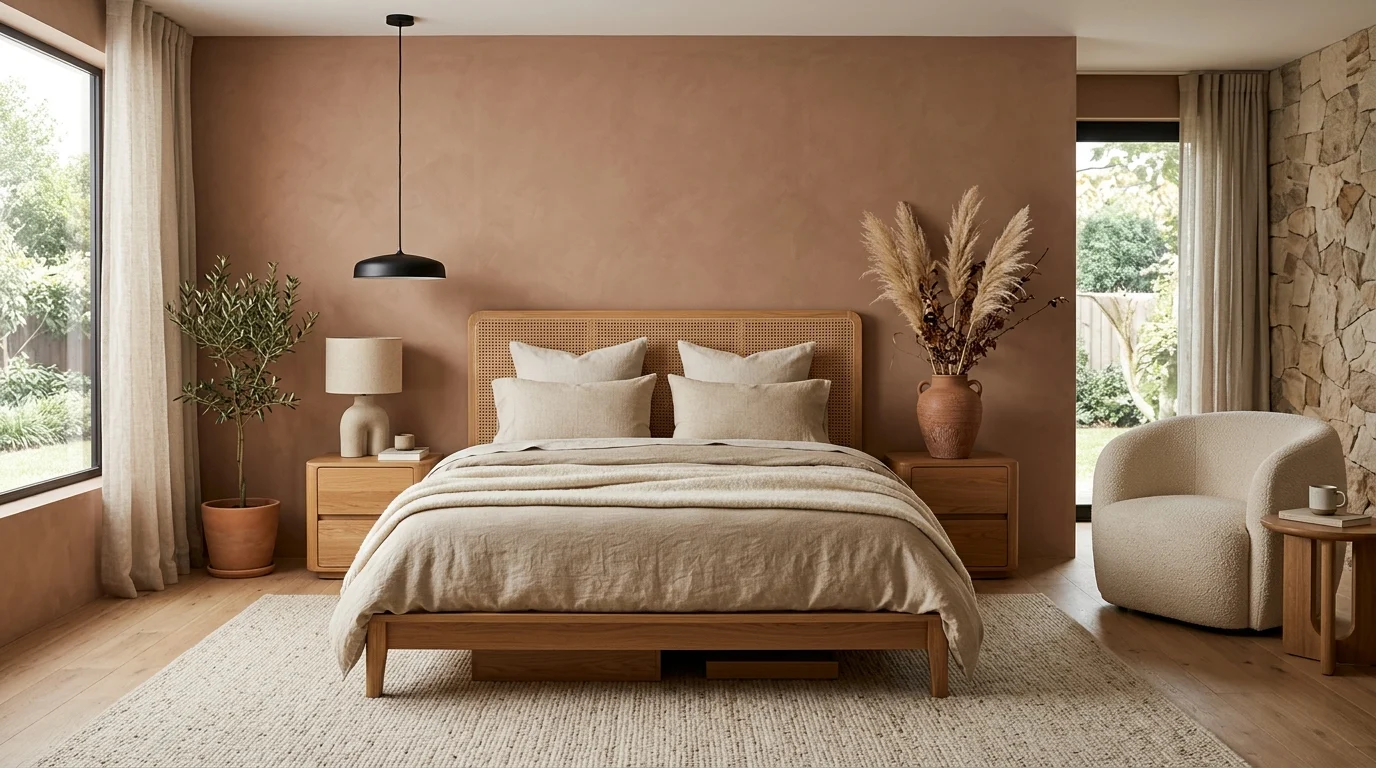
For a long time, I associated “modern” bedrooms with a certain coolness, sleek surfaces, crisp whites, a slightly clinical feel that always photographed well but never actually felt like somewhere I wanted to unwind. It wasn’t until I started incorporating genuinely earthy, natural materials into our own bedroom’s more contemporary bones, warm wood, raw linen, clay-toned walls, that I understood modern and cozy were never actually opposites. The clean lines stayed, but the room finally felt warm enough to actually want to spend time in beyond just sleeping.
Since that shift in our own space, I’ve leaned further into this earthy modern direction in every bedroom project I’ve worked on since, and picked up plenty of practical lessons about which natural materials and tones genuinely deliver that warmth without tipping into something overly rustic or dated. Below are 17 earthy modern bedroom ideas based on real rooms I’ve lived in or designed, each one balancing clean, contemporary design with genuine natural warmth.
1. Clay and Terracotta Wall Tones
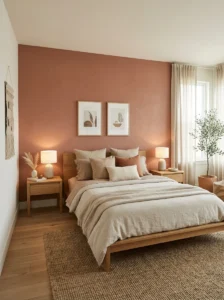
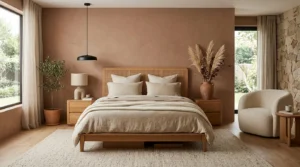
A muted clay or terracotta wall color brings immediate warmth to a modern bedroom, grounding the space in a way that a purely white or grey wall simply can’t achieve. I painted our own bedroom’s accent wall a soft, dusty terracotta a couple of years ago, keeping the surrounding walls in a simple warm white, and the contrast gave the room genuine depth while still maintaining a clean, contemporary feel throughout the rest of the space.
The key to keeping this color feeling modern rather than overly rustic lies in restraint elsewhere in the room, pairing the clay tone with simple, clean-lined furniture and minimal decorative clutter, rather than heavily ornate or traditional pieces that might pull the aesthetic toward something more overtly bohemian or country-style than intended.
I’d recommend a muted, slightly greyed-down version of clay or terracotta specifically, rather than anything too bright or saturated, since the muted quality reads as considerably more sophisticated and better suited to a modern aesthetic than a bolder, more vibrant version of the same color family.
2. Raw, Unfinished Wood Furniture
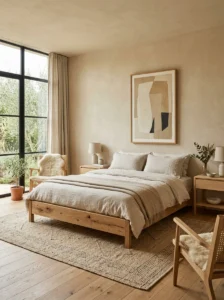
Furniture with a raw, minimally finished wood surface, showing genuine grain and natural variation rather than a heavily lacquered or painted finish, brings authentic organic texture to a modern bedroom’s otherwise clean lines. I chose a simple raw oak bed frame for our own room specifically for this reason, and the wood’s natural character, small knots, visible grain, subtle color variation, adds genuine warmth against our room’s otherwise fairly minimal, contemporary furnishings.
I’d recommend pairing this kind of raw wood furniture with simpler, cleaner surrounding pieces, a low-profile platform bed rather than an ornately carved frame, letting the wood’s natural texture provide the room’s organic warmth while the overall silhouette stays firmly contemporary.
I’d suggest a simple oil or wax finish specifically for raw wood pieces, rather than a heavy lacquer, since this lighter treatment protects the wood while still allowing its natural texture and grain to remain genuinely visible and tactile, an important detail for achieving this specific earthy modern balance.
3. Linen Bedding in Natural, Undyed Tones
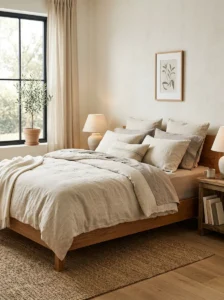
Linen bedding in its natural, undyed color, an oatmeal, a soft stone grey, a warm sand tone, brings genuine textural richness to a modern bedroom while keeping the overall palette calm and cohesive. I switched our own bedding to natural linen a few years back, and the fabric’s slightly rumpled, lived-in texture became a genuine style element in its own right, rather than something to smooth away entirely as a flatter cotton bedding might encourage.
I’d recommend embracing linen’s naturally relaxed, slightly wrinkled quality specifically, rather than trying to keep it perfectly pressed and smooth, since this relaxed texture is actually part of the material’s appeal within an earthy modern aesthetic, contributing genuine organic character rather than reading as untidy or unfinished.
I’d suggest layering two or three different natural linen tones together, a lighter sheet with a slightly deeper toned duvet cover, rather than a single flat color throughout, since this subtle tonal variation adds genuine depth to the bed without introducing any pattern or bold color that might feel at odds with the room’s overall calm, earthy character.
4. Woven Rattan or Cane Headboard
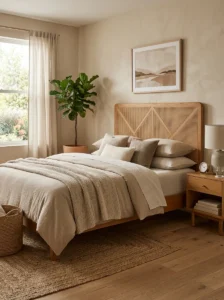
A headboard crafted from woven rattan or cane brings genuine natural texture to a modern bedroom’s focal point, offering a distinctly organic alternative to a fully upholstered or solid wood headboard. I used a simple, clean-lined rattan headboard in a client’s bedroom, and its open, woven texture added considerable visual interest while still maintaining the room’s overall minimal, contemporary feel.
I’d recommend a rattan headboard with a simple, geometric silhouette specifically, rather than an overly ornate or curved design, since the cleaner shape keeps the piece feeling modern despite the material’s inherently natural, textural quality.
I’d suggest pairing a rattan headboard with simple, solid-colored bedding rather than anything too busy or patterned, letting the headboard’s natural texture stand out as the room’s primary source of visual interest without competing against other equally textured or patterned elements nearby.
5. A Neutral Palette Built Around Sand and Stone
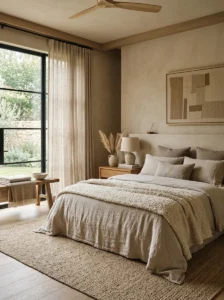
Rather than a single dominant accent color, building a bedroom’s entire palette around varying shades of sand, stone, and warm beige creates a genuinely cohesive, earthy modern foundation that feels considered without relying on any single bold statement color. I designed a bedroom this way for a client specifically wanting a calm, grounded space, layering three or four different warm neutral tones across her walls, bedding, and furniture, and the resulting depth felt rich and intentional despite technically staying within a fairly narrow, neutral color range.
I’d recommend varying texture alongside this neutral tonal palette specifically, a smooth linen alongside a nubby wool throw, a matte painted wall against a slightly glossy wood nightstand, since this textural variation is what keeps an all-neutral room from feeling flat or underdeveloped.
I’d suggest testing your chosen neutrals together directly in your bedroom’s actual lighting before committing to a full palette, since warm neutrals can shift noticeably depending on the specific light exposure, and ensuring genuine cohesion between your chosen tones matters considerably more in this kind of palette than it might with a single, more attention-grabbing accent color.
6. Sculptural Ceramic Accents
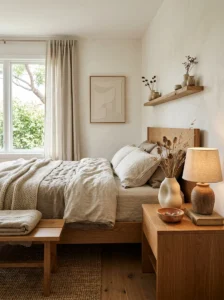
Simple, sculptural ceramic pieces, a rounded vase, an organically shaped bowl, a textured table lamp base, bring genuine handmade character to a modern bedroom without introducing any specific pattern or bold color. I’ve collected a small handful of these pieces for our own bedroom over the past few years, favoring pieces with visible texture or an irregular, hand-thrown quality over anything perfectly smooth and uniform.
I’d recommend choosing pieces in muted, earthy glazes specifically, a soft cream, a warm terracotta, a muted sage, rather than anything glossy or brightly colored, since these earthier finishes integrate more naturally into the overall warm, organic palette this bedroom style depends on.
I’d suggest displaying just a few well-chosen pieces rather than a large, crowded collection, since restraint here keeps each individual piece feeling genuinely appreciated and considered, rather than blending together into an undifferentiated cluster of similar objects.
7. Warm Wood Flooring or a Natural Wool Rug
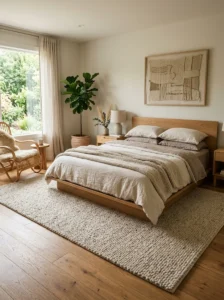
The material underfoot matters considerably for achieving genuine earthy warmth in a modern bedroom, and either warm wood flooring or a natural wool rug in an undyed or subtly patterned tone grounds the room in a way that cooler flooring materials or a synthetic rug simply don’t achieve. I added a natural, undyed wool rug to our own bedroom, and its slightly nubby texture and warm, oatmeal tone brought genuine coziness underfoot that our previous flatter, more uniform rug hadn’t provided.
I’d recommend a rug with genuine natural fiber and texture specifically, wool, jute, a natural sisal blend, rather than a synthetic alternative, since these natural materials carry an inherent warmth and tactile quality that’s difficult to fully replicate with manufactured fibers.
I’d suggest a relatively simple, subtly textured rug pattern rather than anything boldly graphic, letting the material’s natural texture provide visual interest rather than relying on a strong, potentially competing pattern that might pull attention away from the room’s other earthy, natural elements.
8. Matte Black Accents for Modern Contrast
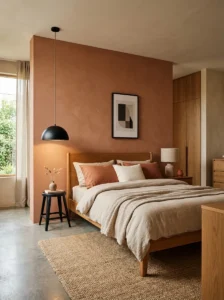
While warmth and natural texture define much of this aesthetic, incorporating a few matte black accents, a light fixture, a picture frame, a simple metal stool, provides genuine modern contrast that keeps the overall room from feeling overly soft or purely rustic. I added a simple matte black pendant light to our own earthy modern bedroom, and the sharp, contemporary silhouette against our warmer, more textural surrounding elements struck exactly the balance I was after between cozy and genuinely current.
I’d recommend limiting these black accents to just a couple of pieces specifically, rather than introducing black throughout every fixture and detail, since the whole point is providing a considered, contrasting note rather than competing with the room’s primary warm, earthy palette for dominant visual attention.
I’d suggest choosing black accents with clean, simple silhouettes specifically, avoiding anything overly ornate or detailed, since a cleaner shape reinforces the modern side of this aesthetic’s balance more effectively than a more decorative, traditional black piece would.
9. A Low-Profile Platform Bed
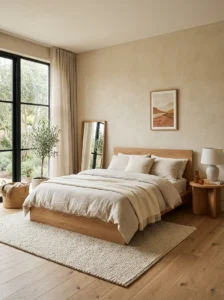
A simple, low-profile platform bed frame, often crafted from warm wood with clean, minimal lines, anchors this aesthetic’s modern foundation while still allowing natural material warmth to come through in the frame’s actual wood tone and texture. I chose this style of bed for our own room specifically, and its low, grounded silhouette combined with the wood’s natural grain struck exactly the balance between contemporary simplicity and organic warmth I was after throughout the whole space.
I’d recommend a frame without excessive ornamentation or detailing specifically, letting the wood’s natural grain and warm tone provide the visual interest rather than relying on carved details or an elaborate silhouette that would pull the piece toward a more traditional aesthetic.
I’d suggest pairing this low platform frame with simple, unfussy bedding in natural, undyed tones, similar to guidance offered elsewhere throughout this list, ensuring the whole bed setup feels cohesive and intentional rather than mixing too many competing style influences within this single, central piece of furniture.
10. Dried Botanicals Instead of Fresh Flowers
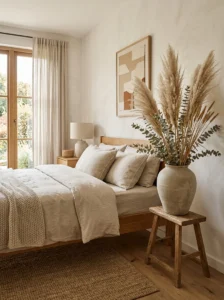
Dried grasses, pampas, or simple dried botanical stems in a ceramic vase bring genuine organic texture to a modern bedroom without requiring the ongoing maintenance fresh flowers demand, while their muted, neutral coloring integrates seamlessly into this aesthetic’s overall earthy palette. I’ve kept a simple arrangement of dried pampas grass in our bedroom for years now, and its soft, textural quality adds a gentle, organic element to the room without introducing any color that might clash with our otherwise carefully considered neutral palette.
I’d recommend choosing dried botanicals with genuine textural interest specifically, pampas grass, dried eucalyptus, wheat stalks, rather than anything too delicate or sparse, since a fuller, more textural arrangement contributes more meaningfully to this aesthetic’s overall organic richness.
I’d suggest a simple, unadorned ceramic or glass vase for this display, avoiding anything overly ornate that might compete visually with the dried botanicals themselves, letting the natural texture of the stems provide the arrangement’s primary visual interest.
11. Woven Wall Hangings for Textural Art
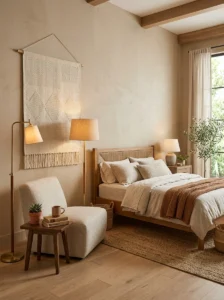
A woven textile wall hanging, in natural fibers and a muted, earthy color palette, brings genuine handmade texture to a modern bedroom’s walls, offering a softer alternative to framed art or a mirror. I added a simple, cream-toned woven hanging above a reading chair in our bedroom, and its soft, tactile quality introduced a gentle organic element that a flat, framed print wouldn’t have achieved in quite the same way.
I’d recommend choosing a piece with a relatively simple, geometric weave pattern specifically, rather than anything overly intricate or colorful, since a simpler design keeps the piece feeling modern and considered rather than pulling toward a more overtly bohemian or maximalist direction.
I’d suggest natural fiber materials specifically, wool, cotton, jute, for this kind of hanging, since these materials age and wear more gracefully over time than synthetic alternatives, and their inherent texture and slight irregularity genuinely suit this earthy, handmade aesthetic.
12. A Warm Wood Nightstand with Rounded Edges
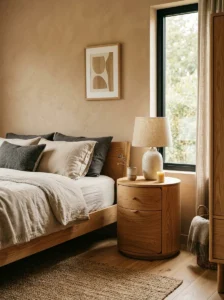
Nightstands with soft, rounded edges rather than sharp, angular corners bring a gentle, organic quality to a modern bedroom’s bedside furniture, softening what could otherwise feel like an overly rigid, geometric room. I chose a simple, rounded wood nightstand for our own bedroom specifically for this reason, and its soft silhouette felt considerably more inviting than the sharper, more angular nightstand we’d previously used.
I’d recommend this rounded silhouette specifically for smaller furniture pieces throughout the room, nightstands, a small side table, rather than necessarily your larger pieces like the bed frame or dresser, since this softer detail works particularly well as an accent against the room’s otherwise cleaner, more geometric larger furniture.
I’d suggest a warm wood tone specifically for these rounded pieces, walnut, oak, cherry, rather than a painted or lacquered finish, letting the wood’s natural warmth and grain reinforce the room’s overall earthy character alongside its gently rounded shape.
13. Layered Neutral Textiles Without Pattern
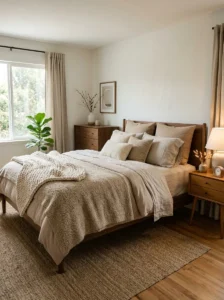
Rather than relying on a single bold pattern for visual interest, layering several different neutral-toned textiles with varying texture, a chunky knit throw, a smooth linen sheet, a slightly nubby wool blanket, creates genuine depth without introducing any specific pattern into the room at all. I layered our own bed this way, using three distinct neutral tones and textures without a single patterned piece among them, and the resulting richness felt genuinely sophisticated rather than flat or underdeveloped.
I’d recommend gathering your chosen textiles together physically before finalizing your selection, similar to guidance offered regarding grey textile layering elsewhere, since subtle tone and texture combinations are easier to judge this way than when shopping for individual pieces separately without seeing them together first.
I’d suggest at least three distinct textures within this kind of layered, pattern-free approach, since fewer than that tends to read as somewhat flat, while three or more genuinely different textures create enough variation to hold visual interest without needing any actual pattern at all.
14. A Simple Woven Pendant or Wall Sconce
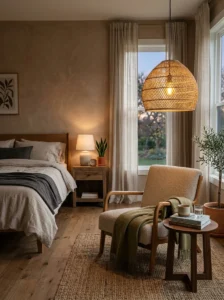
Beyond a statement pendant discussed elsewhere, a simpler woven light fixture, a small rattan or seagrass pendant, a wall sconce with a woven shade, brings gentle, filtered light and genuine natural texture to a modern bedroom. I added a small woven pendant beside our reading chair specifically, and the soft, dappled light it casts through the woven material adds a genuinely warm, organic quality to that corner of the room in the evening.
I’d recommend this kind of fixture specifically for secondary or accent lighting rather than your primary overhead fixture, since the filtered, softer light these woven shades produce suits ambient or accent lighting purposes considerably better than a room’s main functional lighting needs.
I’d suggest pairing a woven light fixture with a warm bulb specifically, consistent with lighting guidance offered throughout other room types, ensuring the light itself contributes to the room’s overall warm, earthy atmosphere rather than undermining it with a cooler, more clinical bulb temperature.
15. A Reading Nook with Boucle or Textured Upholstery
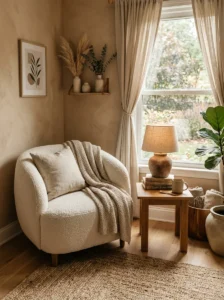
A small reading chair upholstered in boucle or another genuinely textured fabric brings tactile richness and a soft, contemporary silhouette to a corner of an earthy modern bedroom. I added a cream boucle chair to our own bedroom’s corner, and its nubby, tactile texture paired beautifully with the room’s other natural materials while still reading as distinctly modern in its overall clean, rounded silhouette.
I’d recommend a chair with simple, rounded lines specifically, rather than anything with sharp angles or elaborate detailing, since this softer shape complements boucle’s inherently soft, tactile quality far better than a more angular frame would.
I’d suggest a neutral, undyed boucle color specifically, cream, oatmeal, a soft stone grey, rather than anything bold or brightly colored, ensuring this piece integrates smoothly into the room’s overall earthy, muted palette rather than becoming an unrelated, competing focal point.
16. Exposed or Faux Wood Beams
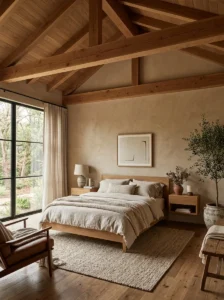
For bedrooms with adequate ceiling height, exposed or decorative faux wood beams bring genuine architectural warmth to the space, echoing similar guidance offered regarding this feature in other room contexts throughout related design projects. A client’s earthy modern bedroom included original exposed beams, and even within an otherwise fairly minimal, contemporary room, the beams added enough natural texture and warmth to keep the space from feeling overly stark or clinical.
I’d recommend a beam finish that complements your room’s other wood tones, your bed frame, your nightstands, rather than introducing an entirely unrelated wood color that would feel disconnected from the room’s other material choices.
I’d suggest this addition specifically for rooms with genuinely appropriate ceiling height and structure to support it, consulting with a contractor about appropriate spacing and scale relative to your specific room’s dimensions before committing to either genuine structural beams or a decorative faux alternative.
17. A Curated Collection of Natural Stone or Crystal Accents
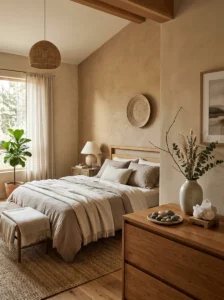
A small, simple collection of natural stones or unpolished crystal specimens, displayed on a nightstand or dresser, brings genuine organic texture and a quiet, grounding quality to a modern bedroom without requiring any specific pattern or bold color choice. I keep a small collection of smooth river stones and one larger, unpolished crystal specimen on our dresser, gathered gradually over a few years rather than purchased all at once, and this simple display adds a genuinely calming, natural element to the room.
I’d recommend choosing pieces with genuine natural texture and variation specifically, rather than anything overly polished or uniform, since the slightly irregular, natural quality of unpolished stone or crystal suits this earthy aesthetic considerably better than something with a more manufactured, uniform appearance.
I’d suggest keeping this collection relatively small and curated, three to five pieces at most, rather than an extensive display, since restraint here lets each individual piece feel genuinely appreciated rather than blending into an undifferentiated cluster of similar objects competing for the same attention.
Final Thoughts
Every earthy modern bedroom I’ve genuinely enjoyed living in or designing achieved its particular balance through the same underlying principle, clean, considered lines paired with genuine natural material and texture, rather than either element dominating entirely on its own. A room that’s purely sleek and modern without any organic warmth can feel cold, while one that leans too heavily into natural texture without any contemporary structure can start to feel more rustic than intended.
If you’re building this kind of bedroom for your own space, I’d suggest starting with your foundational elements, wall color, bed frame, flooring, choosing pieces with genuine natural material and warm tone, before layering in the smaller accent details from this list that add texture and personality without disrupting that underlying balance. Earthy and modern were never actually in conflict, they just require a bit of intentional layering to genuinely work together.