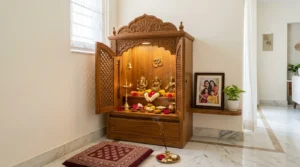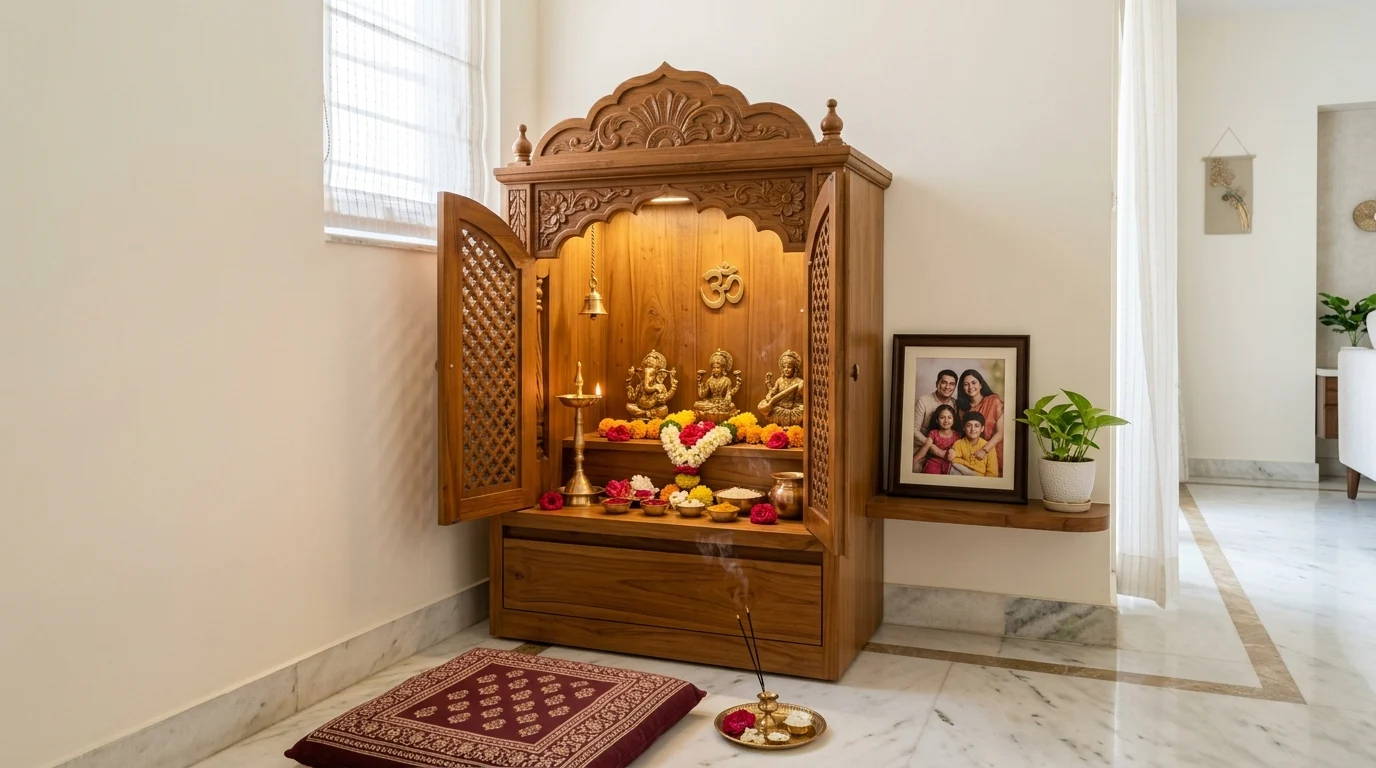
When my parents finally sold our old family house last year, the one place that felt hardest to leave behind wasn’t the kitchen or the living room where we’d celebrated every birthday, it was our small pooja room, the corner where my mother had lit her diya every single morning for over thirty years without fail. Moving into their new, smaller apartment meant genuinely rethinking how to recreate that same sense of peace and sacredness in a considerably more limited space, and helping my mother figure this out became one of the more meaningful projects I’ve worked on with her, more about feeling than furniture.
What I learned through that process is that a genuinely peaceful pooja space has very little to do with square footage or elaborate design, and everything to do with intention, cleanliness, proper orientation, and the quiet consistency of daily ritual. My mother’s new pooja corner, though considerably smaller than what she had before, somehow feels just as sacred, maybe even more so, because we built it so deliberately around what actually mattered to her. Here are 17 pooja room design ideas, drawn from that project and a couple of others I’ve helped with since, all aimed at creating a genuinely peaceful, sacred corner regardless of how much space you’re working with.
1. Choose the Right Direction for Your Mandir
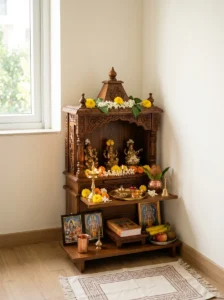
The very first thing my mother insisted on was getting the orientation right, positioning her mandir so she’d be facing east or north while praying, following traditional guidance she’d grown up with and genuinely didn’t want to compromise on despite our apartment’s limited layout options.
We spent a full afternoon testing different corners of the new apartment before finding one that worked. I’d recommend prioritizing this orientation early in your own planning, even if it means sacrificing a bit of convenience elsewhere in your layout, since this detail genuinely matters to many families’ sense of correctness and peace within the space.
2. Use a Dedicated Wooden Mandir Unit
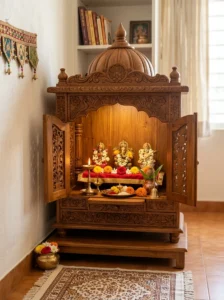
Rather than open shelving, my mother chose a proper wooden mandir unit with doors, similar to the one she’d had for decades, giving her murtis a genuine sense of enclosure and protection when not in active use each day.
This kind of dedicated unit also helps contain the space visually within a smaller apartment, keeping the sacred corner distinct from the rest of the room rather than blending into general shelving. I’d recommend this investment specifically for anyone wanting that traditional, contained feeling regardless of their available space.
3. Keep the Space Genuinely Separate From Clutter
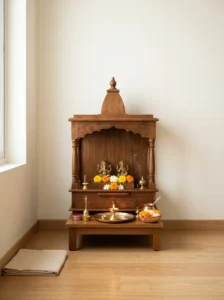
We made sure my mother’s new pooja corner had zero overlap with general household storage, no mail piling nearby, no random items leaning against the unit, treating the space with the same care and cleanliness she’d always maintained in her original, larger room.
This kind of genuine separation matters enormously for maintaining the sense of sanctity a pooja space requires, and I’d recommend this same discipline for anyone working with limited space, resist the temptation to let the area slowly become a catch-all corner over time.
4. Add Proper Lighting for Both Function and Ambiance
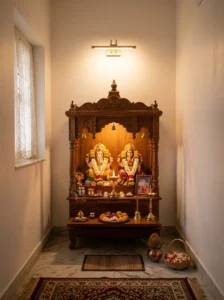
Beyond her diya, we added a small, warm-toned light specifically above her mandir, ensuring she could see clearly during her early morning prayers before the rest of the apartment’s daylight had fully arrived, while also creating a gentle, appropriately reverent glow.
This kind of dedicated lighting matters for both practical function and genuine atmosphere, and I’d recommend this addition for any pooja space, particularly one used during early morning or evening hours when natural light might not be sufficient.
5. Incorporate a Small Bell for Daily Ritual
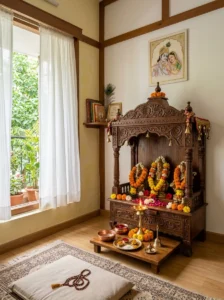
We made sure her small ghanti had a proper, easily reachable spot within her new mandir, since this small object carries real ritual significance in her daily routine and needed genuine, thoughtful placement rather than being tucked away inconveniently.
This kind of careful attention to ritual objects specifically matters for maintaining consistency in daily practice, and I’d recommend considering each meaningful object’s actual placement and accessibility rather than treating the whole space as purely decorative.
6. Choose Calming, Sacred Colors Like White or Soft Yellow
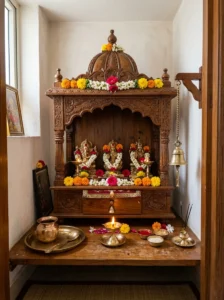
For the wall directly behind her mandir, we chose a soft, warm white, creating a genuinely calm, uncluttered backdrop that let her murtis and the space’s ritual objects remain the clear visual and spiritual focus.
This kind of restrained, peaceful color choice matters for the space’s overall atmosphere, and I’d recommend avoiding anything too bold or busy specifically behind your mandir, letting the sacred objects themselves carry the visual weight rather than competing wall color.
7. Add a Small Bench or Cushion for Seated Prayer
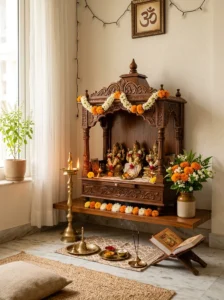
Given my mother’s knees aren’t what they used to be, we added a simple, low cushion specifically for sitting comfortably during longer prayers, something her original space hadn’t really needed but her new routine genuinely benefited from.
This kind of practical accommodation matters for making daily practice genuinely sustainable long-term, and I’d recommend considering your own specific physical needs when planning seating or kneeling arrangements within your pooja space.
8. Incorporate Fresh Flowers as a Daily Offering
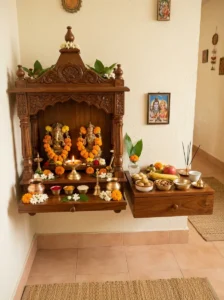
My mother keeps a small vase specifically for fresh flowers, refreshed every few days, continuing a practice she’s maintained for decades regardless of how much smaller her actual space has become.
This kind of consistent, living offering adds genuine daily freshness and life to the space, and I’d recommend maintaining this practice if it’s meaningful to your own tradition, since it’s a small detail that continues connecting daily ritual to something genuinely alive and renewing.
9. Use a Small Shelf for Prasad and Offerings
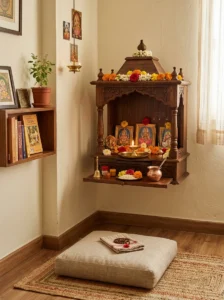
Beside her mandir, we added a small, dedicated shelf specifically for prasad and other offerings, keeping these items organized and respectfully placed rather than scattered loosely across whatever surface happened to be available.
This kind of dedicated, considered space matters for maintaining genuine order and respect within your practice, and I’d recommend this addition for anyone whose daily or weekly rituals involve this kind of offering.
10. Add Sound Dampening if the Space Is Near a Busy Area
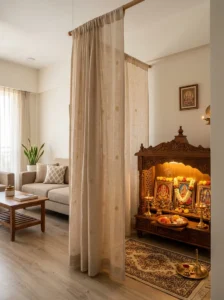
Since my mother’s new pooja corner sits closer to the apartment’s main living area than her old, more secluded room did, we added a small, decorative fabric partition specifically to soften noise from the rest of the household during her prayer time.
This kind of practical acoustic consideration matters for maintaining genuine peace within a smaller, more integrated living space, and I’d recommend this addition for anyone whose pooja area isn’t fully separated from general household activity.
11. Choose Marble or Stone Flooring if Possible
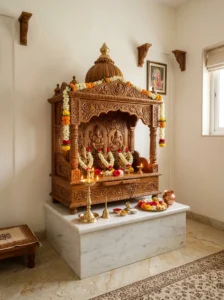
Within her mandir unit itself, we used a small marble insert for the base, similar to traditional pooja room flooring, providing both genuine visual elegance and a cool, clean surface that felt appropriately sacred compared to standard wood.
This kind of material choice adds real traditional authenticity, and I’d recommend this detail specifically for anyone wanting their pooja space to feel connected to more traditional design even within a smaller, modern apartment setting.
12. Add a Small Window or Ventilation Source
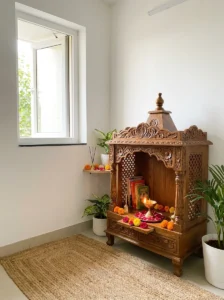
We made sure my mother’s new pooja corner had access to at least a small window nearby, ensuring proper ventilation for incense and diya smoke, something genuinely important both practically and for the sense of the space breathing and connecting to the outside world.
This kind of ventilation consideration matters enormously for daily comfort and safety, and I’d recommend prioritizing this practical detail early in your own pooja space planning, regardless of how much you’re focused on the more visual or spiritual elements.
13. Incorporate Family Photos of Elders Respectfully
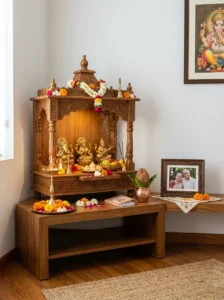
Near her mandir, but distinctly separate from her murtis, my mother keeps a small photo of my grandparents, honoring their memory within a space that already carries so much daily spiritual significance for her.
This kind of respectful inclusion connects daily worship to genuine family lineage and memory, and I’d recommend this addition if this practice holds meaning within your own family’s tradition, keeping these photos thoughtfully positioned rather than crowding the primary sacred objects.
14. Use a Curtain for Privacy When Needed
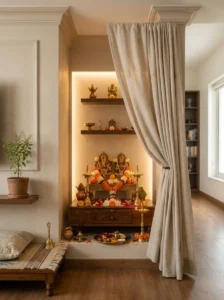
For moments when she wants complete privacy during prayer, we added a simple, soft curtain that can be drawn across her mandir’s opening, giving her the option for genuine solitude within an apartment that otherwise doesn’t offer a fully separate room.
This kind of flexible privacy solution matters for anyone working with limited space, and I’d recommend this addition if your own pooja corner exists within a more shared or open living area rather than a dedicated separate room.
15. Add a Small Storage Drawer for Puja Items
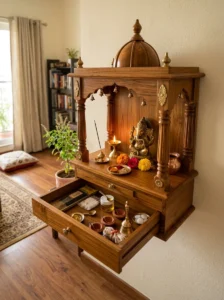
Beneath her mandir, we included a small drawer specifically for incense, extra diyas, and other puja essentials, keeping everything organized and genuinely ready for daily use without cluttering the mandir’s visible surface itself.
This kind of practical, organized storage matters for maintaining genuine daily function, and I’d recommend this addition for anyone wanting their sacred space to stay both beautiful and genuinely practical for regular, ongoing use.
16. Choose a Design That Honors Your Own Family’s Specific Tradition
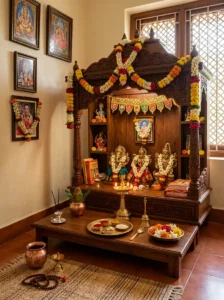
Rather than following generic design trends, we built every single choice in my mother’s new pooja corner around her own family’s specific practices and preferences, the exact deities she worships, the particular rituals she maintains, rather than a generic template.
This kind of personal, tradition-specific approach matters enormously for genuine spiritual comfort, and I’d recommend this same individualized thinking for your own pooja space, letting your family’s actual practices guide every decision rather than purely aesthetic considerations.
17. Let the Space Carry the Same Peace, Regardless of Size
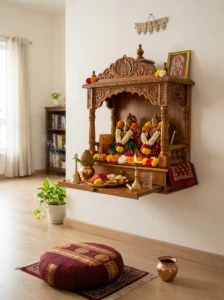
The final and most meaningful lesson from helping my mother through this whole transition is that a pooja room’s genuine sense of peace has very little to do with its actual size, and everything to do with the intention, consistency, and love poured into maintaining it daily.
Her new corner is considerably smaller than what she had for over thirty years, but watching her light that same diya each morning, in this new space, with that same quiet devotion, taught me that sacredness genuinely travels with the person, not the square footage.
My honest advice, whatever size space you’re working with, focus on the intention and daily consistency of your practice, and trust that genuine peace will follow.
Frequently Asked Questions
What’s the ideal direction for placing a mandir? Many traditions recommend facing east or north during prayer, though specific guidance can vary by family tradition and regional practice, so it’s worth consulting what feels right within your own family’s specific customs.
Can a small apartment still have a proper pooja space? Yes, genuinely. A dedicated corner with a proper mandir unit, good lighting, and consistent care can carry just as much sacredness as a larger, separate room, the size matters far less than the intention behind it.
How do I keep a pooja corner from feeling cluttered in a smaller home? Maintain a strict boundary against general household items encroaching on the space, and use dedicated storage specifically for puja essentials so the visible mandir area stays clean and genuinely reverent.
What materials work best for a pooja room in a modern apartment? Wood mandir units paired with marble or stone accents offer both traditional authenticity and practical durability, working beautifully even within smaller, contemporary living spaces.
Final Thoughts
Helping my mother recreate her pooja corner’s peace within a much smaller new home taught me that sacredness really does travel with intention and daily devotion rather than depending on square footage or elaborate design. Whatever size space you’re working with for your own pooja room, my honest advice is to focus first on orientation, cleanliness, and genuine daily consistency, and trust that the same peace your family has always known will find its way into whatever corner you create for it.