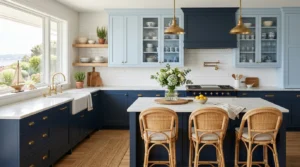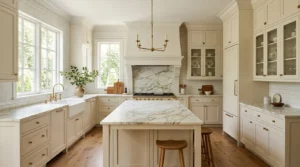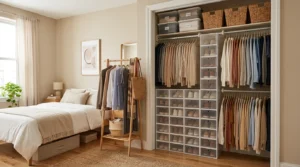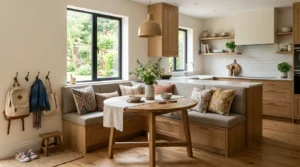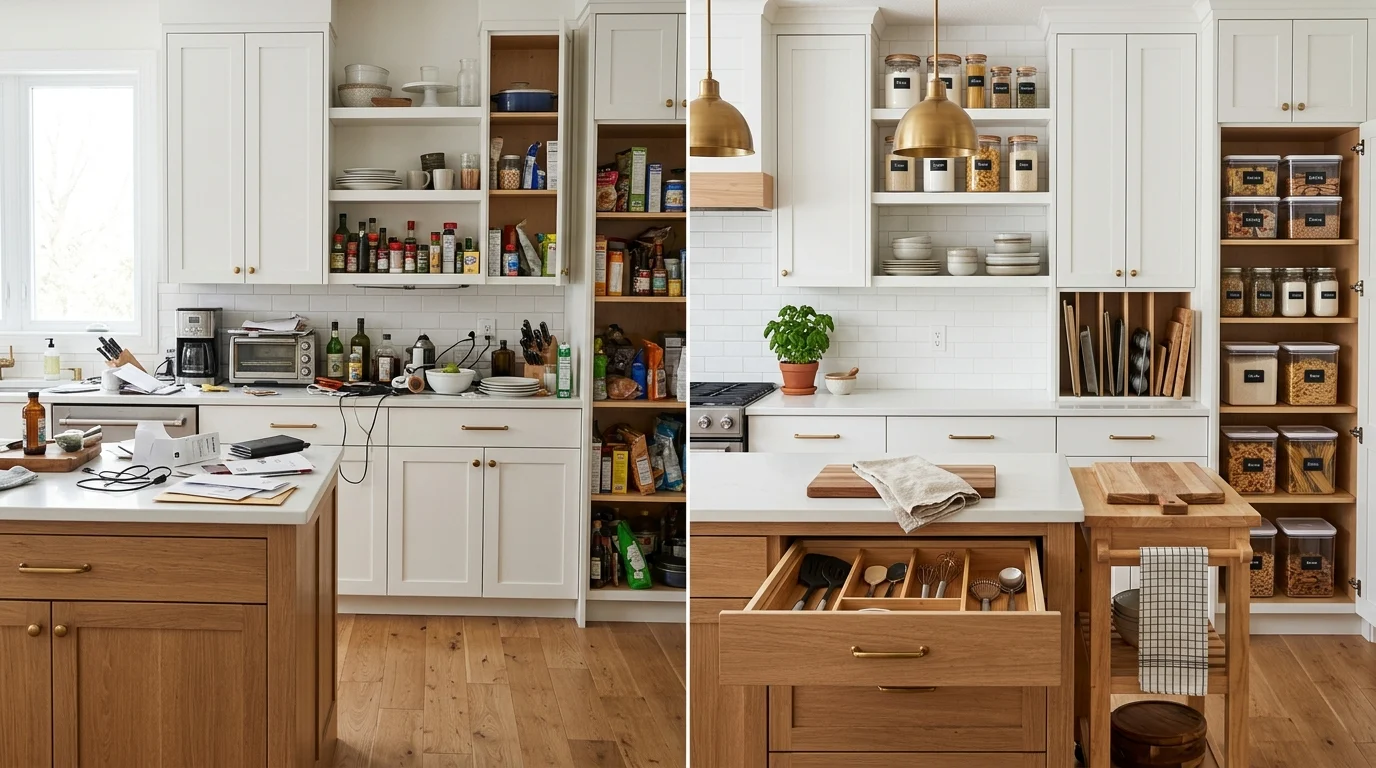
A few months after finishing my kitchen renovation, I realized that even a genuinely well-designed kitchen can slowly slide back into disorganization without ongoing, intentional systems in place. Beautiful cabinets and a thoughtful layout only solve part of the problem, the actual daily habits and specific organizational tricks you use within that space matter just as much for keeping things genuinely functional and clutter-free over the long run. That realization sent me down a genuine deep dive into practical kitchen organization strategies, testing a variety of approaches in my own space before landing on the specific combination that’s actually stuck and continued working months later.
What I learned is that the most effective kitchen organization hacks tend to be the ones addressing genuine, specific pain points rather than generic advice that sounds appealing but doesn’t actually solve a real problem you’re personally experiencing. I’ve since helped a couple of friends implement similar systems in their own kitchens, each with different specific frustrations and space constraints, which broadened my understanding of which strategies genuinely transfer well across different situations versus which ones were more specific to my own particular kitchen’s layout and my own habits.
Here are 20 kitchen organization hacks, based on real, ongoing use rather than just theoretical advice, all aimed at helping you free up genuine space fast without requiring a significant renovation or investment.
1. Use Tension Rods to Create Vertical Divider Storage
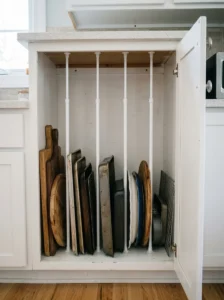
One of the most genuinely transformative changes I made in my own kitchen involved installing simple tension rods inside a lower cabinet specifically, creating vertical dividers for baking sheets, cutting boards, and trays that had previously been stacked in a precarious, difficult-to-access pile requiring me to remove several items just to reach whatever was at the bottom.
This tension rod solution costs remarkably little, essentially just the rods themselves, and requires no permanent modification to your cabinetry, since the rods simply wedge into place using tension rather than any drilling or hardware installation. I’d recommend measuring your specific cabinet’s interior width carefully before purchasing, ensuring the rods you select can adjust to fit securely without any risk of slipping or falling once weighted with your actual bakeware and trays.
I’d recommend this hack as one of the first, easiest wins for anyone dealing with a similarly disorganized stack of flat kitchen items, since the transformation from a precarious pile to genuinely organized, easily accessible vertical storage happens within just a few minutes of actual installation time, providing outsized organizational improvement relative to the minimal cost and effort this particular solution requires.
2. Add a Lazy Susan for Deep Corner Cabinets
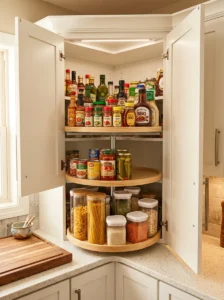
My kitchen’s corner cabinet had always been a genuine organizational black hole, items pushed toward the back becoming essentially inaccessible without fully unloading the entire cabinet each time I needed something stored deep within that awkward, hard-to-reach space. Installing a simple lazy Susan turntable resolved this issue almost entirely, allowing me to spin and access items throughout the cabinet’s full depth without this previous excavation process.
I chose a two-tier lazy Susan specifically, maximizing the vertical storage capacity this solution provided rather than a single, flat turntable that wouldn’t have made full use of my cabinet’s actual available height. This detail mattered considerably for genuinely freeing up space, since the two-tier design essentially doubled my corner cabinet’s functional storage capacity compared to what a single-level solution would have provided within the same cabinet footprint.
I’d recommend this lazy Susan solution for anyone dealing with a similarly deep, hard-to-access corner cabinet, measuring your cabinet’s interior height carefully to determine whether a two-tier option fits comfortably, since this detail significantly affects how much additional functional storage capacity this relatively simple, inexpensive solution ultimately provides within your own kitchen’s specific cabinet configuration.
3. Use Clear Bins for Pantry Category Organization
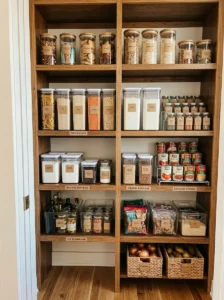
Beyond cabinet-specific solutions, I reorganized my entire pantry using clear, matching bins for different food categories, snacks together, baking supplies together, canned goods organized by type, rather than the previous, more haphazard arrangement where items were simply placed wherever space happened to be available at the time of purchase.
This category-based system, combined with the bins’ transparency, meant I could quickly assess what I actually had on hand without needing to dig through boxes or move items aside to check contents, genuinely reducing both the time spent searching for specific items and the duplicate purchases that had previously resulted from simply not being able to easily see what I already had stored somewhere within the pantry’s previous, less organized arrangement.
I’d recommend this kind of category-based, clear-bin pantry system for nearly any kitchen, starting with a genuine inventory of your actual pantry categories before purchasing bins, similar to inventory-first approaches I’ve applied throughout several other organizational projects, ensuring your specific bin sizes and quantities actually match your real food storage needs rather than guessing at an appropriate system without this important upfront assessment.
4. Add Under-Shelf Baskets for Instant Extra Storage
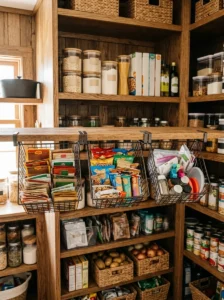
A genuinely simple addition that provided meaningful extra storage capacity involved adding wire baskets that hang directly beneath existing shelves, utilizing the previously wasted space between a shelf’s surface and the item stored on it, without requiring any additional cabinet or shelf installation.
I added these specifically beneath two of my pantry shelves, creating additional storage for smaller items, spice packets, small snack bags, that had previously been loosely scattered across the main shelf surface without any specific containment or organization. This addition essentially created new storage capacity from space that had genuinely existed all along but remained functionally unused before this simple, inexpensive addition.
I’d recommend this under-shelf basket hack for anyone wanting to genuinely maximize their existing shelving without any structural modification, checking your specific shelves’ clearance height before purchasing to ensure adequate room for both the basket itself and whatever you plan to store within it, since inadequate clearance would prevent this particular solution from fitting properly within your own kitchen’s specific shelf spacing and configuration.
5. Use Drawer Dividers for Utensil Organization
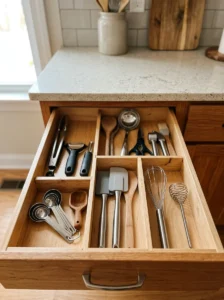
My kitchen’s main utensil drawer had genuinely become a chaotic jumble over time, various tools shifting and tangling together in a way that made finding a specific item, a particular size of measuring spoon, a specific spatula, a genuinely frustrating daily task. Adding an adjustable drawer divider system resolved this considerably, creating designated compartments for different tool categories.
I chose an expandable, adjustable divider system specifically rather than fixed-size compartments, similar to flexibility-prioritizing strategies I’ve applied throughout several other organizational projects, allowing me to reconfigure the specific compartment sizes as my actual tool collection changed over time, rather than committing to fixed dimensions that might not accommodate future additions or changes to my kitchen tool collection.
I’d recommend this kind of adjustable drawer divider system for any kitchen drawer experiencing similar chaotic jumbling, measuring your drawer’s interior dimensions before purchasing to ensure your chosen divider system fits appropriately, since an ill-fitting system, whether too large or too small for your actual drawer dimensions, won’t provide the genuine organizational benefit a properly sized system delivers.
6. Add a Pot Lid Organizer to Prevent Precarious Stacking
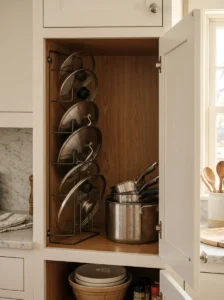
Pot lids had always been one of my kitchen’s most persistent organizational frustrations, previously stacked in a precarious pile that regularly toppled whenever I tried to retrieve a specific lid from somewhere within the stack. A simple, vertical pot lid organizer, positioned within an existing cabinet, resolved this issue by keeping each lid upright and individually accessible rather than stacked together.
This solution required minimal installation, essentially just placing the organizer rack within my existing cabinet space, but the resulting improvement in daily function was considerably more significant than this modest installation effort might suggest, eliminating a genuinely recurring daily frustration that had persisted for years before I finally addressed it with this simple, inexpensive solution.
I’d recommend this pot lid organizer for anyone experiencing this same common kitchen frustration, measuring your available cabinet space and your specific lid collection’s sizes before purchasing, since different organizer models accommodate different lid diameters and quantities, making this upfront measurement important for ensuring your chosen solution genuinely fits your own kitchen’s specific pot and lid collection.
7. Use Magnetic Strips for Knife Storage
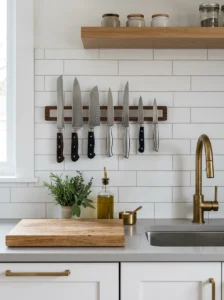
Rather than a bulky knife block occupying valuable counter space, I installed a simple magnetic strip along one section of my backsplash, holding my knife collection securely while completely freeing up the counter space my previous knife block had occupied, similar to vertical storage strategies I’ve applied throughout several other kitchen organization projects covered elsewhere.
This solution also provided a secondary benefit beyond just space savings, since displaying knives on an open magnetic strip made selecting the appropriate knife for a given task considerably faster than searching through a block’s specific slot arrangement, and it kept blades more accessible for regular use rather than requiring the careful insertion and removal a traditional knife block demands.
I’d recommend this magnetic strip solution for anyone wanting to reclaim counter space currently occupied by a knife block, ensuring proper installation into wall studs given the genuine weight consideration multiple knives represent, and being mindful of specific safety considerations regarding placement height and household members, particularly if young children have regular access to the kitchen space where this strip would be installed.
8. Add a Rolling Cart for Flexible Extra Storage
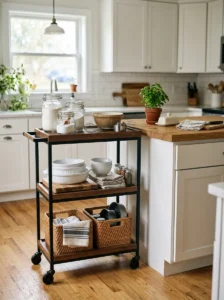
For additional storage flexibility beyond my kitchen’s fixed cabinetry, I added a simple rolling cart, providing mobile extra storage that could be positioned wherever specifically needed, near the stove during active cooking, tucked into a corner otherwise, similar to mobile furniture strategies I’ve applied throughout several other space-constrained room projects covered elsewhere.
This kind of flexible, movable storage solution proved particularly valuable for accommodating occasional extra storage needs, holiday baking supplies, entertaining serveware, without requiring permanent cabinet space dedicated to items used only occasionally throughout the year, rather than the kind of daily-use items that genuinely justify permanent, fixed storage allocation within the kitchen’s main cabinetry system.
I’d recommend this rolling cart addition for anyone whose kitchen storage needs fluctuate seasonally or situationally, choosing a cart with adequate shelving and a genuinely sturdy construction capable of handling your specific anticipated storage weight, since this flexible solution provides meaningful additional capacity precisely when needed without permanently committing valuable floor space to storage that isn’t consistently required throughout regular daily kitchen use.
9. Use Command Hooks for Lightweight Item Storage
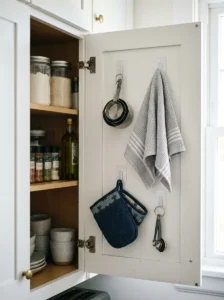
Beyond more substantial storage solutions, simple adhesive command hooks provided surprisingly useful storage for lightweight items throughout my kitchen, oven mitts, small towels, a measuring cup, positioned exactly where I most frequently needed them without requiring any permanent installation or drilling.
This solution’s genuine flexibility, since these hooks can be repositioned or removed without any lasting damage to your cabinets or walls, made it particularly useful for testing different storage configurations before committing to more permanent solutions, similar to trial-and-error approaches I’ve applied throughout several other organizational projects, allowing genuine experimentation without the commitment more permanent installation methods would require.
I’d recommend this command hook approach for anyone wanting to test different small-item storage configurations before investing in more permanent solutions, or simply as a genuinely low-cost, low-commitment way to address specific, smaller storage needs throughout your kitchen without requiring any actual construction or installation beyond the hooks’ simple adhesive application process.
10. Add Stackable Bins for Canned Goods
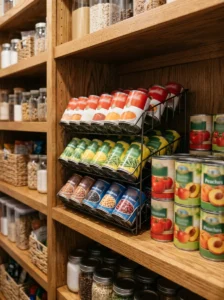
My canned goods had previously been organized in a single, flat row that consumed considerable shelf space while providing minimal actual storage capacity relative to the shelf footprint required. Switching to stackable, angled canned goods organizers dramatically increased my actual storage capacity within the same shelf space, while also making individual cans considerably easier to see and access.
These organizers work by allowing cans to roll forward as items are removed from the front, similar to how retail store shelving typically functions, ensuring older items naturally get used before newer ones added behind them, providing both genuine space efficiency and helpful inventory rotation that my previous, more haphazard flat storage arrangement hadn’t naturally provided.
I’d recommend this stackable canned goods solution for anyone with a genuine collection of canned items taking up more shelf space than necessary in their current storage arrangement, measuring your specific shelf depth before purchasing to ensure your chosen organizer fits appropriately, since this detail affects how many cans the system can actually accommodate within your particular pantry or cabinet’s available depth.
11. Use a Door-Mounted Organizer for Small Items
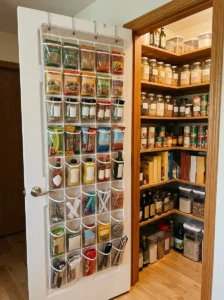
The back of my pantry door had remained entirely unused space until I installed a simple, over-the-door organizer specifically for smaller items, spice packets, snack bars, small condiment bottles, reclaiming genuinely usable storage capacity from an area that had previously contributed nothing to my kitchen’s overall organizational system.
This kind of overlooked vertical storage opportunity, similar to overlooked-space strategies I’ve applied throughout several other small-space organizational projects covered elsewhere, matters considerably for genuinely maximizing your kitchen’s total available storage capacity, since every unused surface represents genuine, reclaimable storage potential that a more comprehensive organizational approach should specifically consider and address.
I’d recommend walking through your own kitchen specifically identifying any unused door backs, pantry doors, cabinet doors, and considering whether an appropriate door-mounted organizer could reclaim genuine additional storage capacity from these commonly overlooked surfaces, similar to comprehensive space auditing approaches I’ve applied throughout several other room organization projects covered throughout previous work.
12. Add a Spice Drawer Insert for Easy Visibility
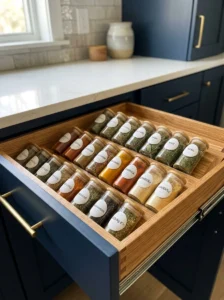
Rather than spices crowded into a single cabinet where older bottles inevitably ended up hidden behind newer purchases, I converted a shallow drawer specifically into spice storage, using a tiered insert that displays each spice jar’s label clearly from above, eliminating the previous need to remove and check multiple jars just to locate a specific spice.
This solution required decanting my spices into matching, uniformly sized containers specifically, similar to the decanting strategies I’ve applied throughout several other kitchen and bathroom organization projects, which admittedly required more upfront time investment than simply installing an organizer for existing, mismatched spice containers would have required, but the resulting visual consistency and genuine ease of use made this additional effort worthwhile.
I’d recommend this spice drawer approach for anyone with a shallow, otherwise underutilized drawer near their cooking area, weighing the tradeoff between the more involved decanting process against the considerably improved daily function this system provides, similar to effort-versus-benefit considerations I’ve applied throughout several other more involved organizational projects covered elsewhere throughout this broader body of work.
13. Use Baskets for Under-Sink Organization
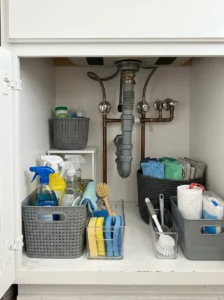
The cabinet beneath my sink had always been a genuinely chaotic space, cleaning supplies and miscellaneous items simply pushed in without any real organizational system, making locating specific items a frustrating, ongoing daily task. Adding a few coordinating baskets, each designated for a specific category, cleaning sprays, sponges and scrub brushes, trash bags, resolved this considerably.
This under-sink space also often includes plumbing pipes that complicate storage, and I specifically chose baskets sized and shaped to work around this obstruction rather than assuming standard, rectangular storage solutions would fit comfortably, a genuine consideration worth researching before purchasing any under-sink organizational products for your own kitchen’s specific plumbing configuration and available space.
I’d recommend this basket-based under-sink organization for nearly any kitchen, measuring around your specific pipe configuration before purchasing baskets, similar to obstacle-conscious measuring I’ve applied throughout several other space-constrained organizational projects, ensuring your chosen solution genuinely fits your particular under-sink cabinet’s actual available space and existing plumbing layout.
14. Add a Vertical File Organizer for Baking Sheets and Trays
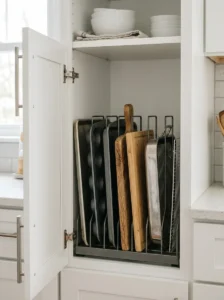
Beyond the tension rod solution mentioned earlier, for kitchens with adequate cabinet height, a dedicated vertical file-style organizer, similar in concept but purchased as a standalone product rather than a DIY tension rod solution, provides similar vertical storage for baking sheets and trays with a somewhat more finished, integrated appearance.
I’d recommend this purchased organizer option specifically for anyone wanting a slightly more polished appearance than the tension rod DIY approach provides, while acknowledging that both solutions address the same fundamental organizational problem, precarious flat-item stacking, through essentially the same vertical storage principle, making the choice between them largely a matter of personal preference regarding appearance and installation method rather than genuine functional difference.
Either approach, the DIY tension rod method or a purchased vertical organizer, provides meaningful improvement over the common alternative of stacking these flat items horizontally, and I’d recommend choosing whichever specific method best fits your own kitchen’s available cabinet space and your personal preference regarding DIY versus purchased organizational solutions for this particular, commonly problematic storage category.
15. Use a Tiered Shelf Riser for Cabinet Doubling
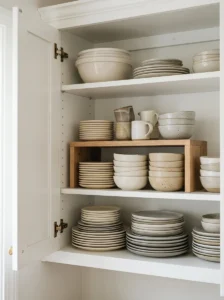
Within several of my upper cabinets, I added simple tiered shelf risers, essentially small stands that create a second level within a single shelf’s existing vertical clearance, allowing me to store cups or small plates on two levels rather than one within the same cabinet space that previously accommodated only a single layer of items.
This solution works particularly well for cabinets with more vertical clearance than a single layer of dishware actually requires, reclaiming this previously wasted overhead space within each shelf without requiring any permanent cabinet modification, similar to vertical-space-maximizing principles I’ve applied throughout several other kitchen and closet organization projects covered elsewhere throughout this broader body of work.
I’d recommend this shelf riser approach for anyone with cabinets containing more vertical clearance than their stored items currently use, measuring this available clearance carefully before purchasing to ensure your chosen riser size fits appropriately, since this detail determines whether this solution genuinely doubles your functional storage capacity or simply adds an unnecessary, ill-fitting addition to your existing cabinet space.
16. Add a Hanging Pot Rack to Free Cabinet Space
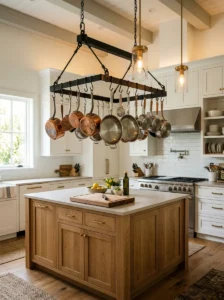
For a kitchen with adequate ceiling height and structural support, a hanging pot rack relocates your pot and pan collection from cabinet storage to overhead display, genuinely freeing significant cabinet space for other items while also providing convenient, immediately visible access to your cookware during actual cooking.
This solution requires genuine structural consideration, ensuring your ceiling can safely support the combined weight of the rack and your actual cookware collection, similar to weight-capacity considerations I’ve applied throughout several other suspended storage projects covered elsewhere, making this a solution worth researching carefully or having professionally installed rather than attempting without this important safety consideration properly addressed.
I’d recommend this hanging rack solution specifically for kitchens with a genuine pot and pan collection substantial enough to justify reclaiming this considerable cabinet space, while acknowledging this particular solution won’t suit every kitchen’s specific layout or aesthetic preference, making it worth considering specifically within the context of your own kitchen’s available ceiling height, structural capacity, and overall design direction.
17. Use Labeled Bins for Kids’ Snack Access
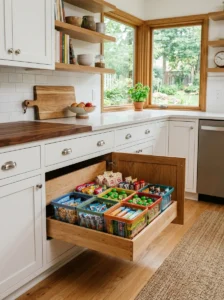
For households with children, dedicating a specific, lower cabinet or drawer to labeled bins for kid-accessible snacks provided genuine daily function beyond pure organization, similar to accessibility considerations I’ve applied throughout several children’s room and kitchen projects, allowing kids to independently select approved snacks without requiring constant adult assistance or supervision for this specific daily task.
This system also genuinely helped with inventory management, since clearly labeled, category-specific bins made it considerably easier to notice when a particular snack type was running low, compared to a more haphazard arrangement where this kind of inventory awareness would require more active, deliberate checking rather than this passive, visual awareness the organized system naturally provides.
I’d recommend this labeled snack bin system for any household with children old enough for some independent snack selection, positioning the storage at a genuinely accessible height for your specific children’s ages, similar to accessibility considerations applied throughout several other family-focused organizational projects, ensuring this system genuinely supports rather than exceeds your children’s actual current independence level and physical reach.
18. Add Adhesive Hooks Inside Cabinet Doors
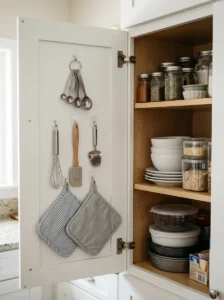
Beyond the command hooks used elsewhere in my kitchen, I added small adhesive hooks specifically to the inside of a few cabinet doors, providing additional storage for items like measuring spoons or small pot holders without requiring any additional shelf or drawer space within the cabinet’s main interior storage area.
This particular hack reclaims genuinely unused space, the interior surface of cabinet doors themselves, similar to overlooked-space principles applied throughout several other ideas on this list, providing meaningful additional storage capacity without requiring any reduction in your cabinet’s existing main storage area or any permanent structural modification to the cabinet itself.
I’d recommend this cabinet door hook approach for anyone wanting to squeeze out additional small-item storage capacity from their existing kitchen without any structural changes, testing hook placement carefully to ensure items hung there don’t interfere with the cabinet door’s ability to close fully or with items stored on the shelves directly behind the door once closed.
19. Use a Drawer-Mounted Trash and Recycling System
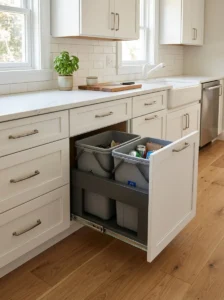
Rather than freestanding trash and recycling bins occupying floor space, I installed a pull-out drawer system specifically designed for this purpose, concealing both bins behind a cabinet front while keeping them genuinely easily accessible during actual daily use, similar to concealed functional storage strategies I’ve applied throughout several other kitchen organization projects covered elsewhere.
This solution required a somewhat more significant installation than several other ideas throughout this list, involving actual cabinet modification or a specifically designed pull-out unit, but the resulting floor space reclamation and improved visual tidiness made this investment genuinely worthwhile for my own kitchen’s overall organization and appearance, particularly given how much floor space my previous freestanding bins had occupied.
I’d recommend this drawer-mounted system for anyone with adequate cabinet space to accommodate this kind of installation, researching pull-out systems specifically designed for your cabinet’s actual dimensions, since this detail significantly affects whether this particular solution provides a properly fitted, genuinely functional result within your own kitchen’s specific existing cabinetry configuration and available space.
20. Establish a Regular Decluttering Routine
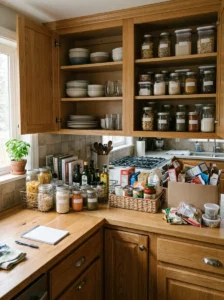
The final and perhaps most important organizational hack isn’t a specific product or installation at all, but rather a genuine, ongoing habit of periodically reassessing and decluttering your kitchen’s contents, similar to ongoing maintenance principles I’ve applied throughout several other organizational projects covered throughout this broader body of work.
I established a simple quarterly habit of going through my pantry and cabinets specifically, checking expiration dates, removing items I genuinely hadn’t used since the previous check, and reassessing whether my various organizational systems still genuinely served my actual, current needs, rather than assuming any organizational system, however well-designed initially, would remain perfectly suited to my evolving kitchen habits and needs indefinitely without this kind of periodic reassessment.
I’d recommend establishing this same kind of regular decluttering routine for anyone implementing the various organizational hacks covered throughout this list, since even the best physical organizational systems gradually accumulate genuine clutter and outdated items without this ongoing, intentional maintenance, making this habit-based final recommendation arguably more important for long-term kitchen organization success than any single physical product or installation covered elsewhere throughout this broader list of ideas.
Frequently Asked Questions
What’s the single most impactful kitchen organization hack for the money? Based on real experience, tension rod dividers and lazy Susan turntables tend to provide the most dramatic organizational improvement relative to their minimal cost, addressing genuinely common, frustrating storage problems most kitchens experience.
Do I need to renovate my kitchen to genuinely improve its organization? No. Most of the hacks covered throughout this list require no structural modification, working within your kitchen’s existing cabinetry and layout to meaningfully improve function and free up space without any significant renovation investment.
How often should I reassess my kitchen’s organizational systems? A quarterly check-in works well for most households, catching accumulating clutter and reassessing whether your current systems still genuinely serve your actual, current needs before disorganization becomes a significant, harder-to-address problem.
Are clear containers really worth the investment for pantry organization? Generally yes, since the ability to quickly see contents without opening or moving containers genuinely saves time and reduces duplicate purchases, providing meaningful ongoing value beyond the initial container investment itself.
Final Thoughts
That realization about my beautifully renovated kitchen slowly sliding back into disorganization taught me that genuine, lasting kitchen organization depends on specific, practical systems and ongoing habits rather than simply having nice cabinetry and a thoughtful initial layout. The core lesson across all 20 of these hacks is addressing genuine, specific pain points through targeted, often surprisingly affordable solutions, while maintaining the ongoing habit of periodic reassessment that keeps any organizational system genuinely functional over the long term. Implement even a handful of these hacks thoughtfully, and you’ll likely find, as I did, that your kitchen feels considerably more spacious and functional without requiring any significant renovation or investment.