When I bought my house, the kitchen window was one of the most underwhelming elements in the entire room, a plain, single-pane window with old, yellowed mini blinds that had clearly been there since the house’s original construction decades earlier. It let in light, technically, but the whole area felt like an afterthought rather than a genuine design opportunity. It wasn’t until I started actually planning my kitchen renovation more broadly that I realized how much attention this single window could actually support, treatment, sill styling, even the glass itself, and how much difference addressing it properly would make to the room’s overall light quality and character.
That project became a genuine, if smaller-scale, education in its own right, separate from the larger cabinet and countertop decisions I’d been more naturally focused on throughout the renovation. I learned that a kitchen window carries functional demands, moisture exposure, need for easy cleaning, potential for herb growing, that a bedroom or living room window simply doesn’t face in the same way, which meant some of my initial, purely aesthetic instincts needed real practical adjustment before finalizing my approach.
Since finishing my own kitchen, I’ve helped a couple of friends think through their own kitchen window treatments and styling too, each with different orientations, sizes, and personal styles. Here are 25 kitchen window ideas, based on real, lived-in results rather than just staged photography, all aimed at bringing more light, style, and genuine charm into this often-overlooked kitchen element.
1. Choose Café-Style Curtains for Privacy Without Blocking Light
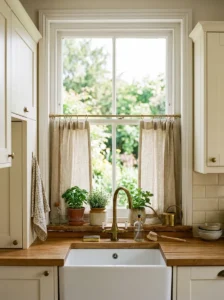
For my own kitchen window, which faces a fairly visible side yard, I chose simple café-style curtains, covering just the lower half of the window on a rod mounted at the midpoint, which provided genuine privacy for the counter and sink area while still allowing the full upper portion of the window to remain uncovered and let in maximum natural light throughout the day.
This style works particularly well for kitchen windows specifically, since a kitchen sink is often positioned directly at window height, creating a genuine practical need for some privacy at that specific level without requiring full window coverage that would meaningfully reduce the room’s overall daylight. I chose a simple, lightweight linen fabric in a natural, undyed tone, which fit the kitchen’s overall restrained material palette rather than introducing a busier pattern or heavier fabric that might have felt visually inconsistent with the rest of the space.
I’d recommend this café-curtain approach for nearly any kitchen window facing a somewhat visible exterior view, prioritizing this partial coverage over either full curtains, which sacrifice too much light, or no window treatment at all, which sacrifices genuine privacy during actual daily use at the sink and counter area specifically.
2. Add a Simple Roman Shade for Clean Lines
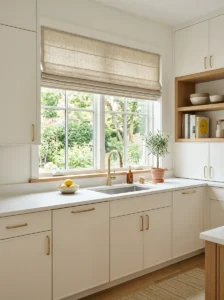
A friend renovating her own kitchen chose a simple, unlined linen Roman shade instead of café curtains, which stacks neatly at the top of the window frame when raised, disappearing almost entirely and maximizing daylight, while still providing full coverage and privacy when lowered during evening hours or whenever fuller privacy is genuinely needed.
This style tends to suit more streamlined, contemporary kitchen aesthetics particularly well, since the shade’s flat, tailored profile avoids the more casual, gathered fullness that curtains typically introduce, fitting more naturally alongside clean-lined modern cabinetry and hardware choices throughout the rest of a similarly styled kitchen space.
I’d recommend, for anyone considering this option, choosing a genuinely lightweight, semi-sheer fabric specifically for a kitchen window application, since Roman shades in heavier, more opaque fabrics can feel overly formal or heavy for a kitchen’s typically more casual, functional daily use compared to how the same fabric weight might read appropriately in a more formal dining or living room window treatment application elsewhere in the home.
3. Skip Window Treatments Entirely for Maximum Light
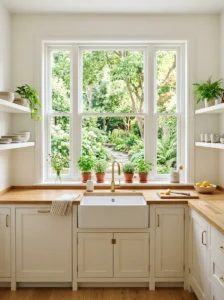
For a kitchen window with minimal privacy concerns, facing a private backyard or positioned high enough to avoid direct sightlines from neighbors, skipping window treatments entirely can maximize natural light and simplify the window’s overall visual presentation, letting the window’s own architectural framing and the view beyond serve as the primary decorative element without any additional fabric treatment layered on top.
A friend with exactly this kind of private, elevated kitchen window situation chose this minimal approach, and the resulting unobstructed daylight throughout her kitchen provided a noticeably brighter, more open feeling compared to even the lightest curtain or shade option would have allowed.
I’d recommend this treatment-free approach specifically for kitchens with genuine privacy already provided by the window’s positioning, height, or exterior view, rather than assuming this minimal option works universally, since a kitchen window with realistic visibility concerns from neighbors or a street-facing orientation genuinely benefits from at least some privacy solution, even if that solution remains fairly minimal compared to fuller drapery treatments used elsewhere in the home.
4. Add a Deep Windowsill for Herb Growing
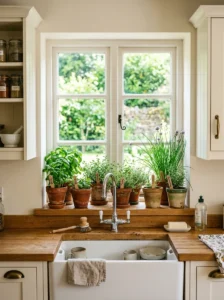
When I redid my own kitchen, I specifically extended my window’s sill depth slightly during the renovation, creating enough surface space to comfortably support a small row of potted herbs, basil, thyme, and chives specifically, which get genuinely excellent light throughout the day and remain conveniently positioned right where I do most of my actual cooking and food preparation.
This kind of extended sill requires some genuine construction consideration during a renovation specifically, since a standard, narrower sill often can’t comfortably support potted plants without them feeling precariously balanced or requiring careful, restrictive placement to avoid tipping. I’d recommend, for anyone planning a kitchen renovation specifically, considering this sill depth extension early in the planning process if herb growing or general windowsill display matters to your own anticipated kitchen use.
For anyone not undertaking a full renovation, even adding a simple, well-secured floating shelf just beneath an existing window can provide similar functional herb-growing space without requiring the sill itself to be physically modified or extended during a more significant construction project.
5. Choose Frosted or Textured Glass for Privacy Without Curtains
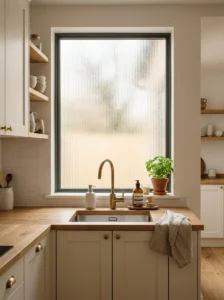
For a friend’s kitchen window facing directly into a close neighboring property with very little distance between windows, replacing the standard clear glass with a frosted or textured privacy glass provided genuine, permanent privacy without requiring any fabric window treatment at all, allowing diffused natural light to still pass through freely while completely obscuring any direct visual sightline.
This approach requires actually replacing the window glass itself, a more significant undertaking and expense than simply adding a fabric treatment, but for genuinely challenging privacy situations where even a curtain or shade feels insufficient given extremely close neighboring sightlines, this permanent glass solution provides a more complete resolution to the underlying privacy concern.
I’d recommend this option specifically for kitchens facing genuinely difficult privacy situations, close neighboring windows, a shared wall or narrow side yard with minimal distance, rather than as a first-choice solution for more typical kitchen window privacy needs, where a fabric treatment option covered elsewhere throughout this list usually provides adequate privacy without the additional cost and construction involved in an actual glass replacement.
6. Add a Window Box for Exterior Charm
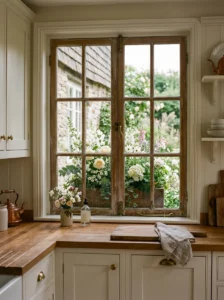
Beyond interior sill styling, I added a simple wood window box to the exterior of my kitchen window, planted with a rotating seasonal selection of flowers, which added genuine charm both from inside the kitchen looking out and from the exterior view of the house itself, creating a cohesive design element that works on both sides of the window simultaneously.
This addition required some basic exterior mounting work, ensuring the box was securely attached and properly drained to avoid water damage to the exterior wall or window frame over time, a genuine practical consideration worth researching carefully or hiring a professional to handle correctly rather than risking improper installation that could lead to moisture-related problems down the line.
I’d recommend this exterior window box addition for anyone wanting to extend their kitchen window’s charm beyond just the interior view, particularly for street-facing kitchen windows where the exterior curb appeal genuinely matters alongside the interior functional and aesthetic benefits this same addition provides from inside the kitchen itself.
7. Use a Bold Wallpaper Around the Window Frame
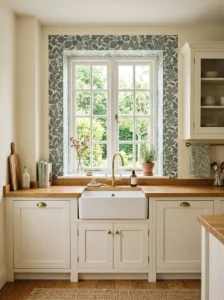
A friend added a small section of bold, patterned wallpaper specifically surrounding her kitchen window frame, rather than the full wall, creating a framed, focal-point effect that drew attention to the window as a genuine design feature rather than treating it as a purely functional element without much decorative consideration beyond the window treatment itself.
This kind of contained, focused wallpaper application allows for a considerably bolder pattern choice than might feel appropriate across a full kitchen wall, since the smaller, contained application limits the pattern’s overall visual weight within the room while still providing genuine impact specifically around this one architectural focal point.
I’d recommend this approach for anyone wanting to introduce more pattern or color into their kitchen without a larger, more committing full-wall application, using the window’s natural framing as a built-in boundary for a smaller, more contained decorative wallpaper application that provides meaningful visual interest without overwhelming the kitchen’s broader overall design and color palette.
8. Add Under-Cabinet Lighting to Complement Natural Light
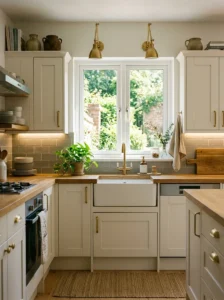
While not directly related to the window itself, I found that adding under-cabinet LED lighting throughout my kitchen genuinely complemented my window’s natural light, providing consistent illumination during darker morning and evening hours when the window’s natural light alone wasn’t sufficient for comfortable food preparation tasks specifically.
This layered approach, natural light during peak daylight hours supplemented by artificial task lighting during lower-light periods, ensures the kitchen remains genuinely functional throughout the full day, rather than relying entirely on the window’s natural light and experiencing a noticeable, frustrating drop in usable brightness during early morning or evening cooking sessions.
I’d recommend, for anyone renovating a kitchen with a single primary window as the main natural light source, planning this kind of supplemental artificial lighting from the beginning, considering how your specific window’s light naturally shifts throughout the day and ensuring your artificial lighting plan genuinely addresses the gaps this natural light pattern leaves throughout your own typical daily kitchen use and cooking schedule.
9. Choose a Farmhouse-Style Window Above the Sink
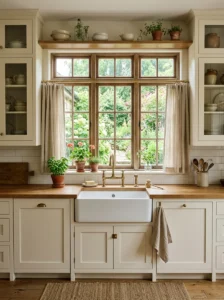
Beyond treatments and styling, the actual window’s architectural style matters considerably too. My own kitchen renovation included replacing the original window with a slightly larger, multi-pane farmhouse-style window positioned directly above my sink, which became a genuine architectural focal point beyond just its functional light and privacy considerations.
This kind of window replacement represents a more significant investment than most other ideas throughout this list, requiring actual construction and potentially structural modification depending on your specific situation, but for anyone already planning a more comprehensive kitchen renovation, upgrading the window itself, not just its treatment or surrounding styling, can provide meaningful long-term value both aesthetically and in terms of genuine energy efficiency compared to an older, single-pane window.
I’d recommend, for anyone considering this kind of window replacement specifically, researching energy-efficient, properly insulated window options even while prioritizing a particular architectural style, since balancing genuine aesthetic preference with practical energy performance provides better long-term value than choosing purely based on visual style without this important functional consideration factored into the decision.
10. Add a Small Bench Seat Beneath a Larger Window
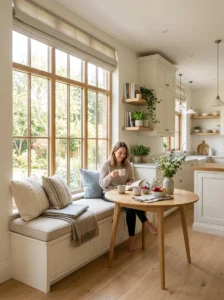
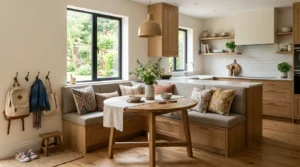
For a friend with an unusually large kitchen window, extending nearly to the floor, she incorporated a simple built-in bench seat directly beneath it, creating a small breakfast nook that made genuine functional use of what could have otherwise remained an underutilized, purely decorative window area without this additional seating consideration.
This kind of built-in seating requires some genuine carpentry work but provides substantial functional value beyond just window styling, creating an entirely new, genuinely useful seating area that takes full advantage of the window’s substantial size and the natural light it provides throughout that specific corner of her kitchen.
I’d recommend this approach specifically for kitchens with unusually large windows or bay window configurations, where the window’s size genuinely supports this kind of more substantial architectural and furniture investment, rather than attempting this same treatment for a more standard, smaller kitchen window where a built-in bench wouldn’t have adequate space to function comfortably or proportionately relative to the window’s more modest actual dimensions.
11. Use Colorful Glass Bottles or Vases on the Sill
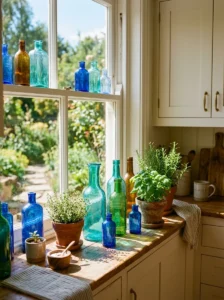
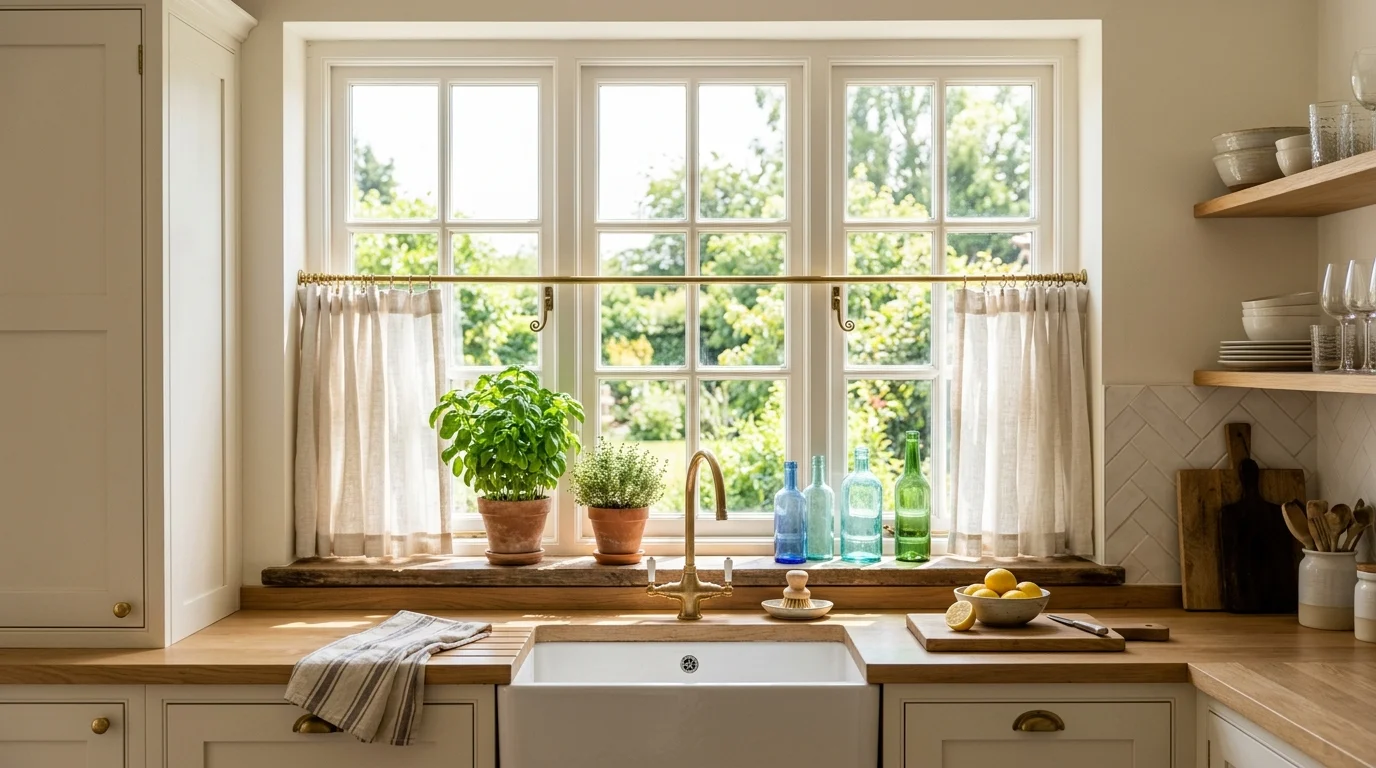
A simple, low-cost styling addition to my own kitchen window involved a small collection of colored glass bottles arranged along the sill, catching and refracting the natural light throughout the day in a genuinely lovely way that plain, empty sill space wouldn’t provide on its own.
I chose bottles in varying shades of blue and green specifically, coordinating loosely with my kitchen’s overall color palette established through other design choices throughout the room, rather than an entirely random, uncoordinated color assortment that might have felt visually chaotic against the window’s more prominent, light-filled position within the kitchen.
I’d recommend this kind of simple, low-cost sill styling for nearly any kitchen window, since the visual effect of light passing through colored glass provides a genuinely lovely, ever-changing decorative element throughout different times of day, all for a relatively minimal cost compared to many other ideas throughout this list requiring more significant construction or furniture investment.
12. Add a Simple Valance for Softness Without Full Coverage
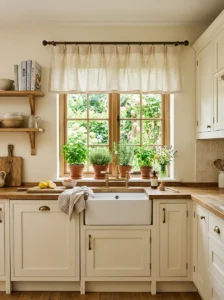
For a kitchen window where full curtains felt too heavy but completely bare glass felt too stark, a friend chose a simple fabric valance, a short decorative panel covering just the top portion of the window frame, adding a touch of softness and color without any actual light-blocking coverage across the window’s main body.
This kind of minimal treatment works well specifically for kitchen windows where the primary goal is softening the window’s hard architectural edges rather than addressing genuine privacy or light control needs, which might already be adequately handled through the window’s positioning or a separate, more functional treatment layered underneath if needed.
I’d recommend this valance-only approach specifically for kitchens wanting just a touch of textile softness without the fuller coverage or light reduction that a more complete curtain or shade treatment would introduce, keeping in mind that this option provides essentially no functional privacy or light control benefit, serving a purely decorative, softening purpose for the window’s upper frame area specifically.
13. Choose a Garden Window for Extra Growing Space
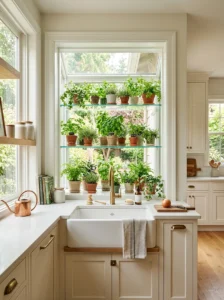
For serious home cooks wanting genuinely expanded herb and plant growing capacity beyond what a standard windowsill provides, a garden window, a small, three-dimensional bay-style window extension specifically designed with built-in shelving for plants, offers considerably more growing surface and often improved light exposure from multiple angles simultaneously.
A friend incorporated this kind of window during her own more extensive kitchen renovation, and the resulting increase in her actual herb and small plant growing capacity was substantial compared to what her previous standard flat window had supported, genuinely elevating her ability to grow a wider variety of kitchen herbs and small plants year-round regardless of outdoor growing season limitations.
This represents one of the more significant investments on this entire list, requiring genuine structural modification and a more substantial window product cost compared to standard window styles, but for anyone with a genuine, ongoing interest in home herb growing specifically, the increased growing capacity and improved light exposure this specific window style provides can offer meaningful long-term value relative to its higher upfront cost.
14. Add a Woven Roman Shade for Textural Interest
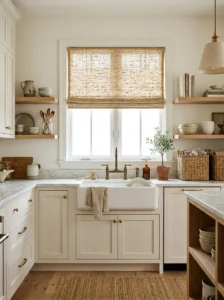
Rather than a smooth, flat fabric Roman shade, I chose a woven, natural fiber version for my own kitchen window, adding genuine textural interest that complemented my kitchen’s other natural material choices, wood cabinetry, woven baskets, throughout the broader space, rather than a flat fabric option that wouldn’t have contributed this same layer of tactile, textural variety.
This woven material choice does require somewhat more careful cleaning consideration than a smooth, wipeable fabric or vinyl shade might, given the more textured surface’s greater potential to trap dust or minor kitchen splatter over time, so I’d recommend factoring in this maintenance consideration specifically for a woven shade positioned in a kitchen’s more exposure-prone environment compared to how the same material might perform in a lower-maintenance living room or bedroom window application.
I’d recommend this woven texture option specifically for kitchens already incorporating similar natural material textures elsewhere throughout the space, since the window treatment then genuinely coordinates with an established material palette rather than introducing an isolated, disconnected textural element without this broader contextual consideration guiding the specific fabric and material choice.
15. Use a Pull-Down Blackout Shade for Evening Privacy
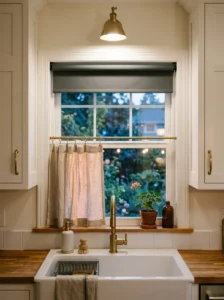
Beyond a primary decorative treatment, I added a simple, discreet pull-down blackout shade behind my main café curtains, providing genuine full privacy and light-blocking capability for evening use, while keeping this more purely functional treatment essentially invisible during daytime hours when it remains fully retracted behind the more decorative primary treatment.
This layered approach, similar to layering strategies I’ve applied throughout other room window treatments, provides maximum flexibility, decorative softness and partial coverage during typical daytime kitchen use, paired with genuine full privacy and light control available whenever specifically needed during evening hours or particular situations requiring more complete coverage.
I’d recommend this kind of layered functional and decorative window treatment combination for kitchens where both genuine evening privacy and attractive daytime styling both matter, rather than choosing only one single treatment that would need to compromise between these two sometimes competing functional and aesthetic priorities throughout different times of day and different specific privacy needs.
16. Add a Hanging Plant for Vertical Greenery
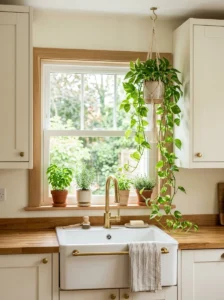
Beyond sill-level plants, I added a small hanging planter, suspended from a simple ceiling hook positioned just above and to the side of my kitchen window, providing additional greenery that takes advantage of vertical space without competing for the same sill surface area my herb collection already occupies.
I chose a trailing pothos variety specifically, which tolerates the kitchen’s variable humidity and light conditions reasonably well while providing an attractive, cascading visual element that adds genuine dimension and softness to the window area beyond what sill-level plants alone provide.
I’d recommend this kind of hanging plant addition for anyone wanting to maximize greenery around their kitchen window without competing for limited sill space, choosing a plant variety genuinely suited to your specific kitchen’s light and humidity conditions rather than assuming any attractive hanging plant will necessarily thrive in what can be a more variable, sometimes challenging growing environment compared to other rooms throughout a typical home.
17. Choose Simple Hardware That Complements Kitchen Fixtures
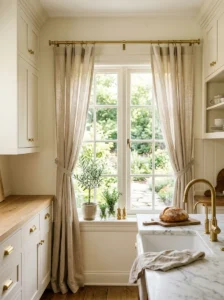
For my curtain rod and any other window treatment hardware, I specifically chose a finish that coordinated with my kitchen’s other established metal finishes, cabinet hardware and faucet fixtures in the same warm brass tone, rather than introducing a mismatched metal finish specifically through the window treatment hardware that would have felt disconnected from the rest of the room’s coordinated metal palette.
This kind of hardware coordination, similar to coordination principles I’ve applied throughout several other room projects, matters more than people often initially consider, since window treatment hardware, curtain rods, brackets, tiebacks, remains genuinely visible throughout daily use and contributes meaningfully to how cohesive and intentional the finished kitchen feels overall.
I’d recommend, for anyone finalizing their own kitchen window treatment, checking your planned hardware finish against your kitchen’s other established metal tones before finalizing this purchase, since this relatively small, often overlooked detail genuinely affects the room’s overall sense of coordinated, intentional design in a way that’s easy to underestimate until you notice a mismatched finish standing out unexpectedly once everything is actually installed together.
18. Add a Small Reading or Coffee Nook Near the Window
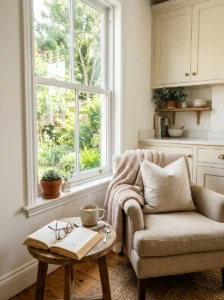
For a friend with adequate space beside her kitchen window, she incorporated a small, simple chair and side table specifically positioned to take advantage of the window’s natural light and pleasant backyard view, creating a small, dedicated coffee nook distinct from her kitchen’s more purely functional cooking and food preparation areas.
This kind of dedicated seating addition transforms a kitchen window from a purely functional element into a genuine destination within the room, providing a specific reason to actually sit and enjoy the window’s natural light and view beyond just its role in illuminating food preparation tasks throughout the rest of the kitchen’s more purely functional daily use.
I’d recommend this addition specifically for kitchens with adequate space and a window offering a genuinely pleasant view worth lingering over, rather than attempting this same treatment for a smaller, more tightly space-constrained kitchen where this kind of dedicated additional seating area wouldn’t have adequate room to function comfortably without crowding the kitchen’s more essential cooking and food preparation functions.
19. Use Café Curtains With a Decorative Trim Detail
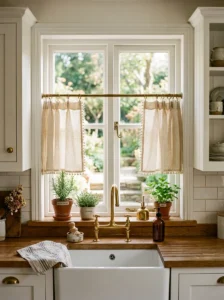
Building on the café curtain concept discussed earlier, a friend added a subtle decorative trim, a simple pom-pom edge in a coordinating color, along the bottom hem of her café curtains, adding a small, charming detail that elevated what might have otherwise been a fairly plain, purely functional treatment into something with genuine personality and charm.
This kind of small trim detail costs relatively little to add, either through purchasing pre-trimmed curtain panels or adding the trim yourself to plain panels through basic sewing or fabric adhesive, but it provides a meaningful boost to the treatment’s overall character and charm relative to its modest additional cost and effort required.
I’d recommend this kind of small decorative detail for anyone wanting to add personality to an otherwise simple, functional window treatment without a significant additional investment, choosing a trim style and color that genuinely coordinates with your kitchen’s broader established palette and style rather than an disconnected, randomly chosen embellishment that doesn’t relate meaningfully to the rest of the room’s coordinated design choices.
20. Add Stained or Decorative Glass Accents
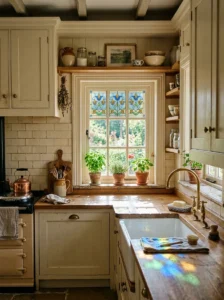
For a genuinely distinctive architectural statement, a friend incorporated a small stained glass panel into a portion of her kitchen window, adding permanent, colorful light-filtering character that changes and moves throughout the day as natural light passes through the colored glass at different angles and intensities.
This represents a more significant, specialized investment compared to most other ideas throughout this list, often requiring a custom or semi-custom glass panel specifically sized and designed for the particular window in question, but for anyone wanting a genuinely unique, artistic architectural feature, this addition provides a level of distinctive character that few other window treatment or styling options can fully replicate.
I’d recommend researching local stained glass artisans or specialty glass companies if this option appeals to you specifically, since sourcing a well-executed, properly installed stained glass element benefits considerably from working with someone genuinely experienced in this specific craft, rather than attempting a lower-quality, mass-produced alternative that wouldn’t provide the same genuine artistic and architectural impact this specialized addition can offer when executed well.
21. Choose a Window Treatment That’s Easy to Clean
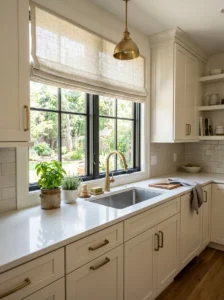
Given the genuine grease, steam, and general cooking mess a kitchen window is realistically exposed to compared to windows in other rooms throughout a home, I specifically prioritized easy-clean fabric and materials for my own kitchen window treatment, choosing a washable linen blend rather than a more delicate, dry-clean-only fabric that would have created ongoing maintenance frustration given the kitchen’s genuinely more demanding environmental conditions.
This practical consideration, while perhaps less exciting than purely aesthetic decisions, genuinely matters for how well any kitchen window treatment actually holds up and remains attractive over years of realistic daily kitchen use, rather than looking pristine only briefly before genuine cooking-related wear and staining becomes an ongoing, frustrating maintenance issue.
I’d recommend, for anyone selecting kitchen window treatments specifically, prioritizing genuinely washable, easy-maintenance materials over more delicate options that might look lovely in a bedroom or living room application but that won’t hold up as well to a kitchen’s specific, more demanding daily use conditions and realistic exposure to cooking-related mess and moisture over time.
22. Add a Small Wire Shelf for Additional Plant Display
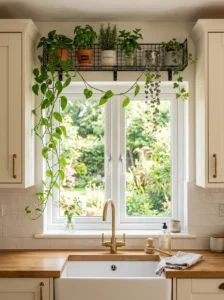
Beyond the windowsill itself, I added a small, simple wire shelf mounted just above my kitchen window, providing additional plant and small decorative object display space that takes advantage of otherwise unused wall area directly above the window frame, similar to overlooked vertical storage opportunities I’ve identified in other room projects covered elsewhere.
This addition required careful measuring and secure mounting into wall studs, given the genuine weight consideration of multiple potted plants, but it meaningfully expanded my kitchen window area’s overall greenery display capacity beyond what the sill alone could accommodate, without requiring any floor space or interfering with the window’s actual function and light transmission.
I’d recommend this kind of additional shelf specifically for anyone wanting expanded plant display capacity around their kitchen window without pursuing a larger renovation project like the garden window option discussed earlier, providing a more modest, accessible way to achieve some of the same increased growing and display capacity benefit at a considerably lower cost and effort investment.
23. Use Tiebacks to Add Shape and Structure
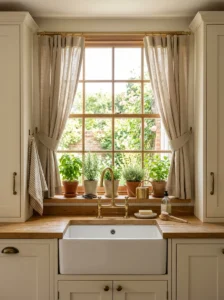
For my café curtains, I added simple fabric tiebacks, allowing the curtains to be pulled back and secured to the sides during particularly bright mornings when I wanted maximum natural light for specific cooking tasks, while still being able to quickly release them for full coverage whenever more privacy or light reduction was specifically needed throughout the rest of a typical day.
This small addition provides genuine functional flexibility beyond what a fixed, non-adjustable curtain treatment would offer, and I chose tiebacks in the same fabric and finish as my main curtain panels, maintaining visual consistency rather than introducing a mismatched, competing material or color through this smaller, secondary treatment detail.
I’d recommend this kind of tieback addition for nearly any kitchen curtain treatment, since the relatively minimal additional cost provides meaningful daily functional flexibility, allowing you to easily adjust between maximum light and full coverage depending on your specific needs throughout different times of day and different particular cooking or privacy situations as they arise.
24. Add a Small Chalkboard or Cork Board Near the Window
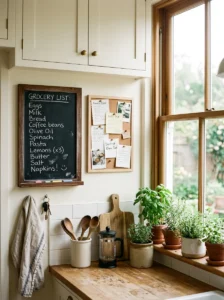
A friend incorporated a small chalkboard panel into the wall space immediately beside her kitchen window, providing a functional spot for grocery lists and reminders positioned conveniently near the window’s natural light, making this practical daily-use element feel genuinely integrated into the window area’s overall styling rather than existing as a separate, disconnected addition elsewhere in the kitchen.
This kind of practical, functional addition near a kitchen window reflects a broader principle worth considering throughout kitchen window planning specifically, that this particular window often serves as a genuine daily activity hub, food prep, dishwashing, casual planning tasks like grocery lists, making practical, function-supporting additions nearby genuinely valuable beyond purely decorative styling considerations alone.
I’d recommend this kind of small, functional addition for anyone with adequate wall space immediately beside their kitchen window, choosing a practical element that genuinely supports your own specific daily routines and needs, whether that’s a chalkboard for lists, a small cork board for recipes, or another functional addition suited to your own particular kitchen habits and daily use patterns.
25. Let the View Guide Your Overall Window Treatment Approach
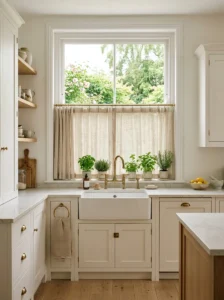
The final and perhaps most important lesson from my own kitchen window project, and from helping friends with theirs since, is that your specific window’s actual view, whether genuinely worth showcasing or better minimized, should meaningfully guide your overall treatment and styling approach, rather than applying a generic solution without this important, specific contextual consideration.
My own window overlooks a pleasant, private garden area, which influenced my choice toward the more minimal café curtain treatment specifically, maximizing my ability to actually enjoy that view throughout the day, while a friend’s window facing a considerably less attractive parking area chose a fuller, more consistently drawn treatment specifically because her actual view didn’t particularly benefit from being showcased or emphasized throughout her own daily kitchen use.
I’d recommend, before finalizing any kitchen window treatment approach, honestly assessing your own specific view and how much you genuinely want to showcase versus minimize it, since this practical, context-specific consideration should meaningfully inform decisions throughout the rest of your window planning process, rather than choosing a treatment style purely based on general trends or inspiration photos without this important, personal contextual factor genuinely guiding your own specific final decision.
Frequently Asked Questions
What’s the best window treatment for a kitchen sink window specifically? Café-style curtains or Roman shades tend to work particularly well, since both provide privacy at counter height while allowing maximum natural light through the upper portion of the window during typical daily use.
Should kitchen window treatments match the rest of the house? Not necessarily exactly, though coordinating general color palette and hardware finish helps maintain overall cohesion, while kitchens often benefit from slightly more practical, easy-clean material choices than treatments used elsewhere in a home.
Is it worth replacing an old kitchen window during a renovation? For older, single-pane, or poorly insulated windows, yes, since improved energy efficiency and updated architectural style can provide meaningful long-term value alongside the more immediate aesthetic benefits this kind of replacement provides.
How do I keep plants thriving on a kitchen windowsill? Choose varieties suited to your specific window’s actual light exposure and the kitchen’s variable humidity conditions, and consider extending or adding shelving if your existing sill doesn’t provide adequate space for your desired plant collection.
Final Thoughts
That plain, overlooked window I inherited when I first bought my house taught me just how much genuine light, style, and functional charm a kitchen window can actually support once given proper, intentional consideration rather than being treated as a purely functional afterthought within a broader renovation project. The core lesson across all 25 of these ideas is letting your specific window’s practical needs, privacy, light, view, and maintenance demands genuinely guide your styling choices, rather than applying a one-size-fits-all treatment without this important contextual consideration. Give your kitchen window this same level of thoughtful attention, and you’ll likely find, as I did, that it becomes one of the most genuinely rewarding, frequently appreciated details throughout your entire kitchen.