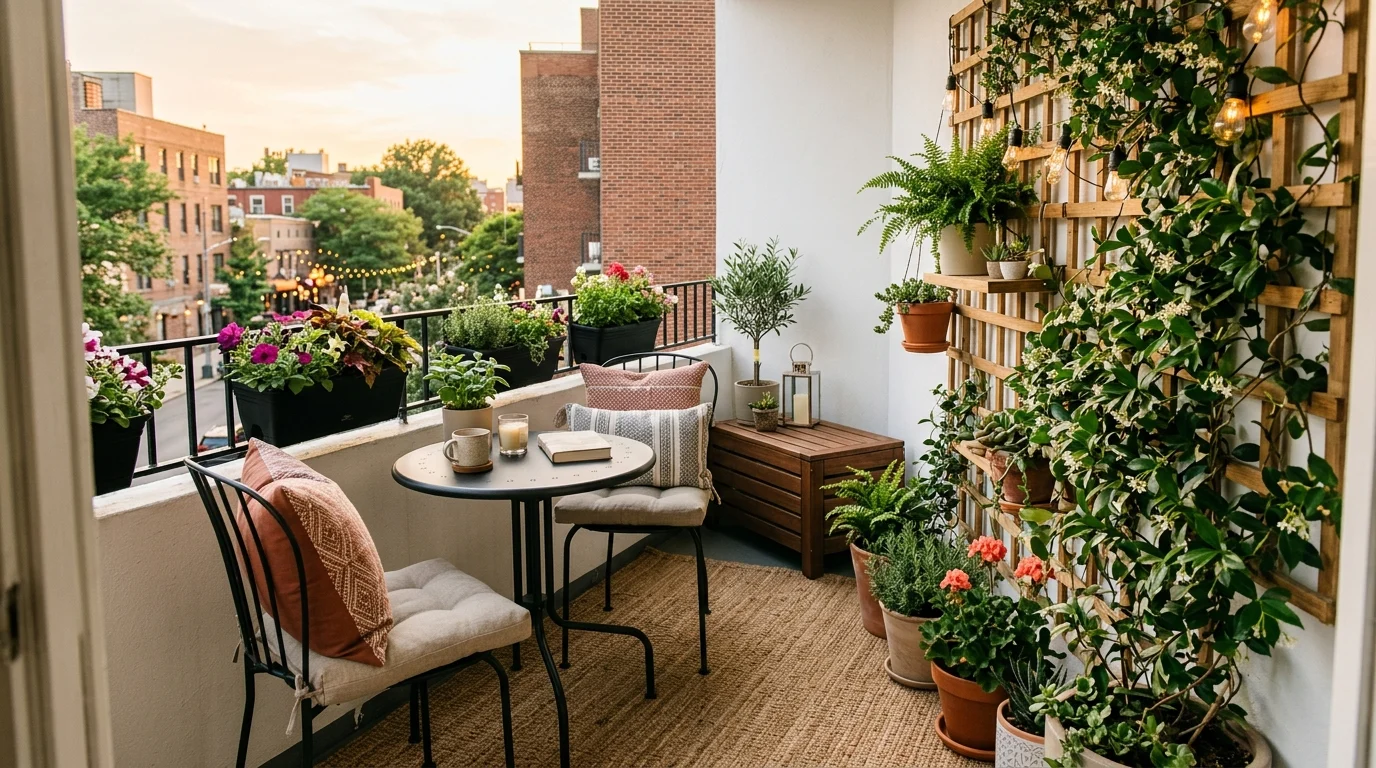
When I moved into my current apartment a few years back, the balcony was, without exaggeration, being used entirely as storage for a broken bike and a couple of boxes I hadn’t gotten around to unpacking. It measured barely five feet by eight feet, and for the first several months, I genuinely didn’t think there was much to be done with a space that small and that awkwardly shaped, tucked into a corner with a partial view of the parking lot below. It took a slow, honest weekend of actually clearing it out and standing in the empty space before I started seeing real potential in what I’d been dismissing as essentially unusable square footage.
What followed was a genuine, ongoing project spanning most of that first year, testing different furniture arrangements, learning the hard way which plants would actually survive my balcony’s specific sun exposure, and slowly transforming what had been a glorified storage closet into what became, honestly, my favorite spot in the entire apartment. I’ve since helped a couple of friends tackle similarly small, initially underwhelming balcony spaces of their own, which broadened my sense of what genuinely works across different layouts, climates, and budgets.
Here are 25 small balcony makeover ideas, based on real, lived-in transformations rather than just staged photography, all aimed at helping you turn even a genuinely tiny outdoor space into somewhere you’ll actually want to spend time.
1. Start With a Genuine, Honest Declutter
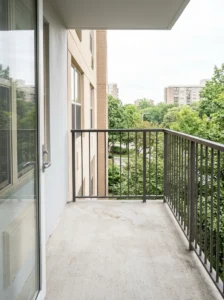
Before any actual design work began on my own balcony, I did a complete, honest clearing out, removing the broken bike, the unpacked boxes, and everything else that had accumulated there purely because it was convenient storage rather than any of it belonging in what I actually wanted to become a genuine outdoor living space.
This first step sounds obvious, but it’s genuinely the essential foundation for everything that follows, since a small balcony has so little total square footage that even a modest amount of stored clutter can consume a disproportionate share of the space’s actual usable area. I’d recommend, for anyone starting a similar balcony transformation, resisting the urge to skip straight to furniture shopping and instead beginning with this same kind of complete, honest reset, evaluating what’s currently occupying the space and whether it genuinely belongs there or has simply accumulated by default over time.
Once my own balcony was fully cleared, I was genuinely surprised by how much larger the actual usable footprint felt, even before any new furniture or decor had been introduced, which reinforced how much unnecessary clutter alone had been limiting the space’s real potential throughout those first several months of simply ignoring it as storage overflow rather than genuine living space.
2. Choose Furniture Scaled Specifically to Your Balcony’s Size
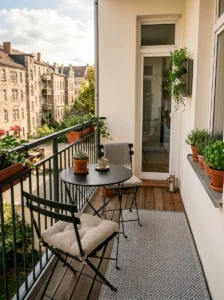
My first furniture attempt used a standard-sized bistro table and chairs that, while individually attractive, left almost no additional floor space for movement once actually positioned on my balcony’s genuinely modest footprint. I eventually returned that set and found a smaller-scale option specifically designed for compact balconies, which finally left enough remaining space to actually walk around comfortably.
I’d recommend, before purchasing any balcony furniture, measuring your specific space carefully and calculating how much floor area any given furniture piece will actually occupy, including necessary clearance for chairs to pull out and for comfortable walking space, rather than judging furniture scale purely based on how it appears in a retailer’s staged product photography, which rarely provides an accurate sense of true proportional scale relative to your own specific, likely much smaller balcony footprint.
This lesson, prioritizing genuine scale appropriateness over simply finding furniture you like in isolation, ended up being one of the most important overall principles guiding my entire balcony project, and I’ve since passed this same advice along to friends tackling their own small balcony spaces, since an otherwise beautiful furniture piece that simply doesn’t fit your specific space’s actual dimensions will undermine the whole project regardless of its individual quality or appeal.
3. Add Vertical Planters to Maximize Growing Space
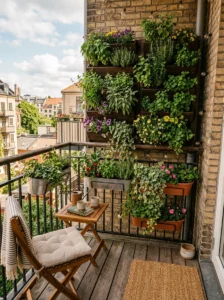
Given my balcony’s extremely limited floor footprint, I quickly realized that traditional floor-standing planters would consume space I genuinely couldn’t spare, so I shifted toward vertical planting solutions instead, a wall-mounted planter system that let me grow a genuine variety of herbs and small flowering plants without sacrificing any of my already limited floor area.
This vertical approach, mounting planters directly to the balcony’s railing and side wall rather than placing them on the floor, dramatically increased how much actual greenery I could incorporate relative to the floor space it required, since the growing area effectively expanded upward rather than remaining constrained to the balcony’s fixed horizontal footprint.
I’d recommend, for anyone with a similarly tiny balcony wanting genuine greenery without sacrificing precious floor space, researching railing-mounted and wall-mounted planter systems specifically designed for this kind of application, checking your railing’s specific weight capacity and mounting compatibility before purchasing, since not every balcony railing style safely accommodates every available vertical planting system on the market.
4. Choose a Folding or Stackable Furniture Set
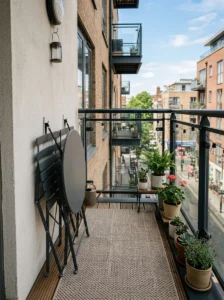
For a friend with an even smaller balcony than my own, standard furniture, even scaled-down options, still felt too permanently space-consuming for her particular situation, so she chose a folding bistro set instead, which could be fully collapsed and stored against the wall when not in active use, providing maximum floor space flexibility throughout the rest of each day.
This kind of collapsible, storable furniture approach works particularly well for balconies serving multiple functions throughout a typical day, providing open floor space for exercise or simply standing room during most hours, while still offering genuine, comfortable seating whenever she specifically wants to sit and relax outside for an extended period.
I’d recommend this folding furniture approach specifically for anyone with a particularly tiny balcony footprint, prioritizing this kind of flexibility over a fixed, permanently positioned furniture set, since the ability to reclaim floor space when seating isn’t actively needed provides genuine functional value that a fixed furniture arrangement simply can’t match within a space this constrained.
5. Add Outdoor String Lights for Evening Ambiance
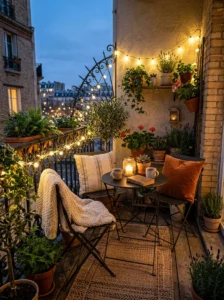
One of the lowest-cost, highest-impact additions to my own balcony was a simple string of warm white outdoor lights, hung along the railing and up toward a hook I installed near the ceiling, transforming the space’s evening atmosphere considerably beyond what the daytime furniture and plant arrangement alone provided.
I chose weatherproof, rated-for-outdoor-use lights specifically, given the genuine exposure to elements a balcony experiences that indoor string lights simply aren’t designed to withstand safely over time. This addition became one of the most consistently commented-on details whenever friends visited, and it’s a genuinely inexpensive way to meaningfully extend a small balcony’s usability into the evening hours, when the space might otherwise feel less inviting without adequate ambient lighting.
I’d recommend this addition as one of the first, easiest changes for anyone starting their own small balcony transformation, given how affordably and quickly it can be installed relative to the genuine atmospheric impact it provides, making it a good early win to build enthusiasm and momentum for the rest of a longer balcony makeover project.
6. Choose a Weather-Resistant Outdoor Rug
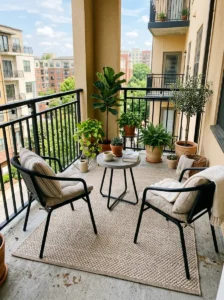
Adding a small, weather-resistant outdoor rug to my balcony’s floor made a bigger difference than I initially expected, both visually, grounding the space and making it feel more like a genuine extension of my indoor living space, and practically, providing a softer, more comfortable surface underfoot compared to the bare concrete that had been there previously.
I specifically chose a rug material designed to handle direct outdoor exposure, rain, sun, temperature fluctuation, rather than an indoor rug that would have deteriorated considerably faster under these genuinely different environmental conditions. Sizing mattered too, I chose a rug appropriately scaled to my balcony’s specific modest dimensions, leaving adequate clearance around the edges rather than an oversized rug that would have curled awkwardly against the walls or railing.
I’d recommend this addition for nearly any small balcony project, since the visual and tactile improvement relative to bare concrete or wood decking is substantial, and outdoor-rated rugs have become considerably more affordable and widely available in recent years, making this a genuinely accessible upgrade regardless of your specific balcony makeover budget.
7. Incorporate a Small Side Table for Function
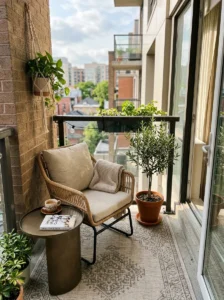
Beyond my main seating, I added a small, simple side table, positioned within easy reach of my chair specifically for holding a drink, a book, or a small plant, providing genuine daily function without consuming much additional floor space given the table’s deliberately compact, minimal footprint.
I chose a table with a slim profile and rounded edges specifically, prioritizing genuine space efficiency and safety, given how easily a bulkier or more angular table might create an obstacle within my balcony’s already tight walking path. This small addition proved surprisingly essential to my actual daily use of the space, since having a genuine surface for a coffee cup or book meaningfully increased how often I found myself actually sitting outside to relax, rather than the balcony remaining a purely passing-through space without adequate function to encourage genuine, extended use.
I’d recommend this kind of small side table addition for nearly any small balcony seating arrangement, since the genuine functional value it provides relative to its modest space requirement makes it one of the more consistently worthwhile additions across different balcony sizes and layouts.
8. Add a Vertical Garden Trellis for Climbing Plants
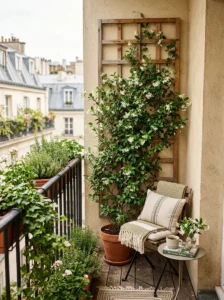
For additional greenery beyond the wall-mounted planters mentioned earlier, I installed a simple trellis structure against one wall, supporting a climbing jasmine plant that has since grown to cover a meaningful portion of that wall’s surface, adding genuine living texture and a lovely evening fragrance without requiring any additional floor space beyond the trellis’s own minimal footprint.
This kind of climbing plant solution provides an excellent way to introduce substantial greenery into a genuinely tiny balcony, since the plant’s growth extends vertically rather than requiring the kind of horizontal spread that would quickly overwhelm a small floor footprint if attempting a similar visual impact through floor-based planters alone.
I’d recommend researching climbing plant varieties suited specifically to your balcony’s actual sun exposure and climate before selecting a specific plant, since I went through two unsuccessful attempts with varieties that ultimately weren’t well-suited to my balcony’s particular partial-shade conditions before finding the jasmine variety that’s genuinely thrived in my specific situation over the following seasons.
9. Choose a Cozy, Weatherproof Outdoor Cushion Set
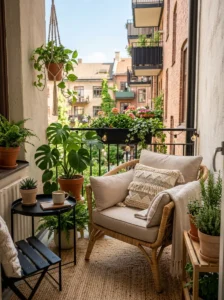
Upgrading my seating’s comfort with genuinely weatherproof cushions, rather than simply using indoor cushions that would have deteriorated quickly under actual outdoor conditions, made a meaningful difference in how comfortable and inviting my small balcony chair actually felt for extended sitting and relaxing.
I chose cushions with a quick-dry foam interior and a water-resistant outer fabric specifically, allowing them to handle occasional rain exposure without becoming waterlogged or developing mold, a genuine practical consideration for balcony furniture that a purely indoor cushion simply wouldn’t have addressed adequately over time.
I’d recommend, for anyone upgrading their own small balcony seating comfort, specifically researching genuinely outdoor-rated cushion materials rather than assuming any cushion will perform adequately once exposed to actual outdoor conditions, since this distinction matters considerably for how long your investment actually lasts and how consistently comfortable and usable your balcony seating remains throughout different weather conditions across the changing seasons.
10. Add a Small Umbrella or Shade Sail
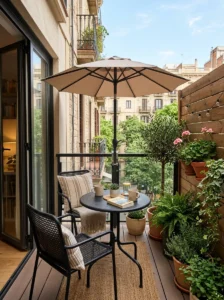
My balcony receives fairly intense afternoon sun during summer months, which initially made the space genuinely uncomfortable to use during exactly the hours I most wanted to relax outside. Adding a small, compact patio umbrella, specifically sized for balcony use rather than a larger, freestanding backyard umbrella, resolved this issue and meaningfully extended the hours during which the space remained genuinely comfortable throughout the day.
For balconies where a standing umbrella isn’t practical given space constraints, a friend instead installed a small shade sail, a triangular fabric panel mounted between two anchor points, providing similar sun protection with an even smaller physical footprint than even a compact umbrella would require.
I’d recommend, for anyone whose balcony experiences significant direct sun exposure during the specific hours you’d most want to use the space, researching these kinds of compact shade solutions early in your planning process, since sun exposure and comfort genuinely affects how much you’ll actually want to use your finished balcony, regardless of how attractively it’s been furnished and decorated otherwise.
11. Use Railing Planters Instead of Floor Pots
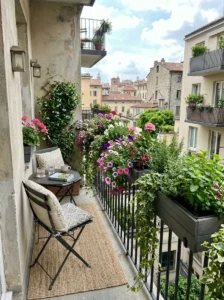
Beyond the wall-mounted system mentioned earlier, I added a row of railing-mounted planter boxes along my balcony’s outer edge specifically, growing a mix of trailing flowers and small vegetables, which provided substantial additional growing space without consuming any floor area at all, since these planters attach directly to the railing itself rather than requiring any floor-based placement.
This railing-planting approach proved to be one of the most space-efficient greenery solutions throughout my entire balcony project, and I’d recommend it as an early priority for anyone wanting substantial plant life in a genuinely tiny balcony space, since the growing capacity relative to the actual footprint required is considerably more favorable than almost any floor-based planting alternative could achieve within the same physical space constraints.
I’d recommend checking your specific railing’s weight capacity and design compatibility before purchasing planter boxes, similar to the wall-mounted system consideration mentioned earlier, since not every railing style, particularly some thinner or more decorative railing designs, safely accommodates the weight of a fully planted, watered railing box without additional reinforcement or a different mounting approach specifically suited to your particular railing’s construction.
12. Add a Small Bistro-Style Bar Cart
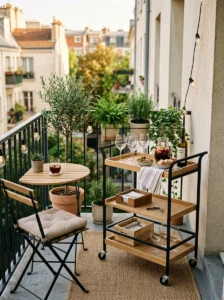
Rather than a full outdoor kitchen setup, entirely impractical given my balcony’s genuine space constraints, I added a small, narrow bar cart specifically for holding drinks and snacks during actual balcony use, which could be wheeled out from a nearby indoor storage spot when needed and returned indoors when not actively in use, providing this specific function without requiring a permanent, fixed footprint on the balcony itself.
This kind of mobile, storable furniture solution works particularly well for functions you want available but don’t need permanently occupying your limited outdoor floor space, similar in principle to some of the folding furniture concepts discussed earlier throughout this list, providing flexibility that a permanently positioned piece serving the same function simply couldn’t offer within this level of genuine space constraint.
I’d recommend this kind of mobile cart solution specifically for anyone wanting to occasionally entertain or host friends on a small balcony, since having a dedicated, easily deployed spot for drinks and snacks meaningfully improves the hosting experience without requiring you to sacrifice permanent floor space for a function you might only need during specific, occasional gatherings rather than constant daily use.
13. Choose a Compact, Space-Saving Hammock Chair
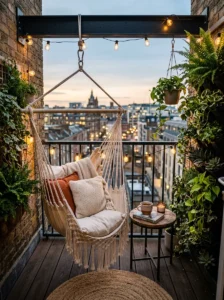
For a friend wanting genuinely relaxing seating within an extremely tight balcony footprint, a hanging hammock chair, suspended from a sturdy ceiling hook, provided comfortable, swinging seating without requiring any actual floor space for chair legs or a base, freeing up considerably more usable floor area than even a compact traditional chair would have required.
This solution does require adequate overhead structure capable of safely supporting the hammock chair’s weight and swinging motion, so I’d recommend, for anyone considering this option, consulting with a professional or thoroughly researching your specific balcony’s ceiling or overhead structure capacity before installation, given the genuine safety considerations involved in properly supporting this kind of suspended seating.
She’s found this hammock chair to be one of her most frequently used and genuinely relaxing additions to her own small balcony project, providing comfortable, gently swinging seating that somehow feels considerably more spacious and relaxing than the actual modest floor footprint it requires would initially suggest, making it a particularly good option for anyone specifically prioritizing genuine relaxation over more traditional dining or entertaining functionality within their small balcony space.
14. Add Solar-Powered Lighting for Low-Maintenance Ambiance
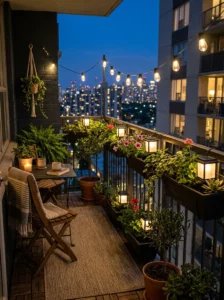
Beyond the wired string lights mentioned earlier, I added a few small solar-powered lantern-style lights positioned among my railing planters, providing additional ambient lighting without requiring any electrical access or wiring, charging automatically during daylight hours and illuminating automatically once darkness falls each evening.
This kind of solar lighting solution works particularly well for balconies without convenient electrical outlet access, or for anyone wanting to add supplemental lighting without the installation complexity that wired options require. I’d recommend, for anyone considering solar lighting specifically, researching your balcony’s actual daily sun exposure before purchasing, since these lights genuinely require adequate direct sunlight during the day to charge sufficiently for meaningful evening illumination, and a balcony with limited direct sun exposure may find these particular lights underperforming relative to expectations.
These solar additions provided a nice complementary layer to my main string lights, adding some variation in lighting height and style throughout the space’s evening atmosphere, rather than relying on a single lighting source and style throughout the entire balcony’s nighttime ambiance.
15. Use Mirrors to Create the Illusion of More Space
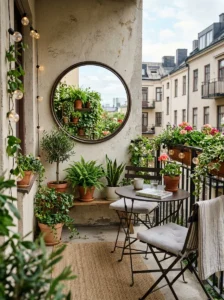
Similar to space-enhancing strategies I’ve applied in small indoor rooms, I added a weatherproof outdoor mirror to one wall of my balcony, positioned to reflect some of my plant arrangement and the view beyond the railing, creating a genuine sense of additional depth and space that made the actual modest square footage feel somewhat larger than its true physical dimensions.
I specifically sought out a mirror rated for outdoor use, since standard indoor mirrors aren’t designed to handle the moisture and temperature fluctuation genuine outdoor exposure involves, and using an indoor-rated mirror outside would likely result in deterioration of the mirror’s backing and reflective quality relatively quickly compared to a properly rated outdoor alternative.
I’d recommend this mirror strategy specifically for balconies with a genuinely appealing view or attractive plant arrangement worth reflecting and doubling visually, since a mirror reflecting an unremarkable view or a cluttered corner wouldn’t provide the same positive space-enhancing effect, making thoughtful mirror placement and orientation an important consideration for anyone incorporating this particular strategy into their own small balcony project.
16. Add a Small Herb Garden for Function and Fragrance
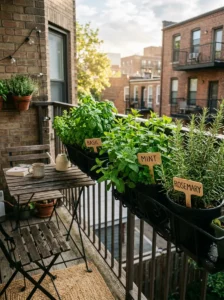
Beyond purely decorative plants, I dedicated a portion of my railing planters specifically to a small herb garden, basil, mint, and rosemary specifically, which provided genuine culinary function alongside the pleasant fragrance these plants add to the balcony’s overall atmosphere during actual use, particularly on warm evenings when the herbs’ scent becomes especially noticeable.
This kind of functional plant selection provides value beyond purely aesthetic greenery, since I’ve genuinely incorporated fresh herbs from this small garden into regular cooking throughout the growing season, adding practical value to the balcony’s overall function beyond just its role as a pleasant place to sit and relax.
I’d recommend this kind of herb-focused planting for anyone who cooks regularly and has adequate sun exposure on their balcony to support these specific plants, since most common culinary herbs require fairly substantial direct sunlight to thrive, making this a good option specifically for south or west-facing balconies with genuine, consistent sun exposure throughout the growing season rather than a heavily shaded space that wouldn’t support these particular plants successfully.
17. Choose a Neutral, Cohesive Color Palette Throughout
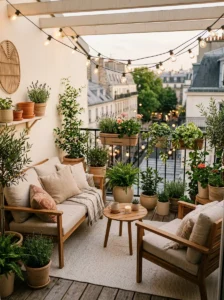
Similar to color palette principles I’ve applied throughout indoor room projects, I made sure my balcony’s various elements, cushions, planters, the outdoor rug, coordinated within a restrained, cohesive color palette, warm neutrals with occasional greenery providing the primary color interest, rather than accumulating a mismatched collection of colors and patterns across these different individually chosen elements.
This coordination matters considerably for how polished and intentional a small space feels overall, since a genuinely cohesive color story reads as considerably more elevated and considered than an equally functional but visually mismatched collection of individually attractive items that don’t relate to each other within a shared, coordinated palette.
I’d recommend, for anyone planning their own balcony makeover, establishing this kind of restrained color palette early in the planning process, before purchasing individual furniture and decor pieces, and checking each subsequent purchase against that established palette, similar to color coordination strategies I’ve applied throughout several indoor room projects, rather than assembling the space more randomly and hoping for cohesion without this kind of deliberate, upfront planning guiding your individual purchasing decisions.
18. Add a Small, Portable Fire Feature for Cooler Evenings
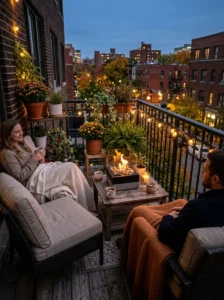
For a friend wanting to extend her balcony’s usability into cooler evening hours, particularly during shoulder seasons when temperatures drop after sunset, she added a small, portable tabletop fire feature, using safe, contained gel fuel specifically designed for this kind of compact, balcony-appropriate application rather than a larger, more substantial fire pit that wouldn’t be appropriate or safe for balcony use.
This kind of feature requires careful attention to your specific building’s fire safety regulations and any homeowner association or landlord restrictions that might apply, since many buildings genuinely prohibit open flame features on balconies specifically, making this an important consideration to research thoroughly before purchasing this kind of addition for your own space.
For her specific situation, after confirming this kind of small, contained feature was permitted within her building’s regulations, this addition meaningfully extended the number of comfortable evening hours she could enjoy on her balcony throughout the cooler months, providing both genuine warmth and an attractive, ambient visual focal point for the space during evening use specifically.
19. Use Multi-Level Plant Stands for Vertical Interest
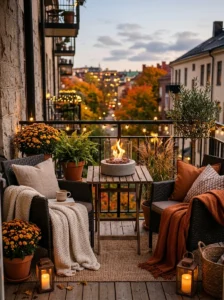
Beyond wall-mounted and railing planters, I added a small, tiered plant stand in one corner of my balcony, allowing me to display several smaller potted plants at varying heights within a single, relatively compact floor footprint, rather than spreading these same plants across a wider horizontal area that my balcony’s limited floor space genuinely couldn’t accommodate.
This kind of vertical, tiered plant display provides genuine visual interest and variety, similar to height-varying styling principles I’ve applied to indoor shelving throughout other room projects, while remaining considerably more space-efficient than displaying the same number of individual plants across separate, individually placed pots throughout the balcony’s floor area.
I’d recommend this kind of tiered stand specifically for anyone wanting to display a genuine variety of smaller plants without sacrificing significant floor space, choosing a stand with a narrow overall footprint but adequate height and shelf spacing to accommodate your specific plants’ actual size and growth habits as they continue developing throughout each growing season.
20. Add Weatherproof Storage for Cushions and Accessories
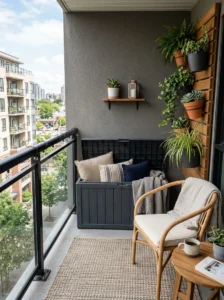
A practical addition that’s kept my balcony looking consistently tidy is a small, weatherproof storage box, positioned discreetly in one corner, specifically for storing cushions and smaller accessories during inclement weather or simply overnight, protecting these items from unnecessary weather exposure while keeping them conveniently accessible for regular use.
This kind of dedicated storage solution addresses a genuine practical need that’s easy to overlook during the more exciting furniture and decor planning phases of a balcony makeover, but having a proper place to protect softer furnishings from rain or excessive sun exposure genuinely extends their usable lifespan considerably compared to leaving these items constantly exposed to the elements without any protective storage option.
I’d recommend, for anyone planning their own balcony makeover, budgeting for this kind of storage solution alongside the more visually exciting furniture and plant purchases, since protecting your other investments through proper storage ultimately provides better long-term value than skipping this less glamorous but genuinely practical addition to your overall balcony setup.
21. Choose Textured Throw Pillows for Extra Comfort and Style
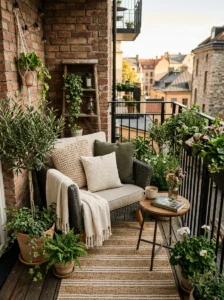
Beyond the main cushion set on my balcony chair, I added a couple of smaller, textured throw pillows, in weatherproof outdoor fabric, providing additional comfort and visual interest without requiring any additional furniture or floor space, simply layering onto the seating I’d already established elsewhere in the space.
I chose pillows with varied texture, a woven outdoor fabric alongside a smoother, water-resistant option, rather than identical matching pillows, adding some visual interest and dimension to the seating arrangement similar to pillow-layering principles I’ve applied throughout several indoor living room projects covered elsewhere in previous articles.
I’d recommend this kind of layered pillow approach for nearly any small balcony seating arrangement, since it’s a relatively low-cost way to add both genuine comfort and visual sophistication to the space, though I’d caution against overdoing the pillow quantity specifically in a genuinely tiny balcony, where two or three well-chosen pillows will read as considerably more elevated and intentional than an excessive pile that might overwhelm the space’s already limited proportions.
22. Add a Small Wind Chime or Sound Element
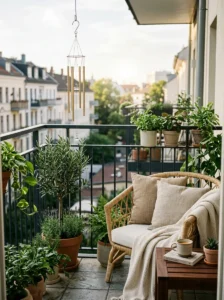
A small, simple wind chime, positioned near my balcony’s edge, added a gentle, pleasant auditory element to the space that purely visual design choices, however well-executed, simply couldn’t replicate on their own. This small addition has become something I genuinely notice and enjoy during quiet moments spent on the balcony, adding a sensory dimension beyond the purely visual and tactile elements covered throughout most of the rest of this list.
I chose a wind chime with a relatively subtle, gentle tone rather than a louder, more dramatic option, being mindful of potential noise consideration for neighbors in adjacent units, a genuinely important practical consideration for anyone living in an apartment or condo building specifically, where sound can travel between units more readily than it might in a detached, freestanding home.
I’d recommend this kind of small sound element for anyone wanting to add sensory variety to their own small balcony, while specifically researching quieter, more subtle chime options if you live in close proximity to neighbors, prioritizing a pleasant addition to your own experience without creating a genuine noise disturbance for others sharing the same building or nearby outdoor spaces.
23. Use a Foldable or Nesting Table for Flexible Dining
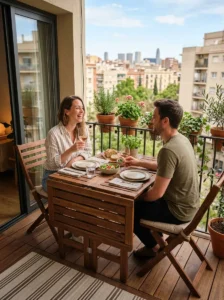
For occasions when I want to actually eat a meal on my balcony rather than just enjoying a drink or snack, I use a small, foldable table that stores flat against the wall when not needed, providing genuine dining functionality without permanently occupying floor space throughout the rest of my balcony’s daily, non-dining use.
This kind of flexible, occasional-use furniture solution, similar to some of the folding and mobile furniture concepts discussed earlier throughout this list, provides genuine function precisely when needed while avoiding the permanent floor space commitment that a fixed dining table would require within a space this genuinely limited in overall square footage.
I’d recommend this kind of foldable table specifically for anyone who only occasionally wants full dining functionality on their balcony, rather than someone who plans to eat outside regularly enough that a permanent table placement would genuinely justify its continuous floor space allocation throughout the rest of the balcony’s typical daily use and function.
24. Add a Small Water Feature for Calming Ambiance
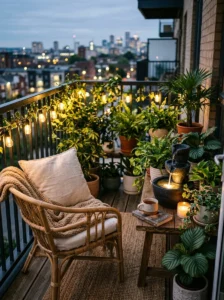
A friend incorporated a small, compact tabletop water fountain into her balcony setup, providing gentle, continuous water sound that added a genuinely calming, meditative quality to her outdoor relaxation time, distinct from the more purely visual and tactile elements covered throughout most of this list’s other suggestions.
She chose a specifically compact, low-maintenance fountain design, requiring only occasional water refilling rather than more elaborate plumbing or electrical installation that a larger, more permanent water feature would require, making this addition genuinely practical for a small, rented balcony space where more significant structural modifications typically aren’t permitted or practical to pursue.
I’d recommend this kind of small water feature specifically for anyone whose balcony faces a busier, noisier street view or urban environment, since the fountain’s gentle water sound can help mask some of that background urban noise, creating a more genuinely peaceful, private atmosphere within the balcony space itself despite its potentially less peaceful immediate surroundings beyond the balcony’s own boundaries.
25. Personalize the Space Gradually Rather Than All at Once
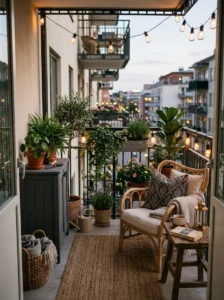
The final and perhaps most important lesson from my own balcony transformation, echoing similar lessons I’ve learned throughout other room projects covered in previous articles, is that the space’s genuine character and comfort developed gradually over time, rather than being achieved through a single, comprehensive makeover completed all at once over one ambitious weekend.
My balcony evolved considerably over that first full year, starting with just the basic decluttering and appropriately scaled furniture, then gradually adding plants, lighting, and smaller personal touches as I lived with the space and better understood what it genuinely needed versus what I’d initially assumed it might require based purely on inspiration photos rather than my own actual daily use and experience of the specific space.
I’d recommend, for anyone starting their own small balcony makeover, resisting the pressure to complete everything at once, and instead prioritizing the foundational elements first, decluttering, appropriately scaled seating, then living with that foundation for a few weeks before adding the next layer of plants, lighting, and personal decorative touches, allowing the space’s genuine character to develop more organically over time rather than rushing toward an immediately finished, but potentially less genuinely considered and personally resonant, final result.
Frequently Asked Questions
What’s the most impactful first step for a small balcony makeover? Based on my own experience, a thorough declutter comes first, since it reveals your space’s actual usable footprint before any furniture or decor decisions, followed by choosing appropriately scaled furniture specifically measured against your balcony’s real dimensions.
How do I add greenery to a balcony with very little floor space? Prioritize vertical solutions, railing planters, wall-mounted systems, and trellises for climbing plants, all of which provide substantial growing capacity without consuming precious floor area.
Is it worth investing in outdoor-rated furniture and textiles specifically? Yes, genuinely. Indoor materials deteriorate considerably faster under real outdoor exposure to sun, moisture, and temperature fluctuation, making outdoor-rated products a better long-term value despite sometimes costing somewhat more upfront.
Can I create a cozy balcony space if I rent and can’t make permanent changes? Absolutely. Nearly every idea on this list, furniture, plants, lighting, rugs, textiles, requires no permanent structural modification, making a rewarding balcony transformation genuinely achievable within typical rental restrictions.
Final Thoughts
That initial, slightly reluctant decision to actually clear out my balcony’s accumulated storage clutter ended up leading to one of my favorite ongoing home projects, teaching me that even a genuinely tiny outdoor space holds real potential once approached with the same intentional planning I’d apply to any indoor room. The core lesson across all 25 of these ideas is prioritizing appropriately scaled, multi-functional, and vertically oriented solutions, allowing the space to develop its own genuine character gradually over time rather than rushing toward an immediately finished result. Start with a clear, honest assessment of your actual space, and you’ll likely find, as I did, that your small balcony has considerably more potential to become a genuinely beloved spot than its modest square footage might initially suggest.