A couple of years ago, my younger cousin, who’s in her early twenties and wasn’t even born until well after the decade ended, asked me to help her decorate her first apartment bedroom in what she called a “90s aesthetic.” I remember feeling a strange mix of amusement and mild existential confusion, the decade I actually grew up in was suddenly being treated as vintage inspiration by someone shopping for it the same way I once shopped for genuinely retro 70s pieces. That project turned into a genuinely fun deep dive into what specifically defined 90s interior design, beyond just the pop culture references most people immediately associate with the decade.
What I learned is that the 90s had a surprisingly distinct visual language, specific color combinations, particular furniture shapes, and a real mix of minimalist and maximalist tendencies existing simultaneously depending on which specific sub-style you were referencing. Getting this right for my cousin required actually researching genuine period references rather than relying purely on my own somewhat hazy childhood memories, which turned out to be less reliable than I expected for pinning down specific, accurate design details.
Since that first project, I’ve helped a couple of other friends navigate similar 90s-inspired room requests, each drawn to slightly different aspects of the decade’s broader aesthetic. Here are 22 nostalgic 90s room ideas, based on genuine research and real builds, all capturing why this particular design era is making such a major comeback right now.
1. Choose a Jelly-Bean Color Palette
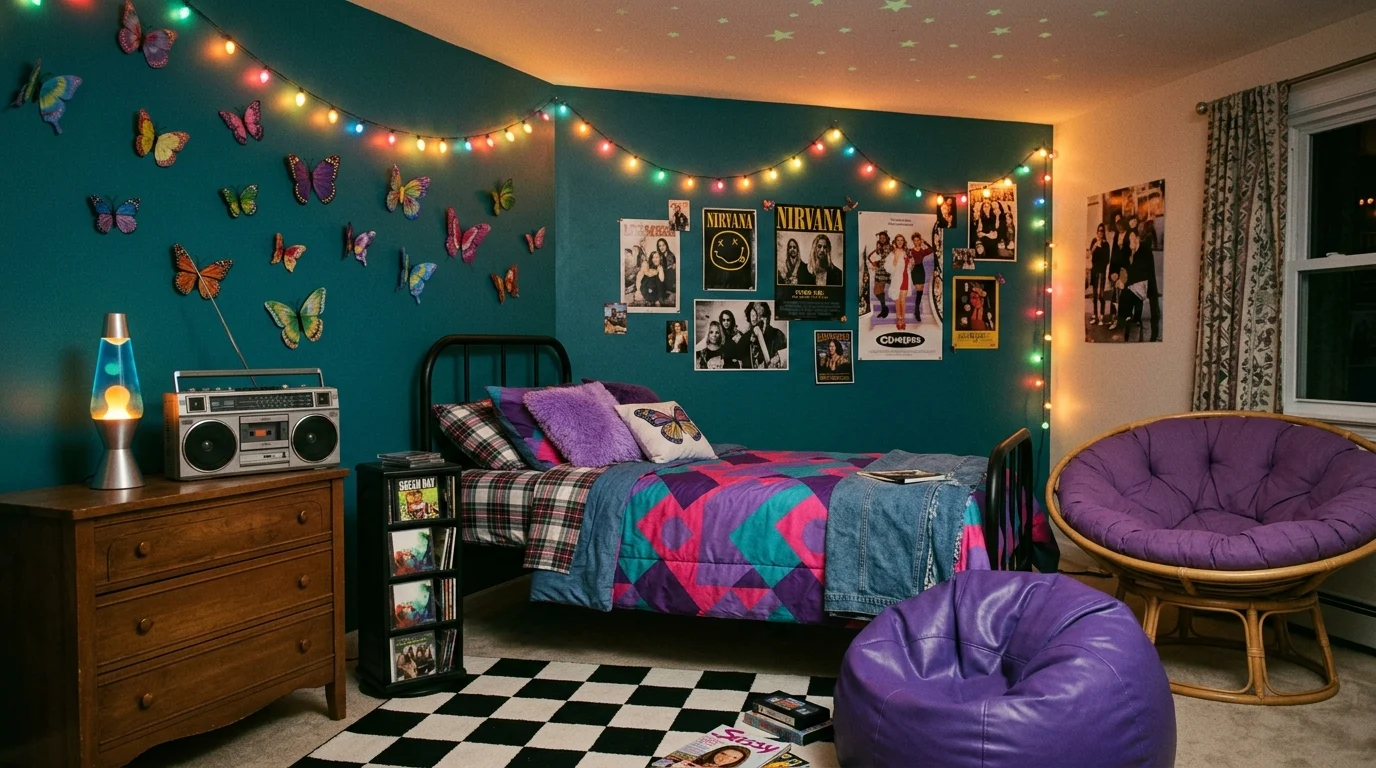
One of the most immediately recognizable 90s design signatures is the specific, slightly translucent, jelly-bean color palette, think teal, purple, hot pink, and lime green, all in that particular saturated but slightly muted tone associated with the era’s plastic products and graphic design specifically. For my cousin’s room, we chose a deep teal accent wall paired with purple and pink textile accents throughout the space.
I researched actual period color references carefully, since a slightly wrong shade of purple or teal reads as more contemporary rather than genuinely period-accurate, the 90s palette has a specific, slightly muted saturation quality that’s distinct from both the brighter neons of the 80s and the more pastel tones popular in later decades. Testing paint swatches against actual period reference images helped calibrate this choice more precisely than working from general color memory alone.
I’d recommend, for anyone chasing this aesthetic, researching specific period color references rather than assuming any bold, saturated color automatically reads as “90s,” since getting these specific tones right matters considerably for genuine authenticity versus a more generic, loosely colorful room that doesn’t specifically evoke this particular design era.
2. Add a Lava Lamp as a Statement Piece
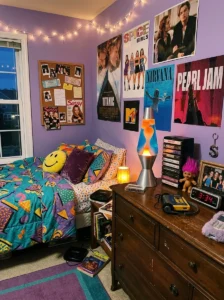
Few objects are as immediately and specifically associated with 90s bedroom decor as the lava lamp, and my cousin’s room includes a genuine, functioning lava lamp positioned on her dresser, providing both an authentic period reference and a genuinely relaxing, ambient light source during evening use.
I’d recommend, for anyone incorporating this piece, choosing a genuine, quality lava lamp from a reputable manufacturer rather than a cheaper, less reliable reproduction, since the actual slow, mesmerizing movement of the wax within a well-made lava lamp is a significant part of its appeal, and lower-quality versions often move too quickly or inconsistently to replicate that same genuinely relaxing, hypnotic quality the original design is known for.
This became one of my cousin’s favorite additions to the whole room, genuinely enjoyed for its actual function and ambiance rather than existing purely as a decorative nod to the era, which reinforced a lesson I’ve noticed across several nostalgic design projects, the most successful period references tend to be items that provided genuine sensory or functional enjoyment during their original era, not just visually recognizable symbols of that specific time period.
3. Incorporate Bean Bag Chairs for Casual Seating
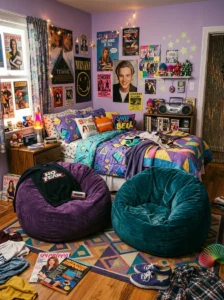
Beyond traditional seating, we added a couple of oversized bean bag chairs in bold, saturated colors, providing genuinely casual, comfortable seating that also reads as an immediately recognizable 90s bedroom staple, particularly for a young person’s space specifically designed around this particular era’s aesthetic.
I’d recommend choosing a quality bean bag with a durable, easily cleanable fabric cover, since the cheaper versions common during the era’s actual heyday often didn’t hold up particularly well over time, an authenticity trade-off worth making in favor of genuine modern durability and comfort rather than replicating every single quality aspect of period-original products exactly.
These bean bags became genuinely functional additional seating for my cousin’s apartment, used regularly by her and visiting friends, rather than existing purely as decorative props referencing the era without actual daily function, which is a good example of choosing period-appropriate elements that still serve genuine practical purposes within contemporary daily living.
4. Use Butterfly Clips and Motifs in Decor
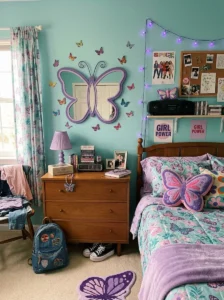
The butterfly motif, closely associated with 90s fashion and decor trends specifically, appeared throughout my cousin’s room in small decorative touches, a butterfly-shaped mirror, small butterfly wall decals, and even butterfly-patterned throw pillow covers, providing a recognizable period reference without overwhelming the entire room with a single, potentially overly literal theme.
I’d recommend using this kind of specific decorative motif in smaller, more restrained doses throughout a room rather than as an overwhelming, singular theme, since a few well-placed butterfly references throughout an otherwise coherently designed 90s-inspired room reads as considerably more sophisticated than covering every surface with the same repeated motif, which risks feeling more like a costume theme than genuine, livable interior design.
This kind of specific, era-appropriate motif also provides a good opportunity for personal customization, since my cousin specifically requested this particular reference based on her own research into 90s fashion trends she found personally appealing, demonstrating how these nostalgic room projects benefit from incorporating the specific sub-references that resonate most with the actual person living in the space, rather than a generic, undifferentiated approach to the broader decade’s aesthetic.
5. Add a CD Tower or Boombox as Decor
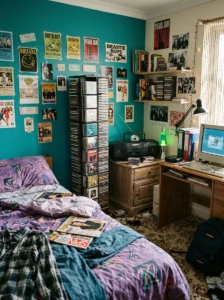
Even though my cousin, like most people her age, primarily streams music digitally, we incorporated a genuine, functioning boombox and a small collection of actual CDs displayed on a rotating CD tower, providing an authentic period reference that also offered some genuine, if occasional, functional use during actual listening sessions.
I found both pieces through secondhand shops and online vintage marketplaces, since genuine period electronics, rather than new reproductions, provided more authentic visual character and, in the boombox’s specific case, an actually accurate period audio quality experience when used, distinct from how contemporary speakers typically sound and look.
I’d recommend, for anyone incorporating genuine vintage electronics into a themed room like this, having any secondhand electrical items properly inspected for safety before actual use, since decades-old wiring and components can present genuine safety concerns that a purely decorative, non-functional vintage piece wouldn’t carry, an important practical consideration beyond just the aesthetic authenticity these genuine period pieces provide.
6. Choose a Checkerboard Pattern for Flooring or Accents
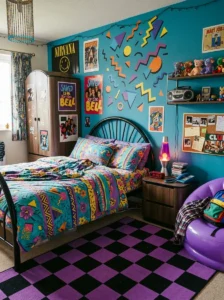
The checkerboard pattern, in either classic black and white or the era’s more colorful variations, appeared throughout genuine 90s design, and we incorporated this through a checkerboard-patterned area rug in my cousin’s room, in purple and black specifically, tying into her broader color palette while providing this immediately recognizable period pattern reference.
I’d recommend, for anyone wanting to incorporate this pattern without a full flooring renovation, considering a rug, as we did, or even smaller applications like a checkerboard-patterned lampshade or picture frame, which provide the pattern reference without requiring the more significant investment and commitment of an actual checkerboard flooring installation throughout the entire room.
This pattern choice also connects to a broader design principle running throughout genuine 90s aesthetic references, a willingness to embrace bold, high-contrast graphic patterns that many more recent design trends have moved away from in favor of subtler, more muted pattern choices, making this particular detail one of the more immediately recognizable signals of this specific design era once incorporated into a room.
7. Add String Lights or Fairy Lights for Ambiance
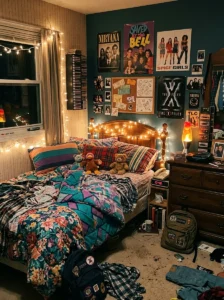
Simple string lights, draped around a headboard or along a wall, became a genuinely popular bedroom decorating trend during the actual 90s and have remained a consistently beloved addition to youth-oriented bedroom design ever since, making this one of the more seamlessly contemporary-feeling elements on this entire list, requiring little modification to feel both period-appropriate and genuinely current simultaneously.
For my cousin’s room, we chose simple, warm white string lights rather than colored versions, providing gentle ambient lighting that complemented rather than competed with her room’s bolder color palette established through paint and larger furniture choices elsewhere throughout the space.
I’d recommend this addition for nearly any nostalgic 90s room project, given how affordably and easily it can be incorporated, and how genuinely functional and pleasant the resulting ambient lighting effect actually provides beyond its purely decorative, period-referencing value, making it one of the highest-return, lowest-effort additions available across this entire list of ideas.
8. Incorporate a Beaded Curtain Doorway
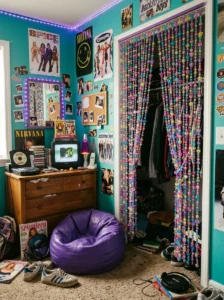
For my cousin’s closet entrance, rather than a standard door, we installed a beaded curtain, a genuinely iconic 90s decorative element that provides both an authentic period reference and a distinctive, tactile, sound-producing element as she moves through the doorway throughout her daily routine.
I’d recommend, for anyone incorporating this specific detail, choosing a curtain with a substantial bead weight and quality construction, since cheaper, flimsier versions can tangle easily and don’t provide the same satisfying, substantial movement and sound that a higher-quality version delivers, an important quality consideration for an item that will see genuine daily physical interaction rather than existing purely as a static decorative element.
This addition specifically appealed to my cousin because of its genuinely interactive, sensory quality, distinct from most other purely visual decorative elements throughout the room, adding a tactile and auditory dimension to the space that purely visual design choices, however well-executed, simply can’t replicate to the same degree throughout daily use of the room.
9. Use a Bold, Graphic Wallpaper Border
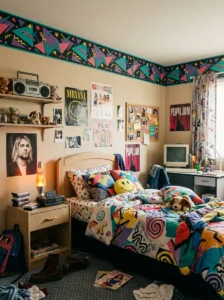
Wallpaper borders, a strip of patterned wallpaper typically applied along the upper portion of a wall rather than covering the entire surface, were a genuinely distinctive and widely popular 90s decorating trend, and we incorporated a bold, geometric-patterned border along the top of my cousin’s walls, providing a clear period reference without the more significant commitment of full wallpaper coverage throughout the entire room.
I researched actual period border patterns specifically, finding a reproduction pattern featuring the era’s characteristic bold geometric shapes in her established color palette, rather than a more generic, loosely “retro” pattern that might not specifically evoke this particular decade’s distinctive design language as accurately.
I’d recommend this border approach specifically for anyone wanting to incorporate genuine period pattern references without the cost and commitment of full wallpaper coverage, since a well-chosen border provides meaningful visual impact and clear period authenticity while remaining considerably more affordable and easier to eventually update or remove compared to a full-room wallpaper installation.
10. Add a Trundle or Bunk Bed for Sleepover Culture
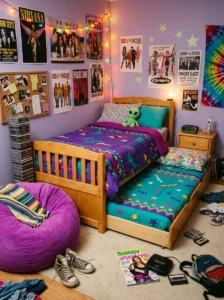
The 90s emphasized genuine sleepover culture among kids and teens, and incorporating a trundle bed or bunk bed setup, even in a single-occupant room, provides both a functional guest sleeping solution and a genuine period reference to this particular social aspect of the decade’s youth bedroom design specifically.
A friend building a similar nostalgic room for her own teenage daughter chose a trundle bed setup specifically for this reason, providing genuine functional flexibility for hosting friends overnight while also referencing this particular cultural and design aspect of the era that a standard, single-bed setup wouldn’t capture as directly or specifically.
I’d recommend this addition specifically for younger users or anyone who genuinely anticipates hosting overnight guests regularly, since it provides real functional value beyond its purely nostalgic reference value, addressing an actual practical need many people continue to have regardless of which specific decade’s design aesthetic they’re drawing inspiration from for their room’s overall styling.
11. Choose a Bubble or Inflatable Furniture Piece
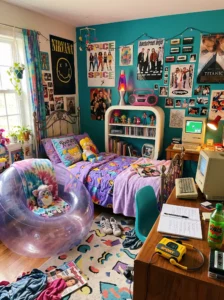
Inflatable furniture, chairs and small ottomans specifically, experienced genuine popularity during the actual 90s, and we incorporated a small, quality inflatable accent chair in my cousin’s room, providing an immediately recognizable, slightly playful period reference distinct from more standard furniture choices throughout the rest of the space.
I’d recommend, for anyone incorporating this specific element, researching quality construction carefully, since cheaper inflatable furniture can puncture or lose air pressure relatively quickly with regular use, while better-constructed versions provide more genuine, lasting daily function alongside their nostalgic visual appeal, an important durability consideration for any furniture piece intended for actual regular use rather than purely occasional decorative display.
This piece became a genuine conversation starter among my cousin’s friends, several of whom hadn’t previously encountered inflatable furniture and found the whole concept both novel and specifically evocative of this particular design era once they learned about its period-specific popularity and history, reinforcing how certain nostalgic elements can genuinely surprise and delight people even without their own direct period memory of the original trend.
12. Add Butterfly or Star-Shaped String Light Covers
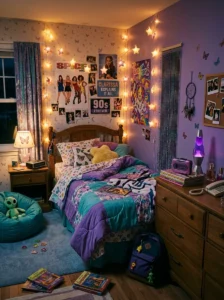
Building on the string lights mentioned earlier, we added small, star-shaped fabric covers to a portion of the light strand specifically positioned above my cousin’s bed, providing a subtle, additional period-specific decorative detail beyond just the basic string lights themselves, referencing another commonly recognized 90s bedroom decorating element specifically.
This kind of layered detail work, small covers on an otherwise simple string light installation, is a good example of how genuine period authenticity often comes from these smaller, more specific details layered onto more basic, widely applicable elements, rather than relying purely on larger, more obvious statement pieces to carry the entire room’s thematic weight and authenticity on their own.
I’d recommend, for anyone wanting to add this kind of specific detail, researching actual period-accurate light cover shapes and styles, since several different specific shapes, stars, hearts, moons, were popular during different points throughout the decade, and choosing shapes that specifically resonate with your own particular aesthetic preferences or memories provides a more genuinely personal touch than defaulting to whichever shape happens to be most readily available through contemporary retailers.
13. Incorporate a Denim or Plaid Textile Element
 z
z
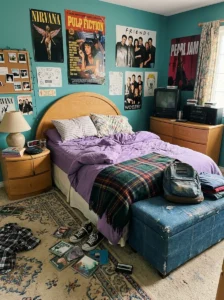
Both denim and plaid patterns were genuinely significant textile trends throughout the 90s, appearing across fashion and home decor alike, and we incorporated a denim-upholstered bench at the foot of my cousin’s bed alongside a plaid throw blanket, providing two distinct but complementary period-appropriate textile references throughout the room.
I’d recommend, for anyone incorporating denim specifically as an upholstery or textile choice, choosing a genuine, quality denim fabric rather than a synthetic imitation, since the actual weight, texture, and slight fading characteristic of real denim provides more convincing period authenticity than a cheaper, less accurate substitute material attempting to merely reference denim’s general appearance without its genuine textural qualities.
This combination of denim and plaid also connects meaningfully to broader 90s fashion trends specifically, which my cousin had researched extensively as part of her own personal interest in this particular design era, demonstrating again how connecting a room’s decor choices to genuine, specific period references, rather than more generic, loosely defined “vintage” choices, tends to produce a more authentically resonant and satisfying finished result.
14. Add a Wall of Magazine Cutout Collage Art
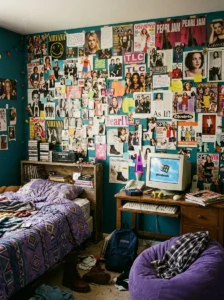
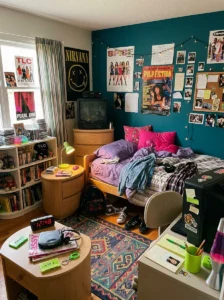
A genuinely charming, low-cost addition to my cousin’s room was a large collage wall created from actual reproduction 90s magazine pages and advertisements, arranged in an overlapping, casual pattern reminiscent of how many actual teenagers decorated their bedroom walls during the decade itself, using tape and pushpins to display favorite images and articles.
We sourced reproduction period magazine pages through online vintage print sellers, since genuine period magazines can be expensive and increasingly difficult to source in good condition specifically for this kind of decorative cutting and display use, making quality reproductions a more practical and affordable choice for this particular application without significantly compromising the collage’s overall authentic, period-appropriate visual character.
I’d recommend this kind of collage approach specifically for anyone wanting a genuinely authentic-feeling nostalgic element without significant cost, since this project requires primarily just time and some careful curation rather than expensive furniture or specialty decor purchases, while still providing one of the most immediately recognizable, genuinely evocative period references available across this entire list of ideas.
15. Choose Furniture With Rounded, Bubble-Like Silhouettes
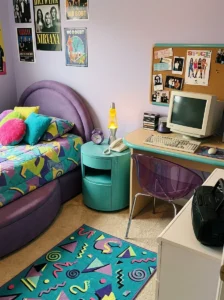
Beyond the specific inflatable furniture piece mentioned earlier, genuine 90s furniture design often favored rounded, somewhat bubble-like silhouettes, distinct from both the more angular styles of earlier decades and the cleaner, more minimal lines that became popular in subsequent design periods. We chose a rounded, bubble-shaped desk chair for my cousin’s room, reflecting this specific period furniture design characteristic accurately.
I’d recommend, for anyone sourcing furniture for this kind of themed room specifically, researching actual period furniture catalogs and reference images to understand these specific silhouette characteristics accurately, rather than assuming any generally “retro-looking” furniture piece automatically captures this particular decade’s specific design language, since furniture silhouettes shifted meaningfully between different decades in ways that matter considerably for genuine period accuracy.
This specific furniture research proved considerably more involved than I’d initially anticipated when starting this project, requiring genuine historical research rather than relying purely on general nostalgic impressions or assumptions, which reinforced a broader lesson I’ve carried through several of these themed room projects, achieving genuine period authenticity requires actual research and attention to specific details rather than a more surface-level, generalized approach to a particular design era’s overall aesthetic.
16. Add a Disco Ball or Mirror Ball Accent
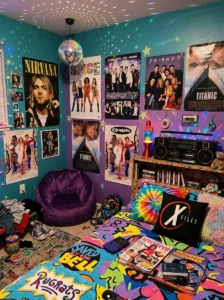
While more closely associated with the broader disco era originally, the mirror ball experienced a genuine resurgence in popularity throughout 90s youth bedroom and party decor specifically, and we incorporated a small disco ball, paired with a simple spotlight, positioned in a corner of my cousin’s room, providing both a decorative daytime element and a genuinely fun, functional lighting effect during actual use for casual gatherings or simply personal enjoyment.
I’d recommend, for anyone incorporating this element, choosing a genuine mirrored glass ball rather than a cheaper plastic imitation, since the actual glass mirror tiles provide considerably more convincing and visually appealing light reflection and movement compared to lower-quality plastic alternatives that often look noticeably less authentic and satisfying once actually illuminated and rotating.
This addition became a genuinely fun, functional feature that my cousin and her friends actively enjoy using during casual hangouts, rather than existing purely as a static decorative object, reinforcing again how the most successful nostalgic design elements tend to provide genuine, ongoing functional or experiential value beyond their purely visual, decorative period-referencing appeal.
17. Incorporate Pastel and Neon Combined Palettes
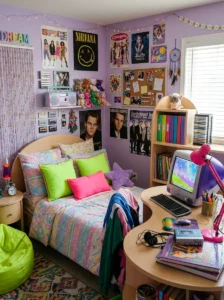
Beyond the primary jelly-bean color palette mentioned earlier, certain 90s sub-styles specifically combined softer pastels with occasional neon accents, creating a distinctive visual tension between these two seemingly contrasting color approaches. A friend working on a different 90s-inspired room for her own space specifically pursued this pastel-and-neon combination, using soft lavender walls paired with neon green accent pillows and a neon pink desk lamp.
This specific combination requires more careful color calibration than a single, more unified palette approach, since balancing these contrasting color intensities without the room feeling visually chaotic took some genuine trial and error on her part, testing different accent color proportions before landing on a combination that felt intentional rather than overwhelming or randomly assembled.
I’d recommend this more advanced color approach specifically for anyone already comfortable working with bold color combinations, since it requires more confident color calibration than some of the other, more straightforward single-palette approaches covered elsewhere throughout this list, but the resulting visual effect, when successfully balanced, provides a particularly striking and specifically period-accurate result for this particular design sub-style.
18. Add a Cassette Tape or VHS-Inspired Decorative Element
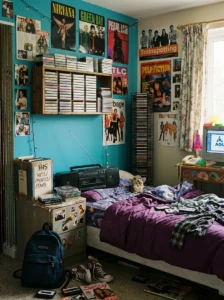
Beyond the CD tower mentioned earlier, we incorporated some smaller decorative nods to other period media formats, a small collection of cassette tapes displayed decoratively on a shelf and a VHS tape-shaped decorative box used for small item storage, providing additional layered period references throughout the room beyond just the larger, more prominent decorative statements covered elsewhere in this list.
These smaller, more specific media-format references particularly appealed to my cousin’s own personal fascination with these now-obsolete technologies, which she’d primarily encountered through her own research into the era rather than direct personal memory, given her own age and birth year relative to the actual decade being referenced throughout this entire room project.
I’d recommend this kind of smaller, layered detail work for anyone building out a comprehensive nostalgic room, since these smaller references, while perhaps less immediately striking than larger statement pieces, contribute meaningfully to the room’s overall sense of genuine, considered period authenticity when accumulated thoughtfully throughout the space rather than relying purely on one or two larger, more obvious decorative statements alone.
19. Choose a Papasan or Woven Rattan Chair
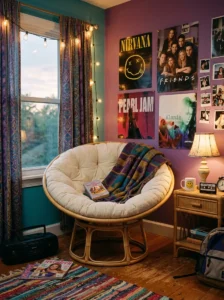
The papasan chair, a large, round, deeply cushioned chair with a woven rattan frame, was a genuinely popular seating choice throughout many 90s bedrooms specifically, and we incorporated one into my cousin’s reading corner, providing both an immediately recognizable period furniture reference and genuinely comfortable, relaxed seating for her actual daily use.
I’d recommend, for anyone sourcing this specific piece, considering secondhand options specifically, since papasan chairs were produced in genuinely large quantities throughout the actual era and remain relatively easy to find through secondhand marketplaces and thrift shops, often at considerably lower cost than a new reproduction while providing equal or, in the case of well-maintained genuine vintage pieces, sometimes even superior construction quality and material character.
This chair became one of my cousin’s most frequently used pieces of furniture in the entire room, genuinely comfortable for reading and relaxing, which reinforces a pattern I’ve noticed consistently throughout these nostalgic design projects, the furniture pieces that combine genuine period authenticity with real, ongoing daily comfort and function tend to become the most beloved, frequently used elements within these themed spaces overall.
20. Add Glow-in-the-Dark Stars to the Ceiling
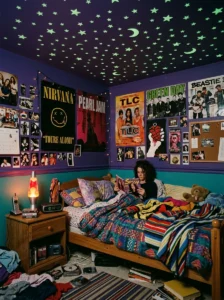
A simple, low-cost addition genuinely popular throughout many actual 90s kids’ and teens’ bedrooms was a scattering of glow-in-the-dark star stickers across the ceiling, and we recreated this exact detail in my cousin’s room, providing both an authentic period reference and a genuinely pleasant, calming visual element during nighttime use before falling asleep.
I’d recommend, for anyone recreating this specific detail, researching actual period star sticker sets or patterns if genuine nostalgic accuracy matters to your specific project, though the basic concept itself remains widely available and largely unchanged from the original era’s version, making this one of the more straightforward, easily accessible details to recreate accurately without requiring extensive specialty sourcing or research.
This detail proved particularly meaningful for my cousin specifically, since it was one of the few elements throughout the entire room that she recognized from her own actual childhood bedroom, despite her general lack of direct personal memory of the broader 90s era itself, since these particular star stickers remained popular and widely available well into the following decade as well, providing a genuinely personal point of connection beyond the room’s more purely researched, historically referenced elements.
21. Incorporate a Slap Bracelet or Scrunchie Display
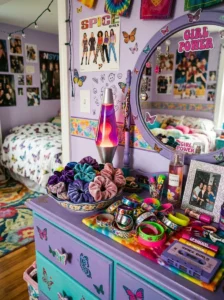
For a smaller, more playful decorative touch, we created a small display featuring a collection of colorful scrunchies and slap bracelets, arranged decoratively on a small dish on my cousin’s dresser, referencing these specific, widely recognized 90s fashion accessories in a way that also provided genuinely functional, usable items rather than purely static decorative objects.
This kind of small, functional decorative display works particularly well for referencing specific fashion trends associated with a given era, since these smaller accessories tend to be more affordable and accessible to source authentically compared to larger furniture or electronics pieces, while still providing immediately recognizable, specific period references that resonate strongly with anyone familiar with the broader decade’s fashion and accessory trends.
I’d recommend this kind of small, functional accessory display for anyone wanting to add layered period detail without significant cost or commitment, since these smaller items can be swapped, added to, or rearranged easily over time as your own collection or preferences potentially change, providing more flexibility than some of the larger, more fixed furniture and decor choices covered elsewhere throughout this broader list of ideas.
22. Balance Nostalgia With Genuine Livability
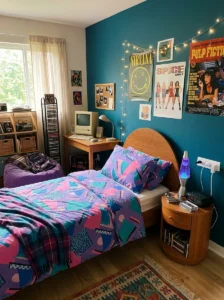
The final and most important lesson from helping my cousin, and subsequently a couple of friends, build out these nostalgic 90s-inspired rooms, is that a genuinely successful themed space needs to remain comfortably livable by today’s actual daily standards, rather than becoming a purely nostalgic museum display disconnected from how someone actually wants to live and function within the space on a genuine daily basis.
We made sure my cousin’s room, despite its extensive period referencing throughout, still included modern conveniences she genuinely needed daily, adequate outlets for contemporary devices, a comfortable modern mattress despite the period-appropriate bed frame styling, and sufficient closet organization suited to her actual current wardrobe rather than attempting to replicate period-accurate closet organization systems that wouldn’t suit her genuine contemporary needs and daily habits.
This balance, authentic period charm and reference layered thoughtfully over genuinely modern comfort and function, is really what separates a successfully executed nostalgic room from one that merely looks the part without accounting for how someone actually needs to live and function within that space every single day. The goal throughout every one of these projects has consistently been genuine charm and personal connection to a beloved design era, not an impractical, purely decorative recreation that sacrifices real daily usability for strict historical accuracy alone.
Frequently Asked Questions
Is 90s-themed decor expensive to achieve authentically? It varies. Many key elements, string lights, glow stars, magazine collages, are genuinely affordable, while sourcing genuine vintage electronics or furniture pieces can add cost, though secondhand markets often provide relatively affordable access to authentic period pieces.
Can this aesthetic work for adults, not just teenagers? Yes, though adults often prefer a more restrained, sophisticated approach, incorporating fewer, more curated period references rather than the more maximalist, comprehensive theming that works well in a dedicated teen bedroom specifically.
Where can I find authentic 90s furniture and decor pieces? Secondhand shops, estate sales, and online vintage marketplaces are excellent sources, since furniture and electronics from this relatively recent era remain reasonably available and often more affordable than earlier vintage periods.
How do I keep a 90s-themed room from feeling like a costume rather than genuine design? Layer specific, researched period details gradually rather than combining every possible reference at once, and prioritize elements that provide genuine daily function and comfort alongside their nostalgic visual appeal.
Final Thoughts
Helping my cousin chase an aesthetic from a decade she never actually experienced firsthand taught me just how specific and researchable genuine period design actually is, well beyond the surface-level pop culture references most people associate with any given era at first glance. The core lesson across all 22 of these ideas is balancing genuine, well-researched period authenticity with real daily livability and comfort, layering specific details gradually rather than attempting an overwhelming, all-at-once theme execution. Done well, a nostalgic room doesn’t just look like a specific decade, it genuinely feels like a personal, livable space that happens to draw deep, considered inspiration from a design era worth celebrating.