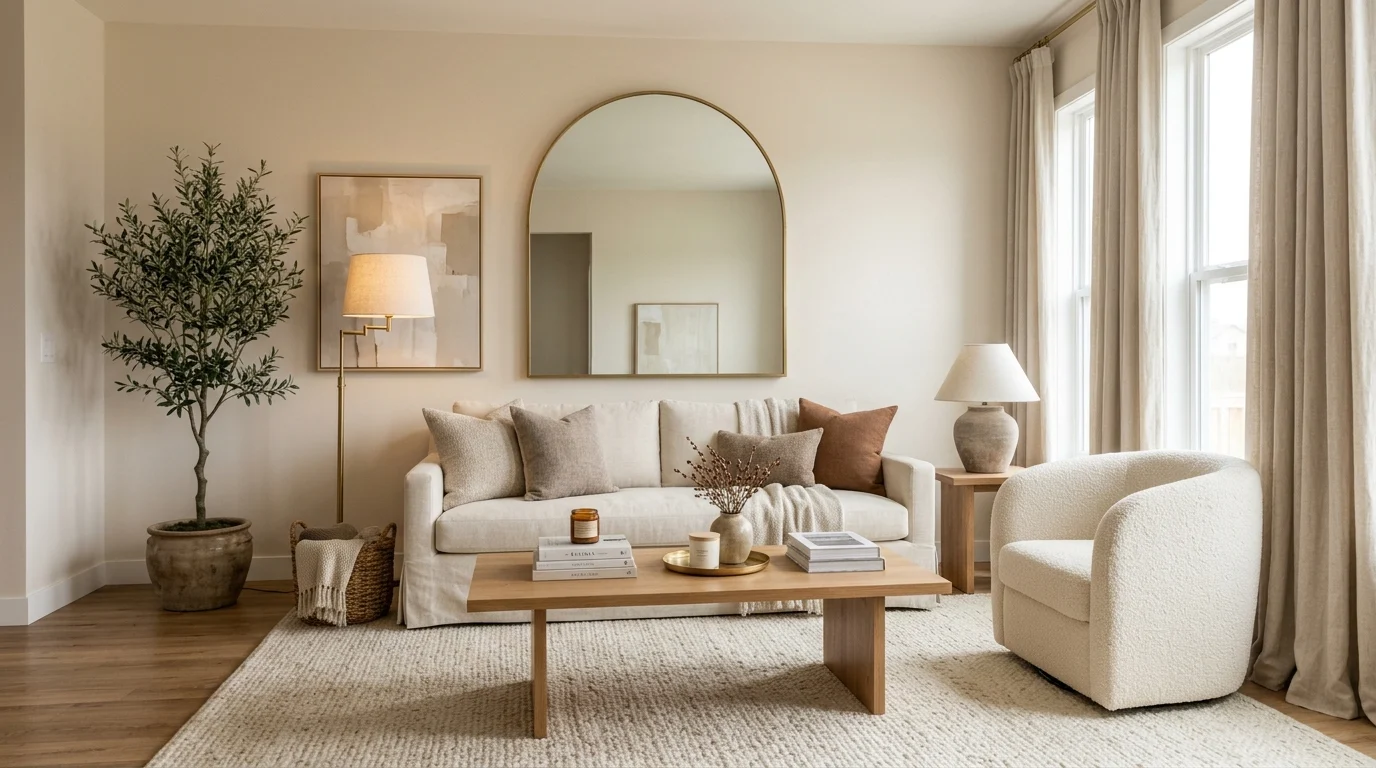
A few years back, right after finishing grad school and moving into my first real apartment, I had exactly enough money for rent, groceries, and not much else. But I still wanted my living room to feel put-together and a little elevated, not like a dorm room that had simply relocated. I spent that first year experimenting with what actually made a space read as “expensive” versus what just looked cheap dressed up in nicer packaging, and I made plenty of mistakes, buying trendy items that looked fine in photos but fell apart or felt flimsy within months.
What I eventually learned is that the feeling of an expensive room has less to do with how much you spend and more to do with a handful of specific principles, restraint, quality in a few key pieces, and attention to small details that most people don’t consciously notice but absolutely register. I’ve since applied these same lessons helping a couple of friends furnish their own budget-conscious living rooms, refining my understanding of what genuinely works versus what just sounds good in theory.
Here are 16 ideas I’ve personally tested or watched work well for others, all aimed at creating a living room that looks genuinely expensive without requiring an expensive budget to achieve.
1. Invest in One Genuinely Good Piece, Then Build Around It
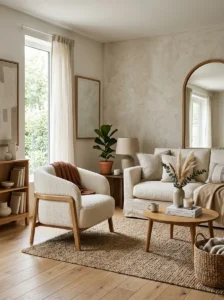
In that first apartment, I spent almost my entire furniture budget on a single, well-made accent chair rather than spreading that same money thin across several mediocre pieces. Everything else in the room, a secondhand coffee table, budget shelving, was chosen to complement that one higher-quality anchor piece rather than compete with it.
This strategy works because a room with one genuinely well-constructed, well-designed piece reads as intentional and elevated, even when surrounded by more budget-conscious items, while a room full of uniformly mediocre pieces reads as uniformly budget throughout. I chose the chair specifically for its solid wood frame and quality upholstery rather than a trendier but more cheaply constructed alternative, reasoning that this single piece would need to anchor the room’s overall credibility for years to come.
I’d recommend, for anyone working with a limited budget, identifying which single piece will get the most visual attention in your specific room, often a sofa, an accent chair, or a coffee table, and directing a disproportionate share of your budget toward that one item, while genuinely economizing everywhere else, rather than spreading your budget evenly across every single furniture piece and ending up with uniform mediocrity throughout the entire room.
2. Choose a Restrained, Cohesive Color Palette
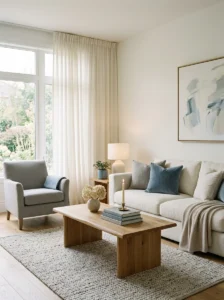
My early apartment attempts mixed too many different colors and patterns, each individually appealing but collectively creating a busy, visually chaotic room that read as thrown-together rather than intentional. Once I restrained myself to just three colors throughout the entire space, warm white, soft gray, and a single muted blue accent, the room immediately felt considerably more elevated despite containing largely the same actual furniture pieces.
This restraint matters because expensive, professionally designed spaces almost always work within a tight, deliberate color story, while budget or poorly planned rooms often accumulate colors somewhat randomly over time without this kind of overarching discipline. I’d recommend, before purchasing any new item for your living room, checking it against your established palette and being willing to pass on pieces you like individually if they don’t genuinely fit your room’s overall restrained color story.
This principle costs nothing to implement, it’s purely a matter of discipline and planning rather than spending, which makes it one of the highest-impact, lowest-cost strategies on this entire list for making a budget living room feel considerably more sophisticated and intentional.
3. Add Substantial, Well-Chosen Curtains
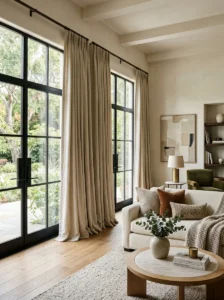
Cheap, flimsy curtains were one of the biggest visual giveaways in my early apartment attempts, and replacing them with heavier, floor-length linen curtains, purchased on sale but genuinely substantial in weight and drape, made a bigger difference than almost any other single change I made throughout that entire first year.
I hung the curtain rod higher and wider than the actual window frame, a trick that makes windows appear larger and more architecturally significant regardless of a room’s actual dimensions or budget level, and one that costs nothing extra beyond the curtain rod itself, just some careful measuring and mounting placement.
I’d recommend, for anyone on a tight budget, prioritizing curtain quality and proper installation over almost any other single decorative purchase, since cheap, thin curtains that stop short of the floor are one of the most immediate visual signals of a lower-budget space, while substantial, properly hung curtains provide an outsized visual return relative to their actual cost, especially when purchased during sales or from more affordable retailers that still offer reasonably substantial fabric weights.
4. Layer Multiple Light Sources Instead of One Overhead Fixture
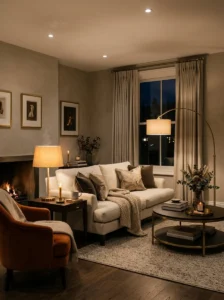
My first apartment’s single, harsh overhead light made the whole room feel like a rental unit rather than a genuinely considered living space. Adding a couple of affordable floor and table lamps, layering in warmer, softer light sources throughout the room, transformed the same space considerably without requiring any structural or electrical changes.
This layered lighting approach is something genuinely expensive, professionally designed spaces almost always incorporate, while budget rentals and quickly furnished spaces often rely entirely on a single overhead source out of simple convenience rather than intentional design. I found several attractive, well-made lamps at secondhand shops and discount retailers, proving that this particular upgrade doesn’t require significant spending, just some patience in finding the right pieces.
I’d recommend, for anyone wanting to elevate a budget living room, prioritizing at least two additional light sources beyond any existing overhead fixture, and specifically choosing warmer-toned bulbs throughout, since this combination consistently transforms a space’s overall atmosphere more dramatically than almost any other single, relatively low-cost change available.
5. Choose Quality Throw Pillows in Limited Quantity
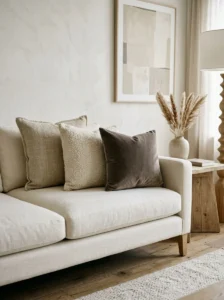
Rather than filling my sofa with numerous cheap, mismatched throw pillows, I chose just three higher-quality pillow covers, in coordinating textures and tones within my established color palette, paired with more affordable pillow inserts purchased separately, a common budget trick that lets you invest in nicer-looking covers without paying for expensive inserts you’ll never actually see.
This restraint in quantity, combined with genuine quality in the few pieces I did choose, created a considerably more polished look than my earlier attempts with numerous inexpensive, slightly mismatched pillows scattered across the sofa. I learned that texture variation, a linen cover alongside a subtly textured knit, mattered more for visual sophistication than pattern or bold color, which tends to read as more budget-conscious regardless of actual cost.
I’d recommend, for anyone furnishing a budget living room, buying pillow covers and inserts separately rather than pre-stuffed pillows, which are almost always more expensive for comparable quality, and limiting your total pillow count to just two or three per seating piece, prioritizing genuine textural quality over quantity or bold pattern throughout this specific decorative element.
6. Use a Large Area Rug, Even if Budget-Friendly
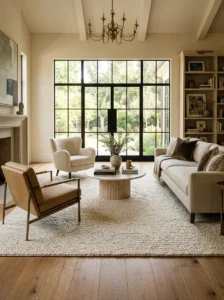
An undersized, cheap rug was another early mistake in my apartment, floating awkwardly in the middle of my seating area without actually reaching any of my furniture. Sizing up to a considerably larger rug, even a more budget-friendly material and construction, and ensuring it extended beneath my furniture’s front legs, made an immediate, significant difference in how grounded and intentional the whole room felt.
Rug size genuinely matters more than rug price for achieving this kind of elevated look, an appropriately sized budget rug reads as considerably more sophisticated than an expensive but undersized one that doesn’t properly anchor the furniture arrangement. I found a reasonably priced, larger flat-weave rug that, while not the most luxurious material available, provided the correct proportions and a clean, unpatterned look that read as intentional rather than cheap.
I’d recommend, for anyone on a budget, prioritizing rug size over rug price point specifically, since an appropriately large rug in a more affordable material almost always outperforms an expensive but undersized alternative in terms of how sophisticated and considered the finished room actually feels.
7. Declutter Aggressively Before Adding Anything New
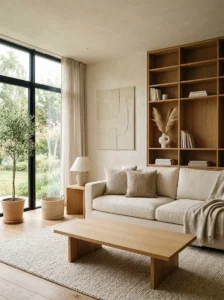
Before buying a single new item for my apartment, I went through and removed everything that wasn’t either genuinely functional or intentionally decorative, which made an immediate difference in how the existing space felt, even before any new purchases entered the picture at all.
This decluttering step costs literally nothing and consistently provides one of the highest-impact improvements available for any budget room redo, since visual clutter is one of the fastest ways to undermine an otherwise well-planned space, regardless of how much money has been spent on the individual furniture and decor pieces themselves. Expensive, professionally designed spaces almost universally embrace negative space and restraint, while cluttered spaces read as budget or unconsidered regardless of the actual quality of the individual items within them.
I’d recommend, for anyone starting a budget living room project, beginning with this kind of aggressive declutter before spending any money on new items, since a genuinely decluttered space with modest existing furniture often already looks more elevated than a cluttered space filled with individually nice, expensive pieces that simply have too much competing visual noise throughout the room.
8. Add Greenery for an Instant Upgrade
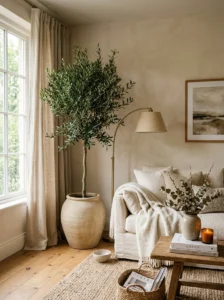
A single large plant, purchased relatively inexpensively from a hardware store rather than a specialty nursery, added more genuine visual sophistication to my apartment living room than almost any other budget-friendly purchase I made during that first year. Living plants add a sense of care and intentionality that purely purchased decorative objects don’t quite replicate to the same degree.
I chose a low-maintenance variety, a snake plant specifically, given my apartment’s limited natural light and my own admittedly inconsistent plant care habits at the time, prioritizing a plant that would actually survive and thrive under my real circumstances rather than an aspirational but ultimately impractical choice that would likely die within weeks and undermine rather than enhance the room’s overall polish.
I’d recommend, for anyone on a tight budget, prioritizing at least one substantial plant for their living room, researching varieties genuinely suited to your specific light conditions and realistic care capacity, since a thriving, well-chosen plant provides considerably more visual sophistication per dollar spent than almost any purely decorative object at a comparable price point.
9. Choose Matte Black or Brass Accents for Cohesion
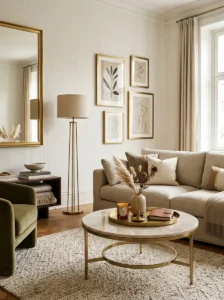
I noticed my apartment’s various small accents, a lamp, a picture frame, a small tray, had accumulated in a random mix of different metal finishes over time, which created a subtly disjointed, unconsidered feeling despite each individual piece being perfectly nice on its own. Consolidating toward a single metal finish, brushed brass specifically, throughout my smaller accent pieces created considerably more visual cohesion without requiring me to replace any of the pieces themselves, just swap a couple of the most visually prominent mismatched items.
This kind of metal finish consistency is something genuinely expensive, professionally coordinated spaces almost always maintain, while more casually assembled, budget spaces often accumulate a random mix of whatever specific finish happened to be available or affordable for each individual purchase made over time without this coordinating consideration.
I’d recommend, for anyone wanting to elevate an existing budget living room without a full furniture replacement, auditing your smaller accent pieces specifically for metal finish consistency, and prioritizing replacing just the most visually prominent mismatched items with pieces in your chosen consistent finish, rather than assuming this kind of coordination requires replacing every single metal element throughout the entire room simultaneously.
10. Frame Prints Instead of Buying Original Art

Original art was entirely outside my budget in that first apartment, so I instead purchased a few high-quality print reproductions and invested specifically in nice, substantial frames rather than the flimsy frames these prints often ship with by default. This combination, budget-friendly print paired with a genuinely quality frame, consistently reads as considerably more elevated than the reverse, an expensive print in a cheap frame.
I chose frames with some actual weight and substance, avoiding the very thin, obviously inexpensive frame styles, and had a couple of pieces professionally matted at a local frame shop for a relatively modest additional cost, which added a level of polish that a basic, pre-made frame from a big box store typically doesn’t provide on its own.
I’d recommend, for anyone building out wall art on a budget, directing a larger proportion of your art budget toward quality framing rather than the print itself, since a well-framed, modestly priced print consistently outperforms an expensive print in a flimsy, obviously budget frame in terms of how sophisticated the finished piece actually reads once hung on your wall.
11. Choose Simple, Unfussy Furniture Silhouettes
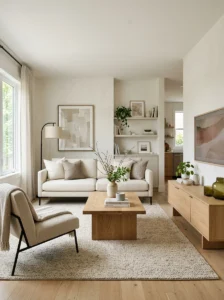
I learned that ornate, heavily detailed furniture, even when reasonably priced, tends to look considerably cheaper than simple, clean-lined furniture at a similar price point, since intricate detailing is genuinely harder and more expensive to execute well, and budget versions of ornate styles often show their lower-quality construction more obviously than a simpler design would at the same price point.
I specifically sought out furniture with clean, straightforward lines rather than elaborate carving or decorative trim, reasoning that simpler silhouettes are more forgiving of budget-level construction and materials, since there’s simply less complexity for lower-quality execution to visibly undermine compared to a more ornate style attempted at the same modest price point.
I’d recommend, for anyone furnishing a living room on a genuine budget, gravitating toward simpler, cleaner furniture silhouettes over more ornate, detailed styles specifically because budget-level ornate furniture tends to reveal its lower quality more readily than a simpler design executed at that same accessible price point, which tends to look considerably more intentional and elevated despite the shared modest budget behind both approaches.
12. Add a Statement Mirror for Instant Elegance
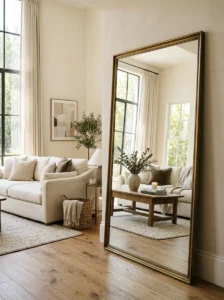
A large, simply framed mirror, purchased on sale from a home goods retailer, became one of the highest-impact, most affordable additions to my apartment living room, reflecting light around the space and adding a genuine sense of scale and elegance that a comparably priced piece of wall art typically wouldn’t provide to the same degree.
I positioned mine to reflect my window, maximizing the natural light-bouncing benefit throughout the day, and chose a simple, substantial frame in the same brass tone as my other coordinated metal accents, tying this addition into my broader cohesive palette rather than introducing yet another isolated, uncoordinated element into the room.
I’d recommend, for anyone on a budget, prioritizing at least one substantial mirror for their living room specifically, since this single item type consistently provides an outsized visual and functional return relative to its typical cost, adding both genuine light and a sense of expanded space that purely decorative wall art at a similar price point simply can’t replicate to the same degree.
13. Keep Surfaces Styled but Sparse
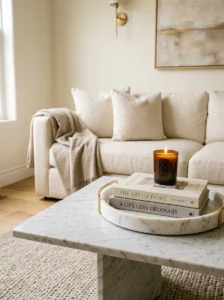
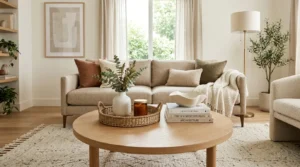
I learned that cluttered surfaces, even with individually nice objects, read as considerably less sophisticated than a sparsely, intentionally styled surface featuring just two or three carefully chosen items. My coffee table now holds just a simple tray, a single candle, and a small stack of two books, rather than the more scattered collection of items it held during my earlier, less intentional apartment styling attempts.
This restraint costs nothing beyond the discipline of actually removing excess items, and it consistently reads as more expensive and considered than a fuller, more cluttered surface arrangement, regardless of how much any individual item on that surface actually cost to purchase. Expensive, professionally styled spaces almost universally embrace this kind of restraint, while budget or hastily assembled spaces often accumulate more surface clutter over time without this same intentional editing.
I’d recommend, for anyone wanting to elevate their existing living room without additional spending, going through and removing at least half of what currently sits on any given surface, keeping only the pieces that genuinely add intentional visual or functional value, rather than assuming more objects automatically create a more finished, complete look throughout the room.
14. Choose Slipcovers to Refresh Worn Furniture
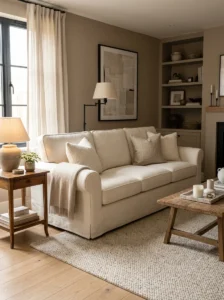
Rather than replacing an existing but visually worn sofa entirely, which was well outside my actual budget at the time, I found a well-fitted, higher-quality slipcover that transformed the piece’s appearance considerably without the cost of full furniture replacement. Getting a properly fitted slipcover, rather than a loose, obviously ill-fitting one, mattered enormously for how convincing this budget solution actually looked once installed.
I specifically avoided the very cheapest slipcover options, which tend to fit poorly and look obviously like a slipcover rather than genuine upholstery, instead spending slightly more for a better-fitted, higher-quality fabric option that draped and fit considerably more convincingly, closer to how genuine upholstery actually looks and behaves.
I’d recommend, for anyone with existing but worn furniture and a limited budget, researching quality slipcover options specifically designed for your furniture’s exact model or general shape, rather than assuming any generic, ill-fitting slipcover will provide a similarly elevated result, since fit and fabric quality matter enormously for how convincing and sophisticated this particular budget solution ultimately reads.
15. Add Candles for Ambiance and Scent
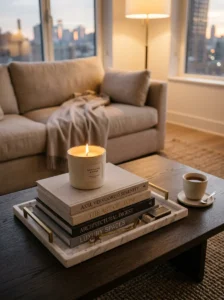
A few well-chosen candles, in simple, substantial glass or ceramic vessels rather than cheap, thin plastic containers, added genuine warmth and a sense of considered luxury to my apartment for a relatively modest cost. I specifically chose candles with vessels attractive enough to keep displayed even when unlit, rather than purely functional, disposable-feeling containers that only looked appealing during actual use.
This detail, easily overlooked but genuinely impactful, connects to a broader principle I’ve applied across other budget room projects, that a room’s overall scent and ambiance genuinely affects how “finished” and considered it feels, beyond just the purely visual furniture and decor choices most people focus on primarily.
I’d recommend, for anyone finishing out a budget living room, including at least one or two quality candles as part of the overall styling plan, choosing vessels attractive enough to function as standalone decorative objects even when not actively burning, which provides both the scent and ambiance benefit alongside genuine ongoing decorative value throughout the room.
16. Prioritize Cleanliness and Maintenance Over New Purchases
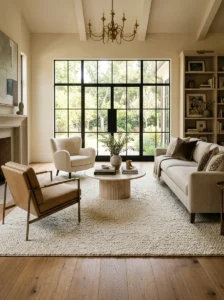
The final and perhaps most important lesson from my own budget apartment experience is that genuine cleanliness, dusted surfaces, vacuumed rugs, streak-free windows, does more to make a room feel expensive and well-maintained than almost any single purchase could achieve on its own, regardless of budget level.
I noticed that even my most budget-conscious furniture pieces looked considerably more elevated simply when the room around them was genuinely clean and well-maintained, while even relatively nicer pieces looked less impressive in a dusty, poorly maintained space. This lesson costs nothing beyond regular effort and attention, making it perhaps the single highest-value, lowest-cost strategy on this entire list.
I’d recommend, for anyone trying to make a budget living room look more expensive, establishing a genuine regular cleaning and maintenance routine before or alongside any new purchases, since a spotless, well-cared-for room featuring modest furniture consistently outperforms a dusty, poorly maintained room featuring more expensive pieces, in terms of how genuinely sophisticated and well-considered the overall space actually feels to anyone spending time in it.
Frequently Asked Questions
What’s the single best budget upgrade for making a living room look expensive? Based on my own experience, upgrading to substantial, properly hung curtains tends to provide the most dramatic visual return relative to cost, though a thorough declutter costs nothing and provides comparable impact.
Is it worth buying secondhand furniture for a budget-friendly elevated look? Yes, particularly for a single higher-quality anchor piece. Secondhand furniture often provides better construction quality per dollar than new budget furniture, especially for solid wood pieces.
How do I make mismatched furniture look intentional? Focus on coordinating metal finishes, color palette, and overall furniture silhouette style across your pieces, rather than requiring everything to match exactly, which creates cohesion even among furniture acquired at different times and price points.
Does lighting really make that big a difference in how expensive a room looks? Yes, genuinely. Layered, warm lighting is one of the most consistently high-impact, relatively low-cost changes available, and it’s a detail that professionally designed spaces prioritize far more heavily than most budget-conscious individual efforts typically do.
Final Thoughts
That first budget-constrained apartment taught me lessons about restraint, intentionality, and prioritization that I still apply to every room project since, regardless of the actual budget involved in more recent work. The core takeaway across all sixteen of these ideas is that an expensive-looking room is really about deliberate choices and genuine care, not necessarily deliberate spending, restraint in color and clutter, investment concentrated in the pieces that matter most, and consistent maintenance, all cost considerably less than most people assume relative to the sophisticated result they can achieve. Start with decluttering and lighting, since both cost little or nothing, and build outward from there as your specific budget allows.