For the longest time, our bedroom had bare hardwood floors, and I genuinely didn’t think much of it. The floors were in good condition, the room looked fine in photos, and I told myself a rug was just an unnecessary extra expense for a room that “already looked done.” It wasn’t until a particularly cold winter morning, stepping out of bed onto freezing hardwood, that I finally admitted the room was missing something both practical and visual. That same week, I started researching bedroom rugs seriously for the first time, and what I learned completely changed how I thought about that space.
What surprised me most wasn’t just the comfort factor, though that mattered plenty, it was how much a well-chosen rug could visually anchor the entire room. Our bed, nightstands, and dresser had always felt slightly disconnected from each other, floating independently rather than working together as a cohesive layout. Adding the right rug changed that almost overnight, tying the furniture grouping together in a way paint and lighting alone hadn’t managed to do. Since that first rug purchase, I’ve gone through two more bedrooms in different homes, and I’ve helped a couple of friends pick rugs for their own spaces, learning quite a bit about sizing, material, and placement along the way.
If your bedroom feels a little disconnected or cold underfoot, here are 15 rug ideas I’ve personally used, tested, or researched thoroughly enough to recommend with real confidence.
Why the Right Rug Matters So Much in a Bedroom
A bedroom rug does more work than people often give it credit for. Beyond the obvious comfort of not stepping onto cold flooring first thing in the morning, a properly sized and placed rug visually unifies the furniture in the room, adds texture and warmth, and can even help absorb sound in a way hard flooring alone cannot. In my own experience, choosing the wrong rug, whether in size, texture, or color, can make an otherwise well-designed bedroom feel oddly unfinished, while the right one can make even a fairly plain room feel intentional and complete.
1. Choose a Rug Large Enough to Extend Beyond the Bed’s Sides
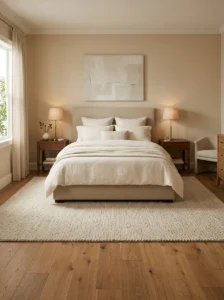
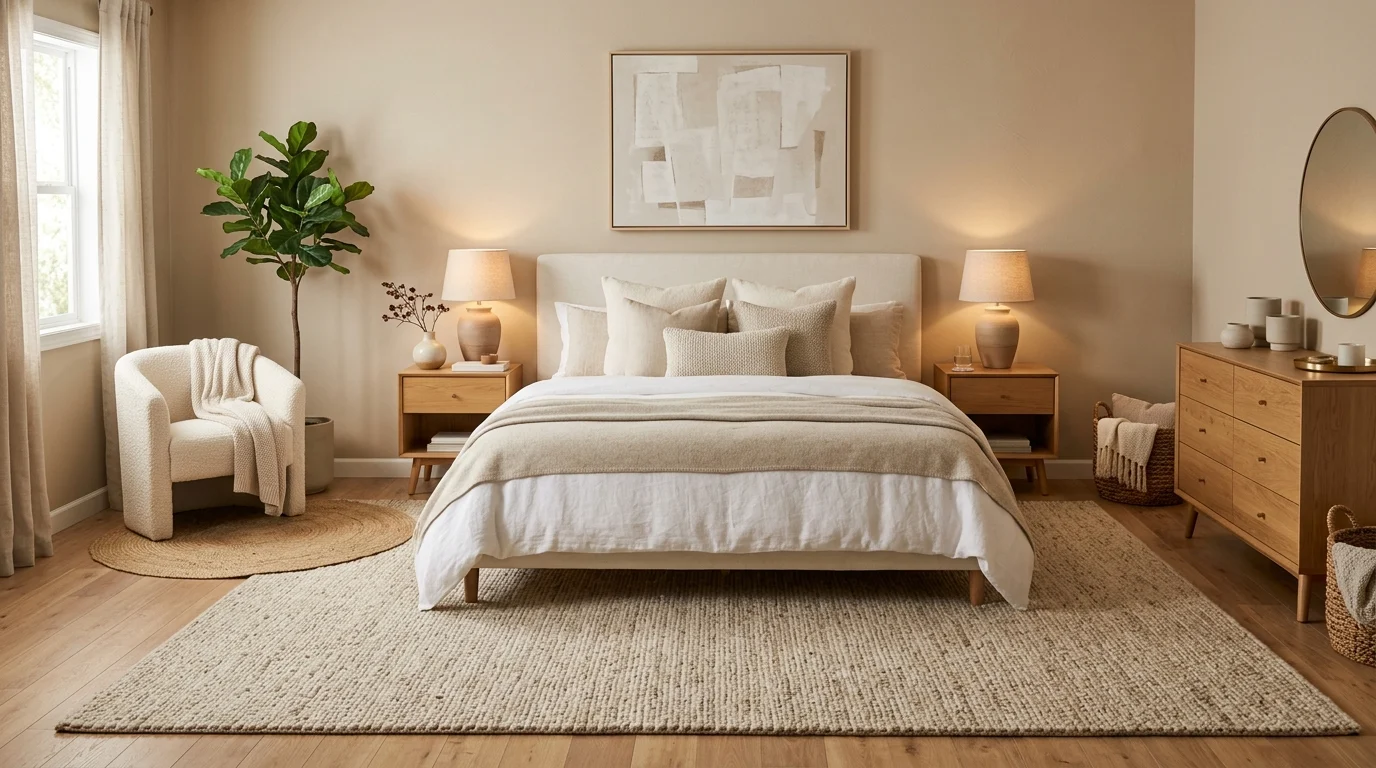
One of the most common mistakes people make, myself included in my very first attempt, is choosing a rug that’s too small for the bed it’s meant to accompany. A rug that only peeks out from under the corners of the bed frame tends to look like an afterthought rather than an intentional design choice. When I finally upgraded to a properly sized rug, one that extended at least eighteen to twenty-four inches beyond each side of the bed, the entire room instantly felt more grounded and cohesive. Walking around either side of the bed and stepping onto soft rug rather than hard floor made the room feel noticeably more finished, and it changed how the whole furniture arrangement read visually. I measured our bed frame carefully before shopping this second time around, accounting for the nightstands on either side as well, since I wanted the rug to comfortably reach beneath at least the front legs of those pieces too. This extra planning made a real difference; the first small rug I’d bought years earlier had made the room feel choppy, almost like the bed and nightstands belonged to two different areas rather than one unified space. Now, stepping out of bed on either side, my feet land on rug rather than a jarring transition to cold wood, which has made mornings genuinely more pleasant, especially during colder months. I’d recommend measuring your specific bed size, whether queen, king, or full, and adding those extra inches on each side before ever browsing rug options, since it narrows the field considerably and prevents the disappointment of falling in love with a rug that simply won’t work for your room’s proportions. It’s also worth sketching a rough floor plan on paper first, marking out the bed, nightstands, and any walkway space, so you can visualize exactly how much rug is actually needed before you start comparing prices, since larger rug sizes can jump considerably in cost and it helps to know your true minimum before deciding whether to stretch the budget for a bit of extra coverage.
2. Layer a Smaller Vintage Rug Over a Larger Neutral Base
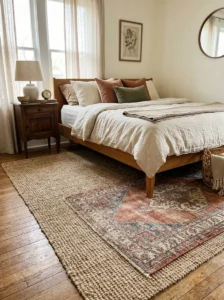
Rug layering has become one of my favorite tricks for adding depth and personality to a bedroom without committing to a single bold pattern across the entire floor. The idea is simple: start with a larger, more neutral rug as your base, something in a solid color or subtle texture that covers most of the floor space around the bed, and then layer a smaller, more decorative rug, often vintage or vintage-inspired, on top near the foot of the bed or beside it. I tried this in my second bedroom after seeing it done in a friend’s guest room, and the effect was more striking than I expected. The neutral base rug kept the overall room feeling calm and cohesive, while the smaller layered piece added a pop of pattern and color that made the space feel curated rather than generic. This approach also solves a practical problem I hadn’t considered before, budget. A single large rug in a bold, high-quality pattern can be quite expensive, but a smaller vintage or vintage-style rug used as an accent layer costs considerably less while still delivering much of the same visual impact. I found a smaller Persian-style rug at a local estate sale for a fraction of what a comparable full-sized rug would have cost, and layering it over a plain jute base rug gave the room a collected, lived-in feel that a single new rug wouldn’t have achieved on its own. The slight variation in pile height between the two rugs also adds a subtle textural dimension underfoot that I’ve genuinely come to appreciate every time I walk across it. When layering, I’ve learned it’s best to keep the top rug positioned slightly off-center relative to the base, rather than perfectly aligned in the middle, since a slightly asymmetrical placement tends to look more natural and collected, closer to how a rug might genuinely accumulate in a well-loved space over time rather than looking like a deliberately staged design trick.
3. Use a Round Rug to Soften a Room Full of Sharp Angles
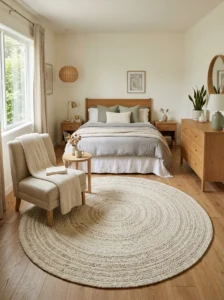
Most bedroom furniture, beds, dressers, nightstands, tends to be rectangular and full of hard, straight edges, which can sometimes make a room feel rigid or overly structured. Introducing a round rug, whether centered under a reading chair in the corner or placed at the foot of the bed, breaks up that visual monotony in a subtle but effective way. I used this trick in a smaller guest bedroom that had felt a bit boxy despite otherwise thoughtful furniture choices, and the round rug softened the whole room considerably. It wasn’t a dramatic change on paper, just swapping a rectangular rug for a round one in roughly the same square footage, but the visual effect was more noticeable than I anticipated. Guests who’ve stayed in that room have specifically commented on how cozy and inviting it feels, and I genuinely think the round rug’s soft edges play a real part in that impression. Beyond the aesthetic benefit, I’ve also found round rugs to be a smart choice for smaller bedrooms or awkward layouts where a large rectangular rug simply wouldn’t fit the available floor space cleanly. A round rug tucked into a reading nook or beneath a small accent chair can define that little zone within the bedroom without requiring the room to be large enough to accommodate a full rectangular rug extending from wall to wall. If you’re working with an oddly shaped room, or simply want to soften an otherwise sharp-edged furniture arrangement, a round rug placed thoughtfully can make a meaningful difference without a large investment or any structural changes to the room itself. It’s also worth noting that round rugs tend to work particularly well beneath pendant lights or in spots directly beneath a ceiling fixture, since the circular shape echoes the light’s radius in a way that feels visually intentional rather than incidental, tying the floor and ceiling elements of a small vignette together more cohesively than a rectangular rug typically manages in that same spot.
4. Choose a Natural Fiber Rug for Warmth Without Heaviness
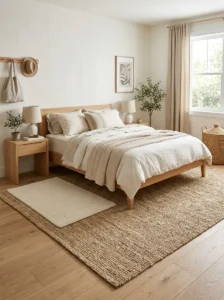
Jute, sisal, and seagrass rugs have become genuinely popular in bedroom design over the past several years, and after using one in our own primary bedroom, I understand exactly why. These natural fiber rugs add warmth and texture underfoot without the visual heaviness that a thick, plush rug can sometimes bring to a room, particularly in smaller spaces where a bulky rug might feel overwhelming. I chose a woven jute rug for our bedroom specifically because I wanted something that would ground the space without competing visually with our patterned bedding and layered throw pillows. The natural, slightly textured look of the jute fibers added a subtle organic quality to the room that a solid-colored synthetic rug simply couldn’t replicate. One thing I’d caution anyone considering this option about, though, is comfort underfoot. Natural fiber rugs, while beautiful and durable, tend to feel rougher and less plush than wool or synthetic alternatives, which matters quite a bit in a bedroom where you’re likely stepping onto the rug barefoot first thing every morning. I solved this in my own room by placing a smaller, softer bath-style rug directly beside the bed, layered partially over the jute rug, so my feet land on something plush immediately upon waking while the rest of the room still benefits from the natural fiber’s texture and durability. This combination has worked well for us over several years now, and the jute rug itself has held up remarkably well to daily foot traffic, showing far less wear than I initially expected given how affordable it was compared to some of the wool options I’d considered. One additional consideration worth mentioning is humidity sensitivity, since natural fiber rugs like jute and seagrass can be prone to mildew if exposed to consistent moisture, which matters if your bedroom is on the ground floor or in a climate with higher humidity levels, so it’s worth keeping the room well-ventilated and avoiding placing these rugs directly beneath a humidifier or near an attached bathroom where steam might regularly reach the flooring.
5. Add a Bold Pattern to an Otherwise Neutral Bedroom
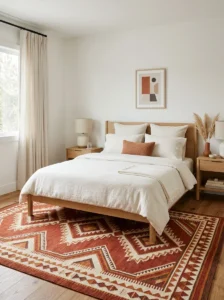
If your bedroom walls, bedding, and furniture all lean toward a neutral, calm palette, the rug is often the perfect place to introduce a bolder pattern without overwhelming the overall design. I made this choice in a bedroom that had otherwise been almost entirely soft whites and warm woods, adding a rug with a bold geometric pattern in deep terracotta and cream tones. Rather than feeling out of place, it became the room’s defining feature, the one element that gave the otherwise calm, neutral space a real sense of personality and intention. I’d been hesitant about this choice initially, worried that a bold pattern underfoot might feel too busy or distracting in a room meant primarily for rest and relaxation. In practice, the opposite happened. Because everything else in the room stayed calm and restrained, the patterned rug read as a deliberate design choice rather than clutter, almost like a piece of art laid across the floor rather than competing with the room’s other elements. This approach has become something of a rule of thumb for me in subsequent projects: if a room’s walls and furniture are neutral, the floor is a relatively low-risk place to experiment with pattern and color, since it’s easy to swap out a rug down the line if your taste changes, unlike a bolder paint color or a large piece of patterned furniture that would require more effort to update later. I’ve also found that a bold rug tends to age better stylistically than a bold wall color, since trends in patterned textiles seem to cycle in and out of favor more gracefully than saturated paint choices, which can feel dated fairly quickly once a particular shade falls out of style. When shopping for a bold patterned rug against a neutral backdrop, I’ve learned it helps to pull at least one accent color from the rug into a smaller detail elsewhere in the room, a throw pillow, a piece of art, a lamp shade, so the pattern feels intentionally connected to the rest of the space rather than an isolated statement piece sitting on its own.
6. Use a Striped Rug to Add Visual Length to a Narrow Room
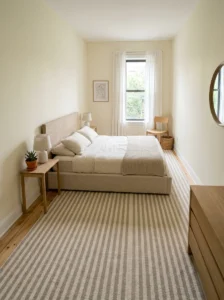
Narrow bedrooms, particularly in older homes or apartments, can sometimes feel cramped or awkwardly proportioned, and rug choice can actually help address that visually. A striped rug, particularly one with stripes running the length of the room’s longer dimension, can create a subtle illusion of added length and openness. I used this trick in a narrow guest bedroom that had always felt slightly tight, choosing a rug with soft, muted stripes running parallel to the room’s longest wall. The visual effect was subtle but genuinely noticeable, the room felt a touch more spacious once the striped rug was in place, likely because the eye naturally follows the stripe direction and perceives the space as extending further than it might with a solid or busier patterned rug. This is a relatively low-cost, low-risk way to address a room’s proportions without any structural changes or expensive furniture swaps. I’d recommend keeping the stripe colors relatively close in tone rather than choosing high-contrast stripes if your goal is a calming, spacious feel, since a bold, high-contrast stripe pattern can sometimes read as more of a statement piece than a subtle spatial correction. In our case, the muted tonal stripes achieved exactly the balance I was hoping for, adding just enough visual interest and length without turning the rug itself into the room’s dominant focal point, which wasn’t the goal in a space intended to feel calm and restful for overnight guests. It’s also worth paying attention to stripe width when choosing this kind of rug, since narrower stripes tend to create a more subtle, elongating effect, while wider stripes can sometimes read as more of a bold graphic statement, which may or may not suit the mood you’re going for in that particular room. I’d recommend laying painter’s tape on the floor in the stripe’s intended direction before purchasing, just to get a rough sense of how the visual line will actually run relative to your existing furniture placement, since it’s a simple, no-cost way to confirm the effect will read the way you’re picturing it before committing to the purchase itself.
7. Choose a Plush, High-Pile Rug for Maximum Comfort
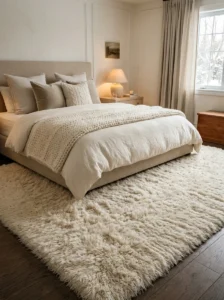
If comfort underfoot is your primary priority, particularly in colder climates or for anyone who simply loves the feeling of sinking their feet into something soft first thing in the morning, a plush, high-pile rug is worth serious consideration. I added one of these to our primary bedroom during a renovation, choosing a soft, high-pile wool blend specifically for the sensory experience it would add to our daily routine. The difference was immediate and, frankly, a little addictive, stepping out of bed onto that thick, cushioned surface each morning became one of those small daily pleasures I hadn’t anticipated caring about as much as I do. Beyond the comfort factor, a high-pile rug also adds a genuine sense of luxury and coziness to a bedroom’s overall aesthetic, softening the room in a way that a flatter, more utilitarian rug simply can’t achieve. There are some practical considerations worth keeping in mind, though. High-pile rugs tend to show footprints and vacuum lines more visibly than flatter options, which some people love for the plush, freshly groomed look and others find requires more frequent maintenance than they’d prefer. They can also be more challenging to clean thoroughly if spills or stains occur, since the deeper pile can trap moisture and debris more easily than a flatter weave. In our case, we’ve found the comfort tradeoff well worth the slightly higher maintenance, and regular vacuuming has kept the rug looking fresh with minimal extra effort beyond our normal cleaning routine. I’d also recommend checking the specific pile height before purchasing if allergies are a concern in your household, since deeper pile rugs can trap more dust and pet dander than flatter alternatives, which matters quite a bit for anyone particularly sensitive during allergy season. We’ve managed this by vacuuming more frequently than we might otherwise, roughly twice a week, which has kept the issue from becoming noticeable while still letting us enjoy the plush comfort the rug provides every single morning.
8. Add a Runner Rug on Each Side of the Bed Instead of One Large Rug
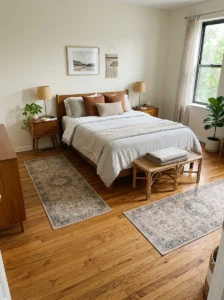
For bedrooms with a tighter budget or an awkward floor plan that makes a single large area rug impractical, placing a slim runner rug on each side of the bed offers a smart, cost-effective alternative. I used this approach in an early apartment where a full-sized area rug simply wasn’t in the budget at the time, opting instead for two matching runner rugs positioned exactly where my feet would land getting in and out of bed each side. This solution addressed the primary practical concern, cold or hard flooring underfoot, without the larger expense of a full room-sized rug. It also worked well in that particular room’s layout, which had slightly awkward proportions that would have made centering a single large rug under the bed somewhat challenging given the furniture arrangement. Beyond the practical benefits, this approach can also work well aesthetically in larger bedrooms where a single massive rug might feel overwhelming or where you want to maintain more visible hardwood or flooring throughout the room while still adding warmth in the specific spots that matter most. I’d recommend choosing runners in a length that extends comfortably along the side of the bed, roughly matching the mattress length, so the visual proportions feel intentional rather than randomly placed. This is a detail I initially got wrong in my first attempt, choosing runners that were noticeably shorter than the bed itself, which made the whole setup look slightly mismatched until I found the right length to properly complement the bed’s proportions. Beyond length, I’d also suggest choosing a runner width wide enough that both feet can comfortably land on it when stepping out of bed, since a narrow runner that only catches one foot defeats much of the practical purpose behind adding it in the first place. This approach has continued to work well for us even after upgrading to a larger apartment, since it offers a flexible middle ground between a bare floor and the expense of a single oversized area rug, especially in a room where the overall floor plan might shift again down the line.
9. Choose a Rug With Subtle Texture Rather Than Bold Color for a Serene Feel
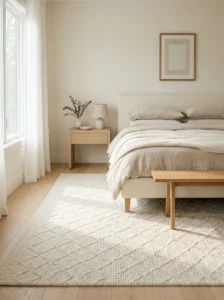
Not every bedroom benefits from a bold color or pattern statement underfoot, and for rooms intended to feel particularly calm and restful, a rug with subtle texture rather than strong color contrast can be the better choice. I made this decision for our current primary bedroom, choosing a rug in a soft, barely-there ivory tone with a subtle raised texture pattern rather than anything with strong color or graphic pattern. The effect has been exactly what I was hoping for, a rug that adds tactile interest and a sense of quality without demanding visual attention the way a bolder choice might. This has proven particularly effective paired with our room’s otherwise fairly simple, muted color palette, since the textured rug adds just enough visual interest to keep the room from feeling flat without introducing any competing colors or patterns that might feel stimulating rather than restful in a space meant primarily for sleep and relaxation. I’ve noticed that this kind of textured-but-neutral rug also photographs beautifully in different lighting conditions throughout the day, since the texture catches and plays with light in a way flat, solid rugs simply don’t, adding a subtle dimension to the room even without any color or pattern doing the visual work. For anyone designing a bedroom with rest and calm as the primary goal, I’d genuinely recommend considering texture as your primary design tool rather than defaulting straight to color or pattern. When shopping for this kind of rug in person, I found it helpful to run my hand across several textured options side by side, since photos and online descriptions rarely capture the subtle differences in raised pattern depth that ultimately determine how much visual and tactile interest the rug actually adds once it’s installed in the room. A rug with too subtle a texture can end up reading as flat and forgettable, while one with too pronounced a texture can start to feel busy despite the lack of color, so finding that middle ground genuinely took some trial and error with physical samples before I landed on the right option for our space.
10. Use a Dark Rug to Ground a Room With Light Walls and Furniture
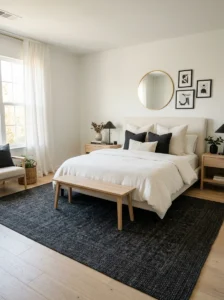
While much of this list leans toward lighter, more neutral rug choices, there’s a strong case to be made for the opposite approach in certain rooms. A bedroom with predominantly light walls, light wood furniture, and light bedding can sometimes feel like it’s missing an anchor, everything floating in a similar tonal range without any real grounding element. I experimented with this in a friend’s bedroom renovation, adding a deep charcoal rug to a room that had otherwise been almost entirely soft whites and pale wood tones. The effect was immediate and dramatic in the best way, the dark rug gave the room a sense of weight and definition it had been missing, while still allowing all the lighter elements to shine as intended. This approach requires a bit more confidence than some of the lighter, safer choices on this list, since a dark rug is a bolder commitment that’s harder to blend seamlessly if you change your mind later. That said, in a room that otherwise risks feeling washed out or lacking in visual structure, a well-chosen dark rug can be exactly the missing piece. I’d recommend choosing a dark rug with at least some subtle texture or a low-contrast pattern rather than a completely flat, solid dark color, since a bit of texture helps prevent the rug from reading as a stark, heavy block against an otherwise light and airy room. It’s also worth considering the size of the dark rug carefully in this scenario, since a smaller dark rug floating in the middle of a large light room can look somewhat isolated, almost like a hole in the floor, whereas a properly sized rug that extends generously around the furniture reads as an intentional grounding element rather than an awkward accident. My friend ultimately chose a rug just slightly larger than what she’d originally planned specifically to avoid this pitfall, and the extra size made a noticeable difference in how balanced the finished room felt.
11. Choose a Rug Material Suited to Your Climate and Season
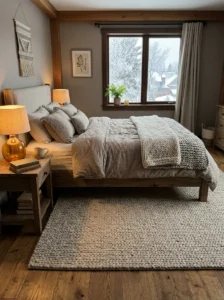
One consideration that’s easy to overlook when shopping for a bedroom rug is how well the material actually suits your local climate and the season you’ll be using it most. In colder climates, or for bedrooms that see heavy use during winter months, a thicker wool or wool-blend rug provides genuine insulation and warmth underfoot that thinner materials simply can’t match. I learned this firsthand after moving to a colder region and realizing our previous flat-weave cotton rug, which had worked fine in a milder climate, felt noticeably inadequate against the colder hardwood floors in our new home. Switching to a proper wool rug made a real, measurable difference in how comfortable the room felt during the coldest months of the year. On the flip side, if you live somewhere warmer or are furnishing a bedroom that tends to run hot, a lighter, more breathable material like a flat-weave cotton or a natural fiber blend can help keep the room from feeling overly heavy or warm underfoot, particularly during summer months. This is a consideration I hadn’t given much thought to before that climate move, assuming a rug was simply a rug regardless of where you lived, but the practical difference in comfort between the right and wrong material choice for your specific climate has genuinely shaped how I approach rug shopping for every bedroom project since. Beyond outdoor climate, it’s also worth thinking about your home’s specific heating and cooling setup, since a bedroom with radiant floor heating might not need as heavy a rug as one relying purely on forced air, and a room that tends to trap humidity could benefit from a more breathable natural fiber over a dense wool option that might hold onto moisture. Taking a bit of time to think through these practical, climate-specific factors before falling in love with a particular color or pattern has saved me from a couple of purchases I might have otherwise regretted once the season actually changed.
12. Add a Small Accent Rug Beneath a Reading Chair or Bench
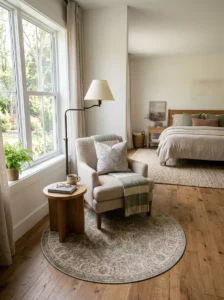
If your bedroom includes a secondary seating area, whether a reading chair in the corner, a small bench at the foot of the bed, or a cozy nook by the window, adding a small accent rug specifically for that spot can help define it as its own intentional zone within the larger room. I added a small round rug beneath a reading chair in the corner of our bedroom, and it made that corner feel like a genuine destination within the room rather than just a chair that happened to be placed there. This approach works particularly well in larger bedrooms where a single rug under the bed alone might leave other functional areas of the room feeling disconnected or unaddressed. The accent rug doesn’t need to match the main bedroom rug exactly, in fact, I’ve found that a complementary but distinct texture or pattern often works better, helping to visually separate the reading nook as its own little zone while still feeling like part of the overall room’s design language. This is a relatively low-cost addition, since accent rugs for a single chair or small bench tend to be considerably smaller and less expensive than a full bedroom area rug, but the impact on how “finished” and intentional that corner of the room feels has been more significant than the modest cost would suggest. I’ve since applied this same idea to a small bench at the foot of another bed, adding a narrow accent rug just beneath it, and it’s had a similar effect of making what could have been an overlooked functional piece of furniture feel like a deliberately styled part of the room. If you’re working with a particularly small bedroom where a full area rug simply isn’t practical, this kind of targeted, smaller-scale rug placement can be a smart way to still bring in warmth and texture without needing the floor space a larger rug would require.
13. Use a Rug to Visually Anchor an Awkwardly Placed Bed
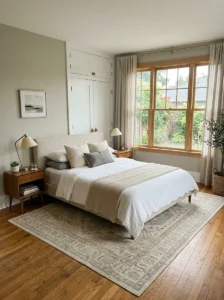
Not every bedroom has a bed centered perfectly against a single wall, and in rooms with an awkward layout, perhaps a bed pushed into a corner or positioned at an angle due to windows or closet placement, a thoughtfully placed rug can help the arrangement feel more intentional rather than accidental. I dealt with this in a bedroom where the bed had to sit at a slight angle relative to the room’s main walls due to an oddly placed window, and for a long time, the layout simply felt off no matter how I arranged the other furniture. Adding a rug that extended generously around the bed’s actual footprint, rather than trying to align it with the room’s walls, helped visually establish the bed’s placement as a deliberate choice rather than an awkward compromise. This taught me an important lesson about rug placement more broadly: the rug should generally follow and reinforce the furniture’s actual arrangement rather than the room’s architectural lines, especially in rooms where those two things don’t perfectly align. Once I stopped trying to force the rug into a position that matched the room’s walls and instead centered it around the bed and nightstands as they were actually arranged, the whole room finally felt cohesive despite the underlying awkward geometry that I couldn’t change without a full renovation. I’d suggest anyone dealing with a similarly awkward layout lay out the rug, or even just a taped outline of its dimensions, on the floor before purchasing, walking around the space to see how it feels relative to the furniture’s actual placement rather than the room’s technical measurements. This small extra step of testing the layout in person prevented what would have otherwise been a costly guessing game, and it gave me the confidence to commit to a rug size and shape that fully embraced the room’s quirks rather than fighting against them.
14. Choose a Rug With a Border Detail for a More Formal, Finished Look
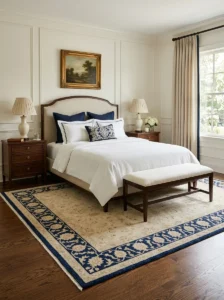
For bedrooms with a slightly more traditional or formal design sensibility, a rug featuring a distinct border, a contrasting color or pattern framing the rug’s main field, can add a polished, finished quality that a plain, borderless rug doesn’t quite achieve. I used a rug with a subtle border detail in a more traditionally styled guest bedroom, and it added a level of intentional formality that suited the room’s overall aesthetic, which leaned toward classic furniture pieces and richer, more saturated color choices throughout. The border effectively frames the rug the way a mat frames a piece of art, giving it a sense of completeness and structure that plain rugs sometimes lack. This style choice tends to work particularly well in bedrooms with hardwood or other visible flooring around the rug’s edges, since the border creates a clear, deliberate boundary between the rug and the surrounding floor rather than the somewhat softer, blended edge effect you get with a borderless design. I’d note that this style choice tends to suit more traditional or transitional design sensibilities better than a strictly modern or minimalist bedroom, where the cleaner, uninterrupted look of a borderless rug often fits more naturally with the room’s overall simplicity and restraint. When choosing a bordered rug, I’ve also found it worth paying attention to how the border color relates to the room’s existing trim, curtains, or furniture finishes, since a border that echoes another element already present in the room helps the rug feel intentionally coordinated rather than like an isolated pattern choice. In that guest bedroom, I chose a border in a deep navy that subtly echoed the color of the curtain trim, and that small connection between two otherwise separate elements has done a lot of quiet work in making the whole room feel pulled together rather than simply decorated piece by piece.
15. Rotate Seasonal Rugs to Refresh the Room Throughout the Year
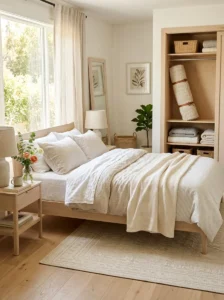
This final idea is less about a single rug choice and more about an ongoing practice that’s genuinely changed how our bedroom feels throughout the year. Rather than committing to one rug permanently, I’ve started rotating between a heavier, warmer rug for the colder months and a lighter, breezier option for spring and summer. This might sound like an unnecessary extra expense at first, but I’ve found that having two moderately priced rugs to rotate seasonally has actually been more cost-effective than trying to find one single “perfect” rug that works well in every season and still looking to replace it prematurely once it started feeling mismatched with the changing season. Beyond the practical comfort benefits, warmth underfoot in winter, breathability in summer, this rotation has also kept our bedroom feeling fresh and intentional throughout the year rather than static and unchanging. It’s become something of a small seasonal ritual for us, swapping the rugs alongside our usual seasonal bedding changes, and it’s a simple, relatively low-cost habit that consistently makes the room feel cared for and current no matter what time of year it happens to be. To make this practice manageable, I store the off-season rug rolled up in a closet with a light protective cover, which has kept both rugs looking fresh and free of dust buildup between rotations. I’d recommend choosing two rugs that share a similar overall color palette or at least complement the room’s fixed elements, walls, furniture, curtains, so that neither seasonal swap requires rethinking the rest of the room’s design, keeping the whole process quick and low-effort rather than feeling like a mini renovation every few months. Over time, this rotation has also meant each individual rug gets roughly half the wear it would if used year-round, which has noticeably extended the lifespan of both pieces compared to how quickly our original single rug started showing signs of wear.
Mistakes I Made Along the Way
- Choosing a rug that was too small for our bed – My very first bedroom rug looked like an afterthought until I upgraded to a properly sized option that extended well beyond the bed’s edges.
- Underestimating how rough natural fiber rugs feel underfoot – I hadn’t anticipated needing a softer layered rug beside the bed until I actually lived with the jute rug for a few weeks.
- Choosing mismatched runner lengths in an early apartment – My first pair of bedside runners didn’t match the bed’s proportions, which made the whole setup look slightly off until I found the right length.
- Assuming one rug could work year-round in every climate – Moving to a colder region taught me that material choice genuinely matters more than I’d previously realized.
Frequently Asked Questions
What size rug works best under a queen or king bed? As a general guideline, a rug should extend at least eighteen to twenty-four inches beyond each side of the bed, ideally reaching beneath the front legs of the nightstands as well, to create a cohesive, grounded look.
Should a bedroom rug be soft or more durable and low-pile? This depends on your priorities. Plush, high-pile rugs offer more comfort underfoot but require more maintenance, while low-pile or natural fiber rugs tend to be more durable and easier to clean, though less cushioned.
Is it okay to layer two rugs in a bedroom? Yes, layering a smaller decorative rug over a larger neutral base rug is a popular technique that adds visual depth and texture without requiring a single expensive statement rug.
How often should a bedroom rug be replaced? With regular care, a good-quality rug can last many years, though high-traffic areas or those experiencing significant wear may need replacement or professional cleaning every few years to maintain their appearance.
Final Thoughts
Looking back at that cold winter morning that finally pushed me to take bedroom rugs seriously, it’s genuinely satisfying to see how much of a difference the right rug choice has made across every bedroom I’ve furnished since. A rug isn’t just a practical addition for warmth underfoot, though that matters plenty, it’s one of the most effective tools for visually unifying a room’s furniture, adding texture and personality, and making a space feel genuinely finished rather than simply assembled. Whether you’re drawn to a bold pattern, a soft neutral texture, or a practical layered approach, the right rug can pull an entire bedroom together in a way few other single design choices can.